

Pipeline Programs

CGT Companies Tracked

Manufacturing Facilities


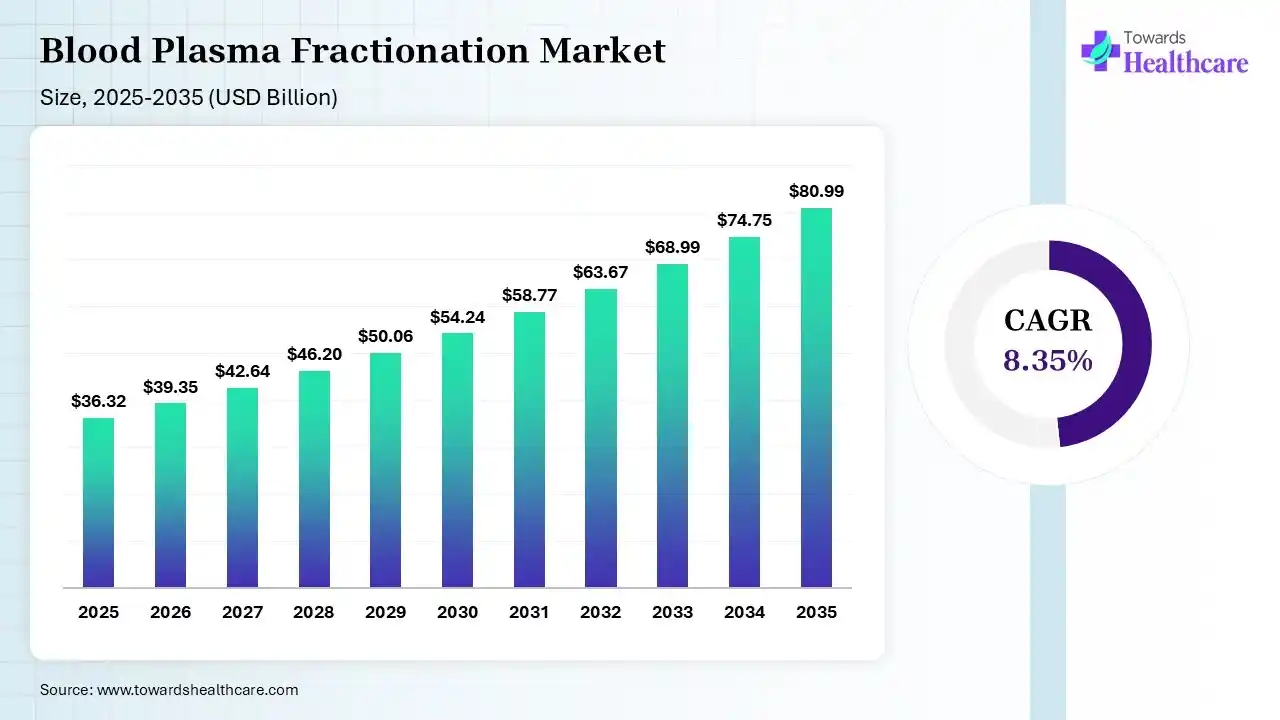
The blood plasma fractionation market size was valued at US$ 36.32 billion in 2025 and is projected to grow to 39.35 billion in 2026. Forecasts suggest it will reach approximately US$ 80.99 billion by 2035, registering a CAGR of 8.35% during the period.
Blood plasma is the liquid component of whole blood, comprising 55% of the total blood volume. Blood plasma fractionation is a process of isolating various components of plasma using different techniques. Plasma products contain coagulation factors such as factor VIII, factor IX, prothrombin complex, Von Willebrand factor, fibrinogen, immunoglobulins, protease inhibitors, anticoagulants, and albumin. These plasma products are used as therapeutics in the prevention, management, and treatment of life-threatening conditions like trauma, congenital deficiencies, immunologic disorders, or infections.
The rising incidences of immunological disorders, trauma, and blood disorders increase the demand for blood plasma. Albumin is used in trauma medicine, immunoglobulins are used in immunological disorders, coagulation factors are commonly used in blood clotting disorders such as hemophilia and Von Willebrand’s disease, and protease inhibitors are an effective treatment regimen for emphysema. Additionally, increasing blood donations and the increasing awareness of plasma products as therapeutics boost the market.
Blood plasma fractionation is the industrial process of separating donated blood plasma into individual proteins that can be purified and used to manufacture therapeutic products. The market is growing as healthcare systems experience increasing demand for immunoglobulins, albumin, clotting factors, and other plasma-derived medicines. Key trends include expanded plasma collection networks, greater use of automated fractional systems, and increasing focus on improving plasma supply efficiency. Technological advancements in purification, chromatography, filtration, viral inactivation, and process automation are enhancing product quality, safety, and manufacturing efficiency. Major drivers include rising diagnoses of immune deficiency, bleeding disorders, and access to plasma-based treatments. Future opportunities include development of next-generation fractional technologies, improved recovery of valuable plasma proteins, expansion of collection infrastructure, and increased manufacturing capacity in emerging healthcare markets.
Opportunity for the Blood Plasma Fractionation Market
The rising demand for blood plasma products fosters innovation, leading to enhanced patient care and treatment. Several researchers are investigating novel fractionation techniques for isolating plasma components and also examining the role of plasma products as therapeutics in numerous disorders. Many low- and middle-income countries opt for small-scale fractionation processes due to a lack of large volumes of plasma. Traditionally, ethanol is used as a precipitation agent in blood plasma fractionation. However, removing ethanol can complete a small-scale fractionation process in single-use equipment for quick and efficient deployment. Another fractionation method is continuous manufacturing. This can reduce process and facility scale without compromising throughput capacity and economic efficiency. Furthermore, manufacturers are also looking to automate the fractionation process using advanced technologies. Automation in plasma fractionation can help in harvesting and cleaning operations.
High Upfront Cost Hamper the Blood Plasma Fractionation Market
The primary challenge faced by the market is the high upfront cost of equipment and products. The large-scale instruments required for the fractionation process require huge investments. Single-use filtration can cost up to $500/gram, while the selling price of plasma products can reach up to $150,000/gram, limiting the affordability of small-scale manufacturers. Another major challenge for the market is the availability of large volumes of plasma to cater to huge demands.
Increasing Blood Donations as a Driver
The major growth factor for the blood plasma fractionation market is the increasing awareness among the general public for blood donations. The rising prevalence of immunological and hematological disorders encourages people to donate blood. The World Health Organization (WHO) reported that approximately 118.5 million blood donations are collected globally, of which 40% are collected in high-income countries. Government and private organizations launch initiatives and set up blood donation camps in their respective countries.
| Metric | Details |
| Market Size in 2026 | USD 39.35 Billion |
| Projected Market Size in 2035 | USD 80.99 Billion |
| CAGR (2026 - 2035) | 8.35% |
| Leading Region | North America |
| Market Segmentation | By Product, By Method, By Application, By End-Use, By Region |
| Top Key Players | ADMA Biologics, Inc., Baxter International, Inc., Bio Products Laboratory, Biotest AG, CSL, GC Biopharma, Grifols, S.A., Kedrion Biopharma, LFB S.A., OctaPharma, PlasmaGen Biosciences, Sanquin, SK Plasma, Takeda Pharmaceutical Co. Ltd. |
By product, the immunoglobulins segment held a dominant presence in the market and is anticipated to witness significant growth during the forecast period. Immunoglobulins are the most widely used plasma product to treat several autoimmune, infectious, and inflammatory disorders. The rising incidences of autoimmune disorders are caused due to the COVID-19 pandemic.
By method, the centrifugation segment led the global market and is projected to expand rapidly in the coming years. Centrifugation is the most widely used technique to separate plasma from whole blood. It is the easiest and most cost-effective method for isolating plasma products.
By application, the neurology segment accounted for a considerable share of the market. The rising incidences of neurological disorders and lack of efficient treatment potentiate the segment growth. In neurological disorders, therapeutic plasma exchange or plasmapheresis is the treatment of choice. According to the WHO, 1 in 3 people globally are suffering from neurological disorders.
By application, the oncology segment is predicted to grow with the highest CAGR in the market during the studied years. The rising incidences of cancer and growing research & development for the effective treatment of cancer boost the segment growth. Plasma exchange is widely preferred in hematological cancers. Low-temperature plasma therapy can target malignant cells to inhibit cell proliferation and tumor progression.
By end-use, the hospitals & clinics segment registered its dominance over the global market and is expected to grow at the fastest rate in the market during the forecast period. Hospitals & clinics have favorable infrastructure for storing plasma products and suitable regulatory standards. The increasing number of patients in hospitals & clinics also augments the segment growth.
North America held a significant share of the blood plasma fractionation market in 2025. The advanced healthcare infrastructure, increasing investments & collaborations, favorable manufacturing infrastructure, and the presence of key players drive the market. According to the Red Cross Blood Donation Organization, around 6,500 units of plasma and 5,000 units of platelets are needed daily in the U.S. In Canada, 13% to 14% of the plasma used to make plasma protein products for Canadian patients comes from non-remunerated Canadian donors. The rising incidences of rare diseases increase the demand for plasma products. According to the WHO, each rare disease affects fewer than 200,000 Americans.
U.S. Blood Plasma Fractionation Market is Advancing Rapidly
The U.S. blood plasma fractionation market is significantly growing due to strong demand for plasma-derived therapies, particularly immunoglobulin and albumin. Rising diagnoses of immune deficiencies, bleeding disorders, and neurological conditions are increasing treatment needs. Extensive plasma collection infrastructure, advanced fractionation technologies, and substantial pharmaceutical investments are further supporting market expansion. Growing healthcare expenditure and improved access to specialized therapies are also creating favorable opportunities.
Canada’s Blood Plasma Fractionation Market is Expanding
Canada’s blood plasma fractionation market is notably expanding due to rising demand for plasma-derived medicines and increasing awareness of treatment for immune and bleeding disorders. Investment in plasma collection infrastructure and advanced processing technologies is supporting supply capabilities. Growing healthcare needs, improvements in treatment access, stronger focus on domestic plasma supply are further encouraging market development and creating opportunities for manufacturing.
Asia-Pacific is projected to host the fastest-growing blood plasma fractionation market in the coming years. The rising incidences of chronic disorders and rare disorders, growing research and development, increasing awareness about blood donations, and favorable government policies drive the market. Several government bodies conduct blood donation camps to increase awareness and promote blood donations in the region. Government bodies like the “Department of AIDS Control” by the Indian Government and the “Japan Blood Products Organization” by the Japanese Government regulate the use of blood and plasma components for treatment. In 2022, around 27.6 million units of blood were donated in China. Meanwhile, in India, around 33.8 per thousand people donated blood in 2022. Additionally, the increasing demand for albumin and immunoglobulin promotes the market.
India’s Blood Plasma Fractionation Market is Gaining Momentum
India’s blood plasma fractionation market is significantly growing due to rising demand for plasma-derived therapies and increasing diagnosis of immune, bleeding, and other chronic disorders. Expanding healthcare infrastructure, greater awareness of specialized treatment, and improvements in plasma collection are supporting market development. Growing investment in biotechnology and pharmaceutical manufacturing, along with efforts to strengthen domestic plasma processing capabilities, are creating further opportunities for market opportunities.
China’s Blood Plasma Fractionation Market Is Expanding
China’s blood plasma fractionation market is notably expanding due to increasing demand for plasma-derived therapies and improvements in healthcare access. Rising adoption of immune deficiencies, bleeding disorders, and other chronic conditions is supporting treatment demand. Investments in plasma collection, biotechnology, and domestic pharmaceutical manufacturing are strengthening production capabilities. Growing healthcare expenditure and efforts to improve the availability of essential plasma-based medicine are further creating opportunities for market development.
Europe is estimated to grow at a significant CAGR during the forecast period because immunodeficiency and bleeding diseases are becoming more common, efforts to collect and donate plasma are becoming more important, and therapeutic advancements are also contributing to this trend. Furthermore, another factor supporting market growth in the area is the expanding strategic activities by industry participants to expand the plasma fractionation network. For instance, Kedrion S.p.A. announced in September 2024 that it would acquire Plasmafera s.r.o. in order to operate three of the company's plasma collection centers in the Czech Republic, therefore expanding its network of plasma collecting facilities.
UK Blood Plasma Fractionation Market is Significantly Expanding
The UK blood plasma fractionation market is significantly expanding due to rising demand for plasma-derived therapies and increasing treatment needs for immune deficiencies and bleeding disorders. Improvements in plasma collection and processing capabilities are supporting supply. Growing investment in biotechnology, advanced purification technologies, and healthcare infrastructure is further strengthening the market. Greater focus on treatment accessibility and reliable plasma medicine supply is also creating new opportunities for market development.
Germany Blood Plasma Fractionation Market is Gaining Importance
Germany is a notable market for blood plasma fractionation due to its well-developed healthcare infrastructure, strong pharmaceutical industry, and growing demand for plasma-derived therapies. Increasing treatment need for immune deficiencies, bleeding disorders, and other chronic conditions is supporting market growth. Advanced plasma processing capabilities, strong research activity, and continued investment in biotechnology are further strengthening Germany’s position in the blood plasma fractionation market.
The Middle East & Africa are expected to grow at a considerable CAGR in the blood plasma fractionation market in the upcoming period. The growing awareness of blood donations and favorable government support bolsters market growth. The Blood Transfusion Services Department of Kuwait collected around 80,000 blood bags. Additionally, the department produced over 190,000 products from various blood components, such as platelets and plasma. The increasing research activities and the rising adoption of advanced technologies enable researchers to develop innovative fractionation techniques. The increasing prevalence of hematological disorders potentiates the demand for blood plasma. The prevalence rate of leukemia was 4.4% for females and 7.6% for males in Saudi Arabia.
By Product
By Method
By Application
By End-Use
By Region


Principal Consultant
Payal Rabde is a Healthcare Market Research Analyst at Towards Healthcare Research & Consulting with 4+ years of experience in pharmaceuticals, biotechnology, medical devices, and life sciences.
Learn more about Payal Rabde

Reviewed By
Aditi Shivarkar is a seasoned professional with over 14 years of experience in healthcare market research. As a content reviewer, Aditi ensures the quality and accuracy of all market insights and data presented by the research team.
Learn more about Aditi Shivarkar









