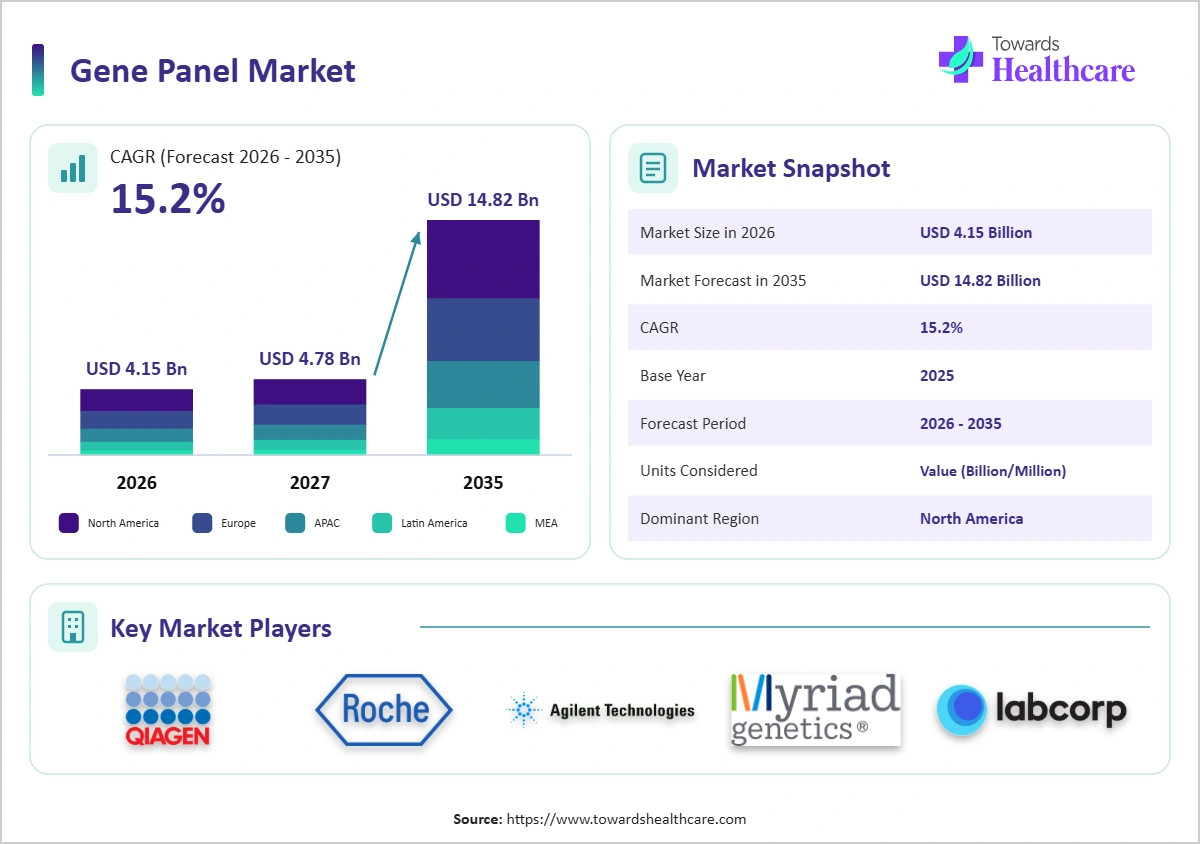
The gene panel market is forecast to increase from USD 3.60 billion in 2025 to USD 14.82 billion by 2035, registering a CAGR of 15.20% over the forecast period. This growth is largely attributed to the rising use of targeted therapies and increasing demand for multi-gene testing in hereditary cancer screening. The growing adoption of precision oncology is expected to accelerate market expansion, taking the market value to USD 7.30 billion by 2030.
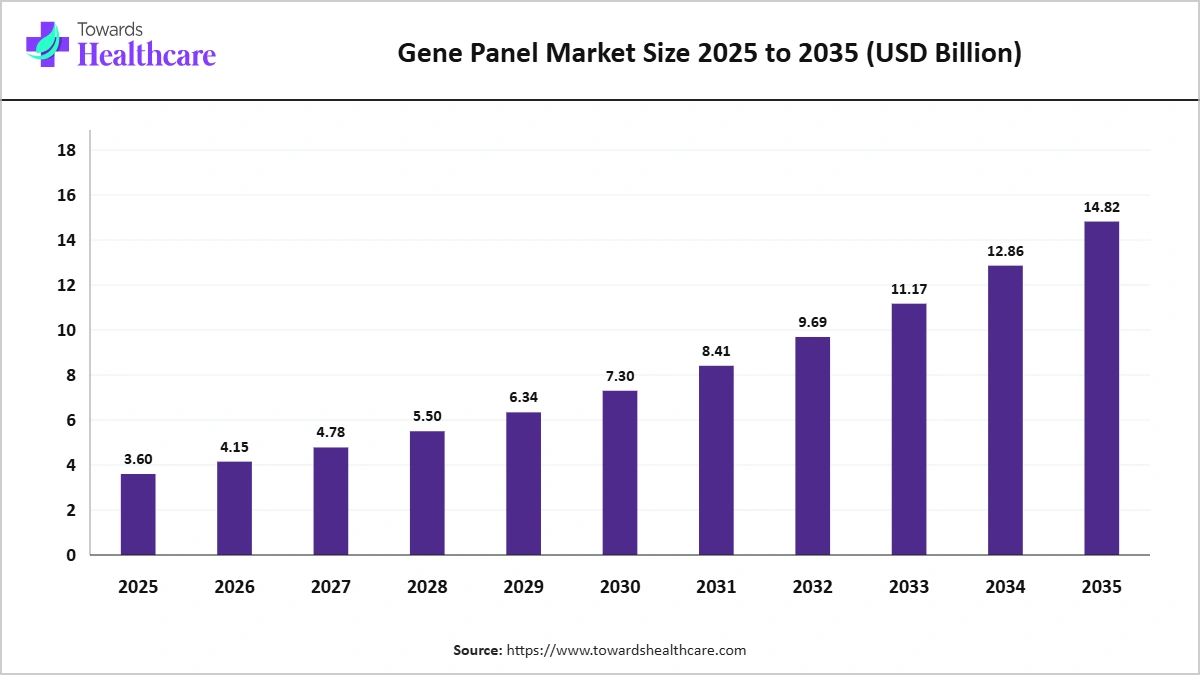
Analyst View: The market estimate was developed using panel testing volumes across different applications, average reimbursement rates, kit sales, and sequencer placements. These estimates were cross-validated against reported company revenues to ensure consistency and reliability.
The gene panel market is growing with precision oncology and hereditary testing, while consumer and pharmacogenomic panels open new demand.
Precision Oncology
The growing adoption of targeted cancer treatments is driving demand for gene panel testing. These tests help identify tumour-specific genetic alterations, enabling oncologists to select therapies based on the molecular profile of each patient's cancer.
Hereditary Screening
Increasing awareness of inherited disease risks is encouraging more individuals to undergo genetic testing. Multi-gene panels allow several hereditary mutations to be assessed in a single test, supporting early risk identification and informed preventive care.
Lower Sequencing Costs
Advances in sequencing technologies are reducing the cost of genetic analysis, making gene panel testing more accessible to healthcare providers and patients. Lower testing costs also encourage laboratories to expand their testing capabilities and support broader clinical adoption.
Clinical Guidelines
Clinical guidelines, including recommendations from the National Comprehensive Cancer Network (NCCN), help define the genes relevant to testing for specific cancer types. These recommendations encourage the use of appropriate gene panels in hereditary cancer assessment, tumour profiling, and treatment planning.
Market Drivers - Impact & CAGR Contribution (2026-2035)
| Driver | Impact | ≈ CAGR Contribution | Time Horizon | Key Regions |
| Precision oncology | High | +5.93 pp | Short to long term | Global, strongest in North America |
| Hereditary screening | Medium | +5.01 pp | Medium to long term | Global, fastest uptake in Asia Pacific |
| Lower costs | Medium | +4.27 pp | Short to medium term | Global |
| Guidelines | Low | +3.34 pp | Long term | Developed and emerging markets |
Note: Contributions are indicative estimates of each factor's effect on annual growth.
Sources: Expert interviews, secondary sources, Towards Healthcare database, and Towards Healthcare analysts.
Precision oncology, hereditary screening, and lower sequencing cost drive most growth in the gene panel market.
Reimbursement
Reimbursement policies for gene panel testing differ across countries, healthcare systems, and insurance providers. Limited coverage and inconsistent payment criteria can increase the financial burden on patients, potentially restricting access to testing and slowing market adoption.
Whole-Genome Sequencing Competition
Whole-genome sequencing (WGS) can analyse a much broader range of genetic variations than targeted gene panels. As sequencing costs decline and WGS becomes more accessible, healthcare providers may increasingly consider it for complex diagnostic cases, creating competition for conventional panel-based testing.
Variant Uncertainty
Gene panel testing can identify variants of uncertain significance (VUS), whose association with disease is not yet clearly established. Such findings can complicate clinical interpretation and treatment decisions, sometimes requiring additional testing, genetic counselling, or continued monitoring.
Market Restraints - Impact & Negative CAGR Contribution (2026-2035)
| Restraint | Impact | ≈ Negative CAGR Contribution | Time Horizon | Key Regions |
| Reimbursement | High | -1.50 pp | Short to medium term | Global |
| Genome competition | High | -1.10 pp | Medium term | Price-sensitive and emerging markets |
| Variant uncertainty | Medium | -0.74 pp | Short term | North America and other mature markets |
Note: Contributions are indicative estimates of each factor's effect on annual growth.
Sources: Expert interviews, secondary sources, Towards Healthcare database and Towards Healthcare analysts.
Reimbursement is the main restraint, followed by whole-genome competition and variant uncertainty.
Population Screening
The growing interest in preventive healthcare is creating opportunities to use gene panels for population-level screening among healthy adults. These tests can help identify inherited genetic risks before symptoms appear, supporting early intervention, risk assessment, and personalised preventive care.
Asia-Pacific Expansion
Rising healthcare investments and the growing adoption of next-generation sequencing (NGS) are creating new growth opportunities across Asia-Pacific. Improvements in diagnostic infrastructure, expanding access to genetic testing, and increasing awareness of precision medicine are expected to support regional market expansion.
Liquid Biopsy
Advances in liquid biopsy are creating opportunities for the development of blood-based gene panels. These tests can detect cancer-related genetic changes using circulating tumour DNA (ctDNA), offering a less invasive approach to tumour profiling, treatment monitoring, and disease assessment.
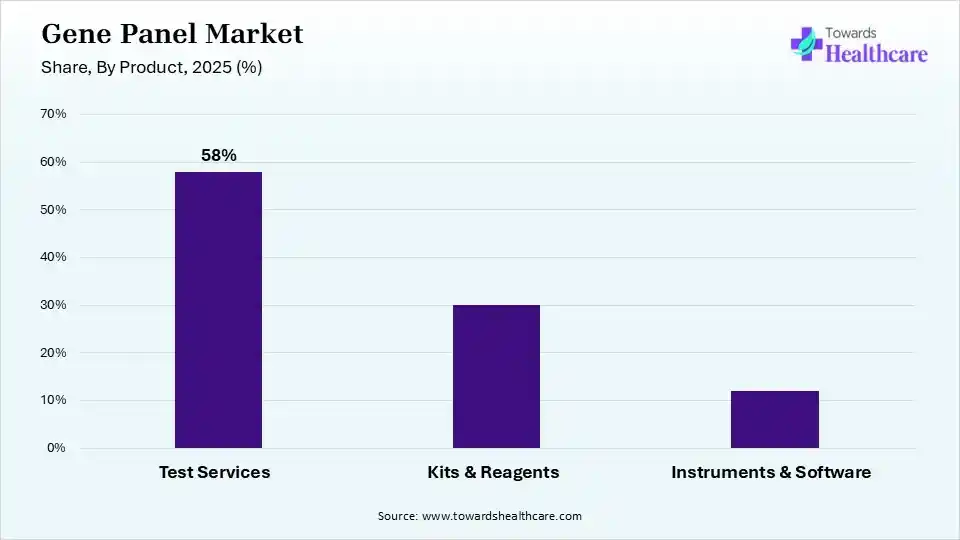
Note: 2025 is the base year; 2035 shares and CAGRs are forecasts.
Sources: Expert interviews, secondary sources, Towards Healthcare database, and Towards Healthcare analysts.
Test services dominated the gene panel market, accounting for 58.00% of the total share in 2025. The segment benefits from the widespread use of laboratory-based genetic testing, with companies expanding their clinical testing portfolios. For instance, Labcorp introduced its 163-gene Marker by Labcorp Genetic Health Panel in July 2026, with consumer availability beginning on 3 August 2026.
Kits and reagents is supported by the increasing adoption of targeted sequencing workflows and the availability of specialised testing solutions. One example is Illumina's TruSight Hereditary Cancer Panel, which covers 113 genes associated with hereditary cancer risk.
Instruments and software segment includes sequencing platforms, data analysis tools, and bioinformatics solutions required to process and interpret gene panel results. Continued improvements in sequencing technologies and analysis capabilities support its role in genetic testing workflows.
Hybridization capture dominated the gene panel market with a 58.00% share and is projected to grow at a CAGR of 15.61% during the forecast period. Its ability to analyse multiple target genes across a broad range of genomic regions makes it suitable for comprehensive genetic profiling and complex clinical applications.
Amplicon-based panels technique is widely used for targeted sequencing, particularly when working with low-input tumour samples. Its relatively streamlined workflow and suitability for analysing specific genetic regions support its continued use in clinical testing.
Oncology and cancer risk represented the largest application segment, accounting for 52.00% of the gene panel market. Growing demand for tumour profiling, hereditary cancer screening, and treatment monitoring continues to support this segment. Myriad plans to introduce tissue-informed minimal residual disease (MRD) tests across five cancer types over the next two years, reflecting the expanding role of genetic testing in cancer management.
Inherited and rare disease panels tests help identify genetic variations associated with inherited conditions and support earlier diagnosis, family risk assessment, and clinical decision-making.
Pharmacogenomics interest in personalised medicine is driving demand for tests that assess how genetic differences influence drug response, helping clinicians make more informed medication and dosage decisions.
Cardiovascular, reproductive, and other applications collectively panels support the assessment of inherited cardiovascular risks, reproductive health conditions, and other genetic disorders, expanding the clinical applications of gene panel testing.
Analyst View: Kits and reagents, hybridization capture, and pharmacogenomics are expected to gain market share at a faster pace, supported by advances in sequencing and the growing demand for personalised testing. However, test services and oncology applications are likely to retain their leading positions, reflecting the continued importance of laboratory-based testing and cancer-related genetic analysis.
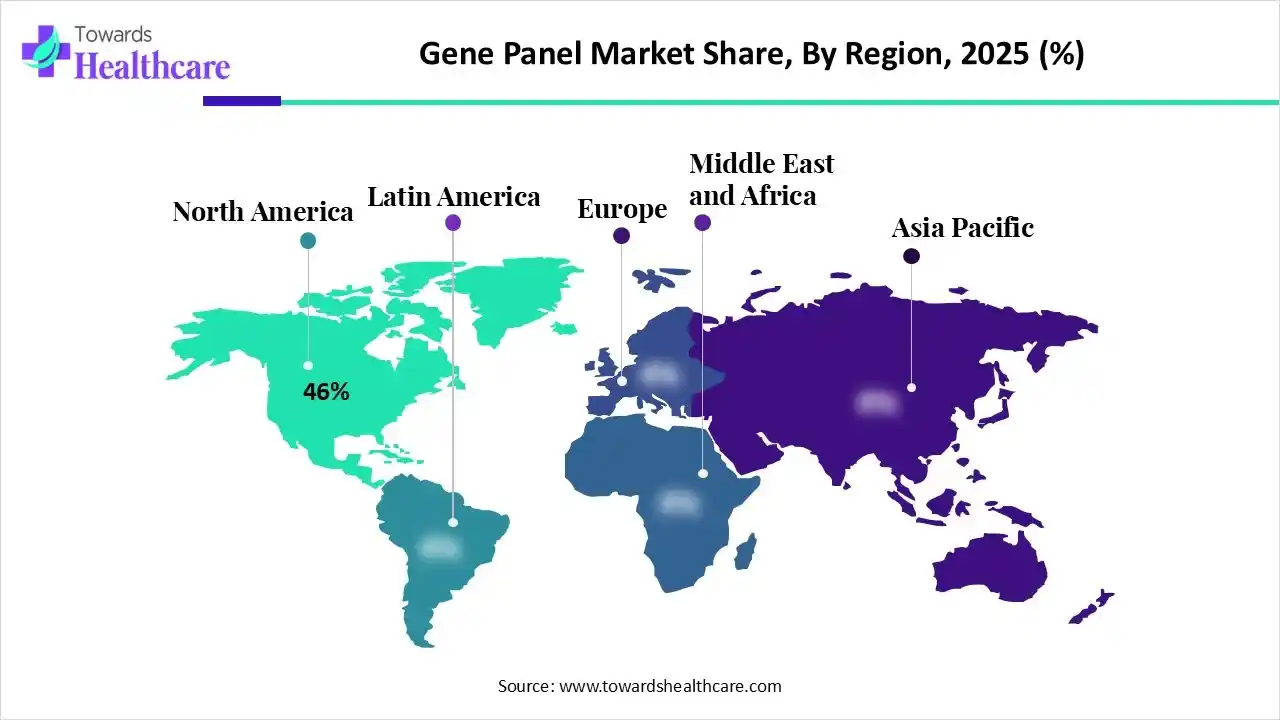
Note: 2025 is the base year; 2035 shares and CAGRs are forecasts.
Sources: Expert interviews, secondary sources, Towards Healthcare database, and Towards Healthcare analysts.
North America leads because hereditary and tumour testing are widely covered, while Asia Pacific grows fastest with NGS adoption.
North America dominated the gene panel market, accounting for 46.00% of global revenue share in 2025. Its leading position is supported by the widespread adoption of hereditary cancer testing, broader coverage of oncology biomarkers, and the strong presence of major diagnostic providers, including Labcorp, Quest Diagnostics, and Myriad Genetics.
Europe supported by the growing integration of genomic testing into national healthcare systems. Initiatives to expand genomic medicine services in countries such as the U.K. and France are encouraging the use of gene panels for disease diagnosis, cancer screening, and personalised treatment.
Asia Pacific got rapid adoption of next-generation sequencing (NGS), rising investments in healthcare infrastructure, and increasing demand for precision medicine in China, Japan, and South Korea are driving regional expansion.
Latin America is improving diagnostic infrastructure, growing awareness of genetic testing, and gradual adoption of advanced sequencing technologies are supporting market development across the region.
The Middle East and Africa collectively is increasing investments in healthcare facilities and the gradual expansion of molecular diagnostic capabilities are creating opportunities for gene panel testing, although adoption remains limited compared with more established markets.
Analyst View: North America is expected to maintain its leading position, supported by established diagnostic networks, strong clinical adoption, and broader access to genetic testing. Meanwhile, Asia Pacific is anticipated to record the fastest growth as NGS adoption expands and healthcare systems increasingly invest in precision medicine.
| Rank | Company Name | Share (%) | Key Products / Business | Headquarters |
| 1 | Illumina | 18.00% | TruSight panels and sequencers | United States |
| 2 | Thermo Fisher | 12.00% | Oncomine panels and Ion Torrent | United States |
| 3 | Labcorp | 10.00% | Invitae and Labcorp Genetics panels | United States |
| 4 | Myriad Genetics | 7.00% | MyRisk hereditary cancer panel | United States |
| 5 | Quest Diagnostics | 6.00% | hereditary and oncology panels | United States |
| 6 | Agilent | 6.00% | SureSelect capture panels | United States |
| 7 | Roche | 5.00% | AVENIO panels and Foundation Medicine | Switzerland |
| 8 | QIAGEN | 4.00% | QIAseq panels | Netherlands |
| 9 | GeneDx | 4.00% | rare disease and hereditary panels | United States |
| 10 | Ambry Genetics | 4.00% | hereditary panels | United States |
Note: Company shares are 2025 estimates.
Sources: Company press releases, expert interviews, secondary sources, Towards Healthcare database, and Towards Healthcare analysts.
Illumina led the gene panel market in 2025 with an estimated revenue share of 18.00%, followed by Thermo Fisher Scientific at 12.00% and Labcorp at 10.00%. Illumina maintains its strong position through its TruSight panel portfolio and sequencing platforms, while Thermo Fisher competes with its Oncomine panels and Ion Torrent technology. Labcorp strengthens its presence through Invitae and Labcorp Genetics testing portfolios. Other key participants include Myriad Genetics, Quest Diagnostics, Agilent, Roche, QIAGEN, GeneDx, and Ambry Genetics.
These companies compete through specialised offerings such as Myriad's myRisk hereditary cancer panel, hereditary and oncology testing services, Agilent's SureSelect capture panels, Roche's AVENIO panels, Foundation Medicine's genomic profiling solutions, QIAGEN's QIAseq panels, and rare disease and hereditary testing portfolios.
The top 10 companies collectively generated an estimated 76.11% of total market revenue in 2025, while the remaining 23.89% was distributed among numerous hospital-based and specialty laboratories. This indicates a moderately concentrated competitive landscape. Illumina and Thermo Fisher maintain strong positions in sequencing technologies and panel development, whereas Labcorp, Myriad Genetics, and Quest Diagnostics have established their presence in clinical genetic testing services.
With its headquarters in the United States, Illumina ranked first in the gene panel market in 2025, accounting for an estimated 18.00% of total revenue. Its strong market presence is largely attributed to its TruSight gene panel range and sequencing technologies.
Thermo Fisher secured an estimated 12.00% share of the gene panel market in 2025. The company differentiates its offerings through Oncomine panels and Ion Torrent sequencing platforms, catering to clinical and research requirements. Headquartered in the United States, it holds a Leader position in the Towards Healthcare Companies Quadrant.
Contributing approximately 10.00% to the gene panel market in 2025, Labcorp benefits from its Invitae and Labcorp Genetics testing portfolios. Its established diagnostic network and expanding genetic testing capabilities reinforce its market position. The U.S.-based company is recognised as a Leader in the Towards Healthcare Companies Quadrant.
Myriad Genetics represented an estimated 7.00% of the gene panel market in 2025. Its competitive presence is anchored by the MyRisk hereditary cancer panel, which supports genetic risk assessment and cancer screening. Based in the United States, the company falls within the Leader category of the Towards Healthcare Companies Quadrant.
Quest Diagnostics, holding an estimated 6.00% market share in 2025, maintains its presence through a portfolio of hereditary and oncology-focused gene panels. Its extensive diagnostic laboratory network further supports its role in clinical genetic testing.
Agilent Technologies accounted for approximately 6.00% of the gene panel market in 2025, with its SureSelect capture technology forming a key part of its portfolio. These solutions support targeted genomic analysis across research and diagnostic applications. Headquartered in the United States, Agilent is recognised as a Leader in the Towards Healthcare Companies Quadrant.
Switzerland-based Roche generated an estimated 5.00% of gene panel market revenue in 2025. Its participation is supported by AVENIO panels and the genomic testing capabilities of Foundation Medicine, particularly in oncology applications.
QIAGEN held an estimated 4.00% share of the gene panel market in 2025, supported by its QIAseq portfolio for targeted sequencing. The Netherlands-headquartered company provides solutions for molecular diagnostics and genomic research, strengthening its position in specialised testing applications. It is placed in the Innovator category of the Towards Healthcare Companies Quadrant.
GeneDx secured approximately 4.00% of the gene panel market in 2025 through its focus on hereditary testing and rare disease diagnostics. Its specialised portfolio supports the identification of genetic conditions and complex inherited disorders. Operating from the United States, it is positioned as an Innovator.
Ambry Genetics accounted for an estimated 4.00% of market revenue in 2025, primarily through its hereditary testing portfolio. The company's gene panels help assess inherited disease risks and support genetic screening applications. Headquartered in the United States, it is classified as an Innovator.
The gene panel ecosystem links technology providers, testing labs, bioinformatics, clinicians & counsellors, and payers & regulators, with each stage adding value before products reach end users. Panels run on next-generation sequencing platforms and support precision medicine and genomics programs.
| Ecosystem Stage | Role in the Market | Key Companies |
| Technology Providers | Make sequencers and panels | Illumina, Thermo Fisher, Agilent |
| Testing Labs | Run panels | Labcorp, Myriad, Quest |
| Bioinformatics | Analyse variants | Software and database firms |
| Clinicians & Counsellors | Order and explain | Oncologists, genetic counsellors |
| Payers & Regulators | Pay and approve | CMS, insurers, FDA |
Sources: Company press releases, expert interviews, secondary sources, Towards Healthcare database, and Towards Healthcare analysts.
Value in the gene panel market flows from upstream material and technology suppliers to manufacturers and service providers, then through distribution partners to end users. Companies that integrate several stages or build long-term relationships with end users capture a larger share of this value.
The Towards Healthcare Companies Quadrant positions key participants in the gene panel market by market strength, reflecting revenue scale, market share, and geographic reach, and by innovation and growth strategy, reflecting product portfolio breadth, R&D intensity, and partnerships. Positions reflect each company's estimated 2025 share of the gene panel market and our assessment of its product innovation, portfolio breadth, and partnerships.
Sources: Company press releases, expert interviews, secondary sources, Towards Healthcare database and Towards Healthcare analysts.
Leaders: Illumina, Thermo Fisher, Labcorp, Myriad Genetics, Quest Diagnostics and Agilent combine high market share with broad portfolios and strong innovation.
Innovators: Roche, QIAGEN, GeneDx and Ambry Genetics bring newer technologies and specialised products.
By Product
By Technique
By Application
By Region
The gene panel market was defined as targeted multi-gene panels used worldwide, including test services, kits and reagents, instruments and software, built by amplicon-based and hybridization capture methods, for cancer risk and tumour profiling, inherited and rare disease, pharmacogenomics, and cardiovascular, reproductive and other uses, used by diagnostic laboratories, hospitals, and research and pharmaceutical companies. The 2025 base year was built bottom-up from demand volumes and average prices by product, technique and application and region, and checked top-down against the market-specific revenues of leading companies and public industry data.
Segment, regional and company values were allocated from product, technique and application and region demand. Key estimates were verified by cross-checking company disclosures, regulatory and industry data, and published third-party estimates, and inputs that could not be reconciled were excluded. All segment, regional, and company figures were reconciled to the same 2025 base year, and the 2026-2035 forecast, which applies a constant CAGR from the 2025 base, was recalculated and validated.
Analyst View: We expect the gene panel market to grow fast as precision medicine spreads. Reimbursement and whole-genome competition are the main risks.