
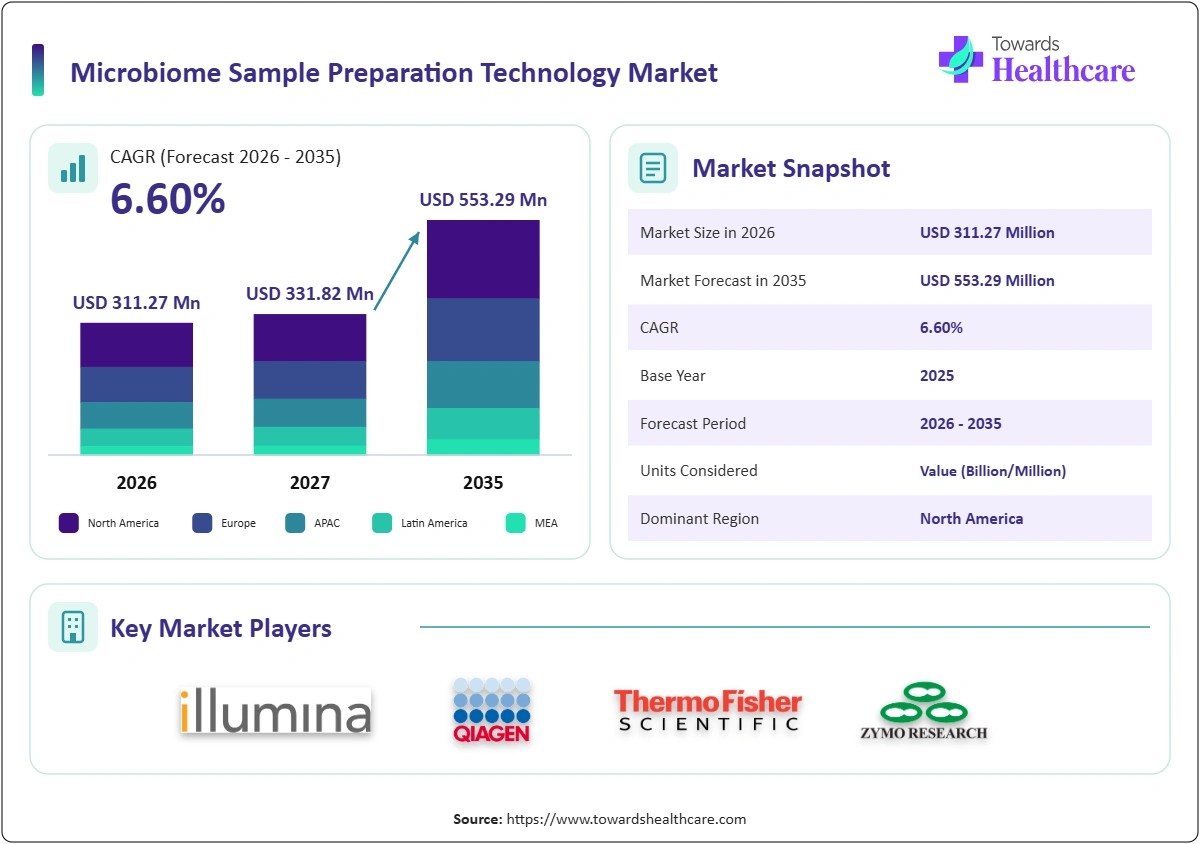
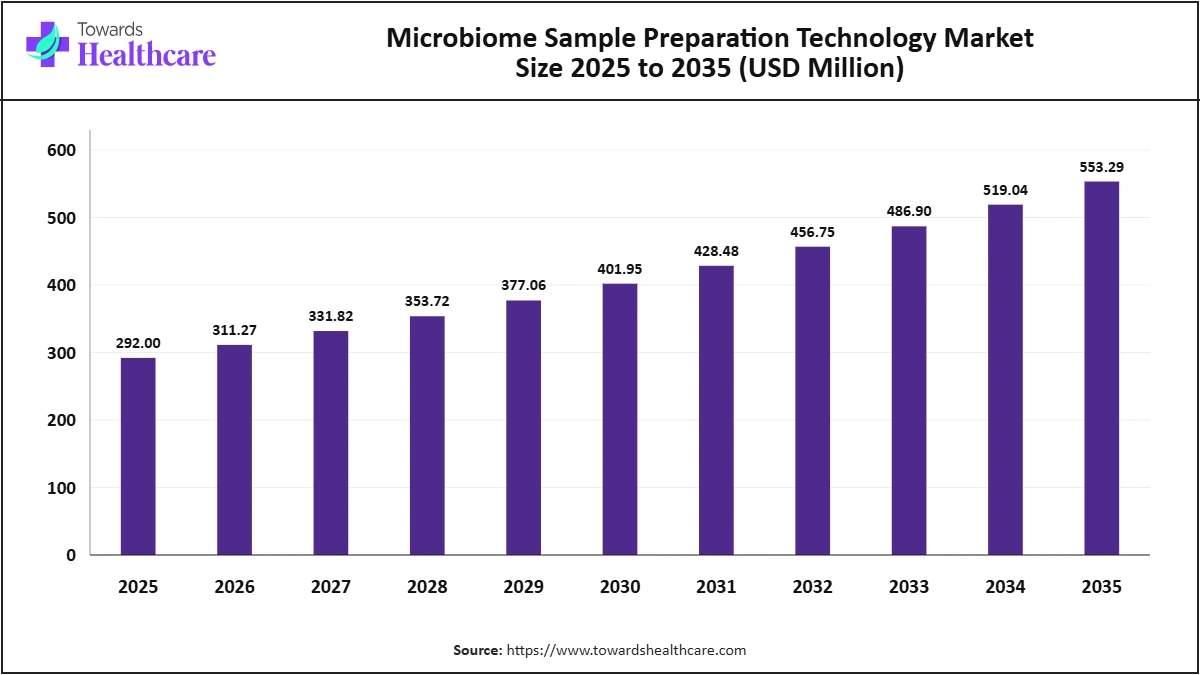
The microbiome sample preparation technology market is projected to grow from USD 292.00 million in 2025 to USD 553.29 million by 2035 because every microbiome test and study depends on reliable sample collection, stabilization, and nucleic acid extraction, and microbiome research and testing volumes are rising. Growth of shotgun metagenomics, at-home collection with room-temperature stabilization, clinical microbiome tests, microbiome therapeutics trials, and automated extraction support steady growth, boosting the market growth to USD 401.95 million by 2030 and sustaining a CAGR of 6.60% by 2035.
 Analyst View: We built the estimate from the number of microbiome samples processed by product, workflow, application, disease, end use, and region, multiplied by the cost of sample preparation products per sample, plus instrument sales. Sample numbers reflect research studies, clinical and consumer testing and drug trials, while per-sample costs reflect the move to more complex metagenomic workflows. The total was cross-checked against the microbiome kit revenues of leading suppliers and against our North America estimate. Published estimates vary widely because some include general nucleic acid extraction products, so our base year sits slightly above the comparable estimates that use a scope like ours. The growth rate reflects steady growth in microbiome research and testing, moderated by price competition among kit makers.
The microbiome sample preparation technology market is driven by expanding microbiome research, rising diagnostic testing, and growing demand for high-quality DNA for shotgun metagenomics. Increasing at-home sample collection, clinical trials for microbiome therapies, and laboratory automation are further supporting market adoption.
Market growth is constrained by extraction bias, inconsistent sample preparation protocols, and variations in microbial DNA recovery. Price competition among consumable manufacturers, sample contamination, PCR inhibitors, and limited research funding further challenge technology adoption and the reproducibility of microbiome analysis results.
Growing demand for regulated clinical collection devices and integrated sample-to-sequence platforms offers significant growth opportunities. Expanding microbiome research across Asia Pacific, increasing adoption of multi-omics workflows, and emerging applications in food safety and environmental monitoring are creating new avenues for market expansion.
Note: 2025 is the base year; 2035 values are forecasts.
Sources: Expert interviews, secondary sources, Towards Healthcare database and Towards Healthcare analysts.
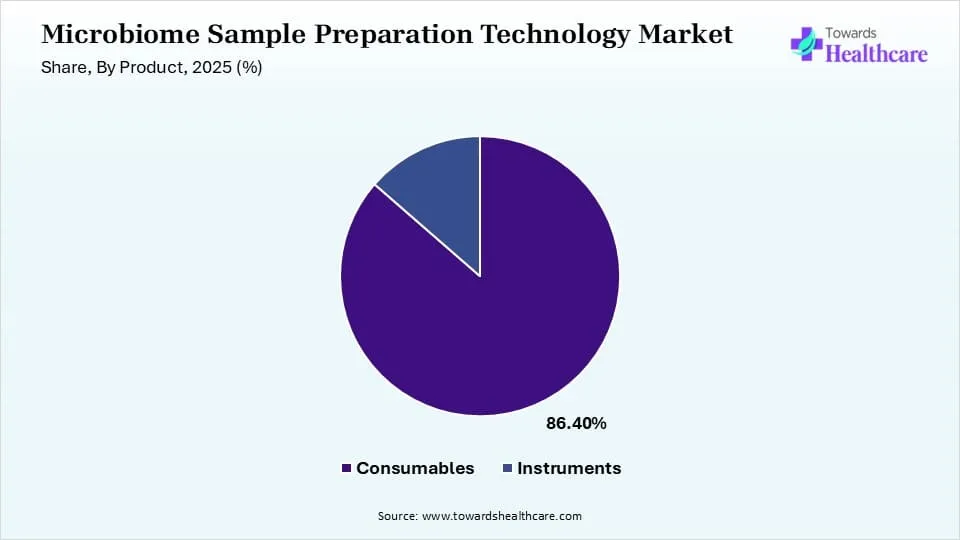
Consumables: Dominating the product category with an 86.40% share (USD 252.29 million) in 2025, this segment is expected to reach USD 479.86 million by 2035, growing at a CAGR of 6.64%. Demand is driven by the recurring use of collection and stabilization tubes, bead-beating tubes, lysis buffers, extraction and purification kits, library preparation kits, and quantification reagents. Products such as QIAGEN's QIAamp PowerFecal Pro, Thermo Fisher's MagMAX Microbiome, ZymoBIOMICS, and DNA Genotek's OMNIgene·GUT support widespread adoption.
Instruments include bead-beating homogenizers, automated nucleic acid extraction systems, liquid handlers, and quantification instruments. They are needed to scale up processing in high-volume laboratories, but sales are smaller and less frequent than consumables.
Note: 2025 is the base year; 2035 values are forecasts.
Sources: Expert interviews, secondary sources, Towards Healthcare database and Towards Healthcare analysts.
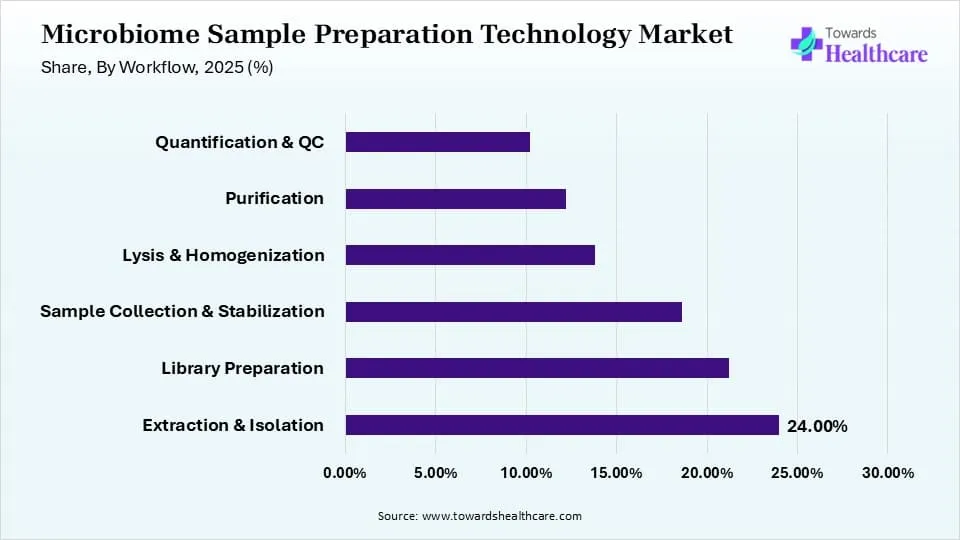
Extraction & Isolation: This segment accounted for 24.00% (USD 70.08 million) of the microbiome sample preparation technology market in 2025 and is projected to reach USD 126.37 million by 2035, expanding at a CAGR of 6.07% during the forecast period. Extraction and isolation is the largest workflow step because microbial samples contain hard-to-lyse bacteria and inhibitors, and specialized kits are needed to recover representative DNA and RNA.
Library preparation converts extracted nucleic acids into sequencing-ready libraries for 16S and shotgun metagenomics. It is the fastest-growing workflow step because shotgun metagenomics and metatranscriptomics are replacing simpler methods and need more reagents per sample.
Sample collection and stabilization devices preserve microbial composition at room temperature during shipping, which is essential for at-home collection, large studies, and clinical testing. DNA Genotek's OMNIgene·GUT Dx is FDA-authorized for this purpose.
Note: 2025 is the base year; 2035 values are forecasts.
Sources: Expert interviews, secondary sources, Towards Healthcare database and Towards Healthcare analysts.
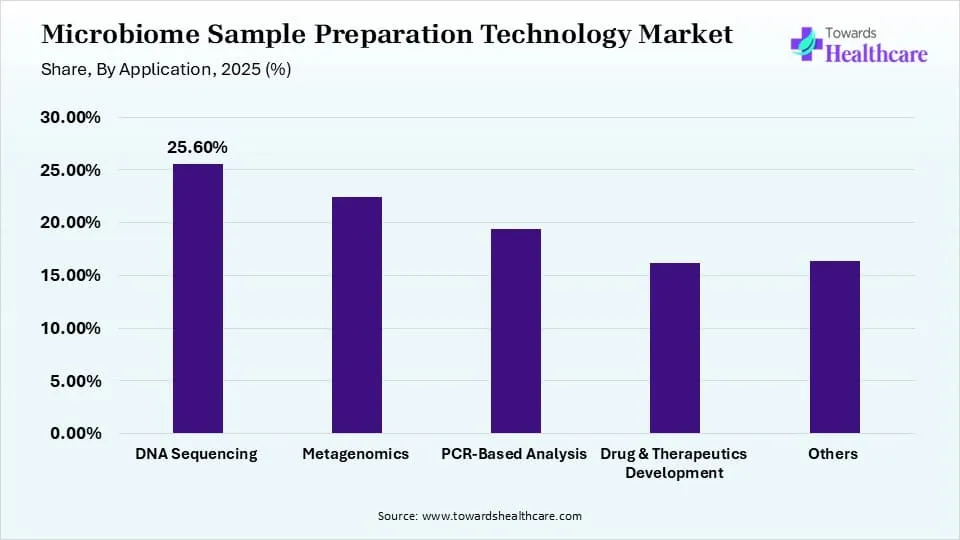
DNA Sequencing: This segment accounted for 25.60% (USD 74.75 million) of the microbiome sample preparation technology market in 2025 and is projected to reach USD 134.12 million by 2035, expanding at a CAGR of 6.02% from 2026 to 2035. DNA sequencing, including 16S rRNA gene sequencing, is the largest application because it is widely used to profile microbial communities in research and testing.
Declining sequencing costs and increasing demand for comprehensive microbial profiling are driving adoption of shotgun sequencing to identify microbial species and functional genes.
Adoption is supported by the use of quantitative PCR (qPCR) and digital PCR for targeted microbial detection, pathogen quantification, and antimicrobial resistance gene analysis in clinical and research samples.
Note: 2025 is the base year; 2035 values are forecasts.
Sources: Expert interviews, secondary sources, Towards Healthcare database and Towards Healthcare analysts.
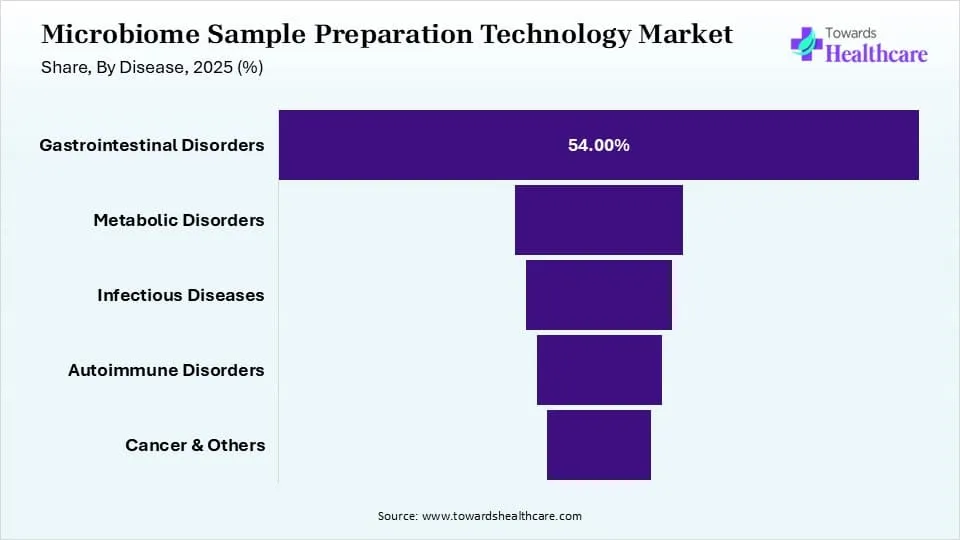
Gastrointestinal Disorders: With 54.00% (USD 157.68 million) revenue growth, the gastrointestinal disorders segment dominated the market in 2025 and is projected to reach USD 288.91 million by 2035, expanding at a CAGR of 6.24% throughout the forecast timeframe. Gastrointestinal disorders, including inflammatory bowel disease, irritable bowel syndrome, C. difficile infection and colorectal cancer screening, are the largest disease area because the gut microbiome is most studied, and stool is the most common sample.
Metabolic disorders include obesity and diabetes, where microbiome research is expanding.
Autoimmune disorders are the fastest-growing disease area as research links the microbiome to rheumatoid arthritis, multiple sclerosis and lupus.
Note: 2025 is the base year; 2035 values are forecasts.
Sources: Expert interviews, secondary sources, Towards Healthcare database and Towards Healthcare analysts.
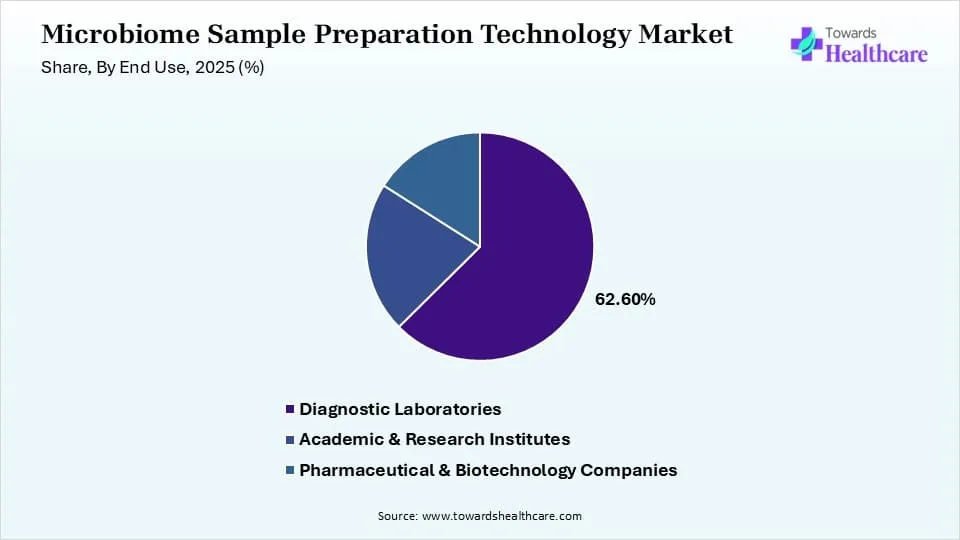
Diagnostic Laboratories: Dominating the end-user category with a 62.60% share (USD 182.79 million) in 2025, this segment is projected to reach USD 334.97 million by 2035, registering a CAGR of 6.24%. Growth is driven by high sample processing volumes across clinical, reference, and consumer microbiome testing laboratories, supported by standardized sample preparation kits and workflows.
Academic and research institutes run publicly funded microbiome studies and large population cohorts.
Expanding clinical trials for microbiome-based therapeutics and companion diagnostics are driving demand for reliable and reproducible sample preparation technologies.
Analyst View: Segment values were allocated by matching sample volumes and per-sample costs to products, workflows, applications, diseases and end users, using supplier portfolios and laboratory data. Consumables, extraction, sequencing, GI disorders, and diagnostic labs lead. We expect library preparation, metagenomics, autoimmune applications, and pharmaceutical users to gain share.
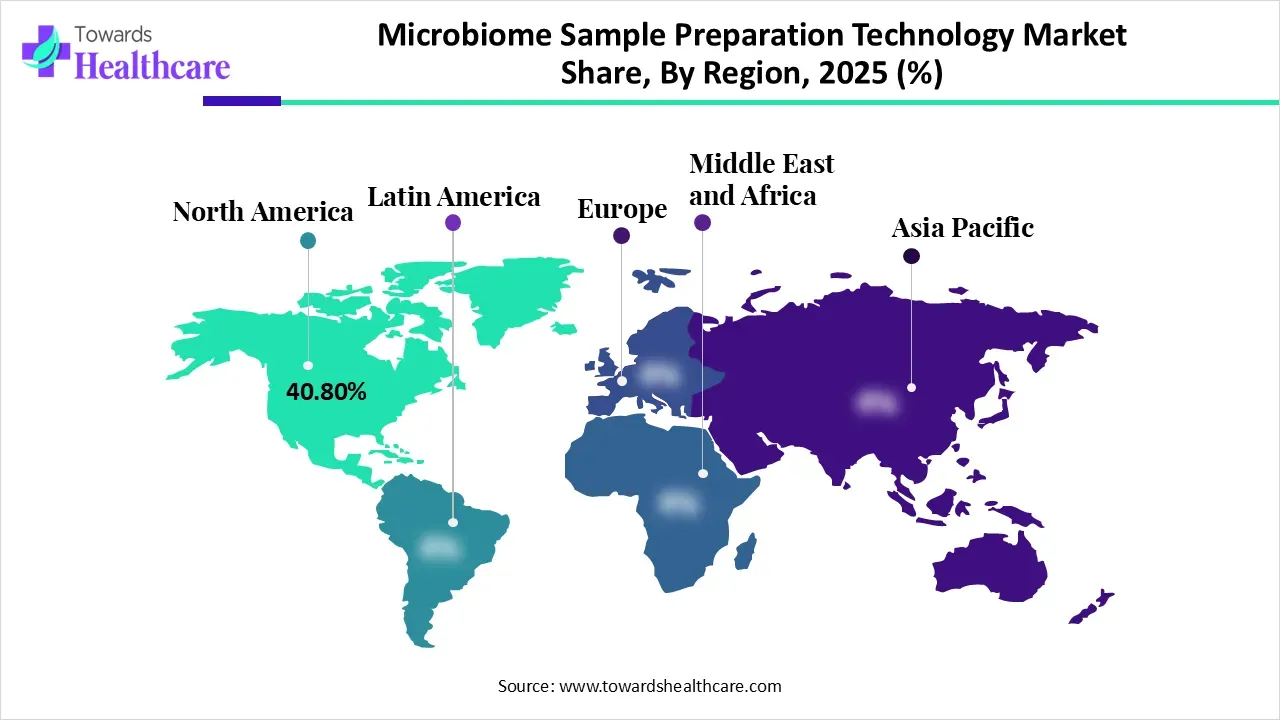
| Region | 2025 Share | 2025 Value (USD Million) | 2035 Value (USD Million) | CAGR 2026–2035 |
| North America | 40.80% | 119.14 | 210.55 | 5.86% |
| Europe | 28.50% | 83.22 | 152.73 | 6.26% |
| Asia Pacific | 23.20% | 67.74 | 149.81 | 8.26% |
| Latin America | 4.50% | 13.14 | 24.12 | 6.26% |
| Middle East & Africa | 3.00% | 8.76 | 16.08 | 6.26% |
Note: 2025 is the base year; 2035 values are forecasts.
Sources: Expert interviews, secondary sources, Towards Healthcare database and Towards Healthcare analysts.
North America: This region accounted for 40.80% (USD 119.14 million) of the microbiome sample preparation technology market in 2025 and is projected to reach USD 210.55 million by 2035, expanding at a CAGR of 5.86% from 2026 to 2035. North America is the largest region because of large microbiome research programmes, consumer and clinical microbiome testing companies, FDA-authorised collection devices and kit makers such as Thermo Fisher Scientific, Zymo Research and DNA Genotek.
Europe: Representing 28.50% (USD 83.22 million) of the global market in 2025, Europe is expected to reach USD 152.73 million by 2035, registering a CAGR of 6.26%. Regional growth is supported by established microbiome research consortia, specialized microbiome CROs, and the presence of sample preparation technology providers such as QIAGEN.
Asia Pacific: This region accounted for 23.20% (USD 67.74 million) of the microbiome sample preparation technology market in 2025 and is projected to reach USD 149.81 million by 2035, expanding at a CAGR of 8.26% by 2035. Asia Pacific is the fastest-growing region because of large sequencing capacity in China, growing microbiome research in Japan, South Korea and Australia, and rising clinical and consumer testing.
Latin America: With a 4.50% share (USD 13.14 million) in 2025, Latin America is projected to reach USD 24.12 million by 2035, growing at a CAGR of 6.26%. Increasing academic microbiome research, particularly in Brazil and Mexico, is supporting demand for specialized sample collection, stabilization, and extraction technologies.
Middle East & Africa: This region accounted for 3.00% (USD 8.76 million) of the microbiome sample preparation technology market in 2025 and is projected to reach USD 16.08 million by 2035, expanding at a CAGR of 6.26% from 2026 to 2035. The Middle East and Africa are supported by research investment in Gulf countries.
Analyst View: Regional shares were built from microbiome sample volumes in each region. North America leads because of its research and testing activity. We assign Asia Pacific the highest growth premium because sequencing capacity and research are expanding fastest there.
| Rank | Company Name | Market-Specific Revenue (USD Million) | 2025 Share | Key Products / Business | Headquarters |
| 1 | QIAGEN | 36.00 | 12.33% | QIAamp PowerFecal Pro and microbiome kits | Netherlands |
| 2 | Thermo Fisher Scientific | 32.00 | 10.96% | MagMAX Microbiome kits and extraction systems | United States |
| 3 | Zymo Research | 24.00 | 8.22% | ZymoBIOMICS kits and DNA/RNA Shield | United States |
| 4 | DNA Genotek | 20.00 | 6.85% | OMNIgene·GUT collection kits | Canada |
| 5 | Illumina | 14.00 | 4.79% | Library preparation kits | United States |
| 6 | Beckman Coulter | 12.00 | 4.11% | Magnetic bead extraction and automation | United States |
| 7 | Bio-Rad Laboratories | 10.00 | 3.42% | Extraction and quantification products | United States |
| 8 | Promega | 10.00 | 3.42% | Nucleic acid extraction kits | United States |
| 9 | MP Biomedicals | 8.00 | 2.74% | FastDNA kits and bead-beating homogenisers | United States |
| 10 | Norgen Biotek | 6.00 | 2.05% | Stool collection and extraction kits | Canada |
Note: Company revenues and shares are 2025 estimates.
Sources: Company press releases, expert interviews, secondary sources, Towards Healthcare database and Towards Healthcare analysts.
QIAGEN led the microbiome sample preparation technology market with an estimated 12.33% (USD 36.00 million) of 2025 revenue, followed by Thermo Fisher Scientific at 10.96% (USD 32.00 million) and Zymo Research at 8.22% (USD 24.00 million). QIAGEN leads with widely used microbiome extraction kits such as QIAamp PowerFecal Pro. Thermo Fisher Scientific offers MagMAX Microbiome kits and automated extraction systems, and Zymo Research supplies ZymoBIOMICS kits and DNA/RNA Shield stabilization products. DNA Genotek, Illumina, Beckman Coulter, Bio-Rad Laboratories, Promega, MP Biomedicals and Norgen Biotek compete through collection and stabilization kits, library preparation, magnetic bead extraction, quantification, extraction kits, bead-beating homogenizers and stool kits.
The top 10 companies accounted for an estimated 58.90% (USD 172.00 million) of 2025 revenue, while the remaining 41.10% (USD 120.00 million) was shared among many regional kit makers and specialized collection device companies. The microbiome sample preparation technology market is moderately concentrated, and competition focuses on extraction yield and bias, inhibitor removal, room-temperature stability, automation compatibility, regulatory clearance and price per sample. Standardization of collection and extraction methods is becoming a key differentiator.
The microbiome sample preparation ecosystem links collection device and kit makers with automation suppliers, sequencing providers, laboratories and research, clinical and consumer users.
| Ecosystem Stage | Role in the Market | Key Companies |
| Collection Devices | Collect and stabilize samples | DNA Genotek, Zymo Research, Norgen Biotek |
| Extraction Kits | Lyse and extract nucleic acids | QIAGEN, Thermo Fisher, Promega, MP Biomedicals |
| Automation | Scale sample processing | Beckman Coulter, Thermo Fisher, liquid handler makers |
| Library Prep & Sequencing | Prepare and sequence | Illumina, Oxford Nanopore |
| Laboratories & Users | Run studies and tests | Diagnostic labs, research institutes, pharma |
Sources: Company press releases, expert interviews, secondary sources, Towards Healthcare database and Towards Healthcare analysts.
The Towards Healthcare Companies Quadrant positions key participants in the microbiome sample preparation technology market by market strength, reflecting revenue scale, market share and geographic reach, and by innovation and growth strategy, reflecting product portfolio breadth, R&D intensity and partnerships. Positions reflect each company's estimated 2025 microbiome sample preparation revenue and our assessment of its product innovation and workflow coverage.
Sources: Company press releases, expert interviews, secondary sources, Towards Healthcare database and Towards Healthcare analysts.
Leaders: QIAGEN, Thermo Fisher Scientific, Zymo Research, DNA Genotek, Illumina and Beckman Coulter combine large microbiome kit revenue with broad, validated workflows.
Innovators: Bio-Rad Laboratories, Promega, MP Biomedicals and Norgen Biotek bring specialized collection and stabilization technologies.
By Product
By Workflow
By Application
By Disease
By End Use
By Region
The microbiome sample preparation technology market was defined as consumables and instruments used to collect, stabilize, lyse, extract, purify, quantify and prepare microbiome samples for sequencing and PCR, worldwide. The 2025 base year was built bottom-up from microbiome samples processed by product, workflow, application, disease, end use and region, and sample preparation cost per sample, and checked top-down against the microbiome kit revenues of leading suppliers and our North America estimate.
Segment, regional and company values were allocated from products, workflows, applications, diseases, end uses, and regional sample volumes. Key estimates were verified by cross-checking company disclosures, regulatory and industry data and published third-party estimates, and inputs that could not be reconciled were excluded. All segment, regional and company figures were reconciled to the same 2025 base year, and the 2026–2035 forecast, which applies a constant CAGR from the 2025 base, was recalculated and validated.
Analyst View: The microbiome sample preparation technology market is a steady, consumable-driven segment that underpins all microbiome sequencing and testing. Our estimate links demand to sample volumes and per-sample costs, so the forecast follows research activity, clinical and consumer testing and the shift to metagenomics. The main upside comes from clinical testing and automation, while the main risks are price competition and lack of standardization.