


The IV hydration therapy market size was estimated at USD 4.82 billion in 2025 and is predicted to increase from USD 5.56 billion in 2026 to approximately USD 19.96 billion by 2035, expanding at a CAGR of 8.9% from 2026 to 2035. The market is witnessing strong growth due to rising consumer demand for rapid hydration, wellness support, immunity enhancements, and recovery-focused treatments. Market expansion is further driven by the increasing popularity of personalized IV infusion, mobile therapy services, and preventive healthcare across both clinical and wellness settings.
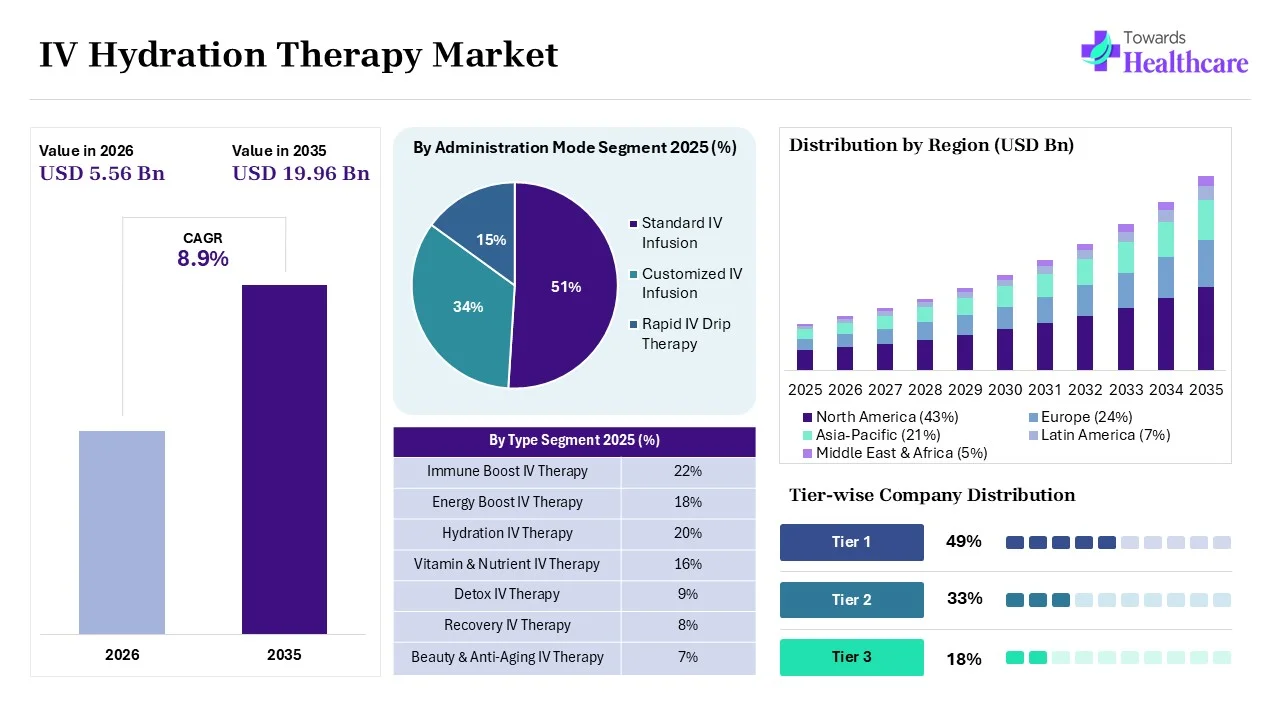
The IV hydration therapy is a treatment that delivers fluids, electrolytes, vitamins, and other nutrients directly into the bloodstream through an intravenous line to support rapid hydration, recovery, and overall wellness. The IV hydration therapy market is growing due to increasing demand for rapid hydration, energy restoration, immunity support, and recovery-focused treatment. Consumers are increasingly seeking convenient wellness solutions that offer quick results. The expansion of mobile IV services, rising preventive healthcare awareness, and growing adoption among fitness enthusiasts and busy professionals are further accelerating market growth.
The future of the IV hydration therapy market is expected to be driven by rising demand for personalized wellness treatment s expanding mobile IV therapy services. Growing consumer interest in immunity support, recovery, and energy enhancements is likely to strengthen market demand. In addition, innovation in nutrient formulations and the expansion of home-based hydration services are expected to create new growth opportunities.
| Indicator | Value |
| U.S. hospital admission linked to dehydration | 1-3% of all hospital admissions |
| Dehydration prevalence among older adults in the U.S | 17-28% |
| Older adults higher risk of dehydration | 20-30% more prone |
| Mortality rate in hospitalized dehydration patients | 15% |
| Pediatric IV rehydration use in hospital Studies | 4.5-100% |
| Adult IV rehydration use in hospital studies | 1.5-100% |
The table highlights the clinical burden of dehydration and the patient groups more likely to require IV hydration therapy. High dehydration prevalence among older adults, notable hospital admission rates, and the risk of serious outcomes in hospitalized patients collectively support the continued demand for IV fluid administration across acute, inpatient, and supportive care settings.
The immune boost IV therapy segment held a dominant share of 22% in 2025 due to strong consumer interest in preventive healthcare, immunity enhancements, and overall wellness. Antioxidants and minerals gained popularity for addressing fatigue, supporting immune health, and promoting faster recovery. Growing awareness of wellness-focused treatments, increasing adoption of personalized IV infusion, and higher demand for proactive health management contributed to the segment’s leading market position.
The vitamins segment dominated the IV hydration therapy market with a share of 38% in 2025 due to the widespread use of vitamin-based IV formulations for hydration, immunity support, energy enhancements, and recovery. Vitamins such as Vitamin C, B-Complex, and B12 are commonly included in IV therapies to address nutrient deficiencies and support overall wellness. Rising consumer awareness of preventive healthcare, increasing demand for customized infusion, and the growing popularity of wellness-focused treatments strengthened the segment’s market leadership.
The IV clinics segment led the IV hydration therapy market with a share of 34% in 2025 due to the growing availability of socialized hydration and wellness services in dedicated outpatient settings. These clinics offer convenient access to customized IV infusion, professional supervision, and a wide range of treatments for hydration, immunotherapy, recovery, and energy support. Rising consumer preference for fast, wellness-focused therapies and the expansion of private IV services networks further reinforced the segment’s dominant market position.
The adults segment held a dominant share of 42% in 2025 due to high demand for IV hydration therapy to manage fatigue, dehydration, nutrient deficiencies, and recovery needs associated with busy lifestyles. Adults are the primary users of wellness -focused IV treatments for immunity support, energy, increasing disposable incomes, and growing adoption of personalized wellness solutions further strengthened the segment’s leading market position.
The wellness and preventive care segment dominated the IV hydration therapy market with a share of 31% in 2025 due to growing consumer focus on maintaining health, boosting immunity, and preventing fatigue and nutrient deficiencies before increasingly being used as part of proactive wellness routines for energy support, recovery, and overall well-being. Rising health awareness demand for preventive personalized treatments and expansion of wellness-focused IV services strengthened the segment market leadership.
North America dominated the IV hydration therapy market with a share of 43% in 2025 due to its advanced healthcare infrastructure, high consumer awareness of wellness and preventive treatments, and widespread availability of specialized IV therapy clinics. Strong demand for hydration, immunity, recovery, and energy-focused infusion, along with the rapid expansion of mobile IV services, supported market growth. Higher healthcare spending and early adoption of personalized wellness solutions further strengthened the region’s leading position.
Asia Pacific held 21% share of the IV hydration therapy market in 2025 and is expected to grow at the fastest CAGR of 11.3% in the market during the forecast period due to rising health and wellness awareness, growing disposable income, and expanding access to private healthcare and wellness services. Increasing urbanization, higher demand for preventive and recovery-focused therapies, and the rapid growth of fitness and beauty-conscious groups are further accelerating the adoption of IV hydration treatments across the region.
Leading companies in the global IV hydration therapy market include Baxter International Inc., B. Braun SE, Otsuka Pharmaceutical Co., Ltd., Fresenius Kabi, ICU Medical, JW Life Science, REVIV Global, and Drip Hydration. These companies are driving market growth through continuous innovation in IV fluids, electrolyte formulations, vitamin-based infusions, smart infusion systems, and personalized hydration solutions. Ongoing investments in product development, clinical-grade wellness therapies, mobile IV services, and expansion of infusion care capabilities are further strengthening their presence across hospitals, outpatient clinics, and wellness-focused care settings.
By Type
By Ingredient
By Service Location
By End User
By Application
By Administration Mode
By Provider Type
By Region


