The global smart drug delivery systems market size accounted at USD 78.6 billion in 2025 and is predicted to increase from USD 88.66 billion in 2026 to approximately USD 262.13 billion by 2035, expanding at a CAGR of 12.8% from 2026 to 2035. Growing chronic disease burden, rapid advancements in digital health technologies, increasing healthcare investments, and a shift towards home healthcare are promoting the market growth.
Next-Gen Therapeutics: Exploring Smart Drug Delivery Systems
The smart drug delivery systems refer to the advanced medical technologies that offer precise, controlled, or automated drug delivery with enhanced safety and efficiency. This increases their use in the management or treatment of various diseases like diabetes, respiratory disease, cardiovascular diseases, neurological disorders, and cancer. The smart injectors, inhalers, and patches are also being used across home healthcare and vaccination programs.
Forecasting Innovation: The Market Growth Trends
- The growth in chronic disease burden is driving the adoption of smart drug delivery systems for their effective management and treatment.
- Increasing demand for personalized medicine is driving the use of smart drug delivery systems, where it offers patient-specific data.
- Expanding home healthcare is increasing the use of smart drug delivery systems for self-administration and remote care.
- The growing adoption of biologic and specialty drugs is also increasing the adoption of smart injectables.
- Expanding healthcare digitalization is increasing its integration with telehealth and cloud-based platforms.
- Growing technological advancements are driving the development of smart patches, implantables, etc., along with the integration of IoT and AI technologies.
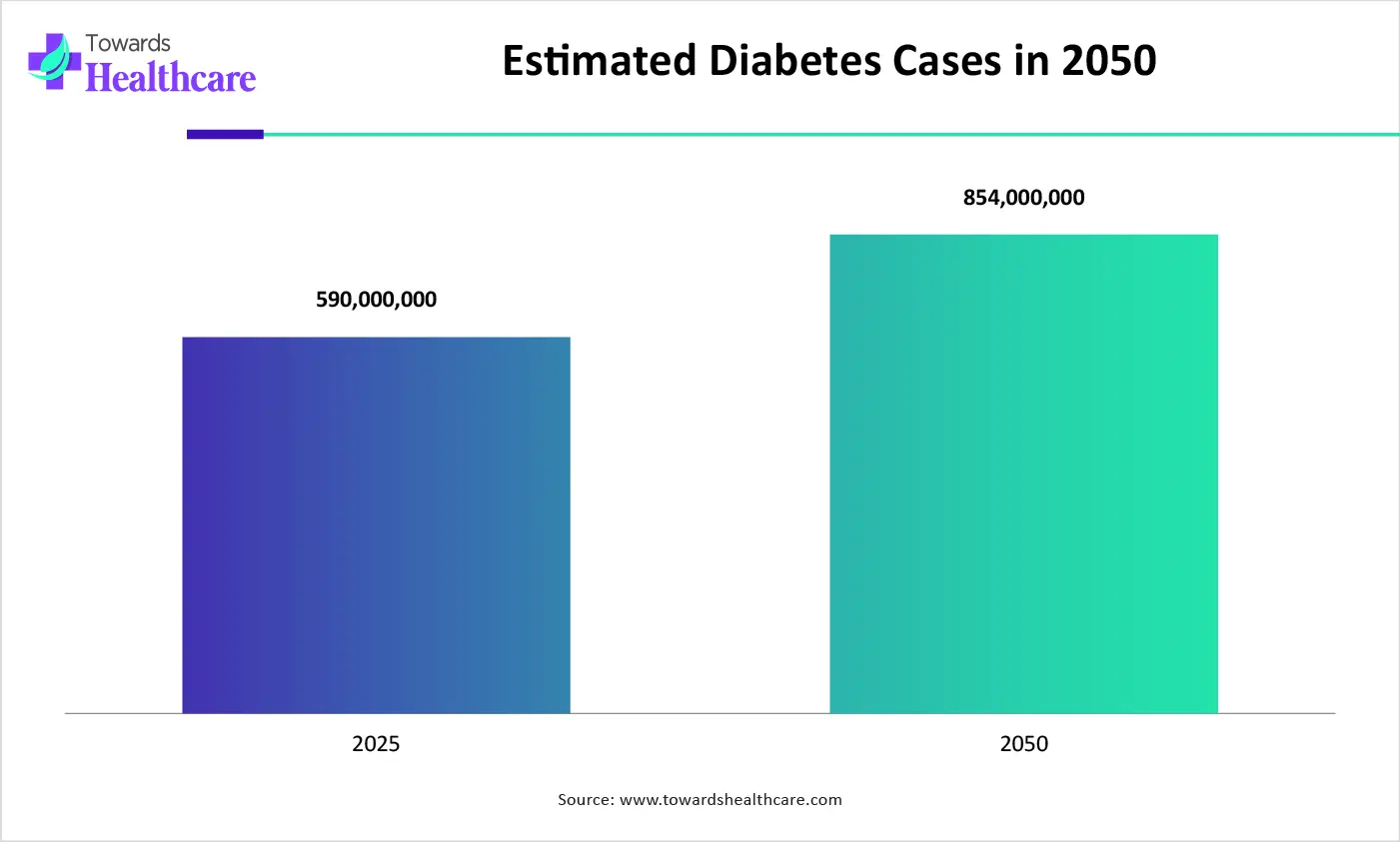
The graph represents a comparison between the diabetes cases globally for the years 2025 and 2050. It indicates that there will be a rise in diabetes cases, which will drive the demand for smart glucose monitoring and diabetes treatment devices. This, in turn, will increase the adoption of smart drug delivery systems for the effective management and treatment of diabetes, which will ultimately promote the market growth.
Market Segmentation Overview
- By product type, the inhalers segment contributed the biggest revenue share of 24% of the smart drug delivery systems market in 2025, due to growth in respiratory diseases. The target-specific action also increased their adoption rates. Their smart monitoring and integration also increased their use, where their portability also promoted patient convenience.
- By technology type, the IoT-based systems segment held a major revenue share of 30% of the smart drug delivery systems market in 2025, due to their real-time monitoring feature. Their regular reminders and alerts also increased their adoption rates. Integration with mobile apps also contributed to their increased use.
- By route of administration type, the injectable segment accounted for the highest revenue share of 35% of the smart drug delivery systems market in 2025, due to its high bioavailability and precise dosing. The growth in the use of biologics has also increased their demand. Their rapid onset of action, presence of auto-injectors, and sensors also increased their adoption rates.
- By application type, the diabetes segment led the smart drug delivery systems market with 28% in 2025, due to the growth in the number of diabetic cases. This increased the demand for smart delivery devices for personalized insulin delivery. The growth in health awareness also increased the use of other smart devices like insulin pumps, pens, and glucose monitors.
Regional Analysis
North America registered its dominance over the global smart drug delivery systems market with 34% in 2025, due to the presence of robust healthcare infrastructures and industries. This increased the early adoption of various smart drug delivery systems, where the high healthcare spending also increased their innovations. The growth in chronic diseases and patient awareness has also increased their use, which has contributed to the market growth.
Asia Pacific held 26% of the smart drug delivery systems market share in 2025 and is expected to grow at the fastest CAGR during the forecast period, due to the rapid expansion of the healthcare infrastructure, growth in chronic disease burden, and rising health awareness. The growth in patient population and technological advancements is also increasing smart drug delivery system innovations and adoptions, enhancing the market growth.
The Market Power Players: The Leaders in Smart Drug Delivery Systems
Becton, Dickinson and Company (BD) held the dominant position in the market with its pre-fillable drug delivery systems and connected auto injectors, where Medtronic plc contributed as its closest contender with the launch of its MiniMed 78G and InPen. Pfizer Inc. also held its position with large-scale manufacturing of next-generation delivery systems, where Merck & Co., Inc. also contributed to the market growth by developing cutting-edge drug delivery systems.
Segments Covered in the Report
By Product Type
- Inhalers
- Metered Dose Inhalers (MDIs)
- Dry Powder Inhalers (DPIs)
- Soft Mist Inhalers
- Smart Injectable Devices
- Smart Syringes
- Auto-injectors
- Wearable Injectors
- Smart Infusion Pumps
- Ambulatory Infusion Pumps
- Insulin Pumps
- Volumetric Infusion Pumps
- Connected Drug Delivery Devices
- Bluetooth-enabled Devices
- IoT-enabled Devices
- Implantable Drug Delivery Systems
- Drug-eluting Stents
- Implantable Pumps
- Transdermal Drug Delivery Systems
- Smart Patches
- Microneedle Patches
By Technology
- IoT-based Systems
- Bluetooth Connectivity
- AI-enabled Systems
- MEMS (Microelectromechanical Systems)
- Nanotechnology-based Systems
By Route of Administration
- Injectable
- Intravenous
- Subcutaneous
- Intramuscular
- Inhalation
- Transdermal
- Oral Smart Delivery
- Implantable
By Application
- Diabetes
- Respiratory Diseases
- Cardiovascular Diseases
- Oncology
- Neurological Disorders
- Infectious Diseases
- Others
By End User
- Hospitals
- Home Care Settings
- Ambulatory Surgical Centers
- Specialty Clinics
By Distribution Channel
- Hospital Pharmacies
- Retail Pharmacies
- Online Pharmacies
By Region
- North America
- U.S.
- Canada
- Mexico
- Rest of North America
- Latin America
- Brazil
- Argentina
- Rest of Latin America
- Europe
- Western Europe
- Germany
- Italy
- France
- Netherlands
- Spain
- Portugal
- Belgium
- Ireland
- UK
- Iceland
- Switzerland
- Poland
- Rest of Western Europe
- Eastern Europe
- Austria
- Russia & Belarus
- Türkiye
- Albania
- Rest of Eastern Europe
- Asia Pacific
- China
- Taiwan
- India
- Japan
- Australia and New Zealand
- ASEAN Countries (Singapore, Malaysia)
- South Korea
- Rest of APAC
- MEA
- GCC Countries
- Saudi Arabia
- United Arab Emirates (UAE)
- Qatar
- Kuwait
- Oman
- Bahrain
- South Africa
- Egypt
- Rest of MEA




