
Pipeline Programs

CGT Companies Tracked

Manufacturing Facilities


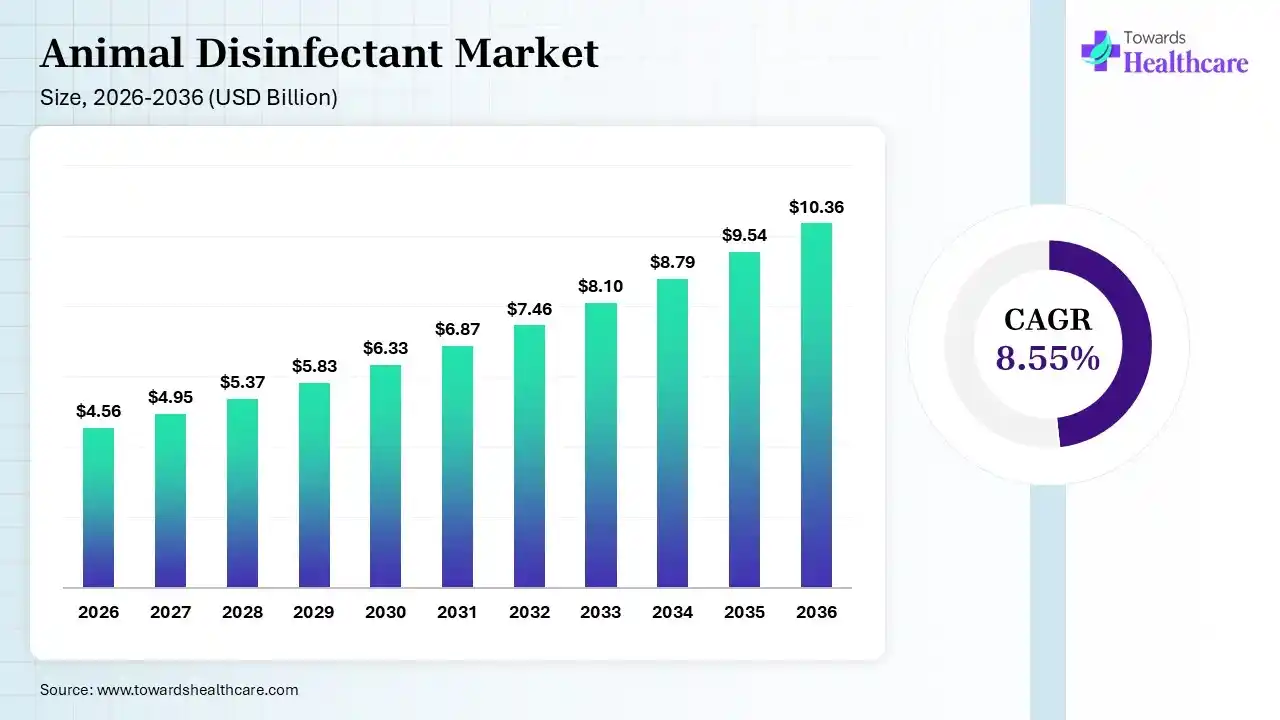
The animal disinfectant market captures USD 4.56 billion in 2026 and is likely to grow at USD 10.36 billion by 2036, with a CAGR of 8.55% from 2027-2036. Increasing biosecurity awareness and zoonotic disease concerns are key factors driving the market growth. The animal disinfectants market includes products used to kill or reduce harmful microorganisms in farms, poultry houses, hatcheries, veterinary clinics, and animal-care facilities. These products help maintain hygiene, prevent disease transmission, protect animal health, and support biosecurity across poultry, dairy, livestock, aquaculture, and companion-animal care operations.
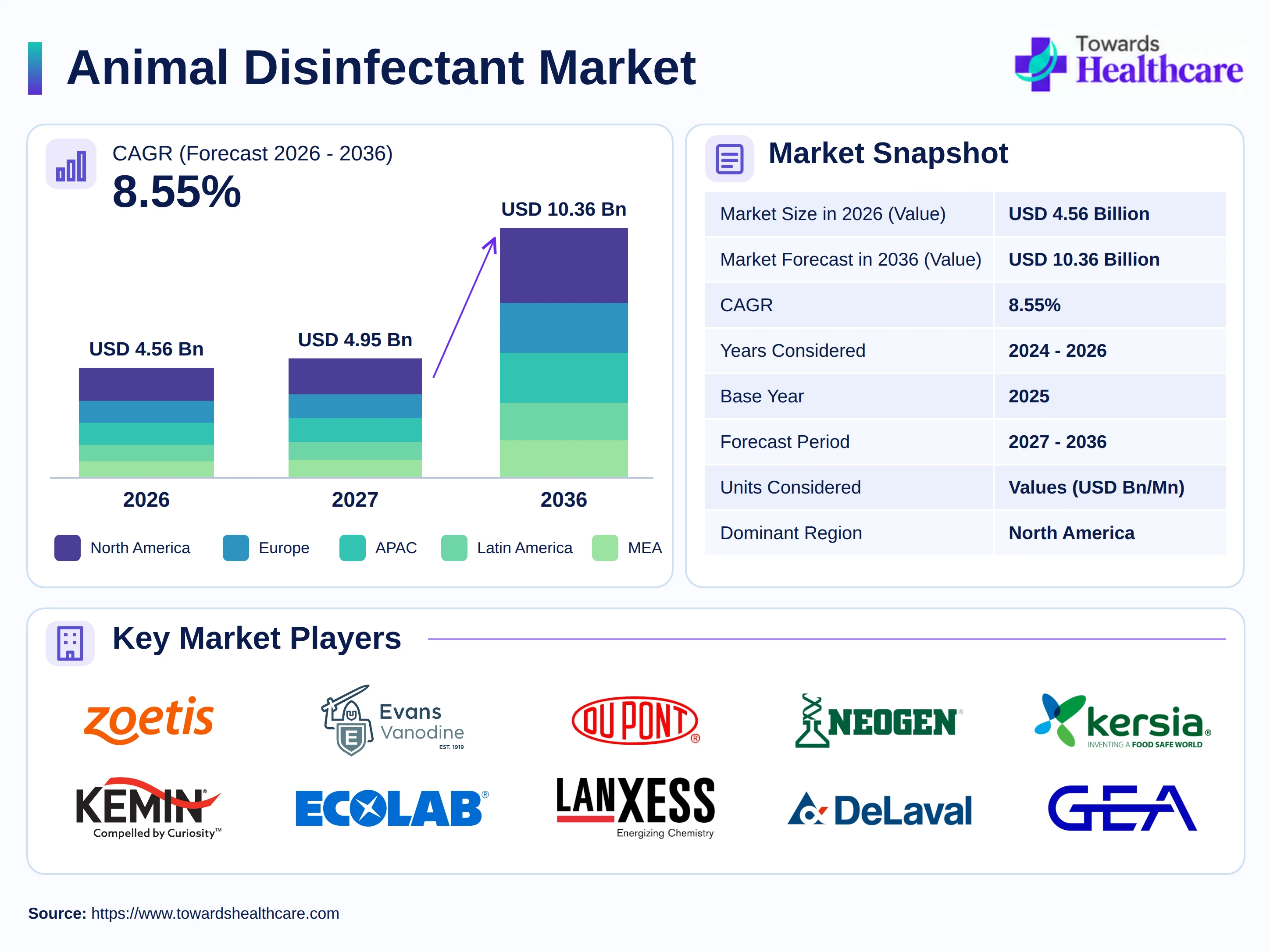
Animal disinfectants play an important role in maintaining cleanliness and preventing the spread of germs in livestock farms and animal-care facilities. They are commonly used to clean animal housing, production areas, and equipment. Product requirements vary by animal type, surface, application, and delivery method. The market serves both commercial animal production and veterinary care, with demand distributed across multiple hygiene applications.
Analyst View: Animal disinfectants remain essential to routine hygiene across farms and animal-care facilities. Demand varies based on the type of animal, cleaning needs, and operating environment.
Market Size & Growth Outlook
Regional Market Spotlight
Segmental Spotlight
| Segment | Share 2026 | Market Value 2026 |
| Iodine-based disinfectants | 21.50% | USD 980.40 million |
| Hydrogen peroxide and peroxygen compounds | 17.50% | USD 798.00 million |
| Quaternary ammonium compounds | 15.00% | USD 684.00 million |
| Lactic acid and organic acids | 11.50% | USD 524.40 million |
| Chlorine and chlorine dioxide | 10.00% | USD 456.00 million |
| Phenolic compounds | 7.00% | USD 319.20 million |
| Aldehyde-based disinfectants | 6.00% | USD 273.60 million |
| Chlorhexidine-based disinfectants | 4.00% | USD 182.40 million |
| Alcohol-based disinfectants | 3.50% | USD 159.60 million |
| Other disinfectants | 4.00% | USD 182.40 million |
Iodine-Based Disinfectants Account for 21.5% of the Market in 2026
The iodine-based disinfectants segment holds a 21.50% market share with a valuation of USD 980.40 million in 2026, driven by demand for dairy hygiene, teat sanitation and broad-spectrum pathogen control. Hydrogen peroxide and peroxygen compounds account for 17.50% of the market, valued at USD 798.00 million in 2026, supported by farm biosecurity practices and demand for disinfectants with lower concerns about persistent chemical residues.
Analyst View: The three largest categories account for more than half of reported product-type revenue.
| Segment | Share 2026 | Market Value 2026 |
| Liquid concentrates and ready-to-use liquids | 52.00% | USD 2.3712 billion |
| Powders and soluble granules | 22.00% | USD 1.0032 billion |
| Foams and gel formulations | 12.00% | USD 547.20 million |
| Tablets and water-soluble formats | 7.00% | USD 319.20 million |
| Wipes, aerosols, and other formats | 7.00% | USD 319.20 million |
Liquid Concentrates and Ready-to-Use Liquids Lead with a 52.0% Share in 2026
The liquid segment dominates the animal disinfectants market by form due to its ease of application and suitability for spraying and surface sanitation across livestock facilities. For instance, Neogen Farm Fluid MAX is a liquid disinfectant used for animal housing and boot and wheel dips, supporting routine farm hygiene. Powder and other solid formulations also serve specific animal health applications.
Analyst View: Liquid disinfectants dominate due to easy application and versatile sanitation uses, while powders and solids address specialized animal hygiene needs.
| Segment | Share 2026 | Market Value 2026 |
| Poultry farms and hatcheries | 24.00% | USD 1.0944 billion |
| Dairy farming and milking systems | 22.00% | USD 1.0032 billion |
| Swine farms | 15.00% | USD 684.00 million |
| Cattle and other ruminant facilities | 12.00% | USD 547.20 million |
| Veterinary clinics and animal hospitals | 8.00% | USD 364.80 million |
| Aquaculture facilities | 7.00% | USD 319.20 million |
| Equine facilities | 4.00% | USD 182.40 million |
| Companion-animal facilities and shelters | 4.00% | USD 182.40 million |
| Feed mills, transport vehicles, and other applications | 4.00% | USD 182.40 million |
Poultry Farms and Hatcheries Hold the Largest Market Share at 24.0% Share in 2026
The poultry farms and hatcheries segment is expected to dominate the animal disinfectants market by application, driven by the growing need for stringent biosecurity measures and disease prevention in poultry production. Regular disinfection of poultry houses, hatchery equipment, egg-handling areas, and transportation vehicles is essential to minimize the spread of infectious pathogens and protect flock health.
Analyst View: The poultry farms and hatcheries dominate the animal disinfectants market in 2026, driven by stringent biosecurity, disease prevention, and sanitation requirements.
| Segment | Share 2026 | Market Value 2026 |
| Poultry | 25.00% | USD 1.1400 billion |
| Dairy cattle | 21.00% | USD 957.60 million |
| Swine | 15.00% | USD 684.00 million |
| Beef cattle and other ruminants | 12.00% | USD 547.20 million |
| Companion animals | 8.00% | USD 364.80 million |
| Aquatic animals | 7.00% | USD 319.20 million |
| Equine animals | 4.00% | USD 182.40 million |
| Sheep and goats | 4.00% | USD 182.40 million |
| Other livestock and farmed animals | 4.00% | USD 182.40 million |
Poultry Capture a 25.0% Share in 2026
The poultry and dairy cattle segment is anticipated to boost the market size by animal type, driven by the growing emphasis on disease prevention, farm hygiene, and biosecurity. Poultry farms require regular disinfection of housing, equipment, and surrounding facilities to minimize pathogen transmission, while dairy cattle operations rely on disinfection of milking equipment, animal housing, and farm surfaces to protect herd health and milk quality.
From an analyst perspective, poultry and dairy cattle dominate the animal disinfectants market in 2026, driven by intensive production, and disease prevention needs.
| Segment | Share 2026 | Market Value 2026 |
| Commercial livestock and poultry farms | 42.00% | USD 1.9152 billion |
| Dairy farms and milk-production facilities | 20.00% | USD 912.00 million |
| Veterinary hospitals and clinics | 10.00% | USD 456.00 million |
| Integrated meat and animal-protein producers | 9.00% | USD 410.40 million |
| Aquaculture operators | 6.00% | USD 273.60 million |
| Animal shelters, kennels, and boarding facilities | 4.00% | USD 182.40 million |
| Feed mills, hatcheries, and breeding facilities | 5.00% | USD 228.00 million |
| Distributors serving small farms and other users | 4.00% | USD 182.40 million |
Commercial Livestock and Poultry Farms Lead with a 42.0% Share in 2026
The commercial livestock and poultry farms segment is anticipated to account for 42% share of the animal disinfectants market by end user, supported by the need for routine sanitation, disease control, and stringent biosecurity across large-scale animal production facilities. High animal densities and frequent movement of workers, equipment, and vehicles increase the importance of regular disinfection to limit pathogen transmission and maintain productivity. The U.S. Department of Agriculture’s Animal and Plant Health Inspection Service (USDA-APHIS) emphasizes thorough cleaning and disinfection of poultry houses to reduce the spread of harmful germs, while its livestock biosecurity guidance highlights the role of disinfecting animal housing, vehicles, and equipment in minimizing disease transmission across commercial farming operations.
Analyst View: The commercial livestock and poultry farms segment leads the animal disinfectants market, reflecting the growing importance of farm-level hygiene and disease prevention.
| Segment | Share 2026 | Market Value 2026 |
| Direct sales and key-account contracts | 38.00% | USD 1.7328 billion |
| Veterinary and agricultural distributors | 32.00% | USD 1.4592 billion |
| Specialty animal-health retailers | 13.00% | USD 592.80 million |
| Agricultural cooperatives and buying groups | 10.00% | USD 456.00 million |
| E-commerce and online B2B platforms | 7.00% | USD 319.20 million |
Direct Sales and Key-Account Contracts Capture a 38.0% Share in 2026
The direct sales and key-account contracts segment accounts for 38.00% of the animal disinfectants market, supported by the preference of large-scale livestock and poultry producers for reliable product supplies, bulk purchasing, technical guidance, and long-term supplier relationships. Direct engagement with manufacturers and distributors helps commercial farms maintain consistent disinfection schedules and meet biosecurity requirements.
From an analyst perspective, direct sales and key-account contracts lead the distribution landscape with a 38.00% market share in 2026, supported by bulk procurement and long-term supply agreements with large livestock producers.
| Segment | Share 2026 | Market Value 2026 |
| North America | 31.00% | USD 1.4136 billion |
| Europe | 27.00% | USD 1.2312 billion |
| Asia Pacific | 28.00% | USD 1.2768 billion |
| Latin America | 8.00% | USD 364.80 million |
| Middle East & Africa | 6.00% | USD 273.60 million |
North America dominates the animal disinfectants market by region, accounting for 31.00% of the market, driven by established livestock and poultry industries, stringent biosecurity practices, and increasing emphasis on preventing animal disease outbreaks. The region’s focus on farm hygiene and disease control supports demand for disinfectants across commercial animal production facilities. This emphasis is reflected in the U.S. Department of Agriculture’s Animal and Plant Health Inspection Service (USDA-APHIS) ,which provides guidance on selecting effective disinfectants to control animal disease-causing microorganisms, highlighting the importance of disinfection in protecting animal health across North American farming operations.
Europe accounts for 27.00% of the animal disinfectants market, valued at USD 1.2312 billion in 2026, supported by stringent farm hygiene standards, antimicrobial stewardship initiatives, and well-established dairy and poultry industries. The region’s emphasis on disease prevention and livestock welfare encourages the adoption of effective cleaning and disinfection practices across animal production facilities. The European Commission’s animal health policy highlights disease prevention and biosecurity as essential components of protecting animal health, reinforcing the importance of hygiene management and disinfection across Europe’s livestock sector.
Analyst View: North America leads the animal disinfectants market with a 31.00% share in 2026, followed by Asia Pacific at 28.00% and Europe at 27.00%, reflecting strong livestock production and established biosecurity practices.
Growing attention to animal health and farm hygiene supports demand for animal disinfectants. Poultry farms, dairy facilities, and livestock operations use disinfectants to maintain clean housing and reduce the spread of infectious diseases. Routine sanitation across animal production facilities also supports demand for products that meet farm biosecurity requirements.
Chemical safety concerns affect the selection and use of animal disinfectants across livestock facilities and veterinary settings. Producers must follow applicable product regulations and safe handling procedures to protect animals, workers, and surrounding environments. Compliance requirements and the cost of approved formulations create challenges for manufacturers and end users.
The expansion of commercial poultry farming and dairy production creates opportunities for animal disinfectant manufacturers. Farms require reliable sanitation products to support routine cleaning and disease prevention across production facilities. Manufacturers that develop effective formulations for different animal environments gain opportunities to serve growing demand for farm hygiene and biosecurity solutions.
The key players of the market include:
The top five companies account for a combined 58.10% share, valued at USD 2.64936 billion. Ecolab Inc. leads the group with an estimated 18.40% share, followed by Kersia Group at 12.10%.” give me heading for this
A 2025 review published in Frontiers in Veterinary Science examined methods for assessing cleaning and disinfection on livestock farms. It highlighted AI-based image analysis for identifying hygiene deficiencies and sensor-based monitoring for evaluating sanitation. The study emphasized that AI improves hygiene assessment, while effective disinfection still depends on proper cleaning procedures and verification of results.
By Product Type
By Form
By Application
By Animal Type
By End User
By Distribution Channel
By Region



Principal Consultant
Payal Rabde is a Healthcare Market Research Analyst at Towards Healthcare Research & Consulting with 4+ years of experience in pharmaceuticals, biotechnology, medical devices, and life sciences.
Learn more about Payal Rabde

Reviewed By
Aditi Shivarkar is a seasoned professional with over 14 years of experience in healthcare market research. As a content reviewer, Aditi ensures the quality and accuracy of all market insights and data presented by the research team.
Learn more about Aditi Shivarkar