The antimicrobial hospital textiles market is projected to grow from USD 12.40 billion in 2025 to USD 27.02 billion by 2035 because healthcare-associated infections affect many patients, and hospitals use antimicrobial textiles as part of infection control. Infection control, hospital expansion, staff safety and long-term care growth support solid growth, lifting the market to USD 18.30 billion by 2030 and sustaining a CAGR of 8.10% from 2026 to 2035. Antimicrobial textiles are part of infection control with IV bags, biological safety cabinet use and medical packaging hygiene.
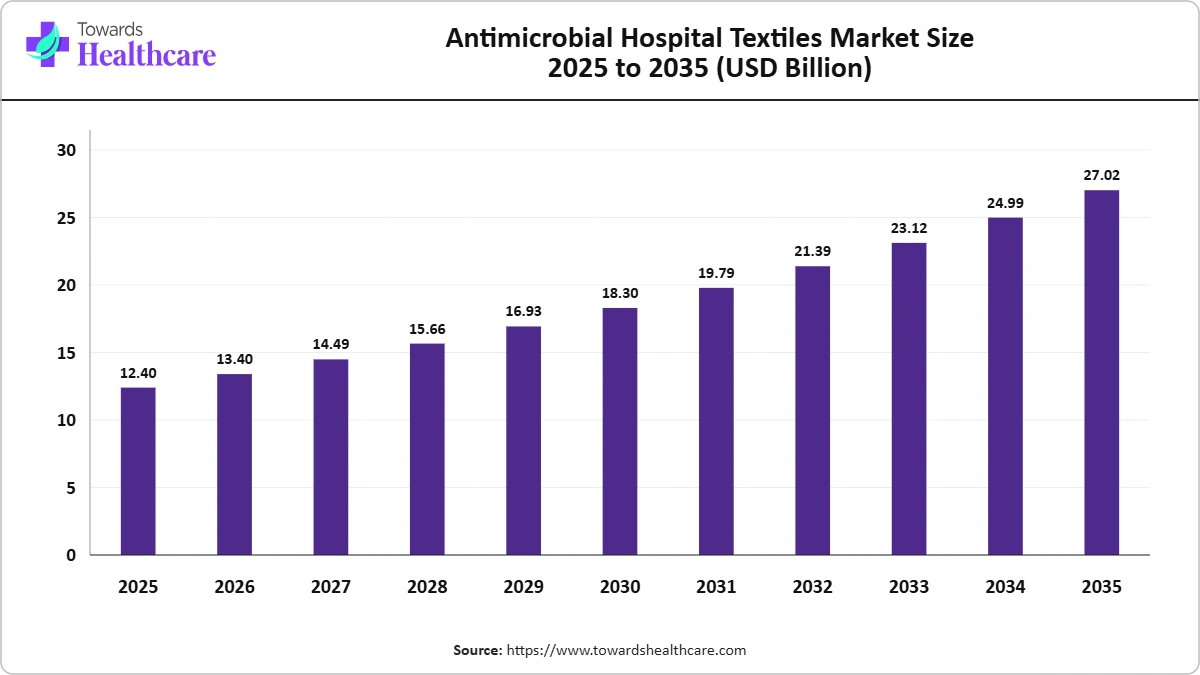
Analyst View: We derived the market estimate using hospital textile volumes, antimicrobial penetration rates and regional product pricing, with supplier revenues serving as a cross-validation benchmark. The lower valuation compared with some published estimates reflects our exclusive focus on antimicrobial-treated products.
| Driver | Impact | ≈ CAGR Contribution | Time Horizon | Key Regions |
| Healthcare-associated infections | High | +3.16 pp | Short to long term | Global, strongest in North America |
| Hospital expansion | Medium | +2.67 pp | Medium to long term | Global, fastest uptake in Asia Pacific |
| Staff safety concerns | Medium | +2.27 pp | Short to medium term | Global |
| Infection control rules | Low | +1.78 pp | Long term | Developed and emerging markets |
Note: Contributions are indicative estimates of each factor's effect on annual growth.
Sources: Expert interviews, secondary sources, Towards Healthcare database and Towards Healthcare analysts.
Taken together, these drivers add about 9.88 percentage points to the annual growth of the antimicrobial hospital textiles market, with healthcare-associated infections having the largest effect. Their influence is strongest in North America, while uptake grows fastest in Asia Pacific.
| Restraint | Impact | ≈ Negative CAGR Contribution | Time Horizon | Key Regions |
| Limited clinical evidence | High | -0.80 pp | Short to medium term | Global |
| Regulatory limits on claims | High | -0.59 pp | Medium term | Price-sensitive and emerging markets |
| Antimicrobial resistance and environmental concerns | Medium | -0.39 pp | Short term | North America and other mature markets |
Note: Contributions are indicative estimates of each factor's effect on annual growth.
Sources: Expert interviews, secondary sources, Towards Healthcare database and Towards Healthcare analysts.
These restraints are expected to reduce annual growth of the antimicrobial hospital textiles market by about 1.78 percentage points, led by limited clinical evidence. Their effect eases over the forecast period as suppliers, buyers and regulators adapt, leaving a net CAGR of 8.10% from 2026 to 2035.
Expansion of long-term care facilities, growing adoption of reusable antimicrobial textiles and increasing hospital investments across Asia present significant growth opportunities. Advancements in copper-based technologies and rising demand for durable, clinically validated products are also creating opportunities for manufacturers to strengthen their presence through specification-led hospital tenders and institutional procurement programs.
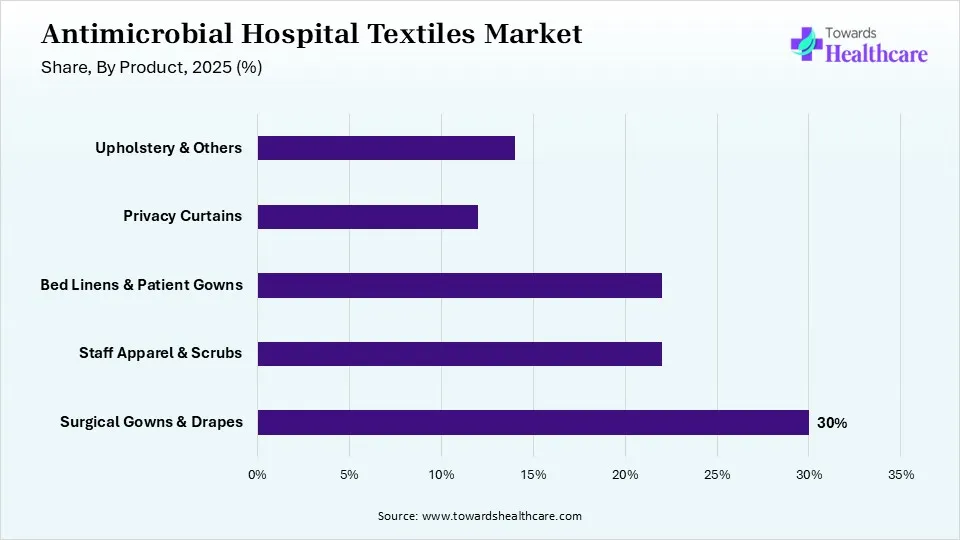
Note: 2025 is the base year; 2035 shares and CAGRs are forecasts.
Sources: Expert interviews, secondary sources, Towards Healthcare database and Towards Healthcare analysts.
Surgical Gowns & Drapes: This segment held the largest share of the antimicrobial hospital textiles market at 30.00% in 2025 and is projected to grow at a CAGR of 7.34% from 2026 to 2035. Its leading position reflects the need for barrier protection and antimicrobial performance in operating rooms. However, the segment is expected to grow slower than the overall market during the forecast period.
Staff Apparel & Scrubs: Increasing hospital adoption of antimicrobial-treated uniforms and growing emphasis on healthcare worker safety are driving demand. Consequently, the segment is expected to grow faster than the overall market.
Bed Linens & Patient Gowns: High-volume usage across hospitals, coupled with the need to maintain hygienic patient environments, supports demand for antimicrobial-treated bed linens and patient gowns. However, growth is expected to remain below the overall market rate.
Privacy Curtains: Frequent handling and exposure to microbial contamination make privacy curtains an important application for antimicrobial treatments. Nevertheless, the segment is expected to expand at a slower pace than the overall market.
Upholstery & Others: Demand stems from the use of antimicrobial-treated fabrics in hospital furniture, mattresses and other healthcare textile applications. The segment is expected to grow slower than the overall market over the forecast period.
Note: 2025 is the base year; 2035 shares and CAGRs are forecasts.
Sources: Expert interviews, secondary sources, Towards Healthcare database and Towards Healthcare analysts.
Silver-Based: Holding the largest share of the antimicrobial hospital textiles market at 34.00% in 2025, this segment is projected to grow at a CAGR of 7.53% from 2026 to 2035. Its leading position reflects the established antimicrobial effectiveness, durability and widespread application of silver-based agents in healthcare textiles. However, the segment is expected to grow slower than the overall market over the forecast period.
Quaternary Ammonium Compounds: The relatively low cost, established application methods and compatibility with various textile treatments support the adoption of quaternary ammonium compounds. The segment is expected to grow broadly in line with the overall market.
Copper-Based: Increasing interest in copper's antimicrobial properties and continuous antimicrobial activity is encouraging its adoption in hospital textiles. Consequently, the segment is expected to grow faster than the overall market over the forecast period.
Chitosan & Others: Growing interest in alternative antimicrobial agents, particularly bio-based solutions such as chitosan, is supporting demand. The segment is expected to grow broadly in line with the overall market over the forecast period.
Note: 2025 is the base year; 2035 shares and CAGRs are forecasts.
Sources: Expert interviews, secondary sources, Towards Healthcare database and Towards Healthcare analysts.
Disposable: Holding the dominant share of the antimicrobial hospital textiles market at 56.00% in 2025, this segment is projected to grow at a CAGR of 7.46% from 2026 to 2035. Its leading position reflects the widespread use of single-use gowns, drapes and other medical textiles to minimize cross-contamination risks and support infection control protocols. However, the segment is expected to grow slower than the overall market over the forecast period.
Reusable: Growing emphasis on healthcare sustainability, waste reduction and long-term cost efficiency is encouraging hospitals to adopt reusable antimicrobial textiles. Improvements in wash-durable antimicrobial finishes that retain performance through repeated laundering are further supporting adoption. Consequently, the segment is expected to grow faster than the overall market over the forecast period.
Note: 2025 is the base year; 2035 shares and CAGRs are forecasts.
Sources: Expert interviews, secondary sources, Towards Healthcare database and Towards Healthcare analysts.
Hospitals: Holding the dominant share of the antimicrobial hospital textiles market at 72.00% in 2025, this segment is projected to grow at a CAGR of 7.73% from 2026 to 2035. Its leading position reflects high patient volumes, increased infection exposure, and extensive consumption of surgical gowns, drapes, bed linens, and staff uniforms. However, the segment is expected to grow slower than the overall market over the forecast period.
Clinics: Although clinics generally require smaller volumes of healthcare textiles than hospitals, growing awareness of infection prevention and increasing adoption of antimicrobial-treated patient gowns, linens and staff apparel are supporting demand. The segment is expected to grow broadly in line with the overall market over the forecast period.
Long-Term Care Facilities: An ageing population, rising demand for elderly care and the need to maintain hygienic environments for residents requiring extended medical assistance are driving the adoption of antimicrobial bed linens, patient gowns and reusable textiles. Consequently, the segment is expected to grow faster than the overall market over the forecast period.
Segment Outlook: Hospitals remain the largest end user segment through 2035, holding about 69.58% of the market in 2035, while Long-Term Care Facilities record the highest CAGR of 9.63% from 2026 to 2035. Clinics hold the smallest share today and serve more specialized needs within the antimicrobial hospital textiles market.
Analyst View: Segment shares were allocated from demand, product portfolios, and pricing in each category. Surgical Gowns & Drapes, Silver-Based, Disposable and Hospitals lead their categories because they meet the core needs of today's buyers. We expect Staff Apparel & Scrubs, Copper-Based, Reusable and Long-Term Care Facilities to gain share as newer technologies; users and applications grow faster.
Note: 2025 is the base year; 2035 shares and CAGRs are forecasts.
Sources: Expert interviews, secondary sources, Towards Healthcare database and Towards Healthcare analysts.
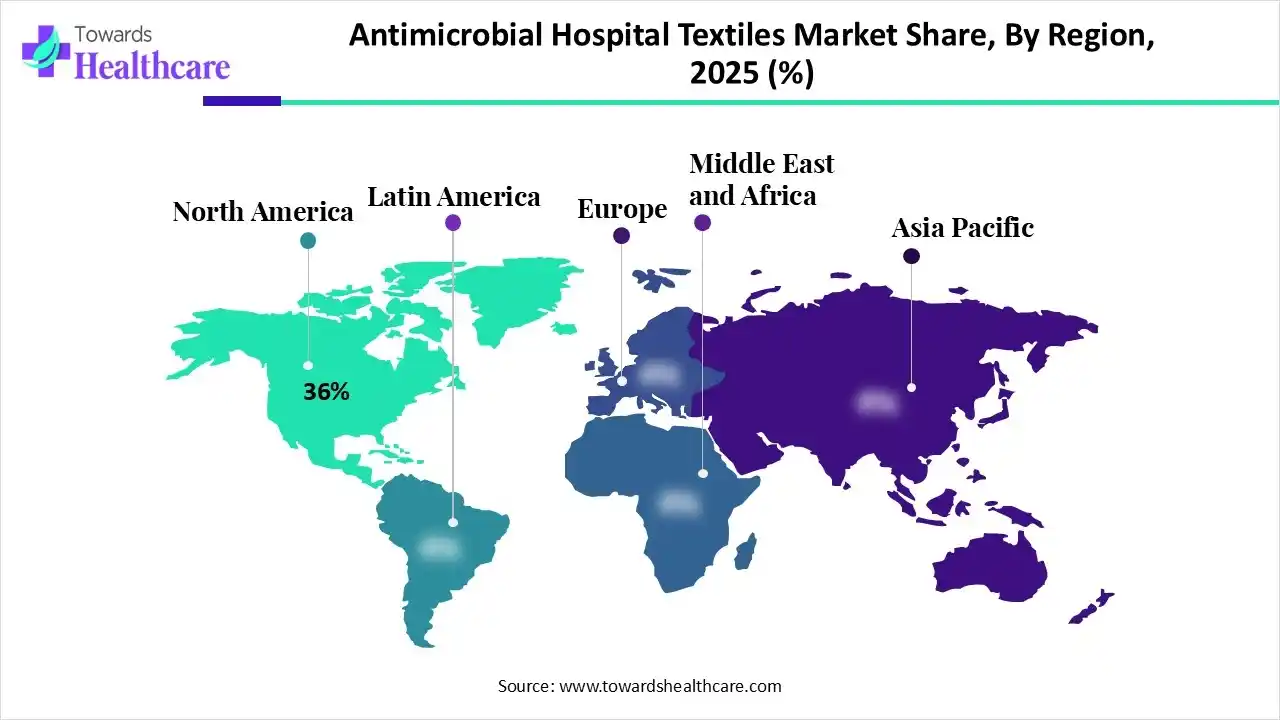
North America: Holding the largest share of the antimicrobial hospital textiles market at 36.00% in 2025, this region is projected to grow at a CAGR of 7.49% from 2026 to 2035. Its leading position reflects high awareness of healthcare-associated infections, substantial hospital expenditure and the presence of established antimicrobial apparel manufacturers. However, the region is expected to grow slower than the overall market between 2026 and 2035.
Europe: Strict infection prevention requirements, established healthcare infrastructure and stringent textile safety and performance standards are supporting regional demand for antimicrobial hospital textiles. The region is expected to grow broadly in line with the overall market over the forecast period.
Asia Pacific: Rapid hospital infrastructure expansion, rising healthcare expenditure and strong textile manufacturing capabilities in China and India are driving regional demand. Consequently, Asia Pacific is expected to grow faster than the overall market between 2026 and 2035.
Latin America: Growing healthcare investments, increasing hospital capacity and rising awareness of infection prevention are supporting the adoption of antimicrobial-treated gowns, linens and other medical textiles. The region is expected to grow broadly in line with the overall market over the forecast period.
Middle East & Africa: New hospital construction, healthcare infrastructure modernization and increasing investments in patient safety and infection control are creating demand for antimicrobial hospital textiles. The region is expected to grow broadly in line with the overall market over the forecast period.
Analyst View: Regional shares were built from demand, installed base, spending and supplier presence in each region. North America leads because of its mature demand base and strong suppliers. We assign Asia Pacific the highest growth premium because investment, adoption and capacity are expanding fastest there.
| Rank | Company Name | 2025 Share (%) | Key Products / Business | Headquarters |
| 1 | Cardinal Health | 9.00% | Surgical gowns and drapes | United States |
| 2 | Medline Industries | 9.00% | Gowns, linens and apparel | United States |
| 3 | Owens & Minor (Halyard) | 6.00% | Surgical gowns and drapes | United States |
| 4 | Mölnlycke Health Care | 5.00% | BARRIER surgical gowns and drapes | Sweden |
| 5 | Paul Hartmann | 4.00% | Surgical textiles | Germany |
| 6 | Standard Textile | 4.00% | Reusable healthcare textiles | United States |
| 7 | Microban International | 2.00% | Antimicrobial treatments | United States |
| 8 | Noble Biomaterials (Americhem) | 1.00% | X-STATIC silver antimicrobial fibres | United States |
| 9 | PurThread Technologies | 1.00% | Antimicrobial fabric for apparel | United States |
| 10 | Sanitized AG | 1.00% | Antimicrobial textile finishes | Switzerland |
Note: Company shares are 2025 estimates.
Sources: Company press releases, expert interviews, secondary sources, Towards Healthcare database and Towards Healthcare analysts.
Cardinal Health led the antimicrobial hospital textiles market with an estimated 9.00% share of 2025 revenue, followed by Medline Industries at 9.00% share and Owens & Minor (Halyard) at 6.00% share. Cardinal Health leads with surgical gowns and drapes, Medline Industries competes with gowns, linens and apparel, and Owens & Minor (Halyard) offers surgical gowns and drapes. Mölnlycke Health Care, Paul Hartmann, Standard Textile, Microban International, Noble Biomaterials (Americhem), PurThread Technologies and Sanitized AG compete through BARRIER surgical gowns and drapes, surgical textiles, reusable healthcare textiles, antimicrobial treatments, X-STATIC silver antimicrobial fibers, antimicrobial fabric for apparel and antimicrobial textile finishes.
The top 10 companies accounted for an estimated 42.00% of 2025 revenue, while the remaining 58.00% was shared among many textile mills, uniform brands, and laundries. The antimicrobial hospital textiles market is fragmented, and competition centers on proven efficacy after washing, regulatory claims, comfort and barrier performance, sustainability, hospital contracts, and price.
Cardinal Health: Headquartered in the United States, Cardinal Health captured an estimated 9.00% of the antimicrobial hospital textiles market in 2025. Its product portfolio includes surgical gowns and drapes, supporting its presence in the hospital textile sector. Towards Healthcare positions the company as a Leader in its Companies Quadrant.
Medline Industries: Based in the United States, Medline Industries held an estimated 9.00% market share in 2025. The company offers a broad range of healthcare textiles, including gowns, linens and staff apparel. Its established product portfolio and market presence place it in the Leader category of the Towards Healthcare Companies Quadrant.
Owens & Minor (Halyard): With its headquarters in the United States, Owens & Minor (Halyard) secured an estimated 6.00% share of the market in 2025. Its antimicrobial hospital textile offerings primarily focus on surgical gowns and drapes. Towards Healthcare classifies the company as a Leader in its Companies Quadrant.
Mölnlycke Health Care: The Sweden-based company accounted for an estimated 5.00% of the antimicrobial hospital textiles market in 2025. Its BARRIER product range, which includes surgical gowns and drapes, strengthens its position in the surgical textile segment. The company features as a Leader in the Towards Healthcare Companies Quadrant.
Paul Hartmann: Headquartered in Germany, Paul Hartmann represented an estimated 4.00% of the market in 2025. Its product portfolio includes surgical textiles designed for healthcare applications, supporting its participation in the antimicrobial hospital textiles market. Towards Healthcare places the company in the Leader category.
Standard Textile: The United States-based manufacturer held an estimated 4.00% market share in 2025, with a strong focus on reusable healthcare textiles. Its offerings address hospital requirements for durable textile solutions and support its presence in the reusable segment. The company is positioned as a Leader in the Towards Healthcare Companies Quadrant.
Microban International: Based in the United States, Microban International captured an estimated 2.00% share of the market in 2025. Unlike finished textile manufacturers, the company focuses on antimicrobial technologies and treatments that can be incorporated into textile products. Towards Healthcare categorizes Microban International as an Innovator.
Noble Biomaterials (Americhem): Headquartered in the United States, Noble Biomaterials held an estimated 1.00% share of the antimicrobial hospital textiles market in 2025. Its X-STATIC technology incorporates silver into textile fibres to deliver antimicrobial functionality. Following its acquisition by Americhem in October 2026, the company is positioned as an Innovator in the Towards Healthcare Companies Quadrant.
PurThread Technologies: The United States-based company accounted for an estimated 1.00% of the market in 2025. Its core offering includes antimicrobial fabrics designed for apparel applications, addressing demand for textile-based microbial protection. Towards Healthcare identifies PurThread Technologies as an Innovator in its Companies Quadrant.
Sanitized AG: Headquartered in Switzerland, Sanitized AG represented an estimated 1.00% market share in 2025. The company specializes in antimicrobial textile finishes that provide functional protection to treated fabrics across various applications. Its technology-focused market positioning places it in the Innovator category of the Towards Healthcare Companies Quadrant.
The antimicrobial hospital textiles ecosystem links antimicrobial agent suppliers, textile makers, product makers, users & laundries and regulators, with each stage adding value before products reach end users.
| Ecosystem Stage | Role in the Market | Key Companies |
| Antimicrobial Agent Suppliers | Supply silver, copper and finishes | Noble Biomaterials, Microban, Sanitized |
| Textile Makers | Make fabrics | Textile mills |
| Product Makers | Make gowns, scrubs and curtains | Cardinal Health, Medline, Mölnlycke, Standard Textile |
| Users & Laundries | Use and launder textiles | Hospitals, care homes, laundries |
| Regulators | Set claims rules | EPA, FDA, EU BPR |
Sources: Company press releases, expert interviews, secondary sources, Towards Healthcare database and Towards Healthcare analysts.
Antimicrobial Agent Suppliers: Supply silver, copper and finishes. Key participants include Noble Biomaterials, Microban, Sanitized.
Textile Makers: Make fabrics. Key participants include Textile mills.
Product Makers: Make gowns, scrubs and curtains. Key participants include Cardinal Health, Medline, Mölnlycke, Standard Textile.
Users & Laundries: Use and launder textiles. Key participants include Hospitals, care homes, laundries.
Regulators: Set claims rules. Key participants include EPA, FDA, EU BPR.
Value in the antimicrobial hospital textiles market flows from upstream material and technology suppliers to manufacturers and service providers, then through distribution partners to end users. Companies that integrate several stages or build long-term relationships with end users capture a larger share of this value.
The Towards Healthcare Companies Quadrant evaluates key participants in the antimicrobial hospital textiles market based on two key dimensions: market strength and innovation and growth strategy. Market strength considers revenue scale, market share and geographic presence, while innovation and growth strategy reflects product portfolio diversity, R&D investments and strategic partnerships. Company positioning reflects estimated 2025 market shares, alongside an evaluation of product innovation capabilities, portfolio breadth and collaborative initiatives.
Sources: Company press releases, expert interviews, secondary sources,Towards Healthcare database and Towards Healthcare analysts.
Leaders: Cardinal Health, Medline Industries, Owens & Minor (Halyard), Mölnlycke Health Care, Paul Hartmann and Standard Textile combine high market share with broad portfolios and strong innovation.
Innovators: Microban International, Noble Biomaterials (Americhem), PurThread Technologies and Sanitized bring newer technologies and specialised products.
By Product
By Agent
By Usability
By End User
By Region
The antimicrobial hospital textiles market was defined as textiles treated or made with antimicrobial agents for healthcare use, including surgical gowns and drapes, staff apparel and scrubs, bed linens and patient gowns, privacy curtains, upholstery and other textiles, using silver, copper, quaternary ammonium compounds, chitosan and other agents, in disposable and reusable formats, used by hospitals, clinics and long-term care facilities. The 2025 base year was built bottom-up from demand volumes and average prices by product, agent, usability, end user, and region, and checked top-down against the market-specific revenues of leading companies and published estimates.
Segment, regional, and company values were allocated from product, agent, usability, and end user and region demand. Key estimates were verified by cross-checking company disclosures, regulatory and industry data and published third-party estimates, and inputs that could not be reconciled were excluded. All segment, regional and company figures were reconciled to the same 2025 base year, and the 2026–2035 forecast, which applies a constant CAGR from the 2025 base, was recalculated and validated.
Analyst View: The antimicrobial hospital textiles market is poised for steady growth, supported by rising demand for infection prevention and improved healthcare hygiene. Our market estimate is based on underlying product demand, installed healthcare infrastructure and pricing trends, ensuring that the forecast reflects actual market adoption. Long-term care expansion and increasing use of reusable antimicrobial textiles present key growth opportunities, while limited clinical evidence and regulatory restrictions on antimicrobial claims remain major challenges.