The global diabetic retinopathy market size is calculated at USD 10.14 billion in 2025, grew to USD 10.79 billion in 2026, and is projected to reach around USD 10.79 billion by 2035. The market is expanding at a CAGR of 6.47% between 2026 and 2035.
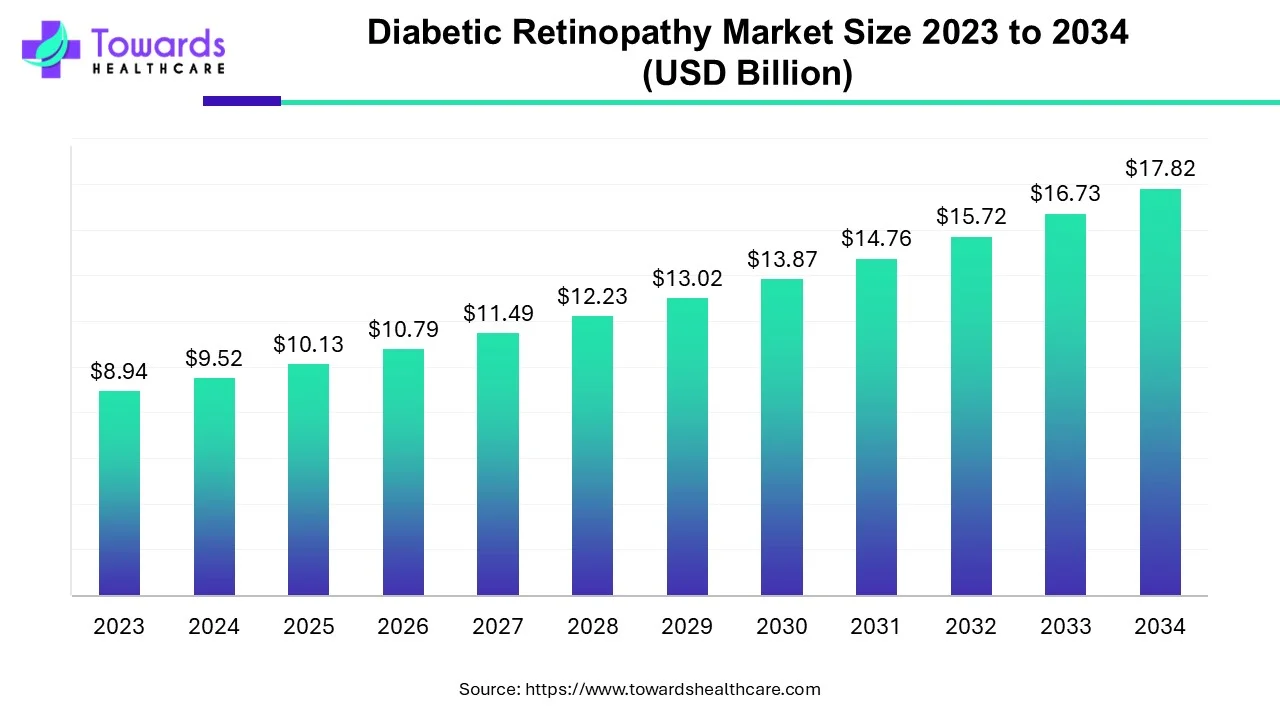
The increasing prevalence of diabetes and its complications, including blindness and an aging population, are expected to drive significant market growth.
Diabetic retinopathy is a diabetes-related complication where elevated blood sugar levels damage blood vessels in the retina and light-sensitive tissue present back of the eye. If it is not diagnosed and treated, it can lead to blindness and visual impairment. According to a report from the American Diabetes Association, people with diabetes have a high risk of experiencing eye issues associated with the condition, such as cataracts, diabetic retinopathy, macular edema, and glaucoma. The National Eye Institute (NEI) reports that 7.7 million people aged 40 and above currently have diabetic retinopathy, and this figure is expected to rise to around 11 million by 2030. The rising occurrence of diabetes and associated blindness, along with the aging demographic, is anticipated to propel market expansion. This expansion is additionally backed by increasing awareness of diabetes management and the launch of new products. Additionally, A report from the WHO states that diabetic retinopathy accounts for 4.8% of the 37 million blindness cases globally. Thus, the growing awareness and demand for treatment promote the diabetic retinopathy market.
AI and machine learning (ML) have the potential to enhance the market through tailored treatment. AI and machine learning (ML) are transforming the diabetic retinopathy industry by enabling earlier detection, diagnosis, and therapy. AI algorithms analyze retinal pictures fast and precisely, allowing for early detection of diabetic retinopathy, which reduces the risk of vision loss. ML models can predict illness development, allowing for more tailored treatment strategies. Automated screening techniques driven by AI make it simpler to screen huge populations, particularly in disadvantaged areas, while also optimizing treatment regimens to improve patient outcomes. Overall, artificial intelligence and machine learning increase diagnostic precision, treatment efficiency, and diabetic retinopathy management.
Driver
Increasing Prevalence of Diabetes
The worldwide incidence of diabetes is swiftly rising because of elements like insufficient physical activity, poor dietary choices, and an expanding obesity crisis. According to the latest IDF report, over 1 in 10 adults worldwide, approximately 10.5% of the population, are living with diabetes, totaling more than half a billion people. This number is expected to increase significantly, with projections estimating nearly 800 million people affected by diabetes by 2045. Diabetic retinopathy is a significant microvascular complication of diabetes, impacting 30% to 40% of individuals with diabetes. With the increase in diabetes rates, the occurrence of diabetic retinopathy is also on the rise. A recent meta-analysis estimates that approximately 103 million individuals worldwide are currently affected by diabetic retinopathy, with projections indicating this figure will reach 161 million by 2045. With the increasing global incidence of diabetes, a greater number of individuals are at risk for developing diabetic retinopathy. The growing number of patients is driving the need for efficient diagnostic tools and treatment alternatives for diabetic retinopathy.
Restraint
High-cost Expenditure
The increasing expenses for treating diabetic retinopathy contribute to overall healthcare spending, impacting individuals and healthcare providers such as government programs, private insurers, and employers. These substantial costs can burden healthcare budgets and obstruct financial resources for preventive strategies and early intervention initiatives. The cost of treating diabetic retinopathy, which includes regular eye exams, laser treatments, injections, and surgery, can create a significant financial strain on patients, especially those lacking sufficient insurance or financial support. Therefore, the high-cost expenditure will restrain the diabetic retinopathy market growth.
Opportunity
Raising Investment and Technological Advancement
The growing investments from leading market entities in advancing ophthalmic technologies create a favorable growth prospect for the diabetic retinopathy market. Improvements in diagnostic imaging and treatment strategies for diabetic retinopathy are improving early detection and management. The combination of AI, machine learning, and cloud-based technologies is enhancing the precision and effectiveness of these assessments. In February 2024, research released in JAMA Ophthalmology demonstrated that machine learning algorithms could forecast the advancement of diabetic retinopathy by examining ultra-widefield retinal images. The models precisely recognized every instance of mild non-proliferative diabetic retinopathy (NPDR) that progressed within a year, and 85% of moderate non-proliferative diabetic retinopathy cases, indicating considerable chances for market expansion.
| Key Elements | Scope |
| Market Size in 2026 | USD 10.79 Billion |
| Projected Market Size in 2035 | USD 18.97 Billion |
| CAGR (2026 - 2035) | 6.47% |
| Leading Region | North America |
| Key Applications | Disease screening, retinal imaging, AI-assisted diagnosis, anti-VEGF therapy, corticosteroid therapy, laser photocoagulation, vitrectomy |
| Primary End Users | Hospitals, ophthalmology clinics, retina specialists, ambulatory surgery centers, diagnostic imaging centers, diabetes care centers |
| Key Challenges | High treatment costs, limited screening access in developing regions, patient adherence to repeated injections, reimbursement variability |
| Market Segmentation | By Type, By Management, By Region |
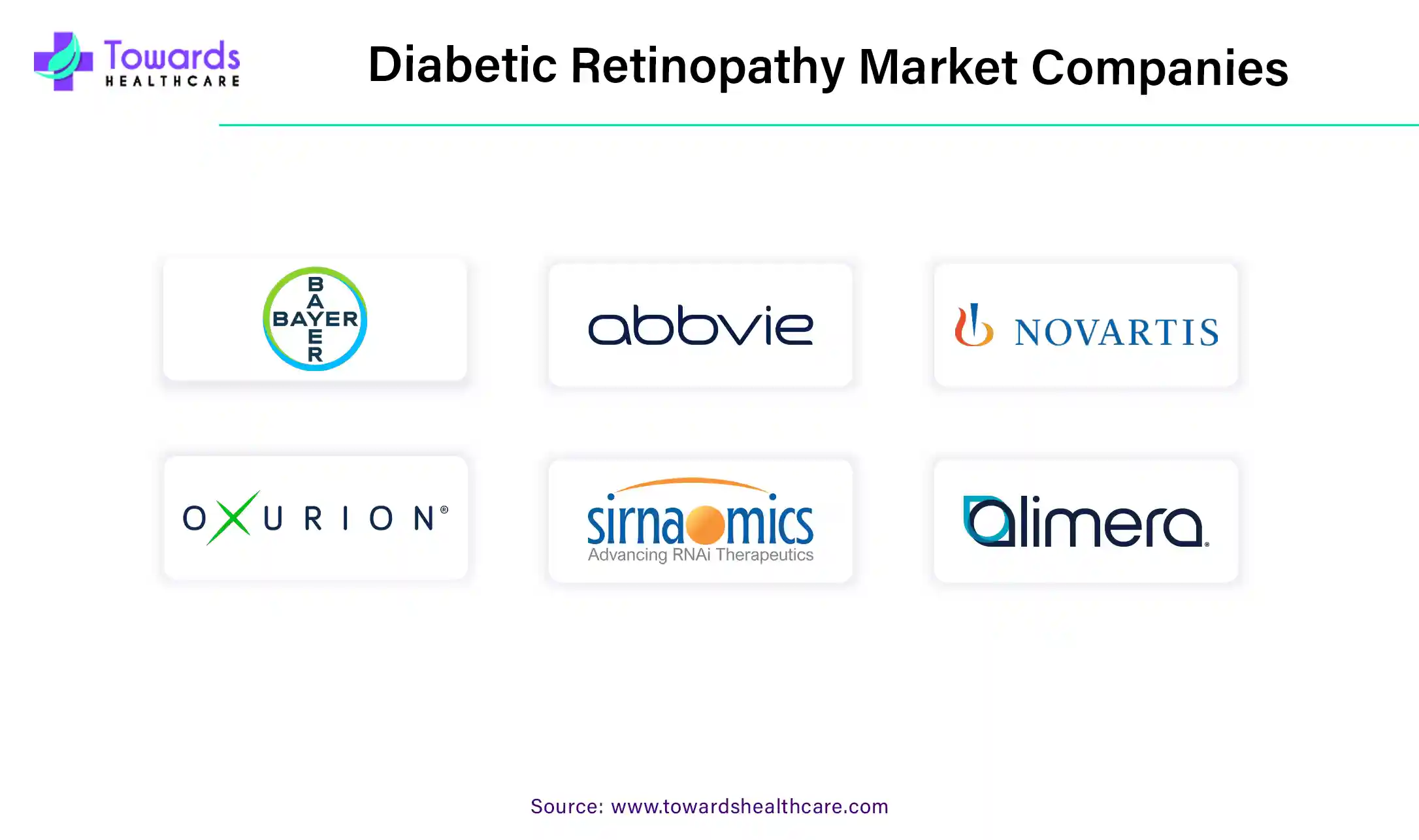
| Top Key Players | ABBVIE INC., Novartis AG, Oxurion NV, Sirnaomics, Alimera Sciences, Ampio Pharmaceuticals Inc., BCNPeptides, Kowa Company Ltd., Genentech, Inc., Bayer AG, Roche |
Why Did the Non-Proliferative Diabetic Retinopathy Segment Dominate in the Diabetic Retinopathy Market?
By type, the non-proliferative diabetic retinopathy segment held the largest share of the diabetic retinopathy market in 2024. The increasing elderly population and the rising incidence of diabetes-related blindness are the primary factors leading to its substantial shares in the market. Non-proliferative diabetic retinopathy (NPDR) represents the early stage of diabetic retinopathy, in which elevated blood sugar levels lead to the weakening and dilation of the retinal blood vessels. Although it might not present clear symptoms at first, as the situation advances, people may observe blurred or changing vision or dark patches. While non-proliferative diabetic retinopathy (NPDR) typically does not pose a direct risk to vision, it can advance to diabetic macular edema, leading to vision impairment. As NPDR intensifies, the chance of developing proliferative diabetic retinopathy can greatly harm vision.
Proliferative Diabetic Retinopathy Segment: Significantly Growing
By type, the proliferative diabetic retinopathy segment is predicted to witness significant growth in the market over the forecast period. Proliferative diabetic retinopathy (PDR) is a severe form of retinopathy characterized by the development of abnormal blood vessels in the retina and vitreous humor, resulting in blurred vision and causing blindness. In the initial stages, it might not display noticeable symptoms but can ultimately result in macular edema. Significant trends in the diabetic retinopathy market characterized by proliferation involve the creation of novel treatments and therapies, the launch of advanced diagnostic tools, and the expansion of healthcare infrastructure in developing regions. Moreover, there is a growing emphasis on utilizing AI and ML to improve the precision of diagnosing and treating proliferative diabetic retinopathy.
How did the Anti-VEGF Segment Dominated the Diabetic Retinopathy Market?
By management, the anti-VEGF segment led the global diabetic retinopathy market in 2024. Anti-VEGF therapy is considered the most widely used therapy for diabetic retinopathy. Diabetic patients with retinopathy frequently generate excessive VEGF, causing the abnormal development of blood vessels in the eyes. Anti-VEGF medications are created to inhibit the production of VEGF, aiding in the prevention of additional vessel growth and minimizing vision impairment. Eylea and Lucentis rank among the leading anti-VEGF medications on the market. Market expansion is anticipated to be driven by the launch of innovative, superior anti-VEGF therapies that provide extended dosing intervals and improved efficacy.
Intraocular Steroidal Injection Segment: Significantly Growing
By management, the intraocular steroidal injection segment is predicted to witness significant growth in the market over the studied year. The intraocular injection consists of corticosteroid-based medicament that ultimately leads to cellular proliferation. Directly injecting steroids into the eye helps decrease swelling and avoid scar tissue development in individuals with diabetic retinopathy, especially in those with diabetic macular edema. Although anti-VEGF medications are usually the primary option for treatment, intraocular steroids are becoming more popular, particularly when administered independently or in combination with anti-VEGF therapy. This trend is anticipated to stimulate expansion in the intraocular steroid injection segment in the diabetic retinopathy market.
North America dominated the diabetic retinopathy market in 2024. The presence of key factors drives the market. Key factors such as improved healthcare infrastructure, government support for drug innovation, and elevated awareness among patients and healthcare providers drive the diabetic retinopathy market growth. The market expansion has been hastened by increasing healthcare expenditures, fueled by higher disposable incomes and enhanced health awareness within the population. The extensive use of innovative products such as anti-VEGF medications, such as Lucentis, Avastin, and Eylea, is a major factor in the area's significant market share.
U.S. Market Trends
The Centers for Disease Control and Prevention (CDC) estimated that 14.7 million Americans would be affected by diabetic retinopathy by 2050. The U.S. government invests around $1.1 billion annually to conduct eye disease and vision disorders research by the National Institute of Health.
Canada Market Trends
Canada’s diabetic retinopathy market is supported by organized diabetes care and retinal screening programs. Teleophthalmology can improve access across remote communities. Hospitals are adopting retinal imaging for earlier detection. Opportunities remain for affordable screening and specialist services. Pharmaceutical companies compete through anti-VEGF therapies, while clinics emphasize faster diagnosis, follow-up, and coordinated diabetes management nationwide for high-risk diabetic patients across provinces.
Asia-Pacific is anticipated to grow at a significant rate in the market during the anticipated period. Technology developments in medicine and improvements in healthcare are driving market expansion in the area. Additionally, as the percentage of elderly diabetics increases, the prevalence of diabetic retinopathy and lifestyle advancement, such as obesity, also rises, increasing the need for related therapies. China and Japan are the main drivers of the Asia-Pacific region, which is largely responsible for this. In terms of revenue share, the Asia Pacific diabetic retinopathy market was dominated by China.
India Market Trends
In April 2025, Dr Mohan’s Diabetes Specialities Center announced the launch of India’s first AI-driven software to detect early signs of retinal damage, including diabetic retinopathy. The tools offer fast and accurate analysis, enabling timely medical intervention and reducing the risk of vision loss.
India faces a large diabetic population, creating a strong need for affordable retinal screening and treatment. Public programs and eye hospitals are expanding screening services. Portable fundus cameras can reach underserved areas. Competition includes multinational drugmakers, local pharmaceutical companies, and ophthalmology networks. Future opportunities lie in lower-cost therapies, screening partnerships, and stronger referral systems between diabetes clinics and eye specialists.
China Market Trends
China is expanding diabetic eye screening as diabetes prevalence rises and healthcare access improves. Large hospitals are upgrading retinal imaging and ophthalmology services. Domestic pharmaceutical companies increasingly compete with multinational drugmakers in retinal treatments. Government healthcare reforms support broader screening and specialty care. Opportunities include regional hospitals, earlier diagnosis, and affordable anti-VEGF treatment for patients across urban and rural populations.
Europe is considered to be a significantly growing area, due to the rising prevalence of diabetes and the increasing geriatric population. Several government organizations launch initiatives and provide funding for early diagnosis of ocular disorders and effective treatment of diabetic retinopathy. The increasing awareness among the general public about the screening of vision disorders also contributes to market growth. The rising adoption of advanced technologies enables key players to develop AI-based tools for screening and diagnosing diabetic retinopathy.
UK Market Trends
The UK government’s UK National Screening Committee (UK NSC) recommends screening for diabetic retinopathy every year to every 2 years. The National Institute for Health and Care Research (NIHR) allocated £977,340 for diabetic retinopathy research in 2023-24.
Germany Market Trends
Germany has a mature diabetic retinopathy care system supported by specialist ophthalmology and structured diabetes management. Advanced retinal imaging is widely used for monitoring disease. Competition centers on innovative medicines, diagnostic equipment, and specialist services. Opportunities include longer-acting treatments and improved patient monitoring. An aging population and continued diabetes burden will sustain demand for retinal care and prevention programs today.
South America is expected to grow significantly in the diabetic retinopathy market during the forecast period, due to the growing incidence of type 2 diabetes. At the same time, the growing geriatric population is also increasing the demand for various diabetic retinopathy treatment options. Additionally, the presence of a well-developed healthcare sector and government support is also promoting the market growth.
Argentina Market Trends
Argentina’s diabetic retinopathy market is shaped by rising diabetes needs and uneven access to specialist eye care. Public hospitals and private clinics both provide retinal services. Economic pressure increases demand for cost-effective treatments and screening. Opportunities include mobile screening, teleophthalmology, and stronger referral networks. Pharmaceutical companies compete through anti-VEGF products, while local providers focus on affordability and access long term.
Brazil Diabetic Retinopathy Market Trends
Brazil is experiencing a growth in the diabetes cases, which is increasing the incidence of diabetic retinopathy, driving the demand for effective treatments. Additionally, the expanding ophthalmology clinics and government health initiatives are also increasing their early detection, promoting their effective treatment.
MEA is expected to grow significantly in the diabetic retinopathy market during the forecast period, due to expanding healthcare, which is increasing the adoption of various advanced treatment options. Additionally, the growing incidence of diabetic retinopathy is also increasing its demand, where the government health initiatives are promoting its early diagnosis and enhancing the market growth.
Saudi Arabia Diabetic Retinopathy Market Trends
The growing government health initiatives across Saudi Arabia are increasing the early and effective diagnosis of diabetic retinopathy. At the same time, the growing diabetes burden due to increasing lifestyle changes and government investment is encouraging the development of various treatment options.
GCC Countries Market Trends
GCC countries are strengthening diabetes and eye-care services as diabetes remains a major health concern. Hospitals in Saudi Arabia, the UAE, and Qatar are investing in retinal imaging and specialist centers. Private providers compete with advanced facilities and premium services. National health strategies support prevention and early detection. Opportunities include screening programs, modern therapies, and integrated diabetes-ophthalmology care and hospitals.
| Ecosystem Category | Major Participants | Role in the Market |
| Technology Providers | Roche, Bayer, AbbVie, Regeneron Pharmaceuticals, Novartis | Develop biologics, retinal therapeutics and ophthalmology technologies |
| Product Manufacturers | Roche (Genentech), Bayer, AbbVie, Novartis, Alimera Sciences | Manufacture anti-VEGF drugs, steroid implants and retinal therapies |
| Service Providers | Eye hospitals, retina clinics, diabetes centers | Diagnosis, treatment and long-term disease management |
| Platform Providers | Digital Diagnostics, Eyenuk, Remidio | AI-powered diabetic retinopathy screening platforms |
| CROs/CDMOs | IQVIA, ICON plc, Parexel, Charles River Laboratories | Clinical trials, regulatory support and ophthalmology research |
| Software Vendors | Eyenuk, Digital Diagnostics, Remidio, Topcon Healthcare | AI image analysis and retinal screening software |
| Research Institutions | National Eye Institute (USA), Moorfields Eye Hospital, Wilmer Eye Institute, Sankara Nethralaya | Clinical research and translational ophthalmology |
| End-User Industries | Healthcare providers, specialty ophthalmology centers, pharmaceutical companies, research institutes | Adoption of diagnostics and therapeutics |
R&D
Clinical Trials and Regulatory Approvals
Formulation and Final Dosage Preparation
Packaging and Serialization
Patient Support and Services
| Tier 1 | Tier 2 | Tier 3 | |
| Typical Market Influence | 72% | 20% | 8% |
| Tier 1 | ||||
| Company Name | Headquarters | Country | Why Relevant to This Market | Key Products/Services |
| Roche (Genentech) | Basel | Switzerland | Global leader in retinal biologics | Lucentis, Vabysmo, ophthalmology R&D |
| Regeneron Pharmaceuticals | Tarrytown, New York | USA | Market-leading anti-VEGF innovator | Eylea, Eylea HD |
| Bayer AG | Leverkusen | Germany | Global commercialization partner for Eylea outside the U.S. | Eylea, ophthalmology portfolio |
| Tier 2 | ||||
| Company Name | Headquarters | Country | Why Relevant to This Market | Key Products/Services |
| Alimera Sciences | Alpharetta, Georgia | USA | Specialist in retinal steroid therapies | ILUVIEN |
| Topcon Healthcare | Tokyo | Japan | Global retinal imaging leader | Fundus cameras, OCT systems |
| ZEISS Medical Technology | Oberkochen, Baden-Württemberg | Germany | Leading ophthalmic imaging and surgical systems | OCT, retinal imaging, microscopes |
| Tier 3 | ||||
| Company Name | Headquarters | Country | Why Relevant to This Market | Key Products/Services |
| Eyenuk, Inc. | Los Angeles, California | USA | FDA-cleared autonomous AI diabetic retinopathy screening | EyeArt AI |
| Digital Diagnostics | Coralville, Iowa | USA | Pioneer in autonomous AI diagnosis | LumineticsCore |
| Remidio Innovative Solutions | Bengaluru, Karnataka | India | AI-enabled retinal imaging | Fundus on Phone, AI DR screening |
The most recent research on AI in diabetic retinopathy emphasizes how it may help with early identification and better access to healthcare, particularly for underprivileged groups. AI may now be utilized for eye exams in endocrinologists' clinics, identifying early indicators of diabetic retinopathy and directing patients to experts, said Dr. Michael Abramoff, founder of Digital Diagnostics. AI improves exam compliance and lowers health inequities, especially in minority and rural regions, according to recent studies. AI's accuracy and potential for broad adoption are revolutionizing diabetic eye care by providing prompt diagnosis and saving eyesight, even while issues like payment still exist.
By Type
By Management
By Region




Principal Consultant
Shivani Zoting is a dedicated research analyst specializing in the healthcare industry. With a strong academic foundation, a B.Sc. in Biotechnology and an MBA in Pharmabiotechnology, she brings a unique blend of scientific understanding and strategy.
Learn more about Shivani Zoting
Reviewed By
Aditi Shivarkar is a seasoned professional with over 14 years of experience in healthcare market research. As a content reviewer, Aditi ensures the quality and accuracy of all market insights and data presented by the research team.
Learn more about Aditi Shivarkar