

Pipeline Programs

CGT Companies Tracked

Manufacturing Facilities


The global hemophilia market size is calculated at USD 15.29 billion in 2025, grew to USD 16.30 billion in 2026 and is projected to reach around USD 27.27 billion by 2034. The market is expanding at CAGR of 6.64% between 2025 and 2034. The rising focus on developing a cure for hemophilia is driving the hemophilia market.
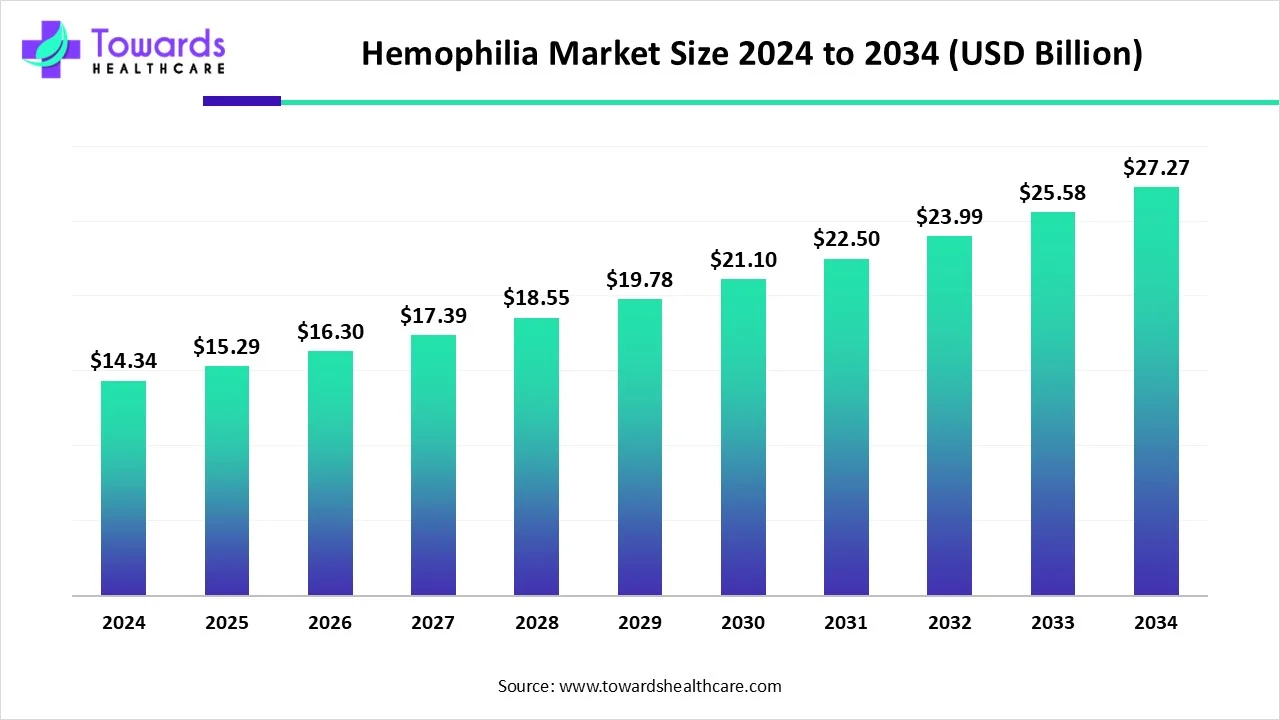
A hereditary bleeding problem is hemophilia. Because their blood contains insufficient amounts of one of the clotting components, people with hemophilia bleed readily. Over 200,000 people worldwide suffer from hemophilia in one way or another. However, recent findings suggest that hemophilia may go undiagnosed. Over 1.1 million people worldwide may actually have hemophilia. The speed at which recent technical advancements in hemophilia have progressed is amazing. These include gene therapy programs, prophylactic bioengineered molecules, medicines that lessen the burden of treatment by extending half-lives, novel modes of action, and subcutaneous delivery. More technical developments have surfaced, which are expected to further revolutionize the treatment of hemophilia.
Eventually, the global market has been inclining towards higher approvals in gene therapies, non-factor treatments, and extended half-life factor replacement options, which are lowering infusion burdens. Recently, a significant initiative was conducted by World Hemophilia Day 2026 under the theme ‘Diagnosis: First step to care’, which emphasises closing the diagnostic gap, where over 75% of patients historically remain undiagnosed. Besides this, firms are widely seeking less frequent subcutaneous prophylactic therapies. On the other hand, nearly 50 biopharmaceutical companies are heavily expanding new trial candidates, such as gene-editing tools and next-generation molecules like NXT007.
A Surge in One-Time Gene Therapies
With a focus on redefining therapies, the globe is actively transitioning from multi-weekly intravenous factor infusions to a single, life-changing injection that allows the liver to endogenously produce its own clotting factors.
Progressing Subcutaneous Therapies
Accelerating demand for advanced solutions forces firms to adopt subcutaneous rebalancing agents, which mainly cover anti-tissue factor pathway inhibitor (anti-TFPI) therapies & RNA interference agents.
Exploration of Groundbreaking Reimbursement Models
In the future, the market will have a major opportunity in demonstrating value-based, multi-year annuity or risk-sharing contract approaches, where payouts are paired directly to the multi-year real-world performance and durability of the therapy.
In January 2025, the Government of Gujrat offered free Hemophilia treatment. Over 11800 factor injections have been provided free of cost, and treatment is available in civil hospitals across the state. Currently, over 3000 hemophilia are present in Gujarat, and the state government provides free injections to patients.
Hemophiliacs may be able to live healthy, active lives with the help of AI models that facilitate early treatment interventions and help with diagnosis. The treatment of hemophilia has a bright future, thanks to the development of artificial intelligence (AI) and the expanding use of ultrasonography in medicine. These advancements contribute to better results and an improved quality of life for patients by empowering them and improving healthcare delivery. AI may be used to improve diagnostic efficiency and accuracy using predictive analytics, genetic testing, and sophisticated imaging methods. By examining enormous volumes of patient data, such as genetic profiles, medical histories, and treatment outcomes, AI-powered systems can help create individualized therapy regimens.
Driver
Rising Focus on Non-factor Replacement Therapies
In the market for hemophilia A, non-factor replacement medicines are a revolutionary advancement that provide fresh methods of treating the illness without depending on conventional factor VIII infusions. Roche's Emicizumab (Hemlibra) is one of the most important developments in this field. Compared to intravenous factor VIII infusions, this novel method enables subcutaneous delivery, offering patients a more practical and minimally intrusive therapy choice.
Restraint
High cost of treatment
Patient access is severely hampered by the high expense of hemophilia therapy. For instance, the price of Roche's Hemlibra, a medication for hemophilia, has increased by 8% to over USD 600,000 per year. Payers will be strained by novel therapies. Hemgenix, CSL Behring's gene treatment for hemophilia B, was recently listed for USD 3.5 million per dosage, making it the most costly medication to date.
Opportunity
Rising R&D for novel therapies
The market for hemophilia treatments is growing as a result of increased spending in research and development (R&D) for novel therapeutics. This is because it makes it possible to create cutting-edge solutions to meet unmet medical requirements. Progress is being greatly aided by increased funding through grants and investments. R&D efforts are increasingly concentrating on innovative strategies with revolutionary potential, such as gene therapy and monoclonal antibodies.
| Metric | Details |
| Market Size in 2025 | USD 15.29 Billion |
| Projected Market Size in 2034 | USD 27.27 Billion |
| CAGR (2025 - 2034) | 6.64% |
| Leading Region | North America |
| Market Segmentation | By Type, By Treatment Type, By Therapy, By Distribution Channel and By Region |
| Top Key Players | Takeda Pharmaceutical Company Limited, CSL Behring, Pfizer, Inc., Bayer AG, Spark Therapeutics, Inc. |
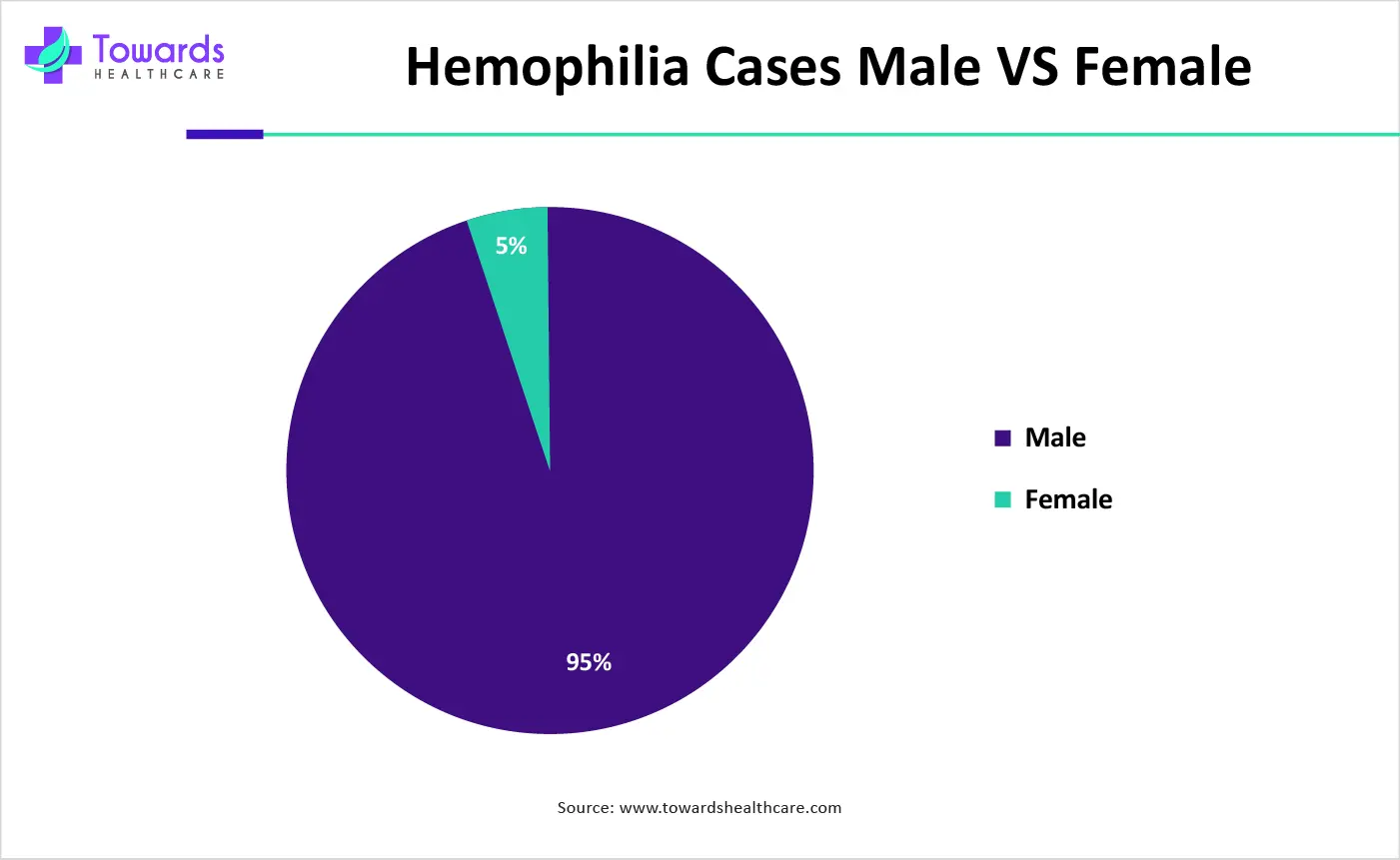
By type, the hemophilia A segment led the market in 2025. This segment dominated due to the rising prevalence of hemophilia. The most prevalent X-linked hereditary hemostasis illness is hemophilia A, which affects one in five thousand boys and is responsible for 80–85% of hemophilia cases. Over 400,000 men worldwide suffer from hemophilia A, with many being misdiagnosed in underdeveloped nations. Treatment goods are usually prescribed by medical professionals for preventive or episodic care. Inhibitors are more common in hemophilia A than hemophilia B, and they are also more common in severe hemophilia (20–30%) than in moderate hemophilia (5%–10%).
By type, the hemophilia B segment is estimated to grow significantly in the hemophilia market during 2025-2034. Five out of every 100,000 live male births are estimated to have hemophilia B, and 1.5 out of every 100,000 are estimated to have severe hemophilia B. Due to the high rate of spontaneous mutation of F9 and its position on the X chromosome, the birth prevalence is assumed to be roughly the same across all nations and ethnic groups. Men make up the majority of those with hemophilia B who exhibit symptoms.
By treatment, the prophylaxis segment held the largest share of the market in 2025. The segmental growth is attributed to the growing demand for early detection of hemophilia and favorable government support. The foundation of contemporary treatment for severe hemophilia A is the preventative use of clotting factor concentrates. In the majority of nations with sufficient resources, the early initiation of primary or secondary prophylactic treatment for children has emerged as the gold standard. In order to preserve good joint function, prophylaxis that was initiated as primary or secondary prophylaxis in children is logically continued in adults. Joint bleeds are being prevented nearly quantitatively by a move toward more rigorous prophylaxis.
By treatment, the cure segment is estimated to be the fastest-growing in the hemophilia market during the predicted time. The fact that there is currently no "cure" offered by any of the therapeutic approaches is often underlined. Therefore, it is thought that cutting-edge therapies like gene therapy might fill this gap. The discovery of gene therapy for hemophilia has brought together a number of academic institutions, biotechnology businesses, and, most recently, bigger pharmaceutical firms. In order to lessen or even completely remove the requirement for exogenous factor replacement, gene therapy aims to produce long-term production of the missing or aberrant coagulation factor at levels that are adequate and consistent. The prospect of a gene therapy treatment for hemophilia raises hopes for increased access to care on a worldwide scale.
By therapy, the factor replacement therapy segment held the major share of the market in 2025. An important milestone in the treatment of hemophilia was the creation of longer half-life factor replacement treatments. These treatments are less frequent because they remain in the circulation longer than conventional factor infusions. By cutting back on infusions to once every ten days, some patients have seen a major improvement in their quality of life. Care for those with hemophilia has significantly improved since factor replacement products became available. When these therapies are available and reasonably priced, people's life expectancy is comparable to that of men in the general population.
By therapy, the gene therapy & monoclonal antibodies segment is estimated to grow at the fastest CAGR in the hemophilia market during the forecast period. Current hemophilia treatment focuses on preventing bleeding, which includes recombinant monoclonal antibody therapy, costly lifetime replacement infusion therapy of blood plasma clotting factors, or their recombinant equivalents. In order to aid in hemostasis, monoclonal antibodies (mAbs) that target APC have most recently demonstrated great promise in directly preventing FVa proteolysis by APC.
By distribution channel, the specialty pharmacies segment held the largest share of the hemophilia market in 2025. This is due to favorable infrastructure and the presence of skilled professionals. By simplifying the distribution process and easing the difficulties associated with healthcare delivery and funding, specialty pharmacy (SP) offers services to insurers and providers. Technology has been a major factor in SP's growth during the last five years. More consistency in providing services to patients is made possible by the data gathered from controlling the distribution of specialized drugs.
By distribution channel, the hospital pharmacies segment is anticipated to witness the fastest growth rate in the hemophilia market during the predicted time frame. When it comes to treating hemophilia, a hospital pharmacy is crucial in supplying and overseeing medications, such as clotting factor concentrates and other treatments, to ensure that patients receive the care they need. With their skills and expertise, pharmacists may positively impact patient care in hemophilia treatment facilities. Pharmacists specializing in therapeutic medication monitoring, pharmacokinetics, and patient counseling can help control healthcare costs by promoting adherence and reducing emergency department (ED) visits.
North America dominated the hemophilia market in 2024 due to its sophisticated healthcare infrastructure, strong reimbursement systems, and high patient awareness. Patients with hemophilia have access to a wide range of diagnosis and treatment options because of the region's established healthcare system. Furthermore, North America's leading position in the industry is a result of continuous improvements in treatment choices, such as gene therapy and recombinant factor products.
The U.S. Hemophilia Market Trends
In the U.S., there are an estimated 33,000 men who have hemophilia. The average annual cost of treating an adult with hemophilia B in the U.S. is between $700,000 and 800,000. The people who stand to gain the most from emerging technologies like gene therapy are the ones who can least afford to pay for them.
The Canada Hemophilia Market Trends
Hemophilia B affects more than 700 people in Canada. The approval of BEQVEZ, the second gene treatment for hemophilia B to get a Notice of Compliance from Health Canada in recent months, is welcomed by the Canadian Hemophilia Society. As soon as possible, eligible patients throughout Canada will have access to gene treatments for hemophilia B because to the CHS's strong collaboration with provincial and territorial health authorities.
Europe is expected to be the fastest growing in the hemophilia market during the forecast period. Numerous factors, such as the growing incidence of hemophilia, encouraging government programs, and heightened research and development for the development of innovative medications, are contributing to the market's expansion. Factors supporting market expansion include the expanding target population, increased diagnostic rates, the number of individuals receiving a hemophilia diagnosis, and the rise in preventative hemophilia therapy.
The presence of improved healthcare facilities helps in the early diagnosis of hemophilia in the regions, which helps in the growth of the market. The growing advancements in treatment like recombinant therapies & gene therapy, increasing awareness about early diagnosis, and increasing number of patients contribute to the market growth.
The Germany Hemophilia Market Trends
Data on the diagnosis, medical history, and treatment of people with blood clotting disorders are gathered online by the German Haemophilia Registry. The primary advantage of the registry is that it serves as an impartial platform for gathering information on blood clotting disease therapy. Research may be done using this data. The more accurately patients and physicians record their therapy and related conditions, the more useful the data is for future studies.
In Germany, the prevalence of treated hemophilia B is estimated to be 0.62 cases per 100000 people, and treated hemophilia A is estimated to be 3.58 cases per 100000 people. The growing diagnosis of hemophilia in the German population increases demand for effective treatments. The growing development of new therapies like enhanced replacement therapies and gene therapy helps in the market growth. Furthermore, government initiatives, increased research & development, and improved healthcare facilities support the market growth.
The UK Hemophilia Market Trends
In August 2024, the UK government revised the Infected Blood Compensation Scheme. This will make it possible for the government to begin implementing the steps required to give the afflicted and impacted victims of this catastrophe the much-needed financial help they require. People suffering with an infection who are enrolled with an Infected Blood Support Scheme received interim payments from the previous government in the amounts of £100,000 in October 2022 and £210,000 in June 2024.
Asia Pacific is estimated to host a significantly growing hemophilia market during the forecast period. Improved healthcare infrastructure, a higher diagnosis rate, and growing awareness of hemophilia in nations like China and India are the primary drivers of the fast rise. The World Federation of Hemophilia reports that these countries have experienced a significant rise in hemophilia cases in recent years, indicating a growing market for hemophilia therapies. The Asia-Pacific market is expanding due to government programs aimed at improving access to hemophilia treatment in the region's rural areas. For instance, hemophilia was included on India's National Health Mission priority disease list, which led to more financing and awareness-raising initiatives.
The China Hemophilia Market Trends
In China, the prevalence of hemophilia ranges from 2.73 to 3.09 cases per 100,000 people, and given the size of the population, there are a significant number of individuals with hemophilia. The prevention and treatment of hemophilia has garnered significant attention in the nation as part of the Healthy China project. China requires hospitals applying for comprehensive management centers and hemophilia diagnosis and treatment centers to be able to independently perform screening and confirming tests related to hemophilia diagnosis in order to fully promote the development of the grading diagnosis and treatment system for hemophilia.
India Hemophilia Market Trends
In India, the prevalence of hemophilia is estimated to be 0.9 per 100000 people. The presence of a large population increases the patient base, fueling demand for effective hemophilia treatment. The growing awareness among people and government initiatives helps in the early diagnosis of conditions. The government's strong support provides financial assistance for research and treatment. Growing technological advancements in treatments and the availability of hospitals and other healthcare facilities help in the growth of the market.
The Middle East & Africa are considered to be a significantly growing area, due to the rising prevalence of hemophilia disorders and increasing research and development activities. Government organizations support the development of novel drugs for hemophilia through initiatives and funding. The increasing collaboration among academic researchers and key players favors market growth. The growing genomics and proteomics research, along with the rising adoption of advanced technologies, contributes to market growth.
UAE Market Trends
In May 2025, Pfizer announced the launch of a new and innovative therapy for people living with hemophilia in the UAE. The therapy is the first prefilled injectable product in the UAE to make treatment more convenient and accessible for patients. The therapy targets the tissue factor pathway inhibitor (TFPI), a natural anticoagulant protein. (Source: Zawya)
South Africa Market Trends
According to a recent systematic review and meta-analysis, the prevalence of hemophilia A in males in Africa is demonstrated to be 6.82 cases per 100,000 persons. (Source: BMC Public Health) The government launched the “South African Rare Diseases Initiative” to improve access to appropriate diagnosis, treatment, and healthcare services at an affordable price.
The hemophilia market in Latin America is anticipated to expand significantly during 2026-2035. This expansion is primarily fueled by robust public health approaches, especially in Brazil, are highly hosting Hemophilia A management by helping plasma-derived factor concentrates. Along with this, regional training is led by global entities, such as the Novo Nordisk Haemophilia Foundation. As per the latest health-economic studies, the region highlights the fact that traditional factor replacement regimens still capture a dominant share of direct medical costs, which creates constant access gaps for high-cost innovations.
Brazil Market Trends
A notable growth of the market in Brazil is encouraged by the Brazilian Ministry of Health, which facilitates free and equitable delivery of factor replacement and specialized care through a network of reference blood centers. Alongside, the nation evolved the PATCH Project, which evaluates infrastructure, clinical workflows, and human resources across 98 blood centers to resolve regional care distances within SUS.
In March 2025, according to Sanofi's Executive Vice President, Head of Specialty Care, this clearance demonstrated our dedication to promoting innovation and enhancing treatment for the community with rare blood diseases. Due to its efficient bleed prevention, infrequent dosing, and straightforward administration, Qfitlia has the potential to significantly alter the hemophilia landscape as we focus on providing protection with a lower treatment burden that best suits each person's needs. Our extensive range of hemophilia treatment options continues to expand.
By Type
By Treatment Type
By Therapy
By Distribution Channel
By Region




Principal Consultant
Payal Rabde is a Healthcare Market Research Analyst at Towards Healthcare Research & Consulting with 4+ years of experience in pharmaceuticals, biotechnology, medical devices, and life sciences.
Learn more about Payal Rabde

Reviewed By
Aditi Shivarkar is a seasoned professional with over 14 years of experience in healthcare market research. As a content reviewer, Aditi ensures the quality and accuracy of all market insights and data presented by the research team.
Learn more about Aditi Shivarkar










