
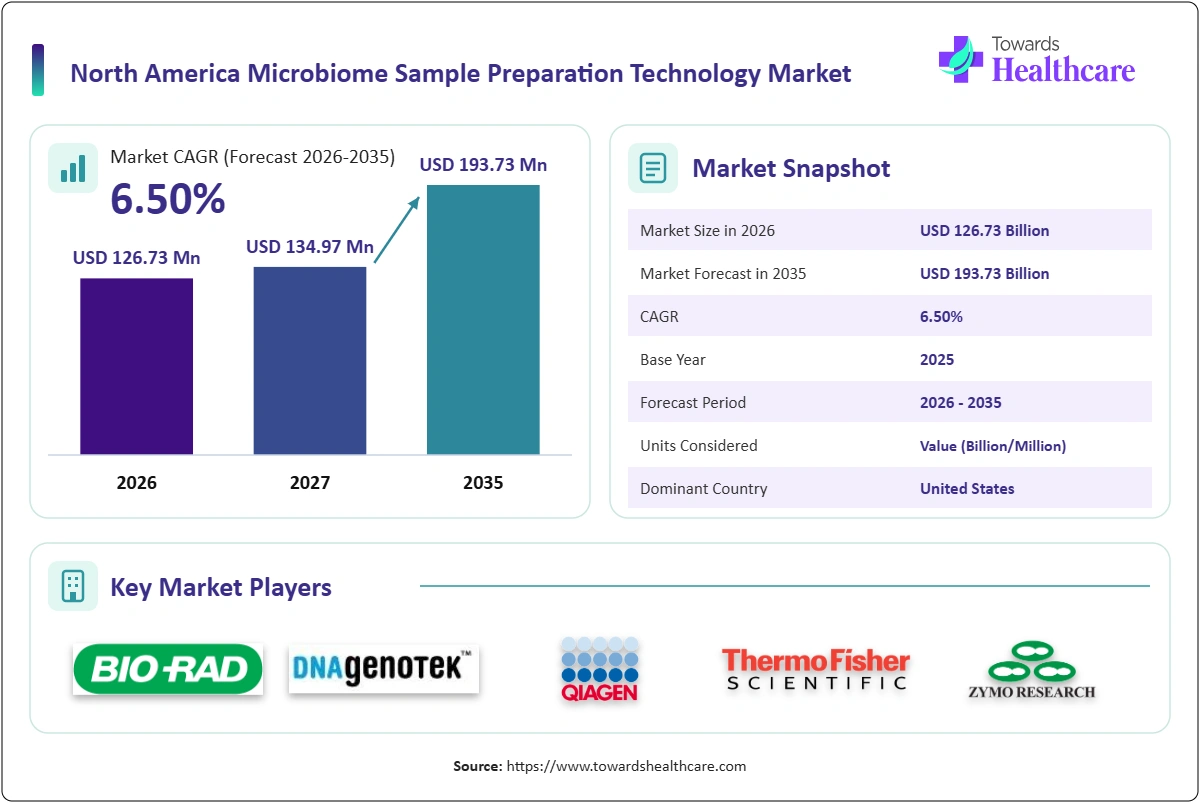
The market is projected to grow from USD 119.00 million in 2025 to USD 223.38 million by 2035 because microbiome research and clinical testing are expanding across North America, and every sequencing or PCR analysis is dependent on reliable collection, stabilization and extraction of microbial nucleic acids. Market growth is supported by rise in shotgun metagenomics, microbiome therapeutics and diagnostics, automation of extraction and library preparation, and demand for standardized collection devices, propelling the market to USD 163.04 million by 2030 and maintaining a CAGR of 6.50% from 2026 to 2035.
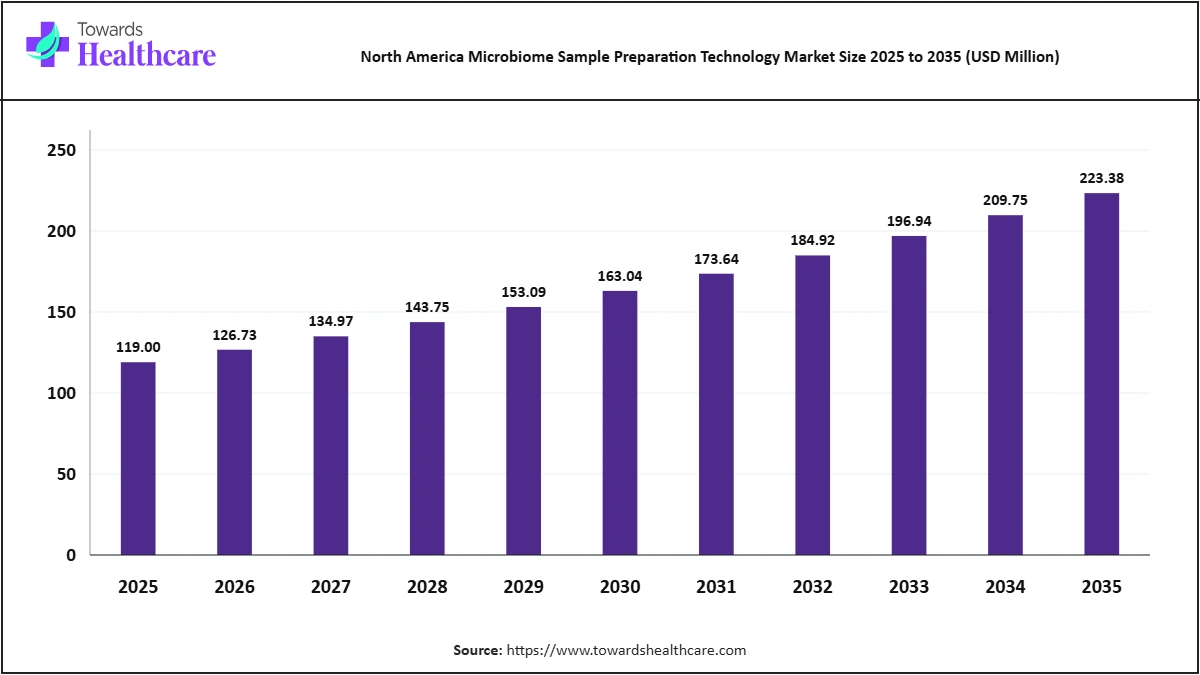
Analyst View: We built the estimate from the number of microbiome samples processed in North America by workflow, application, disease area and end user, multiplied by consumable costs per sample, plus instrument sales. Sample volumes reflect research funding, clinical microbiome testing, therapeutic development programs and consumer testing, together with sequencing adoption. The total was cross-checked against supplier revenues and against published regional estimates, which places our base year slightly above the highest credible comparable figure. The growth rate is a testament to strong growth in metagenomics and clinical applications, which we judge supports a slightly higher rate than comparable estimates, moderated by research funding uncertainty.
Driver: Microbiome research is expanding and more and more microbiome therapeutics are securing approval. Sequencing costs are decreasing and the clinical testing ecosystem is expanding. The increasing trend of standardization drives the adoption of kits.
Restraint: Extraction bias has a negative influence on results and research suffers due to funding uncertainty. There is a significant variation in protocols in different labs. Clinical validation comes with steep prices and there is a significant price pressure on kits.
Opportunity: Clinical diagnostics require validated kits and automation helps in scaling sample processing. Therapeutic trials need to be monitored. Consumer testing is growing and integrated workflows add value.
Note: 2025 is the base year; 2035 values are forecasts.
Sources: Expert interviews, secondary sources, Towards Healthcare database and Towards Healthcare analysts.
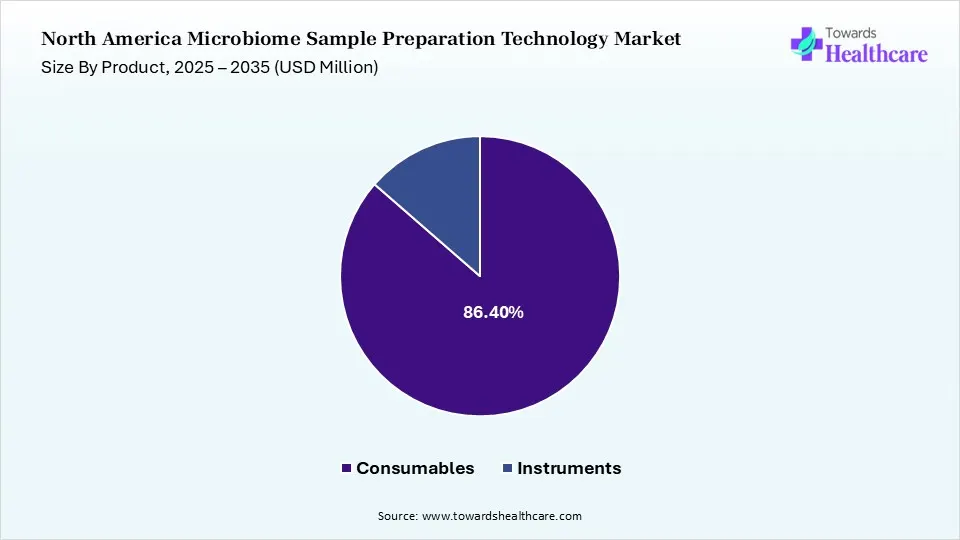
Consumables held the largest share of 86.40% (USD 102.82 million) in 2025 and is projected to reach USD 193.73 million by 2035, expanding at a CAGR of 6.54% during the forecast period. Consumables include collection and stabilization tubes, bead-beating tubes, lysis buffers, extraction and purification kits, library preparation kits and quantification reagents. The leadership of this segment can be attributed to the fact that they are used for every sample, and products such as QIAGEN's QIAamp PowerFecal Pro, Thermo Fisher's MagMAX Microbiome, Zymo's ZymoBIOMICS and DNA Genotek's OMNIgene·GUT have secured widespread adoption.
Instruments include bead-beating homogenizers, automated nucleic acid extraction systems, liquid handlers and quantification instruments. Instruments are required to scale up processing in high-volume laboratories, but the volume and frequency of sales is relatively less than that of consumables.
Note: 2025 is the base year; 2035 values are forecasts.
Sources: Expert interviews, secondary sources, Towards Healthcare database and Towards Healthcare analysts.
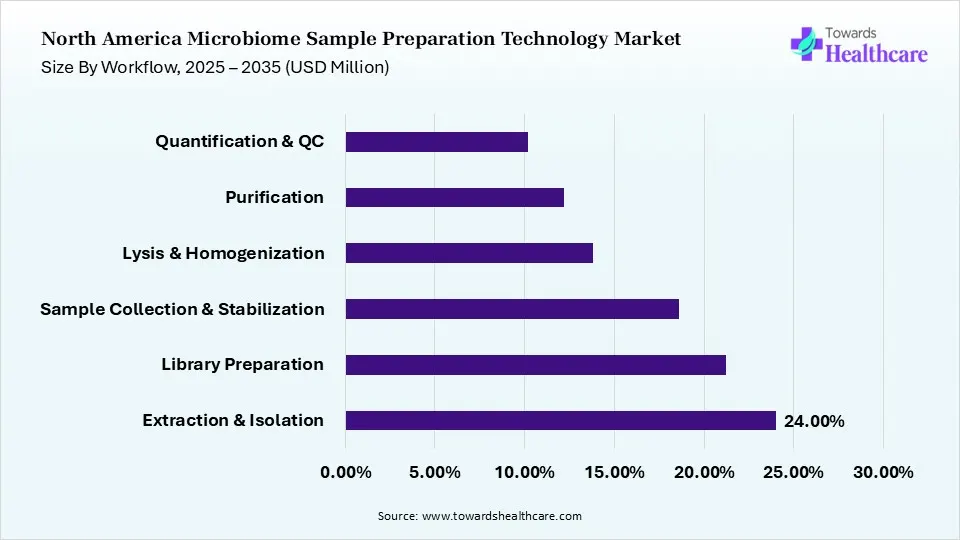
Extraction & Isolation segment held a market share of 24.00% (USD 28.56 million) in 2025 and is projected to reach USD 51.02 million by 2035, expanding at a CAGR of 5.97% over the forecast period. Extraction and isolation is the largest workflow step because microbial samples contain hard-to-lyse bacteria and inhibitors, and specialized kits are needed to recover representative DNA and RNA.
Library preparation converts extracted nucleic acids into sequencing-ready libraries for 16S and shotgun metagenomics. This segment is growing at the fastest rate in the workflow category because shotgun metagenomics and metatranscriptomics are replacing simpler methods and need a higher reagent to sample ratio.
Sample collection and stabilization devices preserve microbial composition at room temperature during shipping, which is essential for at-home collection, large studies and clinical testing. DNA Genotek's OMNIgene·GUT Dx has been authorized by the FDA for this purpose.
Lysis and homogenization use bead-beating and enzymes to break open tough bacterial and fungal cell walls, which helps to minimize bias in results.
The purification process involves the removal of inhibitors and contaminants such as humic acids and bile salts that interfere with downstream analysis.
Quantification and quality control involve checking of DNA amount and quality before sequencing, using fluorometric and electrophoresis products.
Note: 2025 is the base year; 2035 values are forecasts.
Sources: Expert interviews, secondary sources, Towards Healthcare database and Towards Healthcare analysts.
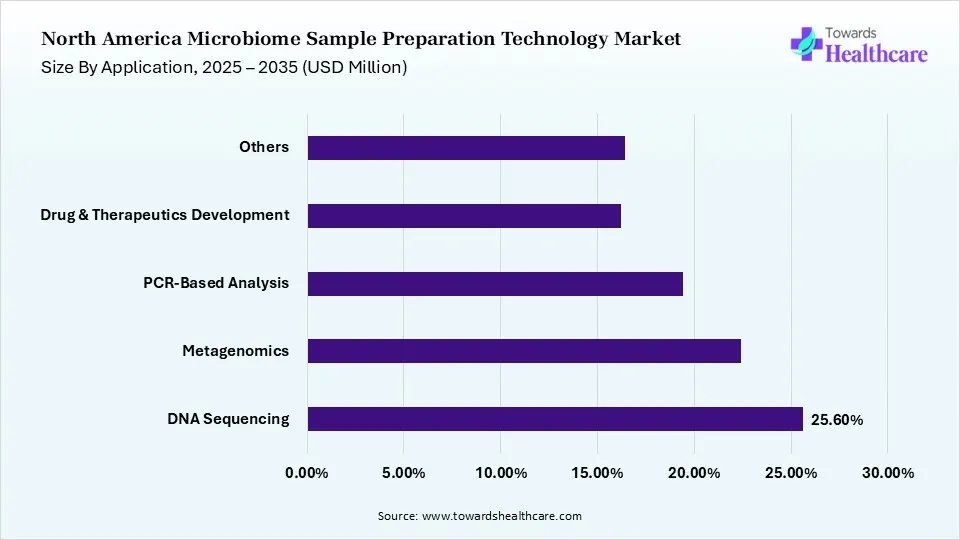
DNA Sequencing held 25.60% (USD 30.46 million) of revenue in 2025 and is projected to reach USD 54.13 million by 2035, expanding at a CAGR of 5.92% during the forecast period. DNA sequencing, including 16S rRNA gene sequencing, is the largest application owing to the fact that it has been widely adopted to profile microbial communities in research and testing.
Metagenomics, including shotgun sequencing of all microbial DNA and RNA, is the fastest-growing application because falling sequencing costs make it possible to identify species and functional genes in detail.
PCR-based analysis makes use of qPCR and digital PCR for detection and quantification of specific microbes and resistance genes in clinical and research samples.
Drug and therapeutics development uses microbiome sample preparation for development and monitoring of live biotherapeutics and microbiome-modulating drugs, following approvals such as Rebyota and Vowst.
Others include environmental, agricultural, and food microbiome analysis.
Note: 2025 is the base year; 2035 values are forecasts.
Sources: Expert interviews, secondary sources, Towards Healthcare database and Towards Healthcare analysts.
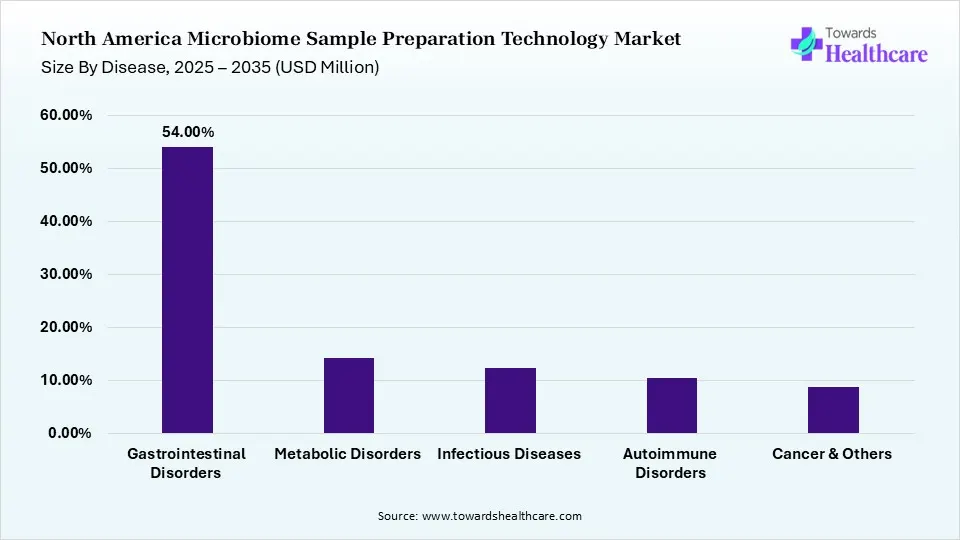
Gastrointestinal Disorders held 54.00% (USD 64.26 million) of net market revenue in 2025 and is projected to reach USD 116.64 million by 2035, expanding at a CAGR of 6.14% from 2026 to 2035. Gastrointestinal disorders, including inflammatory bowel disease, irritable bowel syndrome, C. difficile infection, and colorectal cancer screening, represent the largest demand base because the gut microbiome is most studied and stool is the most common sample.
Metabolic disorders include obesity and diabetes, and microbiome research is expanding in this area.
Infectious diseases include detection of pathogens and antimicrobial resistance in clinical samples.
Autoimmune disorders are growing at the highest pace in the disease segment as research links the microbiome to rheumatoid arthritis, multiple sclerosis, and lupus.
Cancer and others include research on the role of the microbiome in cancer immunotherapy response and neurological conditions.
Note: 2025 is the base year; 2035 values are forecasts.
Sources: Expert interviews, secondary sources, Towards Healthcare database and Towards Healthcare analysts.
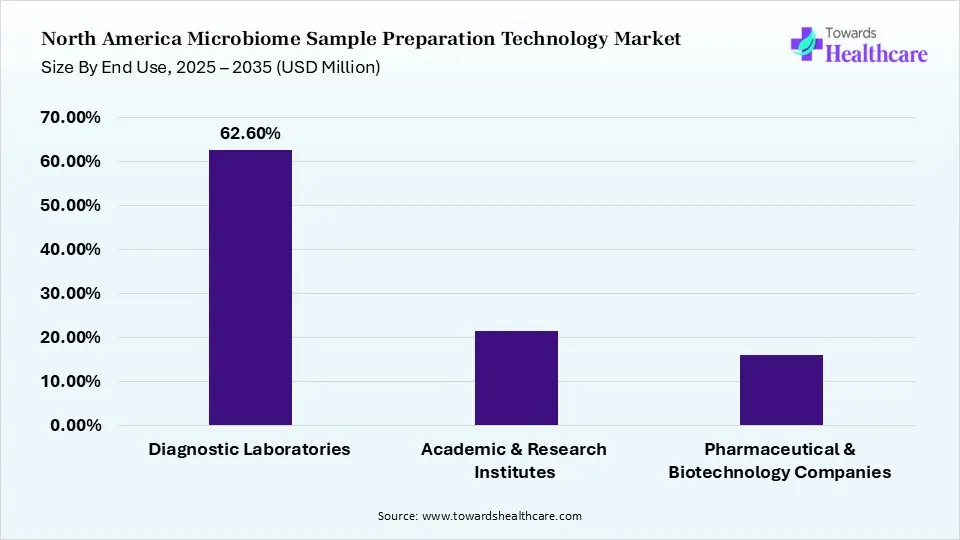
Diagnostic Laboratories held a 62.60% (USD 74.49 million) share in 2025 and is forecast to expand to USD 135.24 million by 2035, growing at a CAGR of 6.14% during the forecast period. Diagnostic laboratories, including clinical, reference, and consumer microbiome testing laboratories, represent the largest end-user base because they process large sample volumes using standardized kits.
Academic and research institutes conduct microbiome studies funded by the NIH on large population cohorts.
Pharmaceutical and biotechnology companies are the fastest-growing end users because microbiome therapeutics and companion diagnostics are advancing through clinical trials.
Analyst View: Segment values were allocated by matching sample volumes and per-sample costs to products, workflows, applications, diseases, and end users, using supplier portfolios and laboratory data. Consumables, extraction, sequencing, GI disorders, and diagnostic labs lead. We expect the shares of library preparation, metagenomics, autoimmune applications, and pharmaceutical users to increase.
| Country | 2025 Share | 2025 Value (USD Million) | 2035 Value (USD Million) | CAGR 2026–2035 |
| U.S. | 86.40% | 102.82 | 191.07 | 6.39% |
| Canada | 9.60% | 11.42 | 22.04 | 6.79% |
| Mexico | 4.00% | 4.76 | 10.27 | 7.99% |
Note: 2025 is the base year; 2035 values are forecasts.
Sources: Expert interviews, secondary sources, Towards Healthcare database and Towards Healthcare analysts.
U.S. held a market share of 86.40% (USD 102.82 million) in 2025 and is projected to reach USD 191.07 million by 2035, expanding at a CAGR of 6.39% during the forecast period. The U.S. has the largest microbiome research funding, through NIH programs and private investment, a significant presence of prominent sequencing and clinical laboratories, microbiome therapeutic companies, and consumer testing firms. A major proportion of leading kit suppliers sell directly to U.S. laboratories.
Canada accounted for 9.60% (USD 11.42 million) of total market revenue in 2025 and is projected to reach USD 22.04 million by the end of the forecast period, expanding at a CAGR of 6.79% from 2026 to 2035. Canada has strong microbiome research programs, including those funded by the Canadian Institutes of Health Research, and benefits from the presence of key players such as DNA Genotek in Ottawa and Norgen Biotek in Ontario.
Mexico held a 4.00% (USD 4.76 million) share in 2025 and is projected to reach USD 10.27 million by 2035, growing at a CAGR of 7.99% during the forecast period. Mexico is the fastest-growing country in the market, due to swiftly expanding genomics research, clinical laboratories, and interest in microbiome studies related to metabolic diseases, although from a small base.
Analyst View: Country shares were built from sample volumes and research and laboratory activity in each country. The domination of the U.S. can be attributed to significant research funding and laboratory capacity. We assign Mexico the highest growth premium because its genomics and laboratory sector is developing at the fastest pace from a relatively small base.
| Rank | Company Name | Market-Specific Revenue (USD Million) | 2025 Share | Key Products / Business | Headquarters |
| 1 | QIAGEN | 18.00 | 15.13% | QIAamp PowerFecal Pro and DNeasy PowerSoil kits | Netherlands |
| 2 | Thermo Fisher Scientific | 14.00 | 11.76% | MagMAX Microbiome kits and KingFisher | United States |
| 3 | Zymo Research | 10.00 | 8.40% | DNA/RNA Shield and ZymoBIOMICS kits | United States |
| 4 | DNA Genotek | 9.00 | 7.56% | OMNIgene·GUT collection devices | Canada |
| 5 | Illumina | 7.00 | 5.88% | Library preparation kits | United States |
| 6 | Revvity | 5.00 | 4.20% | chemagic extraction and library prep | United States |
| 7 | Bio-Rad Laboratories | 4.00 | 3.36% | Extraction and PCR sample prep | United States |
| 8 | Roche | 4.00 | 3.36% | KAPA library preparation | Switzerland |
| 9 | Agilent Technologies | 3.00 | 2.52% | Library QC and preparation | United States |
| 10 | Norgen Biotek | 3.00 | 2.52% | Stool collection and extraction kits | Canada |
Note: Company revenues and shares are 2025 estimates.
Sources: Company press releases, expert interviews, secondary sources, Towards Healthcare database and Towards Healthcare analysts.
QIAGEN holds the dominant share because of its PowerFecal Pro and PowerSoil kits, which are widely used reference methods for microbiome DNA extraction. Thermo Fisher Scientific provides MagMAX Microbiome kits with automated KingFisher extraction, and Zymo Research supplies DNA/RNA Shield stabilisation and ZymoBIOMICS kits and standards. DNA Genotek, Illumina, Revvity, Bio-Rad, Roche, Agilent and Norgen Biotek compete through collection devices, library preparation, automated extraction, PCR sample preparation, KAPA library kits, quality control and stool kits.
The top 10 companies accounted for 64.71% (USD 77.00 million) of net market revenue in 2025, while the remaining 35.29% (USD 42.00 million) was shared among smaller kit manufacturers, sequencing service providers, and laboratory-developed methods. The market is moderately concentrated, and competition revolves around extraction efficiency and bias, inhibitor removal, stability, automation compatibility, regulatory status, standardization, and cost per sample. Integrated sample-to-library workflows are emerging to be an important differentiator in the market.
The North America microbiome sample preparation technology ecosystem links collection device and reagent manufacturers with instrument suppliers, sequencing platforms, laboratories and research, clinical and therapeutic users.
| Ecosystem Stage | Role in the Market | Key Companies |
| Collection & Stabilization | Supply collection and preservation devices | DNA Genotek, Zymo Research, Norgen Biotek |
| Extraction & Purification | Supply kits and extraction systems | QIAGEN, Thermo Fisher, Revvity, Bio-Rad |
| Library Preparation | Supply library kits and QC | Illumina, Roche, Agilent |
| Laboratories & Services | Process samples and sequence | Clinical labs, sequencing service providers |
| End Users | Use microbiome data | Universities, therapeutic developers, diagnostic companies |
Sources: Company press releases, expert interviews, secondary sources, Towards Healthcare database and Towards Healthcare analysts.
The Towards Healthcare Companies Quadrant positions key participants in the market by market strength, reflecting revenue scale, market share and geographic reach, and by innovation and growth strategy, reflecting product portfolio breadth, research and development intensity and collaborations. Positions reflect each company's 2025 North American microbiome sample preparation revenue and our examination of its products, standardization and innovation.
Sources: Company press releases, expert interviews, secondary sources, Towards Healthcare database and Towards Healthcare analysts.
Leaders: QIAGEN, Thermo Fisher Scientific, Zymo Research, DNA Genotek and Illumina bring together the largest revenue and widely adopted kits, stabilization devices and automation.
Innovators: Revvity, Roche and Norgen Biotek offer specialized collection and library preparation products.
Niche Players: Bio-Rad Laboratories and Agilent Technologies serve narrower workflow segments.
By Product
By Workflow
By Application
By Disease
By End Use
By Country
The market is defined as collection, stabilization, lysis, extraction, purification, quantification, and library preparation consumables and instruments for microbiome analysis, in the United States, Canada, and Mexico. The 2025 base year was built bottom-up from microbiome sample volumes by workflow, application, disease and end user, consumable costs per sample and instrument sales, and checked top-down against the North American revenues of leading sample preparation suppliers.
Segment, country and company values were allocated from products, workflows, applications, diseases, end users and country demand. Key estimates were verified by cross-checking company disclosures, regulatory and industry data and published third-party estimates, and inputs that could not be reconciled have not been included. All segment, regional and company figures were reconciled to the same 2025 base year, and the 2026–2035 forecast, which applies a constant CAGR from the 2025 base, was recalculated and validated.
Analyst View: The market is a consumable-driven segment that grows with microbiome research, testing and therapeutic development. Our estimate links demand to sample volumes and per-sample costs, so the forecast follows research funding, clinical adoption, and sequencing trends. The main upside comes from metagenomics and clinical applications, while the main risk is research funding uncertainty.