The global sequential compression system market size was estimated at USD 1.3 billion in 2025 and is predicted to increase from USD 1.41 billion in 2026 to approximately USD 2.9 billion by 2035, expanding at a CAGR of 8.37% from 2026 to 2035.
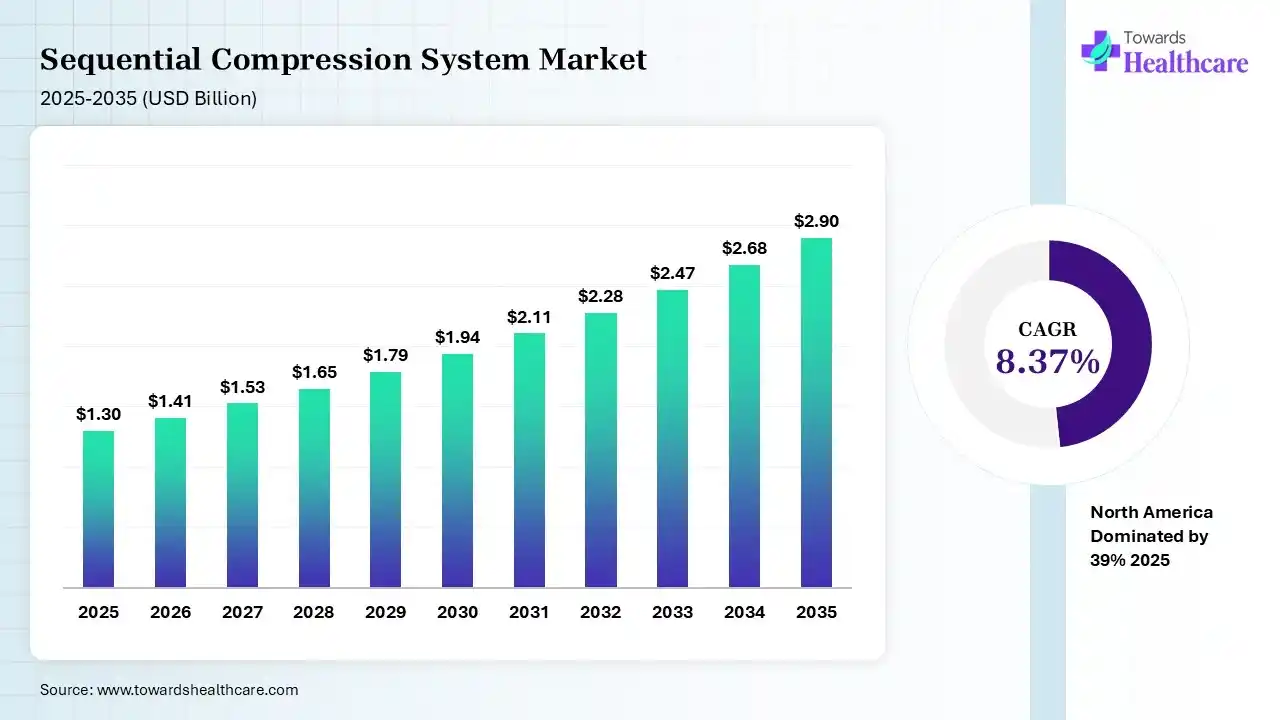
The market is expanding due to the rising prevalence of circulatory disorders and increasing surgical procedures. Growing awareness of thrombosis prevention, improvements in medical device technology, and higher adoption in hospitals and home healthcare are supporting market growth.
Sequential compression systems are medical devices that use inflatable sleeves to apply controlled pressure to the limbs, improving blood circulation and helping prevent conditions such as blood clots and swelling. The sequential compression system market is expanding due to the growing number of surgical procedures and the increasing prevalence of venous disorders, such as deep vein thrombosis. Greater awareness about thrombosis prevention, along with the rising elderly population, is boosting product adoption. In addition, advancements in portable and user-friendly devices and the expanding use of home healthcare solutions are further supporting market growth.
| Surgical Procedures | No. of Surgeries Occurred |
| Orthopedic Surgical Procedures | 30.5 Million |
| General Surgeries | 75 Million |
| Cardiovascular Surgical Procedures | 24 Million |
Artificial intelligence can transform the market by enabling smarter and more personalized therapy. AI-powered devices can monitor patient circulation, adjust compression levels automatically, and provide real-time data to healthcare providers. This improves treatment effectiveness and patient safety. In addition, AI-driven analytics can help detect risks of blood clots early, support remote patient monitoring, and enhance device performance through predictive maintenance and usage insights.
| Table | Scope |
| Market Size in 2026 | USD 1.41 Billion |
| Projected Market Size in 2035 | USD 2.9 Billion |
| CAGR (2026 - 2035) | 8.37% |
| Leading Region | North America by 39% |
| Historical Data | 2020 - 2023 |
| Base Year | 2025 |
| Forecast Period | 2026 - 2035 |
| Measurable Values | USD Millions/Units/Volume |
| Market Segmentation | By Product, By Technology, By Application, By End Use, By Region |
| Top Key Players | Cardinal Health, Arjo, Tactile Medical, Bio Compression Systems, Enovis, Mego Afek, Zimmer Biomet, AIROS Medical |
Why Did the Consumables & Accessories Segment Dominate in the Market in 2025?
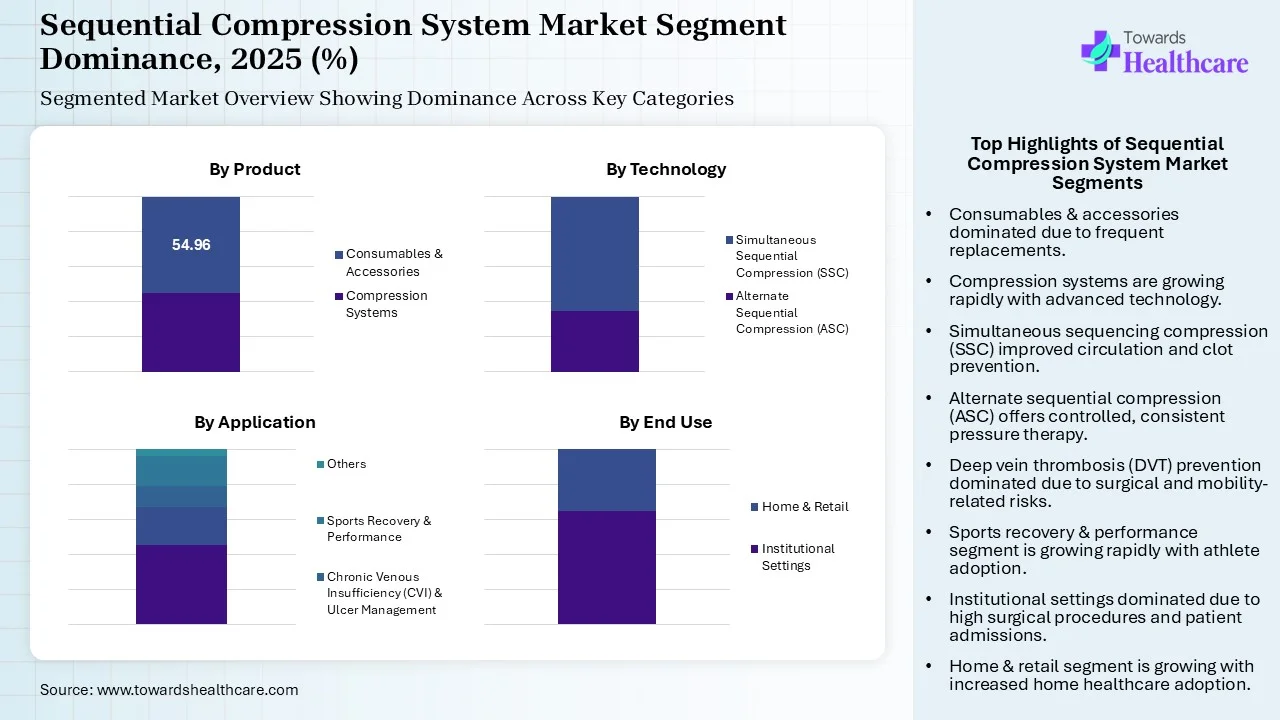
The consumables & accessories segment dominated the sequential compression system market in 2025 due to the frequent replacement of items such as compression sleeves, garments, and tubing. These components are for single-patient use or require regular replacements for hygiene and effectiveness. Additionally, the growing number of surgical procedures and hospital admissions increased the demand for these recurring products, making them a major revenue contributor in the market.
Compression Systems
The compression systems segment is expected to grow at the fastest CAGR due to increasing demand for advanced medical devices that provide effective prevention of deep vein thrombosis and improved blood circulation. Hospitals and home-care settings are adopting technologically advanced and portable compression systems to enhance patient comfort, support post-surgical recovery, and enable continuous therapy, which is accelerating segment growth during the forecast period.
Which Technology was Dominant in the Market in 2025?
The simultaneous sequencing compression (SSC) segment dominated the sequential compression system market in 2005 due to its ability to deliver uniform and efficient pressure across multiple chambers at the same time. This technology improves blood circulation more effectively and reduces the risk of clot formation. Its reliability, faster therapy cycles, and wider adoption in hospitals for post-surgical care and thrombosis prevention significantly contributed to its leading market share.
Alternate Sequential Compression (ASC)
The alternate sequential compression (ASC) segment is expected to grow at the fastest CAGR due to its ability to provide more controlled and consistent pressure therapy, improving blood flow and reducing the risk of clot formation. Increasing adoption of advanced compression technologies, rising surgical procedures, and growing demand for efficient thrombosis prevention in hospitals and home-care settings are the major factors supporting the rapid growth of the segment.
How Does the Deep Vein Thrombosis (DVT) Prevention Segment Dominate the Sequential Compression System Market in 2025?
The deep vein thrombosis (DVT) prevention segment dominated the market in 2025 due to the high risk of blood clot formation among patients undergoing surgery, prolonged hospitalization, or limited mobility. Healthcare providers widely use these systems to improve blood circulation and reduce clot-related complications. Increasing awareness of thrombosis prevention and the growing number of surgical procedures further strengthened the segment’s leading position in the market.
Sports Recovery & Performance
The sports recovery & performance segment is expected to grow at the fastest CAGR due to the increasing adoption of compression therapy by athletes for recovery. Rising participation in sports and fitness activities, along with growing awareness about advanced recovery technologies, is driving demand. Additionally, portable and easy-to-use compression devices are encouraging their use in training centers and home settings.
How Did the Institutional Settings Segment Dominate the Sequential Compression System Market in 2025?
The institutional settings segment dominated the market in 2025 due to the high number of surgical procedures and patient admissions in hospitals and clinics. These healthcare facilities widely use compression systems to prevent deep vein thrombosis in immobile or postoperative patients. Additionally, better access to advanced medical equipment, trained professionals, and established treatment protocols in institutional settings further supported the segment’s leading market share.
Home & Retail
The home & retail segment is expected to grow at the fastest CAGR due to the rising preference for home-based healthcare and convenient treatment options. Increasing awareness of compression therapy, growing availability of portable and user-friendly devices, and expanding online and retail distribution channels are encouraging patients to adopt these systems at home, particularly for long-term care, recovery, and preventive therapy.
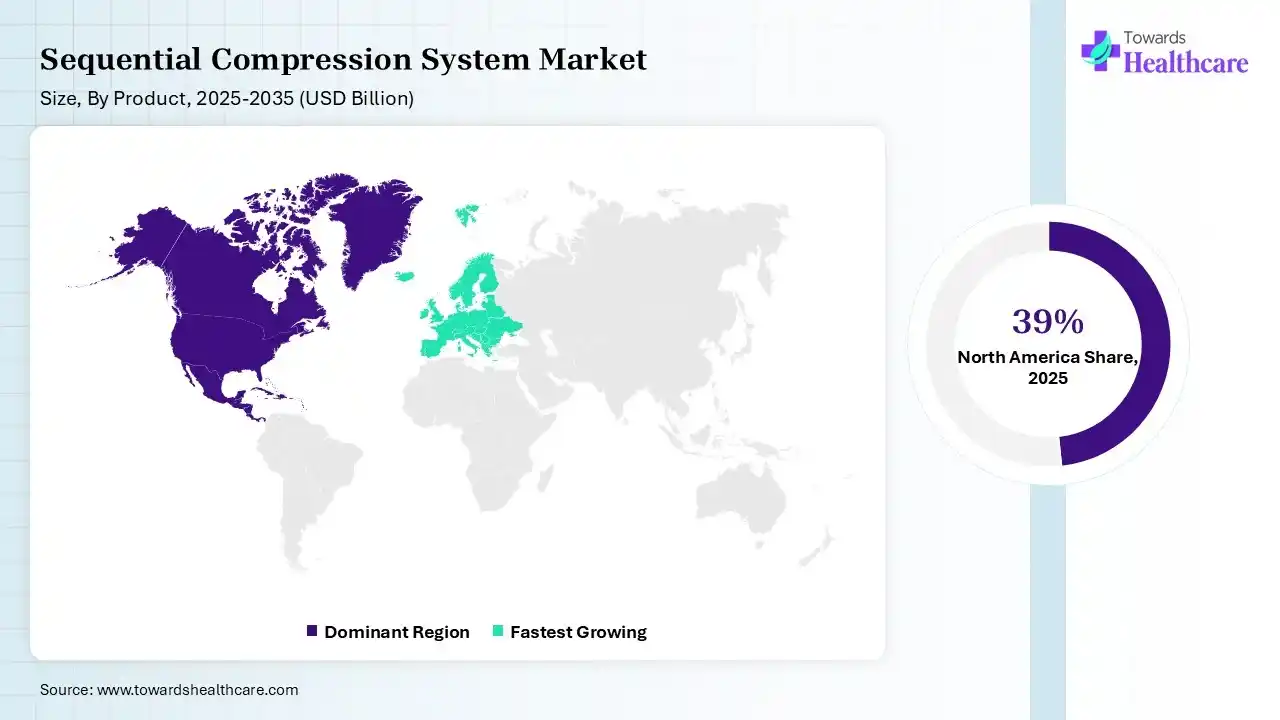
| Regions | Share 2025 (%) |
| North America | 39% |
| Europe | 27% |
| APAC | 24% |
| Latin America | 6% |
| Middle East and Africa | 4% |
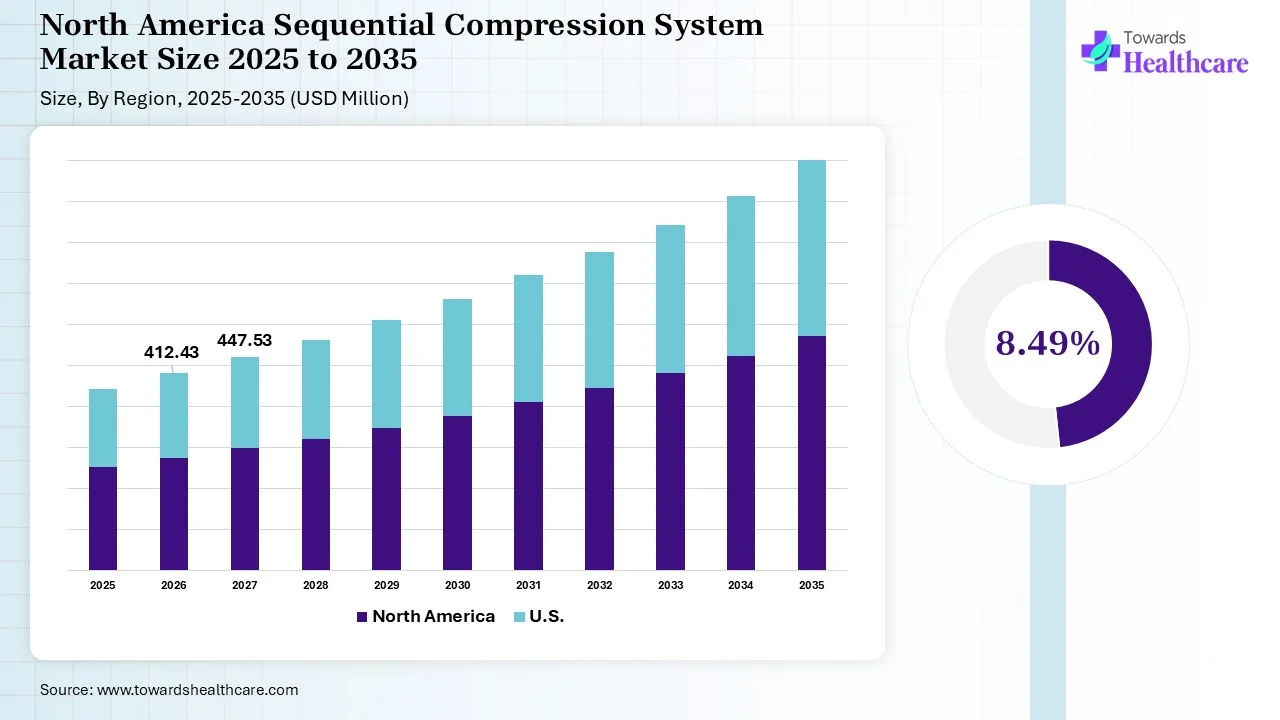
North America dominated the sequential compression system market by 39% due to its advanced healthcare infrastructure and high adoption of medical technologies. The region also reports a large number of surgical procedures and cases of deep vein thrombosis, increasing the demand for preventive therapies. Additionally, the strong presence of leading medical device companies, supportive reimbursement policies, and growing awareness about thrombosis prevention further contributed to the region's market dominance.
U.S. Market Trends
The U.S. sequencing compression system market is leading due to the high number of surgical procedures and a strong focus on preventive deep vein thrombosis in hospitals. Advanced healthcare facilities and early adoption of innovative medical technologies further support market growth. Additionally, the presence of major medical device manufacturers, increasing awareness about circulatory health, and well-established healthcare spending contribute to the country’s dominant position in the market.
Canada Market Trends
Canada's sequential compression system market is growing steadily because of increasing surgical procedures, rising cases of venous thromboembolism, and an aging population. Hospitals are adopting advanced compression systems to improve patient safety and reduce postoperative complications. Government investments in healthcare infrastructure support wider use of preventive medical devices. Home healthcare providers are also expanding the use of portable compression systems. Growing awareness of deep vein thrombosis prevention, improving clinical guidelines, and continuous innovation in compression technology will support future market growth across the Canadian healthcare sector.
Asia Pacific is anticipated to grow at the fastest CAGR due to improving healthcare infrastructure, increasing healthcare expenditure, and rising awareness about thrombosis prevention. The growing number of surgeries, the expanding aging population, and the increasing adoption of advanced medical devices are also contributing to market growth. Additionally, developing countries in the region are investing more in hospital facilities and medical technologies, creating strong growth opportunities.
India Market Trends
India is expected to grow at the fastest CAGR in the sequential compression systems market due to expanding healthcare infrastructure and increasing investment in advanced medical technologies. The rising number of surgeries, growing awareness about deep thrombosis prevention, and improving access to hospital care are driving demand. Additionally, the country's large patient population and rapid development of private healthcare facilities are further supporting strong market growth.
China Market Trends
China's sequential compression system market is expanding rapidly due to increasing hospital admissions, rising orthopedic and cardiovascular surgeries, and growing awareness of thrombosis prevention. Healthcare facilities are investing in advanced compression devices to improve postoperative care and patient outcomes. Government initiatives supporting healthcare modernization encourage adoption of medical technologies. Local manufacturers are introducing affordable and innovative compression systems for broader access. Rising elderly population, expanding healthcare infrastructure, and increasing focus on preventive care will continue driving demand for sequential compression systems across the country.
Europe is anticipated to grow at a notable rate in the sequential compression system market due to increasing awareness of deep vein thrombosis prevention and strong healthcare systems. The region also has a rising elderly population and a high number of surgical procedures. In addition, supportive healthcare policies, technological advancements in medical devices, and the presence of established healthcare providers are contributing to steady market growth.
UK Market Trends
The UK is expected to grow at a significant rate in the sequential compression system market due to increasing awareness about deep vein thrombosis prevention and improved patient care practices. The rising number of surgical procedures and a growing elderly population are also driving demand. Additionally, strong healthcare infrastructure, supportive clinical guidelines, and the adoption of advanced medical technologies are further contributing to market growth during the forecast period.
Germany Market Trends
Germany's sequential compression system market is growing because of its advanced healthcare infrastructure, increasing surgical procedures, and strong focus on preventing venous thromboembolism. Hospitals routinely use compression systems to improve blood circulation and reduce postoperative complications. An aging population and rising chronic disease cases support increasing demand for these devices. Healthcare providers continue adopting advanced portable and automated compression technologies. Ongoing investments in hospital modernization, evidence-based clinical practices, and medical technology innovation will strengthen future market development throughout the German healthcare system.
Sequential compression devices (SCDs), also known as intermittent pneumatic compression systems, are used to improve blood circulation in the legs and help prevent conditions such as deep vein thrombosis and pulmonary embolism in patients with limited mobility. Support services focus on proper device usage, patient monitoring, and ensuring effective therapy, especially during post-surgical recovery. Key players: Zimmer Biomet, Breg Inc., Talley Group Ltd, and Mego Afek.
| Companies | Headquarters | Offerings |
| Cardinal Health | Ohio, USA | Develops sequential compression devices and disposable compression sleeves designed to support blood circulation and help reduce the risk of blood clots in hospitalized or post-surgical patients. |
| Arjo | Sweden | Provides intermittent pneumatic compression systems and patient mobility solutions that assist healthcare providers in preventing circulatory complications in immobile patients. |
| Tactile Medical | Minnesota, USA | Offers advanced pneumatic compression therapy systems mainly used for managing lymphedema and other circulation-related conditions in clinical and home-care settings |
| Bio Compression Systems | Pennsylvania, USA | Manufactures pneumatic compression pumps and garments designed to improve lymphatic and venous circulation and support edema management. |
| Enovis | Delaware, USA | Through its rehabilitation and recovery product portfolio, the company provides compression therapy technologies used in post-surgical care and circulatory health management. |
| Mego Afek | Israel | Produces compression therapy systems such as pneumatic devices designed to treat lymphedema and support improved blood and lymphatic flow. |
| Zimmer Biomet | Indiana, USA | Supplies surgical care and recovery technologies, including compression solutions used to help prevent circulatory complications after orthopedic procedures. |
| AIROS Medical | Pennsylvania, USA | Develops pneumatic compression devices that assist in improving blood and lymph circulation and reducing swelling associated with vascular and lymphatic disorders. |
In February 2026, "Millions of aging Americans, including many diabetics, experience pain in their legs, have trouble healing foot ulcers, and are at risk of other serious health complications, including amputation as a result of poor blood flow to the lower extremities. ARTAIRA increases circulation to treat these conditions and help patients return to regular activities and lifestyles," says Darren M. Behuniak, Chief Operating Officer of AIROS Medical, Inc.
By Product
By Technology
By Application
By End Use
By Region






Principal Consultant
Payal Rabde is a Healthcare Market Research Analyst at Towards Healthcare Research & Consulting with 4+ years of experience in pharmaceuticals, biotechnology, medical devices, and life sciences.
Learn more about Payal Rabde

Reviewed By
Aditi Shivarkar is a seasoned professional with over 14 years of experience in healthcare market research. As a content reviewer, Aditi ensures the quality and accuracy of all market insights and data presented by the research team.
Learn more about Aditi Shivarkar