




 Request Consultation
A globally surging conjunction of oncology, artificial intelligence (AI), personalized medicine, digital health, & biotechnology has revolutionized cancer care into one of the most attractive investment opportunities within healthcare technology. Primarily, Oncology HealthTech, which includes software, diagnostics, AI platforms, digital therapeutics, clinical workflow solutions, patient engagement, remote monitoring, tailored oncology, & genomic technologies. This has become a substantial focus area for venture capital investors over the past decade.
Specifically, cancer remains one of the world's largest healthcare challenges. According to the World Health Organization (WHO), cancer recorded roughly 20 million new cases and 9.7 million deaths globally in 2022, with incidence predicted to rise to 35 million new annual cases by 2050, which shows a 77% increase from 2022 levels. So, this rising disease burden continues to drive demand for earlier diagnosis, precision therapies, digital care pathways, & AI-powered clinical decision support.
From my research, it shows that the rapid progression of cancer diagnostics, genomic sequencing, liquid biopsy technologies, oncology software, and virtual care platforms has drastically empowered the Oncology HealthTech investment landscape. Venture capital leaders highly recognize that digital infrastructure and AI can expedite drug development, enhance clinical outcomes, improve oncology workflows, and lower healthcare expenses. Following the record-breaking digital health investment cycle of 2021, global venture funding experienced a correction during 2022 & 2023 due to increased interest rates, macroeconomic uncertainty, & decreasing technology valuations. However, oncology remained considerably more resilient than many other digital health categories due to consistent demand for innovation in cancer diagnostics, tailored medicine, and AI-enhanced clinical research.
Furthermore, investment activity recovered throughout 2024 & into 2025, mainly led by faster commercialization of generative AI in healthcare, constant expansion of precision oncology, & growing adoption of liquid biopsy diagnostics, and robust pharmaceutical alliances. This also consists of expanded M&A activity, rising demand for decentralized oncology clinical trials, & growth of real-world evidence (RWE) platforms. Currently, oncology indicates one of the giant specialty-focused streams within healthcare venture investing.
Global Oncology HealthTech Market Overview
First of all, Oncology HealthTech is defined as technology-driven firms creating solutions across the cancer care continuum, including AI-enabled cancer diagnostics, digital pathology, and precision oncology software. This further emphasizes genomic analysis platforms, molecular diagnostics, clinical decision support, digital therapeutics, remote patient monitoring, oncology electronic health record (EHR) solutions, clinical trial management platforms & cancer screening technologies. Whereas radiology AI, imaging analytics, biomarker discovery platforms, patient navigation software, oncology revenue cycle management & population oncology analytics are gaining pivotal transformation across the healthcare system.
Regardless of traditional biotechnology players that majorly develop therapeutics, Oncology HealthTech companies are aiming at technology platforms that optimize diagnosis, treatment selection, operational efficiency, patient engagement, & research productivity.
Why Investors Are Focusing on Oncology?
The emergence of numerous structured trends is continuously supporting investment in oncology technologies.
Glimpse of Increasing Global Cancer Prevalence Burden
| Metric | Value (Approx.) |
| Global Cancer Cases (2022) | 20 million |
| Global Cancer Deaths (2022) | 9.7 million |
| Projected Annual Cases by 2050 | >35 million |
| Increase vs. 2022 | 77% |
| People living within five years of diagnosis | >53 million |
The chart shows that a surge in cancer incidence is bolstering demand for earlier detection, precision diagnostics, genomic sequencing, remote care, AI-optimized imaging, and oncology workflow automation. These demand drivers generate appealing long-term opportunities for technology companies & investors.
Research indicates that Oncology is the Largest Therapeutic Area in the Pharma Sector.
This advancing oncology area accounts for the highest level of global pharmaceutical R&D spending.
Current projections represent:
| Metric | Estimate (Approx.) |
| Global Oncology Drug Market | $230-250 billion |
| Share of Pharmaceutical Pipeline | 35-40% |
| Oncology Clinical Trials | >8,000 active across the globe |
| Oncology Drugs in Development | >2,000 candidates |
These metrics & estimates show that pharmaceutical companies are fostering oncology pipelines, leading to a rise in demand for technologies assisting, like companion diagnostics, patient recruitment, clinical trials matching, AI-assisted pathology, real-world evidence (RWE), &digital biomarkers. This ecosystem effect has strengthened venture investment beyond therapeutics into allowing technologies.
Oncology HealthTech VC Funding Snapshot
Even though oncology-specific venture funding is not consistently uncovered as a standalone category across all databases, integrating digital pathology, oncology AI, precision oncology software, oncology diagnostics, & cancer technology companies offers a subtle picture of sustained investor interest.
Estimated Global Oncology HealthTech VC Funding
| Year | Funding (USD Billion) | Deals |
| 2018 | 3.2 | 250 |
| 2019 | 4.1 | 295 |
| 2020 | 5.8 | 365 |
| 2021 | 9.7 | 520 |
| 2022 | 760% | 470 |
| 2023 | 6.3 | 410 |
| 2024 | 7.5 | 455 |
| 2025* | 4.3 (YTD) | 245 |
2025 figures indicate year-to-date projections based on publicly announced venture financing through mid-2025.
As per my CAGR analysis, between 2018 & 2024, funding elevated from nearly USD 3.2 billion to USD 7.5 billion. This shows an estimated 15 to 16% CAGR, as annual deal activity approximately doubled over the same period. A subsequent trend highlights that investor confidence has remained robust regardless of expansive market volatility.
Evolution of Oncology HealthTech Investment
I. Phase 1 (2015-2018): Precision Medicine
During this timeline, investors focused prominently on genomics, next-generation sequencing, precision diagnostics, molecular profiling, and companion diagnostics. Key leaders involved are Tempus, Foundation Medicine, & Guardant Health.
II. Phase 2 (2019-2021): Digital Oncology Expansion
Further investment was shifted toward clinical workflow software, tele-oncology, digital pathology, AI imaging, remote patient monitoring, & clinical trial software. The COVID-19 pandemic expedited digital adoption and broadened investor interest in virtual oncology care.
III. Phase 3 (2022-Present): AI-Enabled Oncology
This era has seen funding concentrated on generative AI, underlying models, clinical copilots, multi-modal diagnostics, pathology AI, drug discovery AI, oncology copilots, & predictive analytics. Eventually, AI-driven oncology startups are commanding some of the largest venture financing rounds within healthcare technology.
Funding by Investment Stage
| Stage | Share of Total Funding |
| Seed | 11% |
| Series A | 21% |
| Series B | 24% |
| Series C | 18% |
| Series D+ | 17% |
| Growth Equity | 9% |
From the above digits, a relatively high proportion of Series B & Series C investments shows the capital-intensive nature of clinical validation, regulatory approvals, & commercialization.
Research activities also found average deal sizes:
| Stage | Average Round Size |
| Seed | USD 3-5 million |
| Series A | USD 12-18 million |
| Series B | USD 30-45 million |
| Series C | USD 60-90 million |
| Growth | USD 120-300 million |
This reflects that players are establishing AI diagnostics & personalized oncology platforms, generally boosting larger rounds due to regulatory requirements & commercialization expenditures.
Investment by Technology Segment Across the Oncology Stream
Respective research explored that investment in the oncology technology segment is mainly fueled by growing worldwide cancer cases, advancements in tailored medicine, & massive demand for non-invasive early diagnostics. This further dictates the estimated share of Oncology HealthTech VC funding:
| Segment | Estimated Funding Share | Estimated Funding (USD Billion, 2024) |
| Precision Oncology | 24% | 1.8 |
| Cancer Diagnostics | 19% | 1.43 |
| AI Drug Discovery | 17% | 1.28 |
| Digital Pathology | 12% | 0.9 |
| Clinical Trial Technology | 8% | 0.53 |
| Imaging AI | 7% | 0.6 |
| Remote Patient Monitoring | 5% | 0.3 |
| Oncology Workflow Software | 4% | 0.38 |
| Digital Therapeutics | 2% | 0.15 |
| Patient Engagement | 2% | 0.15 |
Shares have demonstrated that the prospective era is seeking precision oncology, which continues to attract the dominant share of venture investment because of its central role in customized cancer treatment.
Regional Distribution of Venture Funding
| Region | Share |
| North America | 62% |
| Europe | 19% |
| Asia-Pacific | 13% |
| Israel | 4% |
| Latin America | 1% |
| Middle East & Africa | 1% |
Respective shares show that North America sustained as the dominant investment hub & is expected to account for nearly a 58-60% share by 2030, significantly powered by its leading academic cancer centers, advanced venture capital ecosystem, robust pharmaceutical collaborations, vast addressable market, & suitable reimbursement framework. With the second-largest share, Europe is notably growing & will reach approximately a 20% share by 2030 due to strong capital deployment into TechBio & AI-enabled biological research, coupled with immersive public health landscapes to support affordable therapeutic & digital health allocation. According to my research, APAC will expand rapidly in the coming years, as it is facing huge geriatric populations, booming urbanization, along with government-supported precision oncology & large-scale screening programs, especially in China & India.
Investment Drivers
There are many catalysts & macroeconomic factors, along with healthcare trends, fueling Oncology HealthTech investment across the world.
- AI Adoption: Particularly, large language models & foundation AI models are increasingly improving clinical documentation, pathology workflows, imaging interpretation, drug target discovery, & treatment recommendations. Additionally, machine learning models meet or exceed expert-level accuracy in highlighting early-stage lesions or invisible cellular alterations, with minimally invasive testing.
- Precision Medicine: Globally expanding genomic testing & biomarker-driven therapies are experiencing consistent rising demand for software platforms that assist tailored treatment decisions. Whereas progressive integration of genomics, proteomics, and transcriptomics unveils actionable therapeutic targets in complex cancers.
- Pharmaceutical Digital Transformation: Leading pharmaceutical companies are widely investing in digital platforms that improve trial recruitment, patient identification, biomarker matching, real-world evidence (RWE) generation, & post-market surveillance.
- Ageing Population: According to research, over 60% of new cancers & 70% of cancer deaths occur in adults aged 65 & geriatric people, propelling specialized ageing oncology tech. This driver is expected to drastically increase cancer prevalence over the next two decades, which spurs demand for oncology technologies.
- Regulatory Innovation: Nowadays, several regulatory agencies have increased assistance for digital diagnostics, AI-driven medical devices, Software as a Medical Device (SaMD), & companion diagnostics. These developments are lowering commercialization hurdles for innovative Oncology HealthTech firms.
The Oncology HealthTech Investment Ecosystem
Unlike therapeutic biotechnology investing, Oncology HealthTech investors usually back technology platforms that foster cancer diagnosis, treatment, clinical operations, & research. Alongside, these investors often have expertise extending to software, AI, medical devices, diagnostics, genomics, & life sciences. Specifically, the investor landscape can broadly be classified into:
| Investor Type | Focus |
| Generalist venture Capital | Digital health, AI, enterprise software, healthcare IT |
| Healthcare-Focused VC | Digital health, diagnostics, medical technology |
| Life Sciences VC | Precision medicine, genomics, oncology platforms |
| Corporate Venture Capital | Strategic investments by pharmaceutical & technology companies |
| Growth Equity Funds | Expansion-stage oncology platforms |
| Family Offices | Long-term healthcare innovation investments |
Estimated Distribution of Oncology HealthTech VC Activity (2024-2025)
| Investor Category | Share of Total Deals |
| Healthcare-Focused VC | 34% |
| Life Sciences VC | 27% |
| Generalist VC | 18% |
| Corporate Venture Capital | 14% |
| Growth Equity | 7% |
This has been showcasing healthcare-specialized investors continue to dominate because of their expertise in navigating regulatory, reimbursement, & clinical validation challenges.
Top 25 Most Active Oncology HealthTech Investors
| Rank | Investor | Estimated Oncology-Related Investments* |
| 1 | OrbiMed | 95+ |
| 2 | RA Capital Management | 90+ |
| 3 | ARCH Venture Partners | 85+ |
| 4 | Third Rock Ventures | 80+ |
| 5 | F-Prime Capital | 75+ |
| 6 | General Catalyst | 70+ |
| 7 | Andreessen Horowitz (a 16z Bio + Health) | 65+ |
| 8 | NEA | 60+ |
| 9 | Sofinnova Partners | 60+ |
| 10 | Casdin Capital | 55+ |
| 11 | GV (Google Ventures) | 50+ |
| 12 | Khosla Ventures | 48+ |
| 13 | Deerfield Management | 45+ |
| 14 | DCVC Bio | 42+ |
| 15 | Lux Capital | 40+ |
| 16 | Section 32 | 38+ |
| 17 | Insight Partners | 35+ |
| 18 | Sequia Capital | 32+ |
| 19 | Bessemer Venture Partners | 30+ |
| 20 | Andreessen Bio Fund | 28+ |
| 21 | Eclipse Ventures | 26+ |
| 22 | Polaris Partners | 24+ |
Approximate historical oncology-related investments across oncology software, diagnostics, genomics, AI, digital pathology, precision medicine & related healthtech segments.
Market Share by Estimated Oncology Investment Activity
| Investor | Estimated Share |
| Top 5 Investors | 29% |
| Top 10 Investors | 52% |
| Top 25 Investors | 78% |
| All Other Investors | 22% |
The market remains emphasized among experienced healthcare & life sciences investors with long-standing expertise in oncology innovation.
Investor Profiles
OrbiMed
- Headquarters: New York, USA
- Assets Under Management (AUM): Over USD 18 billion
- Investment Focus: An investor that aims at oncology therapeutics, precision medicine, diagnostics, medical devices, digital health, & AI-driven healthcare platforms.
Representative Portfolio Companies: Tempus, Freenome, Caris Life Sciences, Guardant Health, & Color Health. - Why OrbiMed Leads: It has continuously invested across the oncology ecosystem, which helps companies from early-stage development through commercialization. It has a diversified strategy that comprises diagnostics, precision oncology, & digital infrastructure.
RA Capital Management
- Headquarters: Boston, USA
- AUM: Nearly USD 10 billion
- Investment Focus Areas: A leader has been widely investing in precision oncology, genomics, AI drug discovery, diagnostics, & computational biology.
- Notable Portfolio Companies: Tempus, Recursion, Relay Therapeutics, Freenome, & C2i Genomics.
- This investor is known for backing companies that unify biological innovation with modern computational platforms.
ARCH Venture Partners
- Headquarters: Chicago, USA
- Estimated Healthcare Portfolio: 100+ firms
- Investment Themes: The respective company focuses on platform technologies, AI-enabled biology, genomics, cell & gene therapy, and personalized oncology.
- ARCH often invests in science-driven companies emerging from leading academic institutions.
Third Rock Ventures
- Headquarters: Boston, Massachusetts
- AUM: Nearly $3.8 billion
- Investment Areas: An investor increasingly focused on oncology, immunotherapy, AI drug discovery, digital diagnostics, & genomic medicine.
- It mainly specialises in company creation, recurring partnerships with academic researchers & industry experts to roll out novel ventures.
- Alongside, its portfolio focuses on transformative technologies with robust clinical & commercial potential.
F-Prime Capital
- Headquarters: Cambridge, Massachusetts, United States
- AUM: Approximately $5.3 billion
- Investment Focus Areas: It primarily emphasizes healthcare IT, oncology diagnostics, digital pathology, AI applications in healthcare, & precision medicine.
- A leader has supported many companies integrating AI & genomics into oncology workflows.
General Catalyst
- Headquarters: Cambridge, Massachusetts, US
- AUM: nearly $40 billion
- Core Areas: The firm aims at healthcare IT, digital infrastructure, clinical workflow optimization, patient involvement, & data platforms.
- It has strengthened its healthcare investment strategy to include oncology platforms recognizing clinical workflows, AI-optimized decision support, & patient care.
Andreessen Horowitz (a16z Bio + Health)
- Headquarters: Menlo Park, California
- AUM: USD 700 million
- Investment Key Areas: It majorly fosters investment in generative AI, oncology software, clinical AI, bioinformatics, and digital diagnostics.
- It significantly spurs scalable software & AI infrastructure positions, as a leading investor in the latest oncology technologies.
New Enterprise Associates (NEA)
- Headquarters: Menlo Park, California
- AUM: > $35 billion
- Investment Focus Areas: The company has been broadly investing in medical technology, digital health, oncology diagnostics, clinical software, and AI-powered healthcare.
- It invests across all stages, i.e. from seed to growth.
Sofinnova Partners
- Headquarters: Paris, France
- AUM: Nearly USD 4.6 billion
- Investment Key Areas: It has been pushing investments in oncology innovation, precision medicine, digital therapeutics, AI-assisted diagnostics, & biotechnology platforms.
- Especially, its investments reinforce Europe’s position in oncology healthtech.
Casdin Capital
- Headquarters: New York City, United States
- AUM: Approximately USD 2.9 billion
- Investment Core Areas: Its investments extend to computational biology, genomics, precision oncology, AI-driven diagnostics, & digital infrastructure.
- It primarily emphasizes life sciences & healthcare technology.
Corporate Venture Capital in Oncology HealthTech
Firstly, corporate investors play an increasingly pivotal role by offering strategic capital, industry expertise, and commercialization assistance. Additionally, corporate partnerships have widened through strategic collaborations, co-investments, & acquisitions. Major investors are:
- Roche Venture Fund: Focused on diagnostics, tailored oncology.
- Merck Global Health Innovation Fund: Emphasized digital health, oncology.
- Johnson & Johnson Innovation-JJDC: Aiming at Medical technology, oncology.
- Pfizer Ventures: Stepping into precision medicine.
- Novartis Venture Fund: Investing in oncology, AI, diagnostics.
- Bayer Leaps: Shifting towards advanced health technologies.
- Siemens Healthineers Ventures: Focused on imaging, diagnostics.
- GE HealthCare Ventures: Emphasized imaging, AI, digital health.
Emerging Investment Themes in Oncology HealthTech
Many investors are massively deploying capital to companies developing AI-enhanced pathology platforms, foundation models for oncology research, liquid biopsy technologies, & multi-cancer early detection (MCED) tests. Also, investment is supporting clinical trial matching platforms, digital twins for oncology, federated learning for healthcare data, synthetic control arms, RWE, and companion diagnostic software. Furthermore, these segments are anticipated to sustain significant investment priorities through the remainder of the decade.
Quarterly Funding Trends
Estimated Quarterly Funding Activity (2024)
| Quarter | Funding (USD Billion) | Deals |
| Q1 | 170% | 108 |
| Q2 | 190% | 112 |
| Q3 | 180% | 116 |
| Q4 | 210% | 119 |
The recovery in late 2024 was led by renewed interest in AI-driven healthcare platforms, vast funding rounds in cancer diagnostics, pharmaceutical strategic partnerships, improved IPO expectations, surged M&A activity, and institutional investor re-entry into healthcare expansion investing.
Top 20 largest Venture Rounds
| Company | Approx. Funding Raised ($Million) | Primary Focus |
| Tempus | 1,600+ | Precision oncology, AI |
| Caris Life Sciences | 1,800+ | Molecular diagnostics |
| Freenome | 1,350+ | Liquid biopsy |
| Grail | 1,900+ | Multi-cancer early detection |
| Guardant Health | 900+ | Liquid biopsy |
| Paige AI | 400+ | Digital pathology |
| PathAI | 390+ | AI pathology |
| C2i Genomics | 270+ | Minimal residual disease |
| Owkin | 300+ | AI drug discovery |
| Flatiron Health* | 300+ | Oncology data platform |
| Lunit | 280+ | Imaging AI |
| Kheiron Medical | 190+ | Breast imaging AI |
| Nuclei | 125+ | Spatial biology AI |
| Aiforia | 100+ | Pathology AI |
| Canexia Health | 130+ | Precision diagnostics |
| Strand Life Sciences | 120+ | Genomics |
| Ibex Medical Analytics | 140+ | Digital pathology |
| COTA | 100+ | Real-world oncology data |
| OncoHost | 90+ | Precision oncology |
| CanSense | 85+ | Early cancer detection |
Flatiron Health was later acquired by Roche.
Top Funded Oncology HealthTech Startups
Tempus: Founded in 2015, Tempus has become one of the giant oncology healthtech companies that combines genomic sequencing, clinical data analytics, AI-enabled decision support, and precision oncology software. This firm extensively partners with hospitals, physicians, & pharmaceutical leaders to promote personalized cancer research.
Grail: A company discovered in 2015-2016, & recognized as a commercial-stage healthcare company. This prominently impels multi-cancer early detection (MCED) utilizing next-generation sequencing (NGS), population-scale clinical data, & modern machine learning. Its Galleri test is referred to as a popular liquid biopsy platform across the world.
Caris Life Sciences: Developed in 1996 in Irving, Texas & well-known as a next-generation AI TechBio & precision oncology developer. Caris broadens the integration of molecular profiling, AI, genomics, real-world evidence (RWE), & clinical decision support. Its extensive approach has attracted substantial venture & strategic investment.
Freenome: Founded in 2014, & it creates AI-enabled blood tests for early cancer detection by unifying machine learning with multiomics data. Freenome joins with key tech & medical firms, including Google Cloud for data compute infrastructure, NVIDIA for rapid deep learning initiatives, & Roche for international commercial development.
Paige AI: It was established in 2017 as a digital pathology entity facilitating AI-powered diagnostic & biomarker software for cancer care. Paige uses deep learning in digital pathology, assisting pathologists in determining cancer more accurately & efficiently.
Projected Oncology HealthTech Unicorns (USD Billion)
- Tempus: 8 to 10
- Grail: 8+
- Caris Life Sciences: 7 to 8
- Freenome: 5 to 6
- Guardant Health*: Public
- Paige AI: 1 to 2
- Owkin: 1 to 2
Several additional players are approaching unicorn status as AI adoption & precision diagnostics continue to progress.
Mergers & Acquisitions (M&A)
| Acquirer | Target | Strategic Rationale |
| Roche | Flatiron Health | Oncology real-world data |
| Roche | Foundation Medicine | Precision oncology |
| Illumina | Grail (later divested) | Cancer screening |
| Exact Sciences | Thrive Earlier Detection | Early cancer detection |
| Siemens Healthineers | Varian | Oncology technology |
These acquisitions represent strong strategic demand from diagnostic firms, pharmaceutical leaders, & medical technology companies.
IPO Activity
Even though public markets slowed during 2022-2023, numerous oncology healthtech leaders continue preparing for IPOs as market conditions improve.
Characteristics of IPO Candidates
- Annual recurring revenue (ARR) above USD 100 million
- Regulatory-approved products
- Advanced pharmaceutical partnerships
- Demonstrated reimbursement pathways
- Robust clinical validation
Key Investment Risks
Regardless of strong long-term fundamentals, investors are consistently assessing many challenges, such as time-consuming regulatory approval timelines, intricate reimbursement processes, & clinical validation requirements. Alongside, investors are facing data privacy & cybersecurity concerns, limitations in integration with hospitals It systems, coupled with competitive pressure from well-established diagnostic companies, & capital-intensive commercialization.
Market Outlook: 2026-2030 & Expected Industry Evolution
The upcoming five years are predicted to be characterized by commercial-scale implementation of AI in oncology workflows, massive growth of multi-cancer early detection (MCED), & expansive adoption of digital pathology. Moreover, the prospective era will bolster higher integration of genomics into regular oncology care, expanded use of RWE in clinical decision-making, rising demand for decentralized oncology clinical trials, & mergers & acquisitions (M&A). Collectively, these trends will transform how cancer is diagnosed, monitored, & treated.
Market Growth
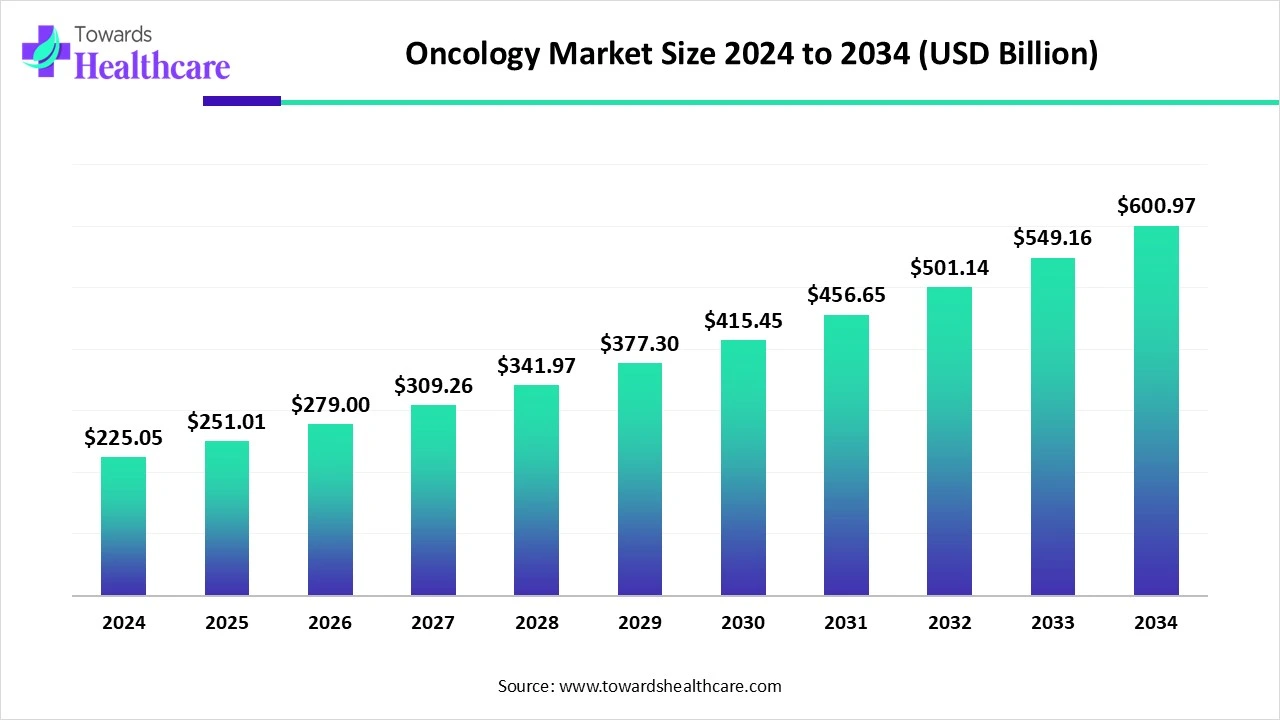
According to Towards Healthcare, the global oncology market size is calculated at US$ 279.98 billion in 2026, grew to US$ 251.01 billion in 2025, and is projected to reach around US$ 748.17 billion by 2035. The market is expanding at a CAGR of 11.54% between 2026 and 2035.
Projected Oncology HealthTech VC Funding
| Year | Predicted VC Funding ($Billion) | Growth Rate |
| 2025 | 8.0* | - |
| 2026 | 8.8 | 10% |
| 2027 | 9.8 | 11% |
| 2028 | 10.9 | 11% |
| 2029 | 12.1 | 11% |
| 2030 | 1350% | 12% |
projected full-year estimate.
Under this base-case scenario, annual venture investment could increase by $13 billion by 2030, which is propelled by constant demand for AI-powered cancer technologies & precision diagnostics.
Latest Funding Acquisitions in Oncology Technology in 2026
- In July 2026, Sightera Biosciences raised €3 million in pre-seed funding to reinforce its artificial intelligence-powered drug discovery platform and advance programs targeting cancer and fibrosis. This round was led by Entourage Ventures, Anacura & Qbic Fund, consolidating investors with experience across AI, biotechnology & life sciences.
- In July 2026, Premas Biotech received funding support under the Scheme for Promotion of Research and Innovation in Pharma MedTech Sector (PRIP) for the progression of its AXTEX-4D technology & to expand tailored chemotherapy screening leveraging patient-derived tumour organoids.
- In July 2026, Tempus AI acquired Personalis and will merge Personalis’ molecular residual disease, or MRD, technology to the Tempus platform, expanding the company’s ability to assist patients across their cancer journeys.
- In June 2026, GRAIL closed a $110 million equity financing agreement with Samsung affiliates to expedite US regulatory approval & reimbursement for its Galleri multi-cancer early detection test.
- In June 2026, Biomedical engineers at UConn were awarded an R33 grant from the National Institutes of Health (NIH) to evolve an advanced diagnostic smartphone-based platform to enable early lung cancer detection to be more rapid, more cost-effective, accessible and less invasive.
- In May 2026, Triomics raised $22 million in Series B financing backed by Battery Ventures, with participation from existing investors Nexus Venture Partners, Lightspeed & Y Combinator, along with strategic backers Oncology Ventures and Precision Health Informatics, a wholly-owned subsidiary of Texas Oncology. This will be employed to expedite the adoption across health systems, oncology networks and life sciences organizations; advance Triomics' AI/engineering & forward-deployed teams; coupled with the progression of the company's AI agents for clinical care and research.
- In May 2026, ClearNote Health secured a $52 million Series D financing round to speed up the expansion & commercialization of the company’s blood-based diagnostic tests & the appointment of a new president and chief operating officer.
- In May 2026, Roche entered into a definitive merger agreement to acquire PathAI to empower Roche’s position in Digital Pathology, which is revolutionizing comprehensive manual workflows into fully automated, AI-enabled processes & insights.
- In May 2026, Blank Bio secured a $7.2 million seed financing round coupled with a strategic alliance with Pacific Biosciences to bolster RNA foundation models for precision oncology, including the development of novel long-read RNA sequencing datasets for applications in biomarkers, clinical trial design, & diagnostics.
- In April 2026, Caredx Inc. acquired Naveris Inc. for up to $260 million, that introduce the NavDx liquid biopsy platform into CareDx's portfolio.
- In March 2026, Spotlight Pathology invested £1.4m to foster the commercial launch of its AI cancer diagnostics product.
- In February 2026, Royal Philips awarded funding from the EU’s Innovative Health Initiative (IHI) to strengthen precision cancer treatment through the unification of advanced medical imaging, robotic assistance, & minimally invasive therapies.
Emerging Investment Themes
Foundational AI Models
General-purpose AI models trained on pathology images, radiology scans, genomic data, clinical records, & molecular biomarkers. Furthermore, execution of these platforms offers assistance to multiple oncology applications from diagnosis to treatment selection.
Multi-Cancer Early Detection (MCED)
Along with breakthroughs in liquid biopsy, blood-based cancer screening technologies are attracting significant venture and strategic investment due to their potential to enhance early diagnosis across multiple cancer types.
Spatial Biology
This mainly covers a pairing of imaging with molecular analysis to excellently address tumor biology & support precision treatment decisions. Leading life science companies are massively buying out spatial innovators to secure market share.
AI Clinical Copilots
Primarily, the implementation of clinical assistants is capable of concluding patient records, recommending treatment pathways, detecting eligible clinical trials, & spurring documentation. Besides this, these sophisticated tools are projected to become widely integrated into oncology workflows.
Digital Twins
Digital twin models employ patient-specific clinical, imaging, and genomic data to simulate disease progression & examine treatment alternatives before clinical intervention. These models also enable pharma players to conduct in silico trials on virtual patient populations, significantly lowering preclinical evaluation spending & development timelines.
Future Exit Landscape
M&A Activity
Several large healthcare organizations are consistently looking for acquisitions that bolster their oncology capabilities. Potential acquirers cover global pharmaceutical firms, diagnostic companies, medical device manufacturers, healthcare software vendors, & cloud and AI platform providers. Moreover, industry researchers showcase that oncology & AI-driven healthcare remain among the most attractive acquisition areas for healthcare investors.
IPO Market
Companies most likely to seek IPOs will generally have annual recurring revenue surpassing USD 100 million, regulatory-cleared products, developed reimbursement solutions, robust clinical validation, & sustainable commercial expansion.
Major Challenges Across the Oncology HealthTech Companies
A prominent hurdle includes regulatory intricacy, as companies designing AI-enabled Software as a Medical Device (SaMD) must navigate emerging regulatory requirements across multiple jurisdictions. Commercial success relies on demonstration of clinical utility, generation of health economics evidence, protection of payer coverage, & integration into clinical workflows, creating certain reimbursement barriers. In the case of clinical validation, companies face challenges, as oncology technologies necessitate multi-center validation, vast patient datasets, long-term outcome data, & peer-reviewed evidence. These requirements finally raise development periods & capital needs. Alongside, expanding AI models' dependency on patient data, compliance with privacy regulations & strong cybersecurity practices remains essential.
Strategic Recommendations
For Founders: Founders must prioritize clinically validated products rather than proof-of-concept demonstrations. Also, they should develop proprietary datasets to generate durable competitive advantages, and establish reimbursement strategies early in the commercialization process. Founders can evolve partnerships with hospitals 7 pharmaceutical players, and maintain an emphasis on measurable improvements in clinical outcomes & workflow effectiveness.
For Venture Capital Investors: They can broaden their investments across diagnostics, AI, genomics, & software platforms. Also, investors must assess regulatory readiness & reimbursement potential, with technical innovation. They favor companies with robust clinical evidence & scalable business models. Investors are pushing strategic collaborations with healthcare providers & life sciences firms. To prevent technical & regulatory limitations, investors should consider syndicate investments.
For Pharmaceutical Companies: These leading firms raise strategic investments in AI-powered companion diagnostics & also expand collaborations with oncology software & RWE providers. Pharma leaders can increase the use of digital platforms to enhance clinical trial recruitment & patient engagement, coupled with integration of AI into biomarker discovery & precision medicine initiatives.
Frequently Asked Questions (FAQs)
What is Oncology HealthTech?
Oncology HealthTech mainly encompasses technology leaders establishing software, AI, diagnostics, genomics, digital pathology, clinical decision support, remote monitoring, & other digital solutions designed to enhance cancer care.
Why is oncology appealing to venture capital?
Globally rising cancer burden, advances in precision medicine, and accelerating adoption of AI are evolving prominent opportunities for technology-enabled innovation in cancer diagnosis & treatment.
Which technologies receive the most investment?
Especially, precision oncology, AI diagnostics, liquid biopsy, digital pathology, imaging AI, & genomic analytics currently attract the greatest levels of venture funding.
Which regions lead Oncology HealthTech investment?
North America remains the dominant investment region, followed by Europe and Asia-Pacific.
Who are the most active investors?
The most active investors are OrbiMed, RA Capital Management, ARCH Venture Partners, Third Rock Ventures, F-Prime Capital, General Catalyst, Andreessen Horowitz, NEA, Sofinnova Partners, and Casdin Capital.
How is AI transforming oncology?
Broader AI adoption supports earlier cancer detection, improves diagnostic accuracy, speeds up drug discovery, optimizes pathology and imaging workflows, & helps clinicians in treatment planning.
What are the biggest risks for investors?
Major risks include regulatory uncertainty, reimbursement challenges, lengthy clinical validation, cybersecurity concerns, and integration with healthcare systems.
What exit opportunities exist?
Strategic acquisitions by pharmaceutical, diagnostics, & medical technology firms remain the foremost exit route, while IPO activity is expected to strengthen as capital markets improve.
Which startups have raised the most funding?
Key startups that have raised the most funding are Tempus, Caris Life Sciences, Grail, Freenome, Guardant Health, Paige, PathAI, & Owkin.
What is the long-term outlook?
The oncology HealthTech sector is predicted to experience sustained growth through 2030, fueled by continued investment in AI, precision medicine, & digital oncology platforms. Whereas industry observers also expect AI-enabled healthcare technologies to remain a significant driver of venture capital deployment over the remainder of the decade.
Conclusion
Oncology HealthTech has transformed from a niche investment theme into a foundational pillar of healthcare innovation. Ongoing advances in artificial intelligence, precision medicine, digital diagnostics, and genomics are revolutionizing the way cancer is determined, diagnosed, & treated. Even though the venture capital market has become more selective since the 2021 funding peak, oncology is consistently achieving sustained investor interest due to its impressive clinical relevance, advancing addressable market, & multiple commercialization pathways. However, investor attention is widely focused on AI-native platforms, digital pathology, liquid biopsy, and technologies that allow more tailored and data-driven cancer care. Nowadays, as healthcare systems seek to digitize & personalized oncology becomes standard practice, companies that unify stronger clinical evidence with scalable technology platforms are estimated to be best positioned for long-term growth. Specifically, for investors, the sector facilitates a compelling opportunity to invest in innovations that can optimize patient outcomes while developing substantial commercial value.