


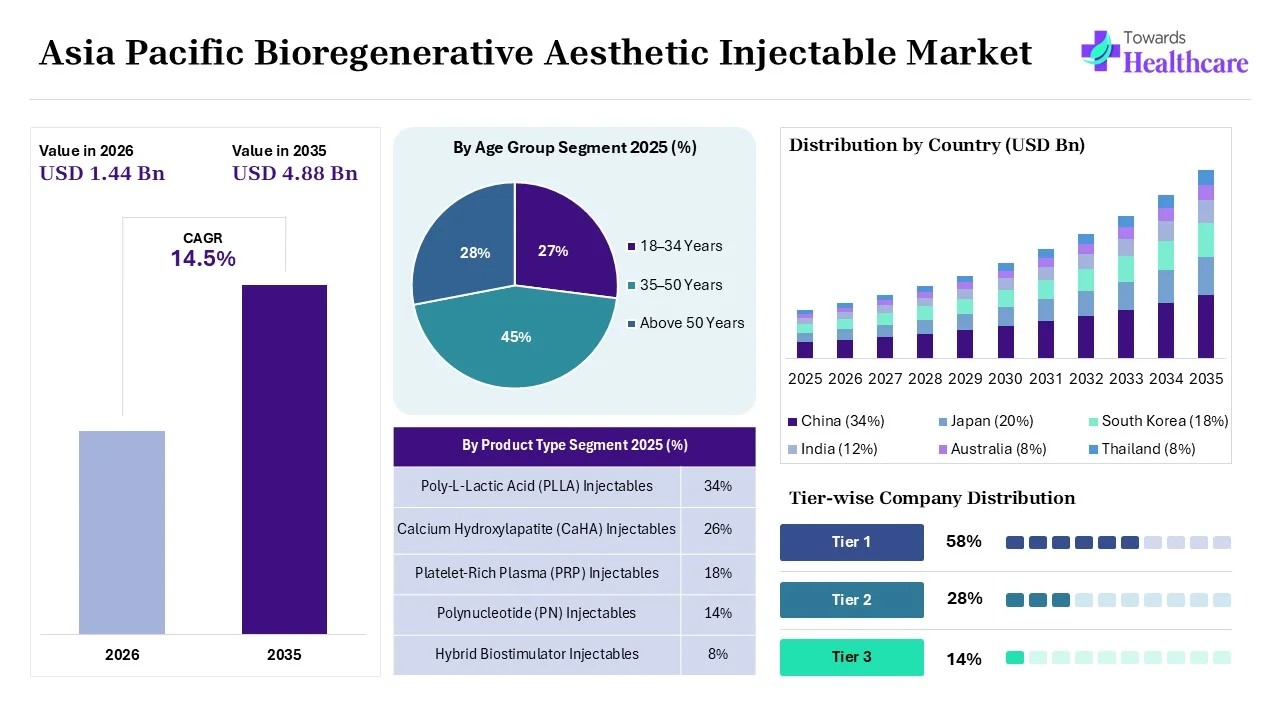
The Asia Pacific bioregenerative aesthetic injectable market size was estimated at USD 1.26 billion in 2025 and is predicted to increase from USD 1.44 billion in 2026 to approximately USD 4.88 billion by 2035, expanding at a CAGR of 14.5% from 2026 to 2035. Regeneration has evolved as an important concept in aesthetic therapeutics as the sectors emerge from predominantly volumetric correction to biologically oriented strategies, to improve tissue quality, function, and longstanding structural integrity, which drives the growth of the market
Bioregenerative aesthetics is a non-invasive or minimally invasive technology that is intended to stimulate the body’s natural regenerative processes. Unlike outdated cosmetic interventions, which are based on synthetic materials or surgery, bioregenerative treatments work in harmony with the patient's body’s own biology to improve appearance. Bioregenerative medicine harnesses the body’s innate ability to heal and regenerate itself, unlike traditional cosmetic procedures. These technologies reverse the aging in their specific tissue, enabling the production of healthier collagen and elastin, decreasing inflammation, which is a hallmark of aging, increasing their metabolic activity, and promoting better utilization of significant components like amino acids and multivitamins.
South Korea performs close to 1 in 4 aesthetic surgeries worldwide, and in 2025, a record 2.01 million international patients traveled there for medical care.
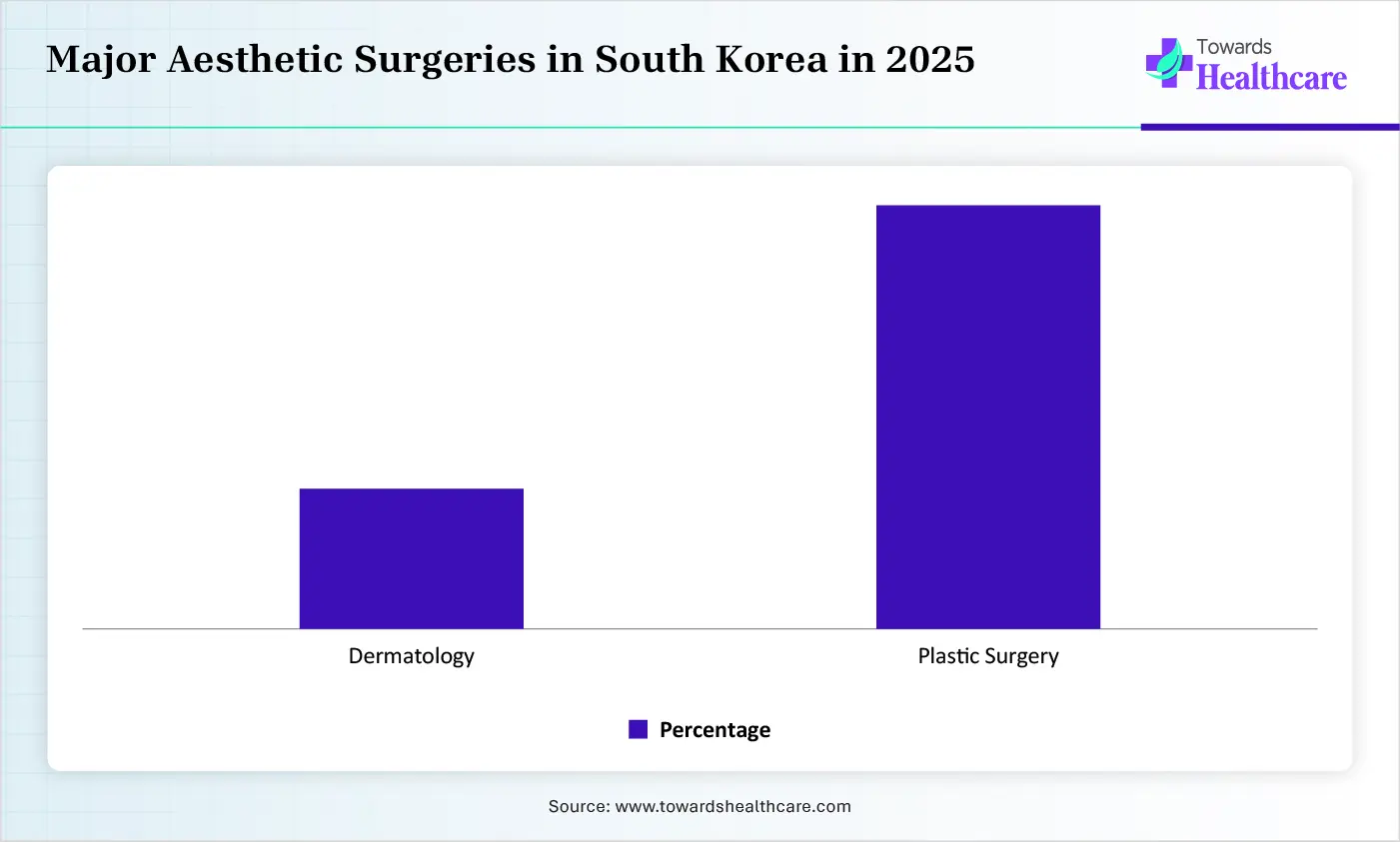
| Surgeries | Percentage |
| Dermatology | 72% |
| Plastic Surgery | 74% |
Skin boosting is an innovative technique that delivers either hyaluronic acid (HA) combined with vitamins, amino acids, and antioxidants, or pure HA, to stimulate the body’s natural production of collagen and elastin. Hyaluronic acid–based fillers and skin boosters mainly serve as microenvironmental modulators with limited regenerative capacity. These skinboosters have a low rheological profile, enabling even spread throughout the dermis and primarily enhancing skin quality. They help improve hydration, elasticity, texture, fine lines, erythema, and dyschromia, with a generally favorable safety profile. Recent developments have explored the molecular mechanisms of HA and its derivatives in anti-aging and wound healing.
By product type, the poly-l-lactic acid (PLLA) injectables segment contributed the largest Asia Pacific bioregenerative aesthetic injectable market share of 34% in 2025, as the efficiency of PLLA in managing wrinkles on the face, volume loss, and improving skin elasticity and hydration with patient fulfilment beyond 90%. PLLA injections provide safe, continuing, and natural rejuvenation results for the facial and neck areas.
By application, the facial rejuvenation segment contributed the largest market share of 38%, as bioregenerative aesthetic injection functions well for fine rhytides reduction, as well as to volumize, contour, and rejuvenate the face, hands, and neck. The constancy and autologous nature of plasma bio-filler are more accepted by individuals than the high-density hyaluronic acid fillers.
By end user, the dermatology clinics segment held a significant share of 36% in the Asia Pacific bioregenerative aesthetic injectable market, as regular screenings and tests allow skin specialists to detect skin conditions and underlying health challenges, leading to rapid diagnosis. A dermatologist prescribes injectable medications to manage acne and offers treatments in the office for reducing breakouts.
By gender, the female segment contributed the largest market share of 72%, as bioregenerative injections trigger profound cellular regeneration at the deepest levels of the skin. Collagen stimulation is the significance of this treatment’s efficacy, with clinical research demonstrating remarkable surges in various types of collagen production.
By age group, the 35–50 years segment contributed the largest Asia Pacific bioregenerative aesthetic injectable market share of 45%, as bio-regeneration therapies in the 35–50 years age group are designed to harness the body's natural regenerative strength to counteract these processes and improve the elasticity of skin. They stimulate tissue repair over time.
By country, China contributed the largest market share of 34%, as aesthetic medicine clinics in China are progressively adopting the advanced technologies and processes. These treatments support rejuvenating skin by lowering fine lines and energising the texture of the skin. The incorporation of advanced recombinant humanized collagen, exosomes, and stem-cell therapies enables the speed-up of tissue regeneration.
Leading companies in the Asia Pacific bioregenerative Aesthetic Injectable Market are PharmaResearch Products Co., Ltd., Galderma S.A., Merz Aesthetics, and Caregen Co., Ltd. Meanwhile, PharmaResearch Products Co., Ltd. is a significantly popular polynucleotide (PN) injectable derived from salmon DNA that enhances skin elasticity and cellular repair. Galderma S.A. offers an important PLLA biostimulator that stimulates collagen production to restore deep facial volume. Merz Aesthetics offers major services such as immediate lifting while long-term stimulating natural collagen networks. Caregen Co. Ltd.'s ground-breaking biomimetic peptide injectables are for skin rejuvenation.
By Product Type
By Payer
By Application
By Care Setting
By Condition Type
By Ownerships
By Region


