Pipeline Programs

CGT Companies Tracked

Manufacturing Facilities


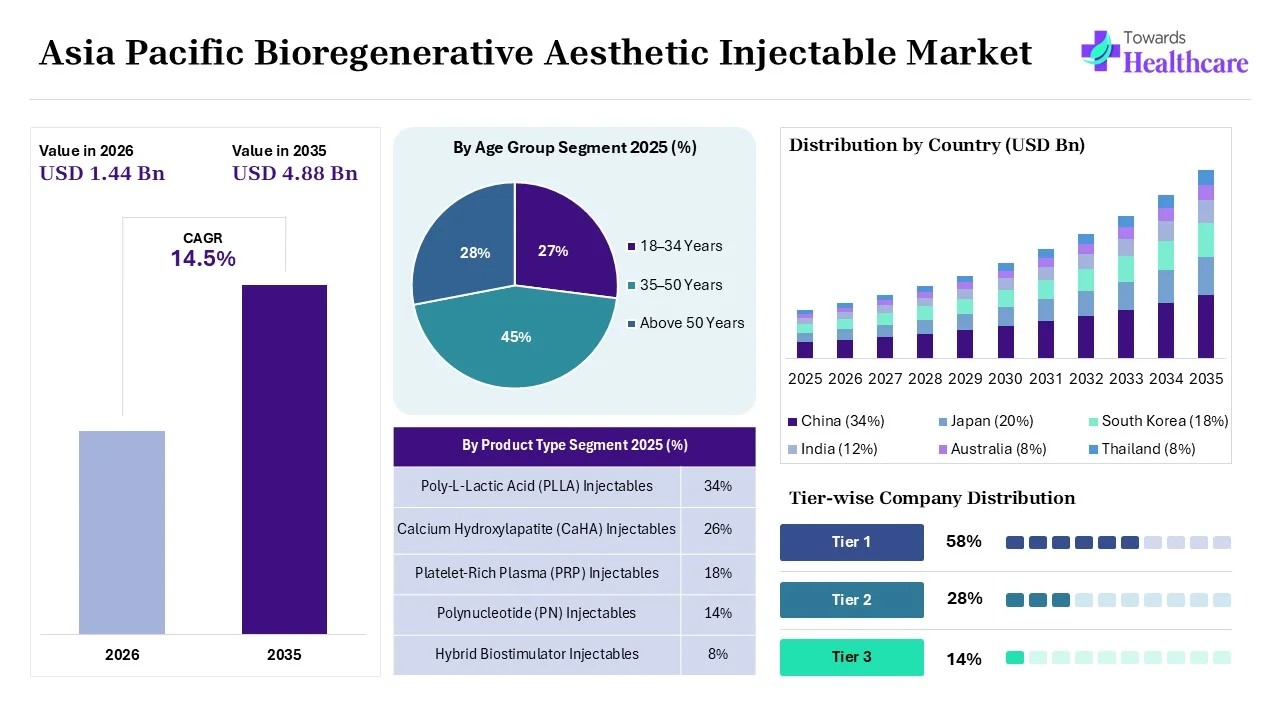
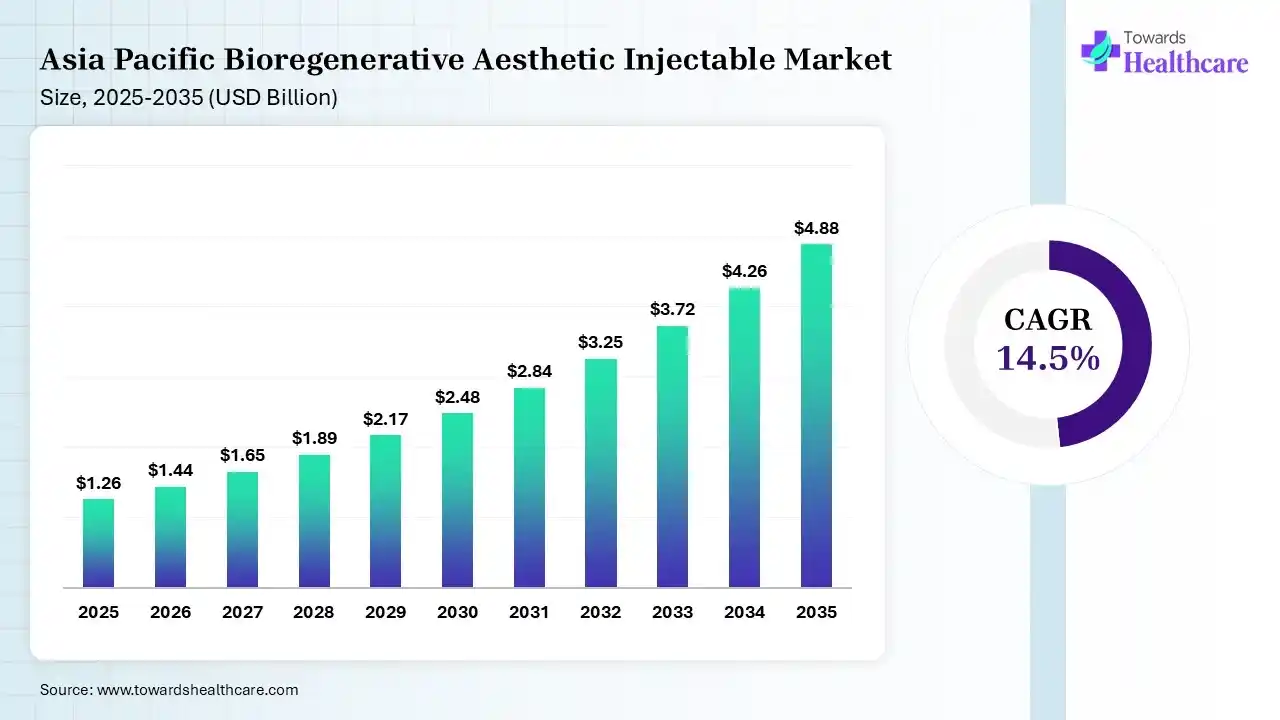
The Asia Pacific bioregenerative aesthetic injectable market size was valued at US$ 1.26 billion in 2025 and is projected to grow to 1.44 billion in 2026. Forecasts suggest it will reach approximately US$ 4.88 billion by 2035, registering a CAGR of 14.5% during the period.
Bioregenerative medicine attaches the body’s innate capability to regenerate and heal itself. Different from traditional cosmetic technology, this strategy doesn’t include invasive surgeries or artificial implants. Regeneration in aesthetic therapeutics has a biological mechanism, functional incorporation, and durability rather than by transient morphological modification. They trigger the body’s own collagen production and tissue repair over time. This means results look softer, more natural, and continue to enhance for months after treatment.
Bioregenerative treatments aim to stimulate collagen production, efficiently reversing the aging process. Aesthetics, bioregenerative treatments provide a promising way to achieve youthful and rejuvenated skin. By addressing the root cause of aging, the decline in collagen production, these treatments lead to both natural and long-lasting outcomes. Hyaluronic acid-driven fillers and skin boosters significantly act as microenvironmental modulators with limited regenerative depth.
AIâ€based technology such as ARTAS has enhanced precision and reproducibility in aesthetic procedures such as laser and hair transplantation. AIâ€driven technology provides realâ€time feedback, reducing errors, optimizing outcomes, and improving the safety of bioregenerative aesthetic procedures. AIâ€based virtual assistants, chatbots, and learning platforms have enhanced administrative workflows and enhanced patient appointments. Incorporating AR/VR and wearables to bring immersive consultation and realâ€time monitoring. Ethical AI development, hopeful fairness, interpretability, and inclusivity. This technology supports international cooperation among tech organizations, physicians, and regulators to synchronize standards. It enhances diagnostic precision and objectivity. AI-driven technology and computer vision outperform traditional visual inspection in the identification of facial asymmetries and aging signs.
Shift to Biostimulators:
Biostimulators mark a significant shift from temporary improvement to regenerative, collagen-driving solutions. As patients progressively seek output that looks and feels natural, the demand for biostimulators and qualified injectors is continuing to rise. By incorporating biostimulators in their services, practitioners not only meet this demand but also support patients as they age with grace and confidence.
Rise of Polynucleotides & Exosomes:
Polynucleotides are applied to enhance skin texture, lower wrinkle depth, and improving economic appearance. Polynucleotides, multilayered molecules composed of nucleotides, have increased attention in aesthetic medicine for their ability to regulate gene expression and encourage tissue regeneration.
Preventative Pre-juvenation:
Recent advancements in prejuvenation, a preventive strategy for aging, evolved in the early 2000s as Generation Z continues to seek a novel approach to aging, driven by increasing development in skincare and aesthetics integrating with the increase of social media as a projecting source of data, prejuvenation has gained immense acceptance.
| Table | Scope |
| Market Size in 2026 | USD 1.44 Billion |
| Projected Market Size in 2035 | USD 4.88 Billion |
| CAGR (2026 - 2035) | 14.5% |
| Historical Data | 2020 - 2023 |
| Base Year | 2025 |
| Forecast Period | 2026 - 2035 |
| Measurable Values | USD Millions/Units/Volume |
| Market Segmentation | By Product Type, By Payer, By Application, By Care Setting, By Condition Type, By Ownerships, By Region |
| Top Key Players | Galderma, Merz Aesthetics, IBSA Group, PharmaResearch, Shanghai Haohai Biological Technology |
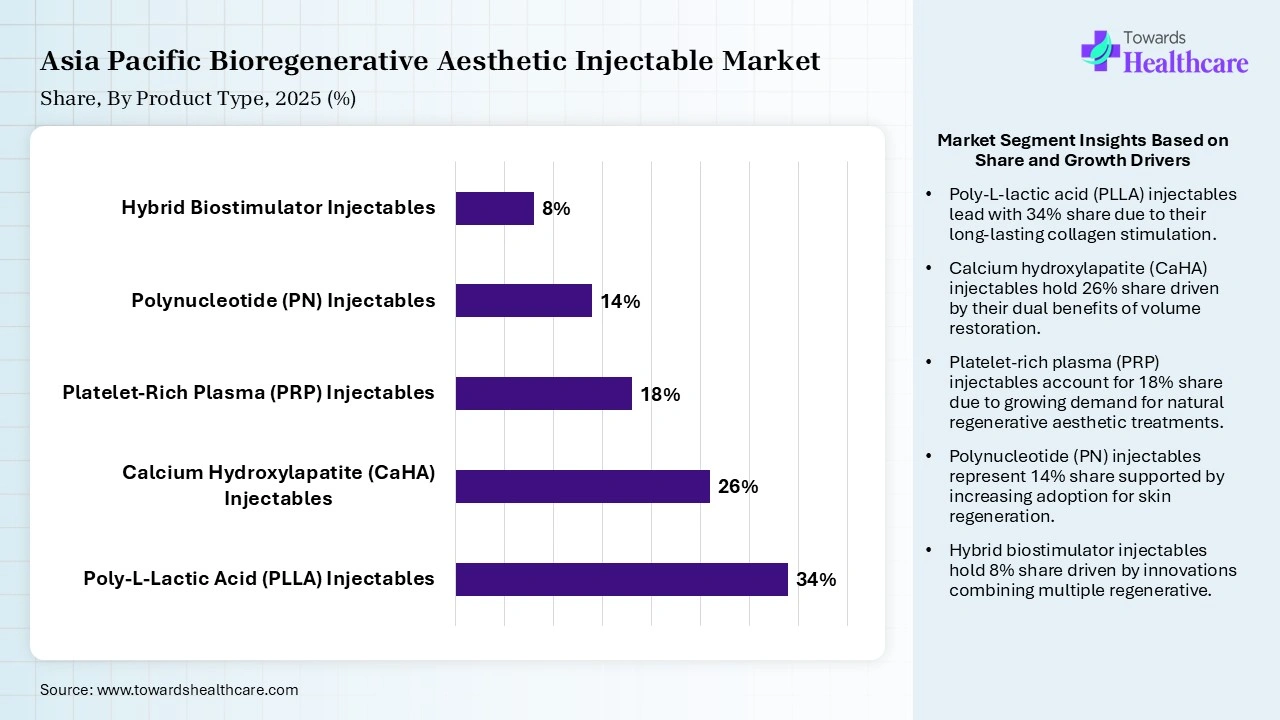
| Segment | Share 2025 (%) |
| Poly-L-Lactic Acid (PLLA) Injectables | 34% |
| Calcium Hydroxylapatite (CaHA) Injectables | 26% |
| Platelet-Rich Plasma (PRP) Injectables | 18% |
| Polynucleotide (PN) Injectables | 14% |
| Hybrid Biostimulator Injectables | 8% |
The Poly-l-Lactic Acid (PLLA) Injectables Segment Led the Market in 2025
The poly-l-lactic acid (PLLA) injectables segment contributed the largest Asia Pacific bioregenerative aesthetic injectable market share of 34% in 2025, due to the efficiency of PLLA in treating facial wrinkles, volume loss, and improving skin elasticity and hydration, with patient satisfaction. PLLA injections provide safe, long-lasting, and natural rejuvenation results for the facial and neck region. Ongoing innovation in injection technologies, particle preparations, and combination therapies promises additional advancements.
The calcium hydroxylapatite (CaHA) injectables segment held a significant share of 26%, as CaHA injections enhance aesthetic outputs, involving facial areas like nasolabial folds and jawline, and hands, with increasing levels of satisfaction. CaHA filler demonstrated efficient and continued volume restoration while potentially enhancing skin hydration, challenging function, and elasticity.
The platelet-rich plasma (PRP) injectables segment held a significant share of the Asia Pacific bioregenerative aesthetic injectable market of 18% in 2025, and is expected to grow at the fastest CAGR during the forecast period in the market, as PRP injections potentially lead to greater enhancement in skin texture, tone, wrinkles, and dermal collagen as compared to saline, though plain saline injections lead to growth in dermal collagen and enhancement in skin sallowness.
The polynucleotide (PN) injectables segment held a significant share of 14%, as polynucleotides have been used to enhance skin texture, lower wrinkle depth, and improve facial arrival. Polynucleotides are rapidly becoming one of the most in-demand skin boosters for enhancing hydration, skin repair, and elasticity.
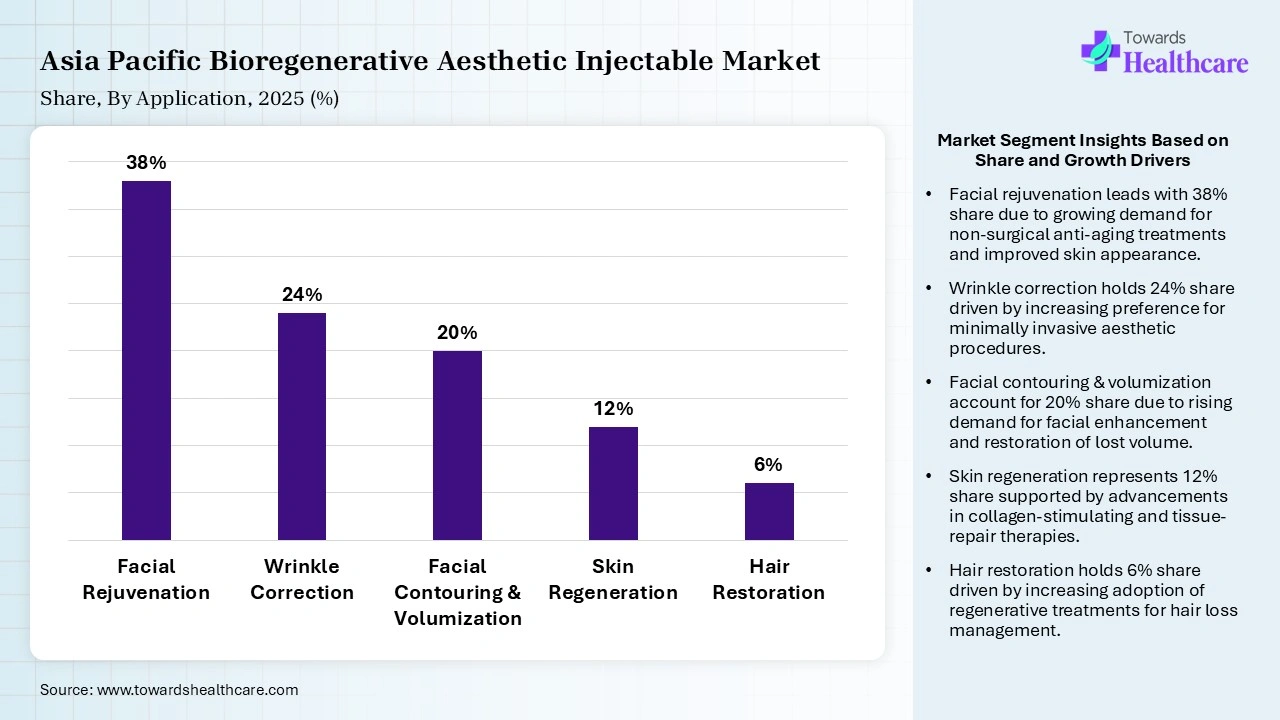
| Segment | Share 2025 (%) |
| Facial Rejuvenation | 38% |
| Wrinkle Correction | 24% |
| Facial Contouring & Volumization | 20% |
| Skin Regeneration | 12% |
| Hair Restoration | 6% |
Facial Rejuvenation Segment Led the Market in 2025
The facial rejuvenation segment contributed the largest Asia Pacific bioregenerative aesthetic injectable market share of 38%, as it supports diminishing common signs of aging, like wrinkles, fine lines, and loose skin. Bio-regeneration therapies are designed to harness the body’s natural regenerative strength to counteract these issues, improving skin elasticity, hydration, and circulation.
The wrinkle correction segment held a significant share of 24% of the market as bioregenerative aesthetics lowers wrinkles, restores lost volume, enhances skin texture, and prevents aging-related complexities, while helping physiological repair mechanisms. Bioregenerative injectables support long-term prevention goals well.
The facial contouring & volumization segment held a significant share of 20% of the Asia Pacific bioregenerative aesthetic injectable market, as bioregenerative options enhanced texture and tone. Bio-regeneration therapies are designed to harness the body’s natural regenerative strength to counteract these processes, improve skin elasticity, hydration, and circulation, and help long-lasting tissue homeostasis.
The hair restoration segment held a significant share of 6% of the market and is expected to grow at the fastest CAGR during the forecast period, as PRP uses the body’s platelets to potentially enhance hair growth, removing challenges related to reactions to synthetic materials. The presence of cultured MSC-nutrient-rich ECM can efficiently induce hair revival with additional advantages.
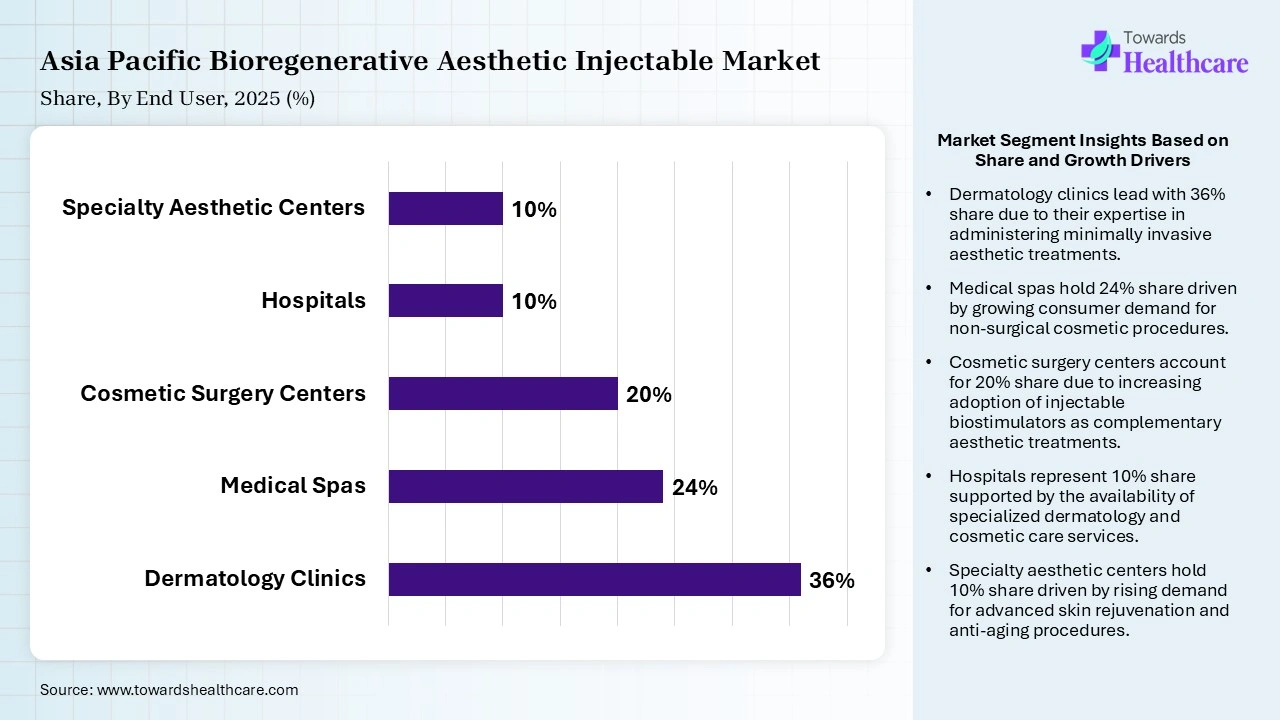
| Segment | Share 2025 (%) |
| Dermatology Clinics | 36% |
| Medical Spas | 24% |
| Cosmetic Surgery Centers | 20% |
| Hospitals | 10% |
| Specialty Aesthetic Centers | 10% |
The Dermatology Clinics Segment led the Market in 2025
The dermatology clinics segment contributed the largest Asia Pacific bioregenerative aesthetic injectable market share of 36%, as bioregenerative options enhance texture, brightness, and tone. Regenerative aesthetics has the strength to attract a novel set of patients, individuals interested in biohacking and longevity. Stimulate collagen production and improve skin quality, resulting in softer, more natural, and long-term transformations.
The medical spas segment held a significant share of 24% in the market in 2025 and is expected to grow at the fastest CAGR during the forecast period, as bio-regeneration therapies are designed to harness the body’s natural regenerative strength to counteract these technologies, improve skin elasticity, circulation, and hydration, and support long-term tissue homeostasis. Skin feels flatter and more even overall.
The cosmetic surgery centers segment held a significant 20% share of the Asia Pacific bioregenerative aesthetic injectable market in 2025, as bioregenerative therapies advance procedures provides significant anti-aging outputs with minimal downtime. It comprises increasing factors that help repair. These factors enhance texture, glow, and elasticity. The process feels natural as it uses its own biology. It is a current choice in recreating aesthetic treatments.
The hospitals segment held a significant 10% share of the market in 2025, as bioregenerative options enhance shape and tone. Bioregenerative approaches that support the cell's internal repair signals, collagen and elastin architecture, vascular health, and overall tissue superiority. Promotes healing by stimulating the body's natural regenerative technology.
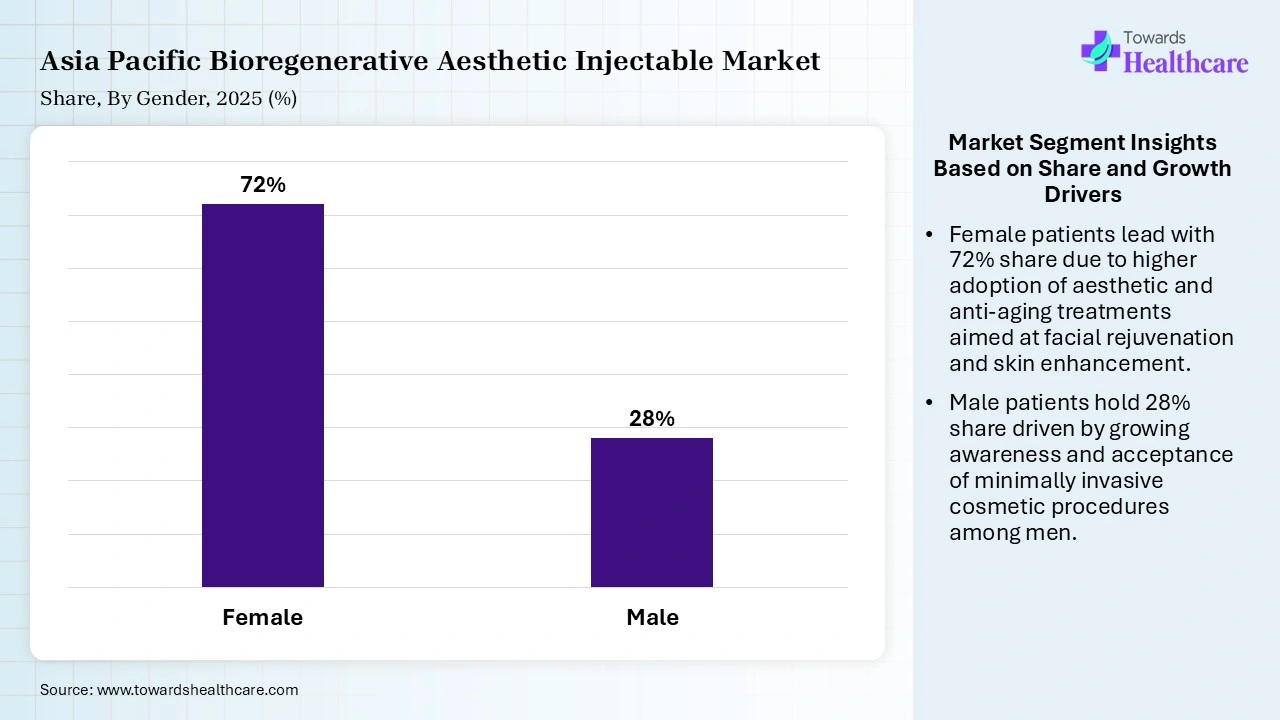
| Segment | Share 2025 (%) |
| Female | 72% |
| Male | 28% |
The Female Segment led the Market in 2025
The female segment contributed the largest Asia Pacific bioregenerative aesthetic injectable market share of 72% in 2025, as aesthetic interventions aim to address significant aging-related risks, involving smoothing, hydrating, brightening, evening out skin tone, and firming of aging skin. Dermal fillers are used to replace volume loss in both deeper and superficial layers. Bioregenerative aesthetics uses the body's natural healing technology to restore cellular function, stimulate collagen, and enhance skin health.
The male segment held a significant share of 28% in the market and is expected to grow at the fastest CAGR during the forecast period. Injectable technology is minimally invasive, outpatient technology fit seamlessly in a busy, competitive professional lifestyle, with minimal to zero recovery time. Improved skin elasticity and hydration, and improved skin tone. This stratergies provides natural-looking outputs, lower the challenges of challenges, and have minimal downtime.
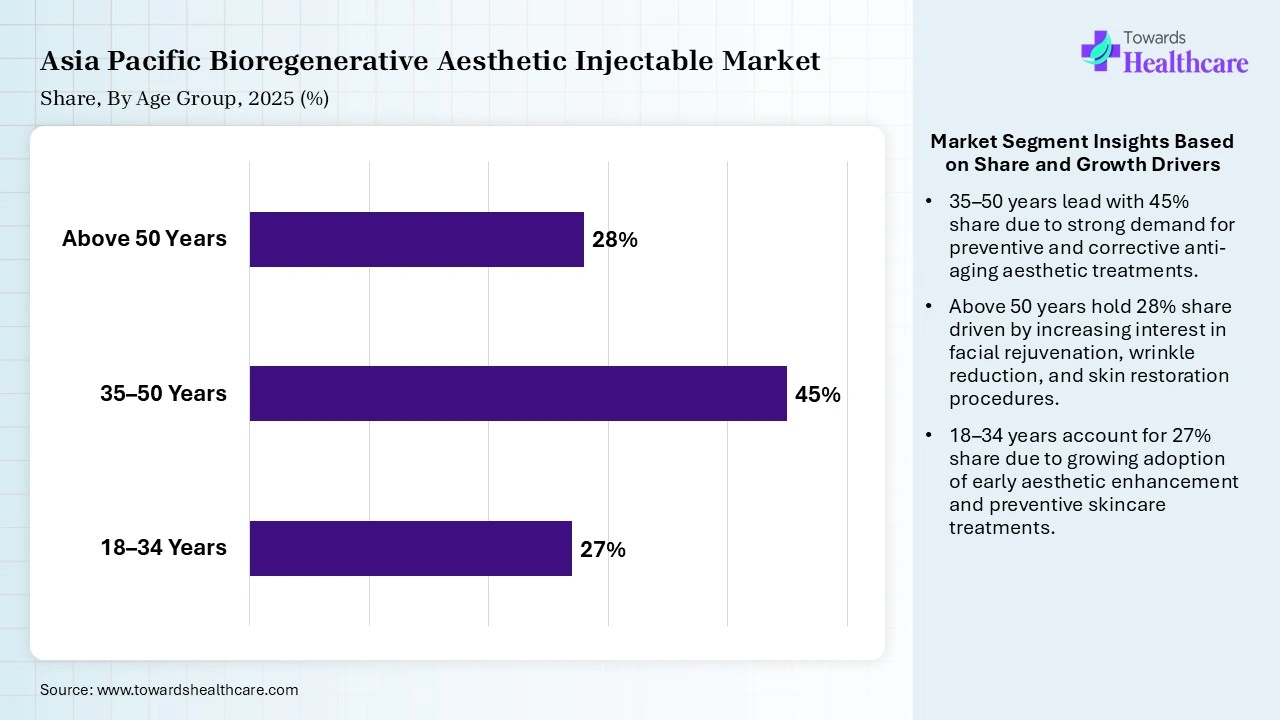
| Segment | Share 2025 (%) |
| 18–34 Years | 27% |
| 35–50 Years | 45% |
| Above 50 Years | 28% |
The 35–50 Years Segment led the Market in 2025
The 35–50 years segment contributed the largest Asia Pacific bioregenerative aesthetic injectable market share of 45%, as these injections provide natural skin improvement. Triggers collagen, enhances elasticity, and achieves lasting outputs. Bioregenerative aesthetics enhance texture and tone. Collagen-stimulating fillers support both shape and quality.
The 18–34 years segment held a significant share of 27% in the market and is expected to grow at the fastest CAGR during the forecast period, as bioregenerative aesthetics enhance texture, tone, and fairness. Skin feels smoother and significantly even overall. By increasing the continuous cellular synthesis of type I and type III collagen, this technology significantly maintains youthful tissue elasticity and mechanical volume.
The above 50 years segment held a significant share of 28% in the Asia Pacific bioregenerative aesthetic injectable market, as bioregenerative aesthetic injectable treatments rise collagen production by 53%, enhance circulation, lower fine lines and dark undereye circles, and grow skin plumpness. As negligibly invasive technology, it enables patients to bypass the lengthy recovery times and risks related to surgical renovations, fitting simply into active lifestyles.
The global bioregenerative aesthetic injectable market size is calculated at US$ 3.82 billion in 2025, grew to US$ 4.35 billion in 2026, and is projected to reach around US$ 13.92 billion by 2035. The market is expanding at a CAGR of 13.80% between 2026 and 2035.
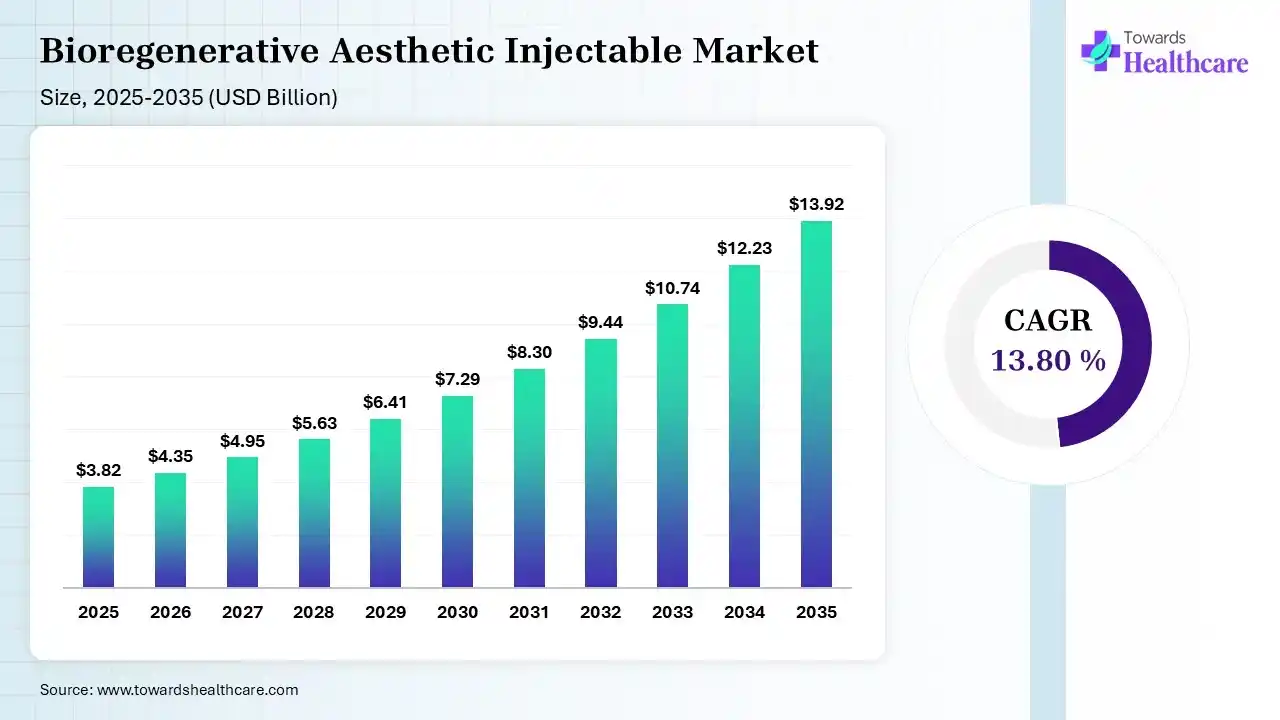
The Asia Pacific bioregenerative aesthetic injectable market is expanding rapidly due to rising consumer demand for minimally invasive treatments and long-term skin health. Key trends include a shift toward biologically derived formulations like exosome-based and collagen-stimulating injectables, which provide natural-looking, extended results. Additionally, pre-juvenation among younger demographics and the integration of AI-assisted diagnostics are reshaping procedures. The competitive landscape is highly dynamic, driven by established multinational players such as AbbVie, Galderma, and Merz, alongside surging local manufacturers in China and South Korea offering cost-effective, culturally tailored products.
China Market Trends
China contributed the largest market share of 34%, as 23% of consumers in China have undergone laser hair removal, the most common healthcare aesthetics process. Increasing demand for minimally invasive aesthetic actions and growing acceptance of regenerative anti-aging treatments. China is presently transitioning its sector focus from basic hyaluronic acid fillers toward well-developed regenerative solutions.
South Korea Market Trends
South Korea held a significant share of 18% in the Asia Pacific bioregenerative aesthetic injectable market and is expected to grow at the fastest CAGR during the forecast period, as Korea's dermatology and plastic surgery hospitals, specifically those in Seoul's Gangnam district, Cheongdam, and Apgujeong areas, have incorporated regenerative treatments with notable enthusiasm. Significant universities and research institutions in Korea are conducting advanced research on regenerative therapeutics applications in aesthetics, ensuring that treatments are both innovative and systematically authorized.
R&D:
Manufacturing Processes:
Patient Services:
| Company | Headquarters | Latest Update |
| Galderma | Singapore | It is intended to activate the skin's natural regenerative power. It increasingly rebuilds lost structural foundation, smoothing fine lines, creases, and skin laxity. |
| Merz Aesthetics | Singapore | It is used for immediate structural lifting as well as chronic skin rejuvenation. |
| IBSA Group | China | An original, stabilized hybrid cooperative complex of ultra-pure hyaluronic acid. |
| PharmaResearch | South Korea | A massively popular polynucleotide (PN) skin increases derived from salmon DNA. |
| Shanghai Haohai Biological Technology | China | The company provides products like intraocular lenses, medical sodium hyaluronate gel, lubricant eye drops, sodium hyaluronate injections, medical chitosan, healthcare collagen sponge, among others. |
In March 2026, "We will swiftly respond to rising demand in the medical aesthetics market to further strengthen our leadership in the industry. We see this agreement as a starting point for Hugel's business expansion and will continue to explore innovative products and opportunities in Korea and overseas," said Daniel Chang, Korea CEO of Hugel.
By Product Type
By Payer
By Application
By Care Setting
By Condition Type
By Ownerships
By Region










Principal Consultant
Rohan Patil is a seasoned market research professional with over 5+ years of focused experience in the healthcare sector, bringing deep domain expertise, strategic foresight, and analytical precision to every project he undertakes.
Learn more about Rohan Patil

Reviewed By
Aditi Shivarkar is a seasoned professional with over 14 years of experience in healthcare market research. As a content reviewer, Aditi ensures the quality and accuracy of all market insights and data presented by the research team.
Learn more about Aditi Shivarkar