


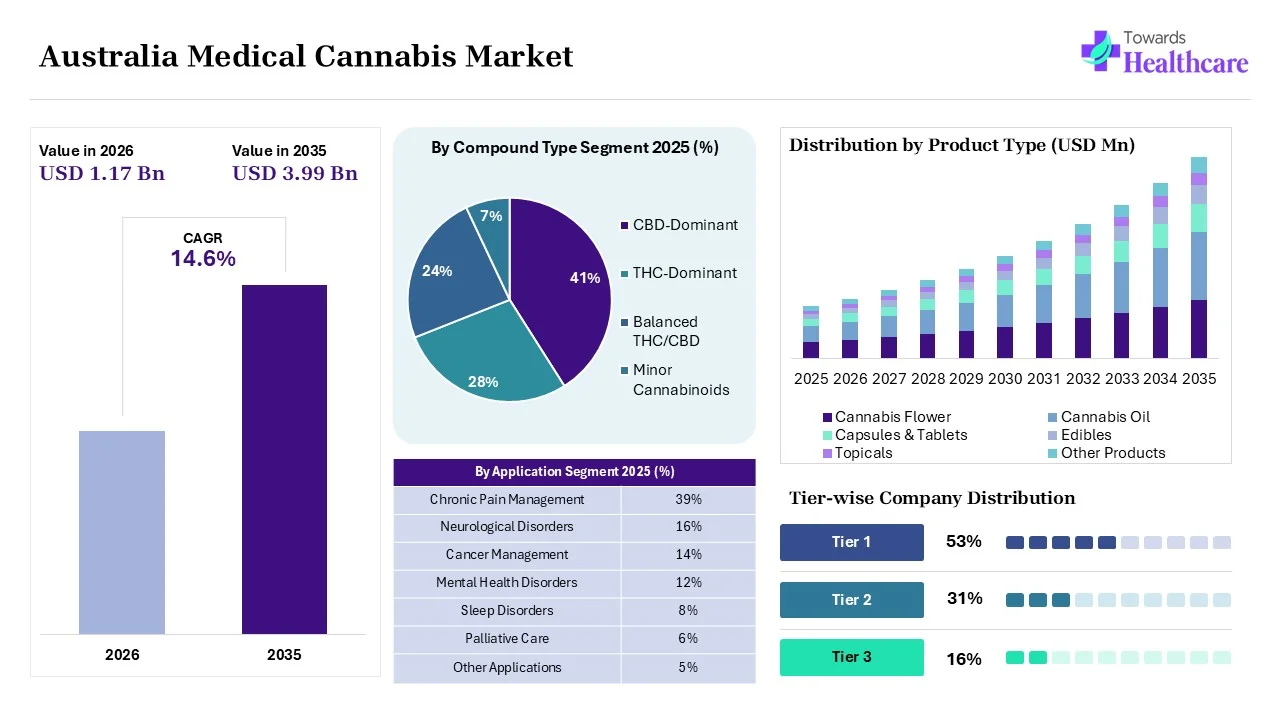
The Australia medical cannabis market size accounted for USD 1.02 billion in 2025 and is predicted to increase from USD 1.17 billion in 2026 to approximately USD 3.99 billion by 2035, expanding at a CAGR of 14.6% from 2026 to 2035. Medicinal cannabis presents a multifaceted yet promising service for lowering opioid-associated mortality and addressing medical care inequities, which drives the growth of the market.
Medical cannabis is the product output from the whole cannabis plant or its extracts, comprising a variety of active terpenes and cannabinoids, which patients take for healthcare reasons, after consulting with and obtaining authorization from their medical practitioner. Cannabis and cannabinoids help manage chronic pain, nausea, and MS symptoms. It is significant to only ever take cannabis or cannabinoid-containing products or therapeutics as directed by a medical care professional. Cannabis use lessens pain and spasticity in patients with MS, lowers tremor, rigidity, and pain in patients with PD, and enhances the quality of life of ALS patients by enhancing appetite and lowering pain and spasticity. Medical cannabis supports some types of pain, but the evidence is not yet strong enough to recommend it for chronic pain relief.
Advancements in minor cannabinoids, involving CBN, CBG, CBC, and THCV, are helping with sleep, pain relief, mood, and inflammation. These cannabinoids have significant potential advantages in the management of neuropathic pain, epilepsy, neurodegenerative diseases, tumors, and skin diseases. Recent developments in minor cannabinoids have transformed the spotlight from major compounds such as THC and CBD to lesser-known and non-psychoactive alternatives. These specific compounds offer specific, a-effect-free benefits, while biotechnology breakthroughs in synthetic biology now allow for their scalable, cost-effective production.
By product type, the cannabis flower segment contributed a major market share of 32% in 2025. Many patients turn to cannabis flower for its analgesic characteristics. Whether it's long-term pain, migraines, or inflammation, the cannabinoids in the flower support lessening discomfort. Anxiety and depression rank among the most common mental health disorders worldwide. Some patients find that some strains of cannabis flower support reducing the symptoms of these conditions, helping with relaxation and an elevated mood.
By compound type, the CBD segment contributed the largest share of the Australia medical cannabis market of 41%, as cannabidiol (CBD) is a prevalent natural medicine for many health challenges and ailments. Approximately, research is hopeful, but more is required to entirely understand how it affects different health conditions. Potential CBD advantages involve pain relief and relaxation without any mind-altering effects.
By application, the chronic pain management segment led with a market share of 39%, as the applications of healthcare cannabis for long-term pain offer efficient outputs for both pain management and slowing down the opioid epidemic. Cannabis co-operative in managing neuropathic pain. Lowers inflammation and stiffness, enhancing mobility. Supports inclusive well-being and lowers strain levels.
By route of administration, the oral segment held a significant share of 48% in the Australia medical cannabis market, as oral medications are simple to administer and taken without needing medical supervision, which adds to their suitability for patients. It is the easiest, most appropriate, and safest means of therapeutic administration. It is inexpensive and safe for the patient. It requires no nursing care, which means the patient takes it with no support.
By distribution channel, the retail pharmacies segment held a dominant market share of 42%, as retail pharmacies play a significant role in healthcare by offering convenient access to therapeutics, a broad range of products, and appreciation. Retail pharmacies are a significant part of health technology and, in significant countries, are responsible for dispensing a large proportion of health products and associated services.
By end user, the home care settings segment contributed the largest market share of 46%. This service encourages independence, improves comfort, and offers peace of mind. Home care lessens the requirement and difficulties of gaining access and travelling to doctors' offices and healthcare facilities. In-home care places emphasis on conserving the person's individuality.
Leading companies in the market are Vitura Health, Little Green Pharma, ECS Botanics, and Cann Group. Meanwhile, Vitura Health leading digital health and cannabis distribution organization. Little Green Pharma is a prominent vertically integrated company that operates in the cultivation, production, and worldwide distribution of cannabis. ECS Botanics harvests EU-GMP-certified medicinal cannabis, offering both direct-to-consumer brands and large-scale B2B. Cann Group company leverages extensive agricultural technology to cultivate, produce, and supply ground-breaking cannabis medicines.
By Product Type
By Compound Type
By Application
By Gender
By Distribution Channel
By Patient Age Group
By End User


