


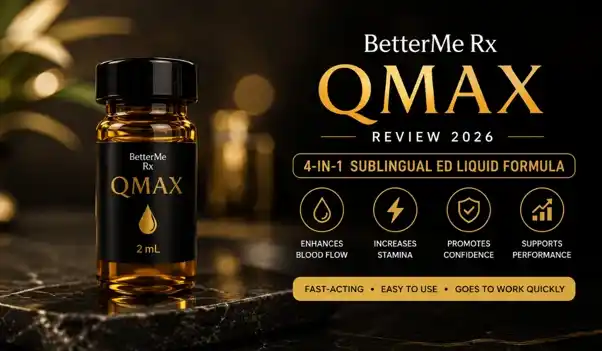
Affiliate Disclosure: This article contains affiliate links; we may earn a commission on qualifying purchases at no extra cost to you. Medical Notice: This content is educational only and not medical advice. QMAX is a compounded prescription product, not FDA-approved, and is not intended to diagnose, treat, cure, or prevent any disease. It's available only after review by a licensed provider. Disclosure provided per FTC 16 CFR Part 255.
Erectile dysfunction remains one of the most common men's health conditions worldwide, and while age is still the strongest risk factor, diagnosis rates among younger men have climbed steadily. Sedentary lifestyles, obesity, diabetes, cardiovascular disease, psychological stress, smoking, and hormonal imbalance are all contributing to a broader, younger patient base than the condition typically drew a generation ago. In response, telehealth providers have moved aggressively into men's health, reshaping how ED is diagnosed, prescribed for, and treated.
The erectile dysfunction treatment market reflects that shift. According to market research firm Towards Healthcare, the global ED drugs market was valued at roughly $4.98 billion in 2025 and is projected to reach $10.87 billion by 2035, growing at a compound annual rate of about 8.12 percent.
BetterMe Rx QMAX sits directly at the intersection of both trends. It's a telehealth-dispensed, compounded, sublingual ED treatment combining four active ingredients in a single dose, rather than the single-compound tablet that has defined the category since sildenafil's approval in the late 1990s. This review examines what QMAX actually is, how each ingredient in the formula works, what clinical evidence exists behind those ingredients individually, what the compounded, four-in-one combination changes in practice, and where the pricing, safety, and evidence picture leaves a prospective patient.
Check if QMAX is available in your state
ED is typically defined clinically as a persistent, at least three-month pattern of difficulty achieving or maintaining an erection sufficient for satisfactory sexual activity. Occasional difficulty is common and not diagnostic; the persistent pattern is what tends to signal an underlying vascular, neurological, hormonal, or psychological issue worth medical evaluation.
A 2024 study published in The Journal of Sexual Medicine, based on the 2021 National Survey of Sexual Wellbeing, offers one of the more recent nationally representative pictures of how ED prevalence breaks down by age in the United States:
| Age Group | Reported ED Prevalence |
| 18-24 | 17.9% |
| 25-34 | 13.3% |
| 35-44 | 12.7% |
| 45-54 | 25.3% |
| 55-64 | 33.9% |
| 65-74 | 48.0% |
| 75+ | 52.2% |
Two things stand out in that data. First, the expected age-related climb is clearly there, roughly doubling between the 45-54 and 65-74 brackets. Second, the 18-24 bracket reports higher prevalence than the 25-34 and 35-44 brackets, a pattern researchers have linked to rising rates of obesity, diabetes, anxiety, and sedentary behavior among younger men. The same study found that only about 8 percent of men meeting diagnostic criteria for ED had actually been diagnosed by a provider, pointing to a meaningful access and awareness gap that telehealth platforms like BetterMe Rx are explicitly positioned to close.
QMAX is not a standalone pharmaceutical formula sold on a pharmacy shelf. It's a telehealth-dispensed, compounded prescription formula offered through BetterMe Rx, a U.S. telehealth provider. After an online medical intake reviewed by a licensed provider, eligible patients receive a personalized prescription for a sublingual formula containing up to four active compounds: sildenafil, tadalafil, vardenafil, and apomorphine, dosed and combined according to the provider's clinical judgment.
The defining structural choice is the sublingual delivery format itself. Rather than a swallowed tablet, the medication is placed under the tongue, where it's absorbed through the oral mucosa directly into the bloodstream. This route bypasses part of the digestive process, which explains both the faster reported onset and the reduced sensitivity to food intake compared with a standard oral tablet.
It's worth being precise about what "FDA-registered" and "FDA-approved" mean here, since the two terms get conflated often. The active ingredients themselves (sildenafil, tadalafil, vardenafil) are individually FDA-approved compounds, long used in branded and generic ED medications. Apomorphine is FDA-approved in a different formulation for a different indication (Parkinson's disease motor symptoms) and is used off-label here for its dopaminergic effect on arousal pathways.
The compounding pharmacies preparing QMAX are FDA-registered facilities, meaning they're registered with and subject to inspection by the FDA. But the finished four-ingredient combination product itself, as a compounded preparation, has not gone through FDA review and approval as a single, standardized drug product the way a commercially manufactured branded medication has.
See if QMAX is right for you - start your free online consultation
QMAX is generally positioned for adults who:
It's not appropriate, and BetterMe Rx's own intake is built to screen out patients who:
A full medical review by a licensed provider, not a self-assessment, is what actually determines eligibility here, and that review is the step that matters most in evaluating whether a compounded, multi-ingredient formula like this is appropriate for a given patient.
Step 1: Online health intake - The process starts with a confidential questionnaire covering age, medical history, current medications, cardiovascular health, blood pressure history, diabetes status, prior ED treatment, and relevant lifestyle factors.
Step 2: Provider review - A licensed U.S. provider reviews the intake to determine medical appropriateness, screening specifically for contraindications, drug interactions, and cardiovascular risk. Some states require a live chat or video consultation before a prescription can be finalized rather than an asynchronous review alone.
Step 3: Personalized prescription - If approved, the provider prescribes a formula tailored to the patient, determining which of the four actives to include and at what dose based on clinical judgment rather than a fixed, one-size formula.
Step 4: Compounding - The prescription is filled by a licensed, FDA-registered compounding pharmacy, which prepares the specific combination and dosage as prescribed.
Step 5: Discreet delivery - The finished product ships in plain, unmarked packaging directly to the patient.
Check your eligibility for QMAX in a few minutes
Understanding why a four-ingredient formula is positioned differently from a single-ingredient pill requires a brief look at how an erection actually happens. Sexual stimulation triggers nerve signals that prompt the release of nitric oxide in penile tissue. Nitric oxide activates an enzyme called guanylate cyclase, which raises levels of a molecule called cyclic GMP (cGMP). Rising cGMP relaxes smooth muscle in the penile arteries, those arteries dilate, blood flow increases sharply, and venous outflow decreases, producing an erection.
PDE5 inhibitors like sildenafil, tadalafil, and vardenafil work by blocking the enzyme that breaks down cGMP, extending and amplifying that blood-flow response during stimulation. None of them cause an automatic erection without stimulation. Apomorphine works on an entirely separate part of the system: it stimulates dopamine D1 and D2 receptors in the hypothalamus, a brain region central to sexual arousal and desire signaling, rather than acting on blood vessels at all.
In men whose ED has a meaningful psychological or arousal-related component alongside a vascular one, that's the theoretical rationale for combining a central-acting compound with peripheral vasodilators in a single formula.
Sildenafil is the most extensively studied ED medication on the market, originally investigated for cardiovascular use before its erectile function benefits led to its approval as an oral ED treatment.
Extensive randomized clinical trial data support sildenafil's effectiveness at improving both the ability to achieve and maintain an erection, including in men with diabetes, hypertension, spinal cord injury, and post-prostatectomy ED. Common side effects include headache, facial flushing, nasal congestion, and, less commonly, temporary visual disturbances such as blue-tinted vision or light sensitivity.
Tadalafil is a PDE5 inhibitor distinguished mainly by its much longer half-life, which is the basis for its "weekend pill" reputation, with effects that can persist up to 36 hours in some patients.
Clinical trial data show tadalafil improves erectile hardness, successful intercourse attempts, and overall treatment satisfaction, with additional evidence supporting benefit in men with diabetes and benign prostatic hyperplasia. Common side effects include headache, indigestion, back pain, and muscle aches.
See the full QMAX formula on the official site
Vardenafil is a third PDE5 inhibitor generally recognized for a comparatively fast onset among oral formulations, which is the primary rationale for its inclusion in the QMAX combination.
Vardenafil shares a similar side effect profile to sildenafil, including headache, flushing, and nasal congestion, and carries the same absolute contraindication with nitrate medications as the other PDE5 inhibitors in the formula.
Apomorphine is the formula's outlier, acting as a dopamine receptor agonist within the central nervous system rather than working on blood flow directly.
Standard ED prescriptions have long relied on a single PDE5 inhibitor, addressing the vascular half of the equation. The theoretical case for a compounded, multi-ingredient formula like QMAX is that ED is frequently multifactorial, with vascular, neurological, and psychological contributors overlapping in the same patient.
Combining a fast-acting PDE5 inhibitor (vardenafil), a long-acting one (tadalafil), a foundational one with the deepest evidence base (sildenafil), and a centrally-acting arousal compound (apomorphine) is intended to address more of that picture in a single dose than any one ingredient could alone.
It's worth being direct about the limits of this rationale: the individual ingredients each have a substantial body of clinical research behind them, but the specific four-ingredient combination as a finished compounded product has not itself been studied in controlled trials the way each ingredient has been studied individually. The formula's premise is grounded in real pharmacology, but its overall real-world effectiveness as a combined product is inferred, not independently proven.
Sublingual administration offers faster absorption through oral tissue, partial avoidance of the digestive system, and reduced sensitivity to food intake for many medications, along with a practical convenience benefit for patients who prefer not to swallow a tablet. These advantages are drug- and formulation-dependent; not every medication absorbs meaningfully faster sublingually, but for PDE5 inhibitors, bypassing gastric digestion is generally understood to shorten the time to onset compared with a standard swallowed tablet.
| Feature | QMAX | Traditional Prescription |
| Consultation | Online telehealth | In-person or telehealth |
| Medication type | Compounded, multi-ingredient | Single FDA-approved branded/generic drug |
| Delivery format | Sublingual drop | Swallowed tablet |
| Dosing | Personalized per patient | Standardized |
| Onset (reported) | ~10-15 minutes | 30-60 minutes |
| Duration | Up to 36 hours (formula-dependent) | Varies by drug (4-36 hours) |
| Regulatory status | Compounded, not individually FDA-approved | Ingredient is FDA-approved as a finished product |
| Fulfillment | Home delivery | Pharmacy pickup or mail order |
The benefits of QMAX largely stem from three factors: telehealth accessibility, a personalized compounded approach, and the underlying pharmacology of the individual ingredients when appropriately prescribed.
See what a 4-in-1 approach can do that a single pill can't
| Clinical Outcome | Reported Effect (PDE5 Inhibitor Trials) |
| Ability to achieve an erection | Significant improvement vs. placebo |
| Ability to maintain an erection | Significant improvement |
| Successful intercourse attempts | Increased |
| Overall sexual satisfaction | Increased |
| Treatment satisfaction | Increased |
These outcomes come from decades of trial data on sildenafil, tadalafil, and vardenafil individually, not from studies of the specific QMAX combination. Response rates vary meaningfully depending on the underlying cause of ED, presence of diabetes or cardiovascular disease, nerve involvement, medication adherence, and lifestyle factors.
Because QMAX combines four active compounds rather than one, its potential side effect profile is broader than a typical single-ingredient prescription.
Common across the PDE5 inhibitor components (sildenafil, tadalafil, vardenafil): headache, facial flushing, nasal congestion, and indigestion are the most frequently reported effects. Muscle aches and back pain are somewhat more associated with tadalafil specifically, while temporary visual changes are occasionally reported with sildenafil.
Apomorphine-specific: nausea, dizziness, fatigue, drowsiness, sweating, and a drop in blood pressure are the primary concerns, and these tend to be most pronounced with the first dose.
Cardiovascular safety: Sexual activity itself places additional demand on the cardiovascular system, which is why providers screen carefully for unstable angina, a recent heart attack or stroke, severe heart failure, significant arrhythmia, uncontrolled hypertension, and symptomatic hypotension before prescribing.
Absolute contraindication: nitrates. Combining any PDE5 inhibitor with nitrate medications (nitroglycerin, isosorbide mononitrate, isosorbide dinitrate) can cause a dangerous, potentially life-threatening drop in blood pressure. This is non-negotiable, not a relative caution, and it's a standard screening question in any legitimate ED intake.
Review the full guarantee policy before you order
Medication addresses symptoms, not necessarily underlying causes, and several modifiable factors are well documented to influence both ED severity and treatment response:
QMAX is sold both as standalone dose packs and as a recurring supply plan, generally shown at a promotional discount off list price. As of current published pricing:
| Pack | Price |
| 5 doses | $124.00 |
| 10 doses | $165.00 |
| 20 doses | $224.00 |
| Plan | List Price | Current Price |
| 1 Month Supply | $250 | $124 |
| 3 Month Supply | $498 | $249 |
Because QMAX is a compounded prescription product, final pricing depends on the specific pack size, plan length, and formula your provider prescribes, and promotional pricing is subject to change. Treat any figure here as a starting point to confirm at checkout rather than a locked-in cost.
Insurance: BetterMe Rx operates on a direct-pay, self-pay basis. Compounded medications are frequently excluded from commercial insurance coverage industry-wide, though HSA or FSA funds may apply in some cases; patients should confirm eligibility with their own plan.
See current QMAX pricing and pack options
Publicly available, QMAX-specific customer feedback is still relatively limited compared with long-established ED brands, and BetterMe Rx's own landing page features a handful of brand-published testimonials alongside an aggregate rating in the high 4-star range. As with any brand-reported feedback, this should be read as representative rather than independently audited or verified by this publication.
The recurring themes in that feedback center on three things: a preference for the drop format over an additional pill, the extended active window carrying through an entire evening or weekend rather than a narrow dosing window, and a noticeable arousal-related effect alongside the physical response, consistent with apomorphine's role in the formula.
Broader feedback about BetterMe Rx as a company tends to note fast response times and reliable delivery as consistent strengths, with more variable commentary around how clearly individual patients feel they understand dosing for their specific formula, a pattern that's common across compounded telehealth products generally, since the prescription is personalized rather than standardized.
Is BetterMe Rx QMAX FDA-approved?
No. QMAX is a compounded medication. Its individual active ingredients are separately FDA-approved compounds, but the finished four-ingredient combination has not been reviewed or approved by the FDA as a standardized product the way a commercially manufactured branded drug has.
Does QMAX require a prescription?
Yes. A licensed provider must review your medical intake and determine that treatment is appropriate before a prescription is issued.
How fast does QMAX work?
Onset depends on the specific formula, dosage, and individual response. The brand reports most users noticing effects within roughly 10 to 15 minutes, driven largely by the sublingual route and the vardenafil component.
Can men with heart conditions use QMAX?
Only after a thorough medical evaluation. Conditions like unstable angina, current nitrate use, or a recent heart attack or stroke can make PDE5 inhibitors unsuitable, which is why cardiovascular screening is part of every intake.
Does QMAX cure erectile dysfunction?
No. Like other ED medications, QMAX is designed to support erectile function when used as directed; it doesn't address or cure the underlying cause of ED.
Do lifestyle changes still matter if I'm using QMAX?
Yes. Exercise, weight management, smoking cessation, diabetes control, and stress management all influence both ED severity and how well medication works, regardless of which treatment you use.
QMAX reflects a broader shift in men's health toward personalized, digitally delivered care. Combining telehealth access, licensed clinician oversight, and a compounded, multi-ingredient formula is a meaningfully different model from a standard single-drug prescription, and it may suit patients looking for faster onset, longer duration, or a broader mechanism of action than a typical tablet offers.
At the same time, two things are worth keeping in view. First, compounded medications are personalized preparations, not FDA-approved finished products, and that distinction matters when weighing them against a standard, individually studied prescription. Second, effectiveness for any ED treatment, compounded or not, depends heavily on the underlying cause and the patient's overall health profile, not on the number of active ingredients in the formula.
Patients who prioritize a standardized, individually FDA-approved product may be better served by conventional sildenafil or tadalafil. Patients prioritizing convenience, faster onset, and a broader-mechanism formula, and who are comfortable with the compounded-medication tradeoffs, are the more natural fit for what QMAX is built to offer.
| Category | Rating |
| Convenience | 4.8/5 |
| Telehealth Experience | 4.5/5 |
| Medical Oversight | 4.5/5 |
| Scientific Basis of Individual Ingredients | 4.5/5 |
| Pricing Transparency | 4.0/5 |
| Personalization | 4.5/5 |
| Strength of Evidence for the Combined Finished Product | 3.6/5 |
QMAX is a reasonable option for adults seeking a convenient, provider-supervised telehealth pathway to ED treatment, with a formula built around real, well-studied pharmacology and a delivery format designed for faster onset and less timing pressure than a standard pill. The clearest gap is evidentiary: the individual ingredients are well researched, but the specific four-in-one compounded combination has not been independently studied as a finished product. For most men weighing convenience, speed, and a broader mechanism against that single evidentiary gap, the process makes it easy to find out: a short online intake is the only way to see what a provider would actually prescribe for you, and it costs nothing to start.
Start your online intake now and see if QMAX is right for you
FDA & Health Disclaimer: QMAX is compounded by an FDA-registered pharmacy. Compounded drugs are not FDA-approved, and the FDA does not verify their safety or effectiveness. While sildenafil, tadalafil, and vardenafil are individually FDA-approved active ingredients, the finished four-ingredient combination has not been independently reviewed or approved. Results vary by individual. Consult a licensed provider before starting any prescription treatment.
Safety & Drug Interaction Warning: QMAX combines sildenafil, tadalafil, and vardenafil (PDE5 inhibitors) with apomorphine, a dopamine agonist. Do not use without provider evaluation if you take nitrates, alpha-blockers, other PDE5 inhibitors, or blood-pressure medications. Combining PDE5 inhibitors with nitrates can cause dangerous hypotension. Disclose your full medication history during intake.
Clinical Evidence Notice: Statistics and clinical findings referenced in this article regarding individual active ingredients are drawn from published research and industry market reports and are cited where used. They describe the ingredients studied individually, not the specific compounded QMAX formula as a finished product, which has not been independently studied or verified by this publication.
Testimonials & Brand Claims Notice: Ratings, reviews, and claims cited here are brand-reported from official BetterMe Rx materials and have not been independently verified by this publication. Individual results vary.
California Proposition 65 Notice: QMAX is dispensed as a compounded prescription following individual provider review. California consumers should discuss chemical exposure considerations with their prescribing provider or pharmacy, since compounded formulations carry no standard retail label.


