


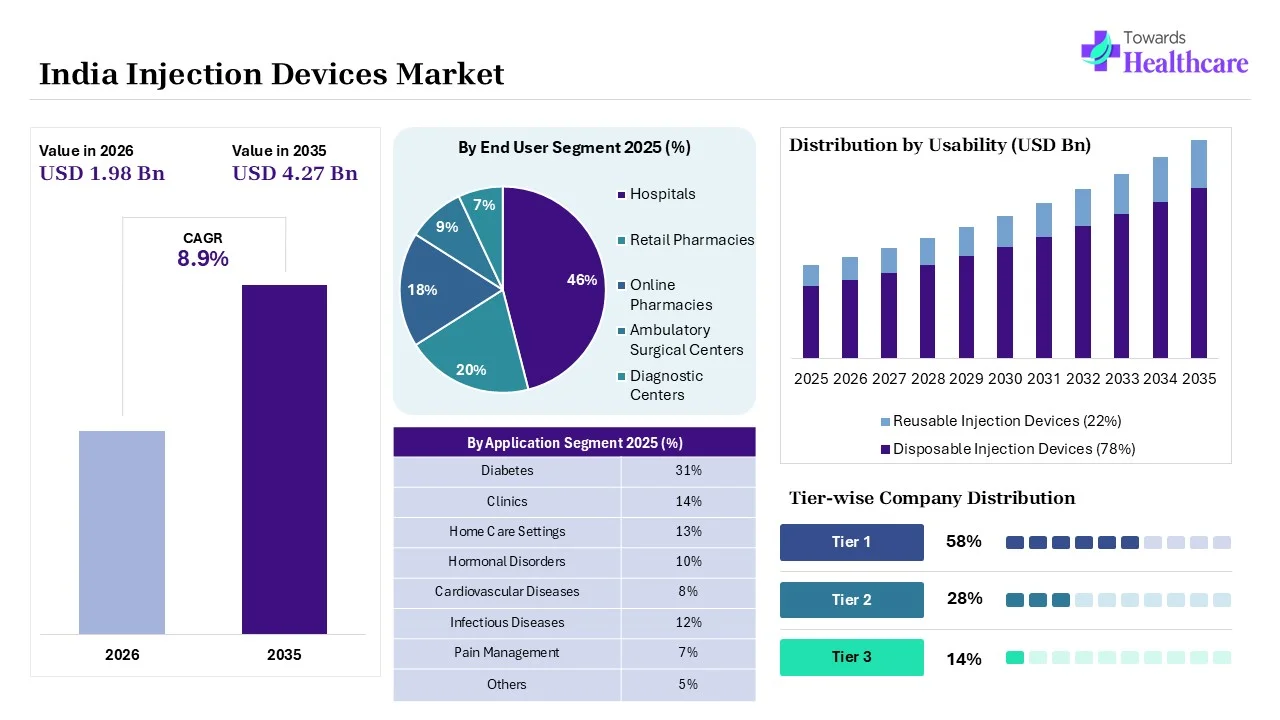
The India injection devices market size reached US$ 1.82 billion in 2025 and is anticipate to increase to US$ 1.98 billion in 2026. By 2035, the market is forecasted to achieve a value of around US$ 4.27 billion, growing at a CAGR of 8.9%. Growth in the diabetic population, extensive government immunization campaigns, a shift towards self-administration at home, expanding prefilled syringes, advancements in connected injection devices, and advancements in needle-free injection technologies are promoting the market growth.
India injection devices refer to the development, manufacturing, and use of medical devices to deliver drugs, vaccines, and other therapeutic agents into the body through various injection routes. These devices help in the safe, accurate, and effective delivery of medications, which increases their use. They are also used for the treatment, management, and prevention of diabetes, cancer, autoimmune disorders, and infectious diseases.
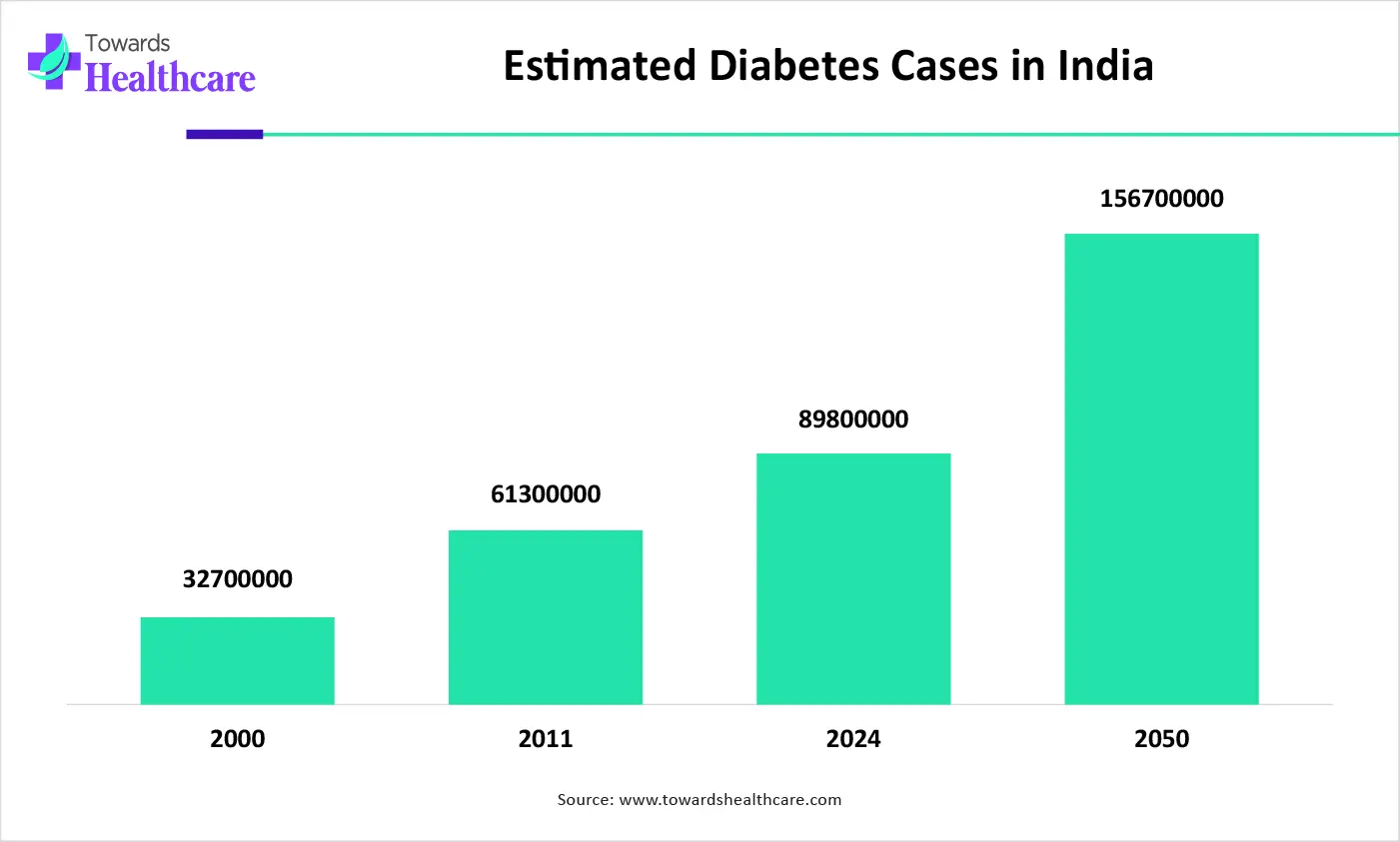
The graph represents a comparison between the diabetes cases in India for the years 2025 and 2050. It indicates that there will be a rise in diabetes cases, which will drive the demand for its accurate diagnosis, monitoring, and effective treatment devices. This, in turn, will increase the adoption of various injection devices for the effective management and treatment of diabetes, which will ultimately promote the market growth.
By product type, the conventional injection devices segment accounted for the highest revenue share of 34% of the India injection devices market in 2025, due to their continued use in routine drug administration. The widespread availability and affordability also increased their use. The growth in the vaccination programs and large patient population also increased their demand.
By delivery mode type, the conventional injection systems segment held a major revenue share of 42% of the India injection devices market in 2025, as it is the most commonly used method for drug administration. Their ability to administer a large volume of medication and affordability also increased their use. They were also used for the administration of a wide range of therapeutic agents.
By route of administration type, the subcutaneous injection segment held the largest revenue share of 38% of the India injection devices market in 2025 and is expected to expand rapidly with a CAGR of 11% during the forecast period, due to growth in chronic diseases, which increased the use of these injections. Their easy use also increased their demand for long-term therapies. Expansion of the self-administration trends also increased their demand.
By application type, the diabetes segment contributed the biggest revenue share of 31% of the India injection devices market in 2025, driven by growth in the diabetes patient population. Rise in health awareness has also increased their early detection, driving the demand for injection devices. Growth in the demand for insulin pens and syringes also promoted the market growth.
By end user, the hospitals segment led the India injection devices market with 46% share in 2025, due to a large volume of patients. The availability of trained professionals has also increased their use for the management of various chronic diseases. Advanced healthcare facilities and large-scale immunization also promoted their usage.
India injection devices held considerable growth in 2025 and is expected to show significant growth during the predicted time, due to a large population and growing incidences of chronic diseases. Expanding healthcare service and health awareness are also increasing the use of various injectable devices. Additionally, expanding immunization programs and the development of new safety-engineered injection devices are also enhancing the market growth.
Hindustan Syringes & Medical Devices Ltd. registered dominance over the market with its Dispovan and Kojak Selinge, where Becton, Dickinson and Company (BD) was its closest competitor, which provided BD Vystra, BD Hypak, and BD Physioject. Novo Nordisk India Pvt. Ltd. also sustained its position by offering FlexPen, FlexTouch, and NovoPen 4/6, where Sanofi India Limited also contributed to the market growth with its SoloSTAR and AllStar PRO.
By Product Type
By Delivery Mode
By Route of Administration
By Application
By End User
By Distribution Channel
By Usability


