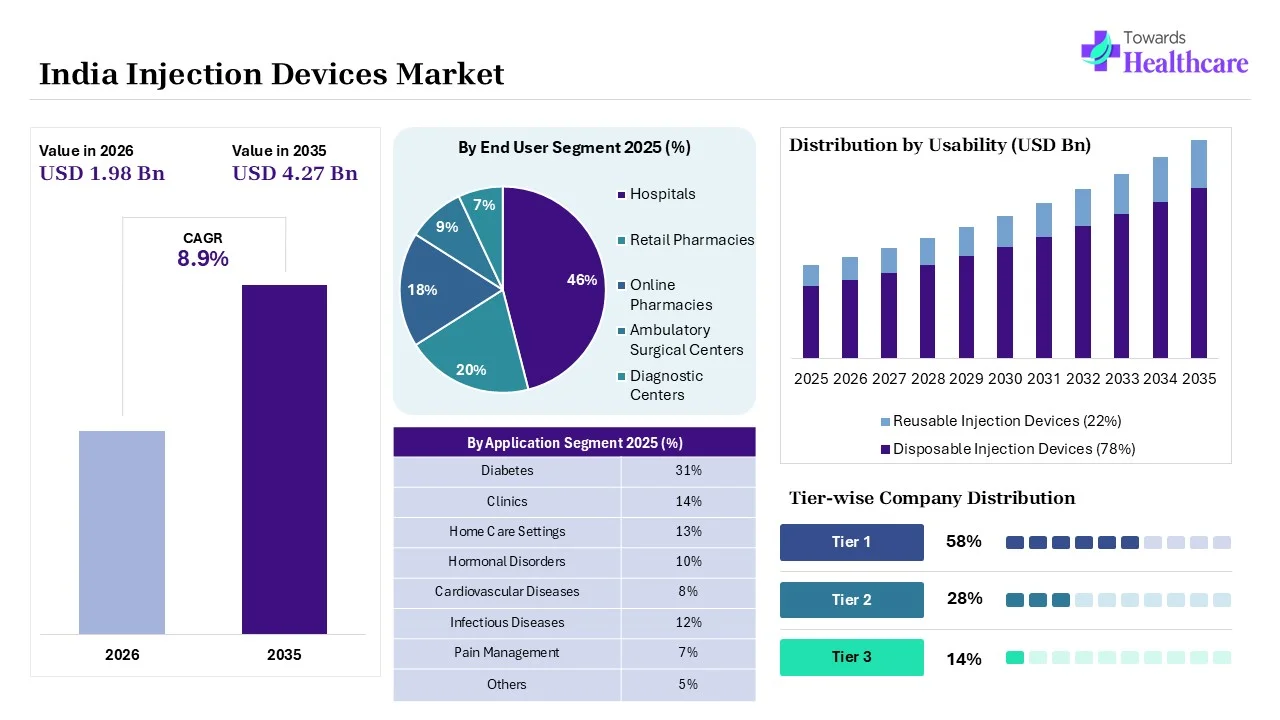
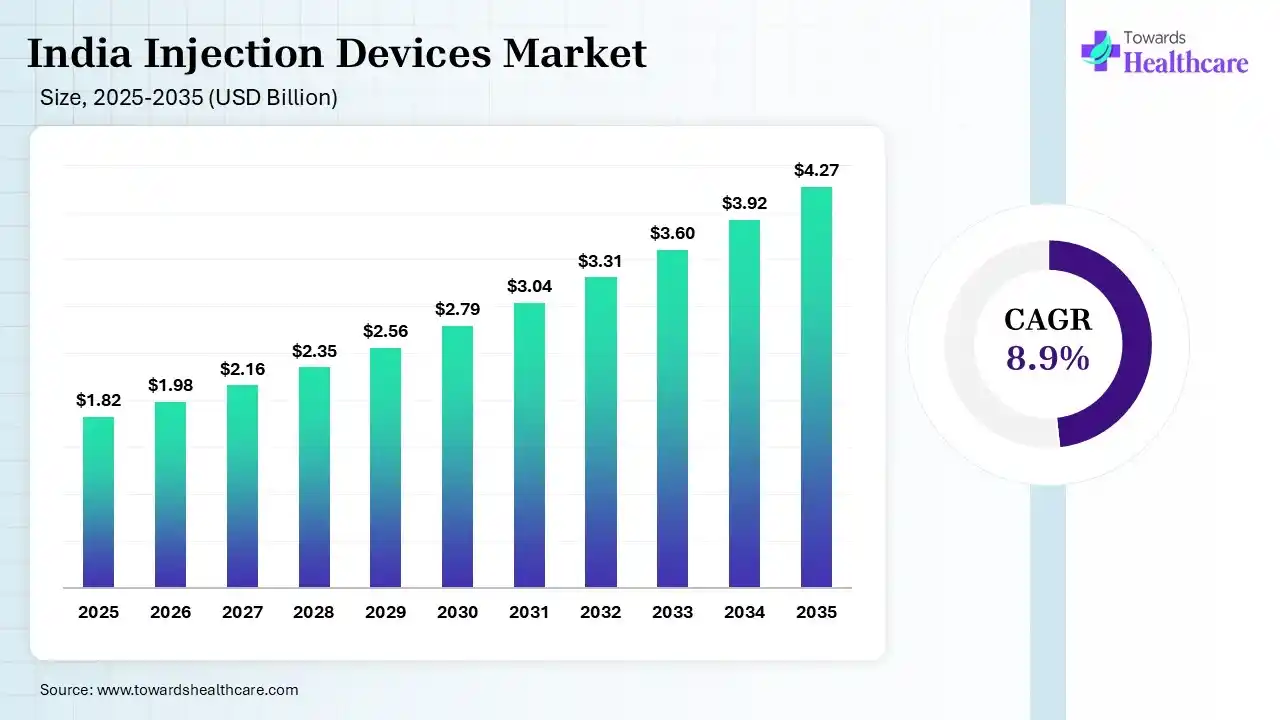
The India injection devices market size reached US$ 1.82 billion in 2025 and is anticipate to increase to US$ 1.98 billion in 2026. By 2035, the market is forecasted to achieve a value of around US$ 4.27 billion, growing at a CAGR of 8.9%.
The India injection devices market is driven by growth in the diabetic population, extensive government immunization campaigns, and a shift towards self-administration at home. India injection devices encompass the development, manufacturing, and distribution of medical devices in India used to administer vaccines, drugs, and other therapeutic agents through various injection routes. These devices help in administering drugs through subcutaneous, intravenous, intradermal, and intramuscular routes, ensuring safe, effective, and accurate drug delivery, where faster therapeutic action also enhances patient outcomes. Different types of injection devices available in India include conventional syringes, safety injection devices, autoinjectors, pen injectors, pre-filled syringes, and infusion devices.
The growing incidence of chronic diseases like diabetes, cancer, infectious diseases, etc., is increasing the demand for injection devices, where the expanding home-based healthcare is also encouraging their use. They are being used for the administration of insulin, chemotherapies, targeted drugs, hormones, specialty medications, biologics, anaesthetics, and various vaccines. They are also being preferred for emergency care, nutritional support, and diagnostic procedures, where advances in prefilled syringes, safety-engineered injections, connected injection devices, needle-free injection technologies, and expanding government vaccination programs are also increasing their innovations and enhancing the market growth.
| Disease Category | Estimated Cases/Prevalence in India (2025) | Key Facts |
| Diabetes | ~73 to 90+ million adults | India is often called the diabetes capital of the world. Many cases remain undiagnosed. |
| Cardiovascular Diseases | 25.6% of reported lifestyle ailments | Heart ailments tripled in 7 years, increasingly affecting younger adults aged 15-45 |
| Oncology (Cancer) | ~1.4 to 1.7+ million new cases | Approximately 1 in 9 Indians is likely to develop cancer in their lifetime. |
| Infectious Diseases | ~11.5% positivity rate in tested samples (ICMR) | Includes ~2.8 million annual Tuberculosis cases, plus spikes in Dengue and Influenza A. |
| Hormonal Disorders | 24.2% of metabolic/endocrine ailments | Includes thyroid disorders and PCOS, often driven by sedentary lifestyles and poor diet. |
| Autoimmune Diseases | Millions affected | Includes conditions like Rheumatoid Arthritis and Lupus. Often hard to diagnose. |
| Pain Management | 100+ million (Chronic pain conditions) | Tied to arthritis, lifestyle posture, and cancer care. Often addressed at specialized pain clinics. |
The use of AI is increasing in the development of injection devices as it helps in enhancing the devices' performance and quality optimization. AI also helps in the development of smart connected autoinjectors and pen injectors, smart dosing, providing reminders and alerts, and enhancing medication adherence. It also provided personalised treatment support, remote patient monitoring, and help in reducing medication errors by ensuring accurate dosing. Its predictive analytics and integration with telehealth platforms are also driving its demand.
Expanding Biologics
The growing chronic disease burden across India is increasing the demand for biologics, which is fueling the adoption of various injection devices. The growing investments are also driving the development of biologics requiring injectable delivery solutions, where the rising health awareness is also increasing their adoption rates. This, in turn, is promoting the use of autoinjectors, prefilled syringes, and pen injectors, as well as fueling the development of patient-friendly injection solutions.
High Demand for Safety Injection Devices
A rise in the infection risk and needlestick injuries awareness is increasing the demand for safety injection devices, which help in reducing blood-borne infections and injuries. They are also being preferred to implement safe injection practices and infection controls, where the growing vaccination campaigns are also increasing their use in large volumes. Moreover, to prioritize patient and worker protection, the healthcare facilities are encouraging their use, and their growing use is driving the development of retractable needles and auto-disable syringes to enhance their performance.
Increasing Technological Advancements
Growing healthcare investment and collaboration are driving the development of advanced injectable devices to offer safe, accurate, and convenient drug delivery. They are developing smart injectors for dose tracking and adherence monitoring, prefilled syringes to enhance patient experience, and needle-free injection technologies to reduce pain and enhance patient compliance. At the same time, new patient-centric, effective, reliable, and user-friendly injections are also being developed for self-administration.
| Table | Scope |
| Market Size in 2026 | USD 1.98 Billion |
| Projected Market Size in 2035 | USD 4.27 Billion |
| CAGR (2026 - 2035) | 8.9% |
| Historical Data | 2020 - 2023 |
| Base Year | 2025 |
| Forecast Period | 2026 - 2035 |
| Measurable Values | USD Millions/Units/Volume |
| Market Segmentation | By Product Type, By Delivery Mode, By Route of Administration, By Application, By End User, By Distribution Channel, By Usability |
| Top Key Players | Becton, Dickinson and Company (BD), Gerresheimer India, Novo Nordisk India Pvt. Ltd., Terumo India Pvt. Ltd., Sanofi India Limited, Eli Lilly and Company Pvt. Ltd., Hindustan Syringes & Medical Devices Ltd. |
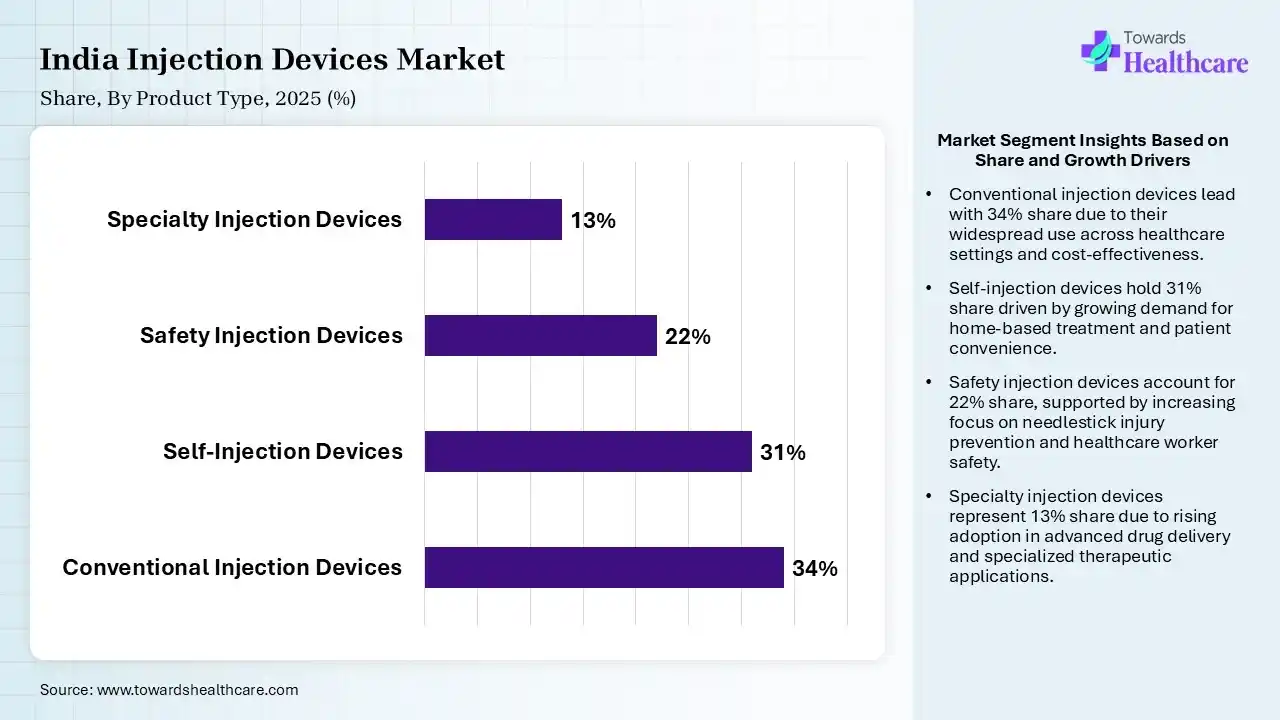
| Segment | Share 2025 (%) |
| Conventional Injection Devices | 34% |
| Self-Injection Devices | 31% |
| Safety Injection Devices | 22% |
| Specialty Injection Devices | 13% |
The Conventional Injection Devices Segment Dominated the Market With 34% in 2025
The conventional injection devices segment led the India injection devices market with a 34% share in 2025, due to the large vaccination volume, which increased the demand for injection devices in India. Extensive hospital utilization for a wide range of drugs and vaccine administrations also increased their adoption rates. Cost-effective procurement also supported their demand.
The self-injection devices segment held the second-largest share of 31% of the market in 2025 and is expected to witness the fastest growth with a CAGR of 11.5% during the forecast period, due to rising diabetes prevalence. Expanding home-based treatment adoption is also encouraging its use. Growing patient convenience is also accelerating their uptake.
The safety injection devices segment held 22% of the India injection devices market share in 2025, driven by healthcare facilities reducing needlestick injuries. Expanding safety regulations and Infection control initiatives are also driving their adoption. Enhanced safety and reduced risk of infection also support their growth.
The specialty injection devices segment held 13% of the market share in 2025, due to the growth of biologics and specialty therapies. Advanced drug delivery requirements, improved drug dosing, and user-friendly designs are also increasing their adoption rates. Rising premium device adoption and expanding home-based healthcare are also encouraging their use.
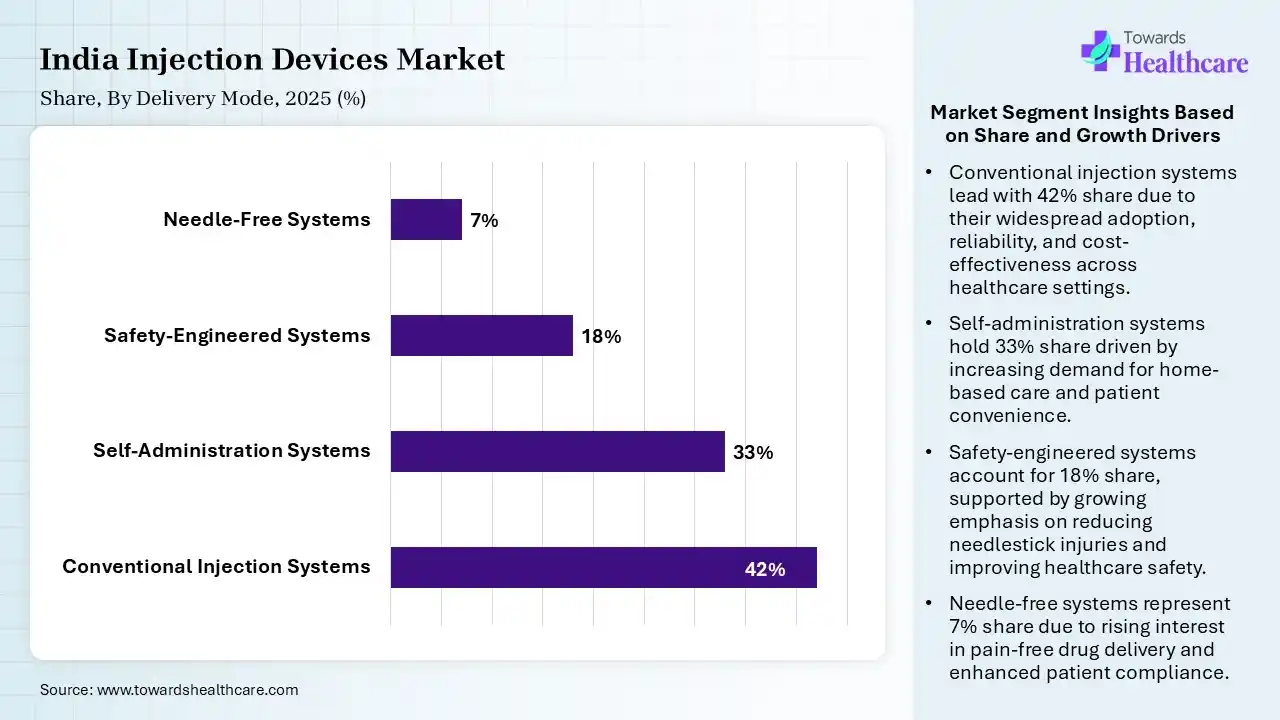
| Segment | Share 2025 (%) |
| Conventional Injection Systems | 42% |
| Self-Administration Systems | 33% |
| Safety-Engineered Systems | 18% |
| Needle-Free Systems | 7% |
The Conventional Injection Systems Segment Dominated the Market With 42% in 2025
The conventional injection systems segment accounted for the highest revenue share of 42% of the India injection devices market in 2025, driven by high procedural volumes, which sustained their demand. Broad therapeutic applicability, ease of use, and affordability also supported their usage. Established healthcare practices and high demand across rural regions also favored their adoption.
The self-administration systems segment held the second-largest share of 33% of the market in 2025, due to chronic disease management shifts to homes. Expanding digital health awareness is also increasing its use due to safe and simpler methods. Patients seek convenience and independence, which also drives their adoption, reducing the need for frequent hospital visits.
The safety-engineered systems segment held 18% of the India injection devices market share in 2025, driven by hospitals prioritizing worker safety. A growth in the government guidelines and a focus on enhancing infection control are also encouraging their implementation. Rising injury prevention investments, vaccination programs, and health awareness are also increasing their use.
The needle-free systems segment held 7.0% of the market share in 2025 and is expected to show the highest growth with a CAGR of 12.3% during the forecast period, due to growing demand for painless delivery. Expanding pediatric applications are also increasing the use of needle-free systems. Technological advancements are also improving their performance.
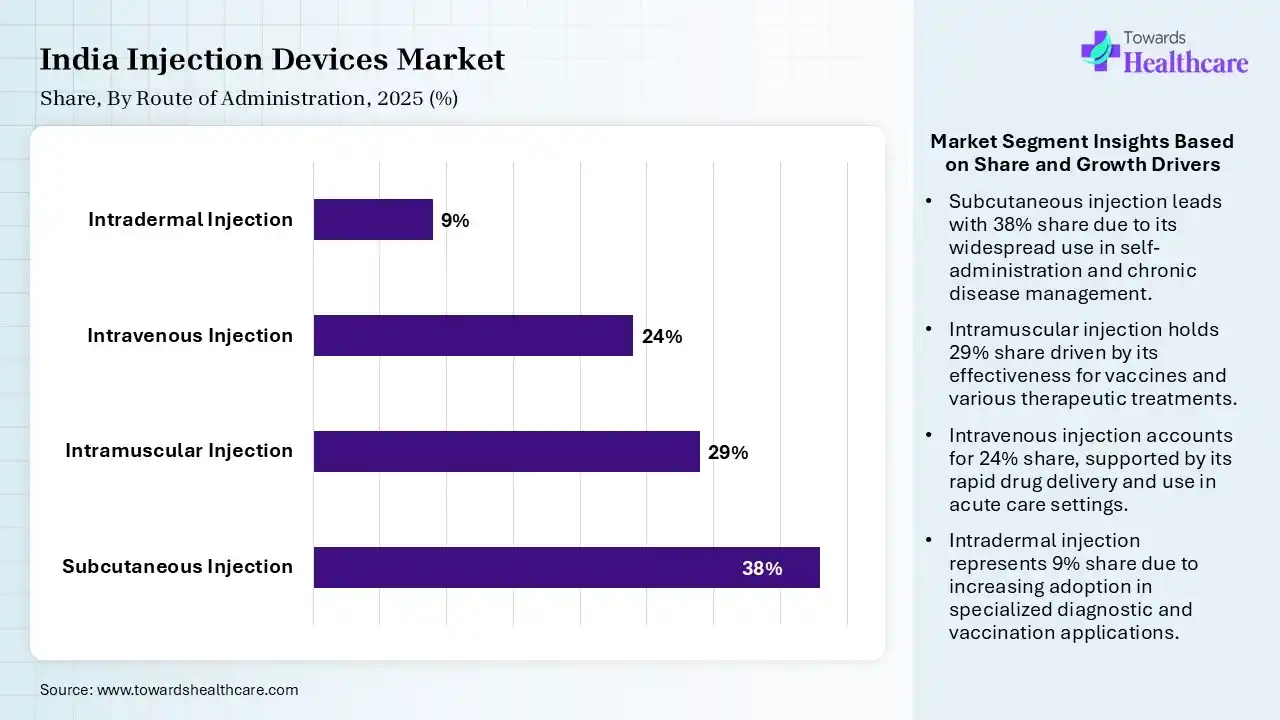
| Segment | Share 2025 (%) |
| Subcutaneous Injection | 38% |
| Intramuscular Injection | 29% |
| Intravenous Injection | 24% |
| Intradermal Injection | 9% |
The Subcutaneous Injection Segment Dominated the Market With 38% in 2025
The subcutaneous injection segment held a major revenue share of 38% of the India injection devices market in 2025 and is expected to expand rapidly with a CAGR of 11% during the forecast period, due to the expansion of insulin and biologic therapies. A rise in the home administration also increased the use of subcutaneous injection. Self-injection technologies also supported their growth.
The intramuscular injection segment held the second-largest share of 29% of the market in 2025, driven by extensive vaccination programs, which drive its adoption. Persistent acute care utilization also drives their demand. At the same time, Faster drug absorption and broad therapeutic usage also sustain their demand.
The intravenous injection segment held 24% of the India injection devices market share in 2025, due to increasing hospital-based therapies. Critical care procedures support utilization for a rapid therapeutic effect. Drug infusion demand remains stable, as they are also being preferred for chemotherapy, antibiotics, and biologics support.
The intradermal injection segment held 9% of the market share in 2025, driven by its expanding diagnostic and vaccine applications. Increasing clinical research activities and growing focus on infectious disease control also drive their use. At the same time, precision administration and a shift towards preventive healthcare are also driving their adoption.
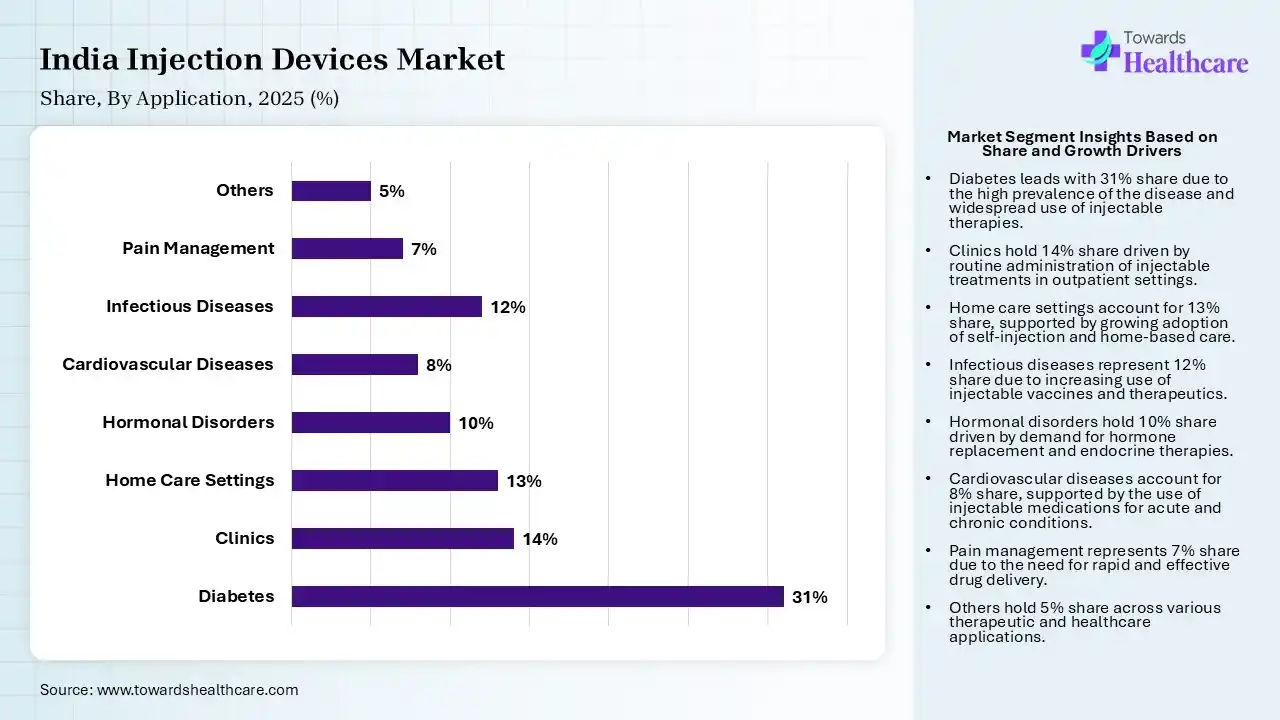
| Segment | Share 2025 (%) |
| Diabetes | 31% |
| Clinics | 14% |
| Home Care Settings | 13% |
| Hormonal Disorders | 10% |
| Cardiovascular Diseases | 8% |
| Infectious Diseases | 12% |
| Pain Management | 7% |
| Others | 5% |
The Diabetes Segment Dominated the Market With 31% in 2025
The diabetes segment held the largest revenue share of 31% of the India injection devices market in 2025, driven by a large diabetic population, which increased the demand for injection devices in India. A rise in the insulin therapy utilization also increased their use. Self-injection adoption also accelerated their growth.
The autoimmune diseases segment held the second-largest share of 14% of the market in 2025, due to growing biologic therapy penetration across India. Expanding long-term treatment requirements are also fueling the demand for injection devices. The growing shift towards patient self-administration is also increasing their use.
The oncology segment held 13% of the India injection devices market share in 2025, driven by the steady rise in cancer incidence. Expanding cancer treatment centres and injectable oncology drugs are also increasing the demand for injection devices. Specialty delivery systems gain traction, where growing government initiatives are also driving new opportunities.
The others segment held 5% of the market share in 2025 and is expected to grow with the fastest CAGR of 11.7% during the forecast period, due to the rise in novel therapies entering the market. Expanding rare disease treatments and self-injection therapies are also increasing the demand for injection devices. Increasing specialty drug adoption also drives its demand.
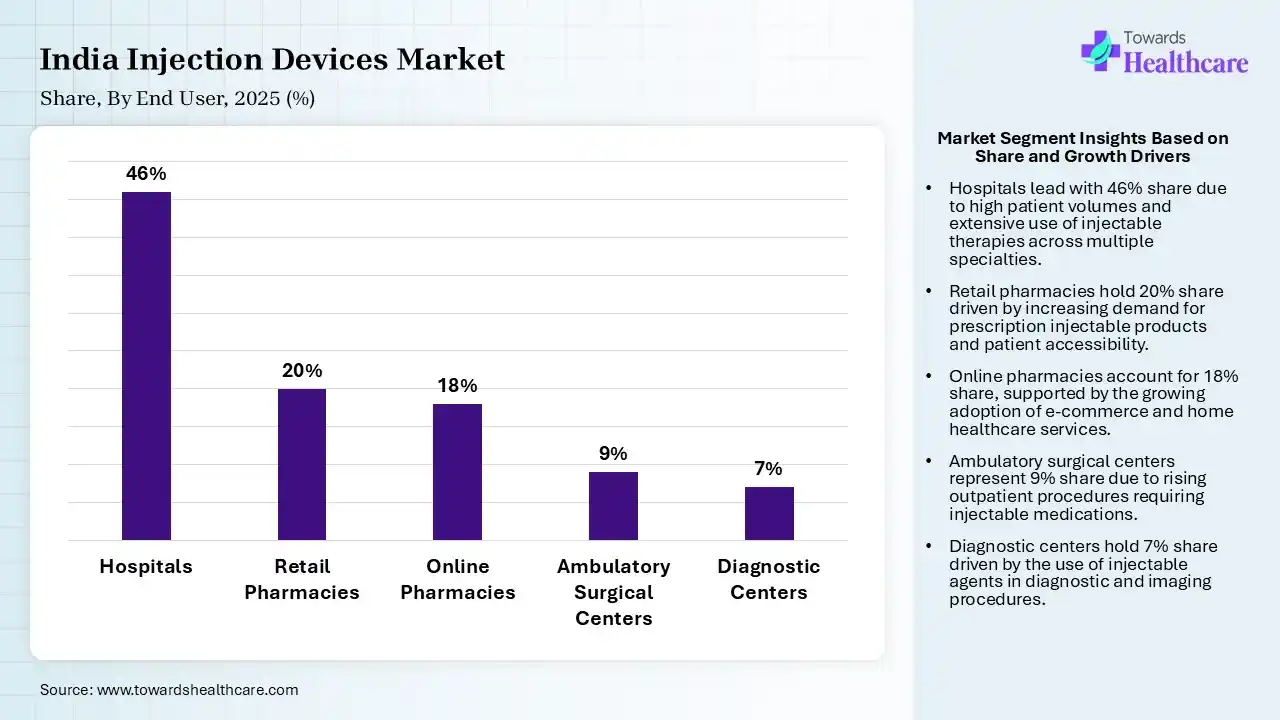
| Segment | Share 2025 (%) |
| Hospitals | 46% |
| Retail Pharmacies | 20% |
| Online Pharmacies | 18% |
| Ambulatory Surgical Centers | 9% |
| Diagnostic Centers | 7% |
The Hospitals Segment Dominated the Market With 46% in 2025
The hospitals segment contributed the biggest revenue share of 46% of the India injection devices market in 2025, due to high inpatient procedures, which increased the consumption of injection devices. Large procurement volumes also supported the demand for various injection devices. At the same time, advanced treatment facilities also increased their usage.
The clinics segment held the second-largest share of 20% of the market in 2025, driven by the expansion of outpatient care. A rise in chronic disease treatment volumes is also driving the demand for injection devices. Their accessibility and lower treatment costs are also improving patient visits.
The home care settings segment held 18% of the India injection devices market share in 2025 and is expected to gain the highest share with a CAGR of 12.1% during the forecast period, due to the increasing self-injection therapies. The elderly population prefers home treatment, which is driving the demand for various injectable devices. Expanding telehealth platforms are also supporting their adoption.
The ambulatory surgical centers segment held 9% of the market share in 2025, driven by the expansion of day-care surgeries and increasing demand for minimally invasive procedures. Increasing cost-efficient procedures are also driving the adoption of injection devices in India. Moreover, rising injectable medication usage is also increasing its demand.
India injection devices market is expected to show rapid growth during the forecast period, due to the increasing incidence of diabetes and cancer cases. The growth in population and health awareness is also increasing the adoption of injection devices, as expanding healthcare services and vaccination programs are also increasing their demand. At the same time, expanding government initiatives, rising focus on self-injecting devices, and growing healthcare investments are also increasing their use and innovation, and are propelling the market growth.
R&D
Clinical Trials and Regulatory Approvals
Patient Support and Services
| Companies | Headquarters | Injection Devices in India |
| Becton, Dickinson and Company (BD) | Franklin Lakes, U.S. | BD Vystra, BD Hypak, and BD Physioject |
| Gerresheimer India | Düsseldorf, Germany | Gx Biological Solutions/Gx RTF |
| Novo Nordisk India Pvt. Ltd. | Basgsvaerd, Denmark | FlexPen, FlexTouch, and NovoPen 4/6 |
| Terumo India Pvt. Ltd. | Tokyo, Japan | Nanopass and PLAJEX |
| Sanofi India Limited | Paris, France | SoloSTAR and AllStar PRO |
| Eli Lilly and Company Pvt. Ltd. | Indianapolis, U.S. | KwikPen, HumaPen Ergo II, and HumaPen Savvio |
| Hindustan Syringes & Medical Devices Ltd | Faridabad, India | Dispovan and Kojak Selinge |
In June 2026, to prevent outbreaks of HIV, Hepatitis C, and Hepatitis B due to unsafe reuse of syringes, needles, and other single-use medical devices, the National Medical Commission (NMC) has issued an advisory mandating strict adherence to safe injection practices, where Rajiv Nath, Forum Coordinator of the Association of Indian Medical Device Industry, highlighted that “India has the manufacturing capacity to supply safety-engineered syringes at scale. The barrier is not technology; it is willpower. Procurement administrators must prioritize patient safety over short-term cost-cutting.”
By Product Type
By Delivery Mode
By Route of Administration
By Application
By End User
By Distribution Channel
By Usability










Principal Consultant
Shivani Zoting is a dedicated research analyst specializing in the healthcare industry. With a strong academic foundation, a B.Sc. in Biotechnology and an MBA in Pharmabiotechnology, she brings a unique blend of scientific understanding and strategy.
Learn more about Shivani Zoting
Reviewed By
Aditi Shivarkar is a seasoned professional with over 14 years of experience in healthcare market research. As a content reviewer, Aditi ensures the quality and accuracy of all market insights and data presented by the research team.
Learn more about Aditi Shivarkar