


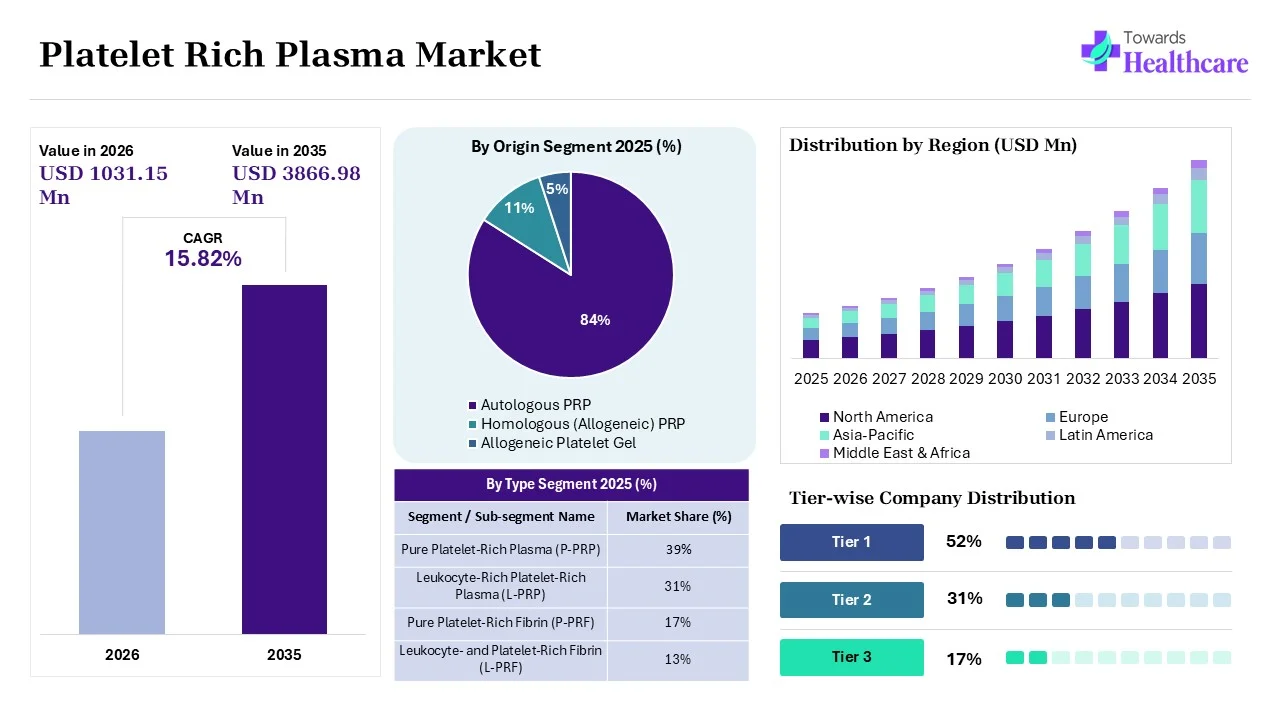
The platelet rich plasma market size accounted for USD 890.3 million in 2025 and is predicted to increase from USD 1031.15 million in 2026 to approximately USD 3866.98 million by 2035, expanding at a CAGR of 15.82% from 2026 to 2035. Growing musculoskeletal disorders, increasing sports injuries, growing demand for cosmetic procedures, increasing shift towards minimally invasive procedures, expanding advanced PRP operations, and blooming new PRP delivery technologies are promoting the market growth.
Platelet-rich plasma refers to an autologs blood derived product utilizing a concentrated level of growth factors and platelets. They are used to enhance tissue repair, healing, and regeneration. This drives their use for orthopedics, dermatology, dentistry, hair restoration, and wound healing applications.
The graph represents a comparison between the under-20 and over-20 UK population suffering from musculoskeletal disorders in 2025. It indicates that there will be a rise in musculoskeletal disorders, which will drive the demand for effective treatment options. This, in turn, will increase the adoption of platelet rich plasma products for the effective management and treatment of musculoskeletal disorders, which will ultimately promote the market growth.
By type, the pure platelet-rich plasma (P-PRP) segment held the largest revenue share of 39% of the platelet rich plasma market in 2025, due to a high concentration of growth factors and platelets. Their enhanced application in orthopedics and sports medicine also increased their use. They also helped in reducing excessive inflammation, which also encouraged their adoption.
By origin type, the autologous PRP segment led the platelet rich plasma market with an 84% share in 2025, due to reduced risk of immune reactions and disease transmission. Their simple preparation process also increased their adoption rates. Their proven effectiveness also increased their use for a wide range of applications.
By application type, the orthopedics segment accounted for the highest revenue share of 36% of the platelet rich plasma market in 2025, driven by growth in musculoskeletal disorders. A rise in joint, tendon, and ligament injuries also increased the demand for platelet rich plasma. A growing geriatric population and demand for minimally invasive procedures have also increased their use.
By activation method type, the calcium chloride segment held a major revenue share of 38% of the platelet rich plasma market in 2025, as it helped in the activation of platelets. Their simple and safe use also increased their use for consistent platelet activation. Their stable fibrin matrix formation and enhanced tissue healing also increased their use.
By end user, the hospitals segment contributed the biggest revenue share of 34% of the platelet rich plasma market in 2025, driven by a high volume of surgical procedures. The availability of advanced PRP products also attracted patients. The presence of skilled healthcare professionals also increased their use.
North America dominated the platelet rich plasma market with 41% in 2025, due to the presence of advanced healthcare infrastructure and high healthcare expenditure. Growth in awareness of orthopedic disorders and a rise in the demand for regenerative medicines have also increased their adoption rates. Rise in innovations and favourable reimbursement policies also enhanced the market growth.
Arthrex, Inc.?dominates the market with its Angel PRP System and autologous conditioned plasma, where EmCyte?Corporation?was its closest competitor, which offered PurePRP?SupraPhysiolog?and?PureBMC. Zimmer Biomet?also sustained its position by providing the GPS III platelet concentration system, while Terumo Corporation?also contributed to the market growth with its Terumo Autologous Platelet Rich Plasma System.
By Type
By Origin
By Application
By Activation Method
By End User
By Preparation Method
By Region


