

Pipeline Programs

CGT Companies Tracked

Manufacturing Facilities


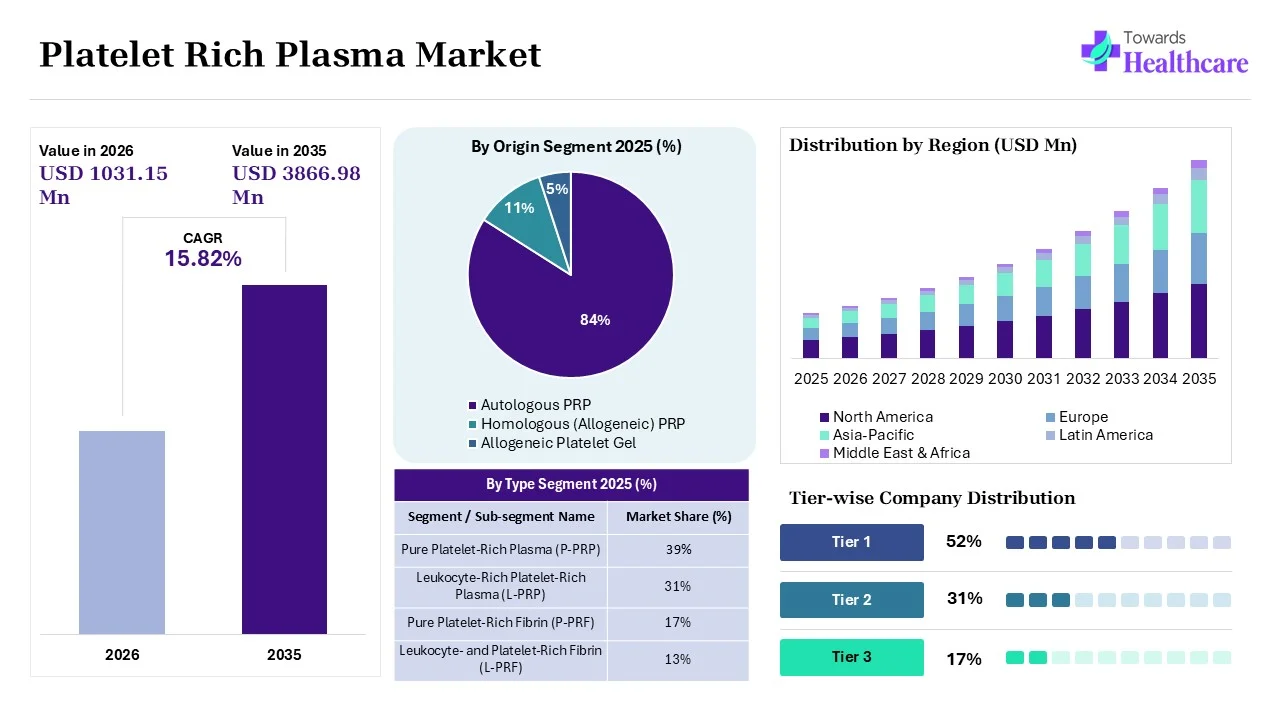
The global platelet rich plasma market size is calculated at USD 890.3 million in 2025, driven by a rise in musculoskeletal disorders globally. The market continues to grow USD 1031.15 million in 2026 due to advancements in cosmetic procedures, new PRP product launches, and AI integration. It is expected to reach USD 3866.98 million by 2035 as expanding aesthetic applications, regenerative medicines, and PRP delivery technologies accelerate market expansion registering a CAGR of 15.82% during the period. North America accounted for 41% of the market in 2025 due to its advanced healthcare infrastructure, high procedure volume, and robust regenerative medicine research.
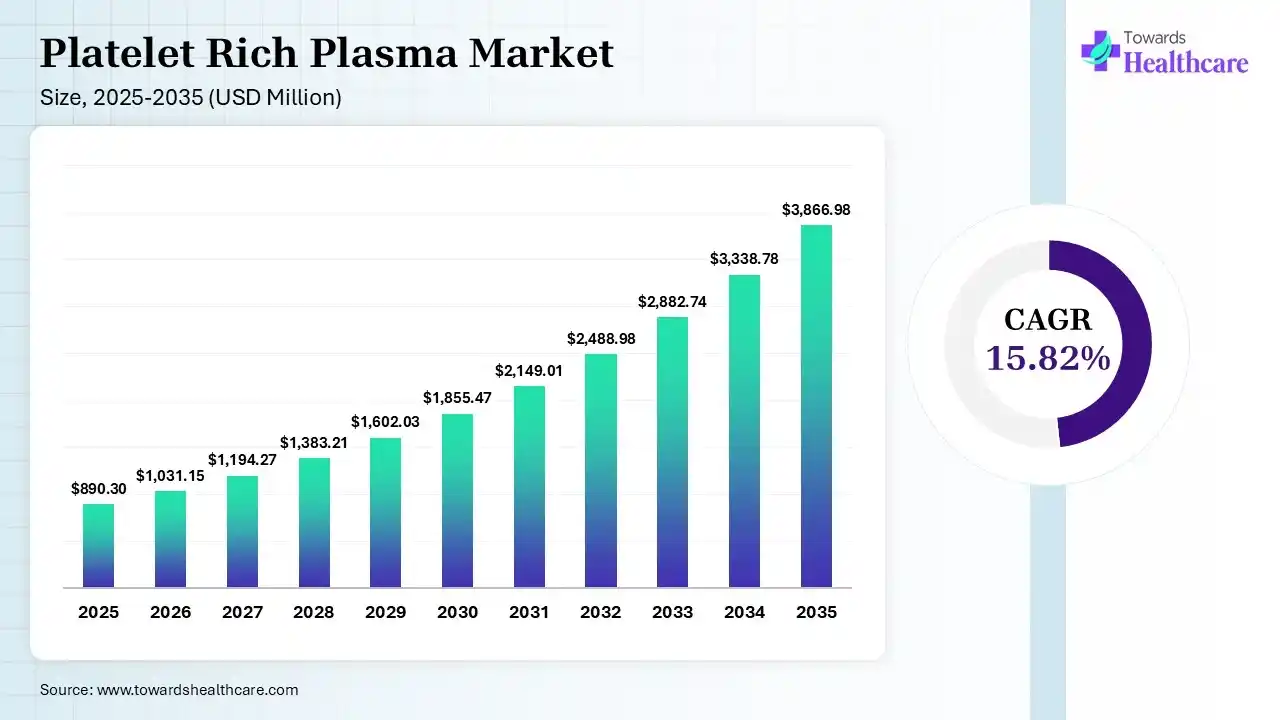
The platelet rich plasma market is driven by growing musculoskeletal disorders and sports injuries, along with the growing demand for cosmetic procedures. Platelet-rich plasma refers to the concentrated preparation of autologous blood plasma consisting of a higher volume of platelets, bioactive proteins, and growth factors. The mechanism of action of PRP involves the release of bioactive growth factors and concentrated platelets, which stimulate cellular repair, wound healing, pain reduction, tissue regeneration, collagen synthesis, and angiogenesis. This, in turn, drives their demand for orthopedics, dermatology, dentistry, hair restoration, and wound healing applications.
The rise in sports injuries, musculoskeletal disorders, and dental problems is also increasing the demand for platelet-rich plasma products. Growing demand for hair restoration and skin rejuvenation procedures is also increasing their adoption rates. Their expanding applications are increasing their use in the development of sports medicines, aesthetic medicines, regenerative medicines, and pain management medicines as well. Furthermore, growing R&D activities, a shift towards minimally invasive procedures, increasing health awareness, expanding advanced PRP operations, and blooming new PRP delivery technologies are also contributing to the market expansion.
Platelet rich (PRP) is an autologous blood-derived preparation containing a concentrated level of platelets growing as healthcare professionals and growth factors, used to support tissue repair and regeneration. The market is growing as healthcare professionals increasingly explore minimally invasive approaches for musculoskeletal injuries, aesthetic procedures, wound care, and regenerative applications. Key trends include customized PRP formulations, combination therapies, outpatient procedures, and growing use in sports medicine and aesthetics. Technological advancements in automated blood-processing systems, centrifugation techniques, platelet concentration monitoring, and closed preparation systems are improving consistency and treatment efficiency. Key drivers include rising sports-related injuries, demand for non-surgical treatments, increasing aesthetic procedures, and growing interest in regenerative medicine. Future opportunities are emerging in orthopedics, dermatology, hair restoration, dentistry, wound management, and personalized regenerative therapies. Expanding clinical application and improved preparation technologies are expected to strengthen adoption across diverse healthcare settings.
Internal factors include PRP preparation technologies, product consistency, platelet concentration, equipment quality, treatment protocol, practitioner expertise, pricing, and research capabilities. External factors include growing demand for minimally invasive procedures, increasing sports injuries, aesthetic treatment adoption, healthcare expenditure, regulatory conditions, patient awareness, and advancements in regenerative medicine. Rising interest in personalized therapies and outpatient procedures creates opportunities for PRP providers, while inconsistent clinical outcomes, limited standardization, reimbursement constraints, and competition from alternative regenerative treatments can restrict adoption. Additionally, technological improvements in automated preparation systems and combination therapies can influence product development and treatment efficiency, shaping competition and long-term growth across the platelet rich plasma market.
AI offers a wide range of applications in the development of platelet-rich plasma, where it assists in the optimization of its development protocols. It also helps in maintaining the purity and consistency of the platelet concentration. Furthermore, AI also supports in finding new PRP indications, predicting treatment outcomes, & helping in monitoring the tissue healing. Additionally, it is also used in the development of personalized PRP treatment solutions.
Flourishing Sport Medicines
The growing incidence of sports injuries is increasing the use of platelet-rich plasma as a non-surgical alternative, and the rising awareness of athletes is also pushing their adoption for faster recovery. A growing shift towards minimally invasive procedures and expanding rehabilitation centres is also increasing the use of these products. Additionally, expanding sports medicine clinics and rising demand for regenerative therapies are also increasing their adoption rates.
Expanding Aesthetic Applications
An accelerating interest in cosmetic procedures is fueling the adoption of platelet-rich plasma for the development of skin regenerative, acne scar reduction, hair restoration, and wrinkle reduction solutions, along with innovative combination therapies. Increasing demand for non-surgical procedures and cosmetic treatments is also accelerating PRP adoption. Furthermore, expanding disposable incomes, a shift towards natural treatment, and a rise in dermatology clinics and combination therapies are also increasing their adoption and innovations.
Blooming Regenerative Therapies
The healing, collagen production, and angiogenesis ability of platelet-rich plasma are fostering its use in the development of new regenerative therapies for the management of various chronic diseases. Additionally, they are also being utilized for the development of wound healing, pain management, and dentistry, where their growing advancements are promoting their applications for new therapeutic indications. The growing investments in R&D activities and regenerative medicine technologies are also creating new opportunities for the development of new PRP products.
| Table | Scope |
| Market Size in 2026 | USD 1031.15 Million |
| Projected Market Size in 2035 | USD 3866.98 Million |
| CAGR (2026 - 2035) | 15.82% |
| Historical Data | 2020 - 2023 |
| Base Year | 2025 |
| Forecast Period | 2026 - 2035 |
| Measurable Values | USD Millions/Units/Volume |
| Market Segmentation | By Type, By Origin, By Application, By Activation Method, By End User, By Preparation Method, By Region |
| Top Key Players | Arthrex, Inc., Zimmer Biomet, EmCyte Corporation, Terumo Corporation, Stryker Corporation, Johnson & Johnson, Regen Lab SA |
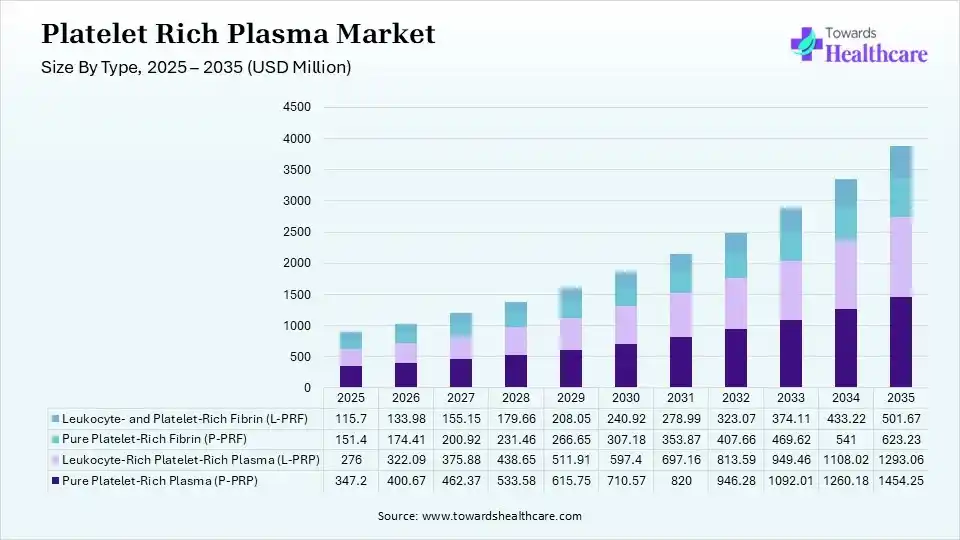
| Segment | Share 2025 (%) |
| Pure Platelet-Rich Plasma (P-PRP) | 39% |
| Leukocyte-Rich Platelet-Rich Plasma (L-PRP) | 31% |
| Pure Platelet-Rich Fibrin (P-PRF) | 17% |
| Leukocyte- and Platelet-Rich Fibrin (L-PRF) | 13% |
The Pure Platelet-Rich Plasma (P-PRP) Segment Dominated the Market With 39% in 2025
The pure platelet-rich plasma (P-PRP) segment led the platelet rich plasma market with 39% share in 2025, due to its wide adoption in orthopedic and sports medicine procedures. Delivers consistent platelet concentration, which increases its use. Growth in physician preference due to its improved tissue regeneration and repair outcomes also supported its utilization.
The leukocyte-rich platelet-rich plasma (L-PRP) segment held the second-largest share of 31% of the market in 2025 and is expected to witness the fastest growth with a CAGR of 16.70% during the forecast period, driven by expanding use in tendon and ligament repair. Improves inflammatory response in selected indications. Clinical evidence continues to broaden its adoption.
The pure platelet-rich fibrin (P-PRF) segment held 17% of the platelet rich plasma market share in 2025, driven by its increasing use in oral surgery and tissue regeneration. Provides sustained growth factor release. Furthermore, it also supports faster healing outcomes, which drives its demand.
The leukocyte- and platelet-rich fibrin (L-PRF) segment held 13% of the market share in 2025, due to rising demand in dental implantology. It helps enhance wound healing and regeneration, which increases its adoption rates. Greater procedural acceptance also boosts growth. Its enhanced bone regeneration property also drives its demand.
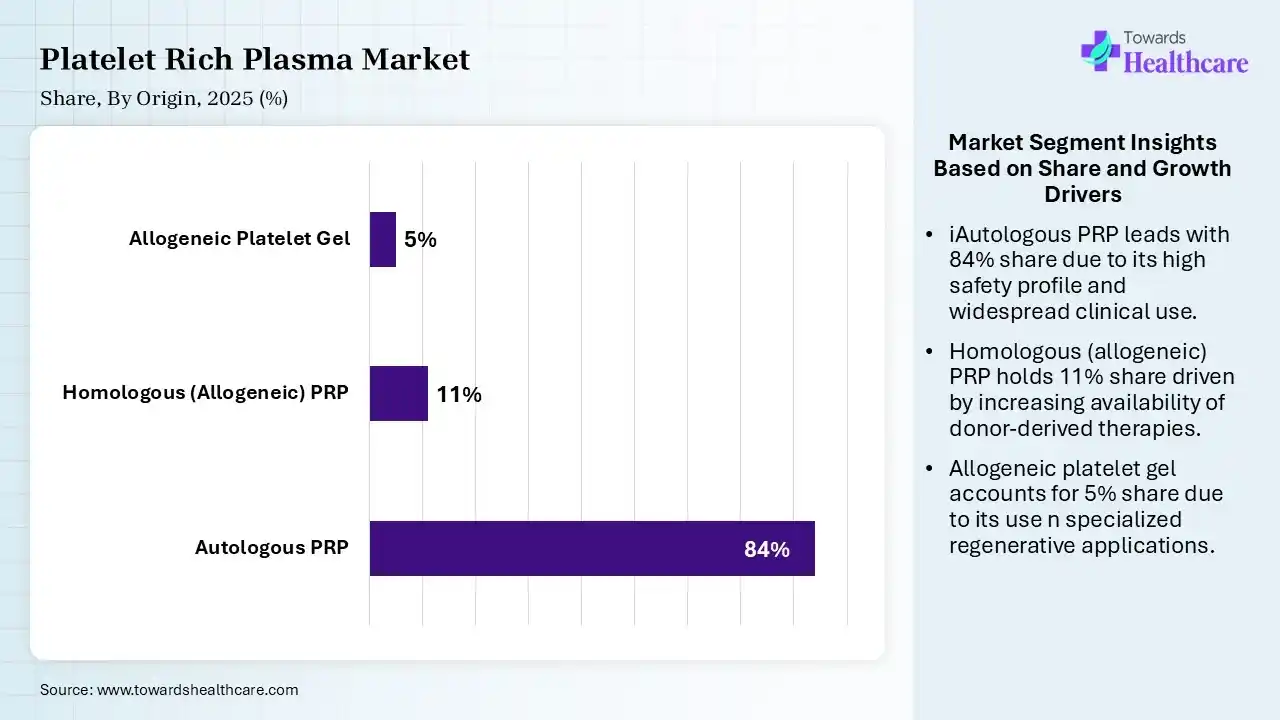
| Segment | Share 2025 (%) |
| Autologous PRP | 84% |
| Homologous (Allogeneic) PRP | 11% |
| Allogeneic Platelet Gel | 5% |
The Autologous PRP Segment Dominated the Market With 84% in 2025
The autologous PRP segment accounted for the highest revenue share of 84% of the platelet rich plasma market in 2025, as it helped in eliminating the risk of immune rejection. This, in turn, increased its use for most clinical applications. Strong physician confidence also sustained its demand.
The homologous (allogeneic) PRP segment held the second-largest share of 11% of the market in 2025 and is expected to show the highest growth with a CAGR of 16.50% during the forecast period, due to expanding treatment options when autologous blood is unsuitable. Increasing clinical research also supports adoption. Improved donor screening enhances safety, increasing its use.
The allogeneic platelet gel segment held 5% of the platelet rich plasma market share in 2025, as it is gaining traction in specialized wound care. It also supports regenerative therapies, which are also being utilized for ulcer management. Technological improvements also encourage their clinical use.
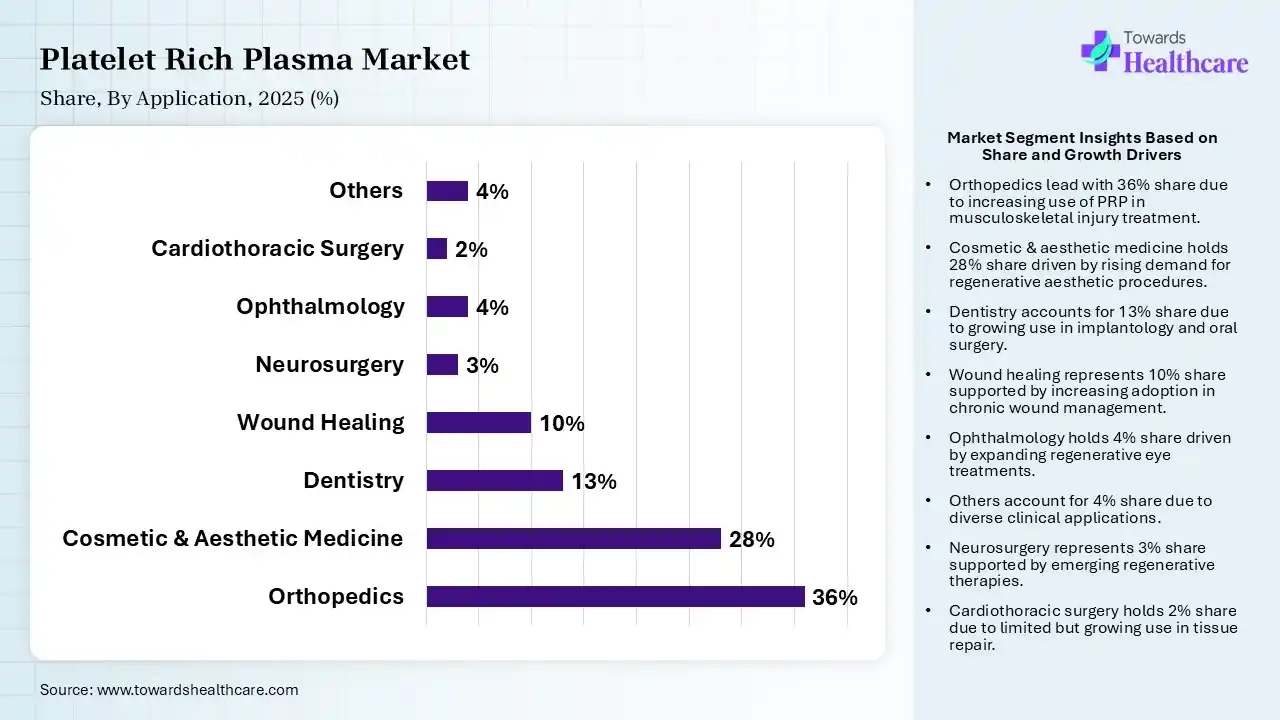
| Segment | Share 2025 (%) |
| Orthopedics | 36% |
| Cosmetic & Aesthetic Medicine | 28% |
| Dentistry | 13% |
| Wound Healing | 10% |
| Neurosurgery | 3% |
| Ophthalmology | 4% |
| Cardiothoracic Surgery | 2% |
| Others | 4% |
The Orthopedics Segment Dominated the Market With 36% in 2025
The orthopedics segment held a major revenue share of 36% of the platelet rich plasma market in 2025, driven by the high prevalence of musculoskeletal disorders, which enhanced procedures. Sports injury treatments continued expanding, which increased the use of platelet rich plasma. Favorable clinical outcomes also increased their utilization.
The cosmetic & aesthetic medicine segment held the second-largest share of 28% of the market in 2025 and is expected to expand rapidly with a CAGR of 17.80% during the forecast period, due to growing demand for minimally invasive aesthetic procedures. Rising acceptance of hair restoration therapies also increases their use. Consumer awareness also accelerates PRP adoption.
The dentistry segment held 13% of the platelet rich plasma market share in 2025, due to PRP improving implant success and tissue regeneration. Increasing oral surgeries are also supporting a rise in their demand. Dental specialists also expand their usage to promote faster recovery.
The wound healing segment held 10% of the market share in 2025, driven by a rising chronic wound burden, which increases treatment demand. PRP promotes faster tissue repair, which drives its adoption rates. Healthcare providers adopt regenerative therapies, which increases their demand.
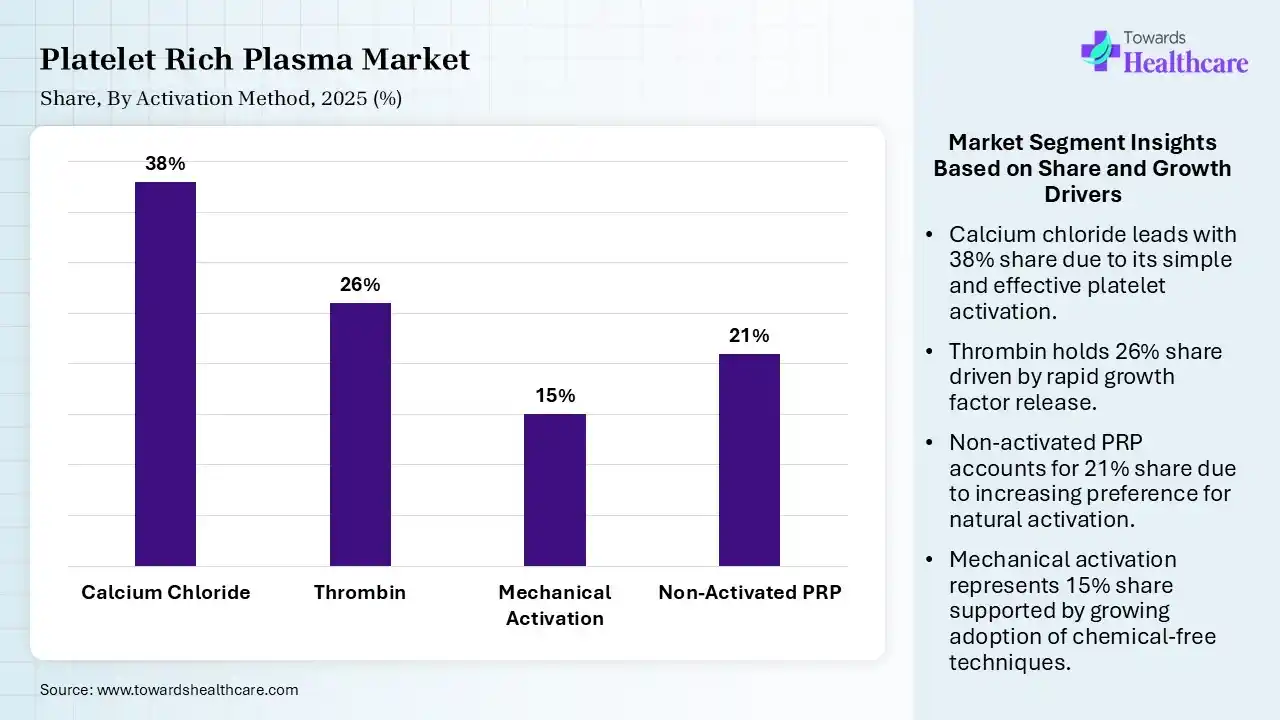
| Segment | Share 2025 (%) |
| Calcium Chloride | 38% |
| Thrombin | 26% |
| Mechanical Activation | 15% |
| Non-Activated PRP | 21% |
The Calcium Chloride Segment Dominated the Market With 38% in 2025
The calcium chloride segment contributed the biggest revenue share of 38% of the platelet rich plasma market in 2025, as they were commonly used for platelet activation. Delivers reliable clot formation, and its affordability and stable fibrin production have also increased its use. It also supported broad clinical applications, which increased its demand.
The thrombin segment held the second-largest share of 26% of the market in 2025, driven by its rapid activation in surgical settings. Its faster fibrin clot formation and release of bioactive proteins also increases their use. Widely utilized during regenerative procedures. Clinical familiarity also drives its demand.
The non-activated PRP segment held 21% of the market share in 2025, driven by high preference in several orthopedic indications. Enables gradual growth factor release, which increases their adoption rate. Expanding physician acceptance rates is also supporting their growth. They also help in preserving the properties of platelets.
The mechanical activation segment held 15% of the platelet rich plasma market share in 2025 and is expected to gain the highest share with a CAGR of 16.80% during the forecast period, due to eliminating chemical additives during activation. Growing interest in simplified preparation is also increasing its use. It also supports reproducible PRP activation processes.
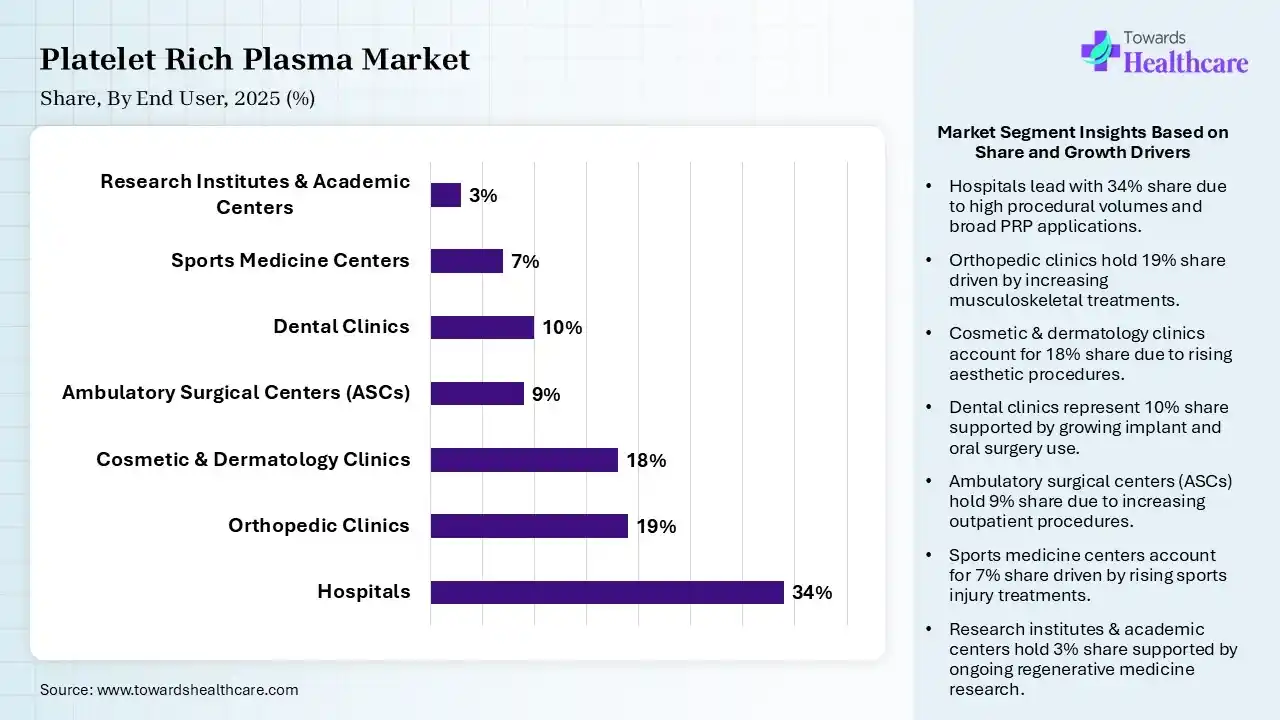
| Segment | Share 2025 (%) |
| Hospitals | 34% |
| Orthopedic Clinics | 19% |
| Cosmetic & Dermatology Clinics | 18% |
| Ambulatory Surgical Centers (ASCs) | 9% |
| Dental Clinics | 10% |
| Sports Medicine Centers | 7% |
| Research Institutes & Academic Centers | 3% |
The Hospitals Segment Dominated the Market With 34% in 2025
The hospitals segment held the largest revenue share of 34% of the platelet rich plasma market in 2025, driven by high patient volume, which supported procedure growth. Advanced infrastructure also enabled complex treatments, which increased the adoption of platelet-rich plasma products. A rise in multidisciplinary adoption also increased their use for a wide range of applications.
The orthopedic clinics segment held the second-largest share of 19% of the market in 2025, due to rising sports injury cases, which are driving a rise in patient visits. Specialized expertise supports PRP utilization, where its use in non-surgical pain management is also increasing its demand. Outpatient treatments continue expanding.
The cosmetic & dermatology clinics segment held 18% of the platelet rich plasma market share in 2025 and is expected to grow with the fastest CAGR of 17.90% during the forecast period, due to increasing aesthetic procedure volumes fueling their demand. Hair restoration services are expanding rapidly, which is increasing the use of platelet-rich plasma. High demand for regenerative therapies is also increasing their use.
The dental clinics segment held 10% of the market share in 2025, driven by increasing implant procedures, which encourage PRP usage. Faster healing improves patient outcomes, which increases their adoption rates. A rise in tooth extraction and surgeries is also expanding their adoption by dental professionals.
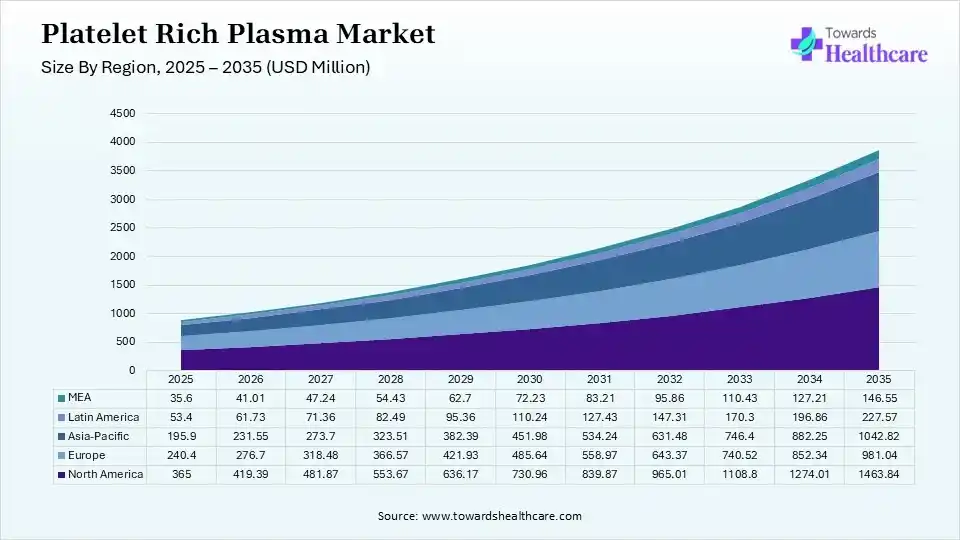
North America dominated the platelet rich plasma market with 41% in 2025, due to the presence of advanced healthcare infrastructure, which supported its adoption. Strong regenerative medicine research also increased innovations, while high procedure volumes also sustained its market leadership. At the same time, increased use of platelet-rich plasma for orthopedics, aesthetics, & sports medicine applications also enhanced their adoption rates. Ongoing substantial progression in health awareness and advances in regenerative medicine have also increased their use, where a rise in innovations has also contributed to the market growth.
US Market Trends
The U.S. held an 82% share in the platelet rich plasma market in 2025, due to strong clinical adoption across specialties. Extensive regenerative medicine research supported platelet-rich plasma innovations, where high healthcare spending also sustained their growth. Additionally, the presence of well-established hospitals and clinics in the U.S. is spurring the use of platelet-rich plasma procedures for diverse applications. Furthermore, the U.S. market is implementing automated, AI-assisted microfluidic separation systems in clinics across the US, which enable practitioners to extract highly standardized platelet concentrations within 15 minutes.
Canada Market Trends
Canada held an 11% share in the platelet rich plasma market in 2025 and is expected to grow with the fastest CAGR of 15.50% during the forecast period, due to rising orthopedic procedures, which increased the demand for platelet rich plasma products. Growing healthcare modernization and clinical awareness also support their adoption. A rise in the geriatric population seeking tissue repair and management solutions is also increasing their use, where growing adoption of minimally invasive procedures, increasing health awareness, and aesthetic medicines are also propelling their use.
Asia Pacific held 22% share of the market in 2025 and is expected to grow at the fastest CAGR of 18.20% during the forecast period, as increasing healthcare investments accelerate market expansion. Expanding medical tourism increases procedures, which drives the adoption of platelet-rich plasma, where rising disposable income also supports their aesthetic treatments. Broadening health awareness, sports medicine, and a combination of standard PRP with stem-cell-derived exosome treatments are also creating new opportunities. Expanding R&D activities and demand for minimally invasive procedures are also enhancing the market growth.
China Market Trends
China held a 34% share in the platelet rich plasma market in 2025, due to the presence of a large patient base, which supported procedure growth. Healthcare modernization also accelerated adoption, where a rise in domestic innovations also expanded their accessibility. Growth in orthopedic disorders and sports injuries also increased their use, where a rise in the demand for regenerative therapies also increased their demand. A shift towards cosmetic and aesthetic procedures also increased their use. Additionally, a rise in healthcare expenditures and disposable incomes also contributed to their enhanced adoption and innovation rates.
India Market Trends
India held an 18% share in the platelet rich plasma market in 2025 and is expected to grow at the fastest CAGR of 19.50% during the forecast period, due to expanding private hospitals increasing platelet rich plasma products adoption. Expanding medical tourism also boosts procedure volumes, while rising awareness also accelerates their adoption rates. Indian research clinics are moving towards Protein-Rich Filtered PRP & unifying it with mesenchymal stem cells (MSCs) & 3D-printed scaffolds for optimized tissue regeneration. Furthermore, wider demand for platelet-rich plasma for dermatology, hair restoration, & orthopedic applications also drives the market expansion.
R&D
Clinical Trials and Regulatory Approvals
Patient Support and Services
| Companies | Headquarters | Platelet Rich Plasma Solutions |
| Arthrex, Inc. | Naples, U.S. | Angel PRP System and autologous conditioned plasma |
| Zimmer Biomet | Warsaw, U.S. | GPS III platelet concentration system |
| EmCyte Corporation | Fort Myers, U.S. | PurePRP SupraPhysiolog and PureBMC |
| Terumo Corporation | Shibuya-ku, Japan | Terumo Autologous Platelet Rich Plasma System |
| Stryker Corporation | Portage, U.S. | Stryker PRP System |
| Johnson & Johnson | New Brunswick, U.S. | PEAK Platelet Rich Plasma System |
| Regen Lab SA | Le Mont-sur-Lausanne, Switzerland | RegenKit, Arthrovisc, and Cellular Matrix |
In March 2026, after the launch of Exprecell, a medical device for the preparation of autologous platelet-rich plasma (PRP) by Croma Pharma, its commercial director, Vikki Baker, expressed, “We are delighted to announce the addition of Exprecell to our portfolio, offering a next-generation solution for fast, anticoagulant-free preparation of PRP. This launch represents Croma’s continued mission to provide healthcare professionals with state-of-the-art tools that support clinical performance, efficiency, and quality of care.”
Strengths
Weaknesses
Opportunities
Threats
By Type
By Origin
By Application
By Activation Method
By End User
By Preparation Method
By Region










Principal Consultant
Payal Rabde is a Healthcare Market Research Analyst at Towards Healthcare Research & Consulting with 4+ years of experience in pharmaceuticals, biotechnology, medical devices, and life sciences.
Learn more about Payal Rabde

Reviewed By
Aditi Shivarkar is a seasoned professional with over 14 years of experience in healthcare market research. As a content reviewer, Aditi ensures the quality and accuracy of all market insights and data presented by the research team.
Learn more about Aditi Shivarkar









