


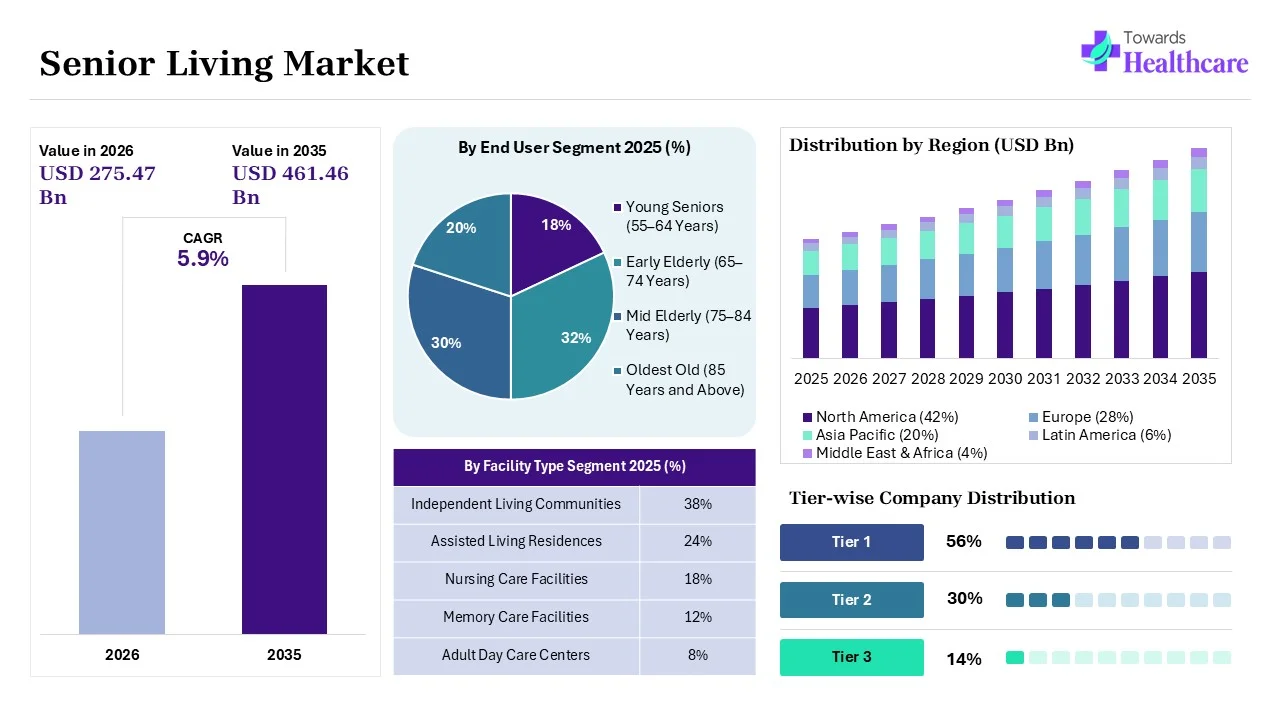
The senior living market size was estimated at USD 260.12 billion in 2025 and is predicted to increase from USD 275.47 billion in 2026 to approximately USD 461.46 billion by 2035, expanding at a CAGR of 5.9% from 2026 to 2035. The growing need for specialized housing and healthcare services tailored to older adults. This demand is surging due to a rapidly aging global population, the rise of nuclear families, and the desire among seniors for security, which drives the growth of the market
Senior living offers a range of housing and care options for older adults, from active lifestyle options such as senior apartments and independent living communities to more supportive environments, such as nursing homes for those with significant medical needs. A senior may need assistance with a few daily activities, such as bathing and eating, but remains largely independent. Those with symptoms of Alzheimer’s or other dementias generally require help with similar ADLs. Independent seniors who don't need help might find senior apartments or independent living suitable. Actively living seniors who require some assistance can find a good balance between independence and support in assisted living communities or board-and-care homes. Senior living apartments typically refer to apartments, sometimes townhouses or condominiums, that are built within communities tailored to meet older adults’ preferences and requirements.
| Countries | Population (million) |
| India | 1463.9 |
| China | 1416.1 |
| USA | 347.3 |
| Indonesia | 285.7 |
| Pakistan | 255.2 |
| Nigeria | 237.5 |
| Brazil | 212.8 |
| Bangladesh | 175.7 |
| Russia | 144 |
Recent developments in holistic health and wellness for seniors emphasize the interconnected comfort of the mind, spirit, and body. For seniors, these processes go beyond managing inaccessible symptoms it emphasizes expressive balance, mental clarity, physical fitness, and spiritual fulfilment. The advantages of holistic strategies to care involve aging with comfort, independence, and vitality, while reducing stress and helping overall life satisfaction. Holistic aging programs often integrate lifestyle choices, community engagement, mindfulness practices, and alternative medicine to create an inclusive wellness framework. These processes are gentle and noninvasive, appealing to seniors who want to improve their quality of life without substantial dependence on medications or aggressive management.
By facility type, the independent living communities segment contributed the largest senior living market share of 38% in 2025, as the independent living communities provide a vibrant, maintenance-free lifestyle with social networks, healthcare programs, and conveniences that make everyday life easy. Independent living provides seniors with a tight-knit community, calming lifestyle, and an attractive activities calendar. In an autonomous living community, residents are active and social.
By ownership model, the private-pay communities segment contributed the largest market share of 54% in 2025, as private-pay assisted living varies from Medicaid-eligible assisted living in what it offers as well. It offers more help and solutions than ALPs. These communities have improved licensing, they provide a higher level of care, they have more dedicated staff members, and they administer more complicated therapeutics.
By service offering, the housing services segment held a significant share of 30% in the senior living market in 2025, as senior living housing has become tremendously popular due to the calm and laid-back way of life that most aging people enjoy. Incorporating service housing units into ordinary senior housing is an imperative feature, adding to the well-being of the residents.
By end user, the early elderly (65-74 years) segment contributed the largest market share of 32% in 2025, as the early elderly help with healthy, happy aging while offering social, intellectual, and cultural stimulation. Creating the appropriate choice early improves independence, as well as health care requirements and abilities change.
By accommodation type, the one-bedroom units segment contributed the largest senior living market share of 37%, as one-bedroom units in a senior living community improved comfort, calmness, and the freedom to completely embrace the later years. One-bedroom housing is generally offered at a reduced price point compared to other larger residential choices. It provides added privacy, storage, and flexibility while still offering access to helpful services.
By care type, the independent care segment contributed the largest market share of 35% in 2025, as independent living is a perfect arrangement for aging adults who are prepared to prioritize joy, comfort, and connection in their lives. It’s intended for those who want the freedom to pursue hobbies and relations without the doubts of day-to-day upkeep.
By region, North America contributed the largest senior living market share of 42% in 2025, as growing spending increases care options and growing housing supply, while highlighting the rising demand for supportive housing as North America ages. As people in this region live longer and families become more geographically dispersed, the requirement for supportive housing options, like assisted living, continues to grow, which drives the growth of the market.
Leading companies in the senior living market are Brookdale Senior Living, Sunrise Senior Living, Atria Senior Living, and Erickson Senior Living. Meanwhile, Brookdale Senior Living operates hundreds of communities that provide independent living, memory care, and assisted living. Sunrise Senior Living is significant for its upscale communities, dedicated memory care, and increasing caregiver-to-resident ratios. Atria Senior Living focuses on premium self-governing living, assisted living, and supportive living solutions. Erickson Senior Living specializes in large-scale continuing care retirement communities (CCRCs), which feature advanced amenities.
By Facility Type
By Ownership Model
By End User
By Accommodation Type
By Care Type
By Region


