


The South Africa traditional & complementary medicine market size stood at US$ 1.84 billion in 2025, grew to US$ 2 billion in 2026, and is forecast to reach US$ 4.32 billion by 2035, expanding at a CAGR of 8.9% from 2026 to 2035. The market is experiencing steady growth, driven by increased consumer preference for natural therapies, herbal products, and preventive healthcare solutions. Rising awareness of holistic wellness, strong cultural acceptance of traditional healing practices, and supportive regulatory development are further contributing to market expansion.
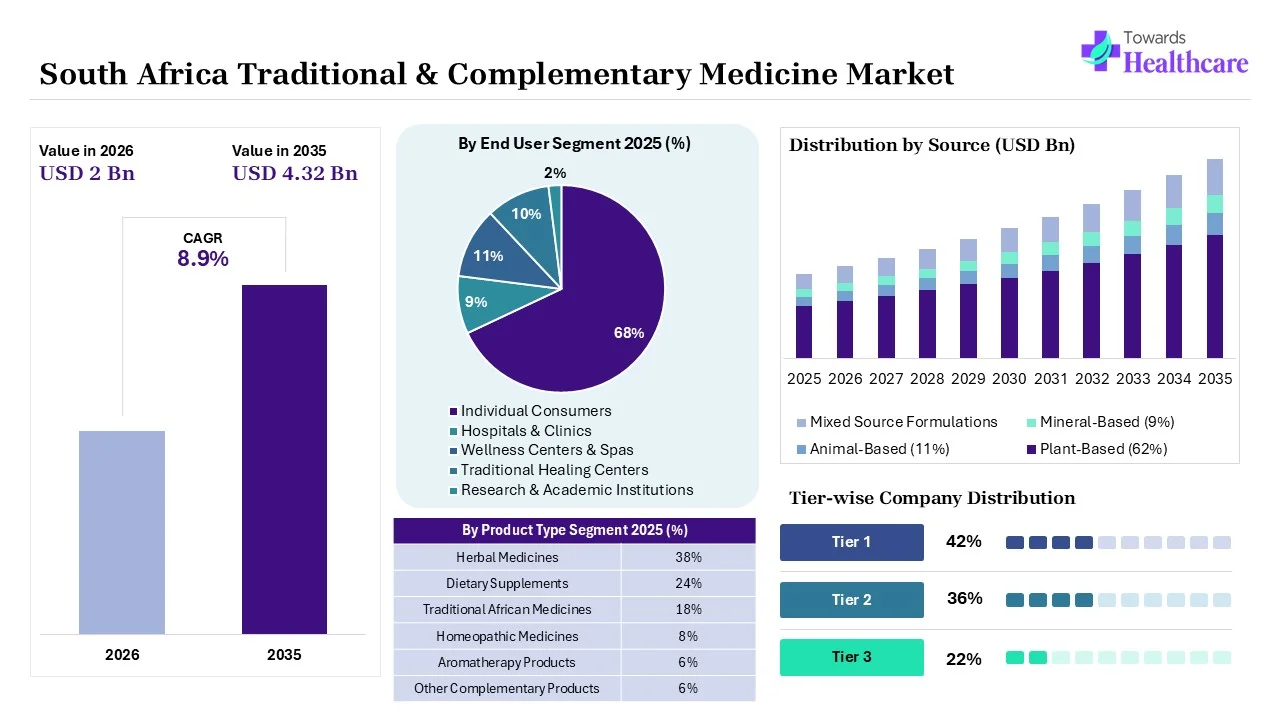
Traditional & complementary medicine (T&CM) refers to healthcare practices, therapies, and products that are used alongside or outside conventional medicine, including herbal remedies, homeopathy, naturopathy, and indigenous healing systems to support health and well-being. The South Africa traditional & complementary medicine market is growing due to rising consumer preference for natural and holistic healthcare solutions. Strong cultural reliance on indigenous healing practices, increasing awareness of preventive wellness, and growing demand for herbal products are driving adoption. Expanding availability of complementary therapies, supportive regulatory development, and increasing interest in alternative treatment options are further accelerating market growth across the country.
The market is expected to witness strong growth driven by rising demand for natural healthcare products, increasing consumer focus on preventive wellness, and greater acceptance of traditional healing practices. Expanding research activities, product innovation, and integration of complementary therapies into mainstream healthcare are expected to create significant opportunities in the coming years.
| Indicator | Value |
| Traditional Healers in Practices | 2000,000 |
| The population using traditional medicine annually | 60-80% |
| Registered complementary health practitioners | 10,000-15,000 |
| Medicinal plant species used in traditional systems | 3000 species |
| The rural population relies on traditional medicine | 70-90% |
The table highlights the strong presence and widespread use of traditional and complementary medicine in South Africa. A large share of the population relies on traditional healing systems, especially in rural areas, supported by thousands of practitioners and a rich biodiversity of medical plants. Government bodies are also actively promoting integration, regulation, and standardization to improve safety, accessibility, and coordination with mainstream healthcare services.
The herbal medicines segment held a dominant share of 38% in 2025 due to its widespread acceptance, long-standing cultural relevance, and perceived natural benefits. Consumers increasingly preferred herbal remedies for preventive care and management of common health conditions. The availability of locally sourced medicinal plants, growing awareness of natural wellness solutions, and expanding retail distribution channels further strengthened the segment’s market leadership.
The herbal therapy segment led the South Africa traditional & complementary medicine market with a share of 34% in 2025 due to its cultural roots, broad consumer acceptance, and extensive use in everyday healthcare. Many individuals rely on herbal therapies for wellness support, disease prevention, and symptom management. The abundance of medical plants, increasing preference for natural treatments, and growing awareness of holistic health practices further contributed to the segment’s leading market position.
The tablets & capsules segment dominated the South Africa Traditional & complementary medicine market with a share of 32% in 2025 due to their ease of consumption, accurate dosage, and longer shelf life. Consumers prefer these formulations for their convenience, portability, and consistent effectiveness compared to liquid or raw forms. The growing availability of herbal and homeopathic products in standardized, capsule, and tablet formats further strengthened their dominance in the market.
The immunity & wellness segment held a dominant share of 28% in 2025 due to rising health consciousness and a strong focus on preventive healthcare. Consumers increasingly adopted herbal and natural products to strengthen immunity, improve vitality, and maintain overall well-being. Growing awareness of lifestyle-related diseases, combined with a preference for safe and natural remedies, further supported the segment’s leading market position.
The individual consumers segment held a dominant share of 68% in 2025 due to increasing self-care practices and a strong preference for natural healthcare solutions. Consumers are actively using herbal products and complementary therapies for preventive, immunity support, and daily wellness. Easy product availability through retail stores and online channels, along with rising awareness of holistic health benefits, further strengthened direct consumer adoption and market leadership.
Leading companies in the market include Afriplex (Pty) Ltd, Parceval (Pty) Ltd, Phyto Nova (Pty) Ltd, Coyne Healthcare, Natura Laboratory, and Pharma Natura (Pty) Ltd. These companies are driving market growth through herbal formulations, homeopathic medicines, nutraceutical development, and plant-based healthcare products. Continuous investments in botanical research, product standardization, and expansion of natural wellness portfolios are further strengthening their leadership in South Africa’s traditional and complementary medicine landscape.
By Product Type
By Therapy Type
By Formulation
By Source
By Application
By Distribution Channel
By End User


