Pipeline Programs

CGT Companies Tracked

Manufacturing Facilities


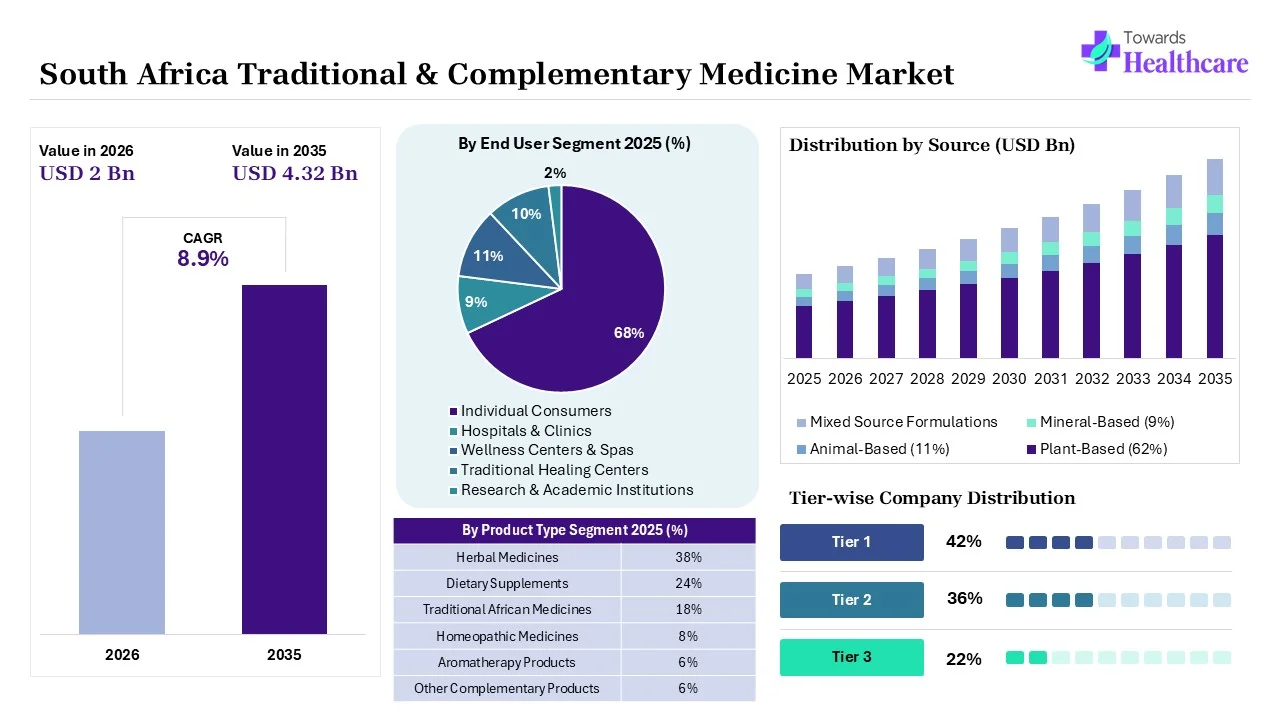
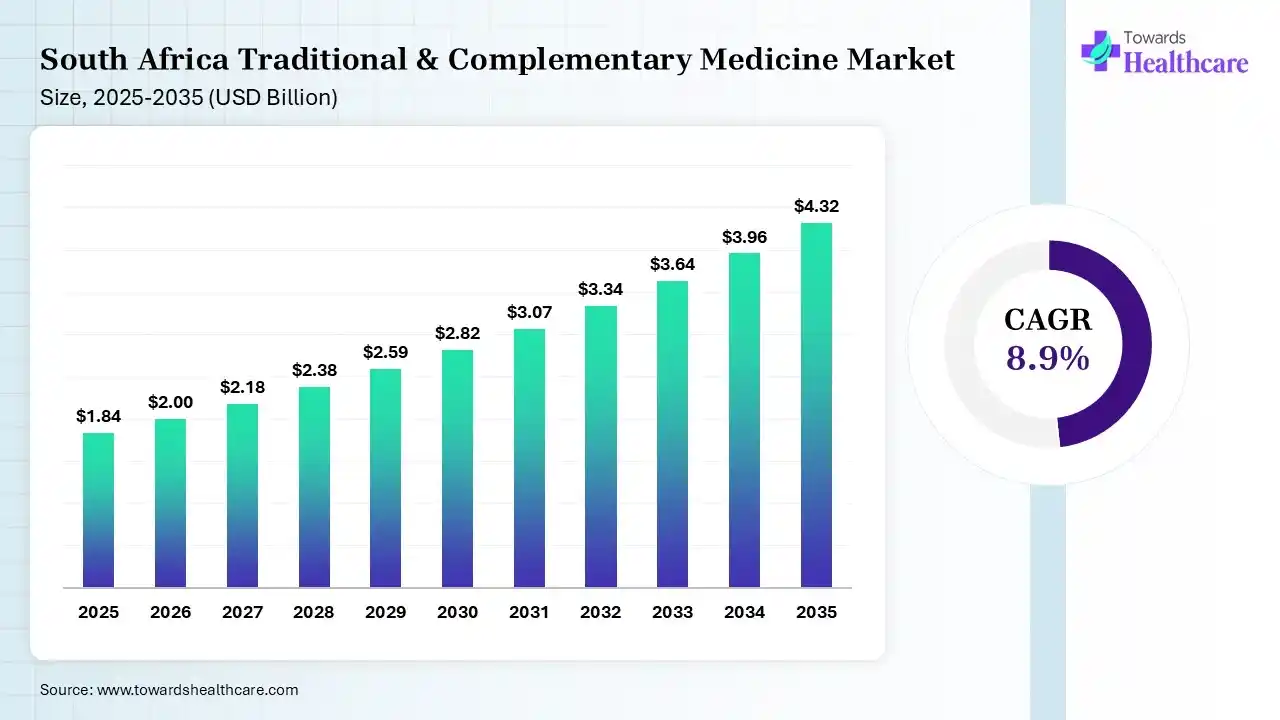
The South Africa traditional & complementary medicine market size stood at US$ 1.84 billion in 2025, grew to US$ 2 billion in 2026, and is forecast to reach US$ 4.32 billion by 2035, expanding at a CAGR of 8.9% from 2026 to 2035.
Traditional complementary medicine (T&CM) refers to healthcare systems, practices, and products based on traditional knowledge and non-conventional therapies used to maintain health, prevent illness, and treat diseases. It includes systems like Ayurveda, Traditional Chinese Medicine, herbal medicine, acupuncture, yoga therapy, and other holistic approaches often used alongside modern medicine to support overall well-being.
The South Africa traditional & complementary medicine market is driven by the rising prevalence of natural and plant-based treatments, the increasing chronic disease burden, and growing focus on preventive healthcare. Key trends include integration with modern healthcare systems and expanding wellness adoption. Opportunities lie in herbal drug development, global acceptance of traditional therapies, and wellness tourism, while technological advancements such as digital health platforms, AI-based research, and telemedicine are improving accessibility and validation of these therapies.
The South Africa traditional & complementary medicine market is growing due to increasing consumer preference for natural and affordable healthcare solutions, along with strong cultural acceptance and indigenous healing practices. Rising burden of chronic diseases, limited access to conventional healthcare in rural areas, and growing integration of traditional healers into public health systems are further driving demand. Government recognition and expanding wellness awareness are also supporting market expansion.
Artificial intelligence is transforming the market by enhancing herbal medicine research, improving patient diagnosis, and supporting personalized treatment recommendations. AI-powered data analytics can help validate traditional remedies, optimize formulation development, and identify potential therapeutic benefits. Additionally, digital health platforms and teleconsultation services are increasing access to traditional healthcare, improving patient engagement, and supporting the integration of traditional medicine with modern healthcare systems.
Growing Demand for Herbal and Natural Therapies
South African consumers are increasingly turning to herbal medicines and natural remedies due to their perceived safety, affordability, and cultural familiarity. Rising awareness of preventive healthcare and holistic wellness is further supporting the adoption of traditional and complementary medicine across diverse patient populations.
Digital Transformation of Traditional Medicine
The adoption of telemedicine, mobile health platforms, and AI-driven healthcare tools is improving access to traditional medicine services. These technologies enable remote consultations, better patient engagement, and enhanced treatment monitoring, helping traditional practitioners reach wider audiences and improve service delivery.
Stronger Integration with Conventional Healthcare
Government support, research initiatives, and growing clinical validation of traditional therapies are encouraging their integration into mainstream healthcare. Collaboration between traditional healers and medical professionals is expected to improve patient outcomes, expand treatment options, and strengthen the long-term growth of the market.
Macro factors
Micro factors
| Table | Scope |
| Market Size in 2026 | USD 2 Billion |
| Projected Market Size in 2035 | USD 4.32 Billion |
| CAGR (2026 - 2035) | 8.9% |
| Historical Data | 2020 - 2023 |
| Base Year | 2025 |
| Forecast Period | 2026 - 2035 |
| Measurable Values | USD Millions/Units/Volume |
| Market Segmentation | By Product Type, By Therapy Type, By Formulation, By Source, By Application, By Distribution Channel, By End User |
| Top Key Players | Afriplex (Pty) Ltd, Parceval (Pty) Ltd, Phyto Nova (Pty) Ltd, Coyne Healthcare, Natura Laboratory, SA Natural Products, Pharma Natura (Pty) Ltd |
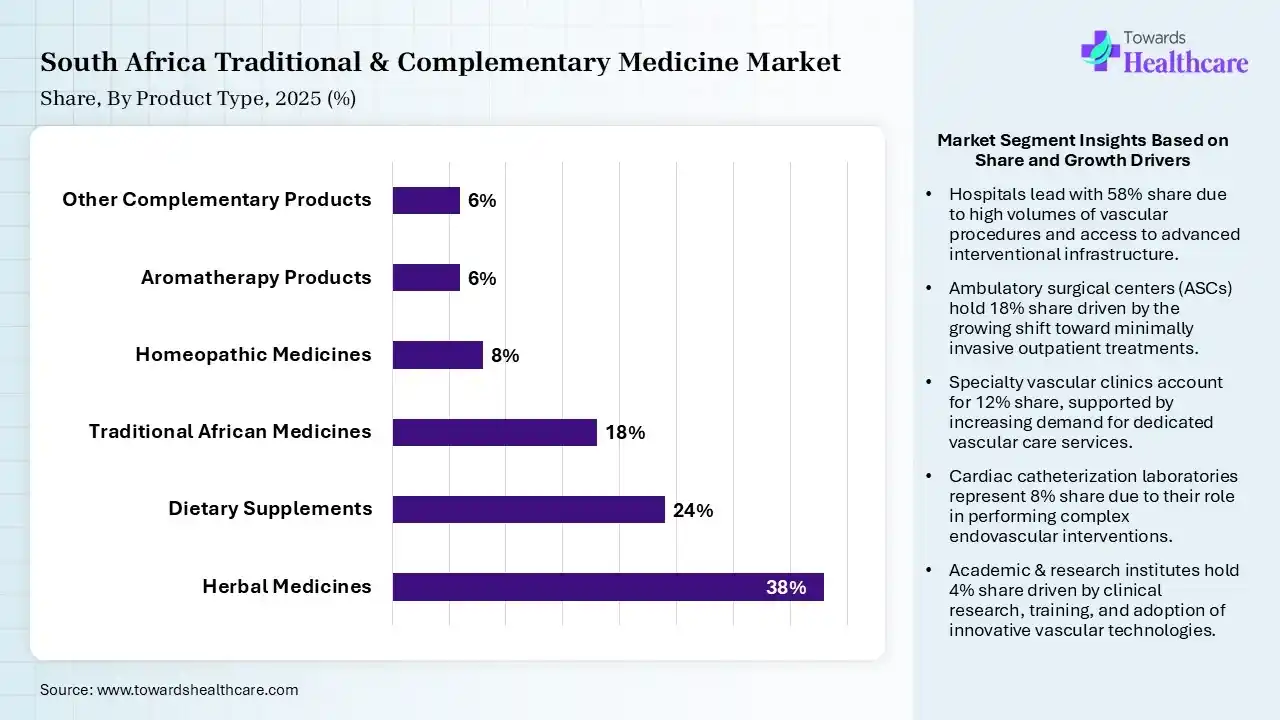
| Segment | Share 2025 (%) |
| Herbal Medicines | 38% |
| Dietary Supplements | 24% |
| Traditional African Medicines | 18% |
| Homeopathic Medicines | 8% |
| Aromatherapy Products | 6% |
| Other Complementary Products | 6% |
The Herbal Medicine Segment Dominated the South Africa traditional & Complementary Medicine Market in 2025
The herbal medicine segment held a dominant share of 38% in 2025 due to its deep cultural acceptance, widespread availability, and affordability. Many consumers prefer herbal remedies for managing common health conditions and supporting overall wellness. Growing awareness of natural treatment options, increasing demand for plant-based products, and the integration of traditional healing practices into daily healthcare routines have further strengthened the segment’s market leadership.
The dietary supplements segment held the second-largest share of 24% in 2025 and is expected to grow at the fastest CAGR of 10.8% in the market during the forecast period due to rising consumer focus on preventive healthcare, immunity enhancements, and nutritional wellness. Increasing demand for vitamins, minerals, probiotics, and herbal-based supplements has supported segment growth. Growing health awareness, busy lifestyles, and the preference for convenient wellness products have further contributed to the strong adoption of dietary supplements across diverse age groups.
The traditional African medicine segment held 18% of south Africa traditional & complementary medicine market share due to increasing recognition of indigenous healing practices and strong cultural trust in traditional remedies. Consumers are increasingly seeking natural, locally sourced treatments for various health concerns. Government efforts to preserve traditional knowledge, growing awareness of holistic healthcare, and the integration of traditional medicine into broader wellness practices are further supporting the segment’s expansion.
The homeopathic medicines segment held an 8% market share due to increasing consumer interest in natural and holistic healthcare approaches. Many individuals are seeking complementary therapies for managing chronic conditions, improving overall wellness, and reducing reliance on conventional medications. Greater product availability, growing awareness of alternative treatment options, and expanding distribution through pharmacies and online channels are further supporting the segment’s steady growth.
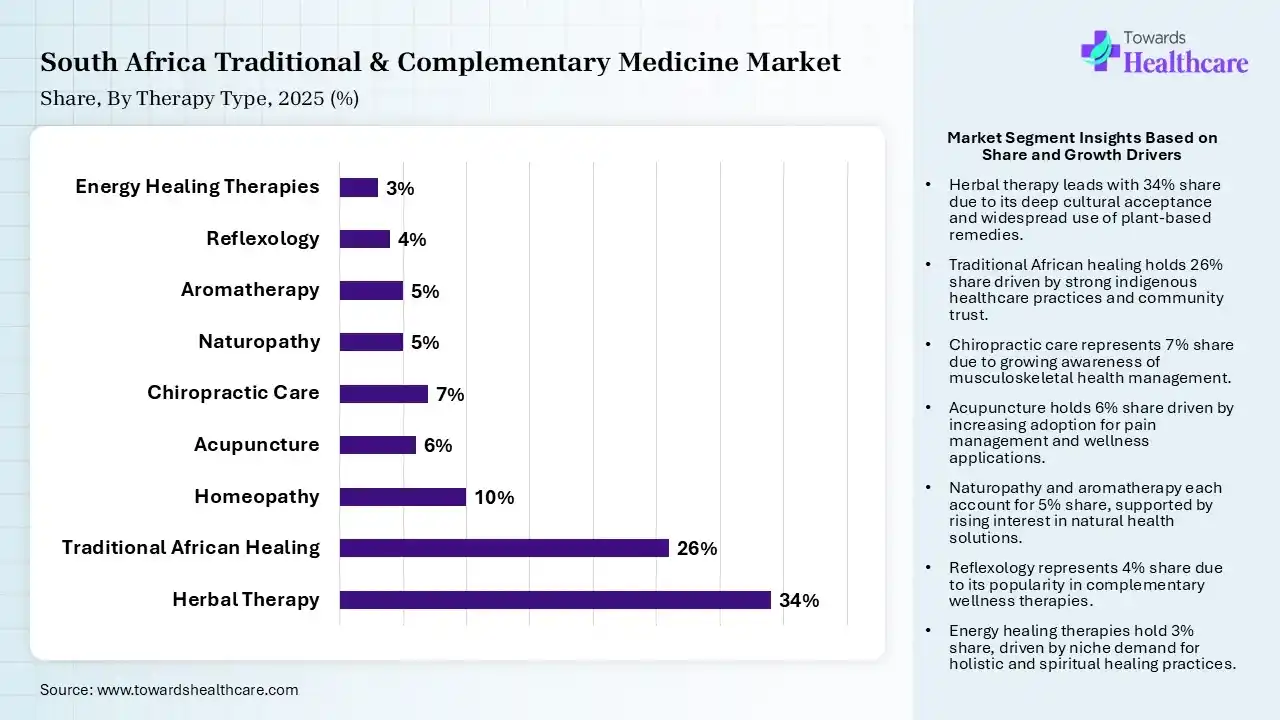
| Segment | Share 2025 (%) |
| Herbal Therapy | 34% |
| Traditional African Healing | 26% |
| Homeopathy | 10% |
| Acupuncture | 6% |
| Chiropractic Care | 7% |
| Naturopathy | 5% |
| Aromatherapy | 5% |
| Reflexology | 4% |
| Energy Healing Therapies | 3% |
The Herbal Therapy Segment Led the South Africa traditional & Complementary Medicine Market in 2025 with the Largest Share
The herbal therapy segment led the market with a share of 34% in 2025 due to its long history of use, widespread consumer acceptance, and perceived natural health benefits. Herbal products are commonly used to support immunity, manage chronic conditions, and promote overall wellness. Their easy availability through pharmacies, health stores, and online platforms, along with growing interest in plant-based healthcare solutions, has contributed significantly to the segment’s leading market position.
The traditional African healing segment held the second-largest share of 26% in 2025 due to its deep cultural roots and widespread acceptance across many communities. Consumers continue to rely on indigenous healing practices, spiritual therapies, and traditional remedies for managing various health conditions. Strong community trust, knowledge passed through generations, and increasing recognition of traditional healthcare practices have helped sustain the segment’s significant position in the market.
The homeopathy segment held a 5% market share due to increasing consumer interest in non-invasive and natural treatment options for various health conditions. Many individuals are turning to homeopathic remedies as part of a broader wellness and preventive healthcare approach. Rising awareness of alternative medicine, expanding product availability, and growing acceptance of complementary therapies are further supporting the segment’s steady growth across diverse patient groups.
The naturopathy segment held a 5% share in 2025 and is expected to grow at the fastest CAGR of 10.9% in the South Africa traditional & complementary medicine market during the forecast period due to increasing consumer preference for preventive, holistic, and wellness-focused healthcare approaches. Rising awareness of natural therapies, lifestyle-based disease management, and personalized treatment plans is driving adoption. Growing interest in reducing dependence on conventional medication, coupled with expanding availability of naturopathic practitioners and wellness centers, is further accelerating segment growth.
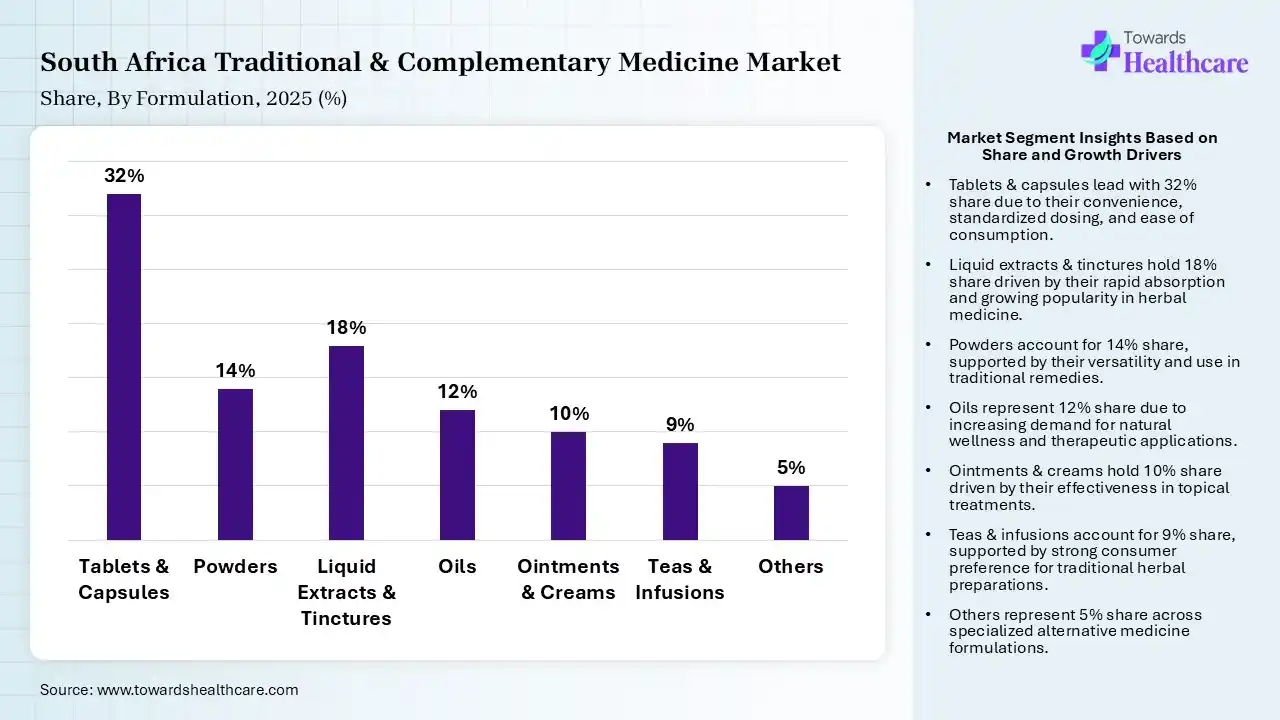
| Segment | Share 2025 (%) |
| Tablets & Capsules | 32% |
| Powders | 14% |
| Liquid Extracts & Tinctures | 18% |
| Oils | 12% |
| Ointments & Creams | 10% |
| Teas & Infusions | 9% |
| Others | 5% |
The Tablets & Capsules Segment Led the South Africa traditional & Complementary Medicine Market in 2025 with the Largest Share
The tablets & capsules segment dominated the market with a share of 32% in 2025 due to their ease of use, precise dosage, and longer shelf life compared to other formulations. Consumers prefer these formats because they are convenient to carry, store, and consume. Additionally, the wide availability of herbal, dietary supplements, and homeopathic products in tablet and capsule form, along with strong distribution through pharmacies and retail channels, has supported the segment’s dominance.
The liquid extract & tinctures segment held the second-largest share of 18% in 2025 due to their rapid absorption, ease of dosage adjustment, and perceived high effectiveness. These formulations are widely preferred by consumers who have difficulty swallowing tablets or capsules. Their versatility in herbal and traditional medicine applications, along with the growing demand for convenient and fast-acting wellness products, has significantly contributed to the segment’s strong market position.
The liquid extract & tinctures segment held an 18% market share due to increasing consumer preference for formulations that offer flexible dosing and faster absorption. These products are widely used in herbal and traditional medicine because they are easy to consume and can be mixed with beverages or foods. Rising demand for natural health solutions, coupled with growing awareness of plant-based remedies, is further supporting the segment’s expansion.
The teas & infusions segment held a 9% share in 2025 and is expected to grow at the fastest CAGR of 10.9% in the South Africa traditional & complementary medicine market during the forecast period due to increasing consumer preference for natural, convenient, and preventive health solutions. Herbal teas are widely consumed for relaxation, immunity support, digestion, and overall wellness. Growing awareness of plant-based remedies, expanding product innovation, and rising demand for functional beverages are further accelerating the segment’s growth across diverse consumer groups.
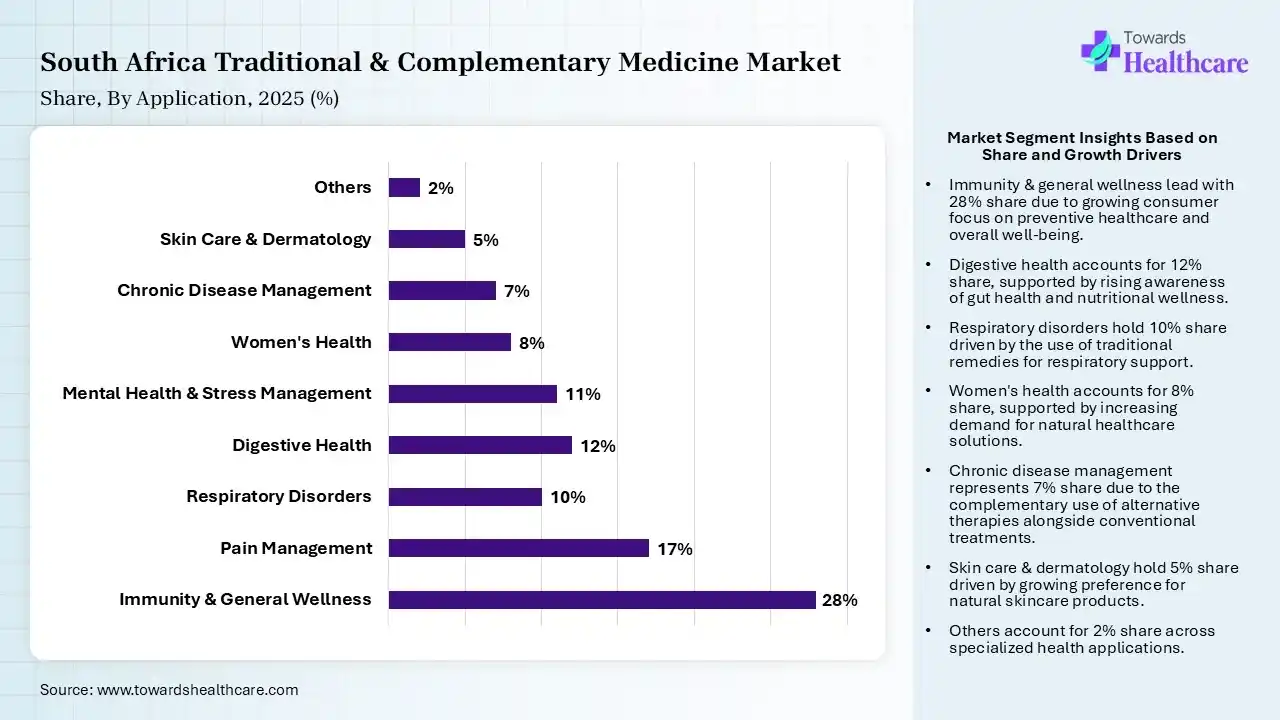
| Segment | Share 2025 (%) |
| Immunity & General Wellness | 28% |
| Pain Management | 17% |
| Respiratory Disorders | 10% |
| Digestive Health | 12% |
| Mental Health & Stress Management | 11% |
| Women's Health | 8% |
| Chronic Disease Management | 7% |
| Skin Care & Dermatology | 5% |
| Others | 2% |
The Immunity & General Wellness Segment Led the South Africa Traditional & Complementary Medicine Market in 2025 with the Largest Share
The immunity & general wellness segment held a dominant share of 28% in 2025 due to the growing consumer focus on preventive healthcare and maintaining overall well-being. Increasing awareness of immune health, rising demand for natural remedies, and greater adoption of herbal and complementary therapies have fueled product usage. Consumers are increasingly seeking wellness solutions that support daily health, energy levels, and disease prevention, strengthening the segment’s leading position in the market.
The pain management segment held the second-largest share of 17% in 2025 due to the growing prevalence of chronic pain, musculoskeletal disorders, arthritis, and stress-related conditions. Consumers increasingly seek herbal, traditional, and complementary therapies as supportive options for pain relief and improved quality of life. Rising awareness of natural treatment approaches, along with concerns about long-term use of conventional pain management, has further strengthened demand for this segment.
The digestive health segment held a 12% market share due to increasing awareness of the link between gut health and overall well-being. Consumers are actively seeking herbal remedies, probiotics, and complementary therapies to support immunity. Rising prevalence of gastrointestinal issues, changing dietary habits, and growing interest in preventive healthcare are further driving demand for digestive health solutions across the market.
The mental health & stress management segment held an 11% share in 2025 and is expected to grow at the fastest CAGR of 11.5% in the South Africa traditional & complementary medicine market during the forecast period due to rising awareness of emotional well-being. Increasing stress levels and growing demand for holistic healthcare solutions. Consumers are increasingly adopting herbal remedies, mindfulness-based therapies, and complementary treatments to support mental wellness. Greater acceptance of preventive healthcare and natural stress-relief approaches is further accelerating segment growth.
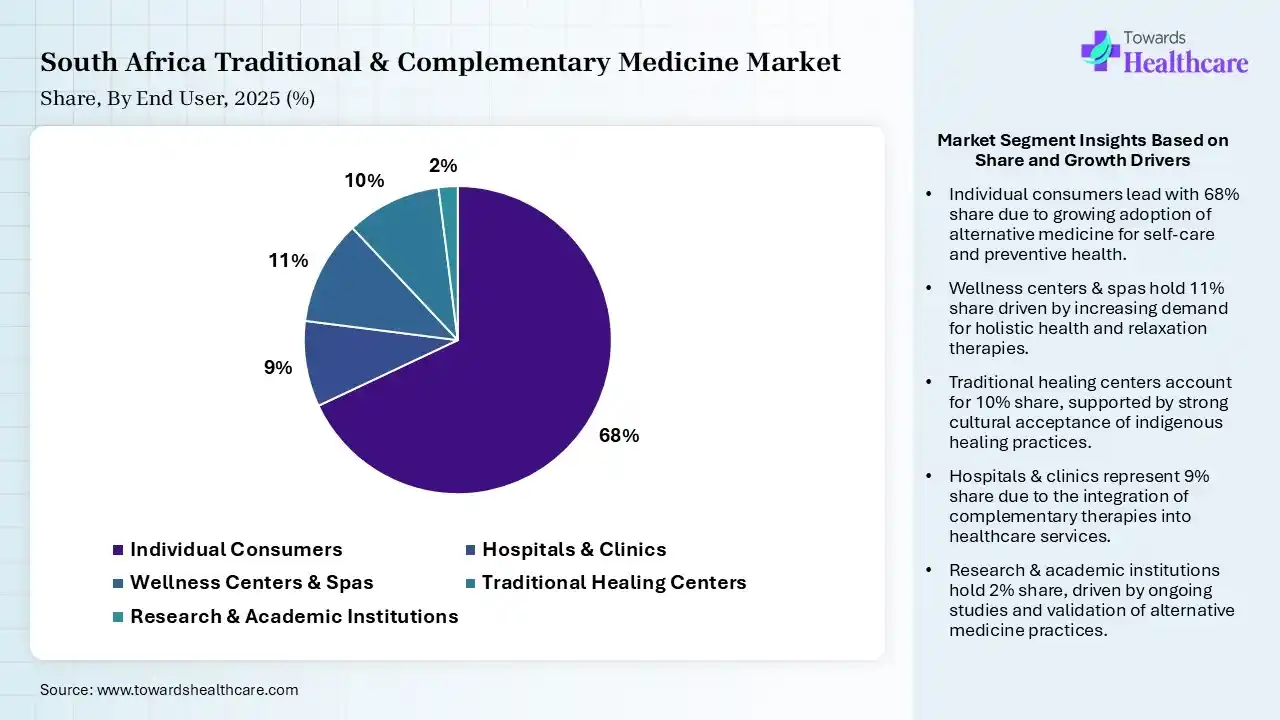
| Segment | Share 2025 (%) |
| Individual Consumers | 68% |
| Hospitals & Clinics | 9% |
| Wellness Centers & Spas | 11% |
| Traditional Healing Centers | 10% |
| Research & Academic Institutions | 2% |
The Individual Consumers Segment Led the South Africa Traditional & Complementary Medicine Market in 2025 with the Largest Share
The individual consumers segment held a dominant share of 68% in 2025 due to growing awareness of preventive healthcare, wellness, and natural treatment options. Consumers increasingly adopted herbal medicines, dietary supplements, and complementary therapies to support immunity, manage chronic conditions, and improve overall health. Easy product availability through pharmacies, health stores, and online platforms, along with rising interest in self-care, further strengthened the segment’s leading position.
The wellness centers & spas segment held the second-largest share of 11% in 2025 and is expected to grow at the fastest CAGR of 10.8% in the market during the forecast period due to increasing consumers’ interest in holistic health, relaxation, and preventive wellness. These facilities offer a wide range of complementary therapies, including herbal treatments, massage therapy, naturopathy, and stress management programs. Rising disposable incomes, growing health consciousness, and demand for personalized wellness experiences have further strengthened the segment’s significant market presence.
The traditional healing centers segment held a 10% share of the South Africa traditional & complementary medicine market due to strong cultural trust in indigenous healthcare practices and growing interest in holistic treatment approaches. Many consumers continue to seek traditional healers for spiritual, physical, and emotional well-being. Increasing recognition of traditional medicine, rising demand for personalized care, and efforts to integrate indigenous healing practices into broader healthcare systems are further supporting the segment’s growth.
The hospitals & clinics segment held a 9% market share due to the increasing integration of traditional and complementary medicine into conventional healthcare services. Healthcare providers are incorporating herbal therapies, wellness programs, and supportive treatment to enhance patient outcomes and satisfaction. Rising patient demand for holistic care, greater acceptance among medical professionals, and ongoing efforts to offer comprehensive treatment options are further efforts to offer comprehensive treatment options are further driving growth in this segment.
The South Africa traditional & complementary medicine market is expanding due to strong consumer reliance on herbal remedies, indigenous healing practices, and natural wellness solutions, growing awareness of preventive healthcare, increasing demand for holistic treatments, and rising acceptance of complementary therapies, which are boosting adoption. Supportive regulatory development, expanding product availability, and the country’s rich biodiversity of medicinal plants further contribute to sustained market growth.
Nigeria: Policy Push Meets Herbal Demand
Nigeria offers a strong regional opportunity for traditional and complementary medicine, supported by widespread use of herbal remedies and accessible traditional practitioners. The government is now emphasizing research, standardization, and commercialization. In 2025, Nigeria launched a strategic implementation plan and practitioner code of ethics. Its herbal pharmacopoeia documents more than 200 medicinal plants. New value-chain initiatives also target cultivation, manufacturing, quality testing, and exports. Market growth can benefit from stronger regulation and scientific validation. Challenges include informal production, inconsistent quality, limited clinical evidence, and weak manufacturing standards for consumers nationwide.
Namibia Shows Growing Interest in Traditional Care
Namibia has a strong base of traditional healing practices. The country has discussed integrating traditional health practitioners into primary healthcare. This creates opportunities for herbal products and complementary therapies. Namibia’s 2014 Traditional Health Practitioners Bill proposed formal recognition, although the framework has faced implementation gaps. Cultural acceptance and limited healthcare access in some communities support local demand. Product quality, practitioner training, and clearer registration rules remain important. These factors can shape investment, distribution, and consumer confidence in Namibia’s traditional and complementary medicine market, as well as trust in local community knowledge.
R&D
Final Dosage Preparation
Patient Support and Services
| Companies | Headquarters | Offerings |
| Afriplex (Pty) Ltd | Paarl | Botanical extracts, nutraceutical ingredients, herbal formulations, and natural health products. |
| Parceval (Pty) Ltd | Cape Town | Homeopathic medicines, herbal remedies, tissue salts, and wellness products. |
| Phyto Nova (Pty) Ltd | Cape Town | Herbal healthcare products, dietary supplements, and natural wellness solutions. |
| Coyne Healthcare | Johannesburg | Complementary medicines, vitamins, minerals, and consumer health products. |
| Natura Laboratory | Pretoria | Homeopathic medicines, herbal products, and natural healthcare solutions. |
| SA Natural Products | Hillcrest | Natural supplements, herbal products, and wellness solutions. |
| Pharma Natura (Pty) Ltd | Sandton | Homeopathic medicines, herbal remedies, vitamins, and complementary healthcare products. |
In May 2026, “With 90% of countries reporting the use of traditional medicine by 40–90% of their populations, this is not some niche. In fact, you could say it is the world's predominant healthcare system, either by primary access or preferred choice” said Dr. Shyama Kuruvilla, Director (a.i.), WHO Global Traditional Medicine Centre
By Product Type
By Therapy Type
By Formulation
By Source
By Application
By Distribution Channel
By End User









Principal Consultant
Payal Rabde is a Healthcare Market Research Analyst at Towards Healthcare Research & Consulting with 4+ years of experience in pharmaceuticals, biotechnology, medical devices, and life sciences.
Learn more about Payal Rabde

Reviewed By
Aditi Shivarkar is a seasoned professional with over 14 years of experience in healthcare market research. As a content reviewer, Aditi ensures the quality and accuracy of all market insights and data presented by the research team.
Learn more about Aditi Shivarkar