A rise in pet humanization, a shift towards preventive healthcare, increasing pet ownership, growing genetic disorders, expanding personalized veterinary care, and technological advancements are promoting the market growth.
Market Snapshot: Understanding the U.S. Companion Animal Genetics Revolution
The companion animal genetics refers to the branch of genetics that focuses on the study of genetic variation, heritability, genes, along with traits and diseases passed among the pet animals. These solutions help in the detection of inherited disorders, identification of breed composition, prediction of risk of genetic disorders, and analysis of behavioral traits. They are also used for the development of personalized veterinary medicines, nutrigenomics, and conservation of rare breeds.
Global Market Growth
The global companion animal genetics market size was estimated at USD 4.92 billion in 2025 and is predicted to increase from USD 5.4 billion in 2026 to approximately USD 12.59 billion by 2035, expanding at a CAGR of 9.85% from 2026 to 2035.
Forecasting Innovation: Exploring the Market Growth Opportunities
- The growing shift towards preventive healthcare is increasing the demand for companion animal genetics for early disease detection and their prevention.
- Increasing demand for personalized veterinary medicines is also increasing their use for the development of new products based on the genetic profile of the respective animals.
- Growing demand for direct-to-consumer genetic testing solutions is also increasing their use for home testing, where expanding online platforms are also increasing their accessibility.
- Growing R&D activities supported by investments from various sources are also increasing their innovations.
- Expanding pet humanization trends and selective breeding are also increasing their use for various applications.
- Expanding veterinary services are also increasing their use for routine veterinary care for better disease diagnosis and treatment.
- Growing advancements in genetic technologies are also driving the development of new platforms with enhanced accuracy and gene analysis capabilities.
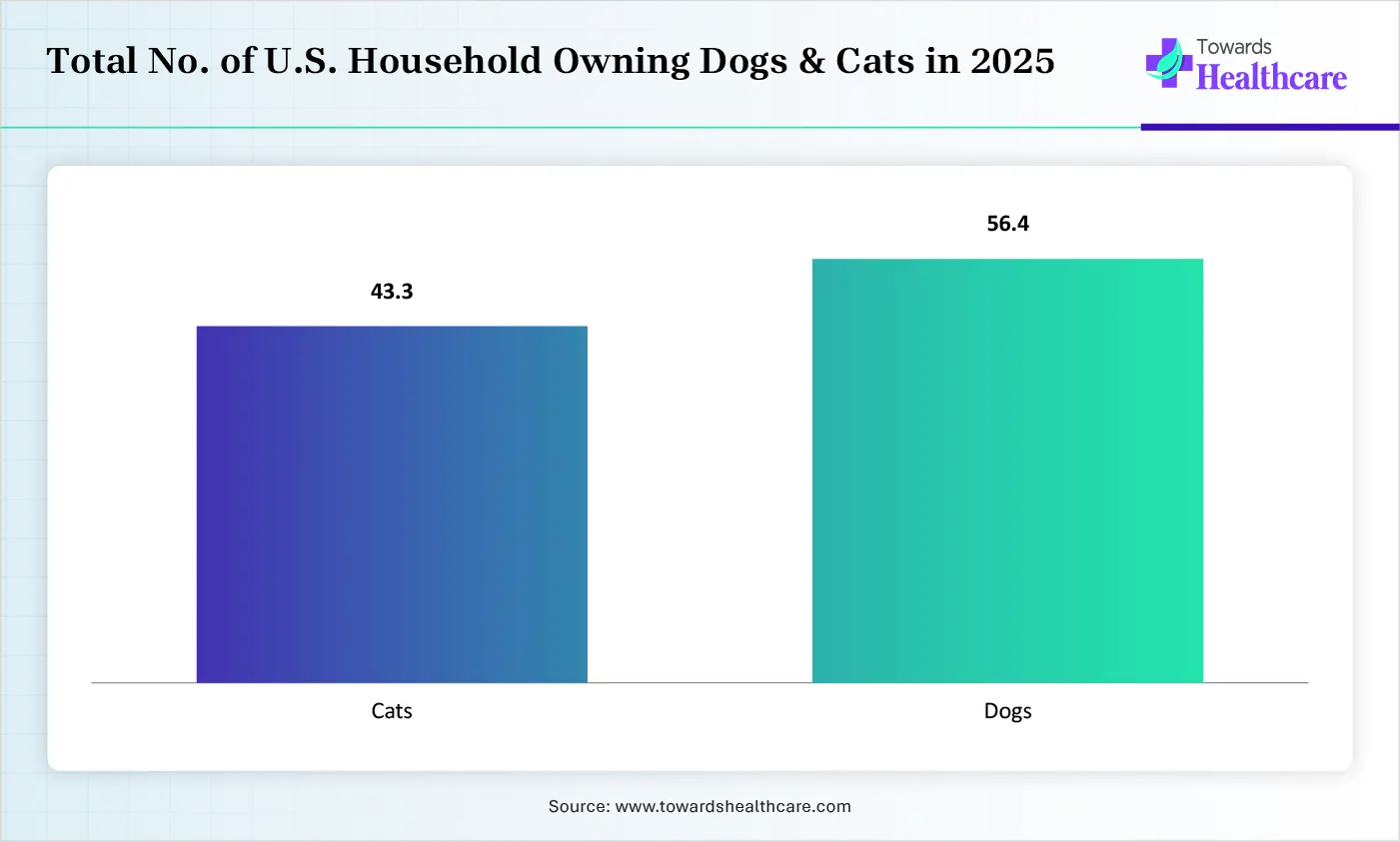
The graph represents a comparison between the cats and dogs owned by U.S. households in the year 2025. It indicates that there will be a rise in dog and cat pet ownership, which will drive the demand for their genetic testing to reduce the risk of inherited disease and for selective breeding. This, in turn, will increase the adoption of companion animal genetics for a wide range of applications, which will ultimately promote market growth.
Market Segmentation Overview
- By animal type, the dogs segment accounted for the highest revenue share of 58% of the U.S. companion animal genetics market in 2025, due to their high pet population and breed diversity. High incidence of genetic disease and breed identification also increased their demand. Additionally, their wide availability also increased their use for selective breeding practices.
- By product type, the genetic testing kits segment held a major revenue share of 62% of the U.S. companion animal genetics market in 2025 and is expected to show the highest growth with a CAGR of 10.4% during the forecast period, due to high demand for inherited disease detection. Their easy use and non-invasive approach also increased their use for early disease diagnosis. Their affordability and wide range of availability also increased their use for personalized treatment development.
- By technology type, the PCR segment contributed the biggest revenue share of 34% of the U.S. companion animal genetics market in 2025 and is estimated to be the fastest-growing with a CAGR of 12.7% during the forecast period, due to its high accuracy, sensitivity, and faster results. Their affordability, simple method, and requirement of a small DNA sample also increased their use for routine testing. Their wide range of applications also increased their adoption rates.
- By application type, the disease diagnosis segment led the U.S. companion animal genetics market with 30% share in 2025, due to growth in inherited diseases in pets. A shift towards preventive healthcare and growth in pet health awareness has also increased their demand for early disease detection. They were also used for treatment planning and breeding control.
Regional Analysis
The U.S. companion animal genetics market held 30% share and is expected to show significant growth during the forecast period, due to the high pet population and willingness of the pet owners to invest in pet healthcare. Expanding pet humanization trends, genetic disease awareness, and genetic testing programs have also increased their use. Growth in biotech startups and R&D activities also increased their adoption rates, which contributed to the market growth.
The Market Power Players: The Companies Shaping the U.S. Pet Genetics
Zoetis Inc. held the dominant position in the market with the acquisition of Basepaws and Neogen’s animal genomics business, where Mars Petcare was its closest competitor, offering Wisdom Panel. IDEXX Laboratories, Inc. also retained its position with its veterinary-led genetic sequencing, disease-linked panels, and inVue Dx Cellular Analyzer, where Embark Veterinary Inc. also participated in the market growth by providing Embark Dog DNA Tests.
Segments Covered in the Report
By Animal Type
- Dogs
- Purebred Dogs
- Mixed Breed Dogs
- Cats
- Purebred Cats
- Mixed Breed Cats
- Horses
- Others (Birds, Rabbits, Small Mammals)
By Product Type
- Genetic Testing Kits
- DNA Testing Kits
- Health Screening Kits
- Breed Identification Kits
- Genetic Services
- Disease Screening Services
- Trait Testing Services
- Ancestry & Lineage Services
By Technology
- PCR (Polymerase Chain Reaction)
- Microarray
- Next-Generation Sequencing (NGS)
- Others (SNP Genotyping, CRISPR-based tools)
By Application
- Disease Diagnosis
- Breed Identification
- Trait Testing
- Genetic Disease Prevention
- Research & Development
By End User
- Veterinary Clinics
- Animal Hospitals
- Research Institutes
- Pet Owners/Breeders
By Distribution Channel
- Direct Sales
- Online Platforms
- Veterinary Channels
- Retail Stores




