Pipeline Programs

CGT Companies Tracked

Manufacturing Facilities


The global companion animal genetics market size is predicted to increase from USD 5.4 billion in 2026 to approximately USD 12.59 billion by 2035, expanding at a CAGR of 9.85% from 2026 to 2035. The growing pet ownership globally is increasing the demand for companion animal genetics, for their early disease diagnosis and behaviour prediction. The growing genetic disorders, personalized veterinary care, technological advancement, and launch of new genetic testing solutions are also enhancing the market growth.
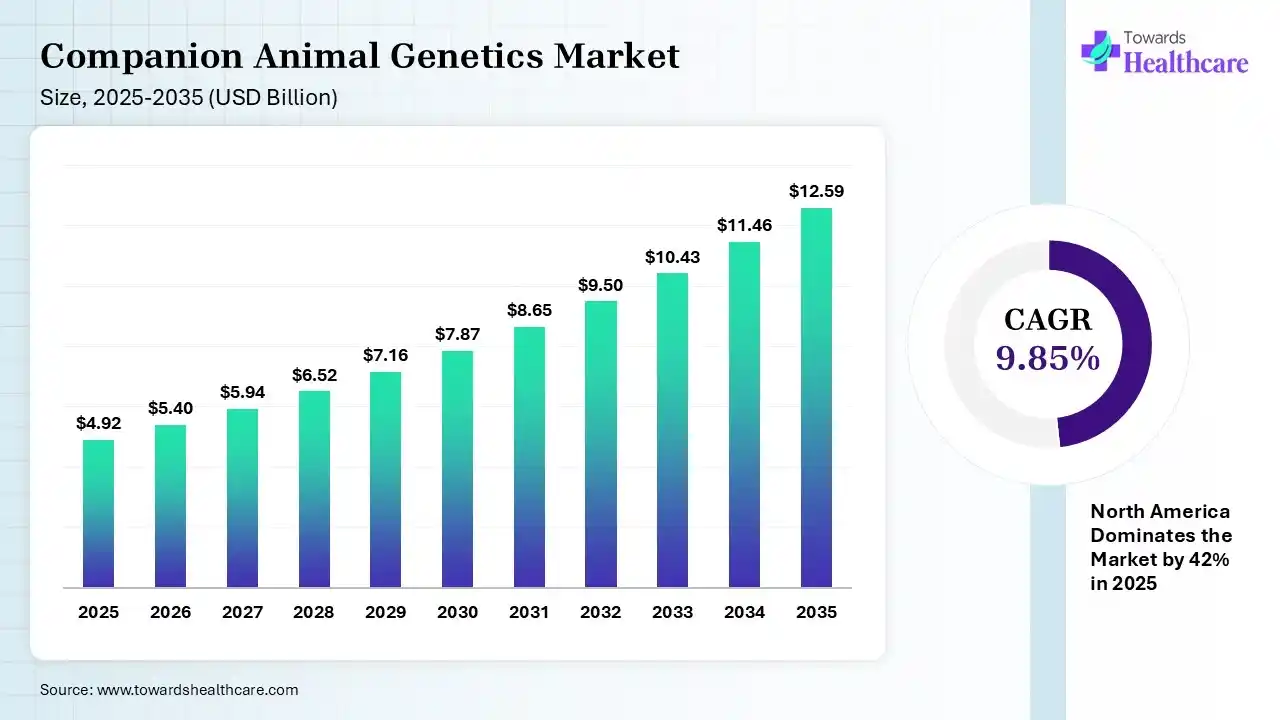
The companion animal genetics market is driven by a rise in pet humanization and a shift towards preventive healthcare. Companion animal genetics refers to the branch of genetics focused on the study of genes, genetic variation, and heredity in pet animals. They are used for early disease diagnosis, breed identification, improved breeding, behavioral understanding, disease prevention, nutritional planning, and personalized treatment development.
AI offers a wide range of applications for companion animal genetics, such as analysis of large genomic datasets, as well as predicting the risk of inherited diseases. It also assists in breeding optimization, behavior prediction, and detection of genetic patterns leading to diseases. AI also helps in the veterinary drug discovery, development, and testing, as well as supporting the precision medicine and personalized treatment plans.
Companion animal genetics is the study and application of genetic information in pets such as dogs, cats, and other companion animals to identify inherited diseases, determine breed characteristics, guide breeding decisions, and enable personalized veterinary care. The companion animal genetics market is expanding rapidly due to increasing pet ownership, growing awareness of preventive animal healthcare, and rising demand for genetic screening and precision diagnostics. Technological advancements in next-generation sequencing (NGS), whole-genome sequencing, artificial intelligence, and bioinformatics are improving the accuracy and speed of genetic analysis.
Expanding applications of pharmacogenomics, molecular diagnostics, and personalized nutrition are creating significant future opportunities. Increasing investments in veterinary biotechnology, growing adoption of direct-to-consumer pet DNA testing, and collaborations between veterinary clinics and genomic companies are further accelerating innovation. These developments are supporting earlier disease detection, optimized treatments, responsible breeding, and improved long-term health outcomes for companion animals.
Expanding Pet Humanization
A rise in pet humanization is increasing the willingness of the pet owner to invest in the health and well-being of their pet. This, in turn, is increasing the use of companion animal genetics for early disease detection.
Shift Towards Preventive Care
Growing pet health awareness is increasing the demand for preventive veterinary care options in order to enhance pet lifespan and reduce long-term treatment. This is increasing the use of companion animal genetics for the identification of diseases before the occurrence of symptoms.
Blooming Technological Innovations
Growing technological advancements are driving the development of new DNA testing kits, next-generation sequencing, bioinformatics tools, and whole-genome analysis. These innovations focus on enhancing the speed, accuracy, and affordability of companion animal genetics.
| Table | Scope |
| Market Size in 2026 | USD 5.4 Billion |
| Projected Market Size in 2035 | USD 12.59 Billion |
| CAGR (2026 - 2035) | 9.85% |
| Leading Region | North America by 42% |
| Measurable Values | USD Millions/Units/Volume |
| Market Segmentation | By Animal Type, By Product Type, By Technology, By Application, By End User, By Distribution Channel, By Region |
| Top Key Players | Zoetis Inc., Mars Petcare, Embark Veterinary, Inc., Neogen Corporation, IDEXX Laboratories, Orivet, BioPet Laboratories, Animal Genetics, Inc., Genetrack Biolabs, EasyDNA |
| Segment | Share 2025 (%) |
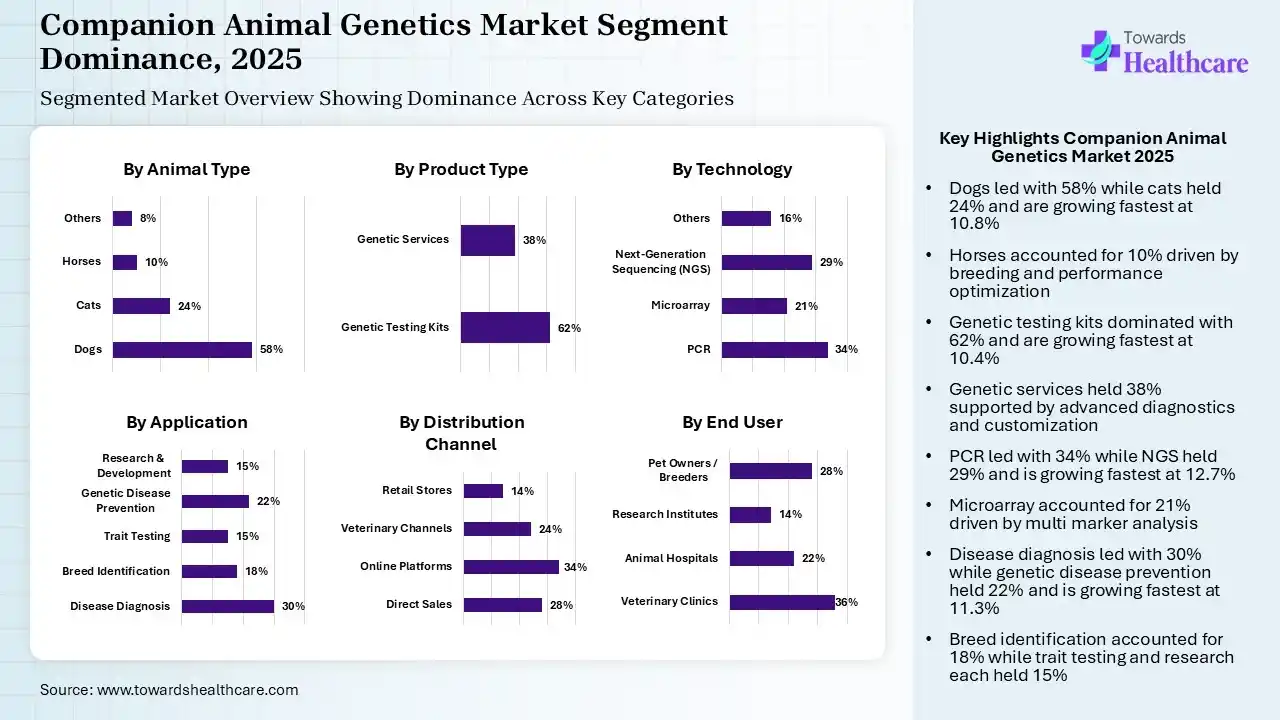
| Dogs | 58% |
| Cats | 24% |
| Horses | 10% |
| Others | 8% |
The Dogs Segment Dominated the Market With 58% in 2025
The dogs segment led the companion animal genetics market with 58% share in 2025, due to high dog ownership globally, which increased demand for genetic screening. Growth in awareness of breed-specific diseases also supported the testing adoption. Moreover, premium pet care spending also increased its diagnostic usage.
The cats segment held the second-largest share of 24% of the market in 2025 and is expected to witness the fastest growth with a CAGR of 10.8% during the forecast period, due to increasing cat adoption in urban areas, which drives companion animal genetic testing demand. Expanding genetic disease awareness in felines is also increasing their use. The presence of affordable testing kits and veterinary care services is promoting their penetration among cat owners.
The horses segment held 10% of the companion animal genetics market share in 2025, due to growing demand for performance and breeding optimization, driving their genetic testing. Equine disease screening adoption is rising in the sports industry, which fuels the demand for companion animal genetics. Veterinary advancements and selective breeding programs are also utilizing them to support precision breeding.
| Segment | Share 2025 (%) |
| Genetic Testing Kits | 62% |
| Genetic Services | 38% |
The Genetic Testing Kits Segment Dominated the Market With 62% in 2025
The genetic testing kits segment accounted for the highest revenue share of 62% of the companion animal genetics market in 2025 and is expected to show the highest growth with a CAGR of 10.4% during the forecast period, driven by their easy-to-use home kits, which increased consumer adoption rapidly. E-commerce expansion also enhanced their accessibility. Cost-effective solutions also contributed to their mass-market penetration.
The genetic services segment held the second-largest share of 38% of the market in 2025, driven by advanced diagnostic services, which support complex testing needs. Their high accuracy and customization are also attracting professional users. Moreover, growing veterinary partnerships and personalized veterinary care also boost service utilization.
| Segment | Share 2025 (%) |
| PCR | 34% |
| Microarray | 21% |
| Next-Generation Sequencing (NGS) | 29% |
| Others | 16% |
The PCR Segment Dominated the Market With 34% in 2025
The PCR segment held a major revenue share of 34% of the companion animal genetics market in 2025, as they are cost-effective and widely available technology, which supported the routine testing. High accuracy, sensitivity, and reliability ensured their continued usage. Established infrastructure and its multiple applications also promoted their adoption.
The next-generation sequencing (NGS) segment held the second-largest share of 29% of the market in 2025 and is expected to expand rapidly with a CAGR of 12.7% during the forecast period, as it provides high-resolution genomic insights for precision diagnostics. Declining sequencing costs and expanding research applications are also increasing their adoption rates. Their better disease detection and expanding personalized medicine trends are also increasing their demand.
The microarray segment held 21% of the companion animal genetics market share in 2025, as it enables simultaneous analysis of multiple genetic markers. Growing demand for comprehensive screening is also increasing its usage. Improved efficiency, accuracy, and affordability enhance laboratory adoption for various veterinary diagnostics.
| Segment | Share 2025 (%) |
| Disease Diagnosis | 30% |
| Breed Identification | 18% |
| Trait Testing | 15% |
| Genetic Disease Prevention | 22% |
| Research & Development | 15% |
The Disease Diagnosis Segment Dominated the Market With 30% in 2025
The disease diagnosis segment contributed the biggest revenue share of 30% of the companion animal genetics market in 2025, due to the growth in prevalence of genetic disorders, which increased companion animal genetic testing demand. Early diagnosis and shift to preventive healthcare also increased their use. Additionally, growth in veterinary recommendations also enhanced their adoption.
The genetic disease prevention segment held the second-largest share of 22% of the market in 2025 and is expected to gain the highest share with a CAGR of 11.3% during the forecast period, due to preventive healthcare trends, which boost proactive testing. Rising awareness of hereditary conditions is also increasing their use. Insurance integration, accessibility of direct-to-consumer kits, and affordability also support their use.
The breed identification segment held 18% of the companion animal genetics market share in 2025, driven by growing pet owners seeking breed verification for better care decisions. Adoption from shelters and increased awareness also support testing growth. Additionally, non-invasive approaches and accuracy are also increasing their use for better pet care and early disease detection.
The trait testing segment held 15% of the market share in 2025, due to behavioral and physical trait insights of companion animal genetics, which attracts pet owners. Breeders utilize testing for selective breeding, where enhanced consumer curiosity drives demand. High emotional appeal, advancements in genomics research, and breed customization are also increasing their adoption rates.
The research & development segment held 15% of the market share in 2025, due to growing investments in veterinary genomics, which drives R&D. Academic collaborations expand genetic databases, which propel the use of companion animal genetics. Growing innovations with the use of AI and bioinformatics integration are also supporting new product development.
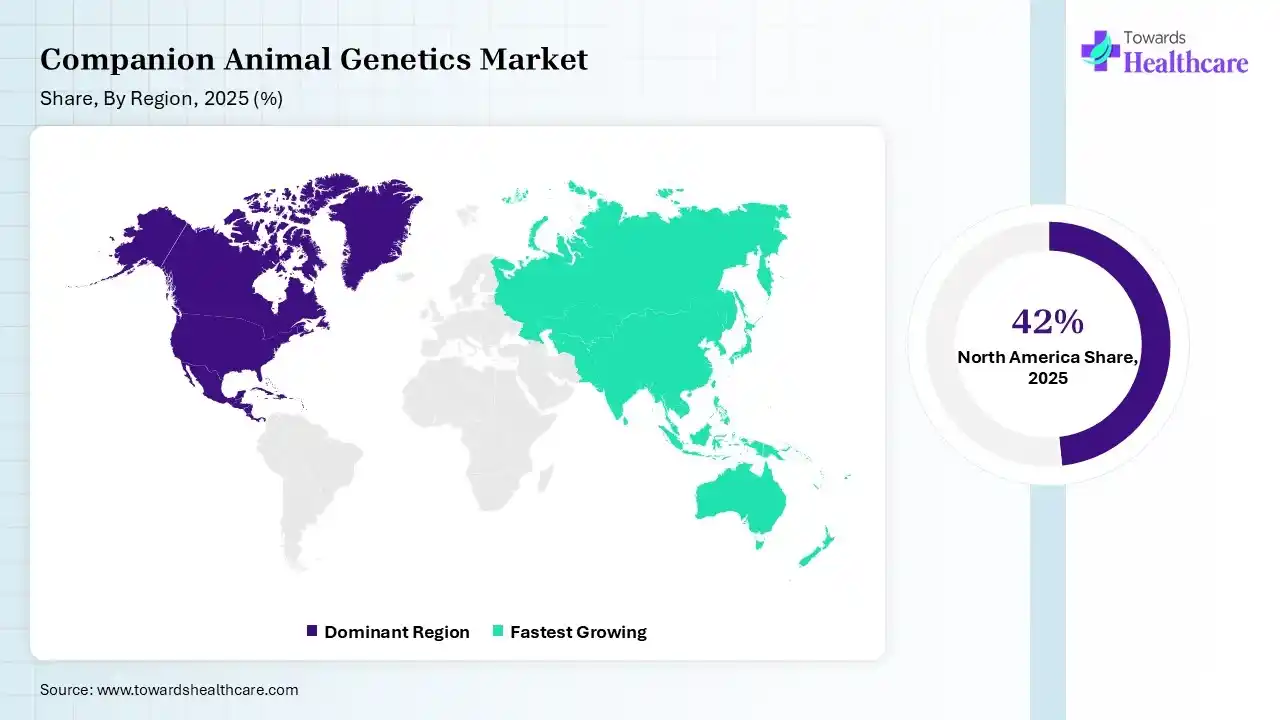
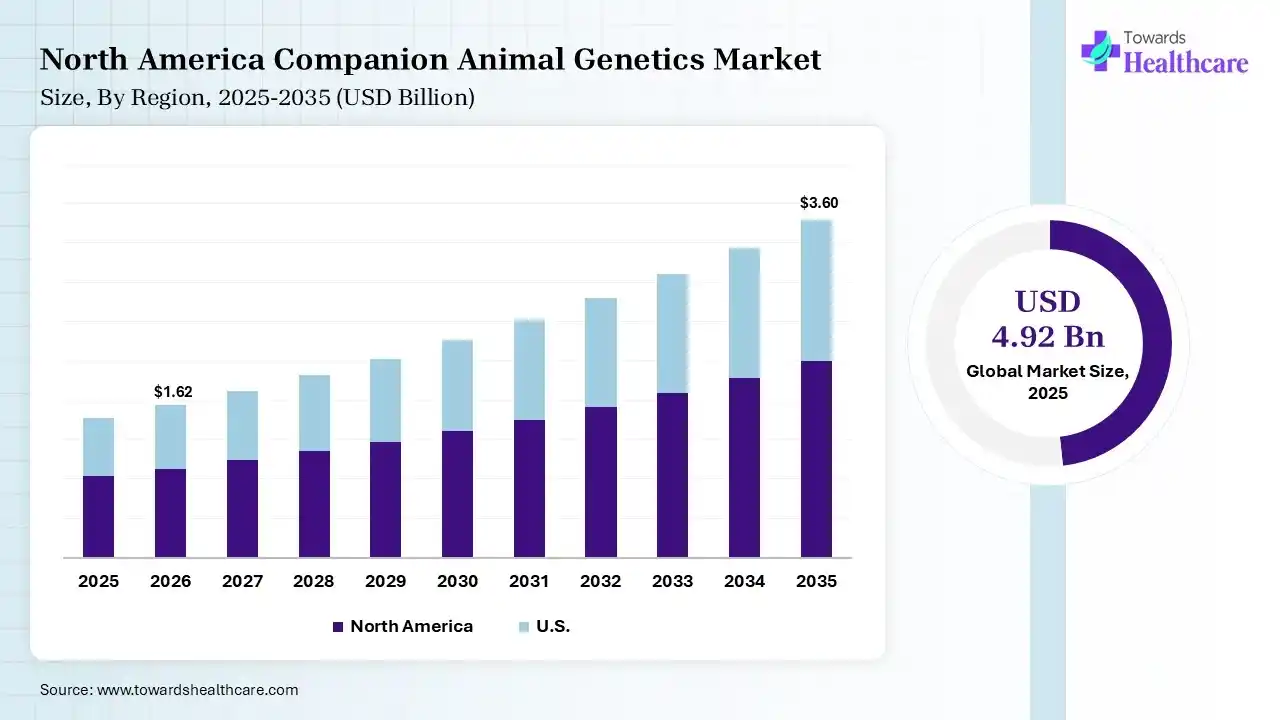
North America dominated the companion animal genetics market with 42% in 2025, due to high pet ownership and spending. Advanced veterinary infrastructure also supported its adoption, where the presence of strong key players also contributed to their increased innovations. Growth in animal health awareness and R&D activities also increased their adoption and advancements, which enhanced the market growth.
U.S. Market Trends
The U.S. consists of a high pet population, which increases the demand for companion animal genetics. The growing pet health awareness is also increasing their adoption rates. Additionally, growing technological advancements and high pet healthcare spending are also increasing their innovations and adoption rates.
Canada Strengthens Innovation in the Companion Animal Genetic Market
Canada is experiencing significant growth in the companion animal genetic market due to rising pet ownership, increasing awareness of preventive veterinary healthcare, and expanding adoption of genetic testing for inherited disease. Strong investments in veterinary genomics research, collaborations between universities and biotechnology companies, and growing demand for personalized animal healthcare are accelerating innovation. Advanced veterinary infrastructure and supportive research initiatives are further driving market expansion.
Asia Pacific held 20% share of the companion animal genetics market in 2025 and is expected to grow at the fastest CAGR of 11.8% during the forecast period, due to rapid urbanization and growing pet ownership. Rising disposable income and expanding veterinary infrastructure are also increasing their use. Increasing awareness, adoption of new technologies, and expanding online services are also promoting the market growth.
China Market Trends
Growing pet ownership in China is increasing the demand for companion animal genetics, where the growing awareness of genetic testing is also increasing their use. E-commerce expansion, increasing disposable income, and growing pet humanization trends are also increasing their use and accessibility. Additionally, expanding veterinary infrastructure and biotech industries are also enhancing their use.
India Emerges as a Fast-Growing Companion Animal Genetic Market
India is significantly growing in the companion animal genetics market due to rising pet ownership, increasing awareness of preventive veterinary healthcare, and growing demand for genetic testing for inherited diseases. Expanding veterinary hospitals and diagnostic laboratories, increasing investments in animal biotechnology, and wider adoption of advanced genomic technologies are driving market growth. Rising spending on pet health and personalized veterinary care is further supporting market expansion.
Europe is growing at a notable rate in the market in 2025. High spending on pet diagnostic services and increased awareness of pet genetic disorders are increasing demand for testing. The strong veterinary infrastructure and robust genomic data resources help with expansion. The high rate of pet ownership, transition to premium health programs, and the availability of pet insurance drive the overall market growth.
Germany Market Trends
Germany is a strong player in the market. The growing pet parenting culture increases demand for specialized veterinary care. The rise in early genetic disease testing and increased genomic screening helps with expansion. The mature healthcare system and strong presence of veterinary clinics help with expansion. The stricter animal welfare regulations and the expansion of breed identification tools support the overall market growth.
France Market Trends
France is expanding significantly in the market. The rise in hereditary disease screening in pets and the increased awareness of pet genetics increase demand for genetic testing. The high use of digital solutions in pet clinics and the rise in breed-specific health risks increase adoption of genetic testing. The advancements in genomics, growing DNA testing, and increasing uptake of pet insurance boost the overall growth.
Latin America is growing substantially in the market. The increased spending on pet wellness and the rising pet population increase demand for genetic testing. The rise in hereditary risks and the preference for early genetic screening help with expansion. The adoption of DNA-based tools and the development of private veterinary clinics boost the overall market growth.
Brazil Market Trends
Brazil is growing rapidly in the market. The increased consideration of pets as a family member and the spending on personalized diagnostics help with expansion. The interest in advanced veterinary services and the increasing use of genetic testing help with expansion. The focus on enhancing the veterinary healthcare ecosystem, the rise in pet wellness trends, and the high use of molecular diagnostics support the overall growth.
Argentina Market Trends
Argentina is growing significantly in the market. The rise in consideration of pets as companions and the focus on detecting breed-specific disorders increase the use of genetic testing. The increasing household pet ownership and focus on early disease detection increase adoption of genetic testing. The investment in personalized nutrition and modernization of diagnostic labs supports the overall growth.
Middle East & Africa is growing substantially in the market. The increased adoption of pets in households and the growing knowledge of hereditary diseases increase the adoption of genetic testing. The increased access to DNA testing and the availability of modern diagnostic tools help with expansion. The focus on high-end wellness supports the overall market growth.
Saudi Arabia Market Trends
Saudi Arabia is growing in the market. The rising pet population and increased cat ownership increase the adoption of genetic testing. The rise in preventive pet care and the utilization of genomic testing help with expansion. The growing annual wellness memberships support the overall growth.
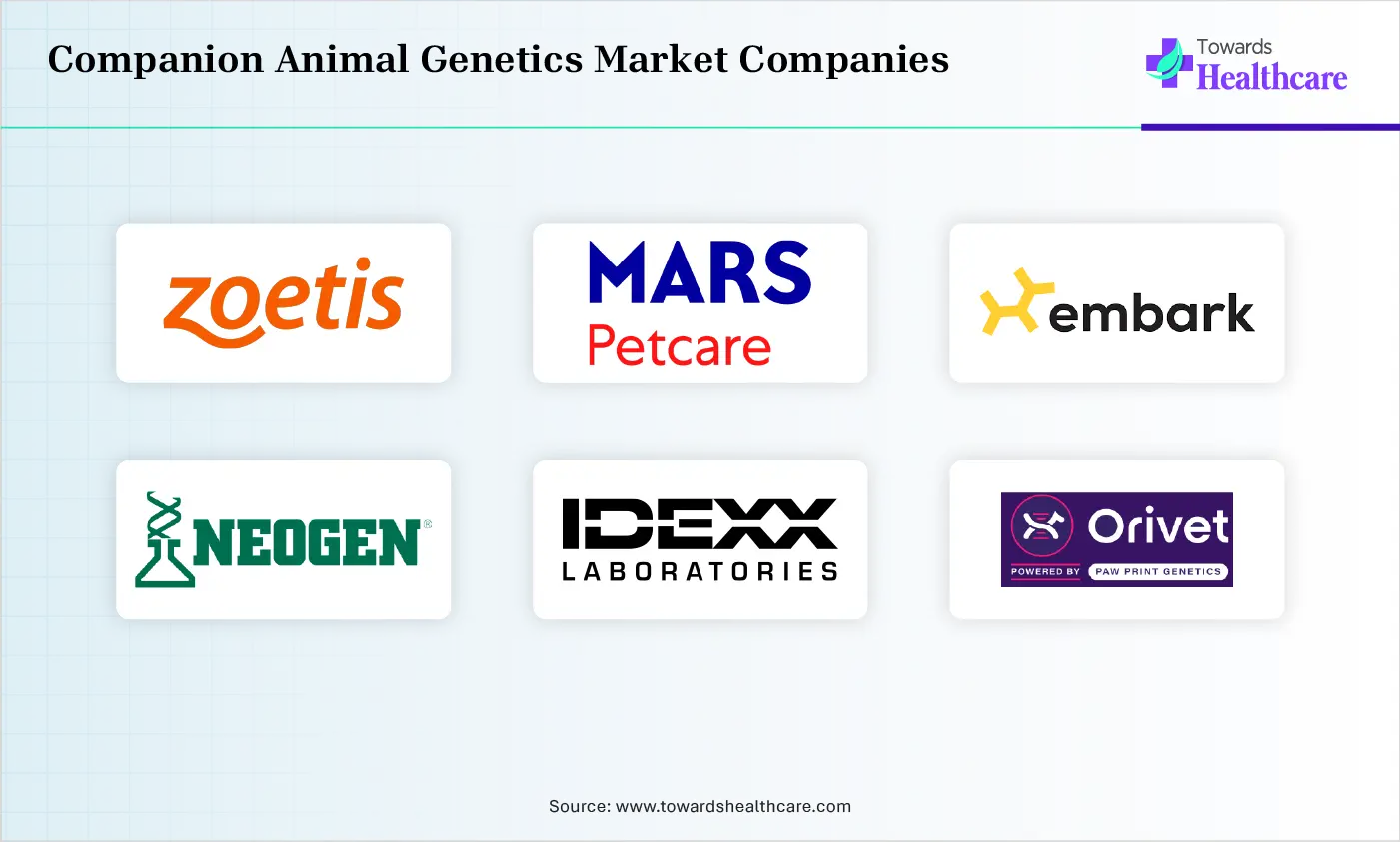
| Companies | Headquarters | Companion Animal Genetics Products |
| Zoetis Inc. | Parsippany, U.S. | Genoscoper and Basepaws |
| Mars Petcare | Vancouver, U.S. | Wisdom Panel |
| Embark Veterinary, Inc. | Boston, U.S. | Embark Dog DNA Test |
| Neogen Corporation | Lansing, U.S. | Paw Print Genetics and Igenity Canine |
| IDEXX Laboratories | Westbrook, U.S. | IDEXX Reference Labs |
| Orivet | St Kilda, Australia | GenoPet and Breed Identification DNA Test |
| BioPet Laboratories | Konxville, U.S. | PooPrints and Know Your Pet DNA |
| Animal Genetics, Inc | Tallahassee, U.S. | Color Panels and Canine Health |
| Genetrack Biolabs | Vancouver, Canada | Genetrack Canine DNA Testing |
| EasyDNA | Kent, UK | Dog Parentage Test and Dog Allergy Test |
In April 2026, “This Master Partnership Agreement will serve as a strategic foothold for expanding our technological competitiveness in companion animal immunotherapy and healthcare beyond Asia and into the global market,” said Je-Jung Lee, CEO of Vaxcellbio.
By Animal Type
By Product Type
By Technology
By Application
By End User
By Distribution Channel
By Region






Principal Consultant
Payal Rabde is a Healthcare Market Research Analyst at Towards Healthcare Research & Consulting with 4+ years of experience in pharmaceuticals, biotechnology, medical devices, and life sciences.
Learn more about Payal Rabde

Reviewed By
Aditi Shivarkar is a seasoned professional with over 14 years of experience in healthcare market research. As a content reviewer, Aditi ensures the quality and accuracy of all market insights and data presented by the research team.
Learn more about Aditi Shivarkar