


The U.S. gastrointestinal endoscopy market size accounted at USD 11.97 billion in 2025 and is predicted to increase from USD 12.87 billion in 2026 to approximately USD 24.67 billion by 2035, expanding at a CAGR of 7.50% from 2026 to 2035. Rising gastrointestinal disorders, increasing GI cancer cases, growing technological innovations, increasing demand for minimally invasive approaches, and growing health awareness are promoting the market growth.
The gastrointestinal endoscopy refers to the medical procedure used for the diagnosis and inspection of the digestive system with the use of an endoscope. They are used for the diagnosis of diseases, cancer screening, biopsy collection, and dilation of strictures. They are also used for the removal of polyps, foreign objects, and the management of GI disorders.
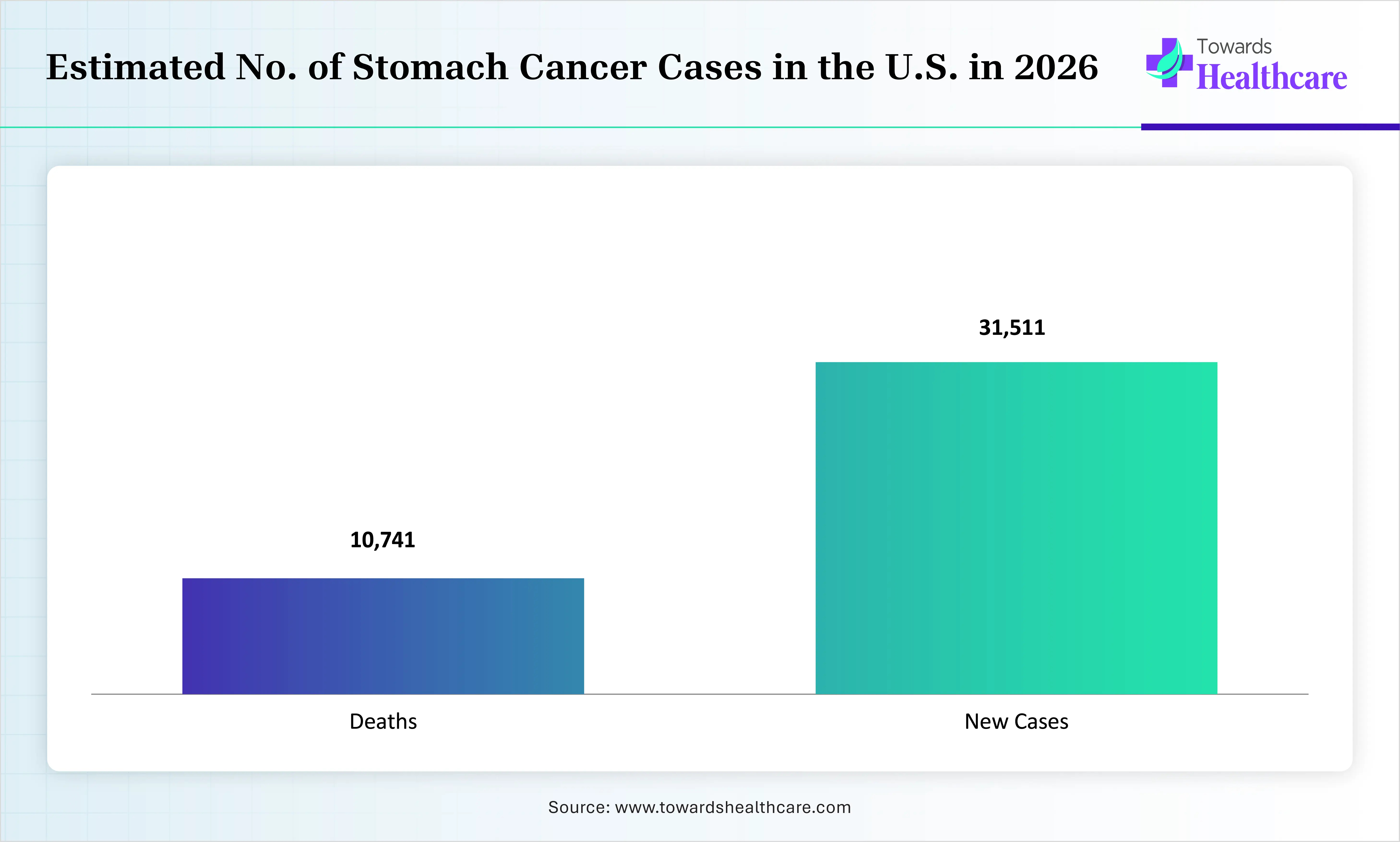
The graph represents a comparison between the estimated stomach cancer deaths and new cases in the U.S. in 2026. It indicates that there will be a rise in the cancer burden, which will increase their screening programs and routine checkups. This, in turn, will drive the adoption of gastrointestinal endoscopy, which will ultimately promote the market growth.
By product type, the endoscopes segment accounted for the highest revenue share of 38% of the U.S. gastrointestinal endoscopy market in 2025, as they were essential for GI endoscopy procedures. Their high diagnostic accuracy and reusability also increased their use. Their wide range of applications and minimally invasive approach also increased their adoption rates.
By procedure type, the diagnostic endoscopy segment held a major revenue share of 52% of the U.S. gastrointestinal endoscopy market in 2025, driven by its less invasive, accurate visualization, and quick procedures. The rise in early disease diagnosis also increased their use. Growth in the cancer screening program also increased its adoption.
By application type, the gastrointestinal cancer segment contributed the biggest revenue share of 29% of the U.S. gastrointestinal endoscopy market in 2025, due to growth in its incidence rates. This increased the demand for gastrointestinal endoscopy for their early and accurate detection. Expansion of routine screening programmes also increased their use.
By end user, the hospitals segment held the largest revenue share of 54% of the U.S. gastrointestinal endoscopy market in 2025, driven by high patient volume. The advanced infrastructure and emergency services also increased their acceptance rates. A wide range of procedures and reimbursement support also attracted the patients.
By technology type, the flexible endoscopy segment led the U.S. gastrointestinal endoscopy market with 36% share in 2025, due to its better navigation and minimally invasive approach. Their enhanced diagnostic accuracy, less pain and discomfort, also promoted their use. Their advanced technologies and therapeutic capabilities also increased their use.
The U.S. gastrointestinal endoscopy market held 29% share and is expected to show notable growth during the forecast period, due to growth in the GI cancer cases, GERD, and other diagnostic disorders. Growth in health awareness also increased their use as a minimally invasive approach, where the presence of advanced healthcare infrastructures also increased their adoption. A rise in the geriatric population and technological innovations also contributed to the market growth.
Olympus Corporation registered dominance over the market with its EVIS X1, where Boston Scientific Corporation was its closest contender, which provided SpyGlass DS. Fujifilm Holding Corporation held its position by offering ELUXEO 7000, where Medtronic plc also contributed to the market growth with its GI Genius product.
By Product Type
By Procedure Type
By Application
By End User
By Technology
By Age Group


