


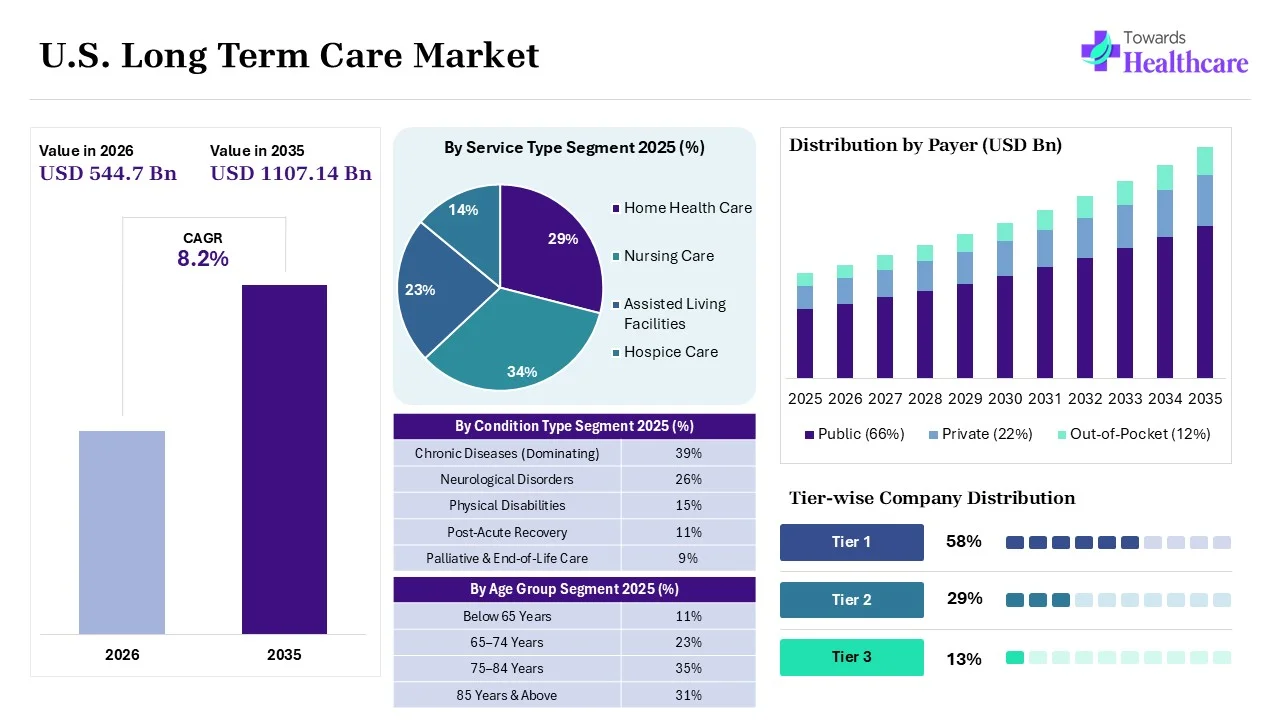
The U.S. long term care market size was estimated at USD 503.42 billion in 2025 and is predicted to increase from USD 544.7 billion in 2026 to approximately USD 1107.14 billion by 2035, expanding at a CAGR of 8.2% from 2026 to 2035. With increasing age and longevity, the risk of long-term disease rises along with that of age-related disabilities from chronic diseases, such as pulmonary diseases, which drive the growth of the market
Long-term care provides a variety of services intended to meet an individual’s health or personal care needs when they can no longer perform daily activities on their own. Long-term care includes a wide variety of support services to help people live as self-sufficiently and safely as possible. It is provided in various places by various caregivers, based on a patient's requirements. Long-term care involves a broad range of personal, social, and medical solutions and support that ensure people with, or at risk of, a significant loss of intrinsic capacity maintain a level of functional capability consistent with their basic rights and human dignity. Long-term care goal to prevent, lower, or rehabilitate functional decline, and it can be offered in various settings, like home care, community-driven care, residential care, or medical care.
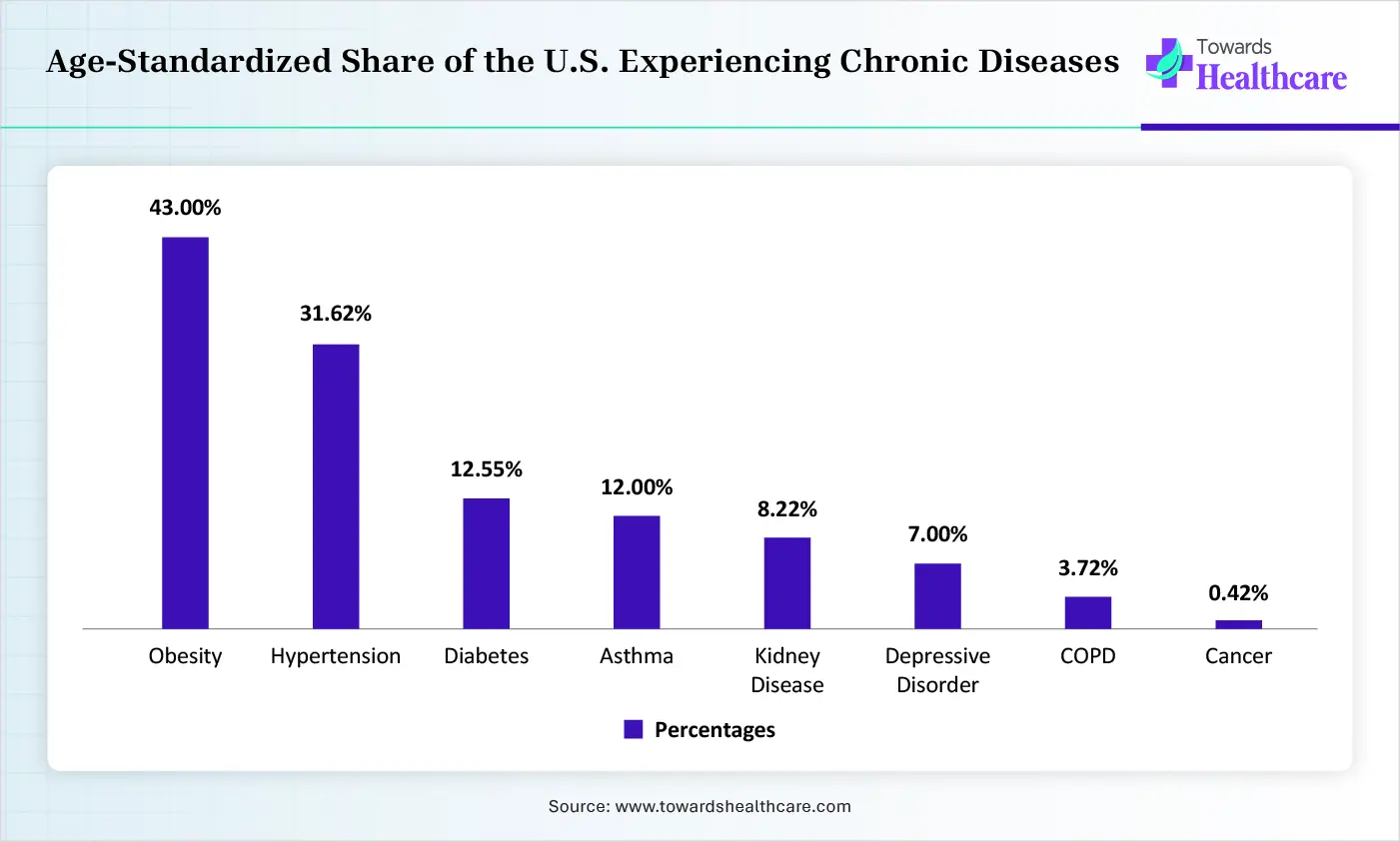
| Various types of Diseases | Percentages |
| Obesity | 42.0% |
| Hypertension | 31.6% |
| Diabetes | 12.5% |
| Asthma | 11.0% |
| Kidney disease | 8.2% |
| Depressive disorder | 6.0% |
| COPD | 3.7% |
| Cancer | 0.4% |
Recent advancements in technology will be vital in shaping the future of long-term care. Innovations like telemedicine, wearable health devices, and smart home systems can more effectively support the health and well-being of older adults, often enabling them to remain at home longer. These technologies improve the quality of care and promote greater independence in seniors. Long-term care facilities are also shifting toward creating environments that nurture mental, emotional, and social well-being in addition to physical health. Improving residents' quality of life is now a central focus.
By service type, the nursing care segment contributed the largest U.S. long term care market share of 34% in 2025, as nursing care ensures that significant signs are monitored frequently, medications are administered appropriately, and any variations in condition are promptly addressed. Nursing care offers a dignified and supportive service.
By payer, the public segment contributed the largest market share of 66%, as long-term care services provide an inclusive range of solutions and amenities that are tailored to meet the particular needs of every resident. These facilities offer a supportive environment where patients receive specialized care, are involved in meaningful activities, and enjoy a sense of community.
By age group, the 85 years & above segment held a significant share of 31% in the U.S. long term care market, as long-term-care technology allows older people, who experience significant declines in capacity, to obtain the care and help that allows them to live a life. Old age homes are particularly accommodating housing places for the elderly with physical and mental or security-oriented challenges.
By care setting, the institutional care segment contributed the largest market share of 48%, as existing in an institutional care sector provides opportunities for growing social interaction via group activities, digital platforms, and computer-generated reality experiences, developing a sense of community and combating loneliness in residents.
By condition type, the chronic diseases segment contributed the largest U.S. long term care market share of 39%, as chronic care management (CCM) supports people with ongoing conditions to stay improved over time. With steady, consistent care, patients manage their health better and avoid severe challenges. The management of long-term illness is a cooperative effort, including caregivers and home health professionals who play diverse yet interconnected roles.
By Ownership, the for-profit providers segment contributed the largest market share of 68%, as for-profit healthcare often outsources and is thus able to minimize the number of employed staff, specifically non-physician staff. For-profit providers seek to offer a product or service to consumers and make a profit by doing so.
Leading companies in the U.S. long term care market are Brookdale Senior Living, Life Care Centers of America, The Ensign Group, and Atria Senior Living. Meanwhile, Brookdale Senior Living provides independent living, assisted living, memory care for dementia, and short-term respite stays. Life Care Centers of America focuses on post-acute care and medicalized care, offering skilled nursing care and rehabilitation therapies. The Ensign Group provides unceasing nursing care and specialized wound or long-term illness management. Genesis HealthCare provides a full continuum, involving long-term custodial care and physical therapy.
By Product Type
By Payer
By Application
By Care Setting
By Condition Type
By Ownerships


