Rising geriatric population, increasing chronic disease burden, growing health awareness, expanding R&D activities, increasing technological advancements, and expanding home healthcare are promoting the market growth.
Beyond Diets: Unlocking the U.S. Therapeutic Clinical Nutrition Market
The therapeutic clinical nutrition is the specially planned nutritional support and diets for the prevention, treatment, and management of disease. These products help in enhancing treatment effectiveness, preventing malnutrition, boosting immunity, managing metabolism, and long-term health management. This drives their use for the management of diabetes, obesity, cardiovascular disease, kidney diseases, and cancer.
Global Market Growth
The global therapeutic clinical nutrition market size was estimated at USD 61.84 billion in 2025 and is predicted to increase from USD 66.76 billion in 2026 to approximately USD 132.89 billion by 2035, expanding at a CAGR of 7.95% from 2026 to 2035.
The Next Nutrition Blooms: Expanding Horizon in Clinical Nutrition Therapy
Increasing cases of diabetes, cancer, obesity, and cardiovascular diseases across the U.S. are increasing the demand for therapeutic clinical nutrition.
- The expanding use of medical nutrition therapies is also creating new opportunities for these products.
- Growing demand for personalized nutrition plans is also increasing the use of therapeutic clinical nutrition products.
- Increasing health awareness is also driving the demand for enteral, parenteral, and disease-specific nutritional products.
- Expanding home healthcare and telehealth nutrition services are also enhancing their accessibility.
- Growing R&D activities supported by investments are also accelerating the development of new products.
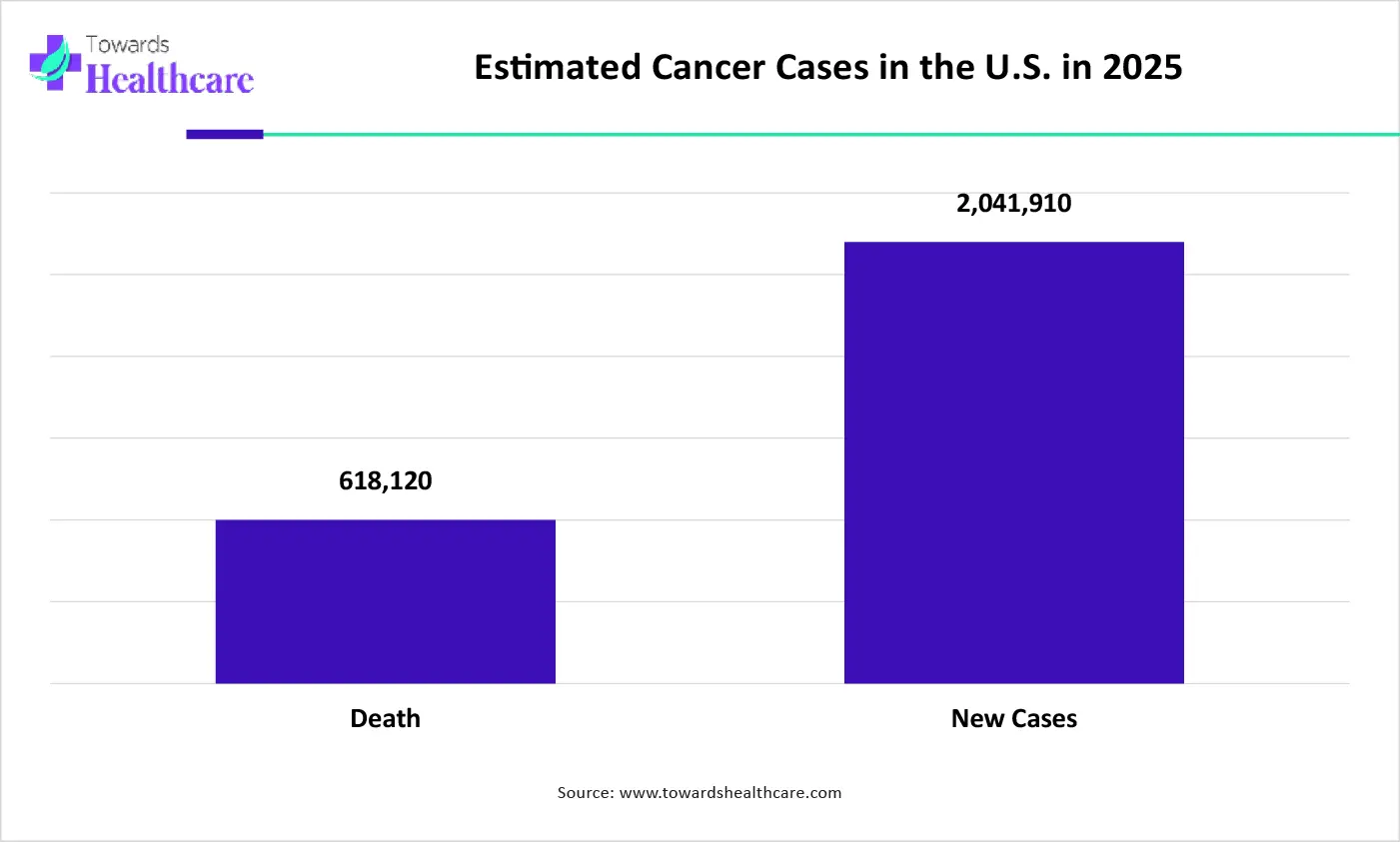
The graph represents the estimated number of cancer cases and deaths in the U.S. for the year 2026. It indicates that there will be a rise in cancer burden, which will drive the demand for effective treatment options. This, in turn, will increase the adoption of therapeutic clinical nutrition to offer nutritional support and reduce the growing cancer burden across the U.S., which will ultimately promote the market growth.
Market Segmentation Overview
- By product type, the oral clinical nutrition segment accounted for the highest revenue share of 46% of the U.S. therapeutic clinical nutrition market in 2025 and is expected to witness the fastest growth with a CAGR of 8.10% during the forecast period, driven by easy use and affordability. Their widespread availability also increased their acceptance rates. Fewer medical complications and enhanced convenience also increased their adoption rates.
- By therapeutic area type, the oncology nutrition segment held a major revenue share of 24% of the U.S. therapeutic clinical nutrition market in 2025, due to growth in cancer burden, which increased the demand for specialized nutrition support. They were also used during the treatment to enhance the treatment outcomes and prevent cachexia. They were also used to strengthen the immunity of the patients.
- By end user, the hospitals segment contributed the biggest revenue share of 48% of the U.S. therapeutic clinical nutrition market in 2025, driven by high patient volume, which increased the demand for therapeutic clinical nutrition support. They were also used for post-surgical recovery and chronic disease management. The presence of clinical experts and advanced infrastructure also attracted the patients.
- By ingredient type, the proteins segment held the largest revenue share of 34% of the U.S. therapeutic clinical nutrition market in 2025, as they are essential for tissue repair and wound healing. They also supported immune function, which increased their adoption for the treatment of various diseases. They were also used to prevent muscle wasting.
Regional Analysis
The U.S. therapeutic clinical nutrition market held 28% share and is expected to show notable growth during the forecast period, due to growth in the incidence of cancer, diabetes, and cardiovascular diseases. The presence of robust healthcare infrastructure and R&D ecosystems also increased the adoption and innovations of therapeutic clinical nutrition products. Growth in health awareness, personalized nutrition therapies, and home healthcare also contributed to the market growth.
Abbott Laboratories held the dominant share of the market with its Ensure and Glucerna brands, where Nestle Health Science was its closest competitor, which offered Peptamen and Optifast. Danone (Nutricia) also held its position by providing Fortisip, KetoCal, Neocate, and Souvenaid, where Fresenius Kabi also contributed to the market growth by offering Fresubin, Supportan, and Kabiven.
Segments Covered in the Report
By Product Type
- Oral Clinical Nutrition
- Standard Oral Nutritional Supplements
- Disease-Specific Oral Nutrition
- High-Protein Oral Supplements
- Pediatric Oral Nutrition
- Immunonutrition Formulas
- Enteral Nutrition
- Standard Enteral Formula
- Disease-Specific Enteral Formula
- Peptide-Based Formula
- Elemental Formula
- Blenderized Tube Feeding
- Parenteral Nutrition
- Total Parenteral Nutrition (TPN)
- Peripheral Parenteral Nutrition (PPN)
- Lipid Emulsions
- Amino Acid Solutions
- Micronutrient Formulations
By Therapeutic Area
- Oncology Nutrition
- Cancer Cachexia Management
- Chemotherapy-Induced Malnutrition
- Post-Surgical Oncology Nutrition
- Diabetes Management Nutrition
- Low Glycemic Formulas
- Diabetic Enteral Nutrition
- Gastrointestinal Disorders Nutrition
- Crohn’s Disease Nutrition
- Ulcerative Colitis Nutrition
- Malabsorption Support
- Neurological Disorders Nutrition
- Alzheimer’s Disease Nutrition
- Stroke Recovery Nutrition
- Dysphagia Nutrition
- Renal Disorders Nutrition
- Dialysis Nutrition
- Chronic Kidney Disease Nutrition
- Critical Care Nutrition
- ICU Nutrition
- Trauma Recovery Nutrition
- Sepsis Nutrition
- Pediatric Clinical Nutrition
- Premature Infant Nutrition
- Pediatric Disease-Specific Nutrition
- Geriatric Nutrition
- Sarcopenia Management
- Frailty Nutrition
- Cognitive Support Nutrition
By End User
- Hospitals
- Homecare Settings
- Long-Term Care Centers
- Ambulatory Surgical Centers
- Specialty Clinics
By Ingredient Type
- Proteins
- Whey Protein
- Casein Protein
- Plant-Based Protein
- Carbohydrates
- Maltodextrin
- Fiber-Enriched Carbohydrates
- Lipids
- Omega-3 Fatty Acids
- Medium Chain Triglycerides
- Vitamins & Minerals
- Probiotics & Prebiotics
By Application
- Malnutrition Management
- Metabolic Disorders
- Post-Surgical Recovery
- Immune Support
- Weight Management
- Muscle Recovery & Rehabilitation
By Route of Administration
- Oral
- Enteral Tube Feeding
- Intravenous/Parenteral
By Age Group
- Pediatric
- Infant
- Children
- Adolescents
- Adult
- Young Adults
- Middle-Aged Adults
- Geriatric
- 65–75 Years
- Above 75 Years
By Distribution Channel
- Hospital Pharmacies
- Retail Pharmacies
- Online Pharmacies
- Long-Term Care Facilities
- Homecare Providers




