


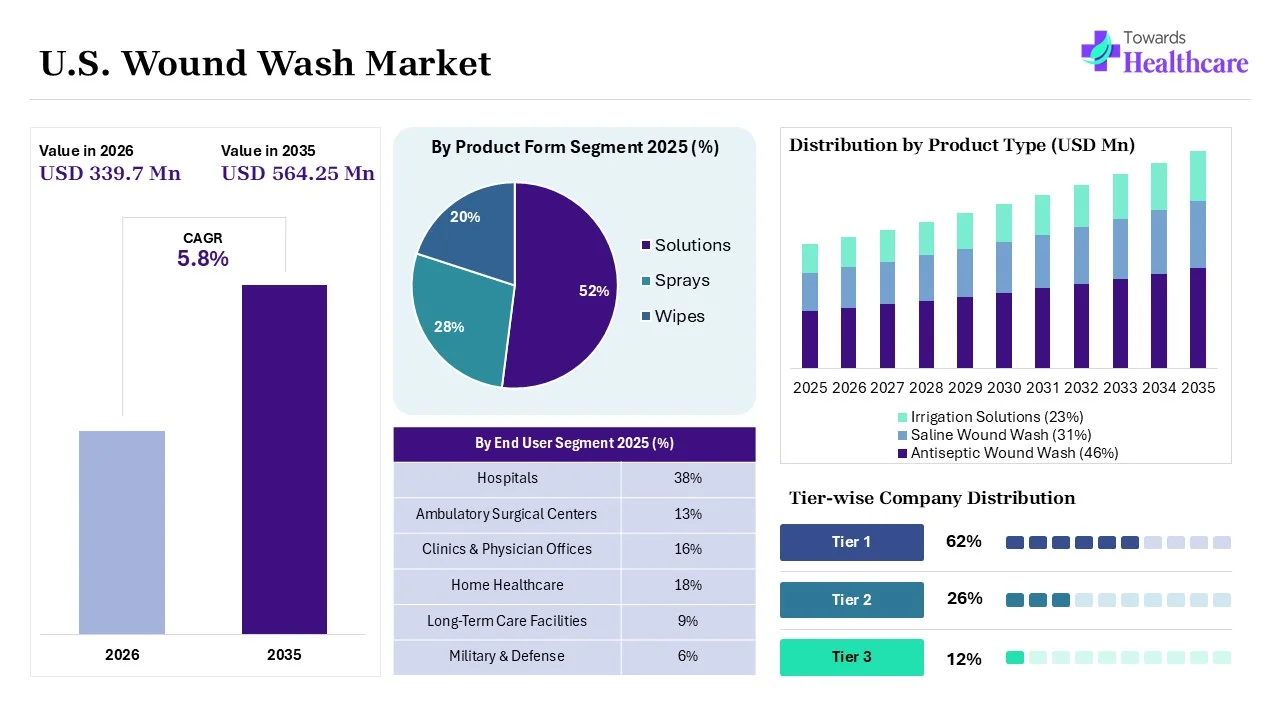
The U.S. wound wash market size was estimated at USD 321.08 million in 2025 and is predicted to increase from USD 339.7 million in 2026 to approximately USD 564.25 million by 2035, expanding at a CAGR of 5.8% from 2026 to 2035. Increasing applications of wound wash solutions because of a rise in chronic wounds, increased surgical procedures, infection prevention focus, growing trauma and accident cases, which drive the growth of the market
Wound wash is a rinsing solution used to remove foreign materials from the wound surface and the nearby skin. Wound cleansers are an affordable means to enhance wound healing and lower the infection rate. Though routine washing removes products and tissues that are significant for wound healing, like regenerating epithelium, growth factors, and chemokines. The solution should be used as the primary step in each acute or chronic wound bed preparation. The wound washes are intended to eliminate foreign bodies and lower the risk of infection. In healthcare practice, the decision on which cleansing agent to use is massively based on local strategies and personal preference. Wound washes include water, saline, and antimicrobial agents. Dyes and organic mercury solutions are considered outdated.
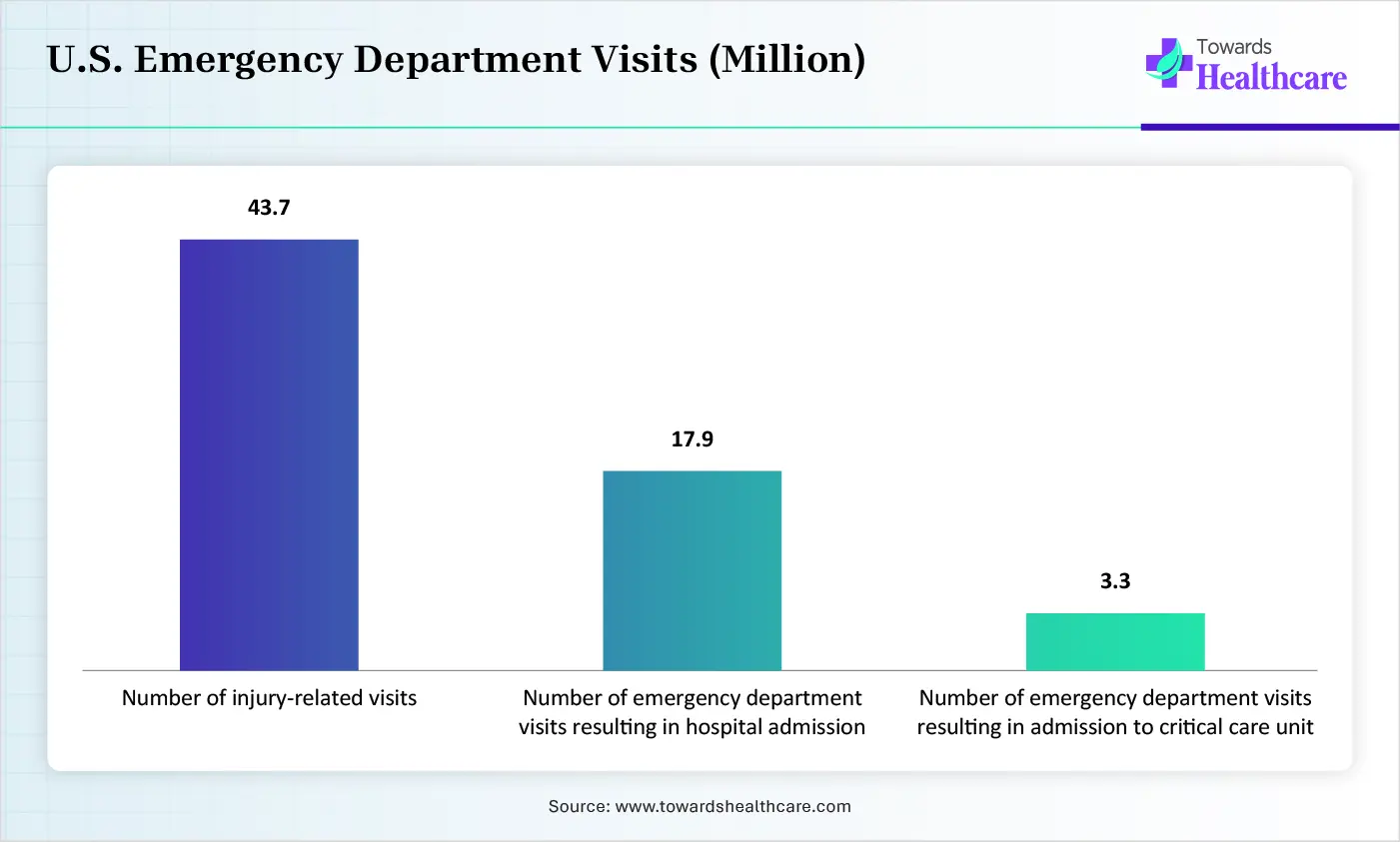
| Department Visits | Visits (Millions) |
| Number of visits | 155.4 |
| Number of injury-related visits | 43.5 |
| Number of emergency department visits resulting in hospital admission | 17.8 |
| Number of emergency department visits resulting in admission to the critical care unit | 3.1 |
Recent developments in wound wash materials have potentially enhanced acute and chronic wound management by addressing risks like moisture balance, infection control, and improving healing. Significant progress has been made, particularly with hydrogels, foams, and antimicrobial materials for making optimized dressings. These dressing options lower wound healing time while focusing on customized patient requirements. Novelties like stimuli-responsive hydrogels and hybrid bioengineered composites are discussed in relation to their improved properties, involving responsiveness to pH, glucose, temperature, or enzymes and drug delivery accuracy.
By product type, the antiseptic wound wash segment contributed the largest U.S. wound wash market share of 46% in 2025, as antiseptic wound wash comprising chlorhexidine, chloroxylenol, and triclosan has been shown to efficiently lower bacterial load in DFU patients. Topical antiseptics are antimicrobial agents that kill, inhibit, or lower the number of microorganisms and are thought to be significant for wound infection control.
By product form, the solutions segment contributed the largest U.S. wound wash market share of 52%, as wound wash solutions containing PHMB and betaine surfactants are used as antiseptics, and it is recommended that their use support wound bed preparation (WBP) and the elimination of bacteria, biofilm, and debris.
By application, the acute wounds segment held a significant share of 62% in the market, as wound wash potentially enhanced acute and chronic wound management by addressing risks like infection control, moisture balance, and improved healing. Significant progress has been made, particularly with hydrogels, foams, and antimicrobial materials for making enhanced dressings.
By end user, the hospitals segment contributed the largest U.S. wound wash market share of 38%, as novelties in wound care lead to better results for patients, including rapid healing, lower pain, and reduced risk of infection. Wound wash is the steady flow of a service in an open wound surface to achieve wound hydration, to eliminate deeper debris, and to contribution with the visual examination.
By distribution channel, the direct sales segment contributed the largest market share of 27%, as direct sales organizations invest a lot of time in research and development to ensure they have quality products. By bypassing traditional wholesalers and retailers, companies lower overhead expenses, manage pricing unpredictability, and capture increasing profit margins.
Leading companies in the U.S. Wound Wash Market are Solventum, Medline Industries, Smith+Nephew, and Cardinal Health. Meanwhile, Solventum offers advanced wound care services, involving isotonic saline and specialized irrigation services. Medline Industries, a company known for lines such as Skintegrity and MicroKlenz antimicrobial cleansers. Smith+Nephew, leader offering dermal wound cleansers designed to gently irrigate and prepare the wound bed. Cardinal Health produces a broad range of value-based, hospital-grade wound management supplies.
By Product Type
By Product Form
By Application
By End User
By Distribution Channel


