


 Request Consultation
Overview:
The approval of every CAR-T therapy proceeds with the same underlying workflow consisting of the collection of a patient's T cells through apheresis, delivery to a specialized manufacturing facility, genetic engineering over many weeks to transfer a chimeric antigen receptor, and reinfusion after the patient undergoes lymphodepleting chemotherapy. Exploration of in vivo CAR-T supports collapsing the complete process into a single infusion. Instead of engineering cells outside the body, a targeted delivery vehicle, like a lentiviral vector or a lipid nanoparticle, which carries CAR-encoding genetic material, is inserted directly into the patient, where it binds circulating T cells & reprograms them in place.
In this era, regardless of a theoretical proposition, Kelonia Therapeutics reported that its key candidate, KLN-1010, showed 100% early minimal-residual-disease-negative results in a first Phase 1 cohort of multiple myeloma patients, all without lymphodepleting chemotherapy. Shifting of commercial signal discloses that between March 2025 & early 2026, there were six acquisitions & licensing deals worth a combined $14 billion or more that transformed the competitive field. Furthermore, AstraZeneca acquired EsoBiotec for $1.0 billion, Bristol Myers Squibb bought Orbital Therapeutics for $1.5 billion, and AbbVie acquired Capstan Therapeutics for $2.1 billion while licensing Umoja Biopharma's lead candidate. Alongside this, Eli Lilly spent a combined $9.4 billion acquiring Orna Therapeutics and Kelonia Therapeutics. Meanwhile, Precedence Research anticipates the in vivo CAR-T market to expand from roughly $861 million in 2026 to $10.8 billion by 2035, a 32.5% CAGR that would make it one of the rapidly growing segments in cell and gene therapy.
Along with consistent queries across the area, no in vivo CAR-T entity has advanced beyond Phase 1, while off-target transduction and uncontrolled in vivo cell expansion are largely uncharacterized risks. Besides this, regulators have not evolved a benchmarked landscape for a therapy where dosing and quality control occur inside the patient instead of in a monitored facility.
The entire report studies both the mechanism and momentum propelling in vivo CAR-T and the clinical, regulatory, & manufacturing forces that will decide whether it becomes a scalable option to current ex vivo therapies or remains a mature but narrow niche.
In the Future, In Vivo CAR-T Could Completely Omit the Lab Effort
The above representation expresses two sides of CAR-T, i.e. today's ex vivo CAR-T workflow termed as apheresis, lab-based cell engineering, and reinfusion over two to four weeks, against the proposed in vivo model of a single direct infusion.
Key Insight: By considering elimination of the manufacturing step, it not only reduces wait time, but also reshapes the complete economics of cell therapy. It also supports conversion of a patient-specific biologic into an approach that can, in rule, be produced & stockpiled like a traditional drug.
Source: AJMC; Inside Precision Medicine, 2026.
Day By Day, Surging Bet by Big Pharma In Vivo Cell Therapy
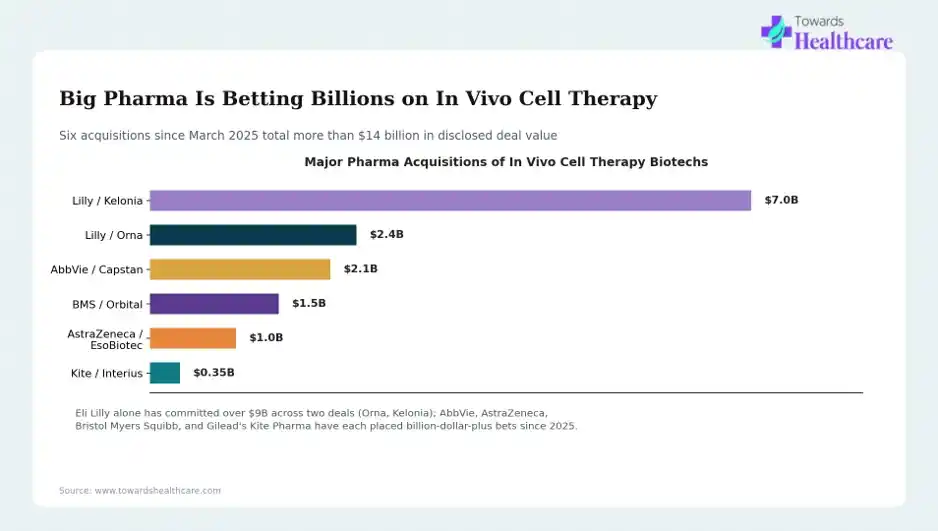
The above chart displays six acquisitions & licensing deals from 2025-2026, extending from Kite's $0.35 billion purchase of Interius to Eli Lilly's $7.0 billion acquisition of Kelonia Therapeutics.
Key Insight: As mentioned, the scale & acceleration of dealmaking, which covers six deals worth over $14 billion paired within nearly eighteen months, shows that large pharmaceutical companies seek in vivo delivery as the forecast revolution in cell therapy.
Source: Company press releases; Labiotech.eu; GenEngNews, 2025-2026.
By 2035, In Vivo CAR-T Market is Expected to Surge From $861M to $10.8B
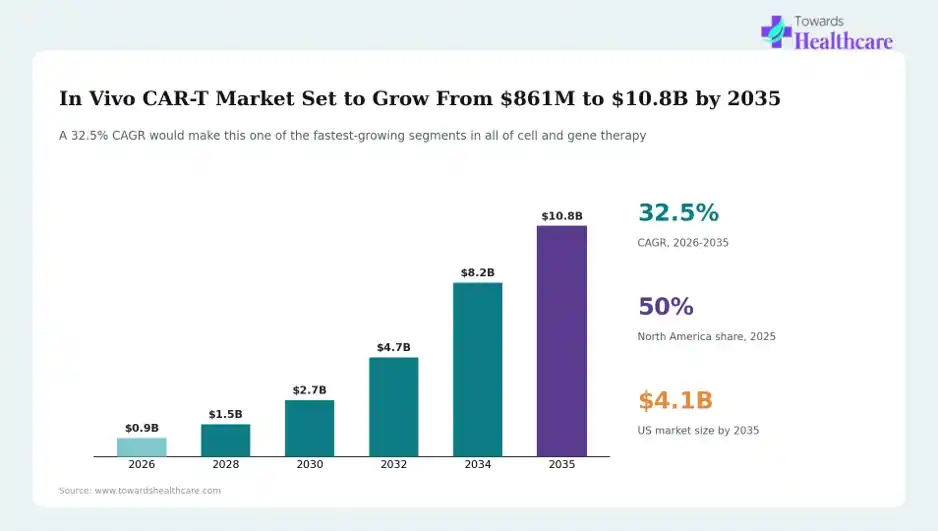
The above graphical representation shows the forecasted market value for in vivo CAR-T from 2026 to 2035, indicating rapid expansion at a 32.5% CAGR, along with regional share & the US-specific 2035 market size.
Key Insight: Along with the fastest growth of in vivo CAR-T at a 32.5% CAGR throughout the biopharma sector, it also shows that it is small in absolute terms currently. Moreover, the progression story is supported by clinical & regulatory validation growth.
Source: Precedence Research, In Vivo CAR-T Market Report, 2026
Compared With Viral Vectors, Non-Viral Delivery Is Reflecting the Fastest Expansion
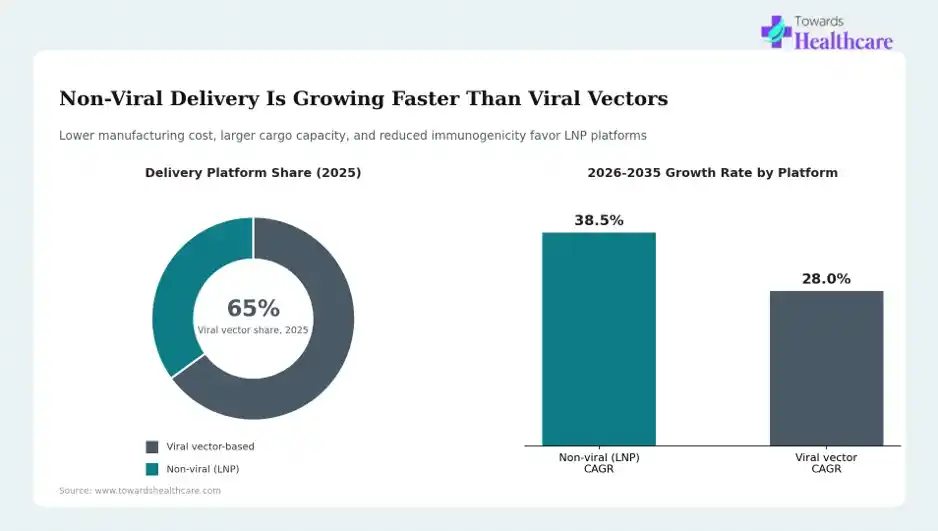
The chart represents 2025 delivery platform share, where the viral vector segment held a 65% share, and further indicates predicted 2026-2035 growth rates by platform, which underlines that non-viral (LNP) will expand at 38.5% & viral vector segment will grow at 28.0%
Key Insight: According to the analysis, viral vectors are still registering dominance in this era, whereas ongoing non-viral LNP platforms demonstrate rapid expansion. LNP, as the fastest-growing, is driven by its manufacturing simplicity & minimal immunogenicity, which are benefits & that are more important as the area scales toward off-the-shelf production.
Source: Precedence Research; GenEngNews, 2026.
Kelonia's KLN-1010 Offers 100% Early MRD-Negative Responses
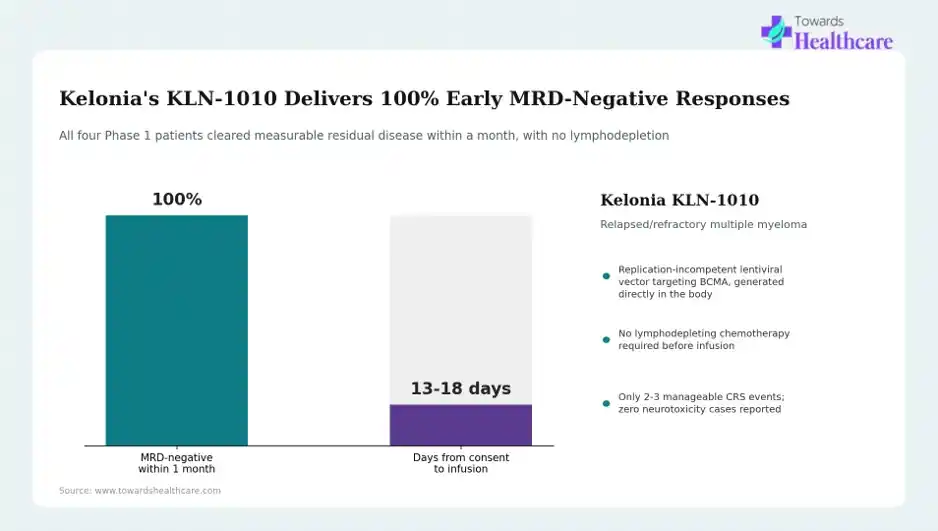
The above chart describes Phase 1 results for Kelonia's in vivo BCMA CAR-T candidate in relapsed/refractory multiple myeloma, such as a 13-to-18-day consent-to-infusion window and safety data showing no neurotoxicity cases.
Key Insight: Achievement of a 100% early MRD-negative response rate in a first-in-human trial of Kelonia's in vivo BCMA CAR-T without lymphodepleting chemotherapy reflects a robust clinical signal. This signal also shows that in vivo CAR-T has produced currently, although the patient population remains small and follow-up is short.
Source: Kelonia Therapeutics clinical data disclosure, 2026.
Uncovering Reprogramming of T Cells by In Vivo CAR-T Reprograms T Cells Without Leaving the Body
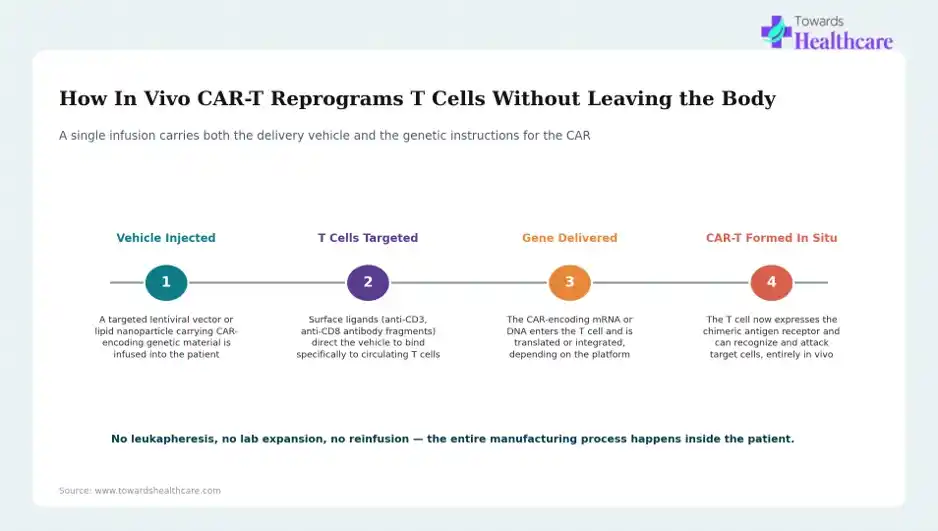
This is a four-step representation of the mechanism, where a targeted vehicle called a lentiviral vector or lipid nanoparticle is infused and further binds circulating T cells via surface ligands, then delivers CAR-encoding genetic material, and develops a functional CAR-T cell completely inside the patient.
Key Insight: Based on the above-mentioned comprehensive mechanism, the complete production process is currently demanding a specialized cell-processing facility. This facility is reduced to a single intravenous infusion, which is the structural modification underlying every other trend in this report.
Source: PMC; Inside Precision Medicine, 2026.
Rapidly Stepping Field Includes Deals & Data Landmarks in 2025-2026
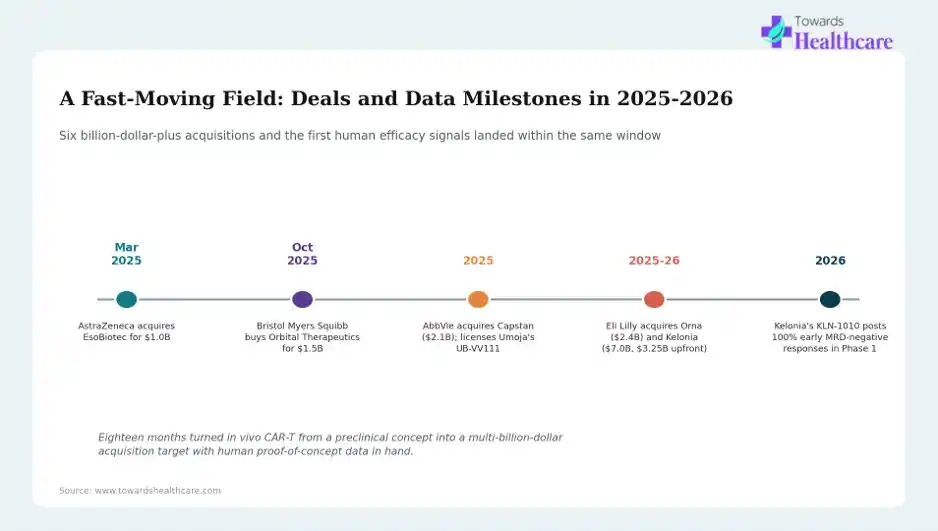
This framework represents a periodic depiction of the field that describes events, such as AstraZeneca's EsoBiotec acquisition in March 2025, Bristol Myers Squibb's Orbital Therapeutics deal in October 2025, AbbVie's Capstan acquisition and Umoja licensing deal, Eli Lilly's Orna and Kelonia acquisitions, and Kelonia's Phase 1 data readout in 2026.
Key Insight: By considering human proof-of-concept data & multi-billion-dollar acquisitions elaborated within the same eighteen-month window lowers a validation timeline that generally extends several years in cell & gene therapy into a single fast-shifting cycle.
Source: Company disclosures; Labiotech.eu, 2025-2026.
Showcasing Three Delivery Platforms, Three Distinct Trade-Offs
This is a pivotal explanation of a comparison among three platforms, i.e. LNP-mRNA, lentiviral, and AAV delivery platforms, specifically across cargo type, expression duration, manufacturing complexity, redosing capability, key risk, and lead developers.
Key Insight: As no platform shows a successful response on each axis, LNP-mRNA provides significant manufacturing lucidity and redosability but only transient expression. Meanwhile, lentiviral vectors facilitate continuity at the cost of insertional mutagenesis risk. However, the field is distinguished by platforms rather than merging into one.
Source: PMC; company technical disclosures, 2026.
So Far Unclarity Between The Durability-Versus-Reversibility Trade-Off
This difference mainly stems from integrating lentiviral platforms, which are permanent & uncontrollable, with episomal AAV that is long-lived but gradually diluting, and transient mRNA-LNP (redosable but short-lived), with implications for long-term safety monitoring.
Key Insight: This exploration indicates that permanent CAR expression omits the alternative to terminate treatment if something goes wrong. Alongside this, transient platforms trade that safety margin for minimal durability; switchable CAR designs that could overcome this trade-off remain early-stage research, not a near-term option.
Source: PMC; industry technical analysis, 2026.
It is Completely Ambiguous So Far About What Happens In Vivo
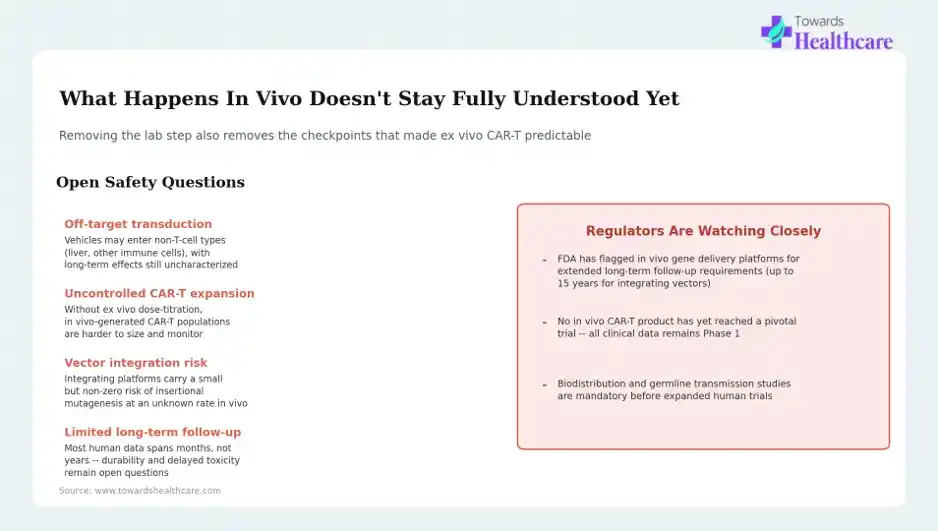
This illustrates four open safety questions, i.e. off-target transduction, uncontrolled CAR-T expansion, vector integration risk, and limited long-term follow-up, coupled with regulatory expectations for extended monitoring and biodistribution studies.
Key Insight: According to the overall study, elimination of the ex vivo manufacturing step also omits the quality-control checkpoints, such as dose titration, release testing, and sterility confirmation. These checkpoints made conventional CAR-T predictable, which moves that supervision burden into the patient's body and into longer post-approval monitoring.
Source: FDA guidance; PMC safety review, 2026.
Day By Day, Manufacturing Becomes Simpler, While Regulatory Questions Get Tougher
The demonstration indicates what in vivo delivery simplifies: no apheresis or reinfusion logistics, industrial-scale off-the-shelf production, against what it complicates: an undefined regulatory framework, in-patient dose control, and mandatory long-term follow-up.
Key Insight: There is no possibility of hiding operational burden with in vivo delivery, but it shifts from the manufacturing facility to the regulatory and clinical monitoring apparatus, which is not yet developed to manage it at scale.
Source: FDA; Technology Networks, 2026.
Prospective Shift Towards Clinic Fueled by An Aggregated, Newly-Funded Pipeline
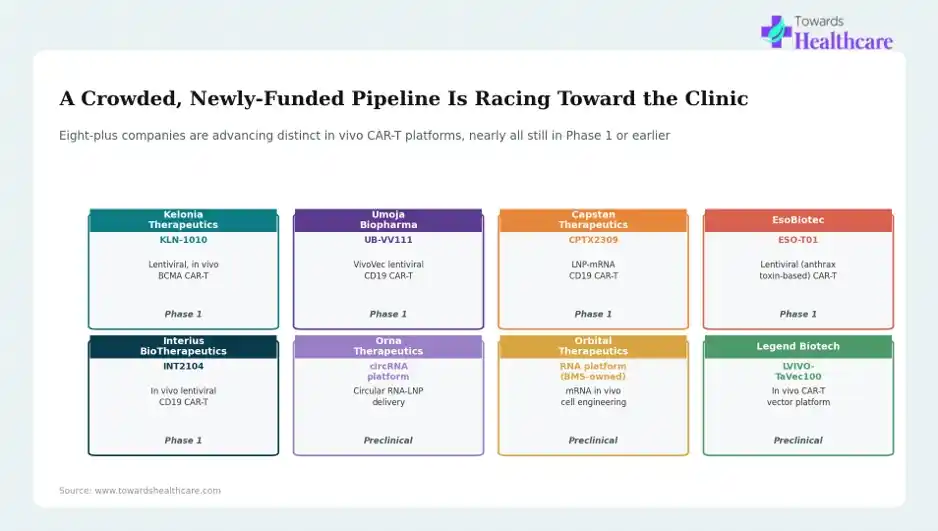
The above landscape shows eight players broadening diverse in vivo CAR-T platforms, i.e. Kelonia, Umoja, Capstan, EsoBiotec, Interius, Orna, Orbital, and Legend Biotech, which range across lentiviral, LNP-mRNA, and circular RNA approaches, nearly all in Phase 1 or earlier.
Key Insight: An execution of a variety of platforms & well-capitalized backers lowers the risk that a single company's clinical hold-up stalls the entire field, but it also indicates most competitive positioning will not be solved for many more years of Phase 1 and Phase 2 data.
Source: Company disclosures; ASH 2025 conference presentations
Three Forces Will Conclude Whether In Vivo CAR-T Avails to Patients
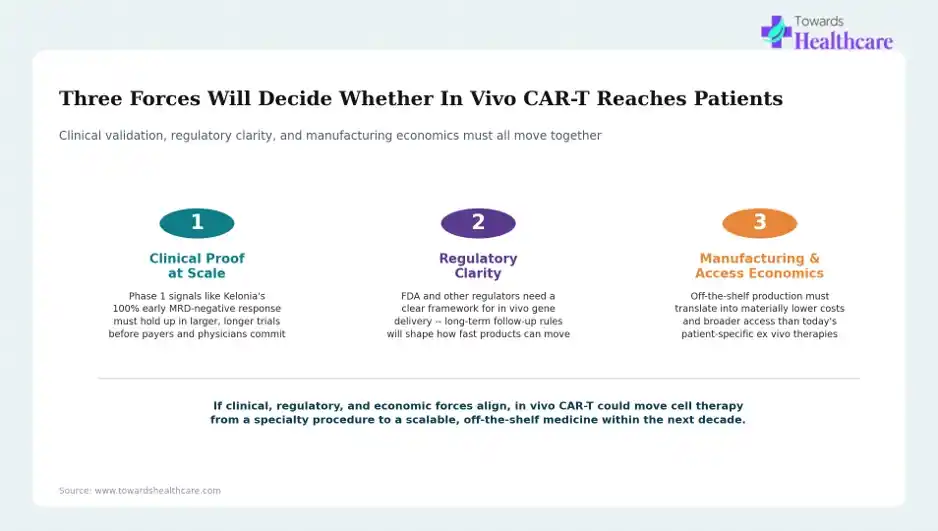
The above-mentioned three variables are most likely to decide the area’s pathways, i.e. clinical proof at scale beyond early Phase 1 signals, regulatory clarity on in vivo gene delivery frameworks, and manufacturing economics that meaningfully undercut today's patient-specific therapies.
Key Insight: As per our analyst efforts, in vivo CAR-T has moved ahead of the toughest initial bar, which proves the mechanism works in humans. AT the same time, conversion of this proof into a scalable, reimbursable medicine relies on forces largely outside any single company's control.
Source: Precedence Research analysis, 2026.
In Vivo CAR-T Pipeline at a Glance
| Company | Lead Candidate | Platform | Stage |
| Kelonia Therapeutics | KLN-1010 | Lentiviral, in vivo BCMA CAR-T | Phase 1 |
| Umoja Biopharma | UB-VV111 | VivoVec lentiviral CD19 CAR-T | Phase 1 |
| Capstan Therapeutics | CPTX2309 | LNP-mRNA CD19 CAR-T | Phase 1 |
| EsoBiotec | ESO-T01 | Lentiviral (anthrax toxin-based) CAR-T | Phase 1 |
| Interius BioTherapeutics | INT2104 | In vivo lentiviral CD19 CAR-T | Phase 1 |
| Orna Therapeutics | circRNA platform | Circular RNA-LNP delivery | Preclinical |
| Orbital Therapeutics | RNA platform (BMS-owned) | mRNA in vivo cell engineering | Preclinical |
| Legend Biotech | LVIVO-TaVec100 | In vivo CAR-T vector platform | Preclinical |
Forecasted Clinical Data & Key Announcements in 2027
- In the first half of 2027, Tempest Therapeutics (TPST-4003) is predicted to report initial clinical data for its CD7-targeted mRNA/LNP in vivo CAR-T candidate targeting myasthenia gravis and multiple sclerosis.
- Collaboration of Cartesian Therapeutics with WestGene is predicted to record clinical data employing its combined mRNA payload and LNP platform for autoimmune conditions in the first half of 2027.
- Sana Biotechnology (SG227) is slated for first-in-human or expanded clinical development strategies for its in vivo CAR-T candidate targeting multiple myeloma for mid-2027.
- Cellectis’s LNP-delivered in vivo gene editing trials (like HEAL-101) project preliminary clinical data in the second half of 2027.
- Companies like J & J and Sail Biomedicines will join to focus on in vivo CAR-T and immune reset for autoimmune diseases, anticipating a financial impact and program maturation spanning through 2027.
Strategic Questions for Industry Leaders
- How should companies design Phase 2 trials to validate Kelonia's early MRD-negative signal across a larger and more diverse patient population?
- What regulatory framework should the FDA adopt for a therapy where CAR-T generation occurs inside the patient rather than in a monitored manufacturing facility?
- How should sponsors structure long-term follow-up programs, potentially up to 15 years, for integrating lentiviral in vivo platforms?
- Should companies prioritize lentiviral platforms for durability or LNP-mRNA platforms for redosability and manufacturing simplicity?
- What biodistribution and off-target transduction studies should become standard before an in vivo CAR-T candidate advances to a pivotal trial?
- How should manufacturers price an off-the-shelf in vivo therapy relative to today's patient-specific ex vivo CAR-T products?
- What role should switchable or controllable CAR designs play in resolving the durability-versus-reversibility trade-off?
- How should companies monitor for uncontrolled in vivo CAR-T cell expansion without the dose-titration control that ex vivo manufacturing provides?
- Should large pharmaceutical companies continue acquiring platform-stage biotechs, or shift toward licensing deals as clinical data matures?
- What lessons from Elevidys's boxed warning in gene therapy should inform safety monitoring protocols for in vivo CAR-T?
- How should companies validate anthrax-toxin-based and other novel targeting ligands for long-term immunogenicity risk?
- What manufacturing capacity investments are needed to support industrial-scale production of in vivo delivery vehicles ahead of approval?
- How should sponsors design trials to distinguish true CAR-T-driven remission from confounding effects of underlying disease biology?
- What financing and reimbursement models should payers develop for a potentially lower-cost, off-the-shelf cell therapy category?
- How should companies balance speed to clinic against the risk of under-characterizing rare but serious in vivo delivery-related toxicities?
- What competitive advantage, if any, will the eight-plus companies in this space retain once larger acquirers fully integrate their platforms?
- How should regulators weigh in vivo CAR-T's simplified manufacturing against its comparatively immature safety data relative to ex vivo CAR-T?
- What role should real-world evidence registries play in tracking long-term outcomes once in vivo CAR-T candidates reach approval?
- How should companies structure patient consent processes given the compressed 13-to-18-day timeline seen in early Kelonia data?
- What combination of preclinical, translational, and early clinical data should define a credible go/no-go decision point for in vivo CAR-T programs?
Data & Intelligence Pointers
- Track Kelonia Therapeutics' Phase 1 data updates for KLN-1010 as the most advanced clinical readout in the in vivo CAR-T field.
- Monitor FDA guidance development for in vivo gene delivery platforms used in cell therapy indications, including long-term follow-up requirements.
- Follow AstraZeneca, Bristol Myers Squibb, AbbVie, and Eli Lilly integration progress for their respective 2025-2026 in vivo cell therapy acquisitions.
- Watch Umoja Biopharma, Capstan Therapeutics, EsoBiotec, Interius BioTherapeutics, and Legend Biotech for pipeline updates and trial initiations.
- Track ASH, ASCO, and other major hematology/oncology conference presentations for new in vivo CAR-T preclinical and clinical data.
- Review company disclosures for biodistribution, germline transmission, and shedding study results required ahead of expanded human trials.
- Monitor patent filings and platform licensing deals for novel targeting ligands beyond current anti-CD3 and anti-CD8 approaches.
- Follow Precedence Research and other market analysts for updated in vivo CAR-T market size and CAGR revisions as new data emerges.
- Track venture capital and private financing rounds for earlier-stage in vivo cell therapy platforms not yet acquired by large pharma.
- Watch for the first in vivo CAR-T candidate to advance into a Phase 2 or pivotal trial as a key inflection point for the field.
- Monitor manufacturing capacity announcements for LNP and lentiviral vehicle production as a proxy for industrial-scale readiness.
- Track payer and health-system commentary on potential reimbursement models for an off-the-shelf, non-patient-specific cell therapy category.
References
- AJMC. "In Vivo CAR T-Cell Therapy: A New Frontier in Cancer Treatment." 2026.
- Inside Precision Medicine. "In Vivo CAR-T: Reprogramming Immune Cells Without Leaving the Body." 2026.
- Labiotech.eu. "The Billion-Dollar Race to Build In Vivo CAR-T." 2026.
- GenEngNews. "Eli Lilly Acquires Kelonia Therapeutics for Up to $7 Billion." 2026.
- Precedence Research. "In Vivo CAR-T Cell Therapy Market Size, Share, and Growth Report." 2026.
- Kelonia Therapeutics. "Phase 1 Clinical Data Disclosure for KLN-1010." 2026.
- PMC (PubMed Central). "Mechanisms and Challenges of In Vivo CAR-T Cell Generation." 2026.
- PMC (PubMed Central). "Safety Considerations for In Vivo Gene Delivery Platforms in Cell Therapy." 2026.
- Technology Networks. "The Evolving Challenges Shaping Cell and Gene Therapy Manufacturing." 2026.
- American Society of Hematology (ASH). "2025 Annual Meeting Abstracts: In Vivo Cell Engineering Platforms." December 2025.