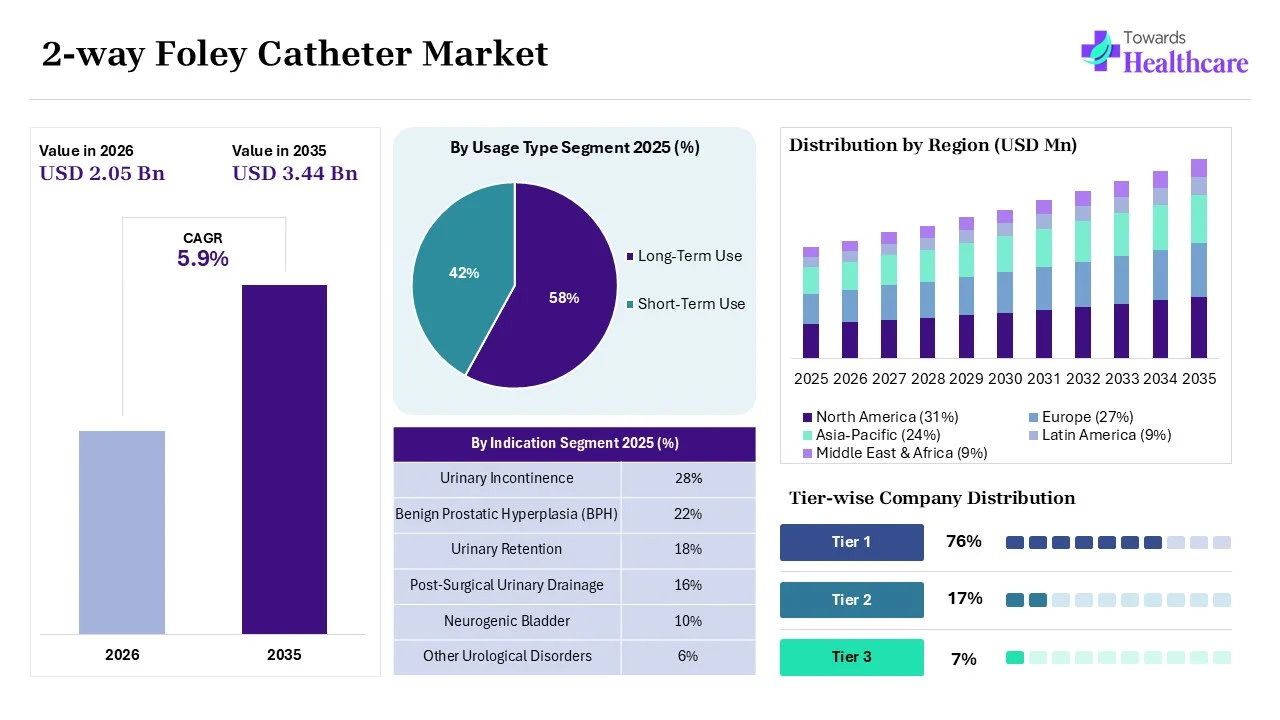
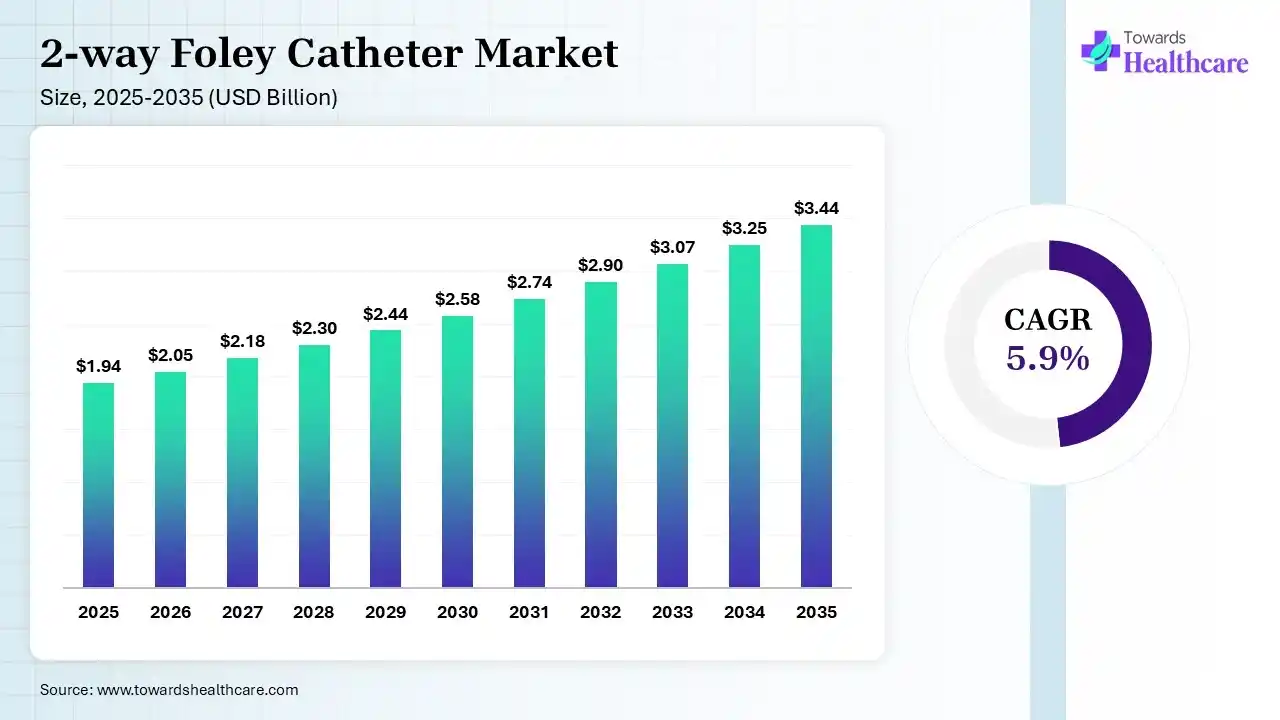
The 2-way Foley catheter market size stood at US$ 1.94 billion in 2025, grew to US$ 2.05 billion in 2026, and is forecast to reach US$ 3.44 billion by 2035, expanding at a CAGR of 5.9% from 2026 to 2035.
2-way Foley catheters are indwelling urinary catheters with two lumens for urine drainage and balloon inflation, used for continuous bladder drainage in urinary retention, post-surgical care, and long-term patient management. Their adoption is rising due to the growing prevalence of urological disorders, increasing surgical procedures, and an expanding elderly patient population.
Key trends include the shift towards silicon-based and antimicrobial-coated catheters to improve comfort and reduce infection risk. Technological focus on CAUTI prevention, improved biocompatibility, reduced encrustation, and better drainage performance, while growing use in home and long-term care settings is creating further opportunities.
The 2-way Foley catheter market is growing due to the increasing prevalence of urinary retention, urinary incontinence, and urological disorders, along with a rising number of surgical procedures requiring postoperative bladder drainage. Growth is also supported by the expanding elderly population, greater demand for long-term and home-based patient care, and the adoption of silicon-based and antimicrobial catheters that improve comfort, safety, and infection control.
A 2-way Foley catheter is an indwelling urinary catheter with two separate lumens, one for continuous urine drainage and the other for inflating a retention balloon that secures the catheter inside the retention. Benign prostatic hyperplasia, spinal cord injuries, and the rising number of surgical procedures requiring postoperative bladder management, expanding hospital admissions, long-term care services, and critical care utilization are further supporting demand. Technological advancements, including antimicrobial and hydrophilic coatings, silicon-based and latex-free materials, improved balloon design, and infection-resistant catheter technologies, are enhancing patient safety and comfort. Future opportunities are emerging through smart urinary monitoring systems, eco-friendly catheter materials, personalized urological care, and innovation focused on reducing catheter-associated urinary tract infections (CAUTIs), improving clinical outcomes and healthcare efficiency.
Buyers have a moderate level of bargaining power because numerous manufacturers offer similar 2-way Foley catheters, providing hospitals and healthcare providers hospitals and healthcare providers with multiple sourcing options. However, purchasing decisions are influenced by product quality, infection-control performance, regulatory compliance, and long-term supplier contracts, which limit buyers’ ability to negotiate aggressively.
Political
Economic
Social
Technological
Environmental
Legal
AI can support by improving patient monitoring, predicting catheter-related complications, and enabling timely intervention through smart healthcare systems. It can help analyze urinary output patterns, detect infection risks earlier, and optimize catheter usage in hospitals and home care settings. AI-driven data insights may also guide product innovation, improve patient outcomes, and enhance efficiency in long-term urinary management.
Shift Toward Advanced Catheter Materials
Manufacturers are increasingly focusing on silicone-based, latex-free, and antimicrobial-coated Foley catheters to improve patient comfort and reduce infection risks. This trend is expected to strengthen as healthcare providers prioritize safer, long-term urinary drainage solutions with better biocompatibility, durability, and lower chances of catheter-associated urinary tract infections.
Growing Demand in Home and Long-Term Care
The use of 2-way Foley catheters is expanding beyond hospitals into home healthcare and long-term care settings, driven by the rising elderly population and increasing prevalence of chronic urinary disorders. Future growth is likely to come from products designed for ease of use, extended wear, and improved patient convenience outside acute care environments.
Focus on Infection Prevention and Design Innovation
Future development is expected to center on infection control, better drainage efficiency, and patient safety, leading to innovations in catheter coatings, balloon design, and drainage systems. As awareness of CAUTI prevention rises, healthcare facilities are likely to adopt technologically enhanced Foley catheters that minimize complications and support better clinical outcomes.
| Table | Scope |
| Market Size in 2026 | USD 2.05 Billion |
| Projected Market Size in 2035 | USD 3.44 Billion |
| CAGR (2026 - 2035) | 5.9% |
| Historical Data | 2020 - 2023 |
| Base Year | 2025 |
| Forecast Period | 2026 - 2035 |
| Measurable Values | USD Millions/Units/Volume |
| Market Segmentation | By Material, By Indication, By Usage Type, By End User, By Patient Type, By Distribution Channel, By Region |
| Top Key Players | Teleflex Incorporated, B. Braun SE, Becton, Dickinson and Company (BD), Coloplast, Cardinal Health, Bactiguard, Medline Industries. |
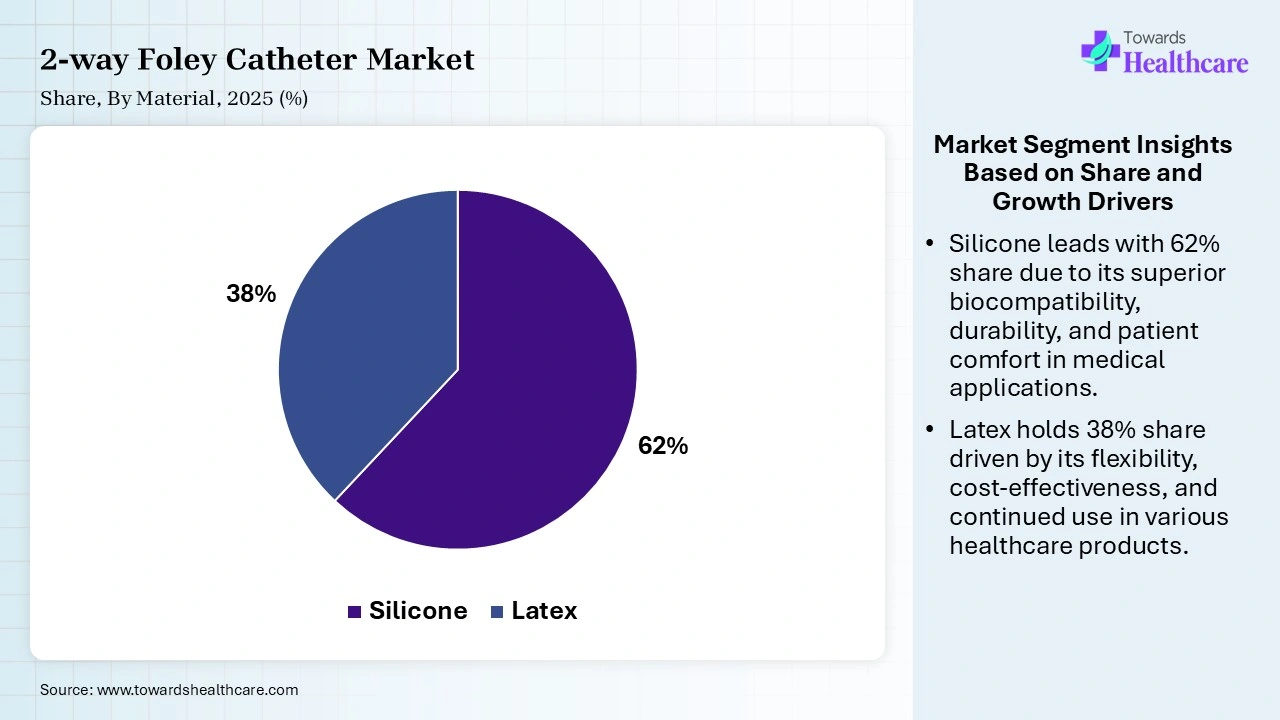
| Segment | Share 2025 (%) |
| Silicone | 62% |
| Latex | 38% |
The Silicon Segment Dominated the 2-way Foley Catheter Market in 2025
The silicon segment held a dominant share of 62% in 2025 and is expected to grow at the fastest CAGR of 6.30% in the 2-way Foley catheter market during the forecast period due to its high biocompatibility, lower allergy risk, and better suitability for long-term catheterization. Silicon catheters also help reduce encrustation, support smoother drainage, and improve patient comfort compared to latex alternatives. Their growing use in hospitals and long-term care settings was further supported by the increasing emphasis on infection control and safer urinary management.
The latex segment held the second-largest share of 38% in 2025 due to its cost-effectiveness, flexibility, and widespread availability. Latex Foley catheters are commonly used for short-term catheterization in hospitals where affordability and ease of insertion are key priorities. Growing procedure volumes, expanding hospital admissions, and continued demand for economical urinary drainage solutions are expected to support segment growth.
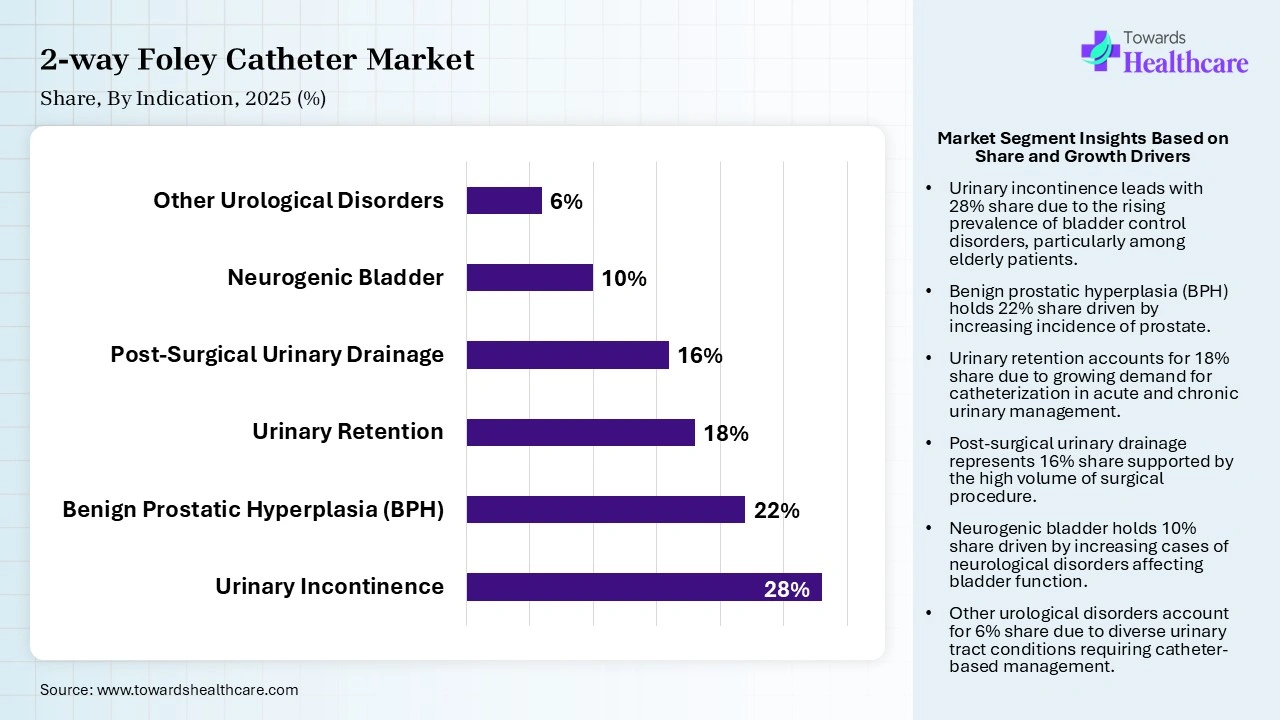
| Segment | Share 2025 (%) |
| Urinary Incontinence | 28% |
| Benign Prostatic Hyperplasia (BPH) | 22% |
| Urinary Retention | 18% |
| Post-Surgical Urinary Drainage | 16% |
| Neurogenic Bladder | 10% |
| Other Urological Disorders | 6% |
The urinary Incontinence Segment Led the Market in 2025 with the Largest Share
The urinary incontinence segment dominated the 2-way Foley catheter market with a share of 41% in 2025 due to the rising number of elderly patients, growing prevalence of bladder dysfunction, and increasing cases linked to neurological disorders, mobility limitations, and post-surgical compliance. Patients with incontinence often require continuous urinary management and prolonged catheter use, which increases demand for 2-way Foley catheters across hospitals, long-term care facilities, and home healthcare settings.
The benign prostatic hyperplasia (BPH) segment held the second-largest share of 22% in 2025 due to the high incidence of prostate enlargement among aging men, which often leads to urinary retention and difficulty in bladder emptying. These patients frequently require temporary or prolonged catheterization during diagnosis, treatment, or post-surgical recovery, supporting steady demand for 2-way Foley catheters across hospitals and urology care settings.
The urinary retention segment held an 18% 2-way Foley catheter market share due to the increasing incidence of benign prostatic hyperplasia, postoperative urinary complications, neurological disorders, and medication-related bladder dysfunction. Patients with urinary retention often require immediate and effective bladder decompression, making 2-way Foley catheters a common clinical choice. Rising hospital admissions, a growing elderly population, and higher diagnosis rates of lower urinary tract disorders are further supporting segment growth.
The neurogenic bladder segment held a 10% share in 2025 and is expected to grow at the fastest CAGR of 6.8% in the 2-way Foley catheter market during the forecast period due to the increasing prevalence of spinal cord injuries, multiple sclerosis, Parkinson’s disease, stroke, and other neurological conditions that impair bladder control. These patients often require long-term or repeated catheterization for effective urinary drainage, driving sustained demand. Growing awareness, improved diagnosis, and expanding long-term care support are also expected to accelerate segment growth.
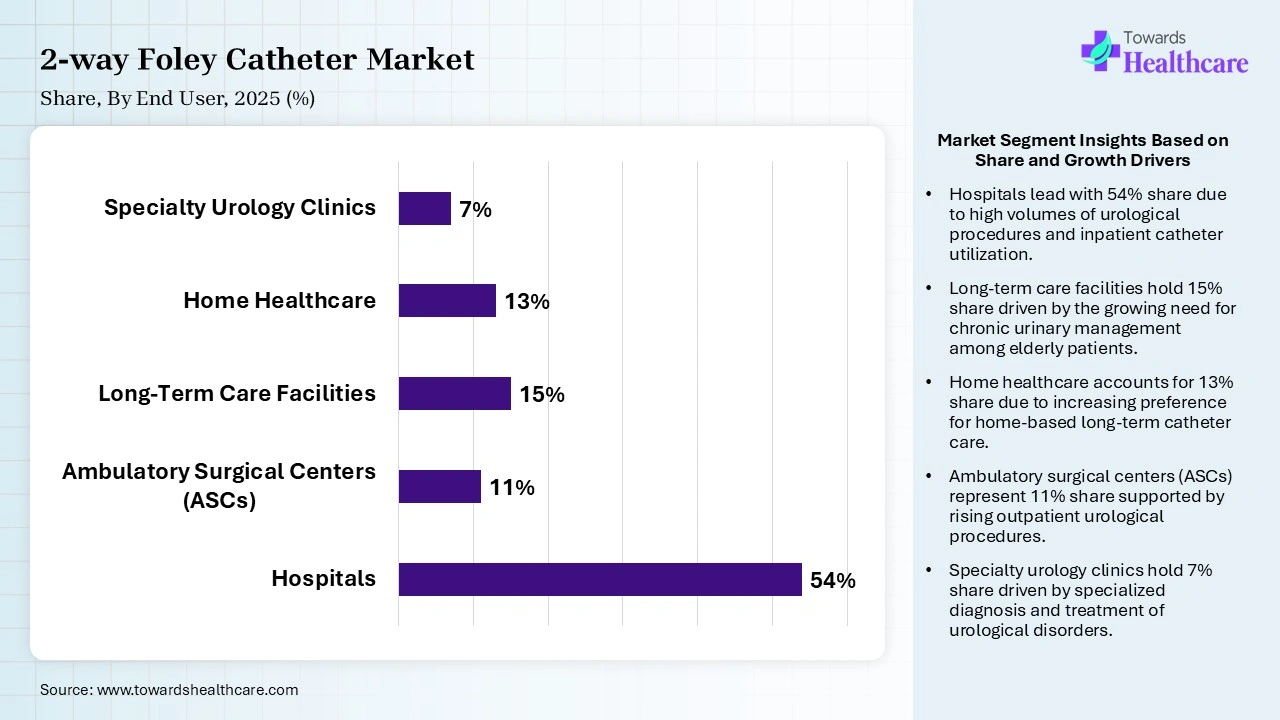
| Segment | Share 2025 (%) |
| Hospitals | 54% |
| Ambulatory Surgical Centers (ASCs) | 11% |
| Long-Term Care Facilities | 15% |
| Home Healthcare | 13% |
| Specialty Urology Clinics | 7% |
The Hospitals Segment Led the 2-way Foley Catheter Market in 2025 with the Largest Share
The hospitals segment led the market with a share of 54% in 2025 because hospitals remain the primary settings for catheter placement during surgeries, intensive care, emergency treatment, and inpatient urinary management. A high volume of admissions, greater use of Foley catheters for postoperative drainage and acute urinary retention, and the availability of trained healthcare professionals supported segment dominance. Strong infection-control protocols and access to advanced catheter products also contributed to hospital leadership.
The long-term care facilities segment held the second-largest share of 22% in 2025 because they manage a large population of elderly and chronically ill patients who often require prolonged urinary drainage for incontinence, mobility limitations, neurogenic bladder, or post-surgical recovery. These settings rely on 2-way Foley catheters for continuous bladder management and patient comfort, while the growing aging population and demand for extended care further support segment growth.
The home healthcare segment held a 13% 2-way Foley catheter market share due to the increasing number of elderly, chronically ill, and mobility-limited patients requiring long-term urinary drainage outside hospital settings. Rising preference for cost-effective home-based care, shorter hospital stays, and improved caregiver support is boosting the use at home. In addition, better awareness of catheter management and the availability of user-friendly drainage products are supporting continuous growth in this segment.
The ambulatory surgical centers (ASCs) segment held an 11% share in 2025 and is expected to grow at the fastest CAGR of 6.8% in the 2-way Foley catheter market during the forecast period due to the rising shift towards minimally invasive and same-day surgical procedures that require short-term postoperative urinary drainage. ASCs offer cost-effective treatment, faster patient turnover, and growing procedural capacity, which is increasing catheter use. Expanding outpatient care infrastructure and a greater preference for convenient surgical settings are also supporting strong segment growth.
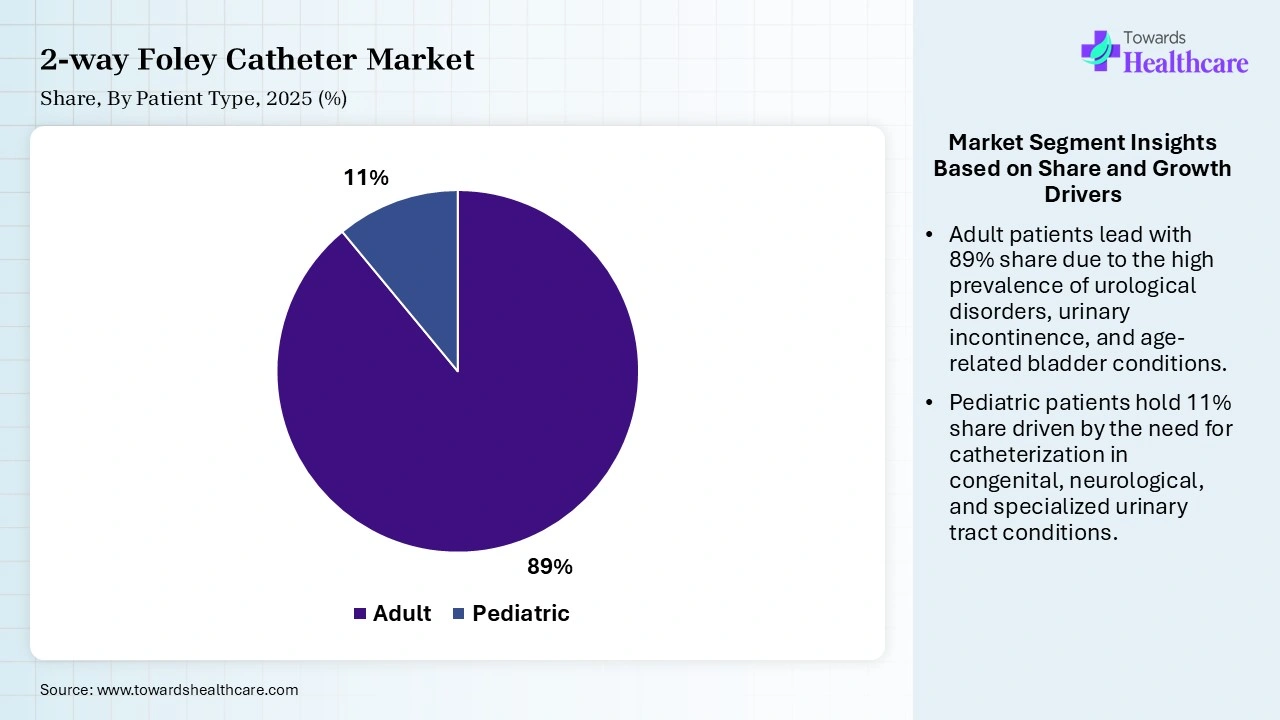
| Segment | Share 2025 (%) |
| Adult | 89% |
| Pediatric | 11% |
The Adult Segment Led the 2-way Foley Catheter Market in 2025 with the Largest Share
The adult segment held a dominant share of 89% in 2025 because adults account for the majority of patients affected by urinary retention, urinary incontinence, benign prostatic hyperplasia, neurologic bladder, and postoperative bladder management needs. This population also undergoes a large volume of urological, gynecological, and general urological procedures requiring temporary prolonged catheterization. Higher hospitalization and growing chronic disease burden further supported strong demand within this adult segment.
The pediatric segment held the second-largest share of 11% in 2025 and is expected to grow at the fastest CAGR of 6.6% in the 2-way Foley catheter market during the forecast period due to the increasing diagnosis of congenital urinary tract abnormalities, neurogenic bladder, spinal conditions, and postoperative bladder complications in children. Greater access to specialized pediatric urology care, improving survival of children with complex conditions, and rising awareness of elderly urinary management are supporting stronger catheter demand in this segment.
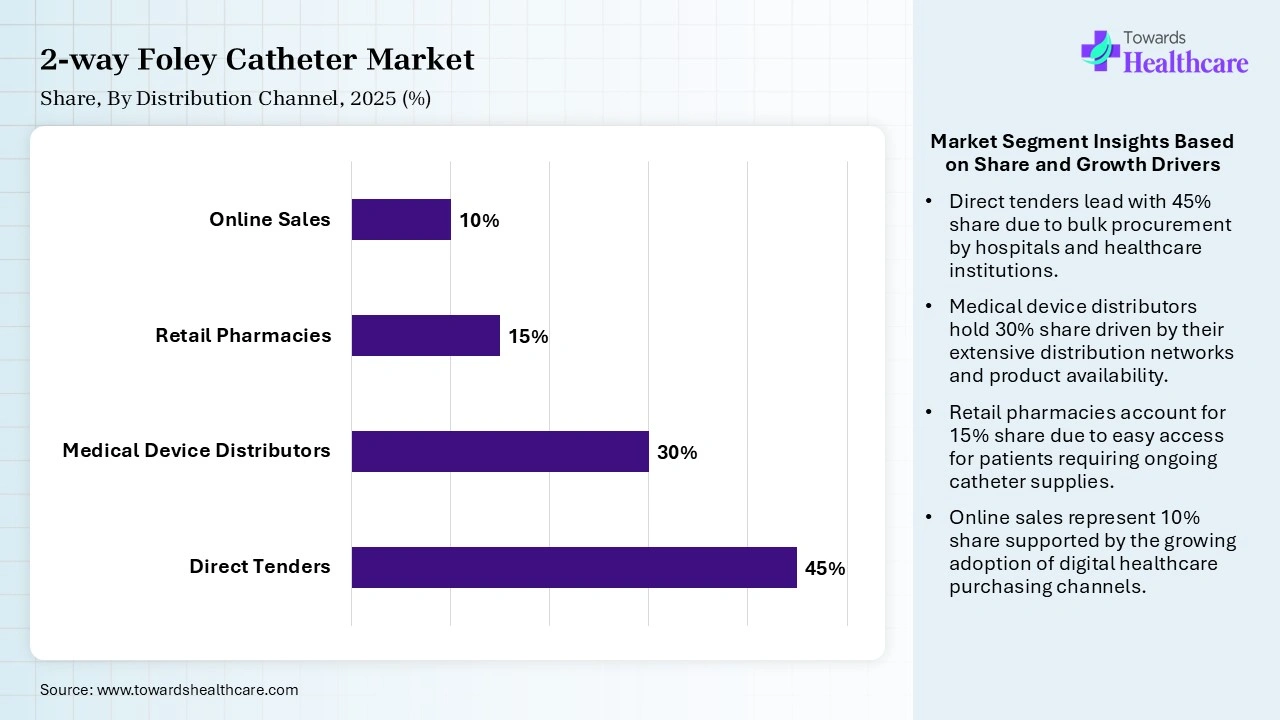
| Segment | Share 2025 (%) |
| Direct Tenders | 45% |
| Medical Device Distributors | 30% |
| Retail Pharmacies | 15% |
| Online Sales | 10% |
The Direct Tenders Segment Led the Market in 2025 with the Largest Share
The direct tenders segment dominated the 2-way Foley catheter market with a share of 45% in 2025 because hospitals, public healthcare systems, and large care facilities commonly procure 2-way Foley catheters through a bulk tender contract to ensure a steady supply and better pricing. This channel supports high -volume purchasing, standardized product selection, and long-term supplier relationships. Growing institutional demand for urinary drainage products, along with cost-control strategies and centralized procurement practices, further strengthened the dominance of direct tenders.
The medical device distributors segment held the second-largest share of 30% in 2025 because distributors play a key role in supplying Foley catheters to smaller hospitals, clinics, long-term care centers, and regional healthcare providers that may not procure directly from manufacturers. Their wide distribution networks support, and faster product availability improves market reach, while growing demand from decentralized care settings continues to strengthen this channel’s position.
The retail pharmacies segment held a 15% 2-way Foley catheter market share due to rising demand for convenient access to urinary drainage supplies among home healthcare patients, elderly individuals, and caregivers managing long-term catheter needs. Retail pharmacies provide easy product availability, trusted pharmacists' support, and quicker local access compared to institutional channels. Growth in chronic urinary conditions, post-discharge catheter use, and expanding community-based care is further supporting demand through this distribution channel.
The online sales segment held a 10% share in 2025 and is expected to grow at the fastest CAGR of 7.2% in the 2-way Foley catheter market during the forecast period due to the rising shift towards digital purchasing, greater product accessibility, and increasing demand from home healthcare users and smaller care providers. Online platforms offer convenience, broader product selection, transplant pricing, and easier repeat ordering of urinary drainage supplies. Expanding e-commerce adoption in healthcare and growing preference for direct-to-consumer medical purchases are further accelerating segment growth.
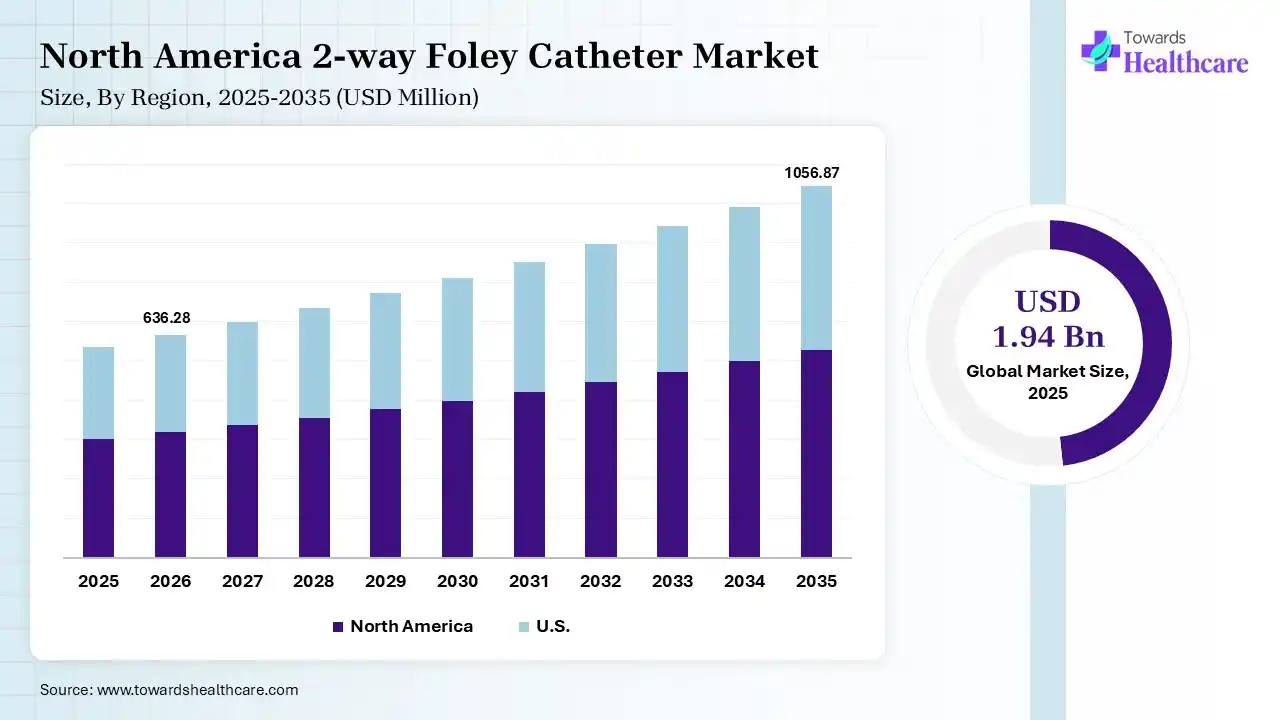
North America dominated the 2-way Foley catheter market with a share of 31% in 2025 due to its high prevalence of urinary incontinence, benign prostatic hyperplasia, neurogenic bladder, and postoperative urinary compliance, all of which drive frequent catheter use. The region also benefits from advanced hospital infrastructure, strong infection-control practices, higher surgical volumes, and broad access to long-term and home healthcare services. A large elderly population further supported sustained demand for urinary drainage products.
U.S. Market Leadership Driven by High Procedure Volume and Strong Urology Care
The U.S. dominated with a share of 78% in 2025 due to its patient population affected by urinary incontinence, benign prostatic hyperplasia, neurogenic bladder, and postoperative urinary complications. The country also performs a high volume of surgical procedures requiring catheterization and has well-established hospitals, long-term care, and home healthcare access to advanced silicon and coated catheters, further supporting market leadership.
Canada maintained a Strong Position Through Universal Care Access and an Aging population.
Canada held a 15% market share in 2025 due to its well-established healthcare system, growing elderly population, and rising burden of urinary incontinence, benign prostatic hyperplasia, and postoperative urinary complications. Demand for 2-way Foley catheters is also supported by strong hospital access, long-term care utilization, and increasing use of urinary management products in chronic care settings. Continued focus on patient safety and infection prevention further strengthened market demand.
Mexico Set for Fastest Growth with Expanding Access and Rising Urology Care Demand
Mexico captured a 7% share in 2025 and is expected to grow at the fastest CAGR of 6.3% in the 2-way Foley catheter market during the forecast period due to improving healthcare access, rising hospital admissions, and growing diagnoses of urinary retention, incontinence, and urological disorders. Increasing investment in hospital infrastructure, broader availability of urinary care products, and expanding awareness of catheter-based management are supporting demand. In addition, the country’s aging population and growing adoption of modern urology care are expected to accelerate market growth.
Asia Pacific held a 24% share of the 2-way Foley catheter market in 2025 and is expected to grow at the fastest CAGR of 7.1% in the market during the forecast period due to its large patient population, rapidly aging demographics, rising incidence of urinary disorders, and improving access to hospitals and long-term care services. Expanding healthcare infrastructure, increasing surgical volumes, and greater awareness of catheter-based urinary management are also driving demand. In addition, rising healthcare spending and stronger availability of affordable catheter products are expected to support continued regional growth.
China Led the Market with Scale, Demand, and Expanding Urology Care
China dominates the market with a share of 34% in 2025 due to its large patient base, rapidly growing population, and rising prevalence of urinary retention, incontinence, and other urological disorders. The country also benefits from high hospital admissions, increasing surgical procedures, and expanding access to urology and long-term care services. Strong domestic manufacturing capabilities and wider availability of cost-effective catheter products further supported China’s leading market position.
Japan held a Strong share Through Aging Demographics and Advanced Hospital Care.
Japan held the second largest market share of 22% in 2025 due to the rapidly aging population and high prevalence of urinary incontinence, benign prostatic hyperplasia, and other chronic urological conditions that often require catheterization. The country also has a well-developed healthcare system, strong hospital utilization, and significant long-term care demand. Greater focus on patient management, infection control, and quality urinary care products further supported market growth.
India Poised for Rapid Growth with Expanding Healthcare Access and Rising Urology Demand
India held an 18% share in 2025 and is expected to grow at the fastest CAGR of 8.1% in the 2-way Foley catheter market during the forecast period due to its large patient population, rising burden of urinary retention, incontinence, and postoperative bladder complications, and improving access to hospital and home-based care. Expanding healthcare infrastructure, increasing surgical procedures, and stronger awareness of urinary management are boosting demand. Greater availability of cost-effective catheter products and rising healthcare spending are also supporting rapid market expansion.
R&D
Regulatory Approvals
Patient Support and Services
| Companies | Headquarters | Offerings |
| Teleflex Incorporated | Pennsylvania, U.S. | 2-way Foley catheters, silicone Foley catheters, urinary drainage solutions, urology care products |
| B. Braun SE | Melsungen, Germany | Latex and silicone 2-way Foley catheters, urinary drainage bags, catheterization accessories |
| Becton, Dickinson and Company (BD) | New Jersey, U.S. | 2-way Foley catheters, infection-control urinary catheters, and drainage systems |
| Coloplast | Humlebæk, Denmark | Foley catheters, continence care products, urinary drainage accessories |
| Cardinal Health | Ohio, U.S. | Foley catheters, urinary drainage systems, hospital urology consumables |
| Bactiguard | Stockholm, Sweden | Infection-prevention Foley catheters, coated urinary catheters, CAUTI-reduction solutions |
| Medline Industries | Illinois, U.S. | 2-way Foley catheters, catheter trays, drainage bags, patient care supplies |
In June 2026, “We are excited to offer Titan Prime IPP, a clinically proven solution that helps men suffering from severe erectile dysfunction take back control of their intimate lives and relationships,” says Kevin Hardage, President of Coloplast Interventional Urology.
By Material
By Indication
By Usage Type
By End User
By Patient Type
By Distribution Channel
By Region










Principal Consultant
Payal Rabde is a Healthcare Market Research Analyst at Towards Healthcare Research & Consulting with 4+ years of experience in pharmaceuticals, biotechnology, medical devices, and life sciences.
Learn more about Payal Rabde

Reviewed By
Aditi Shivarkar is a seasoned professional with over 14 years of experience in healthcare market research. As a content reviewer, Aditi ensures the quality and accuracy of all market insights and data presented by the research team.
Learn more about Aditi Shivarkar