
The acute kidney injury diagnostic market is projected to grow from USD 1.06 billion in 2025 to USD 2.27 billion by 2035, with the growing requirement for timely kidney injury identification across hospitals, ICUs, and surgical care settings. AKI is often associated with severe conditions like sepsis, cardiovascular surgeries, and major operations that can disrupt kidney function. Monitoring creatinine and BUN levels is essential for assessing kidney health, while emerging biomarkers are improving early detection of kidney injury.
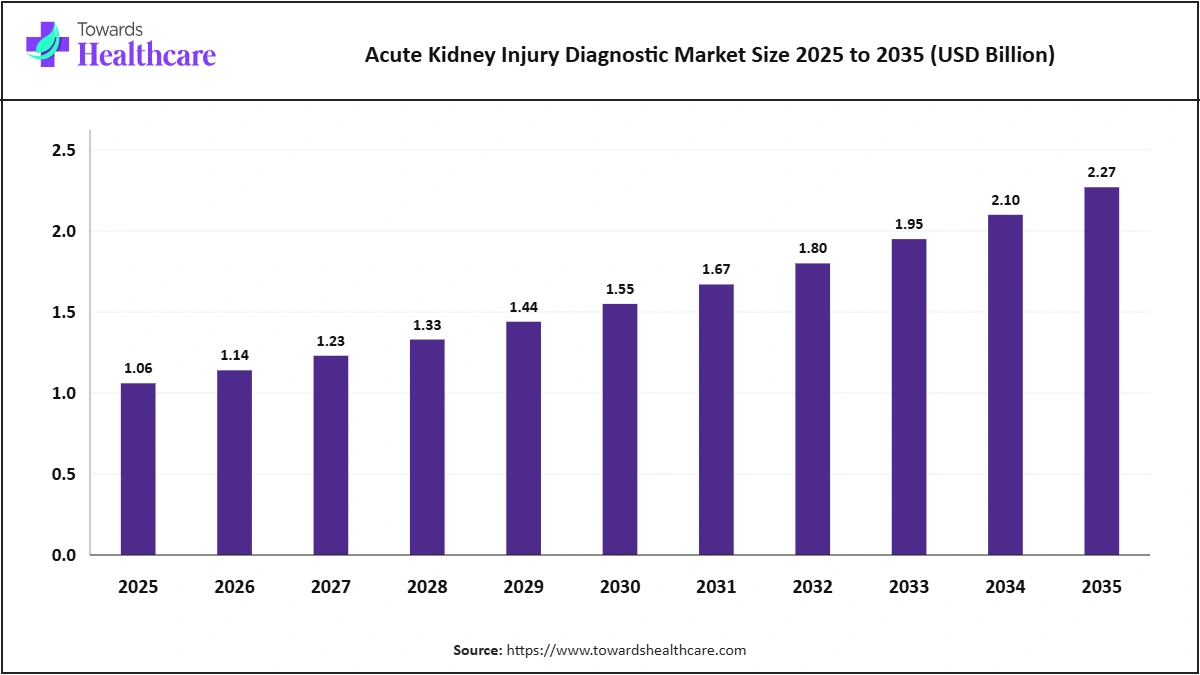
Rising ICU admissions, an aging population, and increasing cases of sepsis and cardiac surgeries are boosting the need for advanced AKI diagnostic solutions. Hospitals are adopting electronic alerts and clinical decision-support technologies to identify at-risk patients and enable timely interventions. These developments are expected to increase market revenue to USD 1.55 billion by 2030 and sustain a CAGR of 7.9% from 2026 to 2035. AKI risk assessment is important for patients on intravenous medications, contrast agents, and home infusion therapies, offering opportunities for monitoring and diagnostics.
Analyst View: Our assessment includes conventional renal chemistry assays, emerging kidney injury biomarkers, urine output monitoring technologies, and clinical decision-support solutions. The estimate was cross-checked against the renal diagnostics activities and product portfolios of leading suppliers. Our market definition includes routine renal chemistry tests used in AKI identification, in addition to specialized biomarker-based products. This broader scope is important when comparing our estimates with published assessments that focus exclusively on dedicated AKI biomarker products.
The acute kidney injury diagnostic market is driven by increasing ICU admissions, sepsis-related complications, cardiac surgery procedures, and ageing populations. Critically ill patients are vulnerable to kidney injury because of reduced renal perfusion, systemic inflammation, infections, and exposure to nephrotoxic medications. These clinical conditions increase the need for regular renal function assessment and early diagnostic intervention. Conventional creatinine and BUN testing remains widely established, while newer biomarkers provide additional information about kidney injury. Growing awareness of the clinical and economic consequences of delayed AKI identification is encouraging hospitals to strengthen diagnostic monitoring protocols.
Limited adoption of novel biomarkers remains a challenge for the acute kidney injury diagnostic market. Although NGAL and TIMP-2•IGFBP7 can provide additional information about kidney injury, their use is restricted by reimbursement limitations, testing costs, differences in clinical evidence, and varying hospital adoption levels. Conventional creatinine testing remains inexpensive, widely available, and familiar to healthcare professionals. Furthermore, healthcare providers require additional clinical validation to establish the usefulness of newer biomarkers across different patient populations and care settings. These factors can delay integration of specialized AKI diagnostic technologies into routine clinical workflows.
The development of additional adult NGAL indications, AI-enabled AKI alerts, and advanced clinical decision-support systems offers opportunities for key market players. Growing investments in paediatric intensive care and specialized renal diagnostics are creating opportunities for biomarker developers. Asia Pacific presents considerable potential because of expanding hospital infrastructure, increasing ICU capacity, and rising healthcare expenditure in China and India. Manufacturers can strengthen their market positions through integrated renal diagnostic panels, rapid point-of-care testing platforms, and partnerships with hospitals and laboratory networks.
| Driver | Impact | ≈ CAGR Contribution | Time Horizon | Key Regions |
| ICU admissions rise | High | +3.08 pp | Short to long term | Global, strongest in North America |
| Sepsis and cardiac surgery cause AKI | Medium | +2.60 pp | Medium to long term | Global, fastest uptake in Asia Pacific |
| Ageing patients have more risk | Medium | +2.22 pp | Short to medium term | Global |
| Early detection reduces dialysis | Low | +1.73 pp | Long term | Developed and emerging markets |
Note: Contributions are indicative estimates of each factor's effect on annual growth.
Sources: Expert interviews, secondary sources, Towards Healthcare database and Towards Healthcare analysts.
The identified growth drivers contribute approximately 9.64 percentage points to annual growth in the market, with increasing ICU admissions representing the largest contribution. Rising sepsis and cardiac surgery volumes are heightening the demand for timely renal assessment in critically ill patients. The ageing population is broadening the high-risk patient demographic, and greater awareness of early AKI detection is prompting hospitals to enhance diagnostic and monitoring solutions. North America is notably impacted, while Asia Pacific is expected to see accelerated adoption due to expanding healthcare infrastructure.
| Restraint | Impact | ≈ Negative CAGR Contribution | Time Horizon | Key Regions |
| Low adoption of new biomarkers | High | -0.78 pp | Short to medium term | Global |
| Reimbursement gaps | High | -0.57 pp | Medium term | Price-sensitive and emerging markets |
| Creatinine is cheap and familiar | Medium | -0.38 pp | Short term | North America and other mature markets |
Note: Contributions are indicative estimates of each factor's effect on annual growth.
Sources: Expert interviews, secondary sources, Towards Healthcare database and Towards Healthcare analysts.
Limited adoption of emerging biomarkers, reimbursement challenges, and the established position of conventional creatinine testing are expected to reduce annual growth of the acute kidney injury diagnostic market by around 1.74 percentage points. Limited clinical adoption of specialized biomarkers and reimbursement constraints are major barriers. However, the growing clinical evidence, product availability, and integration into hospital workflows could mitigate these obstacles over time. The market is consequently projected to maintain a net CAGR of 7.9% from 2026 to 2035.
Note: 2025 is the base year; 2035 shares and CAGRs are forecasts.
Sources: Expert interviews, secondary sources, Towards Healthcare database, and Towards Healthcare analysts.
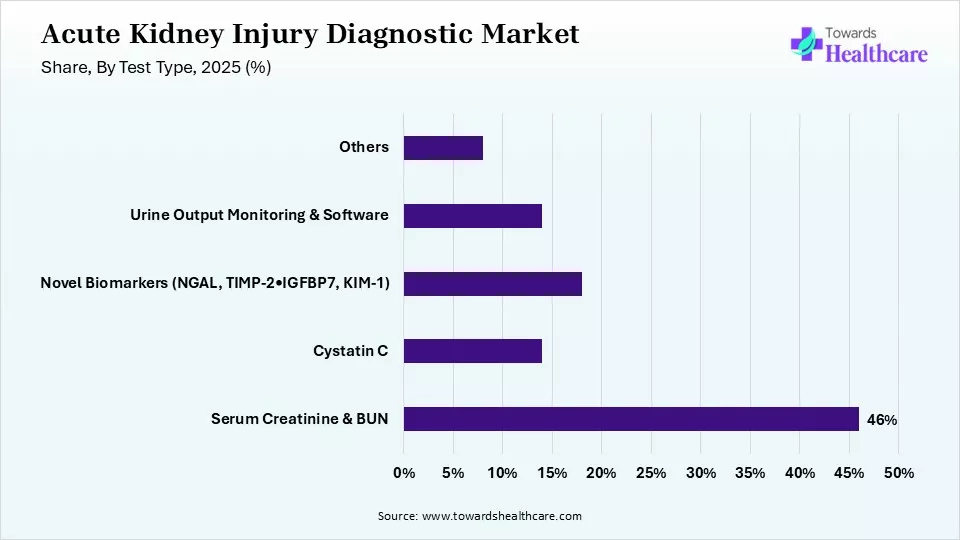
Serum creatinine and BUN accounted for 46% of the market in 2025 and are projected to expand at a CAGR of 7.08% from 2026 to 2035. Serum creatinine and BUN are essential for assessing renal function and diagnosing AKI according to KDIGO guidelines. Their established use in hospitals and low testing costs contribute to ongoing demand, although growth can be hindered due to the emergence of newer biomarkers.
Cystatin C gains traction as a renal function marker, especially for patients whose muscle mass or age may skew creatinine results. It offers valuable insights into kidney function but is less commonly used in routine acute kidney injury protocols compared to traditional creatinine testing.
Novel biomarkers are expected to represent the fastest-growing test-type segment because they can provide information about kidney injury before conventional functional markers show substantial changes. NGAL, TIMP-2•IGFBP7, and KIM-1 are emerging biomarkers for kidney injury assessment and risk evaluation of AKI. Their increasing clinical validation and regulatory support are anticipated to drive growth in early detection initiatives.
Urine output monitoring devices and clinical decision-support software are vital for AKI surveillance in critical care environments. Continuous urine output assessment can provide valuable information about renal function, while electronic alerts help identify changes that may require additional evaluation. Integration with electronic health records and ICU monitoring systems is expected to support continued adoption.
Other diagnostic technologies are used to evaluate kidney function and related conditions. These tests provide complementary clinical information and are commonly used alongside conventional renal chemistry and specialized biomarkers.
However, novel biomarkers are projected to register the highest CAGR of 10.48%, supported by demand for earlier kidney injury assessment and improved clinical risk stratification. Cystatin C and urine output monitoring will continue to provide complementary diagnostic capabilities, while other laboratory tests will support broader renal assessment.
Note: 2025 is the base year; 2035 shares and CAGRs are forecasts.
Sources: Expert interviews, secondary sources, Towards Healthcare database and Towards Healthcare analysts.
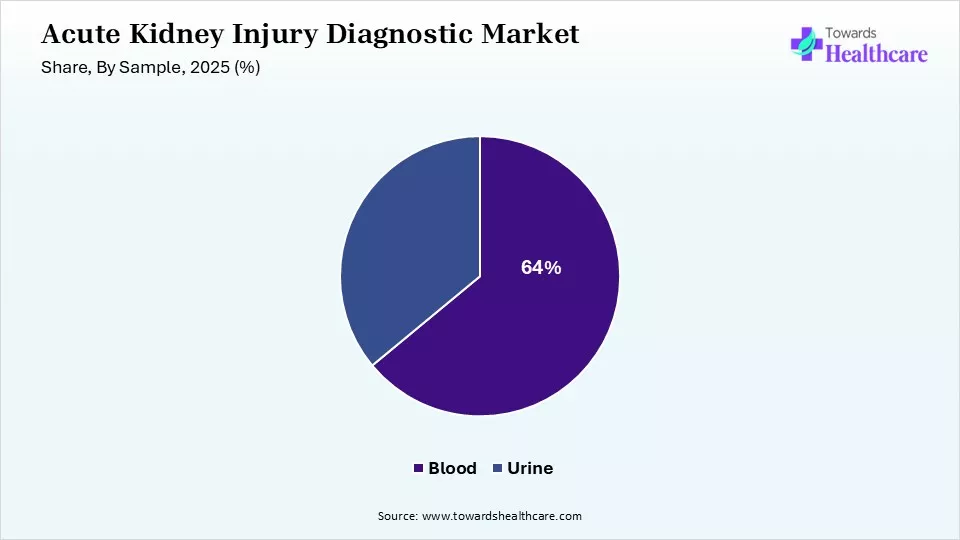
Blood is projected to expand at a CAGR of 7.3% from 2026 to 2035. Blood samples dominate conventional renal chemistry testing, including measurements of creatinine, BUN, and cystatin C, which are integral to hospital laboratory processes. Although the existing infrastructure for blood testing will sustain demand, growth in blood sampling is expected to be slower than the total market due to the rising popularity of urine-based biomarkers.
Urine-based diagnostic testing is gaining importance because several emerging AKI biomarkers can be evaluated using urine samples. NGAL and TIMP-2•IGFBP7-based testing are contributing to the growing interest in urine-based assessment, while urine output monitoring remains an important component of AKI identification. The adoption of biomarker testing and continuous renal monitoring in ICUs is expected to support above-average segment growth.
The faster growth of urine-based diagnostics reflects increasing interest in kidney injury biomarkers and the continued importance of urine output monitoring in critical care settings.
Note: 2025 is the base year; 2035 shares and CAGRs are forecasts.
Sources: Expert interviews, secondary sources, Towards Healthcare database and Towards Healthcare analysts.
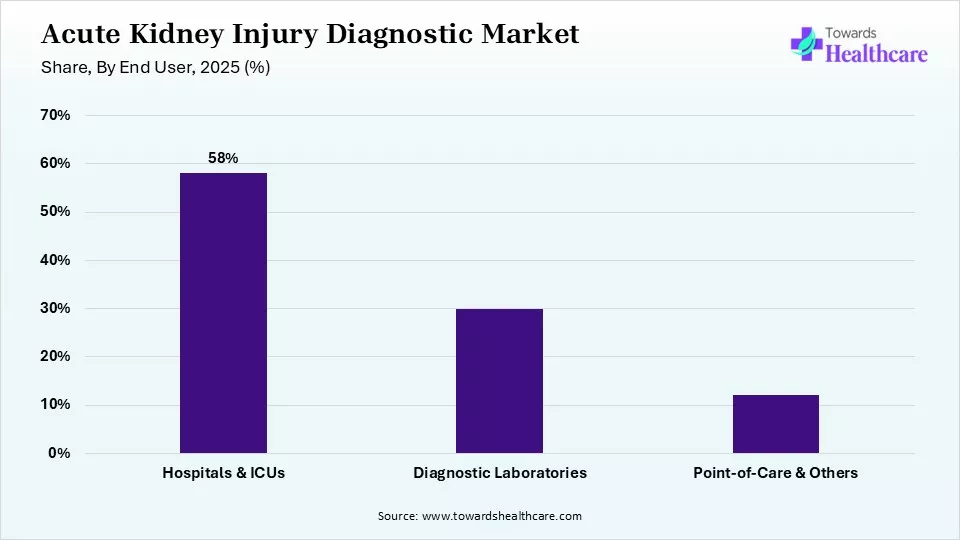
Hospitals and ICUs accounted for 58% of the global market in 2025 and are projected to expand at a CAGR of 7.54% from 2026 to 2035. Hospitals and ICUs are the primary end-users for AKI management, as it commonly affects patients with severe infections and major complications. Increased integration of renal chemistry tests, biomarker testing, and AKI alerts into hospital workflows is noted. The expansion of critical care capacity and the need for continuous patient monitoring are anticipated to drive market growth.
Diagnostic laboratories play a crucial role in the AKI diagnostic ecosystem by conducting high-volume renal chemistry testing and specialized biomarker assessments for various healthcare providers. Their capacity for processing numerous samples and the rising demand for specialized renal testing are anticipated to drive growth during the forecast period.
Point-of-care testing gains traction because it enables rapid assessment of renal function in emergency departments, critical care units, and other settings where timely results are important. Portable creatinine analyzers and rapid diagnostic platforms enhance turnaround times, facilitating quicker clinical decisions, with the growth of point-of-care biomarker technologies anticipated to boost the segment.
Point-of-Care and others are projected to register the highest CAGR of 9.44%, supported by increasing demand for rapid diagnostic results and decentralized testing. Diagnostic laboratories will continue to represent an important market category because of their established role in high-volume renal testing and specialized biomarker analysis.
Analyst View: In our analysis, segment shares were allocated using diagnostic demand, product portfolios, testing volumes, and average prices across each category. Serum creatinine and BUN, blood, and hospitals and ICUs lead their respective segments because they address the core requirements of established clinical diagnostic workflows. However, novel biomarkers, urine, and point-of-care tests are expected to gain market share as newer diagnostic technologies, applications, and testing environments expand during the forecast period.
Note: 2025 is the base year; 2035 shares and CAGRs are forecasts.
Sources: Expert interviews, secondary sources, Towards Healthcare database and Towards Healthcare analysts.
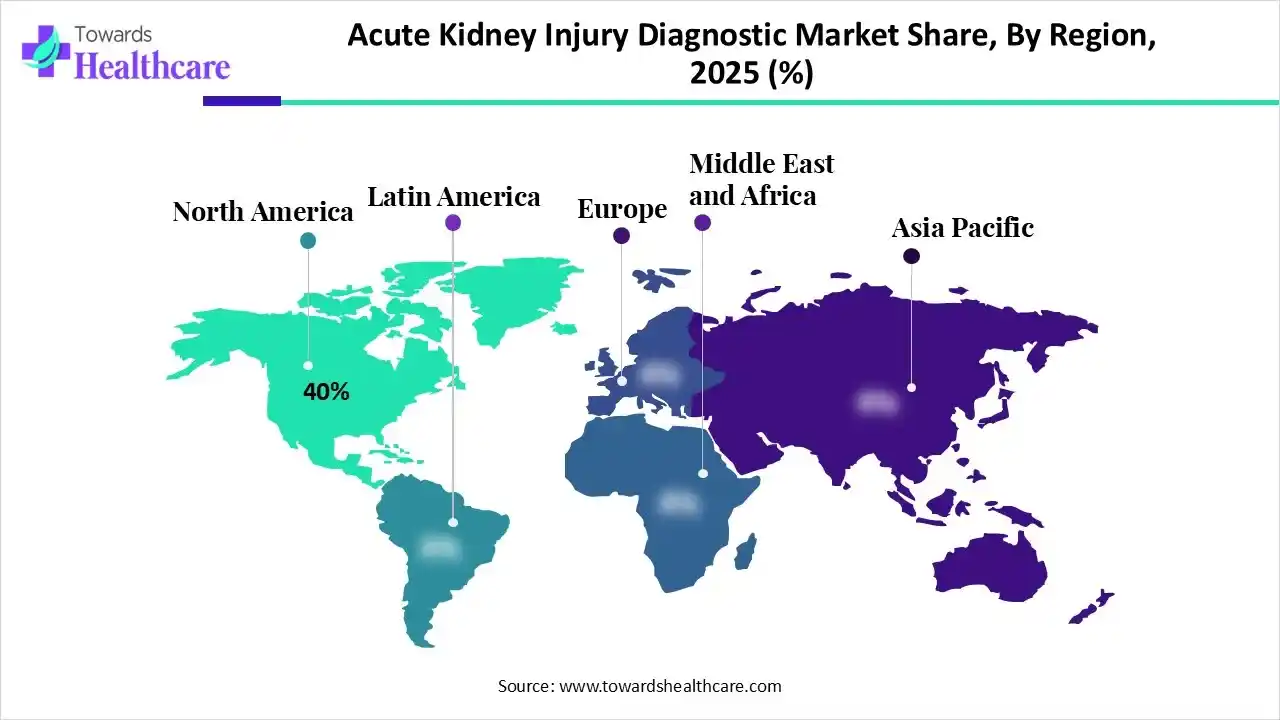
North America accounted for 40% of the acute kidney injury diagnostic market in 2025 and is projected to expand at a CAGR of 7.36% from 2026 to 2035. North America is the largest regional market for AKI biomarker testing, driven by its robust hospital infrastructure and clinical laboratory networks. In the U.S., regulatory advancements and advanced diagnostic platforms bolster demand, aided by high cardiac surgery rates and sepsis-related admissions. However, North America is expected to grow slower than the overall market during the forecast period.
Europe Countries such as Germany, the U.K., France, and Italy have established clinical laboratory infrastructure and critical care services. National AKI alert initiatives and electronic health records are enhancing renal monitoring technologies, with Europe projected to grow alongside the overall market.
Asia Pacific The region is projected to grow rapidly due to enhanced hospital infrastructure, increased ICU capacity, and higher healthcare spending in China, India, Japan, and South Korea. The rise of private diagnostic labs and investments in modern hospital facilities are anticipated to boost demand for AKI diagnostic technologies.
Latin America The demand for renal diagnostics is driven by expanding critical care services, heightened awareness of kidney injury, and better laboratory infrastructure in the region. Brazil, Argentina, and Mexico emerge as key markets due to robust healthcare networks and rising hospital requirements. However, reimbursement issues and uneven access to advanced diagnostics could hinder adoption in certain areas.
The Middle East and Africa Market development in advanced renal testing is bolstered by investments in hospital infrastructure, greater ICU capacity, and enhanced access to diagnostic services, particularly in the GCC countries and South Africa. Rising healthcare expenditures and modern hospital networks are anticipated to facilitate the adoption of both conventional and biomarker-based AKI diagnostic solutions.
Analyst View: In the global acute kidney injury diagnostic market, North America maintains its leading position because of its mature healthcare infrastructure and established diagnostic ecosystem. Asia Pacific is expected to receive the highest growth premium because hospital investments, critical care capacity, and adoption of advanced diagnostic technologies are expanding rapidly. Europe is projected to maintain a substantial market position, while Latin America and the Middle East and Africa will benefit from improvements in healthcare access and diagnostic infrastructure.
| Rank | Company Name | 2025 Share (%) | Key Products / Business | Headquarters |
| 1 | Roche Diagnostics | 1,603.77% | Creatinine, cystatin C and distribution of ProNephro AKI (NGAL) | Switzerland |
| 2 | Abbott | 1,226.42% | Clinical chemistry and i-STAT creatinine | United States |
| 3 | Siemens Healthineers | 1,132.08% | Renal chemistry assays | Germany |
| 4 | Beckman Coulter (Danaher) | 943.40% | Creatinine and cystatin C assays | United States |
| 5 | bioMérieux | 566.04% | NephroCheck TIMP-2•IGFBP7 test | France |
| 6 | Ortho Clinical Diagnostics (QuidelOrtho) | 566.04% | Renal chemistry on VITROS | United States |
| 7 | BioPorto | 283.02% | ProNephro AKI and NGAL tests | Denmark |
| 8 | Nova Biomedical | 283.02% | Point-of-care creatinine meters | United States |
| 9 | Randox Laboratories | 283.02% | Cystatin C and renal assays | United Kingdom |
| 10 | Sysmex | 283.02% | Urinalysis systems | Japan |
Note: Company shares are 2025 estimates.
Sources: Company press releases, expert interviews, secondary sources, Towards Healthcare database and Towards Healthcare analysts.
Roche Diagnostics, Abbott, and Siemens Healthineers are among the major participants in the global acute kidney injury diagnostic market, supported by their established clinical chemistry portfolios, hospital laboratory relationships, and global distribution networks. Roche Diagnostics provides creatinine and cystatin C testing, alongside distributing BioPorto's ProNephro AKI test. Abbott competes with its clinical chemistry portfolio and i-STAT point-of-care creatinine testing, while Siemens Healthineers offers renal chemistry assays for laboratory diagnostics.
Other participants in the market include Beckman Coulter (Danaher), bioMérieux, Ortho Clinical Diagnostics (QuidelOrtho), BioPorto, Nova Biomedical, Randox Laboratories, and Sysmex. These companies compete through conventional renal chemistry assays, specialized kidney injury biomarkers, point-of-care testing technologies, cystatin C assays, and urinalysis systems.
The competitive landscape features large clinical chemistry suppliers with extensive diagnostic offerings and specialized firms targeting novel kidney injury biomarkers. Conventional providers leverage established analyser installations and laboratory ties, while specialized developers focus on clinical evidence, early detection, and regulatory advancements. As a result, the market balances traditional renal testing's scale with the rising relevance of specialized acute kidney injury detection technologies.
Roche Diagnostics: Roche Diagnostics, part of F. Hoffmann-La Roche Ltd, is headquartered in Switzerland. Its AKI diagnostic portfolio includes creatinine and cystatin C testing, alongside the distribution of BioPorto's ProNephro AKI (NGAL) test. The company benefits from an established clinical chemistry business, laboratory relationships, and a global diagnostic distribution network. In the Precedence Research Companies Quadrant, it is positioned as a Leader.
Abbott: Abbott is headquartered in the United States. Its AKI-related offering includes clinical chemistry testing and i-STAT creatinine solutions for point-of-care renal assessment. Its established diagnostic platforms and hospital relationships support its competitive position. The company is placed as a Leader in the Precedence Research Companies Quadrant.
Siemens Healthineers: Siemens Healthineers is headquartered in Germany. The company participates in the market through renal chemistry assays and automated laboratory diagnostic platforms. Its established hospital and laboratory customer base supports the adoption of kidney function testing. It is categorized as a Leader.
Beckman Coulter (Danaher): Beckman Coulter, part of Danaher, is headquartered in the United States. Its AKI-related portfolio includes creatinine and cystatin C assays supported by established clinical chemistry platforms. Its automated testing capabilities and broad laboratory presence strengthen its market position. In the Precedence Research Companies Quadrant, it is classified as a Leader.
bioMérieux: bioMérieux is headquartered in France. The company participates in the specialized AKI biomarker market through its NephroCheck TIMP-2•IGFBP7 test, which is used to assess the risk of developing moderate-to-severe AKI in specified clinical populations. Its focus on specialized diagnostics and clinical biomarker testing supports its competitive position. It is ranked as a Leader in the Precedence Research Companies Quadrant.
Ortho Clinical Diagnostics (QuidelOrtho): Ortho Clinical Diagnostics, operating within QuidelOrtho, is headquartered in the United States. Its AKI-related offering includes renal chemistry testing on VITROS diagnostic platforms. The company's established clinical laboratory presence and automated testing solutions support its participation in the market. It is positioned as a Leader.
BioPorto: BioPorto is headquartered in Denmark. The company specializes in NGAL-based kidney injury diagnostics through its ProNephro AKI product portfolio. Its focus on biomarker-based AKI identification and regulatory development supports its position in the emerging diagnostics category. In August 2025, its paediatric ProNephro AKI test became commercially available to U.S. laboratories through Roche Diagnostics. The company is positioned as an Innovator in the Precedence Research Companies Quadrant.
Nova Biomedical: Nova Biomedical is headquartered in the United States. Its market participation includes point-of-care creatinine testing solutions and portable diagnostic technologies. The company's emphasis on rapid testing and decentralized diagnostic applications supports its position in the point-of-care category. It is placed as an Innovator.
Randox Laboratories: Randox Laboratories is headquartered in the United Kingdom. Its AKI-related offering includes cystatin C and other renal diagnostic assays. The company's clinical chemistry and specialty testing portfolio supports its participation in laboratory-based kidney function assessment. In the Precedence Research Companies Quadrant, it is categorized as an Innovator.
Sysmex: Sysmex is headquartered in Japan. Its participation in the acute kidney injury diagnostic market is supported by urinalysis systems and laboratory diagnostic technologies. The company's established presence in clinical laboratory testing provides opportunities in urine-based renal assessment. It is classified as an Innovator.
The acute kidney injury diagnostic ecosystem links biomarker developers, diagnostic makers, software and monitoring, users, and regulators and guidelines, with each stage adding value before products reach end users.
| Ecosystem Stage | Role in the Market | Key Companies |
| Biomarker Developers | Discover and validate markers | BioPorto, bioMérieux, academic centres |
| Diagnostic Makers | Make assays and analysers | Roche, Abbott, Siemens Healthineers, Beckman Coulter |
| Software & Monitoring | Provide alerts and urine output monitoring | EHR and ICU monitoring vendors |
| Users | Test patients | Hospitals, ICUs, labs |
| Regulators & Guidelines | Clear tests and define AKI | FDA, KDIGO, payers |
Sources: Company press releases, expert interviews, secondary sources, Towards Healthcare database and Towards Healthcare analysts.
Biomarker Developers: Biomarker developers are working to discover and validate diagnostic indicators for earlier identification of AKI and clinical risk assessment. Key contributors to this effort include BioPorto, bioMérieux, and various academic research centers focused on kidney injury biomarkers.
Diagnostic Makers: Diagnostic manufacturers, including Roche Diagnostics, Abbott, Siemens Healthineers, and Beckman Coulter, develop and commercialize laboratory assays, reagents, and automated testing platforms to support routine renal chemistry and specialized biomarker testing.
Software & Monitoring: These participants develop electronic AKI alerts, clinical decision-support systems, and urine output monitoring technologies. Their solutions help healthcare professionals identify changes in kidney function and incorporate diagnostic information into patient management workflows.
Users: Hospitals, ICUs, and diagnostic laboratories represent the principal end users of AKI diagnostic products. These facilities perform routine renal function testing, specialized biomarker assessments, and continuous monitoring of high-risk patients.
Regulators & Guidelines: Regulatory authorities such as the U.S. FDA and clinical guideline organizations such as KDIGO shape product development and standards for diagnostic products. Market adoption is also influenced by healthcare payers and reimbursement policies.
The value chain in the global acute kidney injury diagnostic market begins with biomarker discovery and assay development, followed by diagnostic manufacturing, laboratory integration, and distribution to healthcare providers. Software and monitoring providers add value by connecting diagnostic information with clinical workflows. Companies that integrate diagnostic platforms, biomarkers, digital monitoring, and hospital relationships are well-positioned to capture ecosystem value.
The Towards Healthcare Companies Quadrant positions key participants in the acute kidney injury diagnostic market by market strength, reflecting revenue scale, market share, and geographic reach, and by innovation and growth strategy, reflecting product portfolio breadth, R&D intensity, and partnerships. Positions reflect each company's estimated 2025 share of the acute kidney injury diagnostic market and our assessment of its product innovation, portfolio breadth, and partnerships.
Sources: Company press releases, expert interviews, secondary sources, Towards Healthcare database and Towards Healthcare analysts.
Leaders: Roche Diagnostics, Abbott, Siemens Healthineers, Beckman Coulter (Danaher), bioMérieux, and Ortho Clinical Diagnostics (QuidelOrtho) combine high market share with broad portfolios and strong innovation.
Innovators: BioPorto, Nova Biomedical, Randox Laboratories, and Sysmex bring newer technologies and specialised products.
By Test Type
By Sample
By End User
By Region
The global acute kidney injury diagnostic market encompasses tests, biomarkers, monitoring devices, and clinical decision-support systems designed to identify, assess, and predict AKI. Key components include serum creatinine assays, blood urea nitrogen tests, cystatin C testing, and innovative biomarkers like NGAL, TIMP-2•IGFBP7, and KIM-1, alongside urine output monitoring and clinical decision software. This market functions across various settings, such as hospitals and point-of-care facilities.
The 2025 market estimate was developed through a bottom-up assessment of AKI-related diagnostic test volumes, biomarker utilization, monitoring-system deployment and corresponding average selling prices across major regions. Routine renal chemistry tests were allocated according to their estimated use in AKI identification and monitoring, excluding revenue attributable to unrelated kidney-function testing. Specialized biomarker assays, monitoring hardware, analyzer sales and AKI-specific software were evaluated as separate revenue components. The resulting estimates were cross-checked against product-level supplier revenues, commercial availability, regulatory clearances, hospital adoption and regional diagnostic activity. Forecasts from 2026 to 2035 incorporate changes in AKI testing volumes, biomarker adoption, clinical infrastructure, reimbursement and technology deployment.
Analyst View: The acute kidney injury diagnostic market is poised for growth due to hospitals emphasizing early detection and continuous monitoring of kidney injuries. Conventional creatinine and BUN testing will continue to be foundational in AKI diagnosis because of their established use. However, the introduction of novel biomarkers like NGAL and TIMP-2•IGFBP7 is expected to enhance early identification and risk assessment. North America will maintain its market lead, while Asia Pacific is projected to grow fastest due to improved healthcare infrastructure. Key growth areas include novel biomarker testing and AI-enabled decision-support systems, though challenges like reimbursement gaps and the dominance of traditional testing remain. Overall, a focus on early AKI detection will drive market expansion through 2035.
1.1.1 Market Definition and Scope of Study
1.1.2 Inclusions and Exclusions
1.1.3 Currency, Units and Base Year
1.2.1 By Test Type
1.2.2 By Sample
1.2.3 By End User
1.3.1 Market Value (USD) and Annual Growth
1.3.2 Historical Market Analysis
1.3.3 Market Growth Analysis and CAGR 2026-2035
2.2.1 ICU admissions rise
2.2.2 Sepsis and cardiac surgery cause AKI
2.2.3 Ageing patients have more risk
2.2.4 Early detection reduces dialysis
2.4.1 Low adoption of new biomarkers
2.4.2 Reimbursement gaps
2.4.3 Creatinine is cheap and familiar
2.4.4 Evidence needs
2.7.1 Adult NGAL clearance
2.7.2 AI alerts
2.7.3 Paediatric ICUs
2.7.4 Asia ICU growth
2.8.1 Early biomarker testing
2.8.2 Electronic AKI alerts
2.8.3 Point-of-care creatinine
2.8.4 AI risk prediction
2.8.5 Adult NGAL indications
2.8.6 Contrast and surgery-associated AKI prevention
3.1.1 Serum Creatinine & BUN: Market Share and CAGR
3.1.2 Cystatin C: Market Share and CAGR
3.1.3 Novel Biomarkers (NGAL, TIMP-2•IGFBP7, KIM-1): Market Share and CAGR
3.1.4 Urine Output Monitoring & Software: Market Share and CAGR
3.1.5 Others: Market Share and CAGR
3.2.1 Blood: Market Share and CAGR
3.2.2 Urine: Market Share and CAGR
3.3.1 Hospitals & ICUs: Market Share and CAGR
3.3.2 Diagnostic Laboratories: Market Share and CAGR
3.3.3 Point-of-Care & Others: Market Share and CAGR
4.1.1 Market Size and Forecast, 2025-2035
4.1.2 Market Share by Test Type
4.1.3 Demand Drivers, Regulation and Local Competition
4.2.1 Market Size and Forecast, 2025-2035
4.2.2 Market Share by Test Type
4.2.3 Demand Drivers, Regulation and Local Competition
4.3.1 Market Size and Forecast, 2025-2035
4.3.2 Market Share by Test Type
4.3.3 Demand Drivers, Regulation and Local Competition
4.4.1 Market Size and Forecast, 2025-2035
4.4.2 Market Share by Test Type
4.4.3 Demand Drivers, Regulation and Local Competition
4.5.1 Market Size and Forecast, 2025-2035
4.5.2 Market Share by Test Type
4.5.3 Demand Drivers, Regulation and Local Competition
5.5.1 Product Portfolio Benchmarking
5.5.2 Geographic Presence Benchmarking
5.5.3 Technology and Innovation Benchmarking
6.1.1 Average selling price by product and procedure type
6.1.2 Hospital contract and group purchasing organisation (GPO) pricing
6.1.3 Reimbursement-linked pricing and DRG impact
6.1.4 Premium vs. value-tier device pricing
7.1.1 Hospitals and integrated delivery networks
7.1.2 Ambulatory surgical centres and specialty clinics
7.1.3 Group purchasing organisations and tender bodies
7.1.4 Clinician (KOL) influence on device selection
9.1.1 Raw materials and component suppliers
9.1.2 Contract manufacturers and sterilisation providers
9.1.3 Distribution through medical device distributors
9.1.4 Hospital inventory and consignment models
11.1.1 Next-generation device design and materials
11.1.2 Imaging, navigation and digital integration
11.1.3 AI-enabled clinical decision support
11.1.4 Patent landscape and freedom-to-operate
12.1.1 FDA 510(k), De Novo and PMA pathways
12.1.2 EU MDR certification and notified body capacity
12.1.3 Clinical evidence and post-market surveillance requirements
12.1.4 Recalls, safety notices and quality system risks
17.1.1 Company Overview
17.1.2 Acute Kidney Injury Diagnostic Product Portfolio
17.1.3 Financial Performance and Market Share
17.1.4 Recent Developments and Strategy
17.1.5 SWOT Analysis
17.2.1 Company Overview
17.2.2 Acute Kidney Injury Diagnostic Product Portfolio
17.2.3 Financial Performance and Market Share
17.2.4 Recent Developments and Strategy
17.2.5 SWOT Analysis
17.3.1 Company Overview
17.3.2 Acute Kidney Injury Diagnostic Product Portfolio
17.3.3 Financial Performance and Market Share
17.3.4 Recent Developments and Strategy
17.3.5 SWOT Analysis
17.4.1 Company Overview
17.4.2 Acute Kidney Injury Diagnostic Product Portfolio
17.4.3 Financial Performance and Market Share
17.4.4 Recent Developments and Strategy
17.4.5 SWOT Analysis
17.5.1 Company Overview
17.5.2 Acute Kidney Injury Diagnostic Product Portfolio
17.5.3 Financial Performance and Market Share
17.5.4 Recent Developments and Strategy
17.5.5 SWOT Analysis
17.6.1 Company Overview
17.6.2 Acute Kidney Injury Diagnostic Product Portfolio
17.6.3 Financial Performance and Market Share
17.6.4 Recent Developments and Strategy
17.6.5 SWOT Analysis
17.7.1 Company Overview
17.7.2 Acute Kidney Injury Diagnostic Product Portfolio
17.7.3 Financial Performance and Market Share
17.7.4 Recent Developments and Strategy
17.7.5 SWOT Analysis
17.8.1 Company Overview
17.8.2 Acute Kidney Injury Diagnostic Product Portfolio
17.8.3 Financial Performance and Market Share
17.8.4 Recent Developments and Strategy
17.8.5 SWOT Analysis
17.9.1 Company Overview
17.9.2 Acute Kidney Injury Diagnostic Product Portfolio
17.9.3 Financial Performance and Market Share
17.9.4 Recent Developments and Strategy
17.9.5 SWOT Analysis
17.10.1 Company Overview
17.10.2 Acute Kidney Injury Diagnostic Product Portfolio
17.10.3 Financial Performance and Market Share
17.10.4 Recent Developments and Strategy
17.10.5 SWOT Analysis