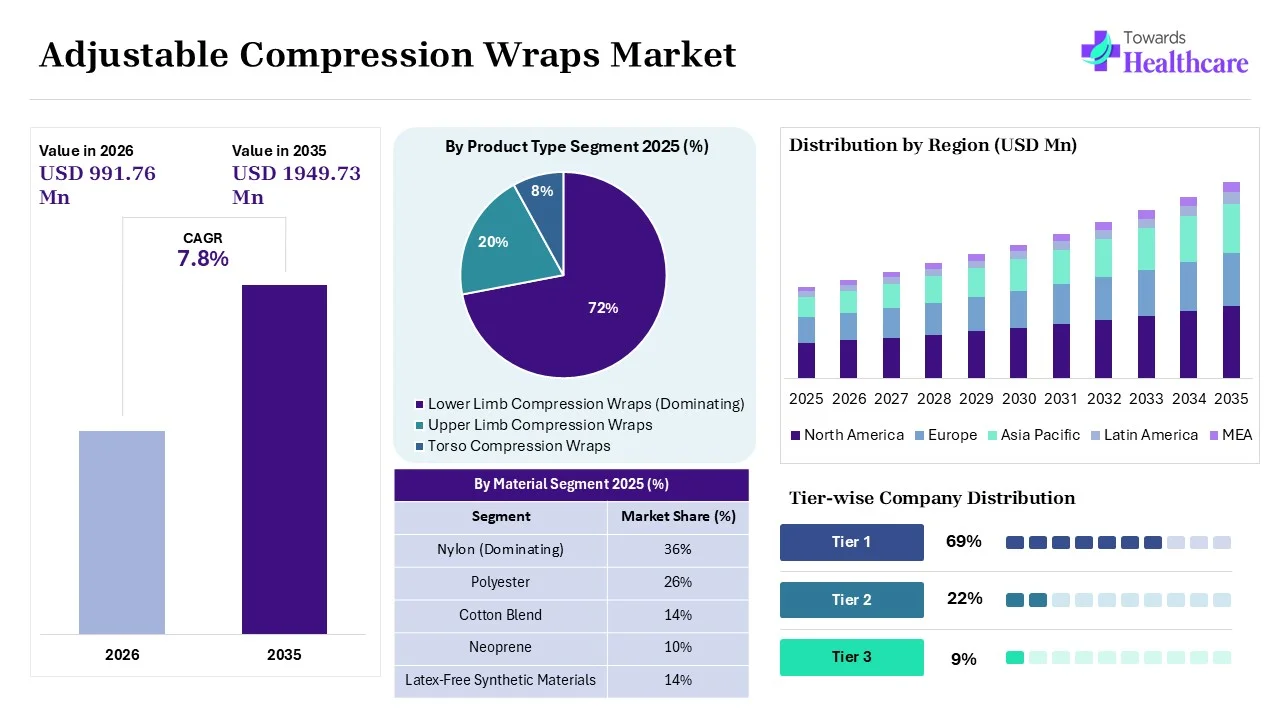
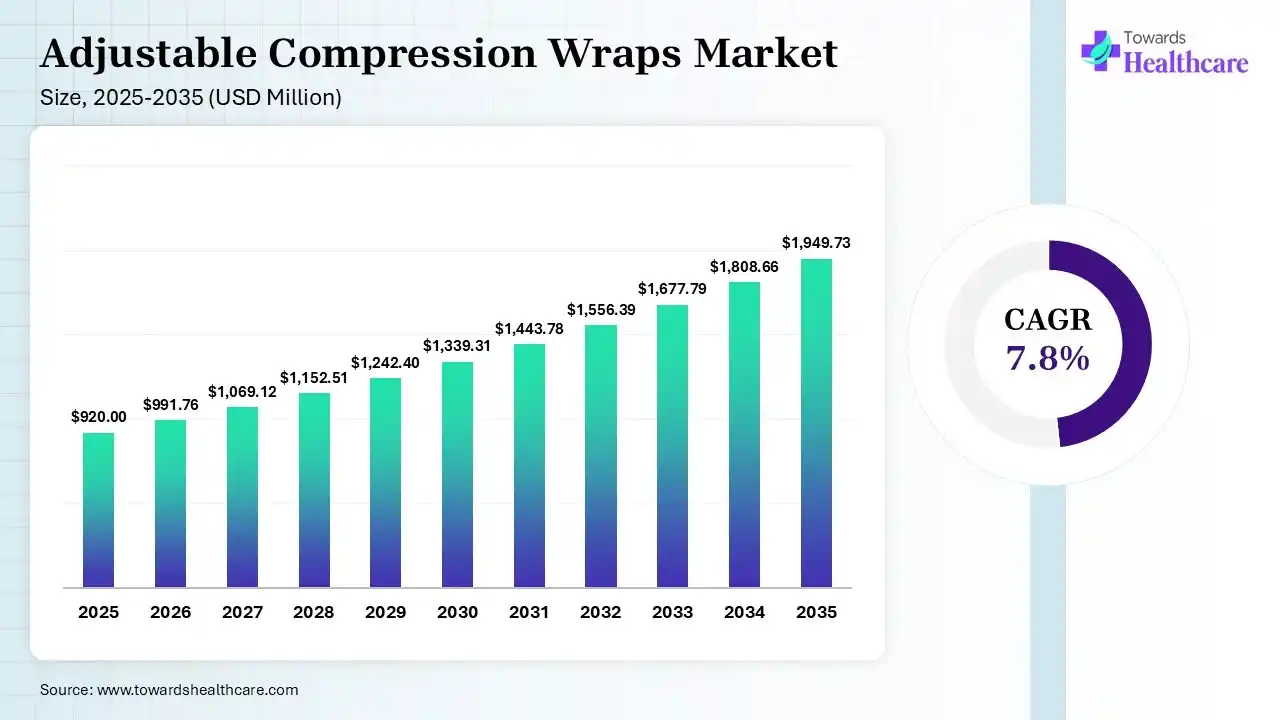
The global adjustable compression wraps market size is calculated at USD 920 million in 2025, driven by increasing lymphatic and venous disorders globally. The market continues to grow USD 991.76 million in 2026 due to the rising geriatric population, demand for remote healthcare, and new product launches. It is expected to reach USD 1949.73 million by 2035 estimated to grow at a CAGR of 7.8%, as a continued rise in demand for user-friendly compression products, expanding applications, and growing technological advancements accelerate market expansion. North America accounted for 39% of the market in 2025 due to a rise in chronic disease burden, the presence of robust reimbursement systems, and advanced wound care infrastructure.
The adjustable compression wraps market is driven by the growth in the geriatric population, lymphedema cases, and demand for self-management products. The adjustable compression wraps encompass specialized devices used for compression therapy, where they are also used as an alternative to the inelastic multilayer bandaging. They offer high working pressure, low resting pressure, and self-adjustability, which increases their use, where they also offer benefits such as self-management and enhanced treatment efficacy, which in turn improves quality of life. Their reusability, less bulkiness, and improved comfort also drive their adoption for the management of a wide range of conditions, such as lymphedema, post-surgical edema, chronic venous insufficiency, deep vein thrombosis, venous leg ulcers, and other sports injuries.
The growth in the incidence of lymphedema, post-surgical edema, chronic venous insufficiency, and sports injuries is increasing the demand for adjustable compression wraps globally. They are used for reducing edema, pain, and improving mobility, venous return, and skin integrity where it also supports tissue and wound healing. The commonly used adjustable compression wraps involve lower leg compression wraps, knee wraps, ankle wraps, arm wraps, and hand wraps. Furthermore, based on the survey conducted by the research team, the growing shift towards home-based care, increasing demand for personalized solutions, expanding applications, and increasing technological advancements are also contributing to the market growth.
Adjustable Compression Wraps and Explain Their Clinical Purpose
Adjustable compression wraps are reusable medical devices delivering controlled external pressure to manage edema, venous disorders, lymphedema, and sports injuries. Unlike traditional stockings or elastic wraps, they offer targeted adjustability, pressure consistency, and ease of application, promoting patient independence and easy removal during wound care.
Adjustable Compression Wraps within the Compression Therapy Market
Adjustable wraps bridge the gap between static compression stockings and bulky multilayer systems. Unlike elastic bandages or orthopedic braces, they provide consistent, inelastic pressure mimicking short-stretch bandages but with simpler application. Providers recommend them for long-term management to boost compliance.
Robust clinical evidence, reimbursement improvements, and product innovations have transformed adjustable wraps into mainstream.
The adjustable compression wraps market exhibits sustained mid-to-high single-digit growth driven by the rising global burden of chronic venous insufficiency and lymphedema. Demographic and epidemiological shifts, specifically aging populations and increasing obesity-related comorbidities, substantially expand the target patient pool. Structural healthcare trends secure long-term demand by shifting therapeutic administration from acute clinical facilities to decentralized home settings, where adjustable wraps foster patient independence. Furthermore, the ongoing need for routine product replacement, caused by the degradation of fabric elasticity through daily wear, guarantees highly stable recurring revenue.
The Increasing Global Burden of Chronic Venous Disorders
The rising incidence of chronic venous insufficiency, varicose veins, and venous leg ulcers directly accelerates market expansion. Obesity, diabetes, and aging populations further compound this burden. Regionally, Western Europe and North America exhibit higher prevalence rates due to sedentary lifestyles and elderly demographics, while developing regions show rapidly increasing cases.
Rising Incidence of Lymphedema Following Cancer Treatment
Survivorship trends following breast cancer, gynecologic cancers, and melanoma lead to a growing burden of cancer-related lymphedema. Because surgical lymph node removal is often permanent, oncology patients require lifelong management, thereby steadily driving long-term demand for adjustable compression wraps.
Growing Post-Surgical Edema Management Requirements
Orthopedic surgeries, vascular interventions, and trauma care generate significant post-operative edema. Adjustable wraps are becoming preferred rehabilitation alternatives to traditional bandages, allowing for easy removal, inspection of surgical sites, and consistent pressure adjustments as swelling decreases.
Expanding Role of Compression Therapy in Sports Medicine
Athletes, physiotherapists, and performance recovery centers rapidly adopt compression to accelerate muscle recovery. Recreational athletes increasingly utilize these wraps for post-workout soreness and injury prevention, mirroring the heavy usage seen in professional sports.
Macro Factors
Healthcare spending: Higher healthcare spending supports demand for compression therapy products.
Aging population: More older adults increase the need for products that support circulation and mobility.
Medical awareness: Greater awareness of venous disorders encourages preventive and supportive treatment.
Regulatory policies: Product standards and healthcare regulations affect manufacturing, approval, and sales.
Economic conditions: Inflation and healthcare budgets can influence product prices and patient purchasing decisions.
Micro Factors
Product comfort: Lightweight and comfortable adjustable compression wraps can attract more users.
Ease of use: Simple designs help patients apply and adjust compression without assistance.
Clinical demand: Growing use in treating lymphedema, edema, and venous conditions supports market growth.
Product innovation: Better materials, adjustable straps, and improved pressure control can strengthen demand.
Competition: Established medical device companies and new brands influence pricing, product variety, and distribution.
Healthcare providers: Recommendations from doctors, nurses, and therapists can strongly affect product adoption.
Reimbursement: Insurance coverage and reimbursement policies influence affordability and patient access.
User-Friendly Compression Products on the Rise
A rise in the demand for simple and self-manageable compression solutions is increasing the use of adjustable compression wraps. Their user-friendly approach, easy adjustability, and enhanced comfort also promote their use. This also reduces reliance on healthcare professional for their application and reduces hospital visits, supporting home-based care and improving treatment adherence as well as quality of life.
Flourishing Wound Care Applications
Growing incidences of chronic wounds and venous leg ulcers are increasing the use of adjustable compression wraps, due to their consistent therapeutic pressure, which reduces pain and edema as well as improves blood circulation. Furthermore, expanding wound care clinics and outpatient services are also adopting these wraps to offer better wound healing outcomes and reduce the chances of wound recurrences.
Blooming Innovations
In order to improve durability, breathability, mobility, and comfort, new adjustable compression wraps are being developed. This, in turn, is driving the development of personalized and lightweight compression wraps with improved therapeutic effectiveness. Expanding healthcare digitalization is also promoting the integration of pressure monitoring technologies, supporting remote healthcare applications, and enhancing treatment adherence.
Primary Drivers Accelerating Market Growth
Rising vascular diseases and decentralized home healthcare heavily drive short-term expansion, as clinical preference shifts toward adjustable systems offering superior patient compliance and easier application. Long-term market growth relies on consistent product innovation and improved reimbursement structures, which expand access to premium therapeutic care.
Market Constraints Limiting Adoption Across Healthcare Systems
Higher product costs compared to elastic bandages and limited awareness in developing economies initially restrict market penetration. Furthermore, reimbursement variability, specific patient training needs, and entrenched clinical preferences for conventional compression in certain regions substantially delay broader adjustable wrap adoption.
Emerging Opportunities Creating Future Revenue Streams
Digital monitoring and smart compression technologies offer major opportunities to enhance therapy precision and optimize remote patient management. Furthermore, the evolution of personalized compression systems, widespread telehealth integration, and the rising demand for home-based chronic disease management will unlock new revenue streams.
Critical Industry Challenges Affecting Sustainable Market Growth
A major challenge is maintaining consistent therapeutic pressure across the limb without slipping or losing tension. Additionally, ensuring long-term patient adherence, delivering cost-effective product customization, mitigating intense competition from cheaper alternatives, and managing strict regulatory compliance remain significant hurdles. Supply chain disruptions also threaten steady growth.
Product Innovation Landscape and Technology Evolution
| Table | Scope |
| Market Size in 2026 | USD 991.76 Million |
| Projected Market Size in 2035 | USD 1949.73 Million |
| CAGR (2026 - 2035) | 7.8% |
| Historical Data | 2020 - 2023 |
| Base Year | 2025 |
| Forecast Period | 2026 - 2035 |
| Measurable Values | USD Millions/Units/Volume |
| Market Segmentation | By Product Type, By Material, By Compression Level, By Indication, By End User, By Closure Type, By Distribution Channel, By Region |
| Top Key Players | Medi GmbH & Co. KG, 3M Company, Juzo, Essity, Lohmann & Rauscher, Sigvaris Group, Lympha Press |
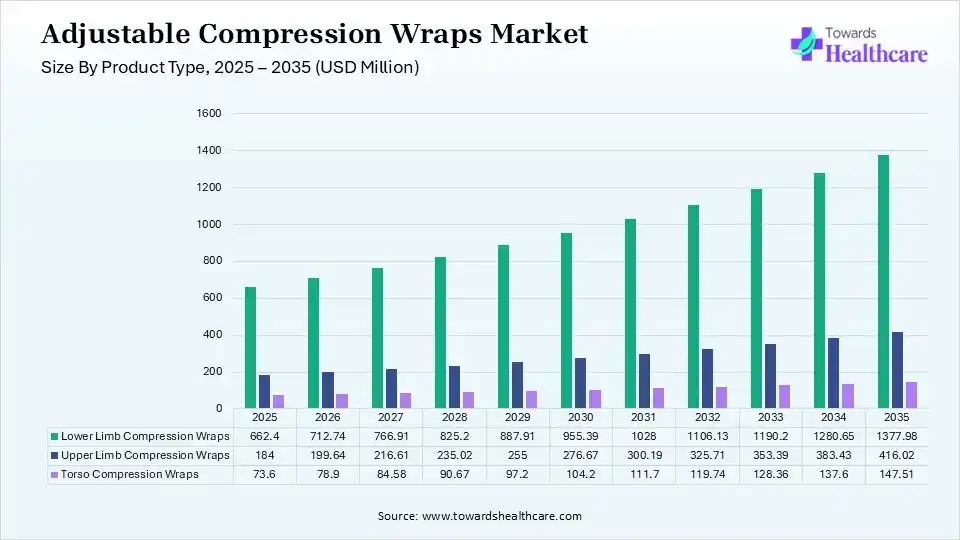
| Segment | Share 2025 (%) |
| Lower Limb Compression Wraps | 72% |
| Upper Limb Compression Wraps | 20% |
| Torso Compression Wraps | 8% |
The Lower Limb Compression Wraps Segment Dominated the Adjustable Compression Wraps Market With 72% in 2025
The lower limb compression wraps segment led the market with 72% share in 2025, due to the high prevalence of venous disorders and lymphedema, which increased the demand for lower limb compression wraps. Clinical recommendations also favored lower limb therapy, which increased their adoption rates. The aging population also sustained its utilization.
The upper limb compression wraps segment held the second-largest share of 20% of the market in 2025 and is expected to witness the fastest growth with a CAGR of 8.5% during the forecast period, driven by rising breast cancer-related lymphedema cases, which support upper limb compression wraps adoption. Greater awareness improves diagnosis and treatment. Growing product innovations also enhance patient comfort, driving their demand.
The torso compression wraps segment held 8% of the adjustable compression wraps market share in 2025, due to growing post-operative care supporting the rise in their demand. Improved adjustable designs of torso compression wraps also increase patient compliance. Growing specialized rehabilitation programs are also expanding their usage.
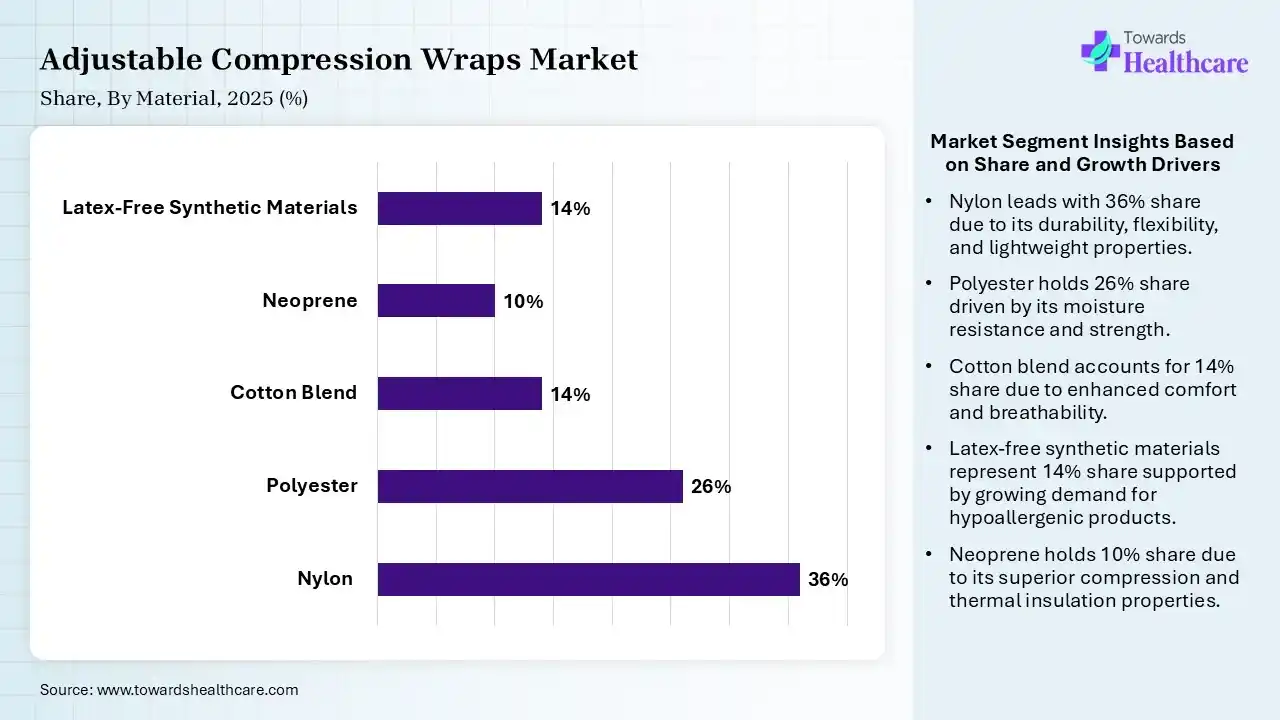
| Segment | Share 2025 (%) |
| Nylon | 36% |
| Polyester | 26% |
| Cotton Blend | 14% |
| Neoprene | 10% |
| Latex-Free Synthetic Materials | 14% |
The Nylon Segment Dominated the Adjustable Compression Wraps Market With 36% in 2025
The nylon segment accounted for the highest revenue share of 36% of the market in 2025, driven by a rise in manufacturers preferring nylon for durability and flexibility. Its moisture resistance also improved wearability, which increased its use. At the same time, long product life also supported healthcare adoption.
The polyester segment held the second-largest share of 26% of the market in 2025, due to cost-effective manufacturing, which is supporting large-scale production. Fabric strength improves clinical performance, which in turn increases their adoption rates. Increasing institutional procurement also boosts their demand. Their high durability and consistent compression also increase their usage.
The latex-free synthetic materials segment held 14% of the adjustable compression wraps market share in 2025 and is expected to show the highest growth with a CAGR of 9.2% during the forecast period, due to rising latex allergy awareness, encouraging their adoption. Advanced synthetic fibers improve comfort, which drives the demand for latex-free synthetic materials. Hospitals increasingly specify latex-free products, increasing their use.
The cotton blend segment held 14% of the market share in 2025, driven by its soft texture, which improves patient comfort. Breathability supports prolonged wear, which increases their adoption rates. Homecare users increasingly prefer cotton blends, where their improved moisture absorption property also increases their use.
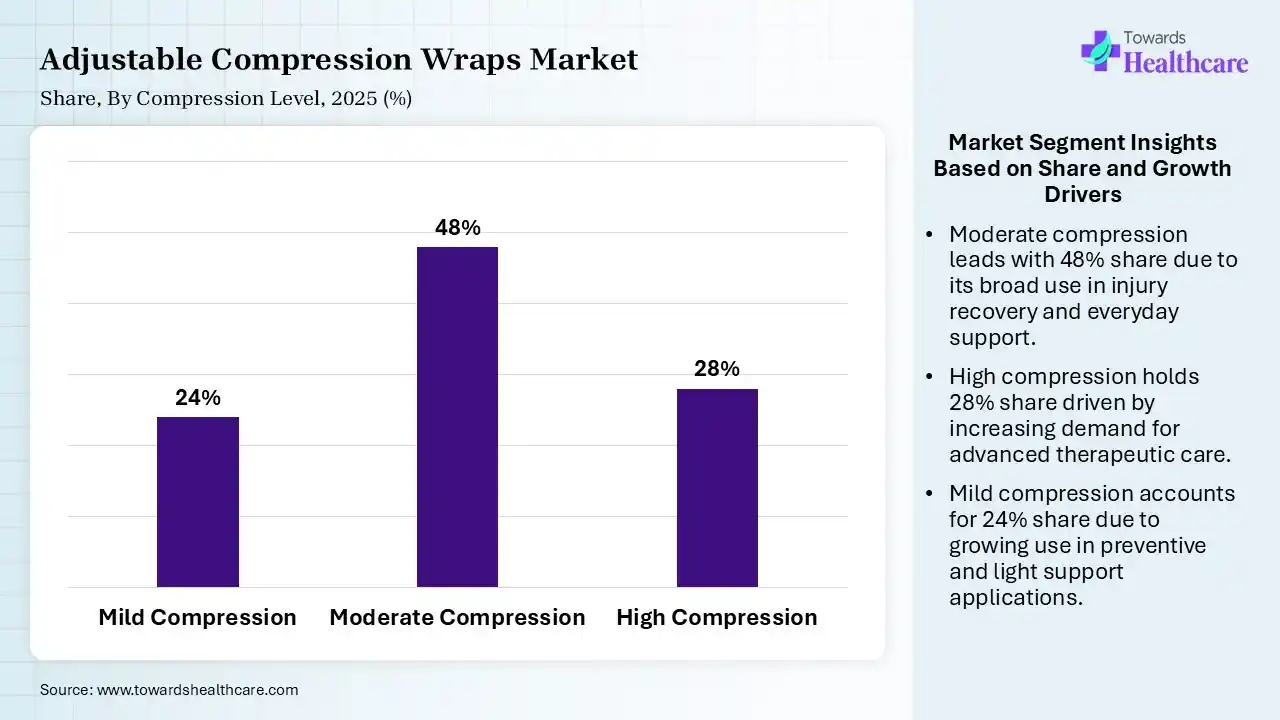
| Segment | Share 2025 (%) |
| Mild Compression | 24% |
| Moderate Compression | 48% |
| High Compression | 28% |
The Moderate Compression Segment Dominated the Adjustable Compression Wraps Market With 48% in 2025
The moderate compression segment held a major revenue share of 48% of the market in 2025, due to its widespread recommendation for chronic venous disorders. Clinical versatility also supported the broad adoption of moderate compression. The balance of efficacy and comfort also increased its preference.
The high compression segment held the second-largest share of 28% of the market in 2025 and is expected to expand rapidly with a CAGR of 8.4% during the forecast period, driven by severe lymphedema treatment, which increases its utilization. Advanced wrap technologies improve pressure consistency, increasing the use of high compression. Specialist clinics expand prescription rates, fueling their demand.
The mild compression segment held 24% of the adjustable compression wraps market share in 2025, due to preventive care and early-stage conditions supporting the rise in their demand. Home users increasingly adopt mild therapy, driving the use of mild compression solutions. Comfortable wear also improves compliance rates.
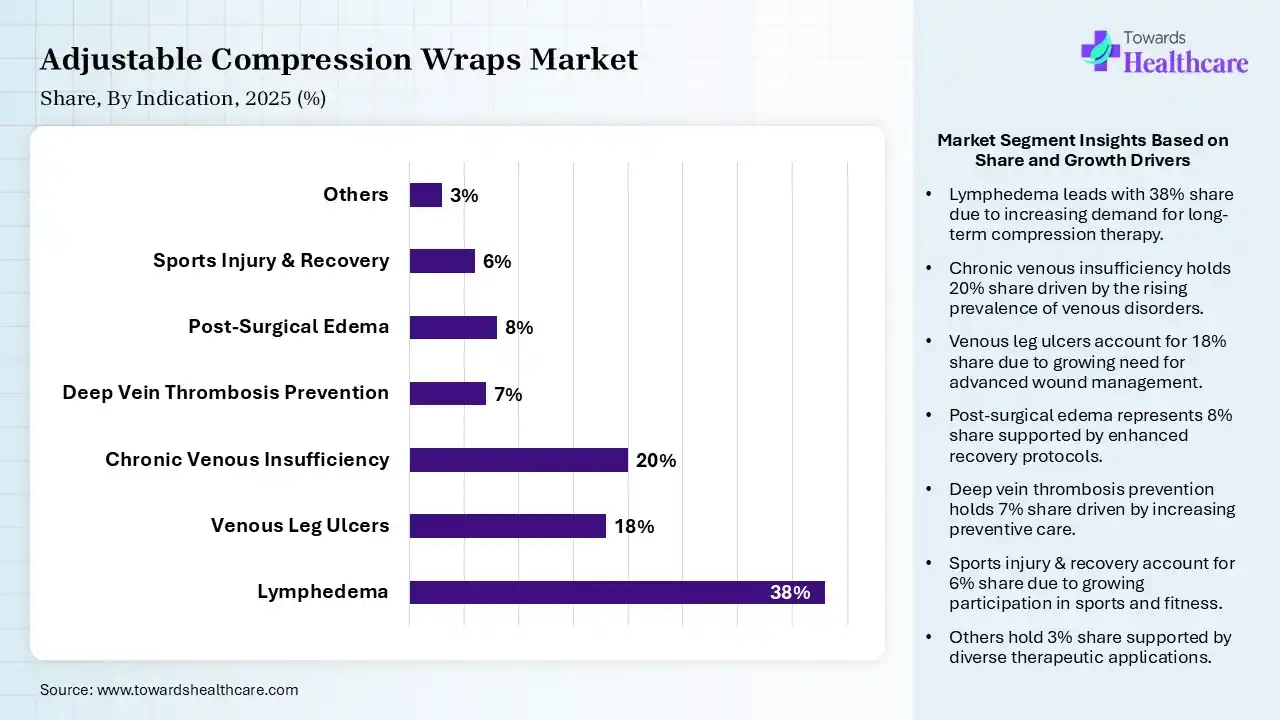
| Segment | Share 2025 (%) |
| Lymphedema | 38% |
| Venous Leg Ulcers | 18% |
| Chronic Venous Insufficiency | 20% |
| Deep Vein Thrombosis Prevention | 7% |
| Post-Surgical Edema | 8% |
| Sports Injury & Recovery | 6% |
| Others | 3% |
The Lymphedema Segment Dominated the Adjustable Compression Wraps Market With 38% in 2025
The lymphedema segment contributed the biggest revenue share of 38% of the market in 2025, driven by growth in cancer survivorship, which increased lymphedema prevalence. Based on the survey conducted by the research team, clinical guidelines recommended adjustable wraps, which increased their adoption. Early intervention also improved patient outcomes.
The chronic venous insufficiency segment held the second-largest share of 20% of the market in 2025, due to a rise in aging populations, which increases disease prevalence. Physicians recommend long-term compression therapy as the first-line treatment for effective management. Improved wrap comfort is also enhancing their adherence.
The venous leg ulcers segment held 18% of the adjustable compression wraps market share in 2025, driven by a rising chronic wound burden, which supports treatment demand. Compression therapy remains standard care, which increases its usage volume. Expanding healthcare reimbursement policies are also improving access to adjustable compression wraps.
The post-surgical edema segment held 8% of the market share in 2025 and is expected to gain the highest share with a CAGR of 8.7% during the forecast period, due to growing orthopedic procedures, which increase recovery needs. Adjustable compression accelerates rehabilitation, increasing its demand. Enhanced patient mobility also supports a rise in their adoption rates.
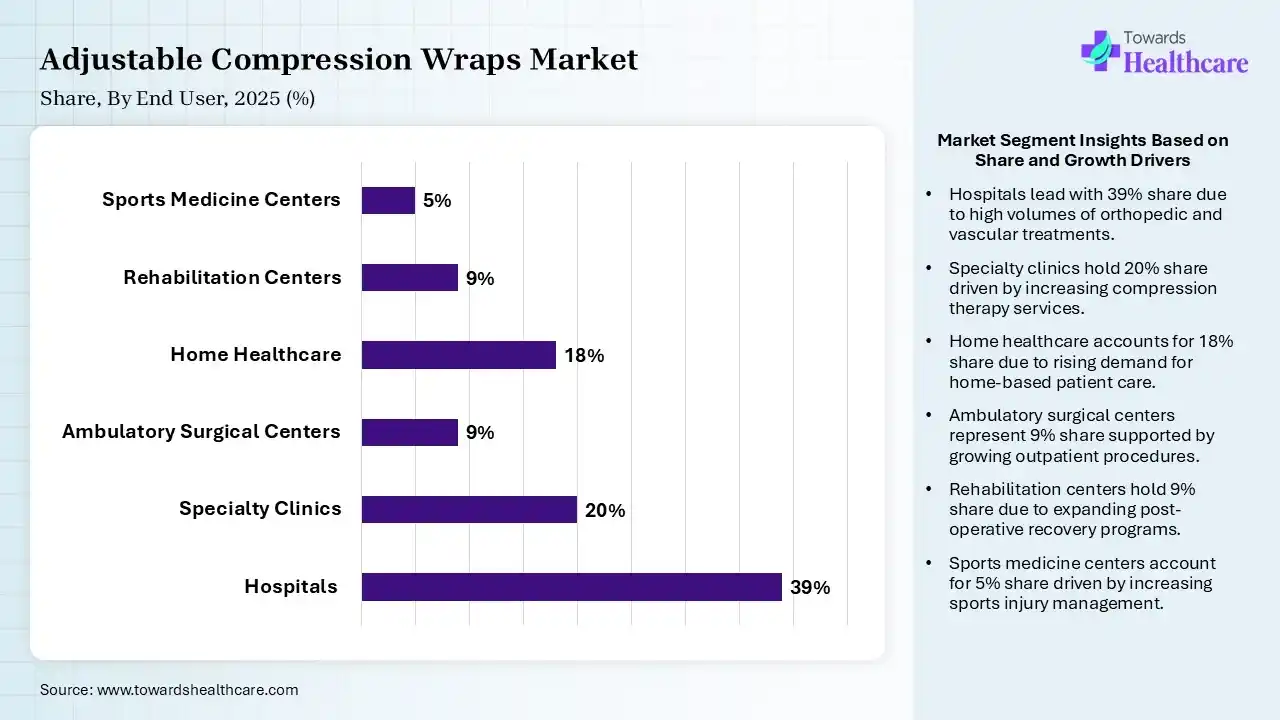
| Segment | Share 2025 (%) |
| Hospitals | 39% |
| Specialty Clinics | 20% |
| Ambulatory Surgical Centers | 9% |
| Home Healthcare | 18% |
| Rehabilitation Centers | 9% |
| Sports Medicine Centers | 5% |
The Hospitals Segment Dominated the Adjustable Compression Wraps Market With 39% in 2025
The hospitals segment held the largest revenue share of 39% of the market in 2025, as hospitals manage large patient volumes requiring compression therapy. The presence of clinical specialists also supported a rise in product utilization. Procurement contracts also maintained steady demand. Favorable reimbursement policies also enhanced their accessibility.
The specialty clinics segment held the second-largest share of 20% of the market in 2025, driven by rising dedicated vascular and lymphedema clinics, increasing the adoption of adjustable compression wraps. Specialized treatment protocols also encourage their usage. Expanding outpatient care also supports their growth. Faster and personalized services also attract patients.
The home healthcare segment held 18% of the adjustable compression wraps market share in 2025 and is expected to grow with the fastest CAGR of 9.4% during the forecast period, due to increasing aging populations preferring home-based care. Easy-to-apply wraps improve self-management, driving their demand. Telehealth supports long-term monitoring, promoting its use.
The ambulatory surgical centers segment held 9% of the market share in 2025, driven by increasing day surgeries and boosting post-operative care demand. Faster recovery programs also promote compression use. Modern facilities improve treatment access, increasing the use of adjustable compression wraps. Improved patient comfort and easy applications also increased their use.
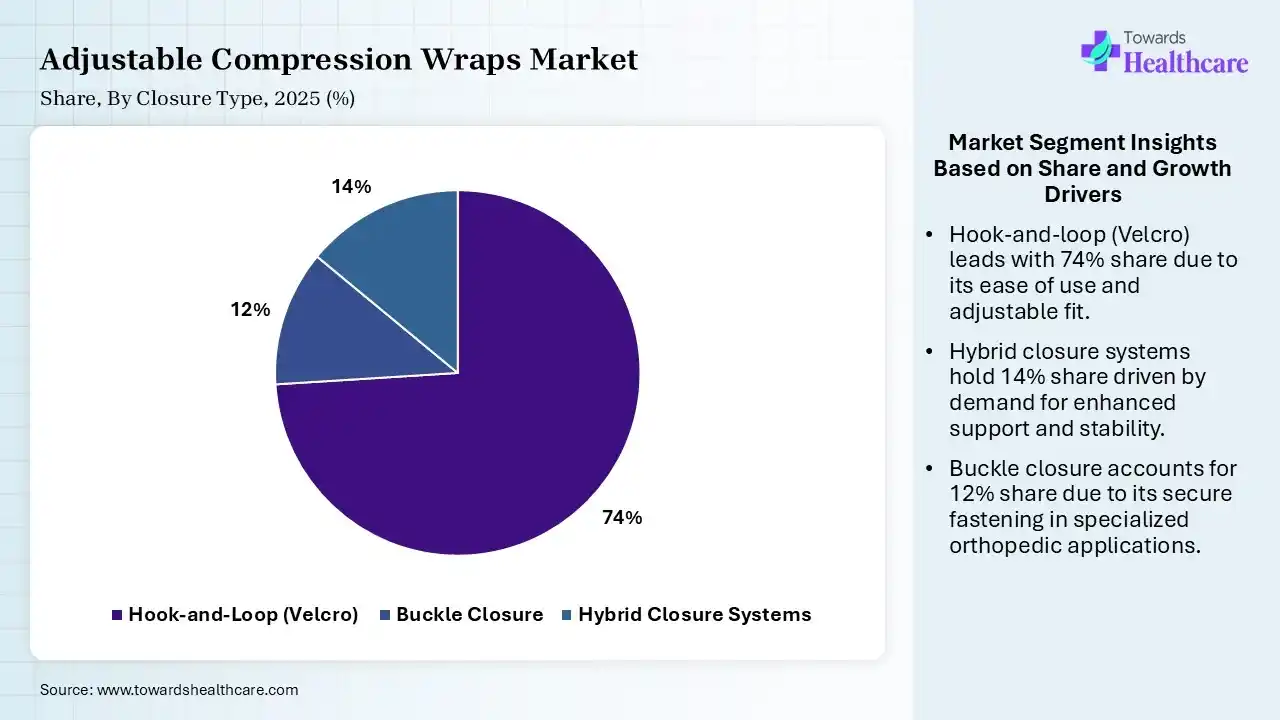
| Segment | Share 2025 (%) |
| Hook-and-Loop (Velcro) | 74% |
| Buckle Closure | 12% |
| Hybrid Closure Systems | 14% |
The Hook-and-Loop (Velcro) Segment Dominated the Adjustable Compression Wraps Market With 74% in 2025
The hook-and-loop (Velcro) segment accounted for the highest revenue share of 74% of the market in 2025, due to its easy adjustability, which improved patient independence. Clinicians prefer precise pressure control, which increases their adoption rates. Their reusable designs also reduced long-term treatment costs.
The hybrid closure systems segment held the second-largest share of 14% of the market in 2025 and is expected to show the highest growth with a CAGR of 9.1% during the forecast period, due to the combination of fastening, improving fit, and comfort. Premium products increasingly adopt hybrid systems, driving their demand. Their growing innovations are also enhancing clinical outcomes.
The buckle closure segment held 12% of the adjustable compression wraps market share in 2025, driven by its secure fastening, which supports specialized applications. Durable construction suits long-term therapy, which increases their acceptance rates. Adoption remains stable in institutional settings. Easy adjustments and a user-friendly design also promote their adoption.
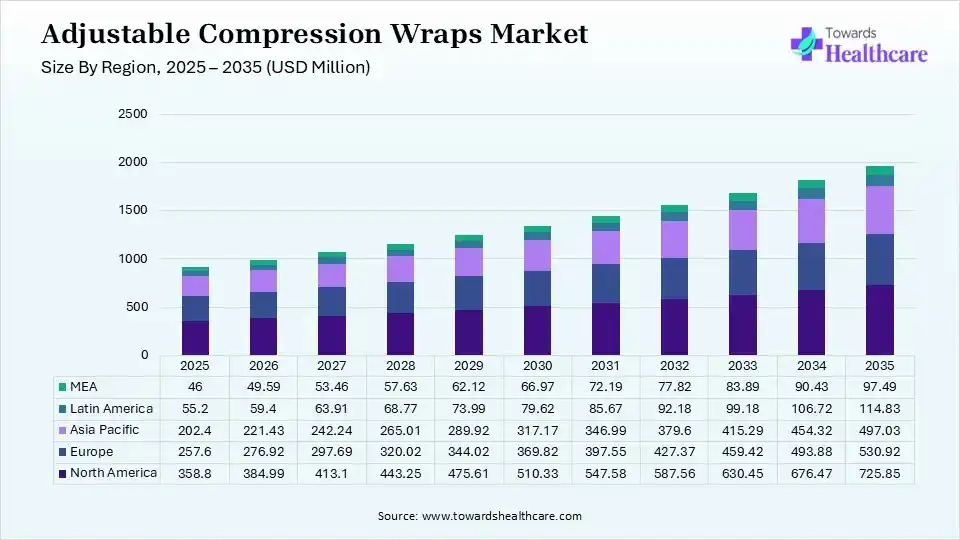
North America dominated the market with 39% in 2025, due to the presence of strong reimbursement systems, which supported compression therapy adoption. High chronic disease burden, such as lymphedema, venous leg ulcers, and chronic venous insufficiency, also increased treatment demand, which enhanced the use of adjustable compression wraps. Growth in the geriatric population and home healthcare has also increased their use. Moreover, the presence of advanced wound care infrastructure and leading medical devices industries also sustained the market growth.
US Market Growth
U.S. held an 82% share in the adjustable compression wraps market in 2025, due to a large patient population and favorable reimbursement, which sustained the market leadership. The presence of advanced clinical infrastructure also increased the utilization of adjustable compression wraps, where growth in product innovations also strengthened their adoption rate. A rise in the demand for self-care compression therapies also increased their use, where the expansion in home healthcare and wound care centres also increased their demand. Additionally, growth in diabetes and obesity cases also increased their adoption.
Canada Market Growth
Canada held an 11% share in the adjustable compression wraps market in 2025 and is expected to show lucrative growth during the predicted time, due to the presence of universal healthcare, which is expanding access. Aging demographics increase the demand for adjustable compression wraps, where continued improvement in clinical awareness also drives their adoption. Growth in lymphedema and edema-related disorders also increases their use, where a focus on chronic wound care also promotes their adoption. At the same time, expanding home healthcare, rehabilitation centres, and vascular care services are also fueling their adoption rates as well as innovations.
Mexico Market Growth
Mexico held a 7% share in the adjustable compression wraps market in 2025 and is expected to grow with the highest CAGR of 8.6% during the studied years, driven by growing healthcare investments, which are expanding treatment access. Rising chronic disease burden and geriatric population also support the rise in the demand for adjustable compression wraps, while expanding distribution networks also improve their availability. Growing awareness is also driving the demand for personalized and patient-friendly compression solutions, where increasing technological advancements are accelerating their innovations.
Europe held a share of 28% in the market in 2025 and is expected to grow significantly during the forecast period, due to favorable clinical guidelines, which encourage product use. An aging population increases vascular disease prevalence, driving the demand for adjustable compression wraps, where growing healthcare investments also support a rise in their use. The presence of robust reimbursement policies is also increasing their accessibility, where growing awareness is also driving a shift towards self-management solutions, expanding home-based healthcare. High healthcare spending and technological advancements are also fueling the market expansion.
Germany Market Growth
Germany held a 28% share in the adjustable compression wraps market in 2025, due to the presence of a strong vascular care infrastructure, which supported the adoption of adjustable compression wraps. The rise in the aging population also increased demand, which, in turn, drives growth in health awareness and also increases their preference. The presence of well-established medical device manufacturers also increased the development of easy-to-use and user-friendly adjustable compression wraps. Continuous medical innovations and focus on wound care also strengthened market growth.
Spain Market Growth
Spain held a 10% share in the adjustable compression wraps market in 2025 and is expected to witness the fastest growth with a CAGR of 8% over the forecast period, driven by growing outpatient care, which expands demand for adjustable compression wraps. Improved awareness is also supporting early interventions, where continued expansion of rehabilitation services is also increasing their adoption rates. Increasing incidences of lymphedema and chronic venous insufficiency are also increasing their use, where favourable reimbursement support is expanding their accessibility. Growing healthcare investments are also supporting a rise in their innovations.
Asia Pacific held a 22% share of the market in 2025 and is expected to grow at the fastest CAGR of 9.4% during the forecast period, due to expanding healthcare infrastructure, which is improving patient access. Rising chronic disease burden increases diagnosis rate, while a reduction in local manufacturing product costs is also increasing the adoption of adjustable compression wraps. Growing vascular complications and health awareness are also increasing their use, while expanding home healthcare is also increasing their adoption. Expanding government support and healthcare expenditure are also enhancing the market growth.
China Market Growth
China held a 34% share in the adjustable compression wraps market in 2025, due to a large patient population, which increased the demand for compression therapy. Growth in domestic manufacturing also expanded the supply of adjustable compression wraps, and healthcare reforms also improved their accessibility. A rise in the demand for self-management products and wound care products also increased their use. At the same time, growth in the development of affordable and user-friendly compression wraps also attracted patients.
Japan Market Growth
Japan held a 22% share in the adjustable compression wraps market in 2025 and is expected to show lucrative growth during the predicted time, driven by a growing aging society, which increases the vascular disease burden. The presence of advanced healthcare also supports the rise in adjustable compression wrap adoption, where high treatment compliance also benefits the market. Strong focus on chronic disease management and rehabilitation also drives the adoption of comfortable and easy application compression solutions, where the rise in demand for self-management treatment products also promotes their usage. A rise in surgeries and awareness also drives their use, where increasing technological advancements accelerate their innovations.
India Market Growth
India held 18% share in the adjustable compression wraps market in 2025 and is expected to expand rapidly with a CAGR of 10.8% in the coming years, driven by expanding healthcare infrastructure and improving accessibility. Rising chronic diseases such as diabetes, cardiovascular disease, and obesity are increasing patient volumes, driving the demand for adjustable compression wraps. Increasing medical device investments and growing cases of lymphedema and sports injuries are also accelerating their growth, while expanding wound care clinics and rehabilitation centres are also fueling their adoption rates.
Latin America held a 6% share in the market in 2025 and is expected to show lucrative growth during the forecast period, due to improving healthcare access, which is expanding treatment availability. Growing awareness is also supporting early disease diagnosis, driving the demand for adjustable compression wraps, where a rise in public healthcare investment is also increasing their adoption. Expanding home-based healthcare is also increasing the demand for self-management products and chronic wound management solutions, where established distribution networks also drive the market growth.
Brazil Market Growth
Brazil held a 52% share in the adjustable compression wraps market in 2025, driven by the largest regional healthcare market, which increased the adoption of adjustable compression wraps. Chronic disease burden supported a rise in their demand, where growth in distribution networks also expanded their access. At the same time, growth in awareness also increased their use across the healthcare setting, were large geriatric population also contributed to their increased use. Expansion of private clinics also increased their adoption rates for chronic disease management, where growth in healthcare expenditures also enhanced their availability and innovations.
The rest of Latin America held a 27% share in the adjustable compression wraps market in 2025 and is expected to gain the highest market share with a CAGR of 7.9% during the forecast period, due to growing healthcare investment, which is improving access to adjustable compression wraps. The growing diagnosis rate is also supporting their utilization, and continued improvement in product availability also drives their adoption rates. Additionally, a growing geriatric population, chronic disease burden, sports injuries, and lymphedema cases are also increasing their demand, where expanding outpatient services are also increasing their use. A rise in the demand for self-management products and increasing innovations are also creating new opportunities.
MEA held a 5% share in the market in 2025 and is expected to show notable growth during the forecast period, due to rapid healthcare modernization supporting advanced compression therapy. Rising diabetes prevalence increases wound care demand, promoting the use of adjustable compression wraps, while growing geriatric populations also contribute to this growth. Government investments strengthen healthcare capacity, and expanding healthcare infrastructure drives the adoption of advanced medical devices. Expansion of rehabilitation centres, outpatient services, and home healthcare is also propelling the market growth.
Saudi Arabia Market Growth
Saudi Arabia held a 36% share in the adjustable compression wraps market in 2025, driven by a rise in government healthcare investment that supports advanced wound care. A rise in chronic disease prevalence, along with edema-related conditions, also increased the demand for adjustable compression wraps. Growth in modern hospitals and home healthcare also expanded their utilization, where a rise in healthcare spending and government support also increased their use for various applications. A rise in awareness and demand for personalized self-management solutions also increased their adoption rates.
UAE Market Growth
The United Arab Emirates (UAE) held a 24% share in the adjustable compression wraps market in 2025 and is expected to show the fastest growth with a CAGR of 8.5% over the forecast period, due to expanding premium healthcare infrastructure, which supports the rise in the adoption of adjustable compression wraps. Expanding medical tourism also increases treatment volumes, which increases the use of patient-friendly compression therapy products. Growing innovation is also accelerating product uptake, where increasing incidences of chronic disease and sports injuries are also driving their adoption. Expanding home healthcare, rehabilitation centres, and wound care clinics are also increasing their use, as well as fueling their advancements.
R&D
Clinical Trials and Regulatory Approvals
Packaging and Serialization
Distribution to Hospitals, Pharmacies
Patient Support and Services
| Companies | Headquarters | Solutions |
| Medi GmbH & Co. KG | Bayreuth, Germany | Circaid Juxtalite Lower Leg System, Circaid Reduction Kit, and Circaid Juxtalite Premium |
| 3M Company | Saint Paul, U.S. | 3M Coban 2 Two-Layer Compression System |
| Juzo | Aichach, Germany | Juzo ACS Light and Juzo Compression Wrap |
| Essity | Stockholm, Sweden | JOBST FarrowWrap Classic and JOBST FarrowWrap Strong |
| Lohmann & Rauscher | Rengsdorf, Germany | ReadyWraps |
| Sigvaris Group | Winterthur, Switzerland | Sigvaris Compreflex Lite and Compreboot Solutions |
| Lympha Press | Afek, Israel | Lympha Press Optimal |
In September 2025, after the launch of expanded sizing for truncal garments, Darren Behuniak, Chief Operating Officer of AIROS Medical, stated that, "Expanding the size range of our truncal garments reflects our mission to provide inclusive, patient-centered treatment options for all patients battling chronic lymphedema," "Feedback from our trusted clinical partners, including physicians and lymphedema therapists, drove this product development process. Millions of Americans are living with lymphedema, and our goal is to provide compression therapy devices and garments that can treat as many of these patients as possible. We are thrilled with the opportunity to ensure more patients can benefit from compression therapy without the need for custom garments."
Strengths
Weaknesses
Opportunities
Threats
By Product Type
By Material
By Compression Level
By Indication
By End User
By Closure Type
By Distribution Channel
By Region










Principal Consultant
Payal Rabde is a Healthcare Market Research Analyst at Towards Healthcare Research & Consulting with 4+ years of experience in pharmaceuticals, biotechnology, medical devices, and life sciences.
Learn more about Payal Rabde

Reviewed By
Aditi Shivarkar is a seasoned professional with over 14 years of experience in healthcare market research. As a content reviewer, Aditi ensures the quality and accuracy of all market insights and data presented by the research team.
Learn more about Aditi Shivarkar