
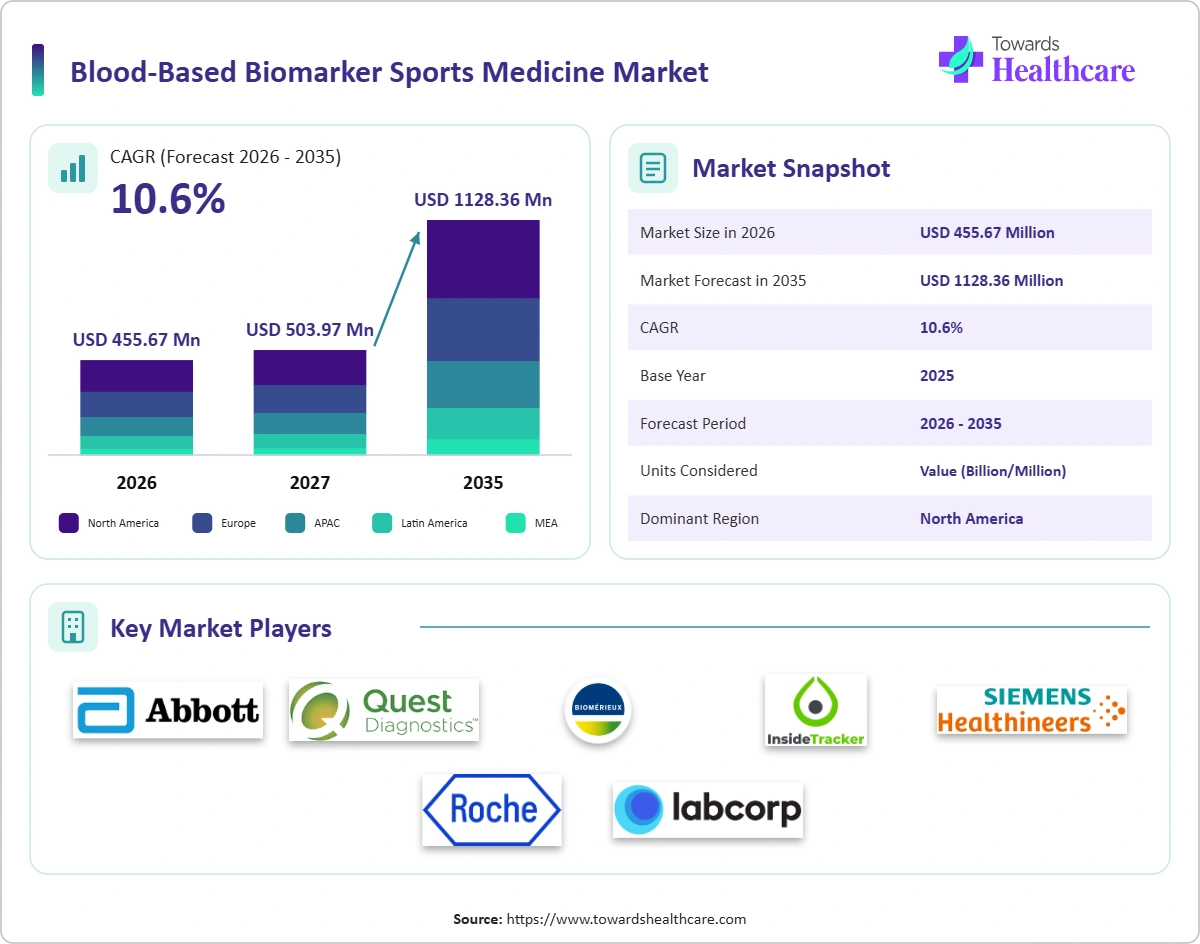
The blood-based biomarker sports medicine market is projected to grow from USD 412 million in 2025 to USD 1,128.36 million by 2035, supported by increasing adoption of biomarker-based approaches to athlete health management. Sports organizations and healthcare providers are utilizing blood tests to assess injuries, monitor recovery, and customize training.
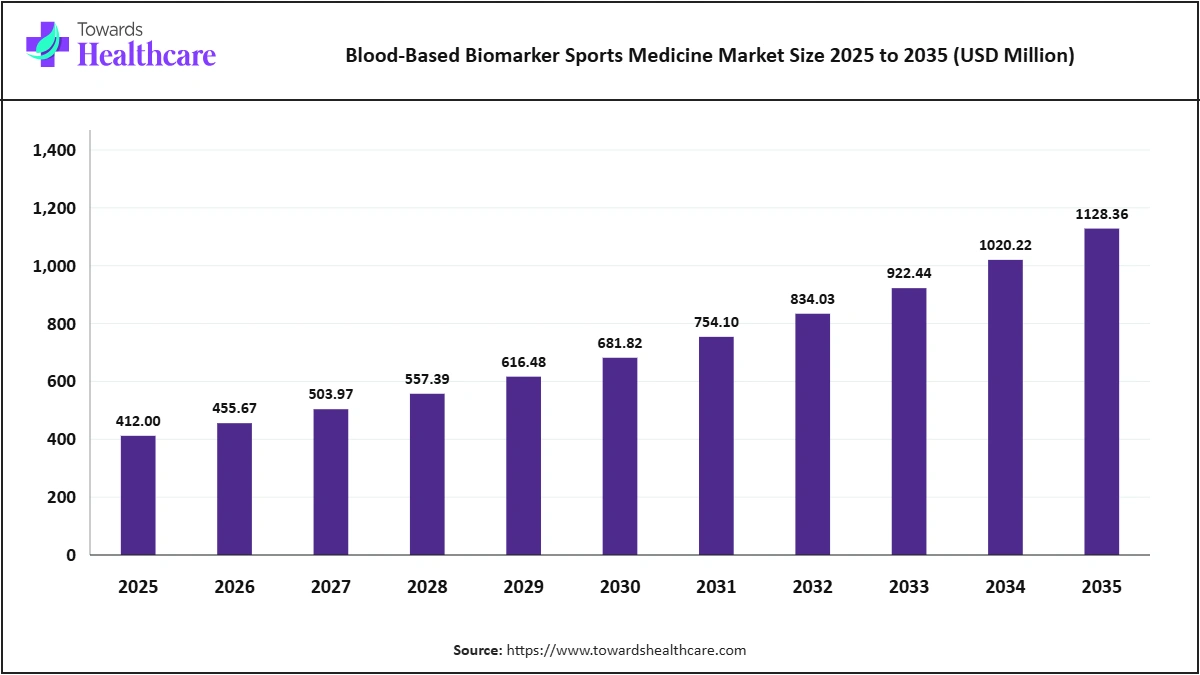
The focus on concussion awareness drives the market, with blood biomarkers like GFAP and UCH-L1 aiding in traumatic brain injury evaluations. Other indicators, such as creatine kinase and hormonal markers, are used in athlete monitoring. Increasing investments in sports and the rise of direct-to-consumer testing enhance market demand. Improved access to rapid diagnostics through point-of-care testing and digital monitoring platforms further integrates laboratory results with athlete performance data. These developments are expected to increase market revenue to USD 681.82 million by 2030 and sustain a CAGR of 10.6% from 2026 to 2035.
Analyst View: Our assessment includes blood-based tests used to evaluate sports-related injuries, concussion, muscle damage, inflammation, hormonal balance, metabolic status, and nutritional deficiencies. The estimate was developed using athlete testing volumes, average panel prices, point-of-care device adoption, and demand across professional teams, healthcare providers, and consumer testing channels. The market estimate was cross-checked against supplier portfolios, commercial developments, and relevant diagnostic technologies. Published estimates for this specific market scope remain limited, making a clearly defined market boundary important when comparing market valuations.
| Driver | Impact | ≈ CAGR Contribution | Time Horizon | Key Regions |
| Concussion awareness grows | High | +4.14 pp | Short to long term | Global, strongest in North America |
| Sports investment rises | Medium | +3.49 pp | Medium to long term | Global, fastest uptake in Asia Pacific |
| Athletes seek data-driven training | Medium | +2.97 pp | Short to medium term | Global |
| Point-of-care tests improve | Low | +2.33 pp | Long term | Developed and emerging markets |
Note: Contributions are indicative estimates of each factor's effect on annual growth.
Sources: Expert interviews, secondary sources, Towards Healthcare database and Towards Healthcare analysts.
The identified growth drivers contribute approximately 12.93 percentage points to annual growth in the blood-based biomarker sports medicine market, with increasing concussion awareness representing the largest contribution. Growing attention to sports-related head injuries is encouraging professional teams, collegiate organizations, and sports medicine providers to explore objective diagnostic technologies.
Rising sports investments are driving athlete health programmes and specialized testing infrastructure. There is an increasing demand for biomarker testing to enhance training and recovery data, supported by advancements in point-of-care technologies. North America is notably influenced by concussion-related needs, while Asia Pacific is set for faster adoption due to growing investments in sports and fitness participation.
| Restraint | Impact | ≈ Negative CAGR Contribution | Time Horizon | Key Regions |
| Limited validation for performance markers | High | -1.05 pp | Short to medium term | Global |
| Cost of frequent testing | High | -0.77 pp | Medium term | Price-sensitive and emerging markets |
| Privacy and anti-doping concerns | Medium | -0.51 pp | Short term | North America and other mature markets |
Note: Contributions are indicative estimates of each factor's effect on annual growth.
Sources: Expert interviews, secondary sources, Towards Healthcare database, and Towards Healthcare analysts.
The estimated restraints are expected to offset approximately 2.33 percentage points of the directional growth contribution attributed to the identified drivers due to limited clinical validation, high testing costs, and privacy concerns related to athlete data. The lack of standardized interpretation of biomarker results further complicates adoption, particularly among smaller organizations and individual athletes. Addressing issues of confidentiality and anti-doping regulations is essential. However, advances in clinical evidence, standardized protocols, and cost-effective testing technologies may help mitigate these challenges over time. The market is consequently projected to maintain a net CAGR of 10.6% from 2026 to 2035.
The expansion of youth and collegiate concussion testing, direct-to-consumer athlete health panels, and integrated sports science platforms presents opportunities for market participants. Increasing participation in organized sports is creating demand for accessible injury assessment and athlete monitoring solutions.
Asia Pacific offers considerable growth potential because of increasing investments in sports infrastructure, professional athletics, sports science facilities, and consumer fitness services in China, India, Japan, and Australia. Military applications also represent an emerging opportunity as organizations seek additional methods of assessing traumatic brain injury.
Manufacturers can strengthen their market positions by developing portable testing platforms, expanding validated biomarker panels, and establishing partnerships with sports leagues, universities, healthcare providers, and athlete management technology companies. Integration of wearable devices with blood-based biomarker analytics could further support personalized recovery and training programmes.
Note: 2025 is the base year; 2035 shares and CAGRs are forecasts.
Sources: Expert interviews, secondary sources, Towards Healthcare database, and Towards Healthcare analysts.
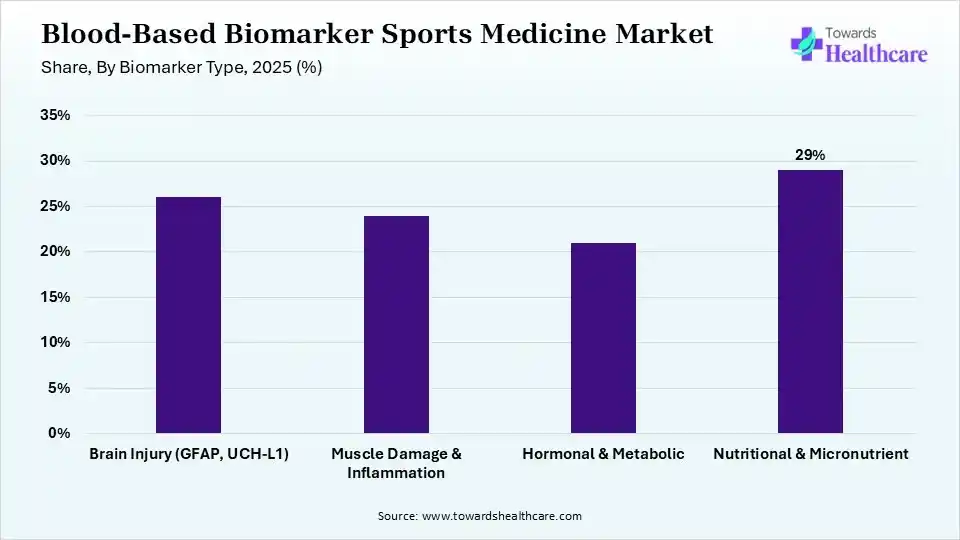
Brain Injury (GFAP, UCH-L1) accounted for 26% of the market in 2025 and is projected to expand at a CAGR of 12.85% from 2026 to 2035. GFAP and UCH-L1 are used in selected blood-based tests to support the clinical assessment of suspected mild traumatic brain injury. The emergence of portable testing platforms enhances rapid evaluation in both sideline and clinical settings. Heightened concussion awareness, sport safety initiatives, and improved access to diagnostic testing are anticipated to drive significant growth in this segment.
Muscle Damage and Inflammation particularly creatine kinase, are essential for evaluating physiological responses to intensive training and injuries. The increasing implementation of athlete monitoring programs and the need for personalized recovery strategies are expected to enhance growth in this segment.
Hormonal and Metabolic testing is essential for assessing physiological changes linked to training stress, energy balance, and recovery. These tests evaluate various hormonal and metabolic indicators and are increasingly integrated into athlete health management to address issues like overtraining, inadequate recovery, and low energy availability.
Nutritional and Micronutrient biomarkers, especially iron, vitamin D, and electrolyte tests, are crucial for assessing athletes' nutritional status and deficiencies. These tests impact energy levels, endurance, muscle function, and recovery, solidifying their importance in sports medicine and wellness programs.
Segment Outlook: Nutritional and micronutrient biomarkers are expected to remain the largest biomarker type segment through 2035, accounting for around 26.13% of the market. However, brain injury biomarkers are projected to register the highest CAGR of 12.85%, supported by increasing concussion awareness and the development of rapid blood-based testing technologies. Muscle damage and inflammation markers, along with hormonal and metabolic testing, will continue to support routine athlete monitoring and recovery assessment.
Note: 2025 is the base year; 2035 shares and CAGRs are forecasts.
Sources: Expert interviews, secondary sources, Towards Healthcare database, and Towards Healthcare analysts.
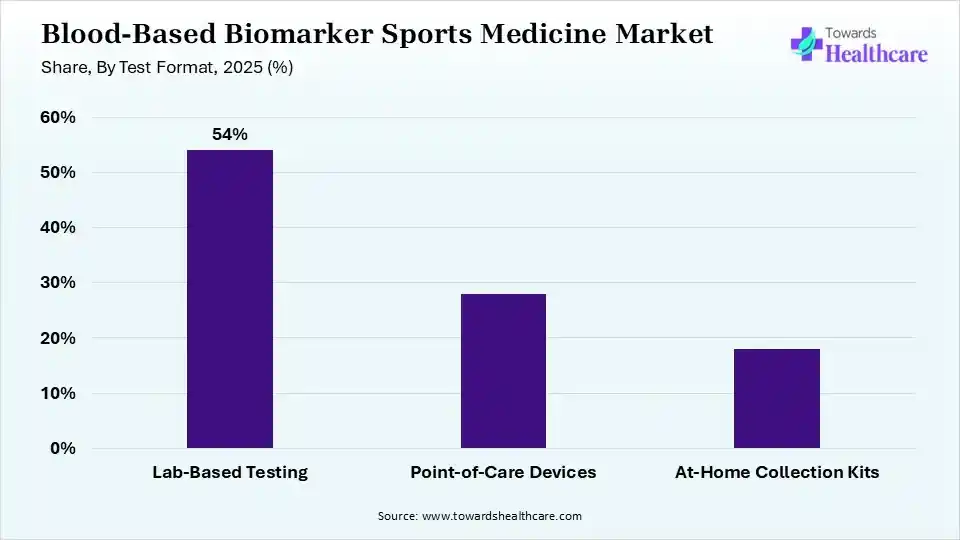
Lab-Based Testing accounted for 54% of the market in 2025 and is projected to expand at a CAGR of 9.81% from 2026 to 2035. Laboratory-based testing is essential for comprehensive biomarker assessment, providing insights into various health markers such as nutritional, hormonal, and metabolic status. Sports medicine providers depend on these laboratory services to assess athlete health and track changes over time, supported by established infrastructure and specialized testing capabilities.
Point-of-Care Devices testing is vital for providing rapid diagnostic results in decentralized settings. Portable analyzers and handheld devices enhance testing in sports medicine, especially for concussion assessments. The increasing need for prompt injury evaluations and swift clinical decisions is expected to drive the growth of point-of-care devices as the fastest-growing testing format.
At-Home Collection Kits offer accessible blood testing for athletes and fitness enthusiasts, aiding in the monitoring of nutrition, metabolism, hormones, and recovery biomarkers. The rise of direct-to-consumer testing services and digital health platforms is likely to drive demand for convenient sample collection and remote result analysis.
Segment Outlook: Through 2035, Lab-based testing is expected to remain the largest test format segment, retaining approximately 50.27% of the market. Point-of-care devices are projected to register the highest CAGR of 12.21%, supported by increasing demand for rapid and decentralized diagnostic solutions. At-home collection kits will continue to expand as consumer fitness testing and remote athlete monitoring gain popularity.
Note: 2025 is the base year; 2035 shares and CAGRs are forecasts.
Sources: Expert interviews, secondary sources, Towards Healthcare database and Towards Healthcare analysts.
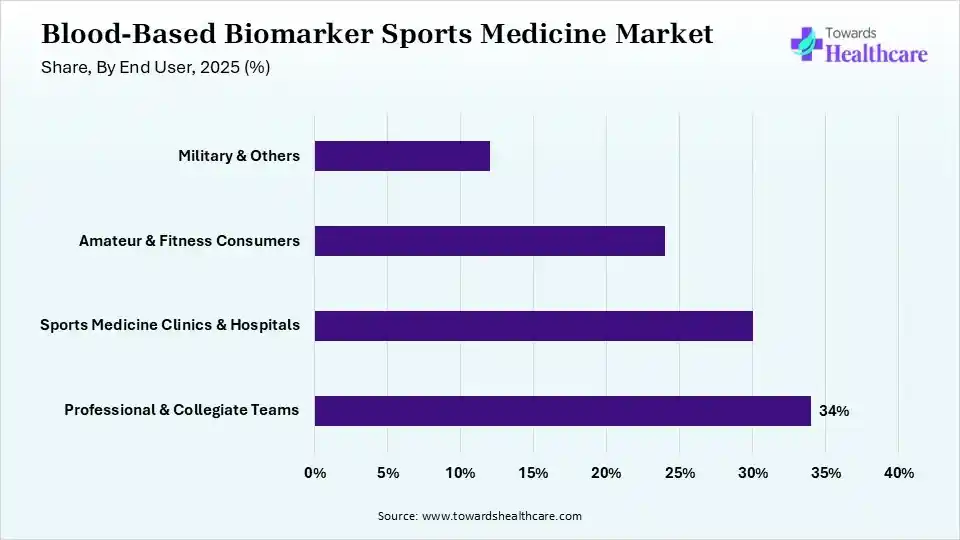
Professional and collegiate teams accounted for 34% of market revenue in 2025 and are projected to expand at a CAGR of 9.82% from 2026 to 2035. Professional and collegiate sports organizations utilize biomarker testing to assess athlete health, manage recovery, and identify nutritional deficiencies, aided by dedicated medical teams. Ongoing investment in sports science is anticipated to maintain demand for these practices in the forecast period.
Sports Medicine Clinics and Hospitals Facilities utilize blood-based biomarker testing to assess sports injuries, monitor recovery, and identify physiological issues affecting athletic performance. Growing demand for specialized care and awareness of evidence-based rehabilitation are driving this trend. The expansion of sports medicine services and diagnostics is anticipated to further enhance this segment.
Amateur and Fitness Consumers Increased participation in recreational sports and wellness programs is driving consumer interest in biomarker testing. Enhanced access through direct-to-consumer testing services and at-home kits is facilitating evaluations of nutrition, hormones, and recovery. The integration of laboratory results with digital fitness platforms is anticipated to boost growth during the forecast period.
Military and Others organizations are investigating blood-based biomarkers to assess physical stress, monitor recovery, and evaluate traumatic brain injuries. This initiative responds to the needs of personnel in demanding environments, creating opportunities for specialized diagnostics and enhancing military health monitoring.
Segment Outlook: Professional and collegiate teams are expected to remain the largest end-user segment by 2035, accounting for roughly 31.67% of the market. Amateur and fitness consumers are projected to record the fastest growth, with a reported CAGR of 12.22% over the forecast period, supported by the expansion of direct-to-consumer testing and personalized fitness monitoring. Sports medicine clinics and hospitals will remain important purchasers, while military and other specialized applications will provide additional opportunities.
Analyst View: In our analysis, segment shares were allocated using testing demand, product portfolios, estimated testing volumes, and average prices across each category. Nutritional and micronutrient biomarkers, lab-based testing, and professional and collegiate teams lead their respective segments because they address the established requirements of today's buyers. However, brain injury biomarkers, point-of-care devices, and amateur and fitness consumers are expected to gain market share as diagnostic technologies, consumer adoption, and decentralized testing applications expand.
Note: 2025 is the base year; 2035 shares and CAGRs are forecasts.
Sources: Expert interviews, secondary sources, Towards Healthcare database and Towards Healthcare analysts.
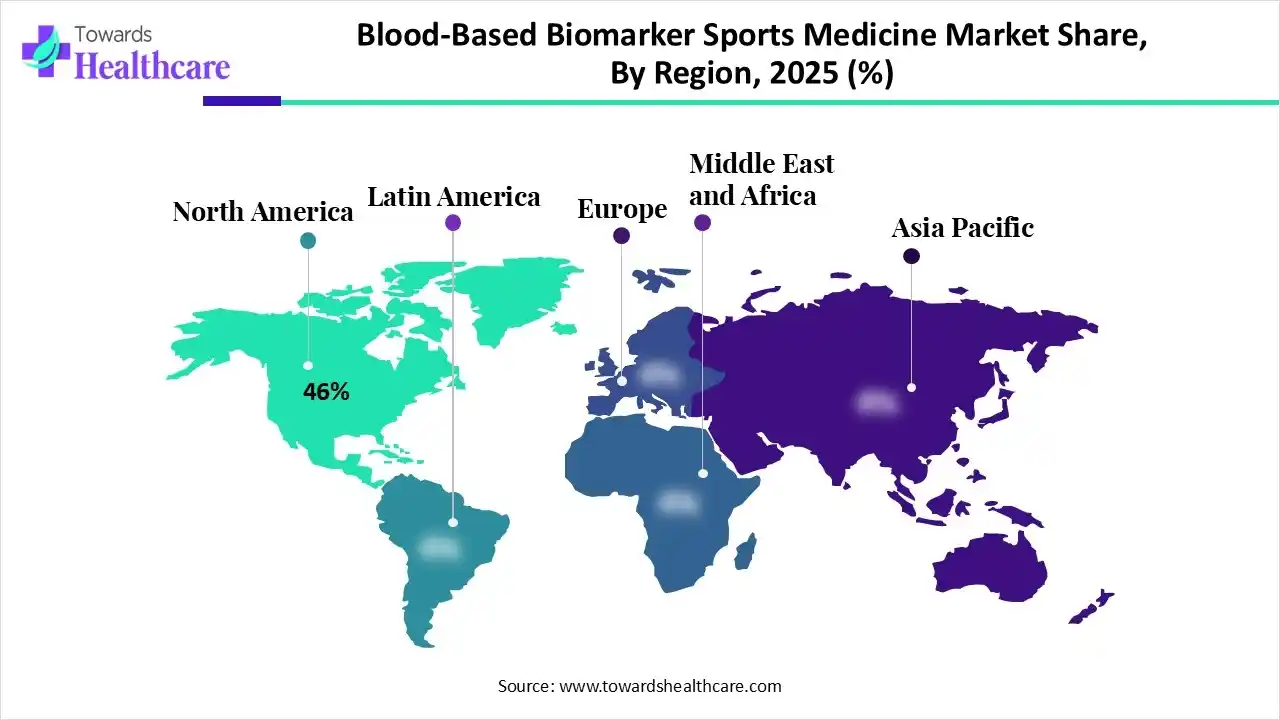
North America accounted for 46% of the blood-based biomarker sports medicine market in 2025 and is projected to expand at a CAGR of 10.14% from 2026 to 2035. The region's dominance is due to a strong sports medicine ecosystem, high levels of professional and collegiate sports participation, and advanced clinical labs. The U.S. market benefits from investments in athlete health, concussion awareness, and advanced brain injury testing. Additionally, point-of-care diagnostics and consumer wellness testing enhance regional demand, although growth in North America is projected to be slightly slower than the overall market during the forecast period.
Europe growth in sports science, particularly in professional football and organized sports, is bolstered by an emphasis on athlete health and performance monitoring. Countries like Germany, the U.K., France, Italy, and Spain have set up sports medicine facilities and clinical labs. There's an increasing focus on personalized nutrition, injury prevention, and recovery assessment, which is anticipated to drive the adoption of blood-based biomarker testing.
Asia Pacific region is becoming significant due to rising investments in sports infrastructure and increasing participation in athletics and fitness. Key growth markets include China, Japan, India, Australia, and South Korea. Investments in sports science, private healthcare, and testing access are anticipated to further enhance market development.
Latin America demand for sports injury management is driven by football participation and professional sports development, particularly in Brazil and Argentina, which have strong football ecosystems and a rising focus on athlete health. However, uneven access to diagnostic infrastructure and varying healthcare expenditures may hinder the adoption of advanced biomarker technologies in certain regions.
Middle East and Africa market development in GCC countries and South Africa relies on investments in professional sports and athlete development programs. Growing interest in international sports and high-performance training drives the use of advanced athlete monitoring technologies. Enhanced healthcare infrastructure and sports science are likely to promote the expansion of blood-based biomarker testing.
Analyst View: In the global blood-based biomarker sports medicine market, North America maintains its leading position because of its mature sports medicine infrastructure, strong professional and collegiate sports ecosystem, and established diagnostic suppliers. Asia Pacific is expected to receive the highest growth premium because sports investments, fitness participation, and adoption of advanced athlete monitoring technologies are expanding rapidly. Europe is projected to maintain a substantial market position, while Latin America and the Middle East and Africa will benefit from growing sports infrastructure and greater attention to athlete health management.
| Rank | Company Name | 2025 Share (%) | Key Products / Business | Headquarters |
| 1 | Abbott | 3.88% | i-STAT TBI and Alinity TBI concussion blood tests | United States |
| 2 | Quest Diagnostics | 2.18% | Athlete and consumer blood panels | United States |
| 3 | Labcorp | 1.94% | Sports and wellness lab testing | United States |
| 4 | Roche Diagnostics | 1.94% | Clinical chemistry and immunoassays | Switzerland |
| 5 | Siemens Healthineers | 1.21% | Immunoassay and chemistry tests | Germany |
| 6 | bioMérieux | 0.97% | VIDAS TBI (GFAP, UCH-L1) test | France |
| 7 | InsideTracker | 0.73% | Blood-based performance analytics | United States |
| 8 | Quanterix | 0.73% | Simoa brain injury biomarkers for research | United States |
| 9 | Nova Biomedical | 0.73% | Point-of-care lactate and chemistry | United States |
| 10 | Orreco | 0.49% | Athlete biomarker analytics | Ireland |
Note: Company shares are 2025 estimates.
Sources: Company press releases, expert interviews, secondary sources, Towards Healthcare database and Towards Healthcare analysts.
Abbott led the blood-based biomarker sports medicine market with an estimated 3.88% share of 2025 revenue, followed by Quest Diagnostics at 2.18% and Labcorp at 1.94%. Abbott maintains its competitive position through its i-STAT TBI and Alinity TBI concussion blood testing solutions, while Quest Diagnostics and Labcorp participate through athlete, consumer, and wellness laboratory testing services.
Other major participants include Roche Diagnostics, Siemens Healthineers, bioMérieux, InsideTracker, Quanterix, Nova Biomedical, and Orreco. These companies compete through clinical chemistry assays, specialized brain injury biomarkers, point-of-care diagnostic technologies, blood-based performance analytics, and athlete monitoring platforms.
The top 10 companies collectively accounted for an estimated 14.81% of 2025 market revenue, while the remaining 85.19% was distributed among sports laboratories, diagnostic providers, wellness testing companies, and specialized analytics firms. The market remains fragmented, with competition centered on clinical validation, test turnaround time, sideline usability, biomarker panel breadth, digital integration, partnerships with sports organizations, and testing costs.
The competitive landscape features both established diagnostic manufacturers and specialized athlete analytics firms. Larger suppliers leverage existing testing infrastructure and relationships, while specialized companies focus on athlete-specific biomarker analysis and personalized performance metrics. As the market develops, those combining validated assays, quick testing methods, and impactful health analytics are likely to enhance their competitive edge.
Abbott: Abbott is headquartered in the United States and held an estimated 3.88% share of the blood-based biomarker sports medicine market in 2025. Its offering includes i-STAT TBI and Alinity TBI concussion blood testing solutions, which support the assessment of suspected traumatic brain injury. Its diagnostic infrastructure and point-of-care capabilities strengthen its competitive position. In the Towards Healthcare Companies Quadrant, Abbott is positioned as a Leader.
Quest Diagnostics: Quest Diagnostics is headquartered in the United States and accounted for an estimated 2.18% share of the market in 2025. Its market participation includes athlete and consumer blood panels used to evaluate nutritional, metabolic, hormonal, and general wellness indicators. Its extensive laboratory network and established diagnostic service capabilities support its position. In the Towards Healthcare Companies Quadrant, it is positioned as a Leader.
Labcorp: Labcorp, part of Laboratory Corporation of America Holdings, is headquartered in the United States and held an estimated 1.94% share of the market in 2025. Its offering includes sports and wellness laboratory testing services that support biomarker assessment and health monitoring. Its established clinical laboratory infrastructure and broad testing portfolio strengthen its market position. It is positioned as a Leader.
Roche Diagnostics: Roche Diagnostics, part of F. Hoffmann-La Roche Ltd, is headquartered in Switzerland and held an estimated 1.94% share of the market in 2025. Its participation is supported by clinical chemistry and immunoassay technologies used to evaluate various physiological and metabolic indicators. Its global diagnostic infrastructure and laboratory relationships support its competitive position. It is positioned as a Leader.
Siemens Healthineers: Siemens Healthineers is headquartered in Germany and accounted for an estimated 1.21% share of the market in 2025. The company participates through immunoassay and clinical chemistry testing technologies used in laboratory-based biomarker assessment. Its established diagnostic platforms and international healthcare presence support its position. In the Towards Healthcare Companies Quadrant, it is categorized as a Leader.
bioMérieux: bioMérieux is headquartered in France and held an estimated 0.97% share of the market in 2025. Its participation includes the VIDAS TBI test associated with GFAP and UCH-L1 brain injury biomarkers. Its specialized diagnostic capabilities and focus on biomarker-based testing support its position in the concussion diagnostics segment. It is classified as a Leader.
InsideTracker: InsideTracker, part of Segterra, Inc., is headquartered in the United States and held an estimated 0.73% share of the market in 2025. The company focuses on blood-based performance analytics and personalized health insights. Its approach combines biomarker information with individualized recommendations to support health and performance monitoring. It is positioned as an Innovator.
Quanterix: Quanterix is headquartered in the United States. It held an estimated 0.73% share of the blood-based biomarker sports medicine market in 2025. Its offering centres on Simoa brain injury biomarkers for research. In the Towards Healthcare Companies Quadrant it is positioned as an Innovator.
Nova Biomedical: Nova Biomedical is headquartered in the United States and held an estimated 0.73% share of the market in 2025. Its market participation includes point-of-care lactate and clinical chemistry testing technologies. Its portable diagnostic platforms support rapid physiological assessment in clinical and performance-related environments. It is positioned as an Innovator.
Orreco: Orreco is headquartered in Ireland and accounted for an estimated 0.49% share of the market in 2025. The company specializes in athlete biomarker analytics and performance monitoring solutions. Its focus on translating biological data into athlete-specific insights supports its participation in the sports science ecosystem. It is categorized as an Innovator.
The blood-based biomarker sports medicine ecosystem links assay & device makers, labs & testing services, analytics platforms, users, and leagues & regulators, with each stage adding value before products reach end users.
| Ecosystem Stage | Role in the Market | Key Companies |
| Assay & Device Makers | Make tests and analyzers | Abbott, Roche, bioMérieux, Nova Biomedical |
| Labs & Testing Services | Run panels | Quest, Labcorp, sports labs |
| Analytics Platforms | Interpret athlete data | InsideTracker, Orreco |
| Users | Use results | Teams, clinics, athletes, military |
| Leagues & Regulators | Set protocols and clear tests | Sports leagues, FDA, anti-doping bodies |
Sources: Company press releases, expert interviews, secondary sources, Towards Healthcare database and Towards Healthcare analysts.
Assay and Device Makers: Assay and device manufacturers develop the diagnostic technologies, reagents, and testing platforms required to measure blood-based biomarkers. Abbott, Roche, bioMérieux, and Nova Biomedical are important participants in this stage. Their products support clinical chemistry, concussion assessment, and point-of-care testing.
Labs and Testing Services: Laboratory providers conduct athlete biomarker panels and specialized diagnostic testing. Quest Diagnostics, Labcorp, and specialized sports laboratories provide testing infrastructure and analytical services. These organizations help make biomarker testing accessible to sports teams, healthcare facilities, and individual athletes.
Analytics Platforms: Analytics providers interpret biomarker results and integrate biological information into athlete monitoring systems. InsideTracker and Orreco are examples of companies operating in this category. Their services support personalized health insights, recovery assessment, and data-driven performance management.
Users: Professional and collegiate sports teams, sports medicine clinics, hospitals, amateur athletes, fitness consumers, and military organizations represent the primary end users. These groups use blood-based biomarker information to evaluate health, identify potential deficiencies, monitor recovery, and support injury management.
Leagues and Regulators: Sports organizations, regulatory authorities, and anti-doping bodies influence the development and use of blood-based biomarker testing. The FDA oversees applicable diagnostic products in the United States, while sports leagues and anti-doping organizations influence testing protocols, athlete data governance, and acceptable testing practices.
The value chain in the global blood-based biomarker sports medicine market begins with biomarker research and assay development, followed by diagnostic manufacturing, laboratory testing, and data interpretation. Distribution partners and healthcare providers connect these technologies with sports organizations and individual athletes. Analytics platforms add value by converting biomarker results into actionable insights for athlete monitoring. Companies that combine validated diagnostic technologies, testing infrastructure, digital analytics, and long-term relationships with sports organizations are well-positioned to capture greater ecosystem value.
The Towards Healthcare Companies Quadrant positions key participants in the blood-based biomarker sports medicine market by market strength, reflecting revenue scale, market share, and geographic reach, and by innovation and growth strategy, reflecting product portfolio breadth, R&D intensity, and partnerships. Positions reflect each company's estimated 2025 share of the blood-based biomarker sports medicine market and our assessment of its product innovation, portfolio breadth, and partnerships.
Sources: Company press releases, expert interviews, secondary sources, Towards Healthcare database and Towards Healthcare analysts.
Leaders: Abbott, Quest Diagnostics, Labcorp, Roche Diagnostics, Siemens Healthineers, and bioMérieux combine high market share with broad portfolios and strong innovation.
Innovators: InsideTracker, Quanterix, Nova Biomedical, and Orreco bring newer technologies and specialised products.
By Biomarker Type
By Test Format
By End User
By Region
The global blood-based biomarker sports medicine market was estimated using a bottom-up assessment of revenues attributable to qualifying blood-based diagnostic tests, assay kits, testing services, point-of-care solutions, and at-home sample-collection products. The analysis evaluated testing demand across professional and collegiate sports teams, sports medicine clinics, hospitals, amateur and fitness consumers, and selected military applications.
Market revenues were assessed by biomarker category, test format, end-user group, and geography. The analysis considered testing volumes, average selling prices, testing frequency, panel composition, commercial product availability and laboratory service revenues. Multi-biomarker panels were allocated according to their primary testing purpose or a defined revenue-allocation methodology to prevent double counting.
Competitive market shares were estimated using revenues attributable to relevant sports medicine applications rather than total corporate revenues. General-purpose diagnostic platforms, unrelated laboratory testing, non-blood-based monitoring products and broad wellness services were excluded unless a directly attributable sports-related revenue component could be established. Diagnostic products intended for clinical TBI assessment were distinguished from athlete-focused performance and recovery testing services.
Forecasts from 2026 to 2035 incorporate expected changes in sports participation, concussion assessment adoption, athlete monitoring programmes, laboratory and point-of-care testing infrastructure, consumer testing demand, clinical validation, and testing costs. Regional estimates were assessed using sports medicine infrastructure, diagnostic access, professional and collegiate sports participation, commercial test availability and healthcare expenditure. Estimates were cross-checked against company disclosures, product portfolios, regulatory records, expert interviews, and relevant industry developments.
Analyst View: The blood-based biomarker sports medicine market is set for significant growth as organizations, healthcare providers, and athletes focus on objective health monitoring and injury assessment. Nutritional testing will remain vital for evaluating factors like iron status and vitamin D. Brain injury biomarkers are anticipated to grow as concussion awareness increases alongside rapid testing technologies. North America will lead the market due to its established infrastructure, while Asia Pacific is expected to grow fastest amid rising fitness awareness. Key opportunities include sideline concussion assessments and personalized biomarker panels, although challenges such as validation of performance markers and data privacy persist. Emphasis on athlete safety and personalized management will drive market expansion through 2035.