

Pipeline Programs

CGT Companies Tracked

Manufacturing Facilities


The global brain cancer market size was estimated at USD 3.09 billion in 2025 and is predicted to increase from USD 3.4 billion in 2026 to approximately USD 8.06 billion by 2035, expanding at a CAGR of 10.07% from 2026 to 2035.
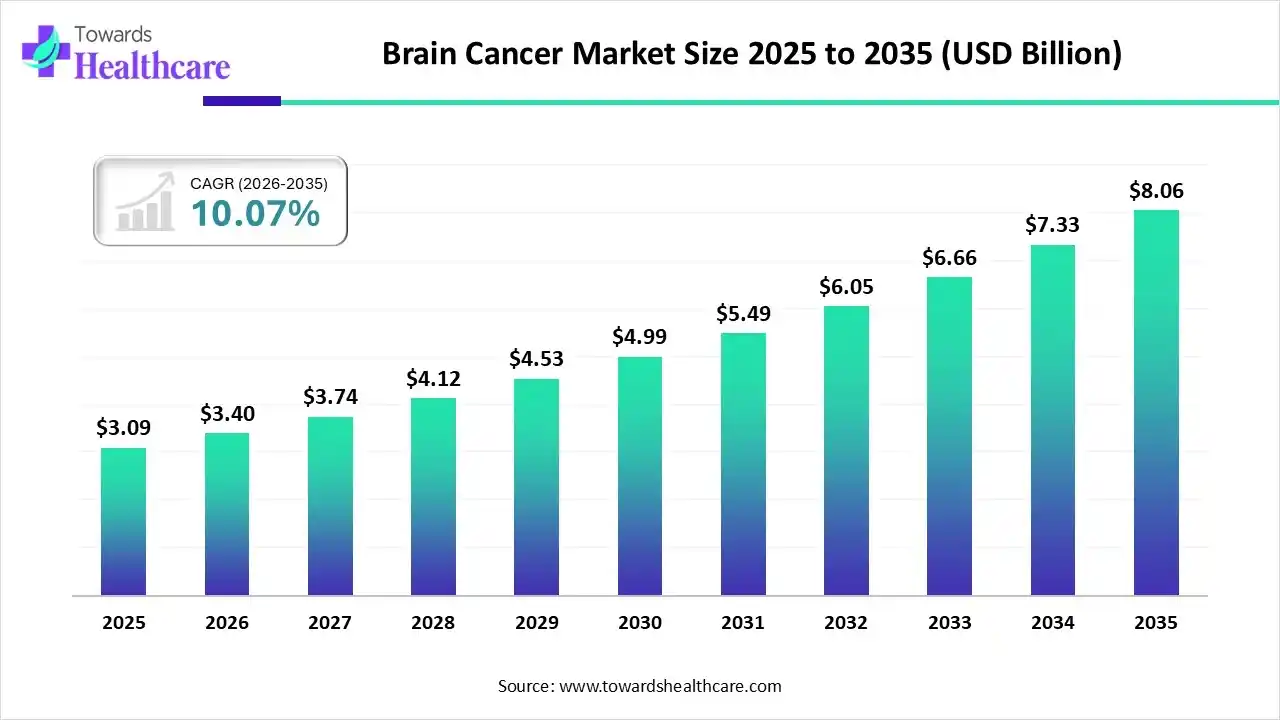
The brain cancer market is growing due to a growing population with stressful life conditions, a wrong diet, and a busy lifestyle.
The brain cancer market involves a multidisciplinary strategy, significantly using surgery, radiation therapy, and chemotherapy, often integrated with novel strategies such as targeted therapy, immunotherapy, and tumor treating fields (TTFields). People who have been exposed to a strong type of radiation called ionizing radiation have an increased risk of brain tumors. Patients with an increased risk of brain tumors may consider screening tests. Brain tumors occur in nerves, the pituitary gland, and the pineal gland.
| Cancer Cases | No. of Cases |
| Estimated New Cases in 2025 | 24,820 |
| Estimated Deaths in 2025 | 18,330 |
The integration of AI-driven technology into brain cancer drives the growth of the market, as AI-driven technology brought transformative innovations to brain tumor management, using imaging, histopathological, and genomic devices for effective identification, categorization, outcome prediction, and treatment planning. AI-driven models efficiently impact various stages of the diagnostic and therapeutic process.
Personalized Cancer Vaccines:
Personalized cancer vaccines have high specificity and work by provoking an immune response directly against cancer cells, thereby reducing the destruction of healthy tissue and lowering off-target effects.
Antibody-Drug Conjugates:
Antibody drug conjugated nanoparticles allow the selective targeting of brain tumor cells by exploiting surface receptors that are overexpressed both on tumor cells and on the endothelial cells of the blood–brain barrier (BBB), transferrin receptor (TfR), and epidermal growth factor receptor (EGFR).
Targeted IDH Inhibitors:
Effectiveness of IDH inhibitors in managing tumors with IDH mutations is superior to that of conventional healthcare therapy, potentially offering more healthcare benefits to patients.
| Key Elements | Scope |
| Market Size in 2026 | USD 3.4 Billion |
| Projected Market Size in 2035 | USD 8.06 Billion |
| CAGR (2026 - 2035) | 10.07% |
| Leading Region | North America by 40% |
| Historical Data | 2020 - 2023 |
| Base Year | 2025 |
| Forecast Period | 2026 - 2035 |
| Measurable Values | USD Millions/Units/Volume |
| Market Segmentation | By Product/Solution Type, By Treatment Modality, By Diagnosis & Monitoring Technology, By End User, By Region |
| Top Key Players | Roche Holding AG, Novartis AG, Pfizer Inc., Merck & Co., Inc., Bristol-Myers Squibb, AstraZeneca PLC |
| Segments | Shares % |
| Therapeutic Treatments | 55% |
| Diagnostic Imaging | 25% |
| Surgical Devices | 12% |
| Supportive Care Products | 8% |
Which Product/Solution Type Led the Brain Cancer Market in 2025?
In 2025, the therapeutic treatments segment held the dominant market share of 55%, as these therapies supports treat brain cancer in children. It supports managing cancers that are close to significant parts of the brain. This treatment shrinks the tumor or slows down its growth, which helps people live longer and helps with symptoms. Immunotherapy provides promising choices for managing brain cancer, which is traditionally treated with chemotherapy, radiation therapy, and surgery.
Diagnostic Imaging
Whereas the diagnostic imaging segment is the fastest-growing in the market, as these well-developed imaging processes have shown some promise in differentiating PsP from true tumor reappearance in recurrent cancer. Its capability to produce detailed images of the brain, differentiate cancer types, and guide treatment makes it a significant tool in modern oncology and neurology.
| Segments | Shares % |
| Chemotherapy | 30% |
| Targeted Therapy | 18% |
| Immunotherapy | 20% |
| Radiation Therapy | 17% |
| Surgery (Neurosurgical) | 10% |
| Tumor Treating Fields (TTF) | 5% |
Why did the Chemotherapy Segment Dominate the Market in 2025?
The chemotherapy segment is dominant in the brain cancer market by 30% share in 2025, as chemotherapy is highly efficient in supervising the growth and spread of brain cancer. It works by inhibiting the division of quickly multiplying tumor cells, therefore lowering cancer size and preventing further progression. Oncologists employ many chemotherapy medicines to target brain tumours. Based on the type of cancer, location, and grade, these medicine be used alone or in combination form.
Immunotherapy
Whereas the immunotherapy segment is the fastest growing in the market, as it is novel and advancing brain cancer immunotherapies have the strength to lower the challenging effects and enhance survival rates for patients with brain cancer. Immunotherapy strengthens or reprograms the body's natural immune response to target and eradicate tumor cells. Immunotherapy has evolved as a promising approches for tackle the brain metastases.
| Segments | Shares % |
| MRI & CT Imaging | 45% |
| PET Imaging | 20% |
| Molecular & Genetic Testing | 18% |
| AI-Based Imaging Analysis | 10% |
| Liquid Biopsy | 7% |
Why did the MRI & CT Imaging Segment Dominate the Market in 2025?
The MRI & CT Imaging segment is dominant in the brain cancer market by 45% share in 2025, as this type of imaging plays a significant role in the management of patients with brain cancer. The technical advancement of computed tomography (CT) and magnetic resonance (MRI), with the development of novel imaging processes, strongly enhanced the identification and characterization of brain cancer.
PET Imaging
Whereas the PET imaging segment is the fastest growing in the market, as this is a functional imaging technology that plays an increasingly significant role in the management of brain cancer. Positron emission tomography (PET) scans identify early symptoms of cancer, heart disease, and brain conditions. It includes an injection of a safe radioactive tracer that helps detect diseased cells.
| Segments | Shares % |
| Hospitals | 50% |
| Specialty Cancer Centers | 30% |
| Diagnostic Laboratories | 12% |
| Academic & Research Institutes | 8% |
Why did the Hospitals Segment Dominate the Market in 2025?
The hospitals segment is dominant in the brain cancer market by 50% share in 2025, as some kinds of brain cancer, like meningioma, ependymoma, and oligodendroglioma, are extremely treatable. In a hospital treating brain cancer, choices include palliative surgery to lower mass effect, high-dose radiation treatment, chemotherapy, and evolving immunotherapy.
Specialty Cancer Centers
Whereas the specialty cancer centers segment is the fastest growing in the market, as specialty cancer centers manage brain cancer with targeted, multidisciplinary strategies, significantly using surgery such as craniotomy, minimally invasive to get rid of tumors, followed by advanced radiation therapy like Gamma Knife, and Proton Therapy for remaining cells, and then chemotherapy.
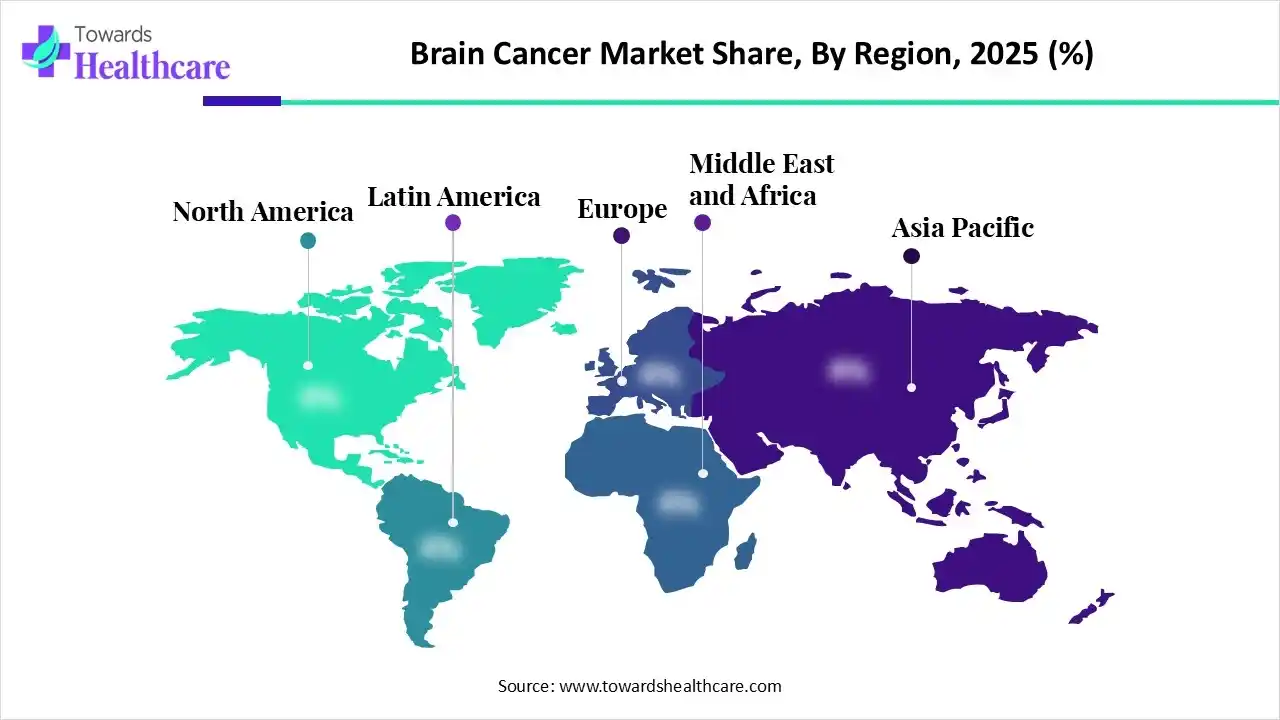
In 2025, North America led the brain cancer market by 40% share, as advancements in scanning and diagnostic technology and changes in environmental challenging factors, the incidence of brain and CNS cancers is expected to grow. Adults aged more than 65 are a fast-growing segment of America's population, who are more prone to brain cancer. Recent research indicates that there is a potential link between moderate to severe traumatic brain injury and a future risk of brain cancer.
U.S. Market Trends
Brain cancer makes up around 1% of the every year cancer diagnoses in the US, affecting the psychological, physical, and cognitive health of the U.S. population. In 2025, 2,041,910 novel cancer cases and 618,120 cancer deaths are estimated to occur in the United States.
Canada Market Trends
Canada has strong neuro-oncology centers and advanced imaging access. Around 27 new primary brain tumors are estimated daily, highlighting ongoing treatment needs. Research is shifting toward glioblastoma biology, precision medicine, and clinical trials. A new five-year Canadian glioblastoma program received $4 million in 2025. Competition includes pharmaceutical firms, hospitals, and research networks. Opportunities exist in targeted therapies, clinical research, molecular testing, and improved patient access. These efforts can improve access.
Asia Pacific is set to experience rapid growth in the brain cancer market by 22% share, as significant increase in brain tumor incidence rates both in males and females in this area. Chronic illness integrated with functional damage often results in an increased requirement for health care and supportive long-term care (LTC) solutions. An aging population with the rising challenges of patients with chronic conditions in Asia needs effective health systems with integrated care.
India Market Trends
In India, every fourth person over 60 years and every fifth Indian over 45 years is diagnosed with poor health. India's cancer challenges are growing more rapidly than the worldwide average. Due to the poor healthcare technology in rural regions, lifestyle and environmental factors, and late identification, which drives the growth of the market is expected to grow.
China Market Trends
China is expanding neuro-oncology capacity through major cancer hospitals and stronger specialist services. Advanced MRI, molecular testing, surgery, and drug therapies are gaining wider use. Domestic drug development is increasing competition alongside multinational companies. Regulatory modernization is supporting access to newer oncology medicines. Growth opportunities include precision diagnostics, targeted treatments, immunotherapy combinations, and clinical trials. Better specialist training and hospital investment should further improve diagnosis and treatment access in major centers.
Europe is experiencing substantial growth in the brain cancer market with share of 25%, as brain and CNS cancers are the most common solid cancers in children and adolescents, posing a significant challenge to life quality and expectancy. Cancer care investing has increased in Europe over the past period, significantly because of the increasing number of cancer patients and spending in novel technology, which drives the growth of the market.
UK Market Trends
In the UK, brain cancer, like most other cancers, becomes more common as people age. Each year in the UK, about 13,000 people are diagnosed with a brain cancer. There are around 5,500 deaths because of brain cancer each year in the UK, more than 100 deaths each week. Developments in low-dose CT, MRI, and molecular imaging have recently made it possible to identify cancer earlier, with greater accuracy and lower challenges.
Germany Market Trends
Germany benefits from established university hospitals, specialist neuro-oncology teams, and strong clinical research. Treatment is increasingly guided by molecular testing and precision diagnostics. Competition includes global pharmaceutical companies, biotechnology firms, and academic research centers. Reimbursement pathways support access to specialty cancer medicines. Growth opportunities include targeted therapies, immunotherapy combinations, advanced imaging, and clinical trials. Continued investment in personalized treatment can improve outcomes for patients with difficult brain tumors and outcomes.
South America is experiencing growth in the market, driven by improved access to diagnostic imaging such as MRI, more clinical trials, and increased investment in oncology infrastructure, particularly in Brazil. The rise in cases, especially meningiomas, and an aging population are heightening the demand for treatment options. Enhanced availability of MRI and advanced neuroimaging in urban areas has led to better detection rates of brain and CNS tumors. Significant funding for cancer treatment facilities and heightened awareness of the importance of early diagnosis are also fueling this growth. The expansion of clinical trials by international pharmaceutical companies is introducing innovative therapies to the region, invigorating the market.
Brazil Market Trends
Brazil is emerging as a key player in the Latin American brain cancer treatment and research market due to high disease rates, advanced medical facilities, and active clinical trials. The brain tumor treatment market in Brazil is projected to grow significantly, supported by an aging population and increased oncology investment. With new cancer cases reported annually by the National Cancer Institute (INCA) and a large elderly demographic, Brazil provides a diverse patient base for research. The country is also a neurosurgery hub in the region, boasting specialized cancer research centers and oncology clinics in cities like São Paulo, Rio de Janeiro, and Porto Alegre, capable of conducting complex multinational studies. Investment in advanced technologies, such as CAR-T cell therapy and new drug delivery systems for the blood-brain barrier, has strengthened Brazil's position in cutting-edge cancer treatments.
Argentina Market Trends
Argentina is seeing gradual improvements in brain tumor diagnosis and specialist cancer care. Demand is supported by better imaging, neurosurgery, radiotherapy, and access to established medicines. Competition involves international drug manufacturers, local healthcare providers, and specialist hospitals. Budget pressures can limit access to expensive newer therapies. Growth opportunities include affordable targeted treatments, molecular testing, tele-oncology, and stronger referral networks. Expanding specialist capacity can help patients reach diagnosis and treatment earlier.
The brain cancer market in the Middle East and Africa (MEA) is expanding by 6% share due to rising cancer cases, advancements in diagnostic tools like MRI and CT scans, and improvements in healthcare systems. Government initiatives for early detection, increased awareness, and a growing number of skilled oncologists are also driving this growth. Advanced imaging technologies and molecular diagnostics are enabling earlier and more accurate detection of brain tumors. Government programs and collaborations with international firms are enhancing cancer treatment facilities and access to local treatments. The market is increasingly shaped by specialized methods like personalized medicine and immunotherapies, supported by a rise in clinical trials in the region.
UAE Market Trends
The UAE has emerged as a key player in the market, encompassing diagnostics and treatments. This growth is driven by significant government investments in healthcare, advanced technologies, and its status as a medical tourism hub. The market is rapidly expanding, with the UAE and Saudi Arabia leading the Gulf Cooperation Council (GCC) region due to high health spending and strong public-private partnerships. The region is adopting AI-driven imaging analytics like PET/MRI, robotic surgical systems, and nanotechnology for drug delivery. The UAE is enhancing its healthcare by partnering with global tech and pharmaceutical companies such as GE Healthcare, Roche, and Siemens to provide high-quality diagnostics and treatments. The government is focused on healthcare, creating a regulatory environment that encourages pharmaceutical innovation and accelerates drug approvals, often aligning with FDA timelines.
South Africa Market Trends
South Africa has growing demand for brain cancer diagnosis and treatment as specialized oncology services expand. Major hospitals support neurosurgery, radiotherapy, imaging, and chemotherapy, while access remains uneven. Competition includes multinational drug companies, local healthcare providers, and public hospitals. Opportunities include improving molecular diagnostics, specialist training, affordable medicines, and referral systems. Investment in cancer infrastructure and wider treatment access can strengthen the market, especially outside major urban centers and communities.
R&D:
Management Processes:
Patient Services:
| Company | Headquarters | Latest Update |
| Roche Holding AG | Switzerland | Roche prolonged its healthcare research program with novel trials examining personalized treatments for glioblastoma, one of the most aggressive forms of brain cancer. |
| Novartis AG | Switzerland | Novartis is reimagining cancer care with RLT for patients with advanced cancers |
| Pfizer Inc. | United States | Pfizer is committed to generating a pipeline of novel cancer medicines, treatments, and clinical trials that enhance the outlook for cancer patients globally |
| Merck & Co., Inc. | United States | In June 2025, Merck announced the presentation of novel oncology information across more than 12 tumor types at the 2025 American Society of Clinical Oncology (ASCO). |
| Bristol-Myers Squibb | United States | Bristol Myers Squibb provides brain cancer resources for patients and caregivers, involving data related to brain tumor management. |
| AstraZeneca PLC | Finland | AstraZeneca develops its ambition to redefine haematology care with novel information from its various pipelines. |
Strengths
Weaknesses
Opportunities
Threats
In August 2026, "Even after a successful surgery, microscopic glioblastoma cells remain in the brain," said Dr. Chen. "In 50 to 70 percent of patients, these cells grow quickly enough to become visible on MRI scans before standard radiation treatment can begin. In some cases, the tumor grows back to a size that requires a second surgery. This early regrowth is associated with poorer survival, creating an urgent need for treatments that can target cancer cells without affecting wound healing."
By Product/Solution Type
By Treatment Modality
By Diagnosis & Monitoring Technology
By End User
By Region




Principal Consultant
Payal Rabde is a Healthcare Market Research Analyst at Towards Healthcare Research & Consulting with 4+ years of experience in pharmaceuticals, biotechnology, medical devices, and life sciences.
Learn more about Payal Rabde

Reviewed By
Aditi Shivarkar is a seasoned professional with over 14 years of experience in healthcare market research. As a content reviewer, Aditi ensures the quality and accuracy of all market insights and data presented by the research team.
Learn more about Aditi Shivarkar










