
Pipeline Programs

CGT Companies Tracked

Manufacturing Facilities


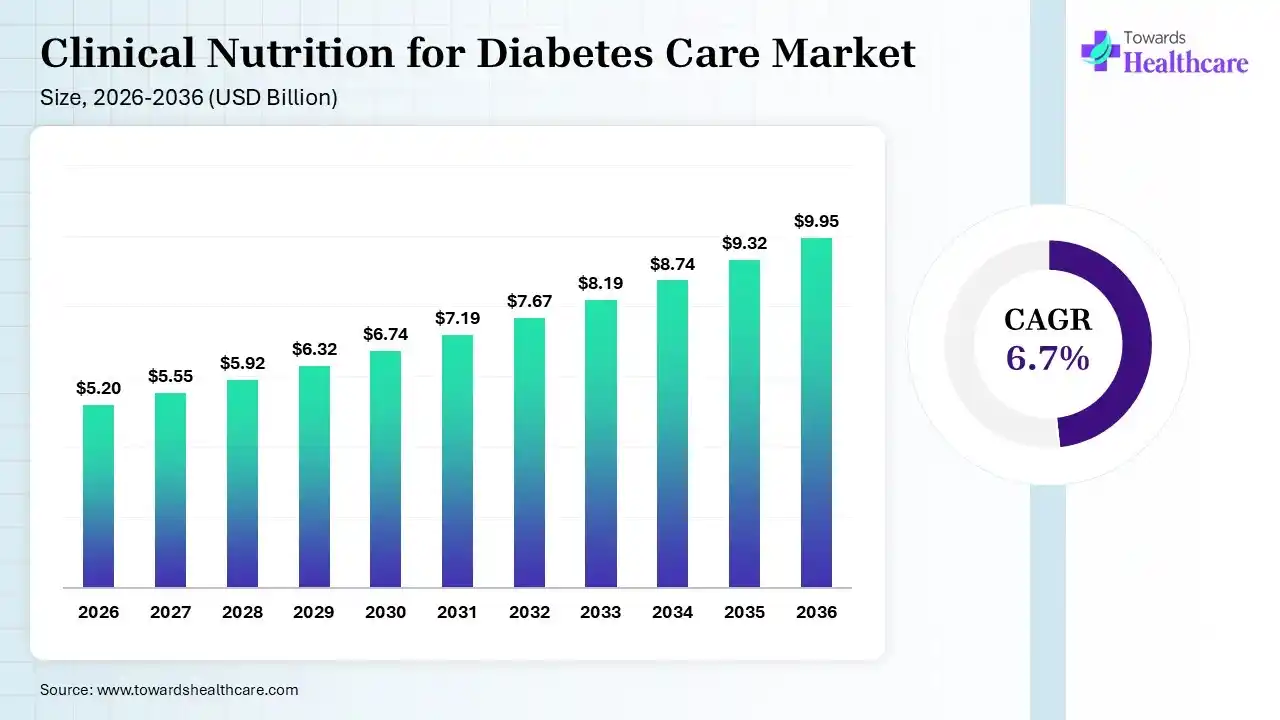
The market size is calculated at US$ 5.2 billion in 2026, grew to US$ 5.55 billion in 2027, and is projected to reach around US$ 9.95 billion by 2036, expanding at a CAGR of 6.7% between 2026 and 2036. The number of adults with diabetes worldwide is projected to rise from 589 million in 2024 to 853 million by 2050, expanding the potential patient base for diabetes-specific clinical nutrition.
Not all adults with diabetes require specialized clinical nutrition. Among patients who need nutritional support, product selection and adoption will depend on clinical suitability, product availability and affordability, alongside alternative nutrition therapy options. Historical revenue and the 2025 base-year estimates segmented by product type, geography, distribution channel and care setting. Scenario analysis assesses how changes in market share, purchase frequency, pricing and product mix could influence revenue through 2030 and 2035.
The clinical nutrition for diabetes care market sits at the intersection of medical nutrition, diabetes management, metabolic health, and specialized oral and enteral feeding. Its commercial potential is supported by the rising prevalence of diabetes, greater emphasis on glycemic control, the use of nutrition as an adjunct to medical treatment, and the need for nutritionally balanced products designed for specific patient requirements.
Diabetes-specific clinical nutrition differs from the broader diabetes food market. It includes specialized oral nutrition supplements, enteral formulas, powders, ready-to-drink (RTD) products and other clinical nutrition solutions designed to support blood glucose management while meeting patients' nutritional requirements. General low-sugar foods, conventional meal replacements and diabetes medications remain outside the market scope unless explicitly included in an extended market definition.
The research methodology distinguishes diabetes-specific clinical nutrition from general medical nutrition, everyday dietary products, and pharmaceutical treatments. This separation is essential for estimating the addressable market, calculating market shares and evaluating product economics accurately.
About 589 million adults ranging from age 20 to 79 years had diabetes in the year 2024, constituting 11.1% of the total adult population globally. The number is projected to rise to about 853 million people by the year 2050, a rise of about 45%. There are two main types of diabetes: Type 2 accounts for over 90% of diabetes cases, with about 81% of people with diabetes coming from the developing countries of the world. This provides huge market potential for patients, but not all patients need clinical nutrition.
Those who require clinical nutrition due to nutritional deficiency, illness, hospitalization, recuperation, weakness, difficulty in swallowing, or tube feeding only form the market opportunity for business enterprises. The difference in formulas used by diabetic patients would be due to different carbohydrate content, fiber content, protein, and fat contents to give good post-meal glucose responses.
| Dimension | Principal segments | Commercial significance |
| Product form | Ready-to-drink, powder, liquid concentrate, tube-feeding formula, texture-modified nutrition | Convenience, dosage flexibility and care setting |
| Care setting | Hospital, outpatient, home care, long-term care | Determines procurement, prescribing and repeat use |
| Patient need | Supplemental calories, protein support, malnutrition, dysphagia, full enteral feeding | Determines formula specification and duration |
| Customer | Hospitals, clinics, pharmacies, distributors, caregivers, consumers | Shapes pricing, contracting and distribution |
| Geography | North America, Europe, Asia-Pacific, Latin America, Middle East and Africa | Reflects affordability, access and clinical infrastructure |
The clinical nutrition market for diabetes management is divided into five key segments: product form, care setting, patient need, customer type and geography. Product forms include ready-to-drink products, powders, concentrates, tube-feeding formulas and texture-modified nutrition products. Demand varies across hospitals, outpatient facilities, home care, and long-term care settings based on patients’ nutritional requirements and ability to consume food orally.
Oral nutritional supplements and enteral formulas serve different patient groups with distinct nutritional requirements. Oral supplements support patients who can eat but require additional nutrition. Enteral formulas serve patients who cannot meet their nutritional needs through oral intake. High-calorie, high-protein, and texture-modified products address specific clinical requirements. Competitive strength depends on formulation, patient suitability, and the care setting. Clinical demand alone does not guarantee commercial success.
The strongest growth opportunities are likely to come from specialized formulations that address defined nutritional needs and reach patients through healthcare and home care channels. Segment performance must be assessed against patient population size, product penetration, selling price, consumption frequency, repeat purchases, and distribution costs. Geographic analysis must account for healthcare infrastructure, purchasing power and product availability alongside diabetes prevalence.
The market intelligence report evaluates segment revenue, market shares, growth forecasts and incremental revenue opportunities across product forms, patient needs, care settings, customer types and geographies. It identifies established revenue pools and emerging opportunities based on clinical relevance, market access, competitive intensity and purchasing economics.
The segmentation database covers product category, formulation, route of administration, patient need, care setting, customer type and country. It also tracks estimated revenue, market share, historical performance, forecast CAGR, pricing and adoption indicators to support commercial planning and investment decisions.
Demand for clinical nutrition in diabetes management is supported by rising diabetes prevalence, an aging population and the growing burden of comorbidities. Patients with acute or chronic conditions often require targeted nutritional support. Key market barriers include price sensitivity, limited access to dietitians, inadequate reimbursement and competition from conventional foods and general nutritional supplements.
Clinical evidence gives diabetes-specific formulas a clear point of differentiation. A meta-analysis of 23 articles involving 784 patients found that these formulas reduced postprandial blood glucose by approximately 1.03 mmol/L compared with standard formulas. This finding supports the value of specialized formulations. However, results vary by product, and short-term glucose reductions do not establish a lower risk of long-term complications.
Commercial success depends on converting clinical evidence into routine use. Healthcare professionals must recognize the benefits and recommend suitable products. Patients must also find them affordable, palatable and easy to incorporate into daily routines. Taste, price and adherence will therefore play a direct role in product adoption and repeat purchases.
Price per serving, price per 100 calories, price per gram of protein, price per day’s supply, and price per liter of enteral formula are appropriate for pricing. The comparison of package prices can be deceptive because there are different levels of energy density, protein, packaging size, and suggested usage for the same product.
There are diabetes-specific products that are available in the market such as 200 mL ready-to-drink packs, 400-500 g powder packs, and smaller texture-modified packs. These are just examples that prove why the global average price cannot be used for analysis without standardizing the formulation and pack.
Pricing analysis takes into consideration the difference between manufacturer net price, retail shelf price, hospital contract price, and patient out-of-pocket cost.
The diabetes nutrition market relies on existing food and medical nutrition manufacturing infrastructure. Supply capacity depends on formulation expertise, ingredient availability, food safety standards, shelf life and packaging capabilities. Cold chain requirements also affect distribution where applicable.
Products reach patients through hospitals, pharmacies, distributors and home care channels. However, strong general nutrition supply does not guarantee the availability of diabetes-specific formulas or specialized enteral nutrition products. Imported premium products may fill supply gaps but face limited adoption when out-of-pocket costs are high.
This study evaluates product availability, import dependence, domestic manufacturing capacity, supplier concentration, stock-out risks and reorder lead times. These factors help identify supply gaps and assess the reliability of product access across markets.
The value chain for diabetes clinical nutrition starts with sourcing protein, carbohydrates, lipids, fiber, vitamins and minerals. It then moves through formulation, blending, manufacturing, quality testing and packaging before products reach hospitals, healthcare facilities, pharmacies and end consumers.
Value creation depends on product performance and clinical suitability. Formulation quality, nutritional benefits, taste, texture, shelf stability and patient adherence influence product selection. Professional recommendations and established institutional relationships also support repeat purchases and long-term business growth.
The full report examines the cost structure, sourcing concentration, manufacturing processes, pricing markups and supply chain bottlenecks. It assesses these factors across different business models to account for variations in production costs, distribution arrangements and commercial margins.
The innovation can be done with respect to a lower amount of carbohydrates, alternative fiber systems, a higher amount of protein, energy density, micronutrients, and better palatability. There can be a formula that provides fewer carbohydrates and more lipids that help maintain postprandial blood sugar levels in the patient. These innovations can also include high-protein formulas due to the increasing need for protein, energy-dense formulas for patients who cannot intake fluids in sufficient amounts, and also modified formulas that use plants and textures for patients with difficulty in swallowing. These modifications will be tailored as per the requirements of the patients rather than a generic formula.
Regulatory requirements vary by country and product category. Diabetes nutrition products may be classified as conventional foods, foods for special medical purposes or medical foods. Each category can have different requirements for labeling, nutritional composition, health claims, manufacturing standards and professional supervision. These differences directly affect product launches and market access.
Reimbursement also determines commercial viability. Hospital purchases, home enteral nutrition coverage and retail sales operate under different payment structures. High out-of-pocket costs can restrict patient access to specialized formulas even when clinical needs are clear. Manufacturers must therefore assess affordability and reimbursement conditions in each target market.
Sustainability adds further operational considerations. Packaging materials, product shelf life, food waste, logistics efficiency and ingredient sourcing all affect costs and supply chain performance. These factors must be assessed alongside regulatory compliance and commercial returns to support long-term market growth.
Hospitals and LTCs need a reliable and stable nutrition supply, as well as correct formulation for patients suffering from various diseases. Clinics and dietitians affect the recommendations of products, while pharmacies, retail, and internet trade affect availability for long-term home use.
The purchasing process takes into account clinical fit, taste, tolerability, complete nutrition, cost, and ease of application. Institutional purchasing involves financial considerations, while consumers are more concerned about convenience and price.
In this analysis, the issue of patient eligibility is divided from consumption of products, which is measured through the following process: recommendation, prescribing if necessary, purchase and re-purchase.
| Segments | 2026 Share | 2026 Market Value (USD Million) |
| Oral nutritional supplements | 30% | $1,560 |
| Diabetes-specific enteral nutrition formulas | 22% | $1,144 |
| Meal replacement shakes and powders | 15% | $780 |
| Protein supplements | 10% | $520 |
| Low-carbohydrate and controlled-carbohydrate nutrition products | 13% | $676 |
| Specialized medical nutrition products | 10% | $520 |
Oral nutritional supplements are estimated to lead, consistent with the supplied market overview identifying this as the dominant product category in 2025. Their broad use for nutritional support, energy intake and dietary management helps sustain demand among people with diabetes.
| Segments | 2026 Share | 2026 Market Value (USD Million) |
| Controlled-carbohydrate formulations | 27% | $1,404 |
| High-protein formulations | 17% | $884 |
| High-fiber formulations | 15% | $780 |
| Low-glycemic-index formulations | 14% | $728 |
| Formulations enriched with healthy fats | 12% | $624 |
| Micronutrient-fortified formulations | 15% | $780 |
Controlled-carbohydrate formulations are estimated to hold the largest share because carbohydrate intake is closely linked to post-meal blood glucose levels and is a central consideration in diabetes nutrition. Low-glycemic-index formulations may gain traction as demand grows for products designed to support more gradual glucose responses.
| Segments | 2026 Share | 2026 Market Value (USD Million) |
| Type 1 diabetes | 18% | $936 |
| Type 2 diabetes | 48% | $2,496 |
| Gestational diabetes | 8% | $416 |
| Prediabetes and diabetes prevention | 16% | $832 |
| Diabetes associated with other medical conditions | 10% | $520 |
Type 2 diabetes is estimated to account for the largest share because of its high prevalence and the sustained need for dietary management, weight control and nutritional support. Gestational diabetes represents a smaller current share, although awareness of maternal nutrition and pregnancy-related glucose management may support growth.
| Segments | 2026 Share | 2026 Market Value (USD Million) |
| Blood glucose management | 32% | $1,664 |
| Weight management and obesity control | 20% | $1,040 |
| Malnutrition prevention and management | 12% | $624 |
| Protein and energy supplementation | 12% | $624 |
| Diabetes-related complications management | 13% | $676 |
| Recovery support during illness or hospitalization | 11% | $572 |
Blood glucose management is estimated to lead, consistent with the supplied market overview identifying it as the dominant patient need in 2025. Weight management and obesity control also account for substantial demand because excess weight and insulin resistance are closely linked to type 2 diabetes.
| Segments | 2026 Share | 2026 Market Value (USD Million) |
| Hospitals and intensive care units | 32% | $1,664 |
| Outpatient clinics and diabetes centers | 25% | $1,300 |
| Home healthcare | 21% | $1,092 |
| Long-term care facilities | 12% | $624 |
| Rehabilitation centers | 10% | $520 |
Hospitals and intensive care units are estimated to lead because patients with diabetes may require closely monitored nutritional support during acute illness, surgery and recovery. Outpatient diabetes centers and home healthcare also contribute substantial demand through ongoing dietary management and long-term care.
| Segments | 2026 Share | 2026 Market Value (USD Million) |
| Oral nutrition | 62% | $3,224 |
| Enteral tube feeding | 23% | $1,196 |
| Specialized oral medical nutrition | 15% | $780 |
Oral nutrition is estimated to dominate because most people with diabetes can consume food and nutritional supplements by mouth. Enteral tube feeding serves patients who cannot meet their nutritional needs orally and may experience increased demand in hospital and critical-care settings.
| Segments | 2026 Share | 2026 Market Value (USD Million) |
| Pediatric patients | 8% | $416 |
| Adult patients | 38% | $1,976 |
| Geriatric patients | 19% | $988 |
| Patients with obesity and diabetes | 15% | $780 |
| Patients with diabetes-related kidney disease | 10% | $520 |
| Critically ill or hospitalized patients with diabetes | 10% | $520 |
Adult patients are estimated to account for the largest share because type 2 diabetes and related nutritional-management needs are widespread in adulthood. Pediatric patients represent a smaller current segment, while age-specific formulations and specialized diabetes care may support future growth.
| Segments | 2026 Share | 2026 Market Value (USD Million) |
| Hospital pharmacies | 26% | $1,352 |
| Retail pharmacies and drugstores | 23% | $1,196 |
| Online pharmacies and e-commerce platforms | 14% | $728 |
| Medical nutrition distributors | 16% | $832 |
| Supermarkets and specialty nutrition stores | 11% | $572 |
| Direct sales to healthcare institutions | 10% | $520 |
Hospital pharmacies are estimated to lead, consistent with the supplied market overview identifying them as the dominant channel in 2025. Retail pharmacies and medical nutrition distributors also play important roles by making diabetes-specific products available for ongoing outpatient and home use.
| Segments | 2026 Share | 2026 Market Value (USD Million) |
| Hospitals and healthcare institutions | 34% | $1,768 |
| Diabetes clinics and endocrinology centers | 24% | $1,248 |
| Homecare providers | 16% | $832 |
| Healthcare professionals and dietitians | 12% | $624 |
| Patients and caregivers | 14% | $728 |
Hospitals and healthcare institutions are estimated to represent the largest end-user category because they purchase clinical nutrition products for inpatient treatment, recovery and specialized dietary support. Diabetes clinics and endocrinology centers also contribute through structured nutrition management and ongoing patient monitoring.
| Segments | 2026 Share | 2026 Market Value (USD Million) |
| North America | 35% | $1,820 |
| Latin America | 7% | $364 |
| Europe | 27% | $1,404 |
| Asia Pacific | 24% | $1,248 |
| MEA | 7% | $364 |
North America is estimated to lead, consistent with the supplied market overview identifying it as the dominant region in 2025. Established clinical nutrition markets, healthcare access and demand for diabetes-specific nutritional products support its position, while Asia Pacific benefits from its large patient population and expanding healthcare infrastructure.
The U.S. is estimated to dominate North American demand because of its large diabetes population and established clinical nutrition and medical food markets. Canada and Mexico contribute through hospital, pharmacy and outpatient nutrition services.
Brazil is estimated to lead Latin America because of its large population and substantial demand for diabetes care. Argentina and other markets contribute through hospital-based nutritional support, pharmacy distribution and diabetes management programs.
Western Europe is estimated to account for most European market revenue because of its established healthcare systems and access to specialized nutritional products. Eastern Europe contributes through hospital and outpatient diabetes care, with demand influenced by healthcare access and purchasing power.
Germany, France and the UK are estimated to be among the largest Western European markets because of their established healthcare systems and demand for specialized diabetes care. Other countries contribute through clinical nutrition services, hospital procurement and retail pharmacy sales.
Russia and Belarus are estimated to represent a substantial combined share of this category, while Türkiye contributes through its large population and diabetes care requirements. Demand in other markets is shaped by healthcare spending and access to specialized nutrition products.
China and India are estimated to account for substantial shares of regional demand because of their large populations and diabetes care needs. Japan, Australia and South Korea contribute through established healthcare systems and access to specialized nutritional products.
GCC countries are estimated to represent a substantial share of the MEA market because of healthcare investment and demand for diabetes management. South Africa and Egypt also contribute through hospital care, pharmacy distribution and clinical nutrition services.
Saudi Arabia is estimated to lead the GCC subsegment because of its population and healthcare requirements. The UAE and other Gulf countries contribute through hospital-based diabetes care, specialist clinics and growing demand for nutritional management.
Competition exists among diversified nutrition firms, medical nutrition specialists, regional players, and those that focus on certain formulations or target population groups. Competition spans both diabetes-specific revenues and the larger nutrition revenue streams, which offer manufacturing efficiencies, distribution capabilities, procurement power, and resources for clinical development.
Three key competitive categories include:
Market concentration must be assessed using revenue from diabetes-specific nutrition products rather than total company revenue. Since most companies do not disclose product-level sales, calculating accurate market shares and identifying the top five players requires reliable estimates of revenue from individual products.
| Company | Headquarters | Market position and core strength |
| Abbott | United States | Diabetes-specific oral nutrition and global nutrition distribution |
| Nestlé Health Science | Switzerland | Specialized nutrition, clinical products and international reach |
| Danone | France | Adult medical nutrition and specialized nutrition portfolios |
| Fresenius Kabi | Germany | Enteral feeding and diabetes-oriented clinical formulas |
| B. Braun | Germany | Clinical nutrition and healthcare delivery infrastructure |
| Baxter International | United States | Hospital nutrition and infusion-related capabilities |
| Meiji Holdings | Japan | Nutrition products and regional clinical nutrition exposure |
| Otsuka Pharmaceutical | Japan | Specialized nutrition and medical nutrition capabilities |
| Ajinomoto | Japan | Amino acids and nutrition-related ingredients and products |
| Hormel Foods | United States | Specialized nutrition and selected medical nutrition offerings |
| Kate Farms | United States | Plant-based oral and enteral nutrition |
| Medifood | Australia | Specialized nutrition products and regional market exposure |
| Victus | United States | Medical nutrition and specialized enteral formulations |
| Medtrition | United States | Clinical nutrition products and hospital-focused offerings |
| Real Food Blends | United States | Real-food blended tube-feeding nutrition |
| Nutricia | Netherlands | Medical nutrition and enteral feeding |
| Global Health Products | United States | Specialized nutrition and dietary products |
| Herbalife | United States | Nutrition supplements and direct-selling distribution |
| USANA Health Sciences | United States | Nutritional supplements and consumer channels |
| Zydus Wellness | India | Consumer nutrition and local distribution capabilities |
| Cipla Health | India | Consumer healthcare and nutrition-adjacent commercialization |
| Benchmark dimension | Leading platforms | Specialist providers | Regional challengers |
| Geographic reach | Strong | Moderate to strong | Primarily domestic or regional |
| Portfolio breadth | Broad | Clinical-category focused | Narrow to moderate |
| Institutional access | Strong | Strong in selected settings | Varies |
| Formulation specialization | Moderate to strong | Strong in core niches | Product dependent |
| Local affordability | Market dependent | Market dependent | Potential advantage |
| Public diabetes-specific financial disclosure | Limited | Limited | Often limited |
The comparison identifies where scale creates cost or distribution advantages and where smaller specialists can compete through formulation, local adaptation or a more focused customer proposition.
Key Coverage
Portfolio comparisons include ready-to-drink products, powders, tube feeding products, high energy products, high protein products, and texture-modified nutrition. The analysis includes flavors available, packaging sizes, nutrient concentration, preparation needs, and accessibility in other countries.
Clinical differentiation is done based on the formula and its appropriateness for the individual, while the commercial differentiation is done based on how well this value is communicated.
Key Coverage
Geographic analysis measures existing medical nutrition markets against emerging markets that have higher prevalence rates. North America and Europe have existing channels for clinical nutrition, while Asia-Pacific has high populations of diabetes patients with varying costs, healthcare access, and manufacturing facilities.
Manufacturing analysis focuses on manufacturing capabilities, import dependence, registrations, packaging capability, and distribution. Company-specific capacity is considered only when provided or can be reasonably estimated; company facility numbers are not considered as diabetes product capacity.
Key Coverage
These factors include institutional relationships, dietitian involvement, pharmacy dispensing, education of caregivers, product availability, and follow-up with patients. Hospital availability could be a factor for initial acceptance, whereas outpatient availability and convenient packaging could be factors in maintaining usage post-discharge.
The research evaluates direct sale, distribution, institutional contract, and retail methods of selling.
Key Coverage
Strategic monitoring tracks formulation innovation, product launches, manufacturing capacity, partnerships, and geographic expansion.
Product development is moving toward concentrated formulas, higher protein content, and plant-based clinical nutrition. These developments reflect growing demand for products that support glycemic control, meet nutritional requirements, and improve patient tolerance and ease of use.
M&A analysis distinguishes acquisitions focused on clinical nutrition from broader transactions involving nutrition companies. Each transaction is assessed by the target’s product portfolio, clinical capabilities, distribution network, geographic reach, and deal value. Diabetes-specific exposure is quantified only when supporting data is available.
Company profiles cover headquarters, ownership, corporate revenue, relevant products, financial performance, R&D capabilities, manufacturing footprint, geographic presence, strategic initiatives, strengths, weaknesses and growth opportunities. Diabetes-specific revenue and margin estimates are reported separately from company-wide financial results when direct figures are unavailable.
The competitive assessment places companies into strategic groups rather than producing an artificial composite score.
The full report benchmarks growth, portfolio breadth, geographic exposure, clinical evidence, distribution, profitability, and strategic investment to distinguish current scale from future growth potential.
The global diabetes population provides a substantial underlying demand pool, but the commercially addressable population is narrower. The opportunity model therefore calculates eligible patients, recommendation rates, treatment penetration, average daily consumption, duration, and realized net price separately.
Priority opportunities include:
The report quantifies each opportunity through scenario-based revenue pools, penetration gaps, and expected adoption.
| Porter's Five Forces | Indicative assessment | Market-specific rationale |
| Supplier power | Medium | Specialized ingredients and quality requirements constrain some sourcing options, while many basic ingredients are more substitutable. |
| Buyer power | Medium-High | Hospitals and distributors can negotiate pricing; individual consumers remain sensitive to affordability. |
| New entrants | Medium | Manufacturing is feasible, but clinical credibility, regulatory compliance, and healthcare access create barriers. |
| Substitutes | High | Standard supplements, conventional foods, and alternative nutrition strategies can displace specialized products in some situations. |
| Competitive rivalry | High | Established nutrition portfolios compete on brand trust, product availability, pricing, and clinical differentiation. |
These ratings are directional hypotheses to be validated against country-level procurement data, switching behavior, and competitive economics. The detailed assessment identifies where barriers are structural and where a focused entrant could establish a defensible position.
Market attractiveness arises when there is an amalgamation of the need for the product, availability, capability of distribution, and willingness to pay. A nation that experiences a high incidence of diabetes patients and yet lacks affordability can be a large unmet need, but not necessarily one that will sell high-end products.
The markets are categorized into highly attractive, attractive, moderately attractive, and challenging based on several parameters including market size, growth rate, accessibility, price, competition, and regulations.
The base-case forecast links revenue growth to diabetes prevalence, the eligible patient population, product availability, frequency of use and net selling prices. The upside scenario assumes higher clinical adoption, wider product availability and successful localization. The downside scenario accounts for affordability pressures, substitution by conventional foods, lower product use and price competition.
By 2030 and 2035, potential profit pools are expected to emerge in differentiated clinical nutrition, enteral formulas, high-protein products and efficient home care distribution. Profitability will vary across segments based on pricing power, production costs, patient demand and distribution efficiency. The analysis does not assume that every segment will be profitable or that market growth will translate directly into higher margins.
The forecast assesses market scenarios, pricing trends, penetration assumptions and the capabilities required to capture growth opportunities. This approach helps identify commercially viable segments and the conditions needed to improve revenue and profitability.
By Product Type
By Nutrition Composition
By Diabetes Type
By Patient Need
By Care Setting
By Route of Administration
By Target Patient Group
By Distribution Channel
By End User
By Region


Principal Consultant
Payal Rabde is a Healthcare Market Research Analyst at Towards Healthcare Research & Consulting with 4+ years of experience in pharmaceuticals, biotechnology, medical devices, and life sciences.
Learn more about Payal Rabde

Reviewed By
Aditi Shivarkar is a seasoned professional with over 14 years of experience in healthcare market research. As a content reviewer, Aditi ensures the quality and accuracy of all market insights and data presented by the research team.
Learn more about Aditi Shivarkar