

Pipeline Programs

CGT Companies Tracked

Manufacturing Facilities


The global dental inlays and onlays market size was estimated at USD 3.42 billion in 2025 and is predicted to increase from USD 3.65 billion in 2026 to approximately USD 6.6 billion by 2035, expanding at a CAGR of 6.8% from 2026 to 2035. The dental inlays and onlays market is growing because of the increasing prevalence of dental caries and tooth damage, which raises the demand for durable restorative treatments.
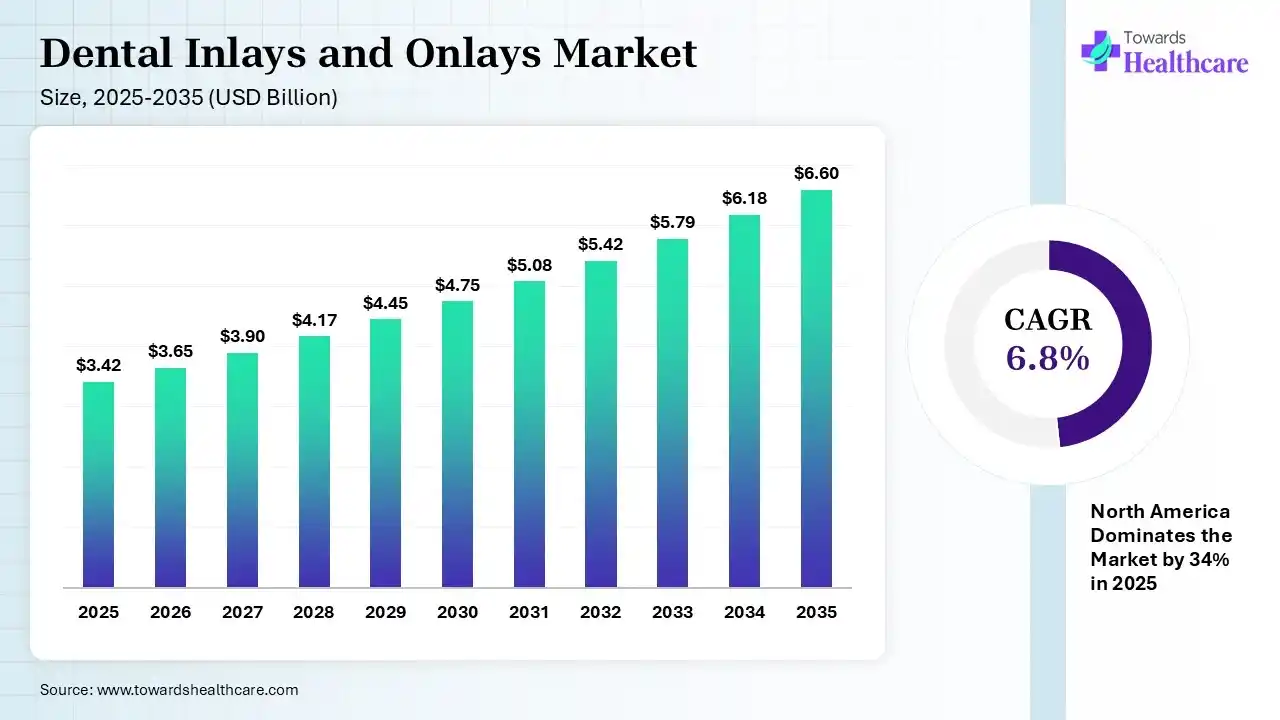
The dental inlays and onlays market is growing, as it is cosmetic restorations which supports to teeth in maintaining their natural look and structure. These types of restorations are significantly suggested for patients who suffer from tooth decay, or to repair teeth with a mild to moderate level of cracks or breakages. It is supposed to be a minimally invasive procedure for managing dental decay, where the patient would not need a dental crown. The technology comprises removing decay, filling the inlay in the tooth, and smearing the onlay, which is more like a sealant on the surface of the tooth. Inlays and onlays are used to replace a previous filling. Inlays are more like fillings and can restore the inward cusp of the tooth. Onlays treat the external cusp of the tooth.
AI-based algorithms are used to analyse dental images and identify the early symptoms of decay, which may be missed by human dentists. AI-driven technology in tooth health creates various technology which improved dentistry. AI models such as artificial neural networks (ANNs), convolutional neural networks (CNNs), and random forests are increasing in popularity among patients. This technology has transformed different aspects of dental care. The incorporation of AI-based technology in dentistry has the strength to enhance diagnostic precision, management planning, workflow effectiveness, and patient access to care. This technology enables dentists to create custom-fit restorations that effortlessly match the tooth’s exclusive shape and structure, resulting in a rapid, tougher, and more natural-looking smile.
| Table | Scope |
| Market Size in 2026 | USD 3.65 Billion |
| Projected Market Size in 2035 | USD 6.6 Billion |
| CAGR (2026 - 2035) | 6.8% |
| Leading Region | North America by 34% |
| Historical Data | 2020 - 2023 |
| Base Year | 2025 |
| Forecast Period | 2026 - 2035 |
| Measurable Values | USD Millions/Units/Volume |
| Market Segmentation | By Material Type, By Type, By Fabrication Method, By End User, By Region |
| Top Key Players | 3M Company, Glidewell Laboratories, Ivoclar Vivadent AG, Dentsply Sirona, Institut Straumann AG |
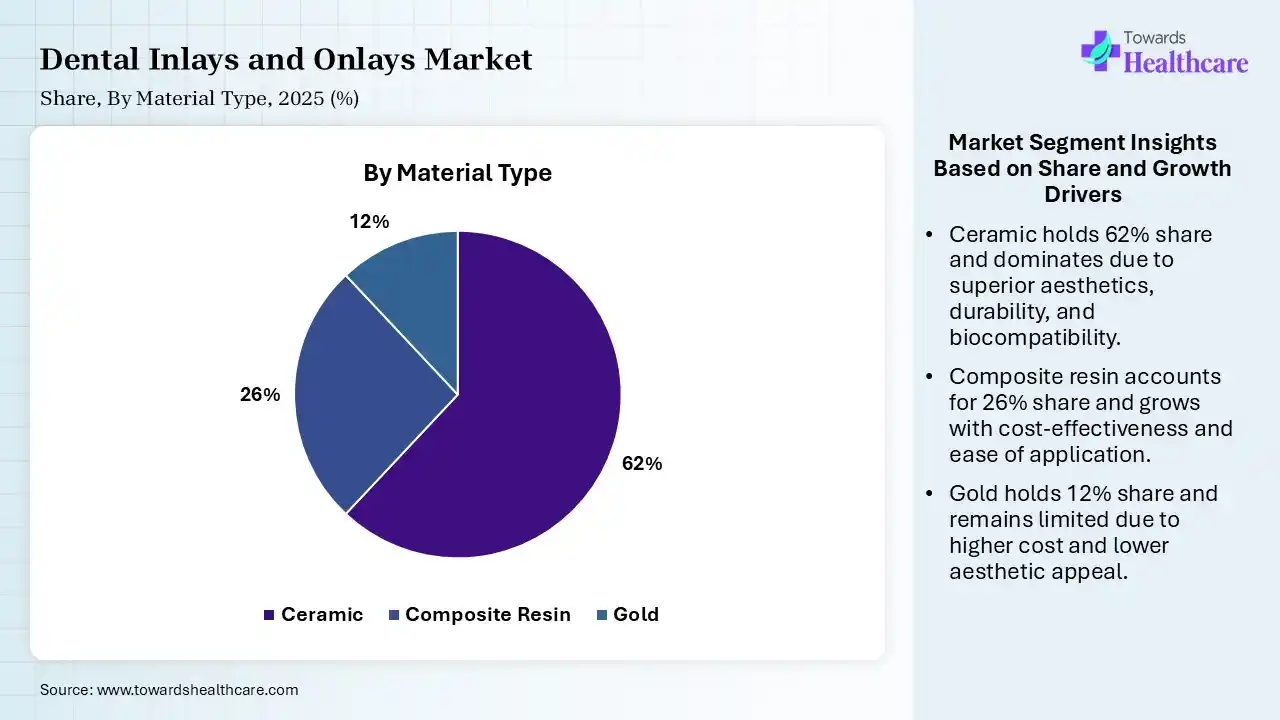
| Segments | Share 2025 (%) |
| Ceramic | 62% |
| Composite Resin | 26% |
| Gold | 12% |
The Ceramic Segment Led the Dental Inlays and Onlays Market in 2025
The ceramic segment contributed the largest market share of 62% in 2025, and is expected to grow at the fastest CAGR of 7.20% during the forecast period, as these materials are extremely aesthetic and closely mimic the usual appearance of teeth. Ceramic inlays and onlays have an increasing success rate of saving teeth, operating as a long-lasting restoration for injured teeth. Ceramics are resilient to compressive forces.
The composite resin segment held a significant share of 26% in the market, expected to grow at the fastest rate of 6.5% of CAGR during the forecast period, as composite fillings are tooth-colored and blend well with natural teeth, offering pleasing aesthetics, particularly for forward-facing teeth restorations. With significant care, composite fillings last for 5 to 7 years or even longer.
The gold segment held a significant share of 12% in the market, as gold is extremely strong and resilient to wear and tear. It withstands the penetrating chewing forces in the mouth for decades, often outliving other restorative materials. This means fewer replacements and a steadier restoration over time. Gold cast with incredible accuracy, letting to create restorations that fit the tooth perfectly.
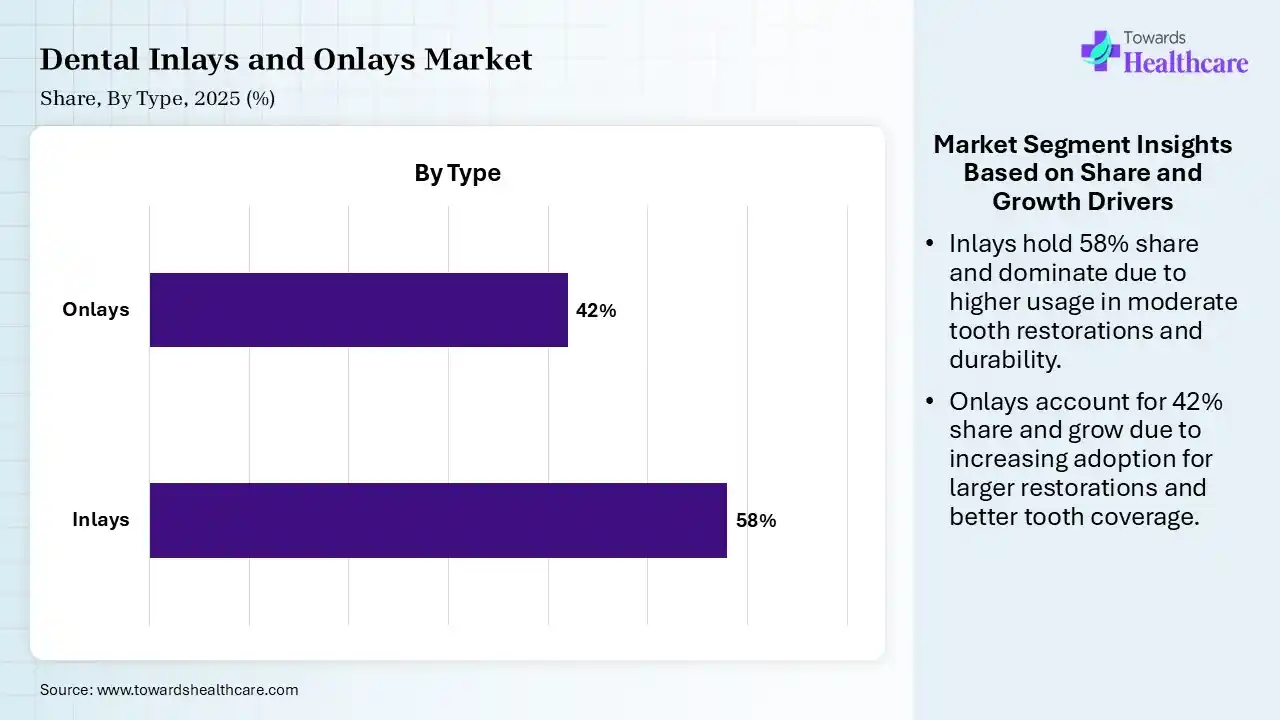
| Segment | Share 2025 (%) |
| Inlays | 58% |
| Onlays | 42% |
Inlays Segment Led the Dental Inlays and Onlays Market in 2025
The inlays segment contributed the largest market share of 58%, as dental inlays restoration of teeth, which moderate decay or damage, characteristically in the chewing surfaces of molars and premolars. Dental inlays manage a lower level of tooth decay than a crown does. Inlays need less removal of the natural tooth structure as compared to full dental crowns, meaning more of the healthy tooth is conserved.
The onlays segment held a significant share of 42% the market, and is expected to grow at the fastest rate of 7.5% during the forecast period, as onlays are a good substitute for crowns as they save a massive amount of the tooth through preparation. Onlays cover and protect the tooth's biting surfaces. Onlays are more precise for deep cavities that have not yet affected the root.
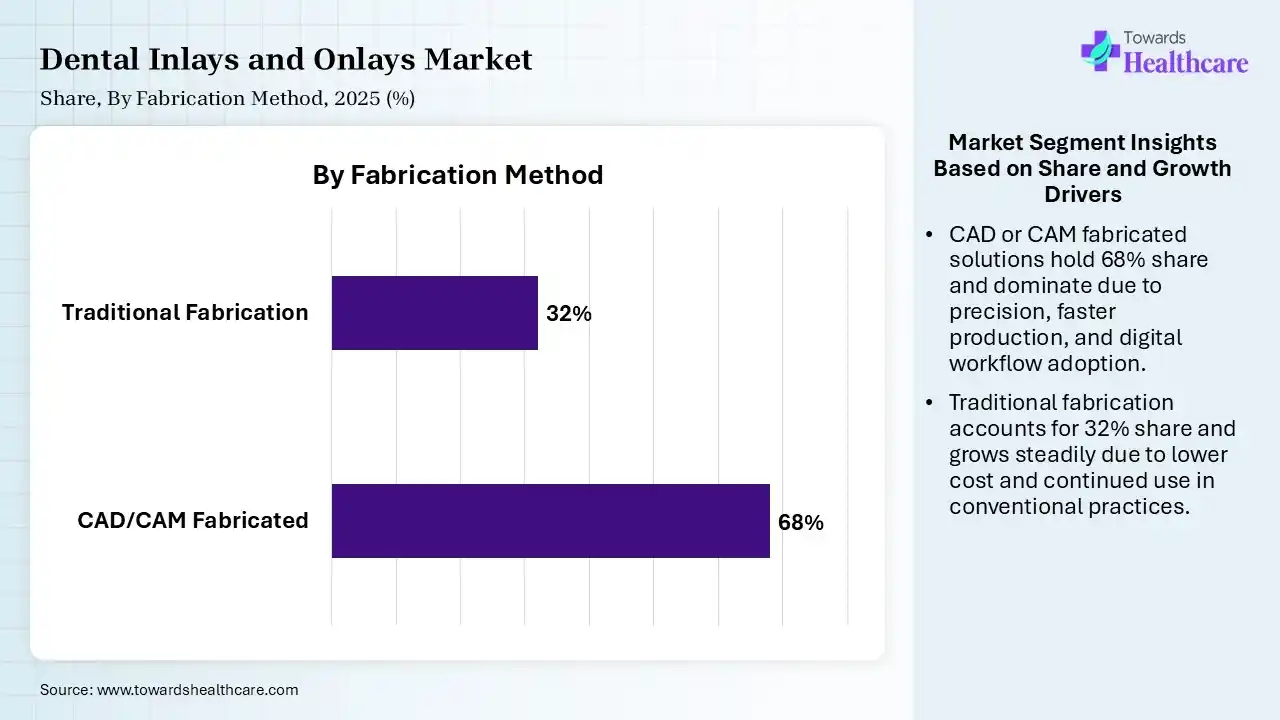
| Segment | Share 2025 (%) |
| CAD/CAM Fabricated | 68% |
| Traditional Fabrication | 32% |
CAD/CAM Fabricated Segment Led the Dental Inlays and Onlays Market in 2025
The CAD/CAM fabricated segment contributed the largest market share of 68%, expected to grow at the fastest rate of 8.1% during the forecast period, as the materials applied in CAD-CAM dentistry emerged, providing benefits like enhanced aesthetics, biocompatibility, and durability. CAD/CAM dentistry is its capability to produce restorations that closely mimic the natural appearance of teeth. It allows for targeted adjustments based on every patient's particular dental anatomy, resulting in improved aesthetics and functionality.
The traditional fabrication segment held a significant share of 32% in the market, as this filling efficiently restores the structure of a tooth that has been cracked by decay or trauma, which may not withstand the pressure of daily chewing and biting over the long term. Fillings also cause increased sensitivity in the tooth.
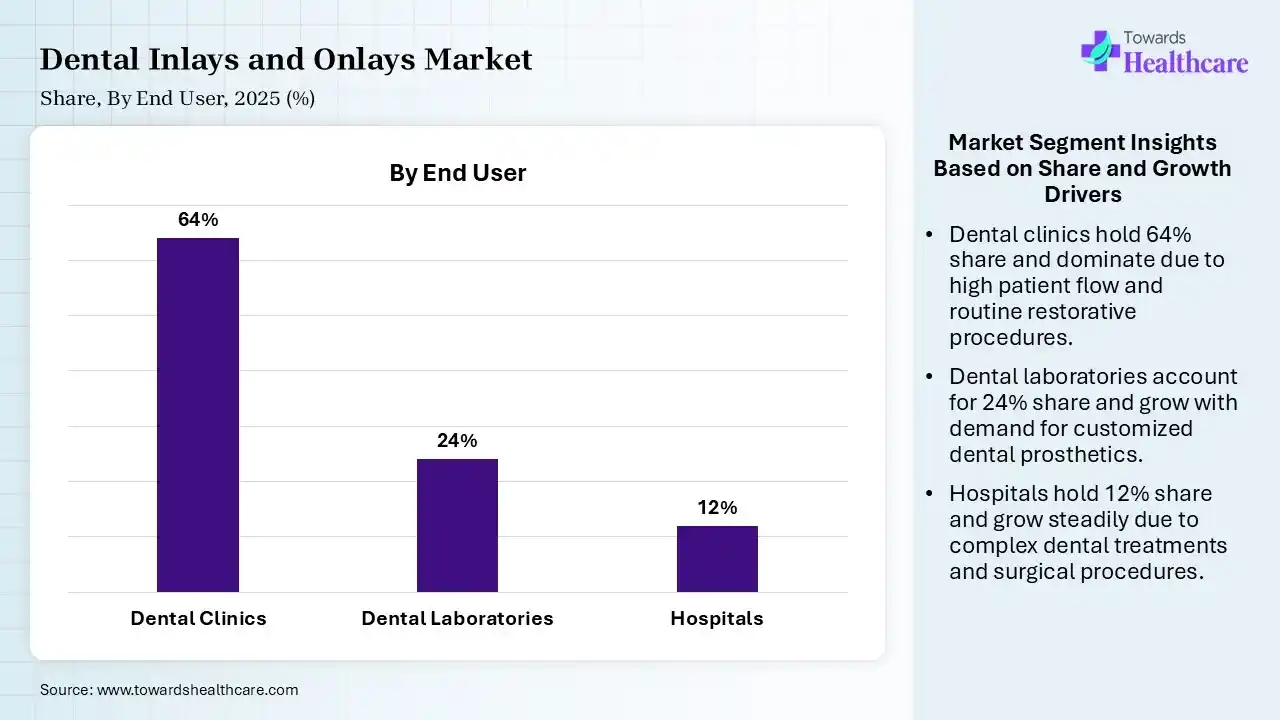
| Segment | Share 2025 (%) |
| Dental Clinics | 64% |
| Dental Laboratories | 24% |
| Hospitals | 12% |
Dental Clinics Segment Led the Dental Inlays and Onlays Market in 2025
The dental clinics segment contributed the largest market share of 64%, expected to grow at the fastest rate of 7.1% during the forecast period, as dental clinics offer routine check-ups and cleanings that supports to prevent oral health issues such as cavities, gum disease, and bad breath. Dental clinics are staffed with capable and experienced physicians, hygienists, and specialists who offer expert care and advice.
The dental laboratories segment held a significant share of 24% in the market, as dental labs often supply rapid turnaround times as compared to outsourcing. This is particularly of seeking expedited smile reintegration for a particular event or occasion, like a wedding. A dental lab can save time, reduce costs, increase service provision, and boost patient satisfaction.
The hospitals segment held a significant share of 12% in the market, as it offers routine check-ups and cleanings, which help prevent oral health issues like gum disease, cavities, and bad breath. Hospitals develop targeted treatment plans based on patients' needs, ensuring that every patient receives proper and actual care.
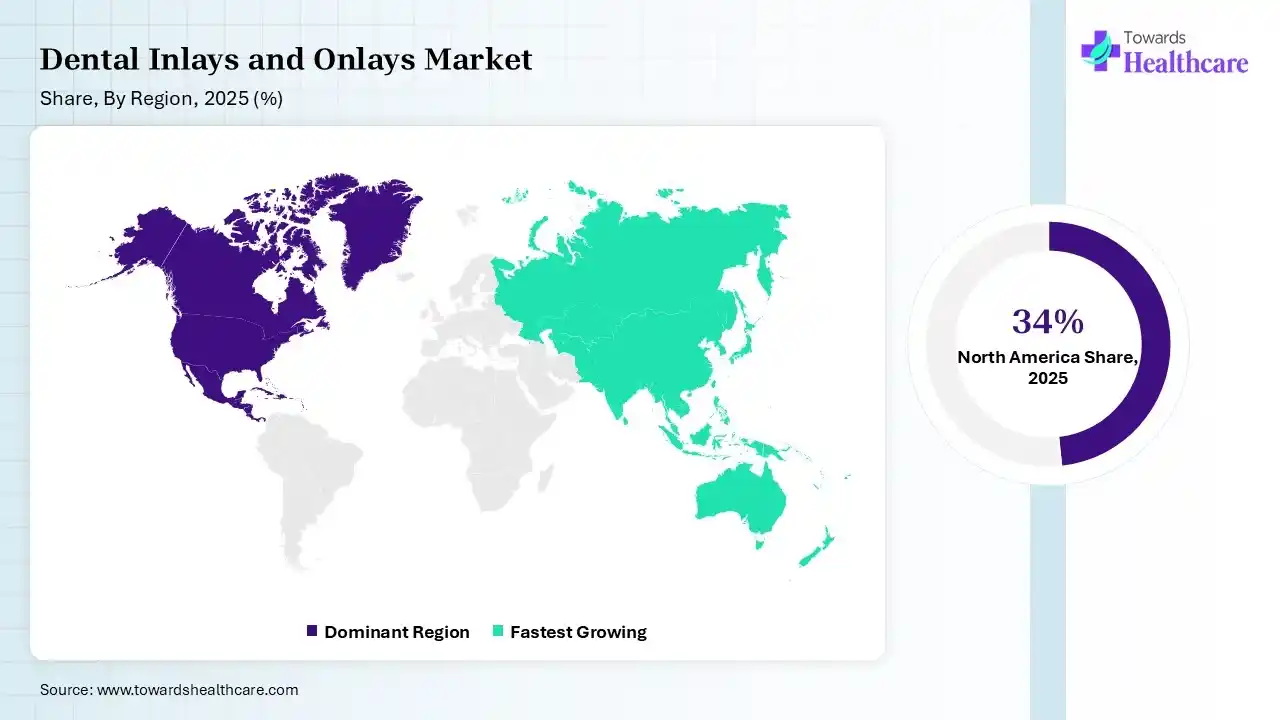
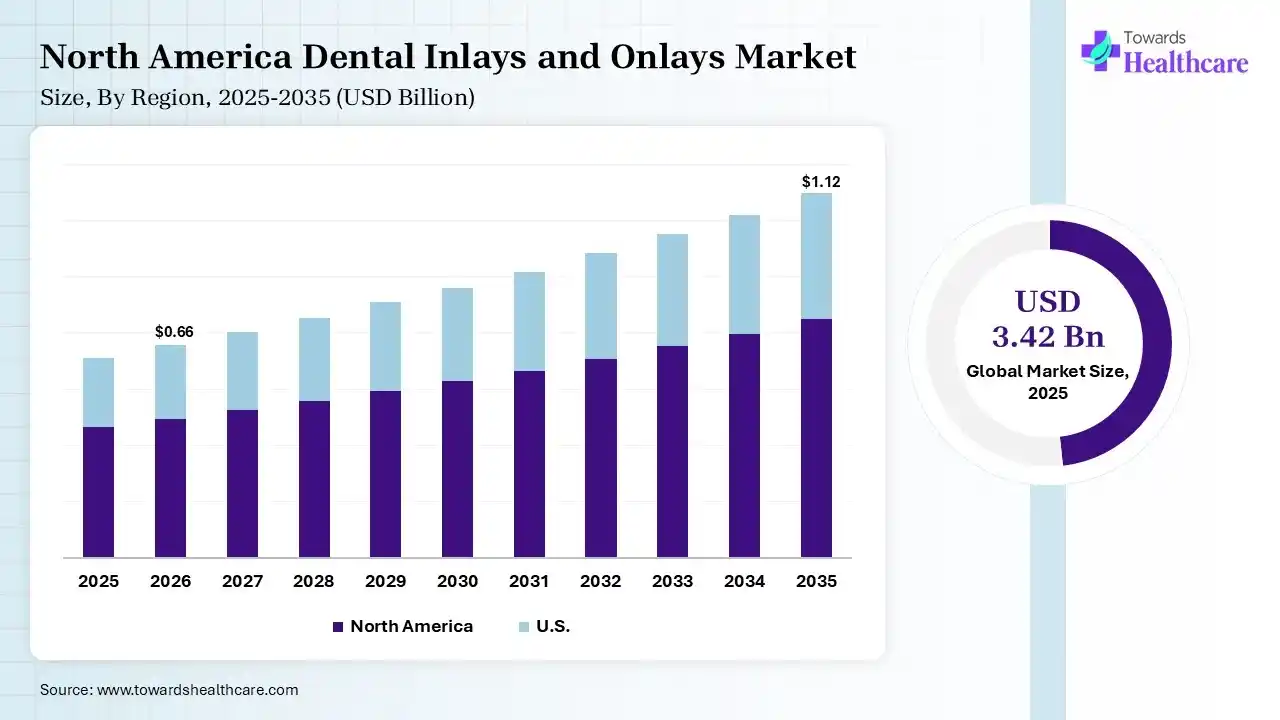
In 2025, North America dominated the dental inlays and onlays market with a share of 34% in 2025, as automated and digital technologies were increasingly adopted for the production of dental restorations. The incorporation of 3D scanning and CAD/CAM technology in routine prosthodontic practice. Enhanced tooth health, better bite alignment, improved aesthetics, and lowered requirement for extensive dental treatments contribute to the growth of the market.
U.S. Market Trends
In the U.S., increasing demand for dental care, a shortage of dentists in supply, and a rising aging population. Development such as digital dentistry, 3D printing, and AI-driven diagnostics has increased treatment effectiveness, improved patient satisfaction, and made procedures less invasive. Oral health plays a significant role in the physical, mental, social, and economic well-being of patients and populations
Asia Pacific held 24% share of the dental inlays and onlays market and is estimated to have the fastest growth rate of 8.4% during the forecast period, as most patients in this region are older adults with periodontal disease, and two-thirds of them have untreated caries. Ageing, medical conditions, and polypharmacy make older adults vulnerable to oral diseases. Increasing dental tourism in this area, as people majorly invest in modern technology, confirms that patients receive the advanced treatments as they would at home, which drives the growth of the market.
India Market Trends
India is continuously increasing in the dental sector as novel technologies have been combined, and dentists have also started using those techniques to make the treatment processes simple. Indian dentists are recognized for offering high-quality care, often receiving training in exceptional treatment processes. There is an increasing demand for aesthetic actions in India.
R&D:
Manufacturing Processes:
Patient Services:
| Company | Headquarters | Latest Update |
| 3M Company | United States | 3M has focused on developing digital dentistry and chairside restorations. |
| Glidewell Laboratories | United States | Glidewell Laboratories digitally designs and fabricates a custom abutment or crown in two days or less. |
| Ivoclar Vivadent AG | Liechtenstein | Ivoclar, a globally leading dental organization, is entering into a collaboration with Plug and Play, one of the largest global revolution platforms. |
| Dentsply Sirona | United States | In September 2025, Dentsply Sirona is excited to announce the launch of an expanded AI-driven CEREC workflow and novel milling units1 CEREC Primemill Lite and CEREC Go, to make Single Visit Dentistry more accessible. |
| Institut Straumann AG | Switzerland | In December 2025, SprintRay and Straumann announced their planned collaboration, which brings with it the co-branded Straumann Signature Midas 3D printer, developed in partnership with SprintRay. |
Strengths
Weakness
Opportunities
Threats
By Material Type
By Type
By Fabrication Method
By End User
By Region










Principal Consultant
Shivani Zoting is a dedicated research analyst specializing in the healthcare industry. With a strong academic foundation, a B.Sc. in Biotechnology and an MBA in Pharmabiotechnology, she brings a unique blend of scientific understanding and strategy.
Learn more about Shivani Zoting
Reviewed By
Aditi Shivarkar is a seasoned professional with over 14 years of experience in healthcare market research. As a content reviewer, Aditi ensures the quality and accuracy of all market insights and data presented by the research team.
Learn more about Aditi Shivarkar









