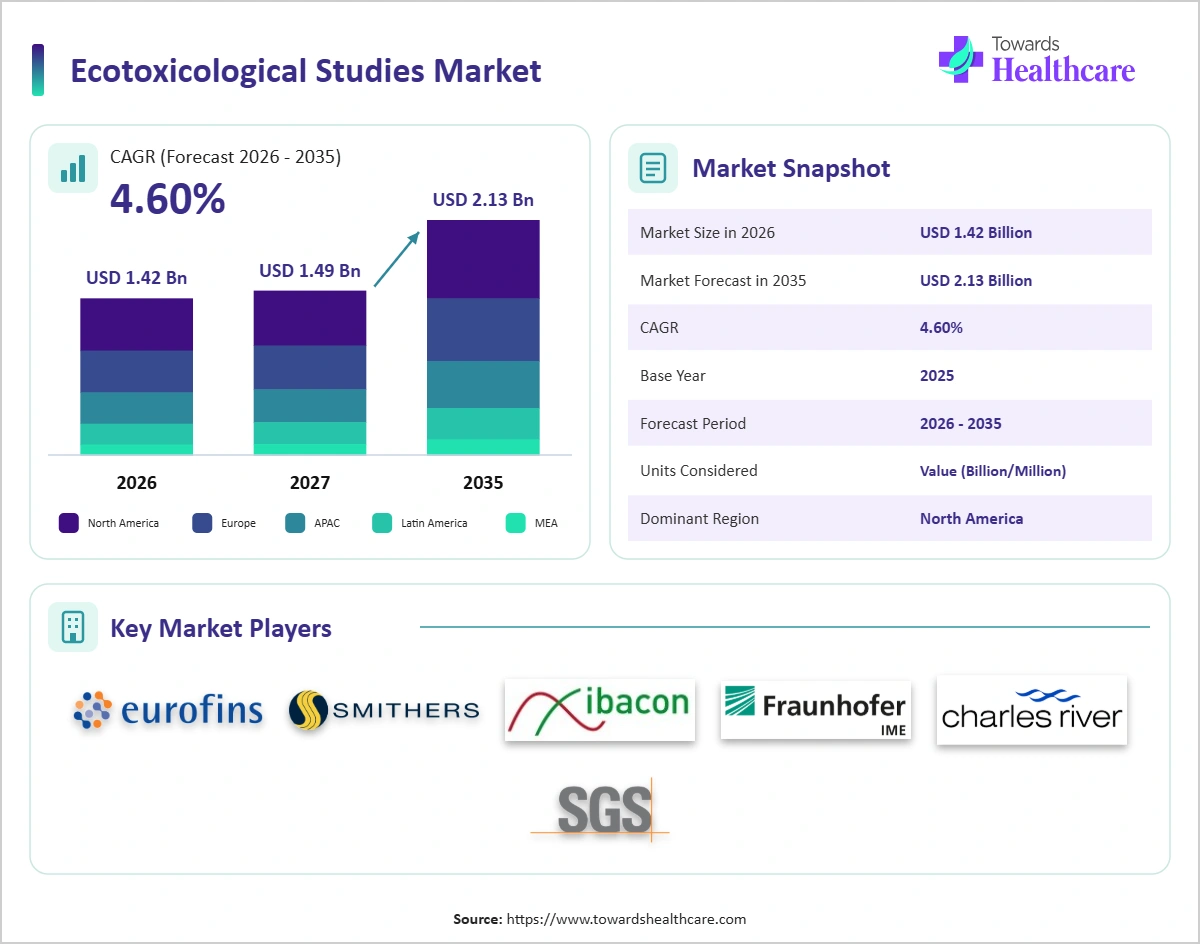
The ecotoxicological studies market is expected to grow from USD 1.36 billion in 2025 to USD 2.13 billion by 2035, driven by rising regulatory requirements for ecotoxicity data across chemicals, pesticides, and pharmaceuticals. Ongoing registration and re-registration activities are expected to sustain demand for laboratory testing, taking the market to USD 1.70 billion by 2030 and supporting a CAGR of 4.60% from 2026 to 2035.
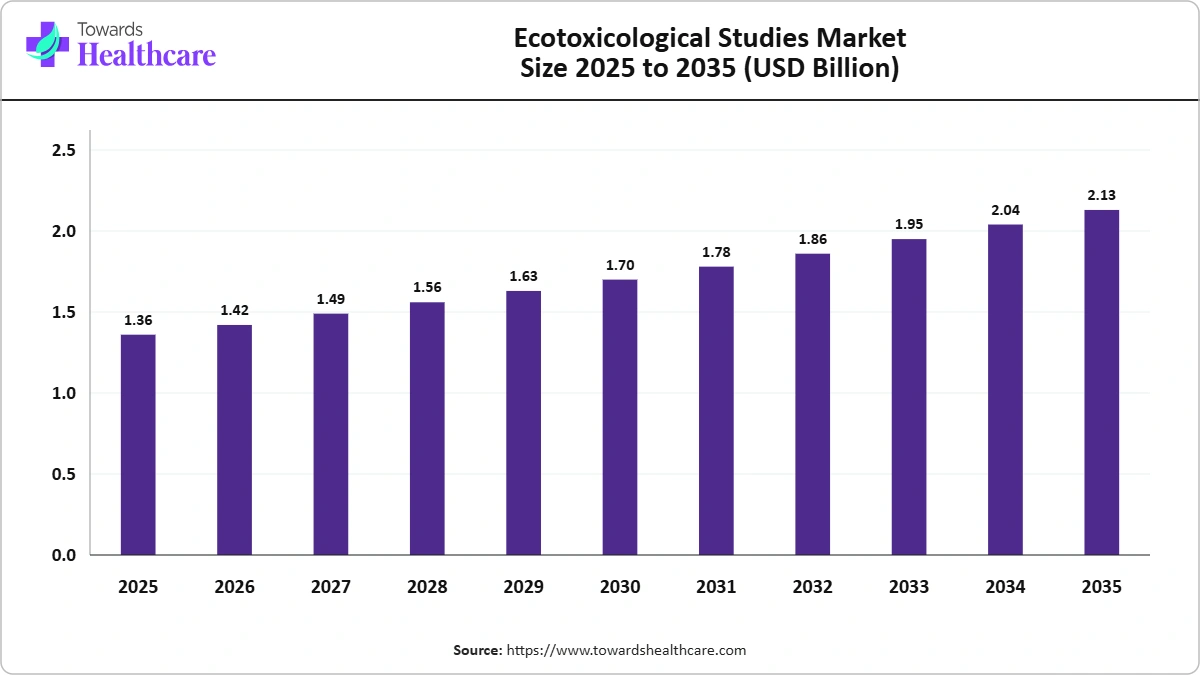
Analyst View: The market estimate was developed using registration and re-registration volumes across key sectors, the number of studies required per dossier, and average study prices. These estimates were cross-checked against CRO revenues to strengthen the assessment.
The ecotoxicological studies market is driven by registration rules for pesticides, chemicals, and medicines. Europe sets the strictest requirements, and pollinator protection and pharmaceutical risk assessment add new demand.
| Driver | Impact | ≈ CAGR Contribution | Time Horizon | Key Regions |
| Chemical regulation | High | +1.80 pp | Short to long term | Global, strongest in Europe |
| Pesticide registration | Medium | +1.52 pp | Medium to long term | Global, fastest uptake in Asia Pacific |
| Pharmaceutical ERA | Medium | +1.29 pp | Short to medium term | Global |
| Pollinator protection | Low | +1.01 pp | Long term | Developed and emerging markets |
Note: Contributions are indicative estimates of each factor's effect on annual growth.
Sources: Expert interviews, secondary sources, Towards Healthcare database and Towards Healthcare analysts.
Chemical regulation, pesticide registration, and pharmaceutical ERA drive most growth in the ecotoxicological studies market.
| Restraint | Impact | ≈ Negative CAGR Contribution | Time Horizon | Key Regions |
| High study cost | High | -0.46 pp | Short to medium term | Global |
| Animal testing limits | High | -0.33 pp | Medium term | Price-sensitive and emerging markets |
| Agrochemical consolidation | Medium | -0.22 pp | Short term | Europe and other mature markets |
Note: Contributions are indicative estimates of each factor's effect on annual growth.
Sources: Expert interviews, secondary sources, Towards Healthcare database and Towards Healthcare analysts.
High study cost is the main restraint, followed by animal testing limits and sponsor consolidation.
Note: 2025 is the base year; 2035 shares and CAGRs are forecasts.
Sources: Expert interviews, secondary sources, Towards Healthcare database, and Towards Healthcare analysts.
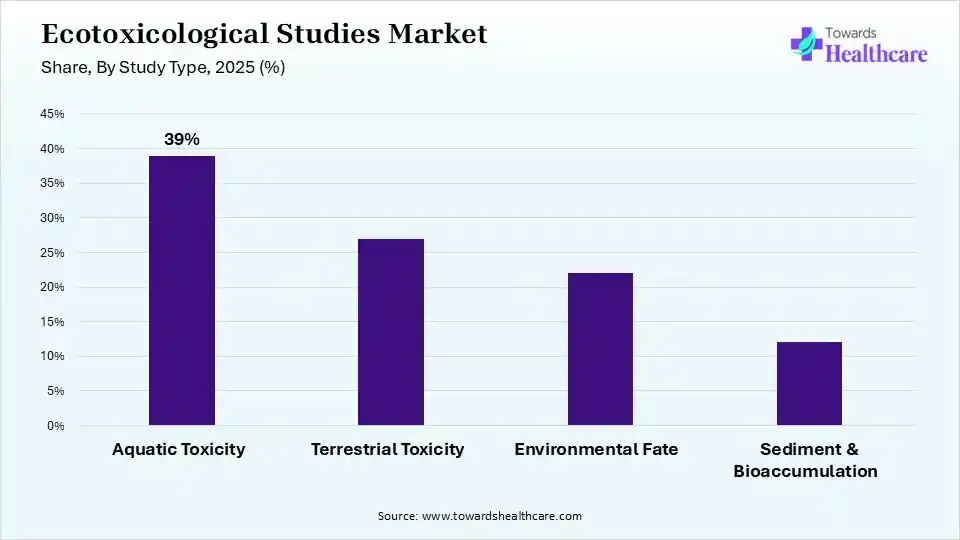
Aquatic toxicity held the largest study type share at 39.00%, supported by widespread requirements for testing the effects of chemicals and pesticides on fish, daphnia, and algae. These studies play a critical role in assessing the potential impact of chemical substances on aquatic ecosystems. Demand is further supported by regulatory requirements for environmental safety data during product registration and approval.
Terrestrial toxicit driven by rising demand for pollinator and soil organism testing. Smithers' investment in a new terrestrial ecotoxicology laboratory in Harrogate reflects the growing need for specialized testing capacity. Growing concerns about pesticide exposure among bees and other beneficial insects are strengthening demand for these studies. Testing on earthworms, birds, and terrestrial plants also supports broader environmental risk assessments.
Environmental fate reflecting the importance of studies that assess chemical degradation, persistence, metabolism, and environmental distribution. These assessments help determine how long substances remain in the environment and how they move through different environmental compartments.
Sediment & bioaccumulation represents the remaining study type share, with demand supported by the need to evaluate chemical accumulation in sediments and aquatic organisms. Sediment toxicity studies help assess the effects of contaminants on organisms living at the bottom of aquatic environments. Bioaccumulation testing also helps determine whether substances build up in organisms and potentially move through the food chain.
Agrochemicals held the largest end-user share at 48.00% in 2025, driven by extensive ecotoxicity testing requirements for pesticide registration and re-registration. Companies conduct these studies to evaluate the effects of crop protection products on aquatic and terrestrial organisms. Growing regulatory attention to pollinator health and soil biodiversity is further supporting demand for specialized testing.
Industrial chemicals supported by chemical safety requirements under REACH and TSCA. Manufacturers require ecotoxicological data to assess the potential environmental impact of substances before placing them on the market. Regulatory updates and periodic chemical assessments are expected to sustain demand for aquatic toxicity, biodegradation, and bioaccumulation studies.
Pharmaceuticals driven by increasing environmental risk assessment requirements for new and existing medicines. Pharmaceutical residues entering water bodies have raised concerns about their effects on aquatic organisms and ecosystems. Growing scrutiny of active pharmaceutical ingredients is encouraging manufacturers to conduct more comprehensive environmental testing.
Consumer Products & Others account for the remaining market share, supported by the need to assess the environmental safety of ingredients used in household products, personal care formulations, and other consumer applications. Manufacturers increasingly rely on ecotoxicological studies to evaluate the effects of product ingredients on aquatic and terrestrial ecosystems. Rising interest in sustainable product development is also encouraging greater attention to environmental safety assessments.
Analyst View: Terrestrial toxicity studies and pharmaceutical applications are expected to gain market share at a faster pace, supported by rising demand for pollinator assessments and stricter environmental risk evaluation of medicines. Meanwhile, aquatic toxicity testing and agrochemicals are likely to retain their leading positions, backed by established regulatory testing requirements and consistent demand for chemical and pesticide registration.
Note: 2025 is the base year; 2035 shares and CAGRs are forecasts.
Sources: Expert interviews, secondary sources, Towards Healthcare database, and Towards Healthcare analysts.
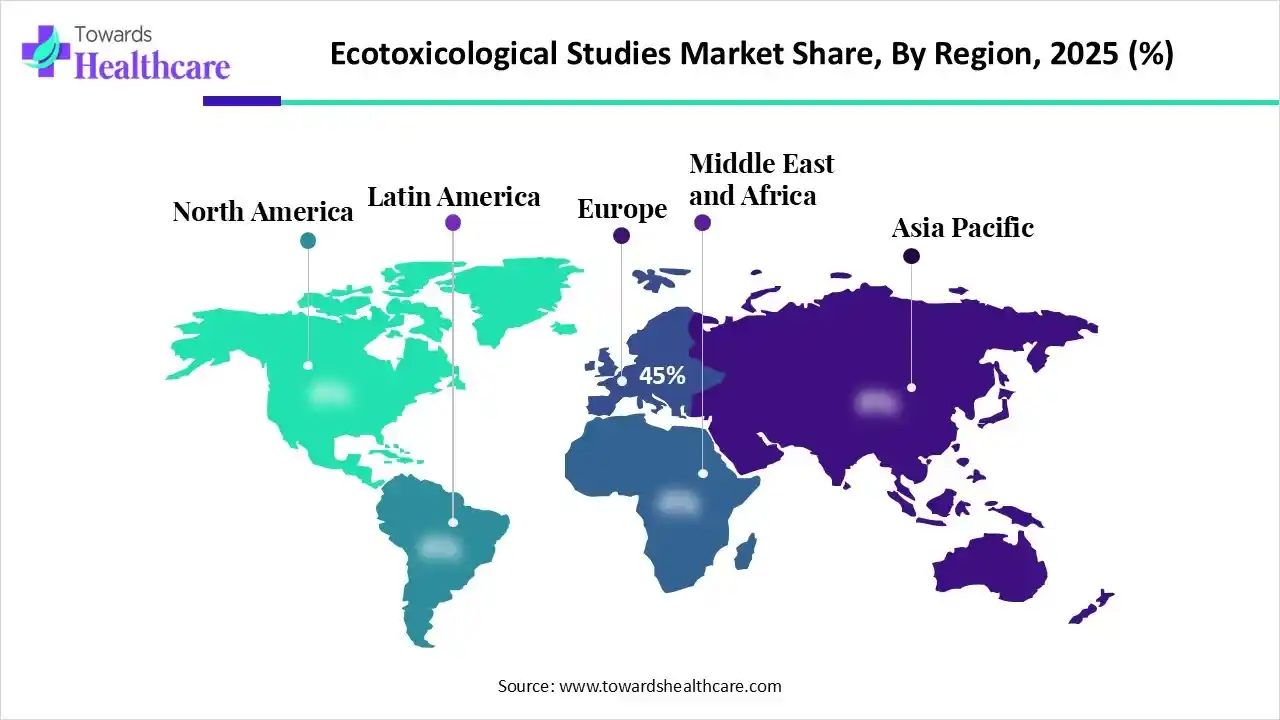
Europe dominated the ecotoxicological studies market in 2025, with a 45.00% share, driven by stringent EU pesticide regulations and REACH requirements. These regulations create substantial demand for environmental safety testing across chemicals and agricultural products. Established providers such as Eurofins and Smithers operate GLP-compliant laboratories in Germany and the U.K., strengthening the region's testing capacity.
North America supported by environmental testing requirements under the U.S. EPA pesticide regulations and TSCA. Chemical manufacturers and agrochemical companies require ecotoxicity data to demonstrate product safety and meet regulatory approval requirements. Continued chemical assessments and pesticide registration activities are expected to sustain demand across the region.
Asia Pacific growth is driven by tightening chemical and pesticide registration requirements in China and India. Expanding chemical manufacturing and agrochemical production are also increasing the need for environmental risk assessments and specialized laboratory testing.
Latin America demand primarily supported by pesticide registration requirements in Brazil. The region's agricultural sector creates a need for studies evaluating the environmental effects of crop protection products. Greater regulatory attention to pesticide safety could further support demand for ecotoxicological testing.
Middle East & Africa reflecting a relatively smaller base of regulatory testing and laboratory infrastructure. Demand is supported by chemical safety assessments and pesticide registration activities across selected countries. Gradual improvements in regulatory frameworks and testing capabilities could create opportunities for market expansion.
Analyst View: Europe is expected to maintain its leading position, supported by stringent chemical and pesticide regulations and well-established GLP testing infrastructure. Meanwhile, Asia Pacific is projected to record the fastest growth, driven by tightening registration requirements, expanding chemical production, and rising demand for environmental safety assessments.
| Rank | Company Name | 2025 Share (%) | Key Products / Business | Headquarters |
| 1 | Eurofins Scientific | 18.00% | agroscience and ecotox services | Luxembourg |
| 2 | Smithers | 9.00% | environmental risk sciences | United States |
| 3 | Charles River Laboratories | 8.00% | environmental fate and ecotox | United States |
| 4 | SGS | 6.00% | chemical testing | Switzerland |
| 5 | Fraunhofer IME | 4.00% | ecotoxicology research | Germany |
| 6 | ibacon | 4.00% | GLP ecotox and fate studies | Germany |
| 7 | Labcorp | 4.00% | crop protection studies | United States |
| 8 | Intertek | 3.00% | chemical testing | United Kingdom |
| 9 | Bureau Veritas | 3.00% | testing services | France |
| 10 | Fera Science | 2.00% | bee and environmental studies | United Kingdom |
Note: Company shares are 2025 estimates.
Sources: Company press releases, expert interviews, secondary sources, Towards Healthcare database and Towards Healthcare analysts.
The ecotoxicological studies market is moderately concentrated, with Eurofins Scientific leading at an estimated 18.00% revenue share in 2025, followed by Smithers at 9.00% and Charles River Laboratories at 8.00%. Eurofins strengthens its position through its agroscience and ecotoxicology services, while Smithers focuses on environmental risk sciences and Charles River Laboratories offers environmental fate and ecotoxicology testing.
Other prominent participants include SGS, Fraunhofer IME, ibacon, Labcorp, Intertek, Bureau Veritas, and Fera Science. These companies compete through chemical testing, GLP-compliant ecotoxicology, environmental fate assessments, crop protection studies, and specialized bee and environmental research. The top 10 companies collectively accounted for an estimated 61.03% of market revenue in 2025, while the remaining 38.97% was distributed among specialized GLP laboratories and universities.
Competition primarily revolves around GLP accreditation, regulatory acceptance, testing capacity, expertise in higher-tier studies, and turnaround time. Providers with specialized testing facilities and the ability to deliver complex studies efficiently are better positioned to secure regulatory testing contracts and strengthen their market presence.
Eurofins Scientific, headquartered in Luxembourg, held an estimated 18.00% share of the ecotoxicological studies market in 2025. Its strong position is supported by a broad portfolio of agroscience and ecotoxicology services. The company is positioned as a Leader in the Towards Healthcare Companies Quadrant.
Smithers, based in the United States, captured approximately 9.00% of market revenue in 2025. Its competitive strength comes from environmental risk sciences and specialized testing services that support regulatory assessments.
Charles River Laboratories, headquartered in the United States, held an estimated 8.00% market share in 2025. Its ecotoxicology capabilities include environmental fate assessments and ecotoxicity testing, supporting the evaluation of potential environmental risks. The company is positioned as a Leader in the Towards Healthcare Companies Quadrant.
SGS, headquartered in Switzerland, accounted for an estimated 6.00% share of the market in 2025. Its chemical testing capabilities support environmental safety assessments and regulatory compliance requirements.
Based in Germany, Fraunhofer IME held an estimated 4.00% market share in 2025. Its focus on ecotoxicology research and environmental risk assessment strengthens its role in specialized testing and scientific studies.
Headquartered in Germany, Ibacon captured an estimated 4.00% share of the ecotoxicological studies market in 2025. Its expertise in GLP-compliant ecotoxicity and environmental fate studies supports regulatory submissions across different industries. The company is classified as a Leader in the Towards Healthcare Companies Quadrant.
Labcorp, based in the United States, held approximately 4.00% of market revenue in 2025. Its presence in the ecotoxicological studies market is supported by crop protection testing and related research services.
Intertek, headquartered in the United Kingdom, accounted for an estimated 3.00% market share in 2025. Its chemical testing portfolio supports the assessment of product safety and environmental compliance.
Based in France, Bureau Veritas held approximately 3.00% of the ecotoxicological studies market in 2025. Its testing and inspection capabilities support chemical safety assessments and environmental testing requirements.
Headquartered in the United Kingdom, Fera Science accounted for an estimated 2.00% market share in 2025. Its activities in bee research and environmental studies support the assessment of pesticide impacts on pollinators and ecosystems.
The ecotoxicological studies ecosystem links test organism suppliers, CROs, sponsors, consultants and regulators, with each stage adding value before products reach end users. Labs also test animal parasiticides and use cell culture methods to reduce animal tests.
| Ecosystem Stage | Role in the Market | Key Companies |
| Test Organism Suppliers | Supply organisms | Culture labs |
| CROs | Run studies | Eurofins, Smithers, Charles River |
| Sponsors | Commission studies | Bayer, Syngenta, BASF, chemical firms |
| Consultants | Prepare dossiers | Regulatory consultants |
| Regulators | Review data | EFSA, ECHA, EPA |
Sources: Company press releases, expert interviews, secondary sources, Towards Healthcare database, and Towards Healthcare analysts.
Test Organism Suppliers: Provide healthy and standardized test organisms, including fish, daphnia, algae, bees, and earthworms, which are essential for generating reliable and reproducible ecotoxicological study results. Consistent organism quality helps laboratories maintain testing accuracy and meet regulatory standards.
CROs: Compete through laboratory capacity, technical expertise, GLP compliance, and the ability to conduct complex ecotoxicological studies. Their specialized facilities and regulatory experience help chemical, agrochemical, and pharmaceutical companies meet testing requirements efficiently.
Sponsors: Include chemical manufacturers, agrochemical companies, and pharmaceutical firms that commission ecotoxicological studies to support product registration and regulatory submissions. Their demand is influenced by new product approvals, re-registration cycles, and evolving environmental safety requirements.
Consultants: Help sponsors develop suitable testing strategies and design study packages that meet regulatory expectations. Their services include identifying data gaps, selecting appropriate test methods, and supporting regulatory submissions.
Regulators: Establish testing guidelines and determine the environmental safety data required for product approvals and chemical registrations. Regulatory frameworks such as REACH and TSCA influence study selection, testing protocols, and compliance requirements across the market.
Value in the ecotoxicological studies market flows from upstream material and technology suppliers to manufacturers and service providers, then through distribution partners to end users. Companies that integrate several stages or build long-term relationships with end users capture a larger share of this value.
The Towards Healthcare Companies Quadrant positions key participants in the ecotoxicological studies market by market strength, reflecting revenue scale, market share and geographic reach, and by innovation and growth strategy, reflecting product portfolio breadth, R&D intensity and partnerships. Positions reflect each company's estimated 2025 share of the ecotoxicological studies market and our assessment of its product innovation, portfolio breadth and partnerships.
Sources: Company press releases, expert interviews, secondary sources, Towards Healthcare database and Towards Healthcare analysts.
Leaders: Eurofins Scientific, Smithers, Charles River Laboratories, SGS, Fraunhofer IME and ibacon combine high market share with broad portfolios and strong innovation.
Innovators: Labcorp, Intertek, Bureau Veritas and Fera Science bring newer technologies and specialised products.
In July 2026, Smithers Environmental Risk Sciences began building a new purpose-built terrestrial ecotoxicology laboratory at its Harrogate site to expand GLP study capacity.
By Study Type
By End User
By Region
The ecotoxicological studies market was defined as contract and in-house studies that assess the effects of substances on organisms and ecosystems, including aquatic toxicity (fish, daphnia, algae), terrestrial toxicity (pollinators, earthworms, birds, plants), sediment toxicity, bioaccumulation, and environmental fate, conducted under GLP for agrochemicals, industrial chemicals under REACH and TSCA, pharmaceuticals (environmental risk assessment), and consumer products. The 2025 base year was built bottom-up from demand volumes and average prices by study type, end user, and region, and checked top-down against the market-specific revenues of leading companies and public industry data.
Segment, regional and company values were allocated from study type and end user and region demand. Key estimates were verified by cross-checking company disclosures, regulatory and industry data, and published third-party estimates, and inputs that could not be reconciled were excluded. All segment, regional, and company figures were reconciled to the same 2025 base year, and the 2026-2035 forecast, which applies a constant CAGR from the 2025 base, was recalculated and validated.
Analyst View: We expect the ecotoxicological studies market to grow steadily with regulation. New approach methods that reduce animal testing will change study mix over the forecast period.