

Pipeline Programs

CGT Companies Tracked

Manufacturing Facilities


The global G-protein coupled receptors market size is calculated at US$ 4.06 in 2025, grew to US$ 4.27 billion in 2026, and is projected to reach around US$ 6.70 billion by 2035. The market is expanding at a CAGR of 5.14% between 2026 and 2035. The growing demand for new drugs drives the research related to G-protein coupled receptors.
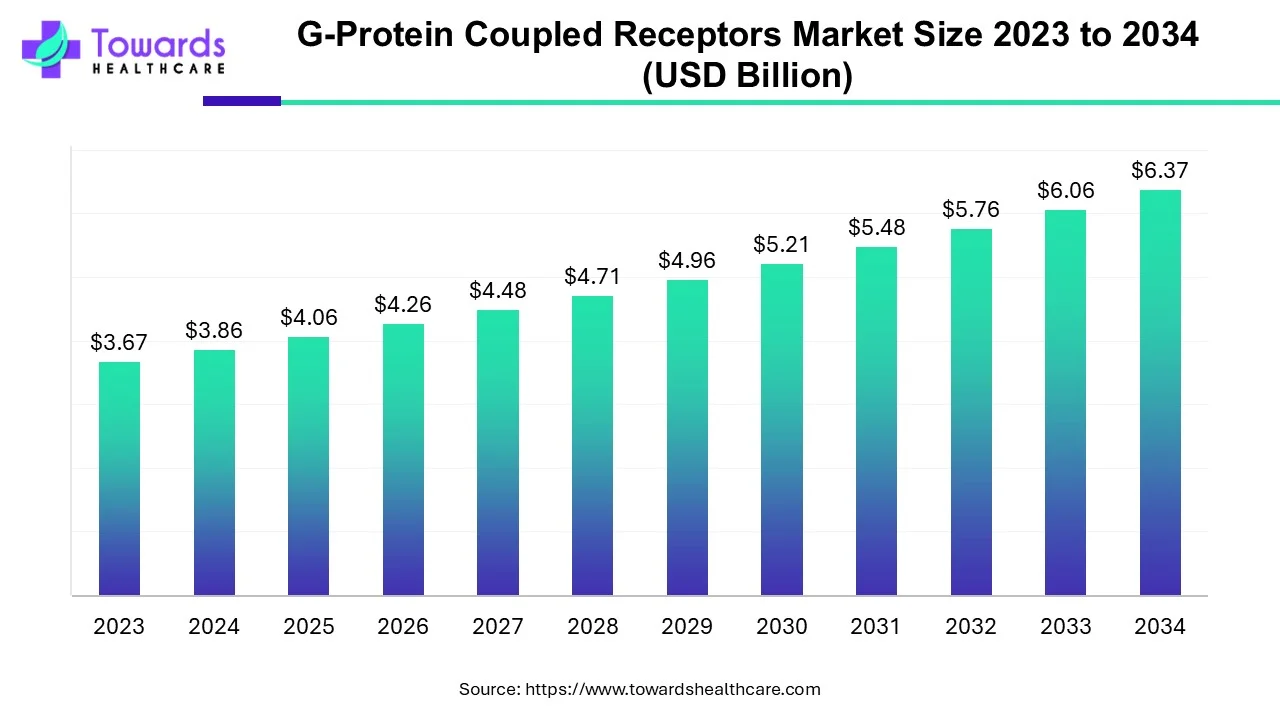
The most numerous and varied class of membrane receptors found in eukaryotes are G-protein-coupled receptors (GPCRs). GPCRs are key therapeutic targets in cardiovascular disease because they control almost every facet of human physiology and illness. G protein-coupled receptors (GPCRs) are among the most effective therapeutic target families. They have undergone a transition from ligand screening at random to knowledge-driven drug design. There are over 500 new medication candidates undergoing clinical testing. Although tiny compounds still make up the bulk, 134 of them are for peptide-activated GPCRs.
A fast-growing field is the application of artificial intelligence (AI) techniques to G protein-coupled receptor (GPCR) drug development. Throughout the drug development process, AI may be applied at several points, from helping us comprehend the basic functions of GPCRs to identifying novel ligand-GPCR interactions or forecasting clinical reactions.
For instance,
Driver
GPCRs are Targets for Many Pharmaceutical Drugs
G protein-coupled receptor (GPCR) signal receptors are important. They affect neurotransmission, taste, vision, hormones, and olfactory perception. As the largest family of proteins produced on the cell membrane, GPCRs can have up to 800 members. Approximately half of pharmaceutical drugs are directed towards them, making up 27% of global drug revenues, which amount to $180 billion. To present, over 34 percent of US FDA-approved drugs target GPCRs, and the number of modulators undergoing preclinical or clinical studies is rapidly increasing.
Restraint
High Cost of GPCRs
On the other hand, the high costs associated with G-protein coupled receptor cell lines will act as a major market growth constraint. Additional barriers to the expansion of the G-protein coupled receptors market will come from unfavorable reimbursement regulations, especially in emerging nations.
Opportunity
Growing Pharmaceutical Research
G-protein coupled receptors are being used more and more in pharmaceutical product development and disclosure. These receptors are becoming more and more accessible with the development of biassed agonists, biological medications, and allosteric modulators. G-protein coupled receptors are the target of a large number of FDA-approved drugs now available on the G-protein coupled receptors market.
| Table | Scope |
| Market Size in 2026 | USD 4.27 Bilion |
| Projected Market Size in 2035 | USD 6.70 Billion |
| CAGR (2026 - 2035) | 5.14% |
| Leading Region | North America by 33% |
| Key Applications | Drug discovery, oncology, neurology, cardiovascular diseases, metabolic disorders, respiratory diseases, inflammation, immunology, ophthalmology, rare diseases |
| Primary End Users | Pharmaceutical companies, biotechnology firms, CROs, academic research institutes, hospitals, government research organizations |
| Key Challenges | Complex receptor pharmacology, target validation challenges, receptor selectivity, expensive clinical development, regulatory hurdles |
| Measurable Values | USD Millions/Units/Volume |
| Market Segmentation | By Product, By Assay Type, By Application, By Region |
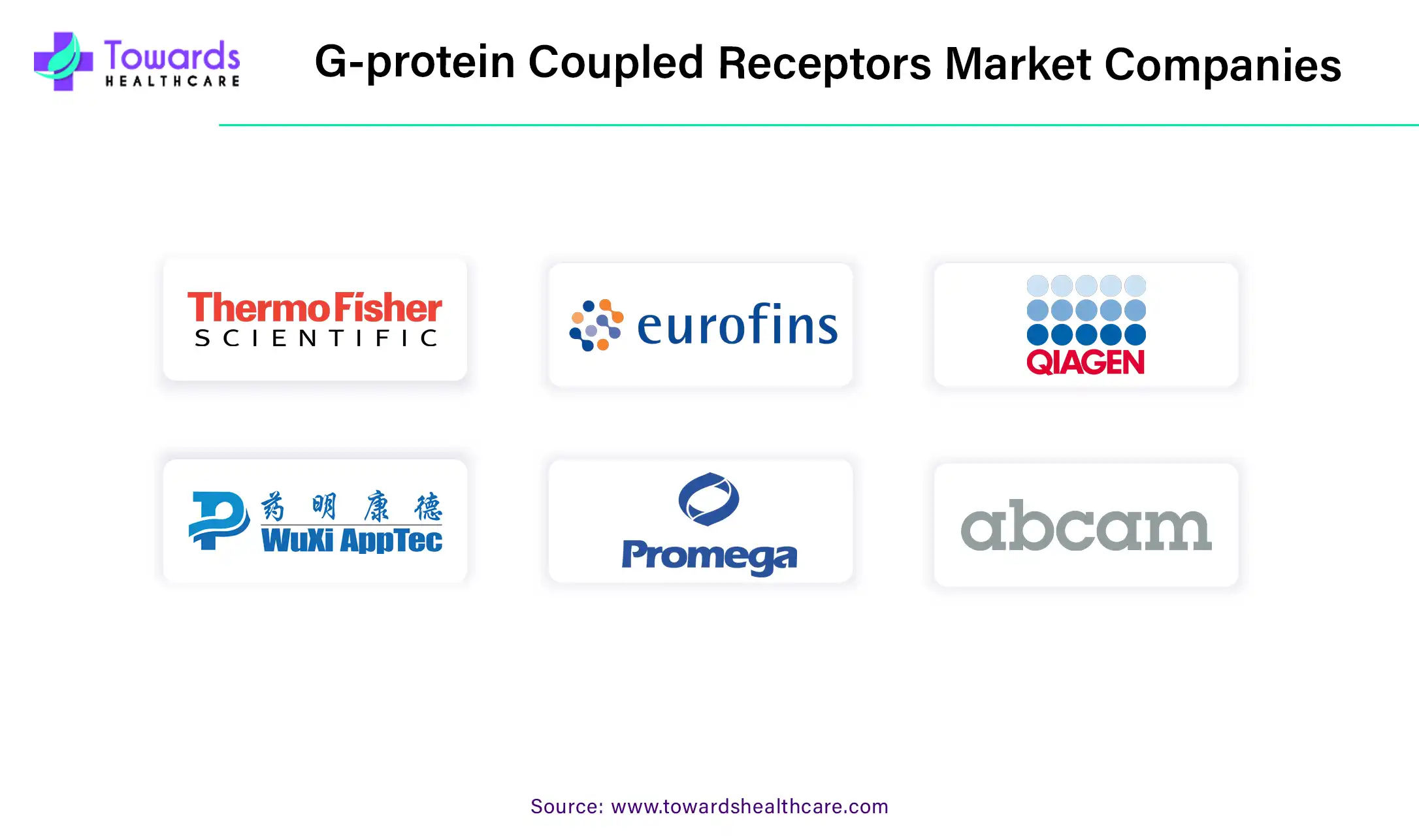
| Top Key Players | Thermo Fisher Scientific Inc., Eurofins Scientific, QIAGEN, WuXi AppTec, Promega Corporation, Abcam plc, Merck KGaA, PerkinElmer Inc., Enzo Biochem Inc., BD |
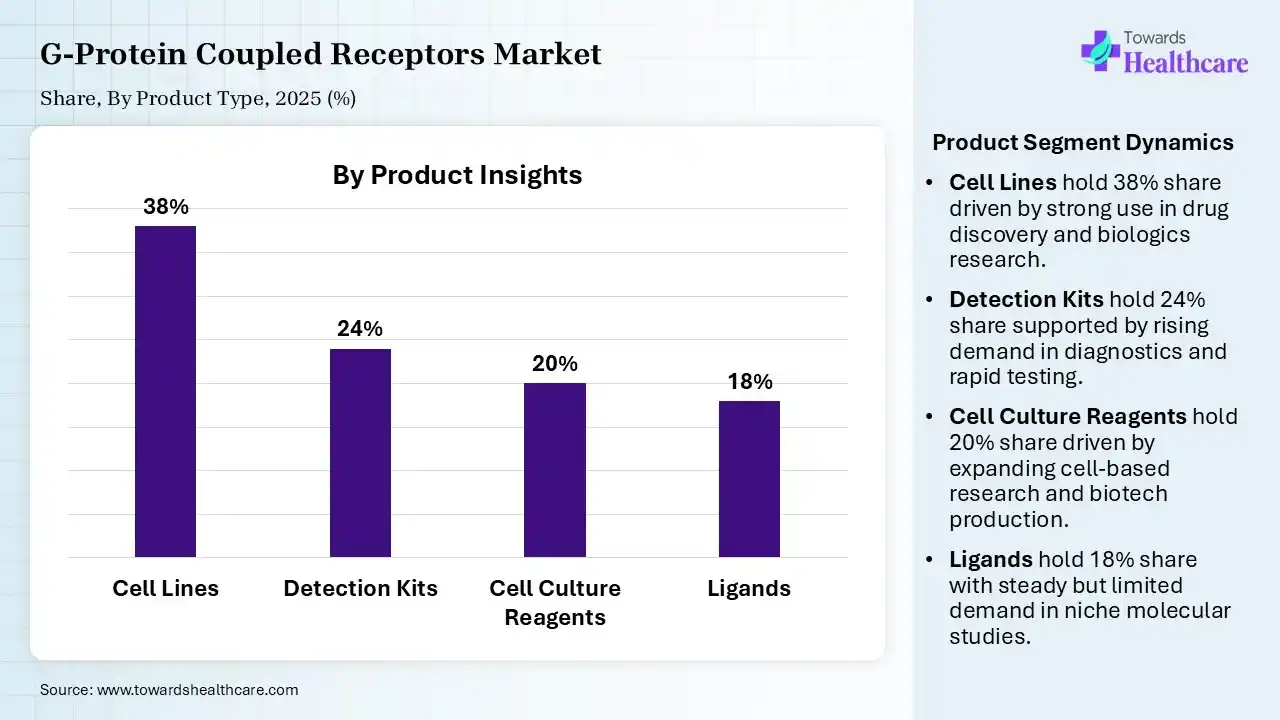
| Segments | Shares % |
| Cell Lines | 38% |
| Detection Kits | 24% |
| Cell Culture Reagents | 20% |
| Ligands | 18% |
The Cell Lines Segment Dominated in 2025
By product, the cell lines segment held the largest share of 38% of the G-protein coupled receptors market in 2025. GPCRs have been used extensively in drug screening and exploration of the pathophysiology and causation of autoimmune diseases. Scientists must thus develop cell lines that exhibit constant overexpression of GPCRs. Numerous recent research has shown that the pharmacological characteristics, downstream signaling cascades, structure, and function of overexpressed GPCRs may be thoroughly examined by generating cell lines expressing these genes. Modern biotechnological techniques may be used to generate particular cell lines for GPCR research in order to find potential therapeutic targets. A vast array of genetic components and sequences are included in genome-wide libraries, which are essential tools and resources for functional genomics research.
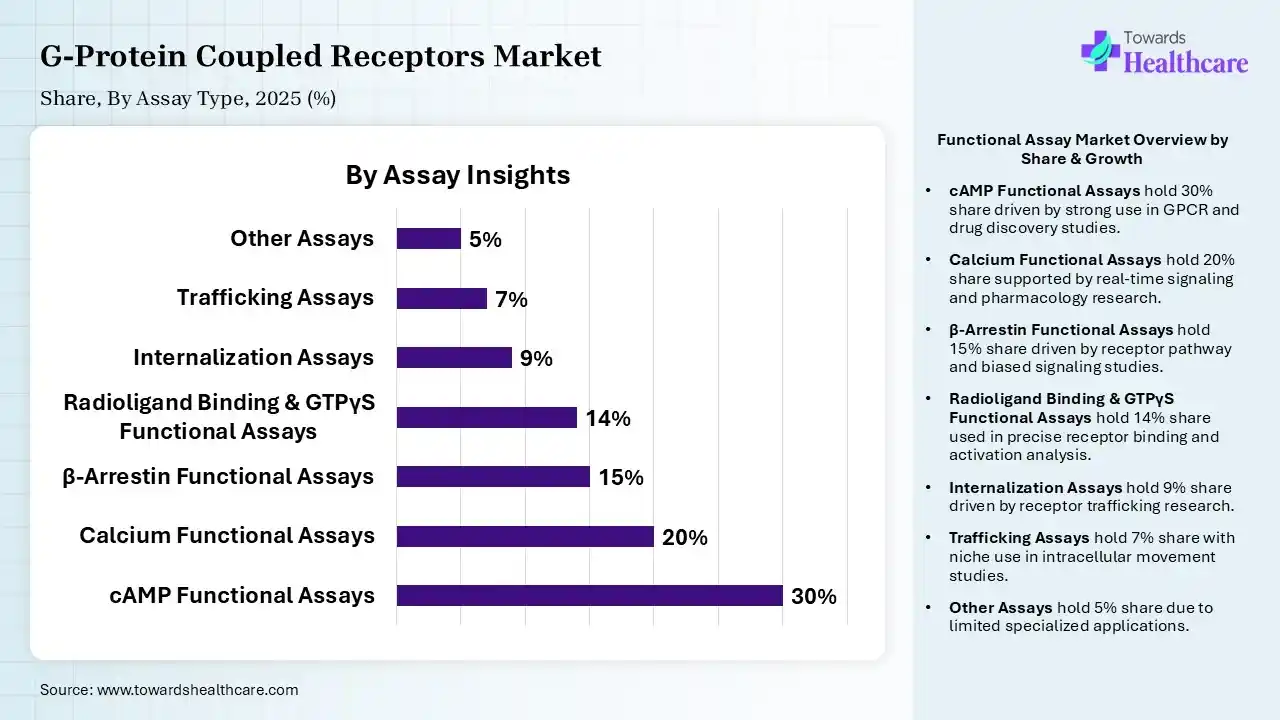
| Segments | Shares % |
| cAMP Functional Assays | 30% |
| Calcium Functional Assays | 20% |
| β-Arrestin Functional Assays | 15% |
| Radioligand Binding & GTPγS Functional Assays | 14% |
| Internalization Assays | 9% |
| Trafficking Assays | 7% |
| Other Assays | 5% |
The cAMP Functional Assays Segment Dominated
By assay type, the cAMP assays segment dominated the G-protein coupled receptors market by 30% share in 2025. A second messenger of several G-protein-coupled receptors is cyclic adenosine monophosphate (cAMP). As one of the most significant G protein-coupled receptors (GPCRs) intracellular mediators, cAMP serves as a major messenger in cells. GPCRs contribute to the communication inside cells. It has been common practice to measure the biological activity of different GPCR-specific drugs using the change in cellular cAMP level. When cAMP levels are low, the high-affinity reagents in the cAMP Fluorescent Assay Kit are made to be as sensitive and accurate as possible.
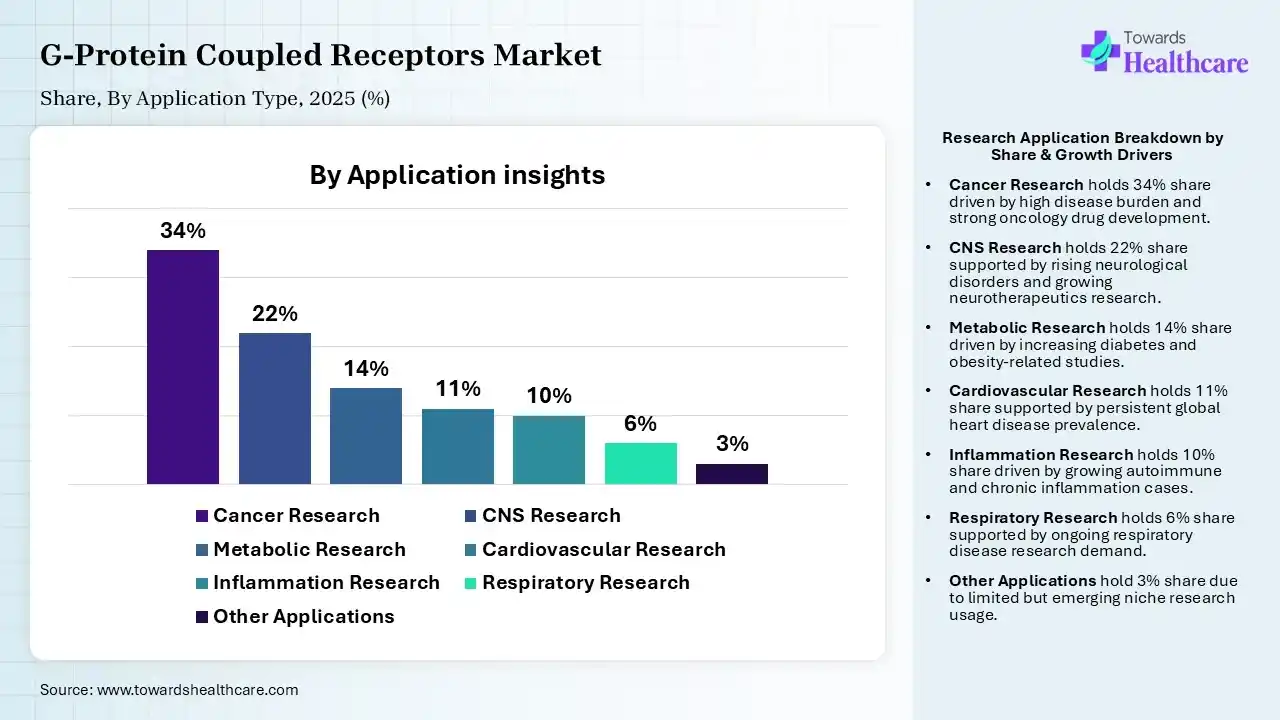
| Segments | Shares % |
| Cancer Research | 34% |
| CNS Research | 22% |
| Metabolic Research | 14% |
| Cardiovascular Research | 11% |
| Inflammation Research | 10% |
| Respiratory Research | 6% |
| Other Applications | 3% |
The Cancer Research Segment Dominated in 2025
By application, the cancer research segment held the major share of 34% of the G-protein coupled receptors market in 2025. There are now several lines of evidence linking the formation and progression of cancer to GPCRs and their downstream signaling targets. In fact, a variety of aspects of carcinogenesis are regulated by GPCRs, such as immune cell-mediated processes, secondary site invasion, proliferation, and survival. Further evidence of GPCR alterations in human cancers has been provided by technological advancements.
For instance,
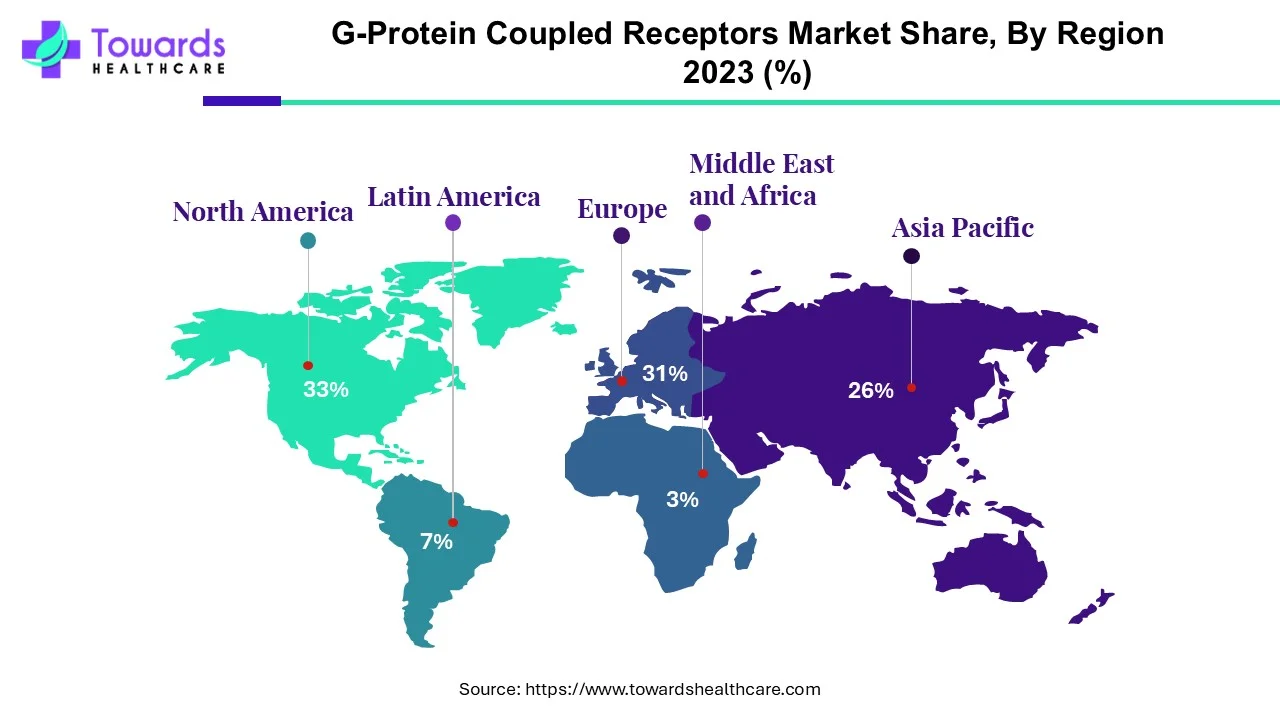
North America dominated the G-protein coupled receptors market by 33% in 2025. The approval of medications that target GPCRs, deliberate investments in cancer research, and increased focus on drug discovery and development initiatives in the area are all factors contributing to this dominance. According to the 2021 Journal of the American Heart Association, by 2035, more than 130 million American people are expected to suffer from heart disease. Additionally, according to the Heart and Stroke Foundation of Canada's February 2022 report, 100,000 people are diagnosed with heart failure each year, an incurable ailment that now affects 750,000 people in Canada.
In 2022, the Advanced Research Projects Agency for Health, or ARPA-H, was created by the Biden Administration. This agency, which is independent of NIH, is responsible for concentrating on high-risk and high-reward translational research. ASCO has backed ARPA-H's establishment and developed a set of guiding principles for the new organization. Congress funded ARPA-H with $1.5 billion in the FY 2024 budget. The NIH, NCI, and ARPA-H will continue to get money, which the Association for Clinical Oncology will continue to support in order to sustain the rate of scientific advancement and prevent cancer.
In December 2024, the Honorable Government of Canada's Health Minister, Mark Holland, announced $295,000 in funding for CanPath to further breast cancer screening research. At a live event held at the Canadian Cancer Society, which also received funds for public awareness of breast cancer, Minister Holland made the announcement of this funding.
U.S. Market Trends
The U.S. G-protein coupled receptors market is experiencing significant growth, driven by advancements in drug discovery and development. It is the largest segment is driven by the rising prevalence of chronic diseases, while the fastest-growing segment focuses on rare diseases. Regulatory support for novel therapies is enhancing the development pipeline for G-Protein Coupled Receptor-targeted drugs.
Asia Pacific is estimated to host the fastest-growing G-protein coupled receptors market by 26% during the forecast period. GPCR research and drug discovery are expanding significantly in Asia-Pacific nations, including China, Japan, and India. The market is driven by a growing biotechnology industry and a large pool of highly qualified researchers. Innovative initiatives pertaining to GPCRs are being propelled by rising governmental and private sector investments in talent development and research infrastructure. Furthermore, the region's increasing illness frequency has fueled research efforts and commercial development by creating a critical demand for tailored medicines.
In November 2024, billions of people utilize traditional medicine for their health and well-being all around the world. During a Geneva signing ceremony, the Chinese government pledged US$ 5 million over five years (2024–2028) to assist the Traditional, Complementary, and Integrative Medicine (TCIM) program of the World Health Organization (WHO). Additionally, this investment will be crucial to the advancement of the WHO Traditional Medicine Strategy 2025–2034, which is expected to be unveiled at the Seventy-eighth World Health Assembly.
China Market Trends
The China G-protein coupled receptors market is experiencing significant growth, driven by advancements in biotechnology and increased research activities in drug discovery and development. The market is characterized by a high demand for GPCR-targeted drugs to treat a range of diseases such as cancer, cardiovascular disorders, and neurological conditions.
| Ecosystem Segment | Key Participants | Explanation |
| Technology Providers | Schrodinger, Relay Therapeutics, Septerna, Structure Therapeutics | AI-driven molecular modeling, GPCR structural biology and computational drug discovery platforms. |
| Product Manufacturers | AbbVie, Novartis, Pfizer, AstraZeneca, Merck & Co. | Develop and commercialize GPCR-targeting therapeutics across multiple disease areas. |
| Service Providers | Charles River Laboratories, Evotec, Eurofins Discovery | GPCR assay development, screening, pharmacology testing, lead optimization services. |
| Platform Providers | Septerna, Sosei Group, Structure Therapeutics | GPCR-focused discovery platforms utilizing structure-based drug design. |
| CROs/CDMOs | Charles River Laboratories, Evotec, WuXi AppTec | Preclinical pharmacology, screening assays, medicinal chemistry, translational research. |
| Software Vendors | Schrodinger, Dassault Systèmes (BIOVIA), Certara | Molecular modeling, simulation, computational chemistry, drug design software. |
| Research Institutions | NIH, Max Planck Institutes, MRC Laboratory of Molecular Biology, University of North Carolina GPCR Center | Fundamental GPCR biology, receptor signaling, structural biology, translational research. |
| End-User Industries | Pharmaceuticals, Biotechnology, Academic Research, CRO Industry | Utilize GPCR technologies for drug discovery, validation, and therapeutic development. |
| Tier 1 | Tier 2 | Tier 3 | |
| Typical Market Influence | 74% | 20% | 6% |
| Tier 1 | ||||
| Company Name | Headquarters | Country | Why Relevant to This Market | Key Products/Services |
| Novo Nordisk | Bagsværd | Denmark | Global leader in GLP-1 receptor agonists targeting GPCR pathways | Ozempic®, Wegovy®, Rybelsus®, GLP-1 therapeutics |
| Eli Lilly and Company | Indianapolis, Indiana | USA | Major GPCR-targeted metabolic drug developer | Mounjaro®, Zepbound®, incretin receptor therapeutics |
| AstraZeneca | Cambridge, England | United Kingdom | Extensive GPCR portfolio across respiratory and cardiovascular diseases | Respiratory GPCR drugs, cardiovascular therapeutics |
| Tier 2 | ||||
| Company Name | Headquarters | Country | Why Relevant to This Market | Key Products/Services |
| AbbVie Inc. | North Chicago, Illinois | USA | GPCR-targeted CNS and immunology drug development | Neurology and immunology therapeutics |
| Pfizer Inc. | New York, New York | USA | Multiple GPCR-based therapies across therapeutic areas | Cardiovascular, inflammation and rare disease drugs |
| Bristol Myers Squibb | Princeton, New Jersey | USA | Active GPCR-targeted immunology and cardiovascular research | Immunology and cardiovascular drug portfolio |
| Tier 3 | ||||
| Company Name | Headquarters | Country | Why Relevant to This Market | Key Products/Services |
| Septerna, Inc. | South San Francisco, California | USA | Pure-play GPCR drug discovery company using structure-based platform | GPCR-targeted small molecule pipeline |
| Structure Therapeutics Inc. | South San Francisco, California | USA | Clinical-stage company focused on GPCR therapeutics | Oral GPCR-targeted medicines |
| Sosei Group Corporation | Tokyo | Japan | Global GPCR structure-based discovery platform licensing | GPCR discovery platform and partnered pipeline |
Dr. Xavier Leroy, CEO of GIO Therapeutics, stated that although GPCRs are prominent targets for drugs, their potential in cancer treatment is now underutilized. It gives me great pleasure to head GIO Therapeutics and work with a superb group of professionals in the field to further investigate the therapeutic potential of GPCRs in inflammatory and oncological conditions, ultimately leading to better patient outcomes.
By Product
By Assay Type
By Application
By Region








Principal Consultant
Shivani Zoting is a dedicated research analyst specializing in the healthcare industry. With a strong academic foundation, a B.Sc. in Biotechnology and an MBA in Pharmabiotechnology, she brings a unique blend of scientific understanding and strategy.
Learn more about Shivani Zoting
Reviewed By
Aditi Shivarkar is a seasoned professional with over 14 years of experience in healthcare market research. As a content reviewer, Aditi ensures the quality and accuracy of all market insights and data presented by the research team.
Learn more about Aditi Shivarkar









