Pipeline Programs

CGT Companies Tracked

Manufacturing Facilities


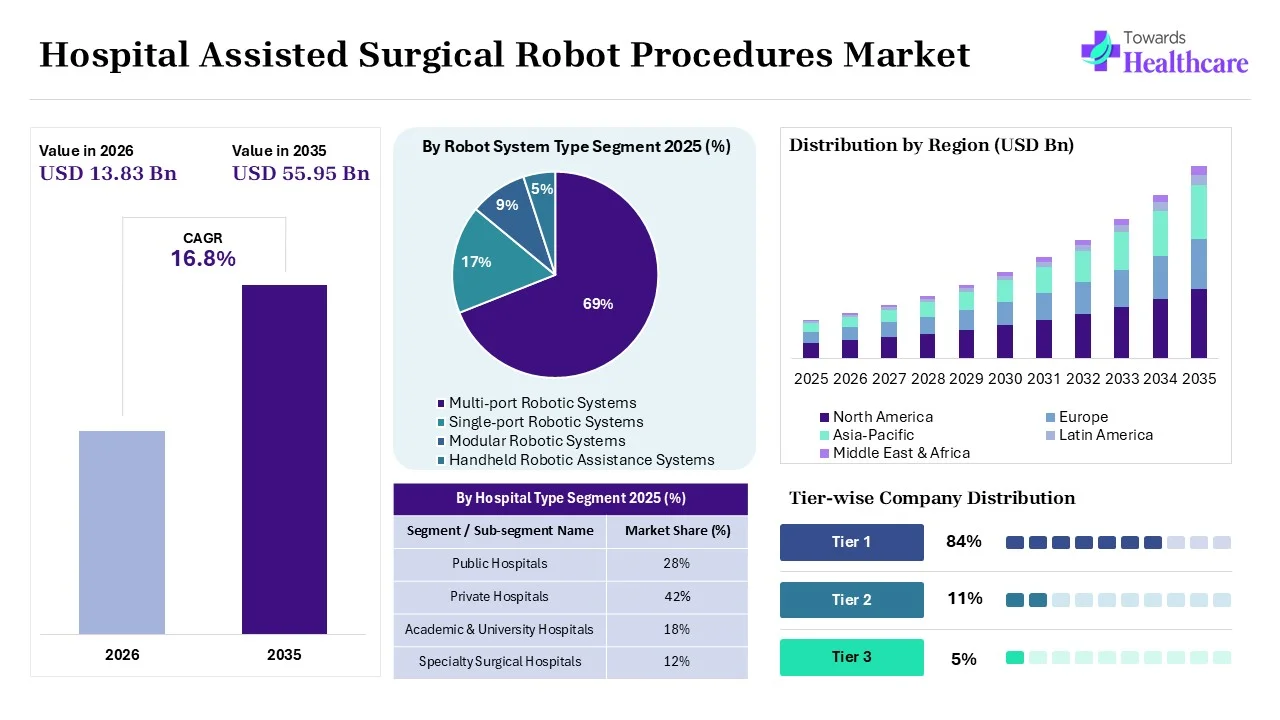
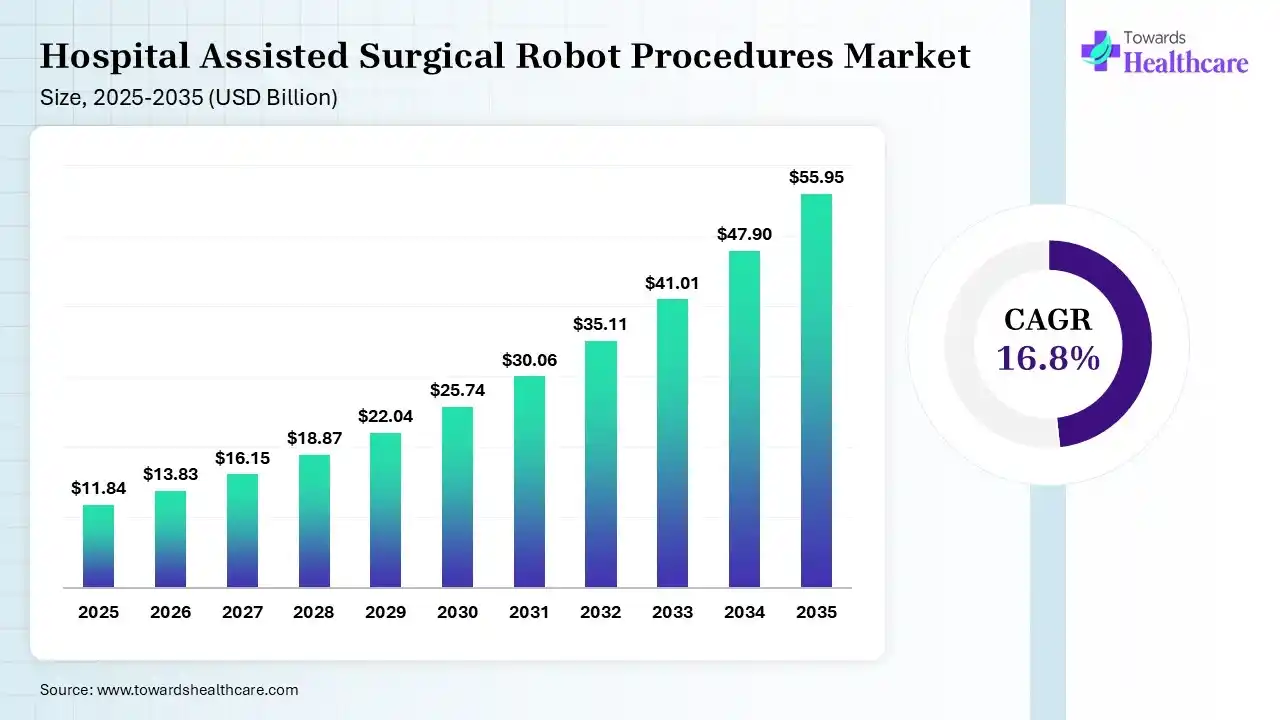
The global hospital assisted surgical robot procedures market is estimated at USD 11.84 billion in 2025, driven by the rising adoption of minimally invasive surgical procedures, increasing investments in robotic-assisted surgical technologies, and growing demand for improved surgical precision and patient outcomes. The market is expected to witness steady growth USD 13.83 billion in 2026 as hospitals expand robotic surgery programs, enhance operating room capabilities, and integrate AI-enabled surgical systems into clinical practice. It is projected to reach USD 55.95 billion by 2035, registering a CAGR of 16.8% during the period, supported by continuous advancements in robotic platforms, expanding applications across multiple surgical specialties, increasing surgeon training initiatives, and the growing emphasis on reducing complications, shortening hospital stays, and improving overall procedural efficiency.
Hospital assisted surgical robot procedures involve the use of advanced robotic systems in hospitals to assist surgeons in performing minimally invasive and complex surgeries with enhanced precision, flexibility, and control. These procedures help improve surgical accuracy, reduce complications, minimize recovery time, and enhance overall patient outcomes across various specialties, including urology, gynecology, orthopedics, and general surgery.
The market is driven by the increasing demand for minimally invasive procedures, rising surgical volumes, growing hospital investment in robotic technologies, and the need for better clinical outcomes. Key trends include the adoption of AI-powered surgical systems, 3D visualization, and image-guided navigation. Opportunities are expanding through the development of cost-effective robotic platforms and broader adoption in emerging healthcare markets, while continuous technological advancements in robotic precision, machine learning, and digital operating room integration are further supporting market growth.
The hospital assisted surgical robot procedures market is growing due to the increasing demand for minimally invasive surgeries, rising prevalence of chronic diseases requiring surgical intervention, and expanding investments in advanced robotic technologies. Hospital stays and faster patient recovery are encouraging wide adoption. Continuous advancements in AI-enabled robotics, 3D imaging, and digital operating room technologies are further accelerating market growth.
Artificial intelligence is transforming the market by improving surgical planning, real-time decision support, and robotic precision during complex procedures. AI-powered systems help surgeons analyze patient data, optimize workflows, and enhance accuracy while reducing the risk of complications. Continuous advancements in machine learning, image-guided navigation, and predictive analytics are increasing the efficiency, safety, and adoption of robotic-assisted surgeries across hospitals.
Rising Adoption of Minimally Invasive Surgery
Hospitals are increasingly adopting robotic-assisted minimally invasive procedures to improve surgical precision and patient outcomes. These procedures reduce blood loss, postoperative pain, recovery time, and hospital stays, encouraging healthcare providers to expand robotic surgery programs across a wide range of surgical specialties.
Expansion of Robotic Surgery Across Specialties
The use of hospital-assisted surgical robots is expanding beyond urology and gynecology into orthopedics, general surgery, cardiothoracic surgery, and neurosurgery. This broader clinical adoption is increasing procedure volumes and creating new growth opportunities for robotic surgical platforms worldwide.
Continuous Advancements in Robotic Technology
Manufacturers are developing next-generation robotic systems with enhanced imaging, improved instrument flexibility, and greater surgical precision. These innovations are improving operating room efficiency, supporting complex procedures, and encouraging hospitals to invest in advanced robotic platforms for long-term clinical and operational benefits.
| Table | Scope |
| Market Size in 2026 | USD 13.83 Billion |
| Projected Market Size in 2035 | USD 55.95 Billion |
| CAGR (2026 - 2035) | 16.8% |
| Historical Data | 2020 - 2023 |
| Base Year | 2025 |
| Forecast Period | 2026 - 2035 |
| Measurable Values | USD Millions/Units/Volume |
| Market Segmentation | By Procedure Type, By Robot System Type, By Hospital Type, By Procedure Mode, By Application, By End User, By Region |
| Top Key Players | Intuitive Surgical, Medtronic, Johnson & Johnson MedTech, Stryker, Zimmer Biomet, CMR Surgical, Olympus Corporation |
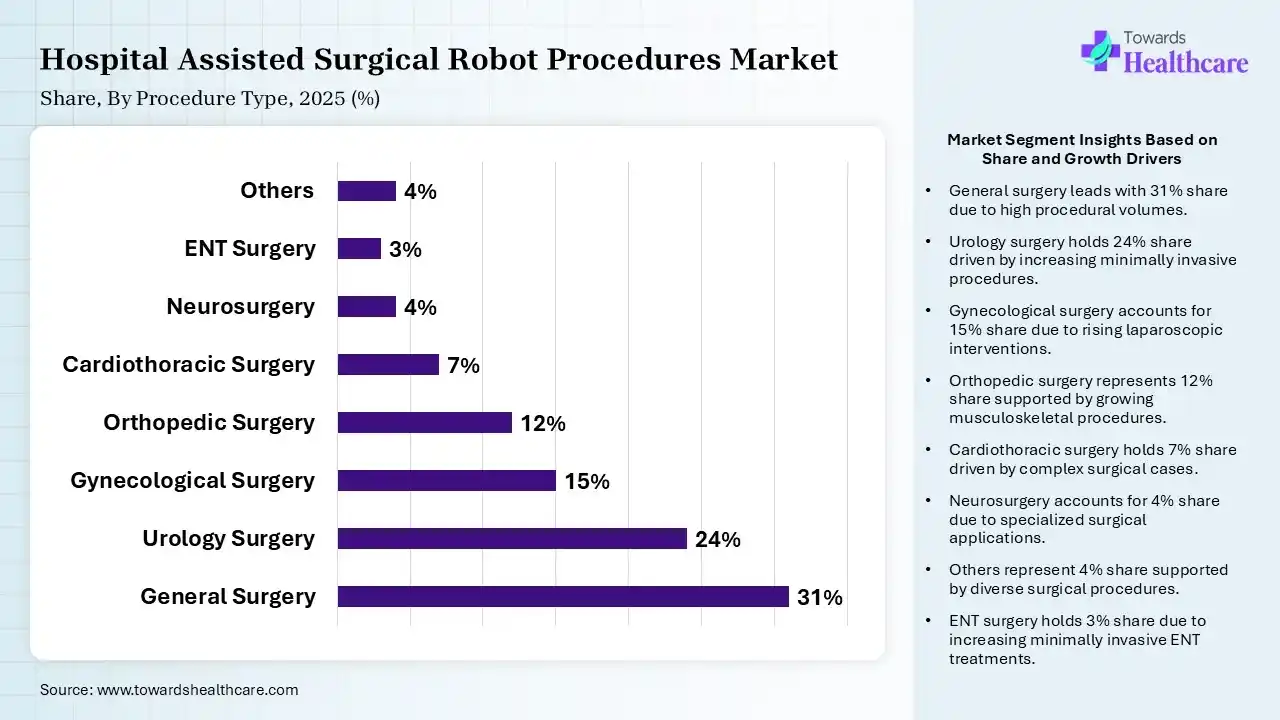
| Segment | Share 2025 (%) |
| General Surgery | 31% |
| Urology Surgery | 24% |
| Gynecological Surgery | 15% |
| Orthopedic Surgery | 12% |
| Cardiothoracic Surgery | 7% |
| Neurosurgery | 4% |
| ENT Surgery | 3% |
| Others | 4% |
The General Surgery Segment Dominated the Hospital Assisted Surgical Robot Procedures Market in 2025
The general surgery segment held a dominant share of 31% in 2025 due to the high volume of procedures such as hernia repair, colorectal surgery, gallbladder removal, and gastrointestinal operations. Robotic assisted systems enhance surgical precision, reduce complications, minimize hospital stays, and improve patient recovery. Growing hospital adoption of minimally invasive techniques and expanding access to robotic platforms continue to strengthen the segment’s market leadership.
The urology surgery segment held the second-largest share of 24% in 2025 due to the high adoption of robotic systems for procedures such as prostatectomy, nephrectomy, and kidney reconstruction. Robotic assisted urological surgeries provide enhanced precision, improved visualization, reduced blood loss, and faster patient recovery. The increasing prevalence of urological disorders and growing preference for minimally invasive procedures continue to support segment growth.
The orthopedic surgery segment held a 12% share in 2025 and is expected to grow at the fastest CAGR in the hospital assisted surgical robot procedures market during the forecast period due to the increasing number of joint replacements, spine, and trauma procedures worldwide. Rising demand for precise implant placements, improved surgical accuracy, and faster patient recovery is driving the adoption of robotic assisted orthopedic surgerious. Continuous advancements in robotic navigation systems and growing investments by hospitals are further supporting rapid segment growth.
The cardiothoracic surgery segment held a 7% market share due to the increasing adoption of robotic assited technique or complex heart and chest procedures. These systems provide enhanced precision, improved visualization, and greater surgical control while reducing blood loss, postoperative complications, and recovery time. Rising prevalence of cardiovascular diseases, growing demand for minimally invasive surgeries, and expanding hospital investments in advanced robotic technologies are driving segment growth.
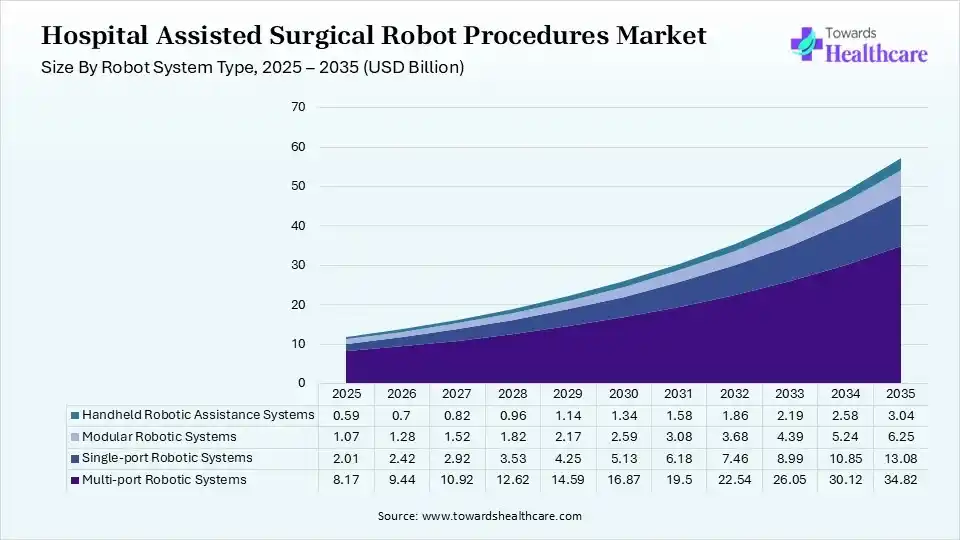
| Segment | Share 2025 (%) |
| Multi-port Robotic Systems | 69% |
| Single-port Robotic Systems | 17% |
| Modular Robotic Systems | 9% |
| Handheld Robotic Assistance Systems | 5% |
The Multi-port Robotic Systems Segment Dominated the Hospital Assisted Surgical Robot Procedures Market in 2025
The multi-port robotic systems segment dominated the market with a share of 69% in 2025 due to its widespread use across a broad range of complex surgical procedures, including general, urology, gynecology, and cardiovascular surgeries. These systems provide superior instrument flexibility, enhanced 3D visualization, and greater surgical precision. Their established clinical effectiveness, extensive hospital adoption, and strong surgeon familiarity continue to reinforce their leading market position.
The single-port robotic systems segment held the second-largest share of 17% in 2025 and is expected to grow at the fastest CAGR in the market during the forecast period due to the increasing demand for less invasive surgical procedures requiring a single incision. These systems offer reduced postoperative pain, minimal scarring, shorter innovations, is supporting the segment’s steady market expansion.
The modular robotic systems segment held a 9% hospital assisted surgical robot procedures market share due to their flexible design, scalability, and ability to support a wide range of surgical procedures. These systems allow hospitals to customize robotic configuration based on clinical requirements while improving operating room efficiency and resource utilization. Increasing demand for cost-effective robotic solutions, technological advancements, and expanding adoption across healthcare facilities are driving segment growth.
The handheld robotic assistance systems segment held a 5% market share due to its ability to enhance surgical precision while maintaining direct surgeon control during procedures. These systems are increasingly adopted for orthopedic, neurological, and minimally invasive procedures because they are compact, cost-effective, and easy to integrate into existing operating rooms. Growing demand for affordable robotic technologies and improved procedural accuracy is supporting segment growth.
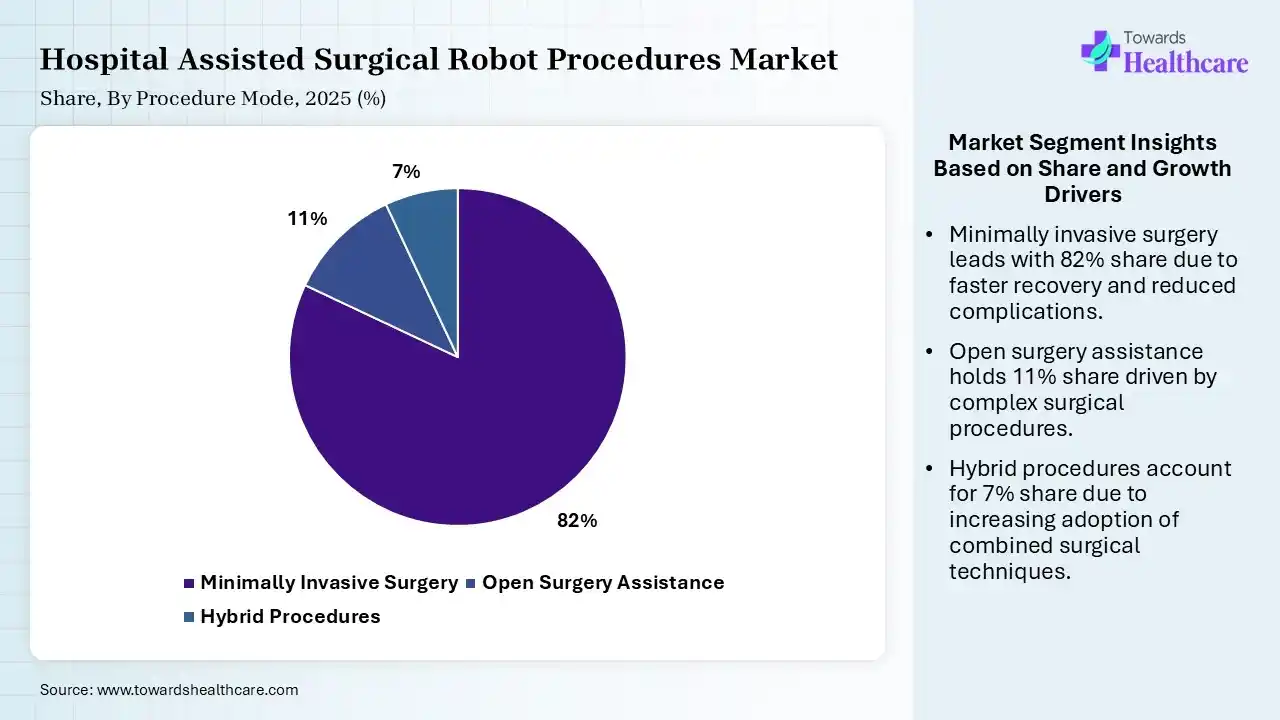
| Segment | Share 2025 (%) |
| Minimally Invasive Surgery | 82% |
| Open Surgery Assistance | 11% |
| Hybrid Procedures | 7% |
The Minimally Invasive Surgery Segment Led the Hospital Assisted Surgical Robot Procedures Market in 2025 with the Largest Share
The minimally invasive surgery segment led the market with a share of 82% in 2025 due to its ability to reduce blood loss, postoperative pain, surgical complications, and recovery time compared to traditional open surgeries. Hospitals and surgeons increasingly prefer robotic-assisted minimally invasive procedures for their precision, shorter hospital stays, and improved clinical outcomes, driving widespread adoption across multiple surgical specialties.
The open surgery assistance segment held the second-largest share of 11% in 2025 due to its continued use in complex and high-risk procedures where open surgical access is required. Robotic assistance enhances surgical precision, improves visualization, and supports better instrument control during these operations. The growing number of complex surgeries and increasing adoption of robotic technologies in major hospitals continue to drive segment growth.
The hybrid procedures segment held a 7% share in 2025 and is expected to grow at the fastest CAGR in the hospital assisted surgical robot procedures market during the forecast period due to the increasing preference for combining robotic-assistes technique with conventional surgical approaches for complex cases. Hybrid procedures improve surgical flexibility, precision and patient outcomes while enabling personalized treatment strategies. Rising adoption of advanced operating room technologies and increasing demand for multidisciplinary surgical care are further accelerating segment growth.
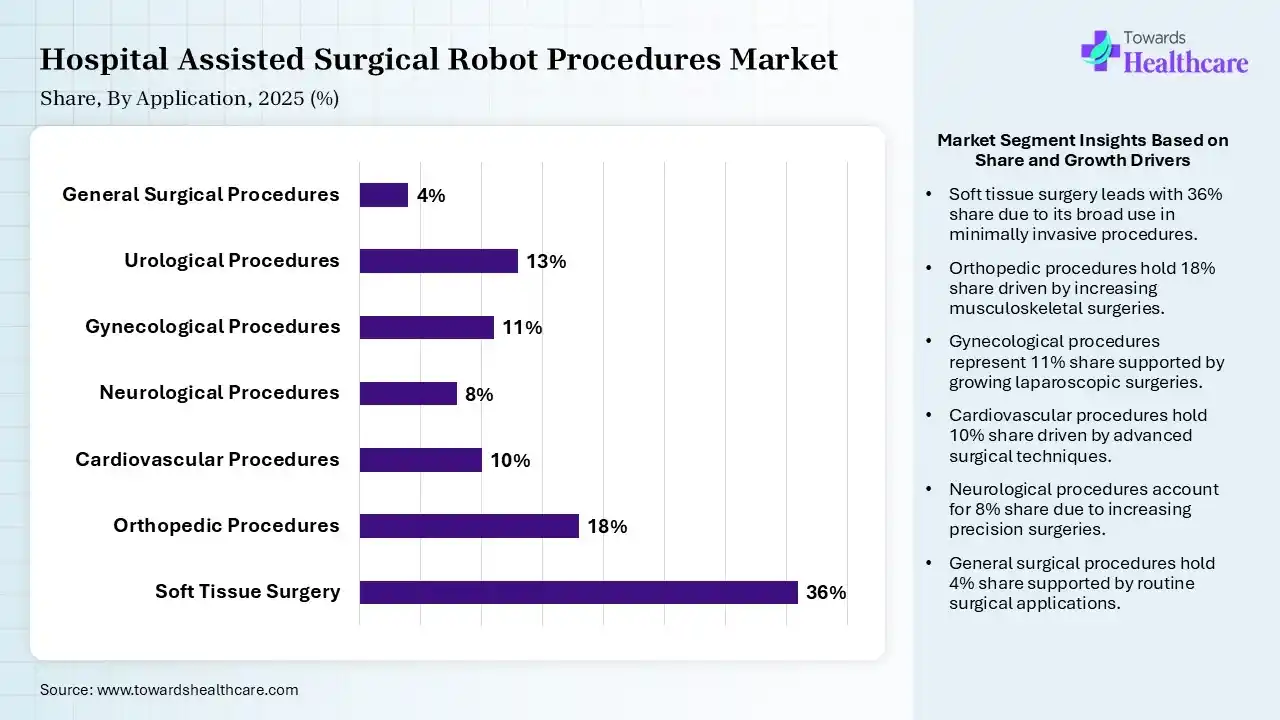
| Segment | Share 2025 (%) |
| Soft Tissue Surgery | 36% |
| Orthopedic Procedures | 18% |
| Cardiovascular Procedures | 10% |
| Neurological Procedures | 8% |
| Gynecological Procedures | 11% |
| Urological Procedures | 13% |
| General Surgical Procedures | 4% |
The Soft Tissue Surgery Segment Dominated the Hospital Assisted Surgical Robot Procedures Market in 2025
The soft tissue surgery segment held a dominant share of 36% in 2025 due to the high number of robotic-assisted procedures performed in urology, gynecology, general surgery, and colorectal surgery. Robotic systems provide enhanced precision, improved dexterity, and better visualization during delicate soft tissue operations. The growing preference for minimally invasive procedures and increasing hospital adoption of robotic platforms continue to strengthen the segment market leadership.
The orthopedic procedures segment held the second-largest share of 18% in 2025 and is expected to grow at the fastest CAGR in the market during the forecast period due to the rising number of joint replacements, spine, and trauma surgeries. Increasing demand for accurate implant positioning, improved surgical outcomes, and faster patient recovery is driving robotic adoption. Growing investments in advanced orthopedic technologies and expanding hospital infrastructure are further accelerating segment growth.
The urological procedures segment held a 13% hospital-assisted surgical robot procedures market share due to the increasing prevalence of prostate cancer, kidney disorders, and other urological conditions requiring surgical intervention. Robotic-assisted systems offer greater precision, improved visualization, and enhanced dexterity during delicate procedures, leading to fewer for minimally invasive recovery. Rising patient preference for minimally invasive surgeries and expanding hospital adoption of robotic technologies are further driving segment growth.
The gynecological procedures segment held a 11% market share due to the increasing use of robotic-assisted surgery for hysterectomy, myomectomy, and endometriosis treatment. These systems enhance surgical precision, reduce blood loss, minimize postoperative pain, and shorten recovery time. Growing awareness of minimally invasive treatment options, rising prevalence of gynecological disorders, and increasing hospitals’ investment in robotic technologies are supporting continued segment growth.
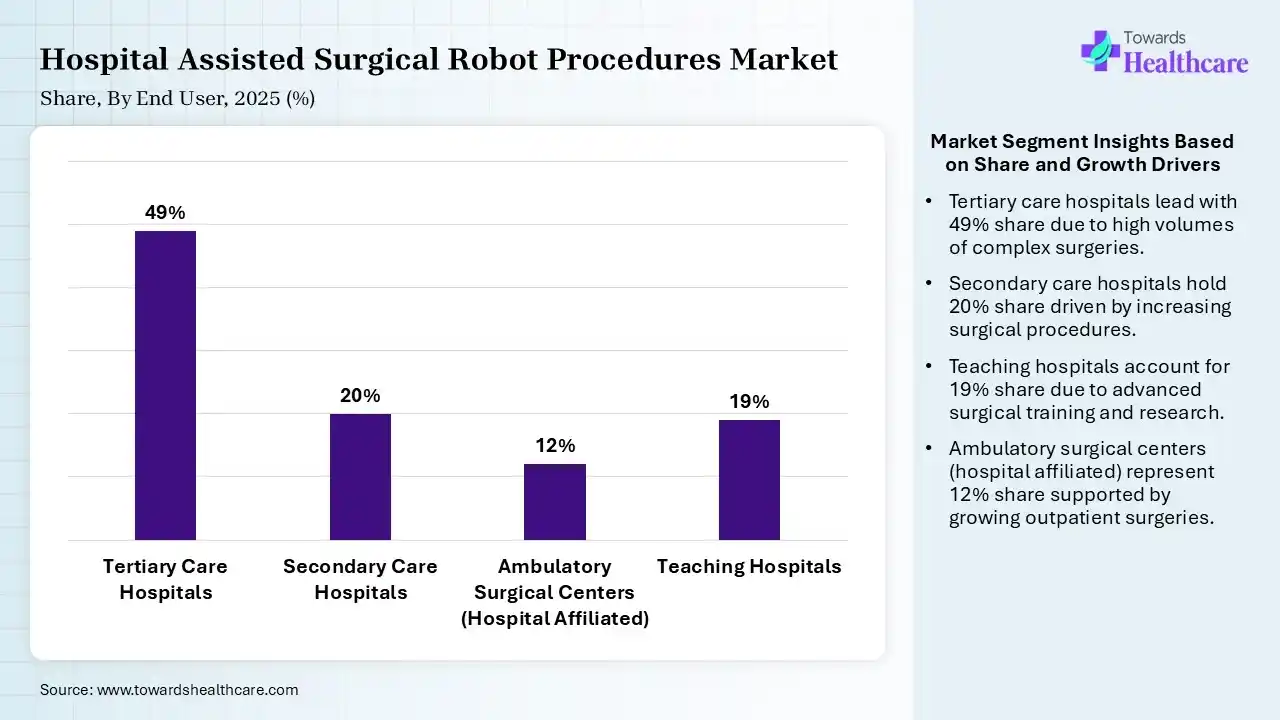
| Segment | Share 2025 (%) |
| Tertiary Care Hospitals | 49% |
| Secondary Care Hospitals | 20% |
| Ambulatory Surgical Centers (Hospital Affiliated) | 12% |
| Teaching Hospitals | 19% |
The Tertiary Care Hospitals Segment Dominated the Hospital Assisted Surgical Robot Procedures Market in 2025
The tertiary care hospitals segment dominated the market with a share of 49% in 2025 due to their advanced surgical infrastructure, availability of specialized surgeons, and higher adoption of robotic-assisted surgical systems. These hospitals perform a large volume of complex procedures across multiple specialties and receive significant investment in advanced medical technologies, enabling them to deliver high-quality patient care and improved surgical outcomes.
The secondary care hospitals segment held the second-largest share of 20% in 2025 due to the increasing adoption of robotic-assisted systems for routine and specialized surgical procedures. These hospitals are expanding their surgical capabilities to improve treatment quality, patient outcomes, and operational efficiency. Rising healthcare investment, growing access to advanced medical technologies, and increasing demand for minimally invasive surgerious continue to support segment growth.
The ambulatory surgical centers (Hospital Affiliated) segment held a 12% share in 2025 and is expected to grow at the fastest CAGR in the hospital assisted surgical robot procedures market during the forecast period due to the rising demand for cost-effective, same-day surgical procedures. Hospital affiliated provide access to advanced robotic technologies, specialized surgical expertise, and integrated patient care. Increasing preference for outpatient minimally invasive surgeries and expanding healthcare infrastructure are further driving segment growth.
The teaching hospitals segment held a 19% market share due to increasing investments in advanced robotic surgical systems for clinical training, research, and complex surgical procedures. These hospitals serve as key centers for surgeon education and technology adoption, accelerating the use of robotic-assisted surgeries. Growing collaborations with medical device manufacturing, rising surgical volumes, and continuous focus on innovation are further supporting segment growth.
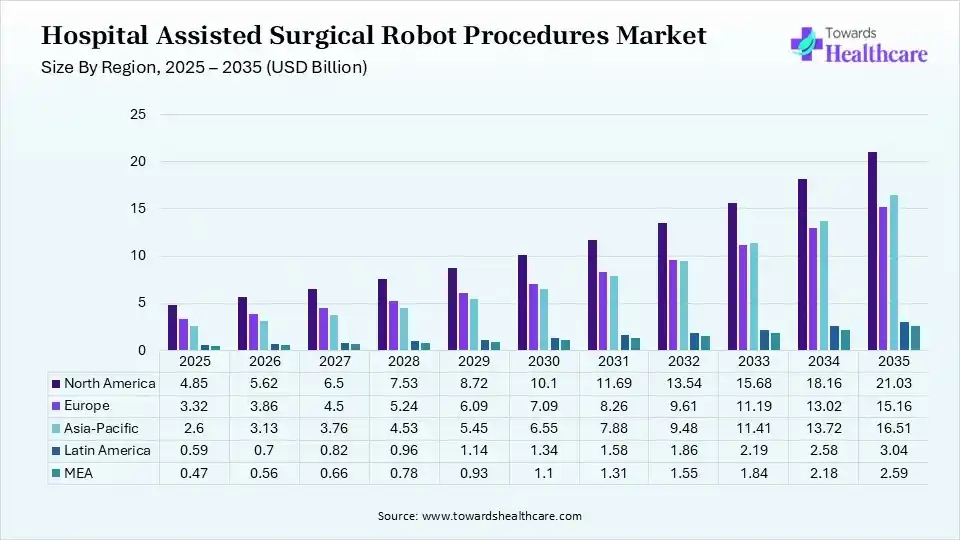
North America dominated the hospital assisted surgical robot procedures market with a share of 41% in 2025 due to the widespread adoption of robotic-assisted surgeries, advanced healthcare infrastructure, and strong investments in surgical technologies. The region benefits from a high concentration of tertiary care hospitals, skilled surgeons, and favorable reimbursement policies. Rising surgical volumes, increasing demand for minimally invasive procedures, and continuous technological innovations further strengthened its market leadership.
Strong Healthcare Infrastructure Strengthens U.S. Hospital Assisted Surgical Robot Procedures Market Leadership
The U.S. dominated the market with a share of 31% in 2025, owing to its well-established healthcare infrastructure, high adoption of robot-assisted surgeries, and strong presence of leading medical device manufacturers. The country performs a large volume of complex surgical procedures and benefits from favorable reimbursement policies, continuous technological advancements, and extensive surgeon training programs, supporting sustained market leadership.
What is fueling Mexico's rapid growth in the Hospital Assisted Surgical Robot Procedures Market?
Mexico held a 4% share in 2025 and is expected to grow at the fastest CAGR in the market during the forecast period due to increasing investments in healthcare infrastructure, expanding access to advanced surgical technologies, and rising demand for minimally invasive procedures. Growing private hospital networks, improving surgeon training programs, and supporting government initiatives to modernize healthcare services are further accelerating market growth across the country.
Asia Pacific held 22% share of the market in 2025 and is expected to grow at the fastest CAGR in the market during the forecast period due to rising healthcare expenditure, expanding hospital infrastructure, and increasing adoption of minimally invasive surgical techniques. Growing investments in robotic technologies, improving access to advanced healthcare services, a large patient population, and supporting government initiatives are accelerating the adoption of robotic-assisted surgical procedures across the region.
Why is China Leading the Asia Pacific Hospital Assisted Surgical Robot Procedures Market?
China dominated the market with a share of 8% in 2025 due to its rapidly expanding healthcare infrastructure, increasing adoption of robotic assisted surgeries, and significant investments in advanced medical technologies. The country benefited from a large patient population, rising prevalence of chronic diseases requiring surgical intervention, growing number of tertiary care hospitals, and strong government support for healthcare modernization and medical technology innovation.
Is India Emerging as the Fastest Growing Hospital Assisted Surgical Robot Procedures Market?
India held 3% share of the market in 2025 and is expected to grow at the fastest CAGR in the market during the forecast period due to rapid expansion of healthcare infrastructure, increasing investments in robotic surgery technologies, and growing demand for minimally invasive procedures. Rising medical tourism, expanding private hospital networks, improving surgeon training, expanding private hospital networks, improving surgeron training and supportive government initiatives to strengthen advanced healthcare services are further driving market growth.
Europe is moving robotic surgery from specialist centres into broader hospital practice. Demand is rising for minimally invasive procedures, shorter recovery, and better surgical precision. Hospitals are adding systems across urology, colorectal, gynaecology, and thoracic care. Competition is widening beyond Intuitive Surgical, with CMR Surgical, Medtronic, and Johnson & Johnson developing alternatives. In 2025, NICE listed five robotic technologies for NHS soft-tissue surgery, reflecting wider European technology competition. High equipment costs and training needs remain barriers. Still, ageing populations, complex procedures, and pressure to improve hospital efficiency are supporting continued adoption across major European healthcare systems. Public funding supports modernization.
Germany Expands Robotic Surgery Beyond Urology
Germany is building robotic capacity through large hospitals, university centres, and private providers. Urology remains a major application, but colorectal, gynaecology, thoracic, and paediatric procedures are expanding. At University Hospital Leipzig, three da Vinci systems were operating routinely by 2024, and the centre completed its 1,000th robotic operation that year. Competition is becoming broader as hospitals assess systems from Intuitive Surgical, CMR Surgical, Medtronic, and others. Germany’s advanced hospital infrastructure supports adoption. However, capital costs, staff training, and evidence on cost-effectiveness still influence purchasing decisions, particularly among smaller hospitals. High procedure volumes can improve investment economics for larger centres.
UK Hospitals Accelerate Robotic Surgery Adoption
The UK is seeing rapid robotic adoption, led by NHS investment and growing private-sector use. In 2024, 100 of 149 responding NHS trusts used robotic systems, with 212 systems operating. Urology, general surgery, and gynaecology generated 90% of activity. The competitive field is broadening. NICE supports evaluation of five systems, including Da Vinci, Versius, Hugo, and Senhance. NHS England aims for 500,000 robot-supported operations annually by 2035. Training, equitable access, and programme costs remain key challenges as hospitals scale capacity. Regional variation persists, with smaller trusts facing financial and training constraints.
R&D
Clinical Trials
Patient Support and Services
| Companies | Headquarters | Offerings |
| Intuitive Surgical | U.S. | da Vinci robotic surgical systems, minimally invasive surgery platforms, robotic instruments, and imaging technologies |
| Medtronic | Ireland | Robotic-assisted surgery platforms, surgical navigation systems, advanced instrumentation, and digital surgery solutions |
| Johnson & Johnson MedTech | U.S. | Robotic surgery platforms, digital surgery technologies, visualization systems, and surgical instruments |
| Stryker | U.S. | Robotic-assisted orthopedic surgery systems, navigation technologies, joint replacement solutions, and smart surgical tools |
| Zimmer Biomet | U.S. | Robotic orthopedic platforms, implant positioning systems, knee and hip replacement technologies, and surgical planning software |
| CMR Surgical | United Kingdom | Versius robotic surgical system, modular robotic platforms, minimally invasive surgery solutions, and surgeon training |
| Olympus Corporation | Japan | Endoscopic surgical systems, visualization technologies, energy devices, and robotic-assisted surgical solutions |
In June 2026, “Every year the Surgical Robotic Technology Awards demonstrates exactly how the industry continues to push the boundaries of what modern medicine can achieve. Winners are using technology to impact everything from improving patient outcomes to redefining clinical workflows. As an ongoing partner to these awards, QNX is honoured to recognise and support the innovators who are making surgery safer, smarter, and more precise for patients around the world, " said Carsten Hurasky, Chief Marketing Officer, QNX.
By Procedure Type
By Robot System Type
By Hospital Type
By Procedure Mode
By Application
By End User
By Region









Principal Consultant
Payal Rabde is a Healthcare Market Research Analyst at Towards Healthcare Research & Consulting with 4+ years of experience in pharmaceuticals, biotechnology, medical devices, and life sciences.
Learn more about Payal Rabde

Reviewed By
Aditi Shivarkar is a seasoned professional with over 14 years of experience in healthcare market research. As a content reviewer, Aditi ensures the quality and accuracy of all market insights and data presented by the research team.
Learn more about Aditi Shivarkar