

Pipeline Programs

CGT Companies Tracked

Manufacturing Facilities
The India retatrutide market has no measurable commercial value in 2025 as the drug remains investigational and unapproved. However, rising obesity and metabolic disease rates, strong clinical outcomes, and growing demand for advanced weight-management therapies could drive rapid market formation following regulatory approval and commercialization.
Retatrutide is still an investigational therapy and has yet to receive regulatory approval for commercial use, representing the unavailability of measurable commercial market value in 2025 for the India retatrutide market. Nevertheless, India’s rapidly expanding obesity and metabolic disease burden, rising demand for highly effective weight-management therapies, and strong clinical outcomes demonstrated by retatrutide in late-stage trials are fueling the future growth potential of the market. Therefore, after potential regulatory approval and commercialization, the market is expected to expand swiftly due to increasing obesity-management programs, specialist prescribing, and increasing patient adoption of next-generation incretin-based therapies. Thus, it can be concluded that the year 2025 represents a pre-commercial baseline, while the post-launch period is anticipated to mark the initiation of substantial market formation and accelerated growth through 2035.
India retatrutide refers to an investigational triple GIP/GLP-1/glucagon receptor agonist developed for chronic weight management. The product is developed by Eli Lilly and Company and is currently in global Phase 3 development with no regulatory approval anywhere in the world. Moreover, indications, dose strength, distribution channels, end user, and patient profiles are covered in this report to highlight the future Indian market growth based on illustrative TAM/SAM/SOM modeling instead of observed commercial revenue, since none exists.
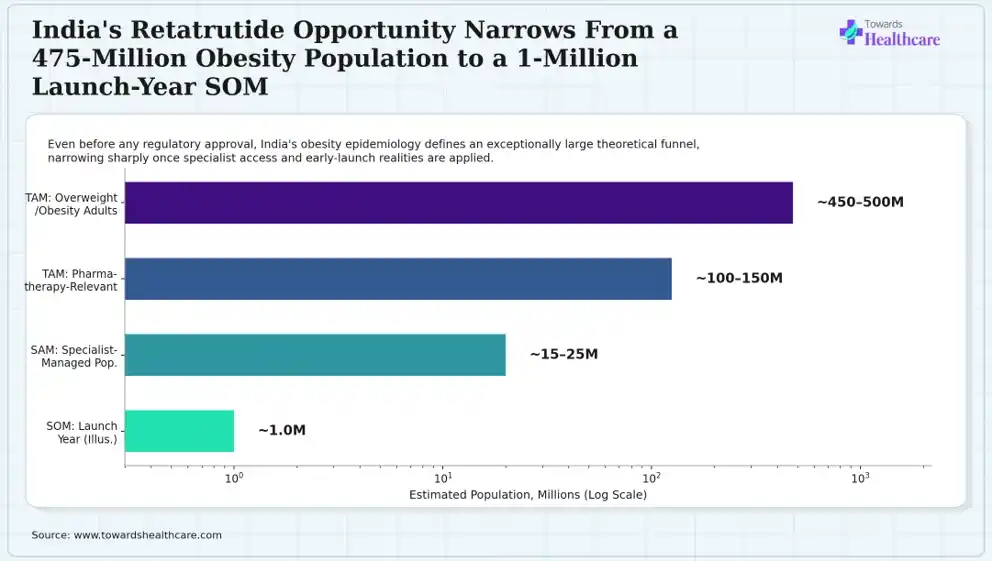
As the market research analyst, I interpret that the horizontal funnel chart (log scale) illustrates India's retatrutide TAM-SAM-SOM population layers. The TAM, focusing on adults population with overweight/obesity, is estimated to increase to approximately 450-500 million, while TAM including the pharmacotherapy-relevant population highlights a rise to nearly 100-150 million. The SAM covering the specialist-managed obesity population is anticipated to grow by approximately 15-25 million. The SOM emphasizing launch-year illustrative midpoint is expected to be roughly 1 million.
Key Insight:
Epidemiological scale alone is a poor predictor of realistic early commercial opportunity for any high-cost specialty therapy across India, as indicated by approximately a 475-to-1 narrowing from the broadest TAM to the illustrative launch-year SOM.
Source: Towards Healthcare, India Retatrutide TAM/SAM/SOM Analysis, 2025 (illustrative analytical ranges, not official market data).
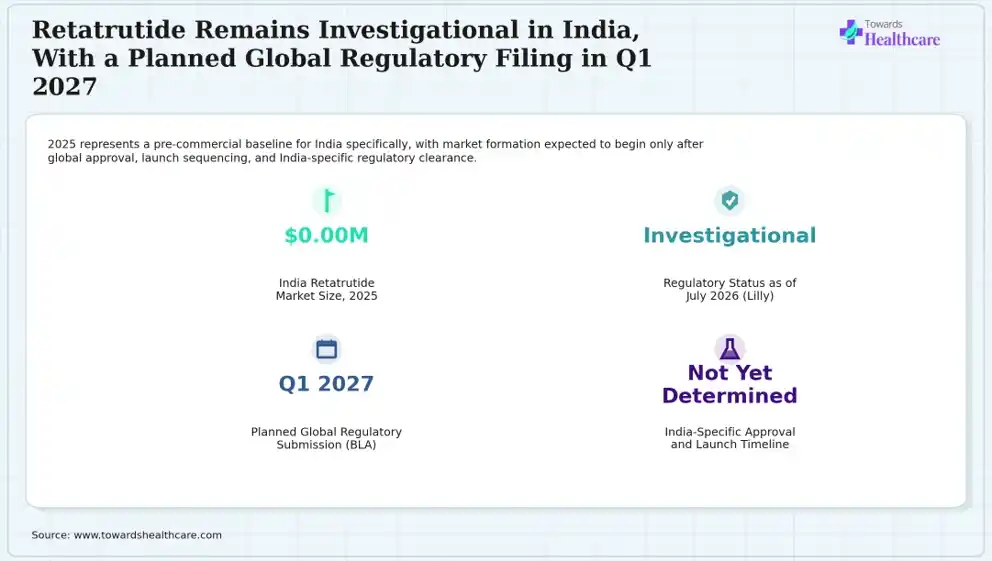
The given infographic stat panel covers pre-commercial regulatory status metrics. In 2025, $0.00 million was the India retatrutide market size, with no regulatory approval of the product till July 2026, and an undetermined India-specific approval and launch timeline. Additionally, the company plans a global regulatory submission in Q1 2027 (BLA).
Key Insight:
The above-mentioned data highlights that no regulatory approval exists anywhere as of July 2026, and that the global review and a subsequent India-specific regulatory and pricing process will initiate after the Q1 2027 U.S. filing, which will be followed by the India-specific launch.
Source: Eli Lilly and Company, investor and press disclosures, 2026.
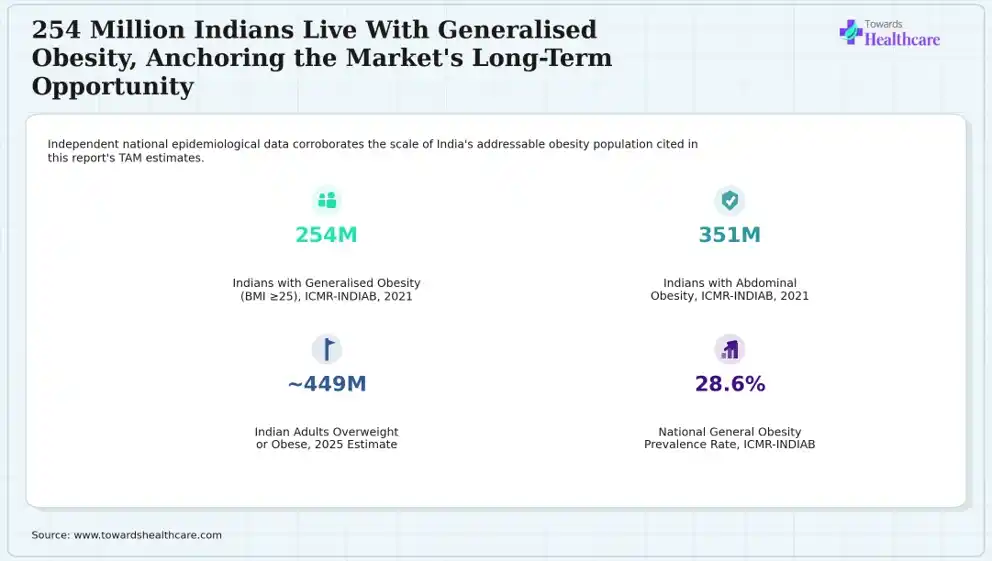
Based on our research, the infographic stat-panel focuses on India's national obesity epidemiology metrics. ICMR-INDIAB 2021 highlighted that 254 million Indians are characterised by generalised obesity (BMI ≥25), while 351 million are detected with abdominal obesity, whereas the national general obesity prevalence rate was noted to be 28.6%. As per the 2025 estimate, approximately 449 million Indian adults are overweight or obese.
Key Insight:
The independently verified ICMR-INDIAB and 2025 prevalence estimates closely relate to the supplied TAM range of 450-500 million, indicating that the epidemiological foundation of the market model is well maintained in real national data.
Source: ICMR-INDIAB national study, 2021; The South First, “India's obesity tsunami: 2025 statistics,” 2025.
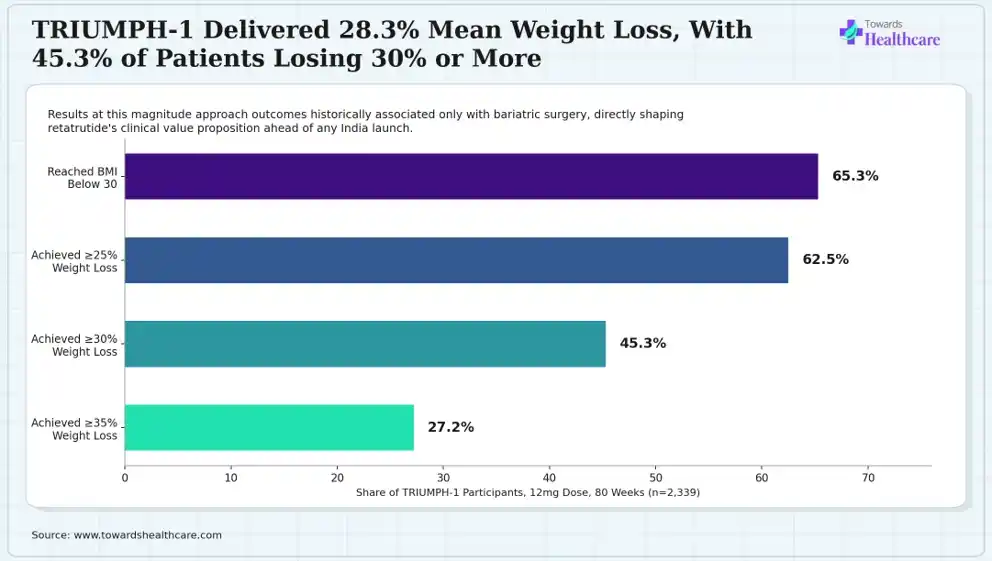
The above-mentioned horizontal bar chart highlights TRIUMPH-1 responder-rate outcomes at 80 weeks. 62.5% share of participants with the 12 mg dose achieved ≥25% weight loss, while 45.3% share achieved ≥30% weight loss, whereas 27.2% share achieved ≥35% weight loss. Moreover, 65.3% of participants with the 12 mg dose reached a BMI below 30, which is no longer classified as obese.
Key Insight:
With almost two-thirds of TRIUMPH-1 participants successfully eliminating the clinical definition of obesity by week 80, it was highlighted that, if replicated in India, a fundamentally different treatment outcome will be achieved than the current available pharmacotherapy options.
Source: Eli Lilly and Company, “Lilly's triple agonist, retatrutide, delivered powerful weight loss in pivotal Phase 3 obesity trial,” May 21, 2026.
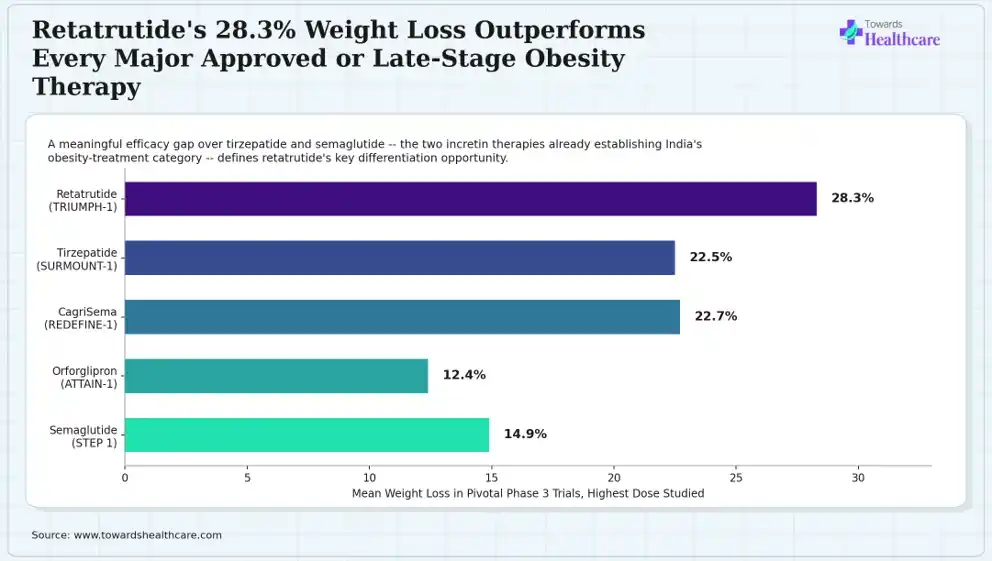
As per the analysis conducted, the horizontal bar chart reflects a cross-trial mean weight loss comparison across pivotal Phase 3 trials. 28.3% mean weight loss, the highest dose was recorded for Retatrutide in TRIUMPH-1, while with 22.7% mean weight loss, the highest dose was noted to be CagriSema in REDEFINE-1. Furthermore, mean weight loss, the highest dose across Tirzepatide in SURMOUNT-1, Semaglutide in STEP 1, and Orforglipron in ATTAIN-1 were recorded to be 22.5%, 14.9%, and 12.4%, respectively.
Key Insight:
The clinical differentiation argument focusing on pricing or access considerations is driven by retatrutide introducing a newly established premium incretin therapy in India via Mounjaro with nearly a 6-percentage-point efficacy advantage over tirzepatide.
Source: Cross-trial comparison compiled from Eli Lilly, Novo Nordisk, and Boehringer Ingelheim/Zealand Pharma pivotal trial press releases, 2022–2026.
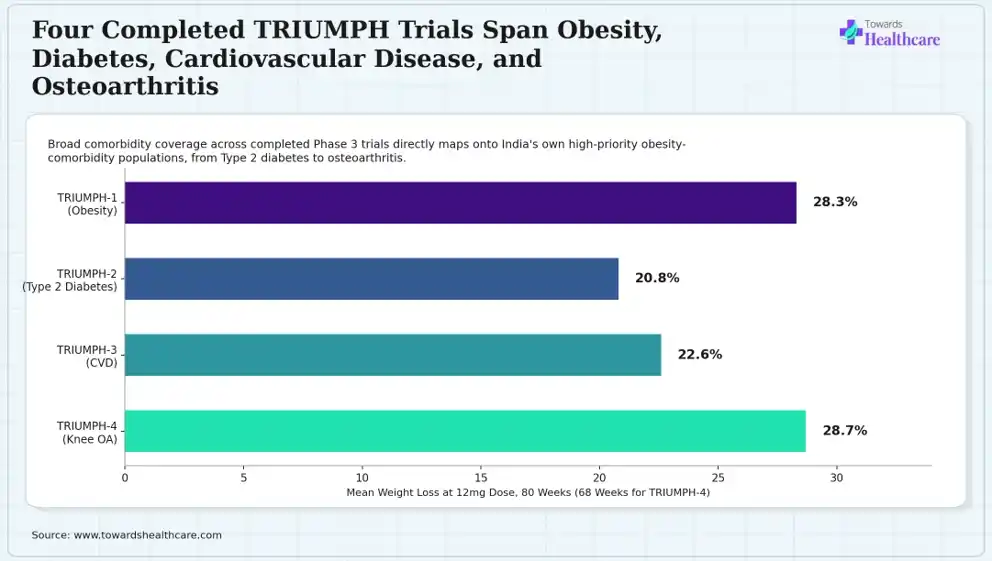
Based on the information gathered, the horizontal bar chart reflects weight-loss results across four completed TRIUMPH Phase 3 trials. The TRIUMPH-1 trial testing a 12 mg dose in 2,339 obesity/overweight patients with no T2D reported a mean weight loss of 28.3% at 80 weeks. For a similar dose, the TRIUMPH-2 trial achieved 20.8% mean weight loss at 80 weeks in 1,152 patients suffering from obesity with type 2 diabetes. In TRIUMPH-3, the 12 mg dose at 80 weeks resulted in 22.6% mean weight loss across 1,949 patients with severe obesity with cardiovascular disease. Moreover, TRIUMPH-4 utilized a 12 mg dose for 68 weeks in 445 patients with obesity and knee osteoarthritis, which resulted in 28.7% mean weight loss.
Key Insight:
The TRIUMPH-4 trial, focusing on the osteoarthritis population, achieved the major weight loss compared to any trial 28.7%, alongside 74–76% pain reduction, representing that knee osteoarthritis, a specific comorbidity segment covered in the report, can be recognized as an unexpectedly strong early commercial niche.
Source: Eli Lilly and Company, TRIUMPH-2, TRIUMPH-3, and TRIUMPH-4 topline results press releases, 2026.
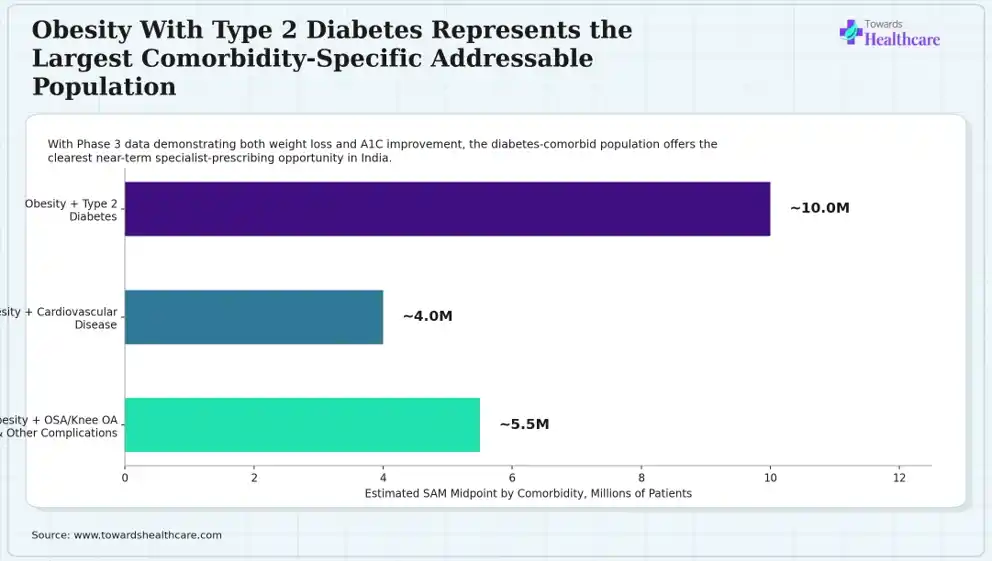
According to the survey conducted, the horizontal bar chart outlines illustrative SAM by comorbidity segment. For obesity with type 2 diabetes, nearly 10 million people are the estimated SAM midpoint. The estimated SAM midpoint for obesity with cardiovascular disease and obesity with OSA/knee osteoarthritis & other complications is approximately 4 million patients and roughly 5.5 million patients, respectively.
Key Insight:
India's specialist prescribing base revolving around endocrinologists and diabetologists is structurally larger and more established compared to CVD-comorbid indication, which would require the cardiology-referral pathway for retatrutide, as which in turn is demonstrated by the diabetes-comorbid SAM, with more than double the cardiovascular-comorbid SAM.
Source: Towards Healthcare, India Retatrutide SAM Analysis, 2025 (illustrative analytical ranges, not official market data).
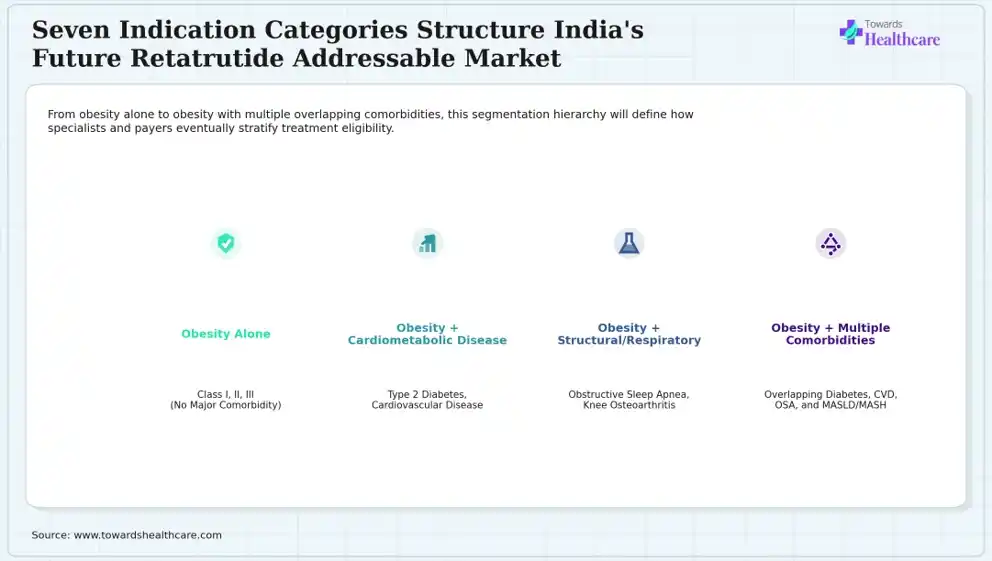
As the market research analyst, I interpret that the ecosystem infographic encompasses four indication groupings within India's retatrutide segmentation hierarchy. Obesity alone leads to class I, II, and III obesity with no major comorbidity, while obesity with cardiometabolic disease contributes to type 2 diabetes and cardiovascular diseases. Obesity with structural/respiratory comorbidities can cause obstructive sleep apnea and knee osteoarthritis, whereas obesity with multiple comorbidities will lead to overlapping diabetes, CVD, OSA, and MASLD/MASH.
Key Insight:
The data highlights multiple comorbidities associated with obesity, and frequent co-occurrence of cardiometabolic conditions indicating the real-world obesity patient complexity across India, suggesting that single-indication market sizing likely understates the true treatable population.
Source: Towards Healthcare, India Retatrutide Market Segmentation, 2025.
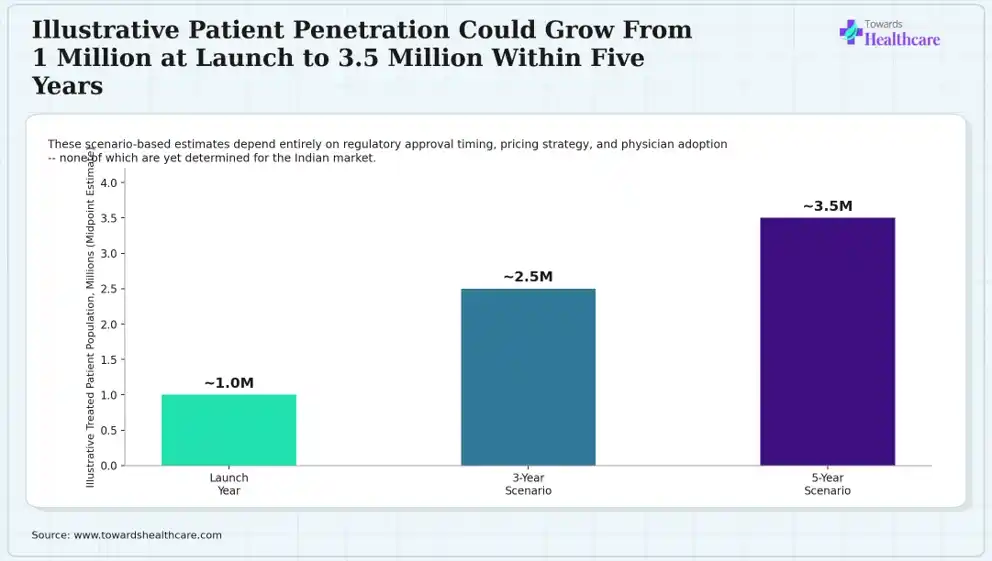
As per the analysis conducted by Aman, the bar chart compares illustrative India patient penetration scenarios, from launch through year 5. After the launch of retatrutide, the year is expected to treat approximately 1 million patients, while in the next 3 years it is anticipated to treat roughly 2.5 million patients. Similarly, in the next 5-year scenario, it is predicted to treat almost 3.5 million patients.
Key Insight:
The adoption curves observed for tirzepatide and semaglutide in comparable emerging markets are reflected by this nearly 3.5x growth from launch-year to 5-year penetration of retatrutide across India, which will ultimately be driven by pricing relative to those already-established competitors.
Source: Towards Healthcare, India Retatrutide SOM Analysis, 2025 (illustrative penetration scenarios, not official market data).
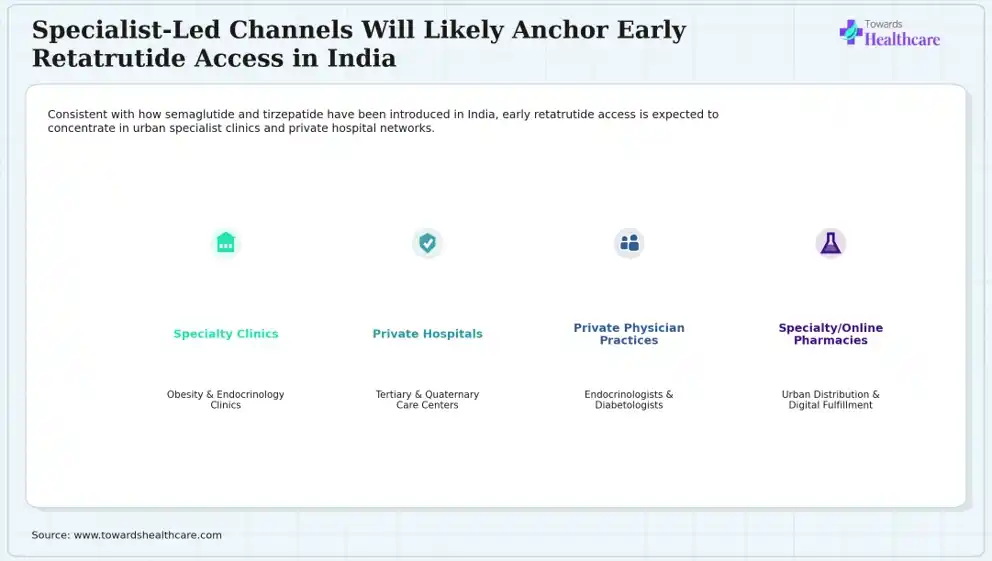
The given ecosystem infographic covers expected early-access distribution and end-user channels. The specialty clinics offer obesity and endocrinology clinics, while private hospitals provide tertiary and quaternary care centers. The private physician practices support endocrinologists and diabetologists, whereas specialty/online pharmacies cover urban distribution and digital fulfilment.
Key Insight:
Focusing on initial access in private, urban, specialist-led channels instead of public hospitals or general retail pharmacy represents the well-established access pattern for tirzepatide and semaglutide in India, confirming that it does not need new distribution infrastructure for retatrutide launch.
Source: Towards Healthcare, India Retatrutide Market Segmentation, 2025.
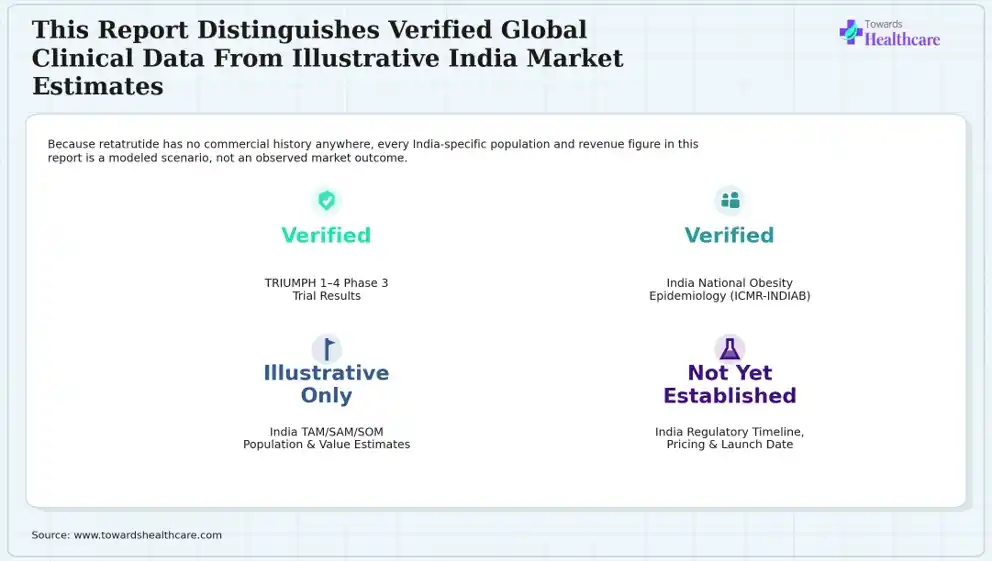
Based on the information gathered by Aman, the infographic stat panel encompasses data verification status by category. In TRIUMPH 1-4, Phase 3 trial results were verified against Eli Lilly disclosures, while India national obesity epidemiology (ICMR-INDIAB) was confirmed against published epidemiological studies. India TAM/SAM/SOM population and value estimates were illustrative due to no official market data, whereas India regulatory timeline, pricing, and launch date are yet to be established.
Key Insight:
The above-mentioned data represents the clearest possible illustration of a pre-revenue market analysis, indicating that strong, verifiable data for global clinical evidence and India epidemiological data exists, but actual India market size is still unavailable and must be modeled.
Source: Synthesis of source verification performed throughout this report's research.
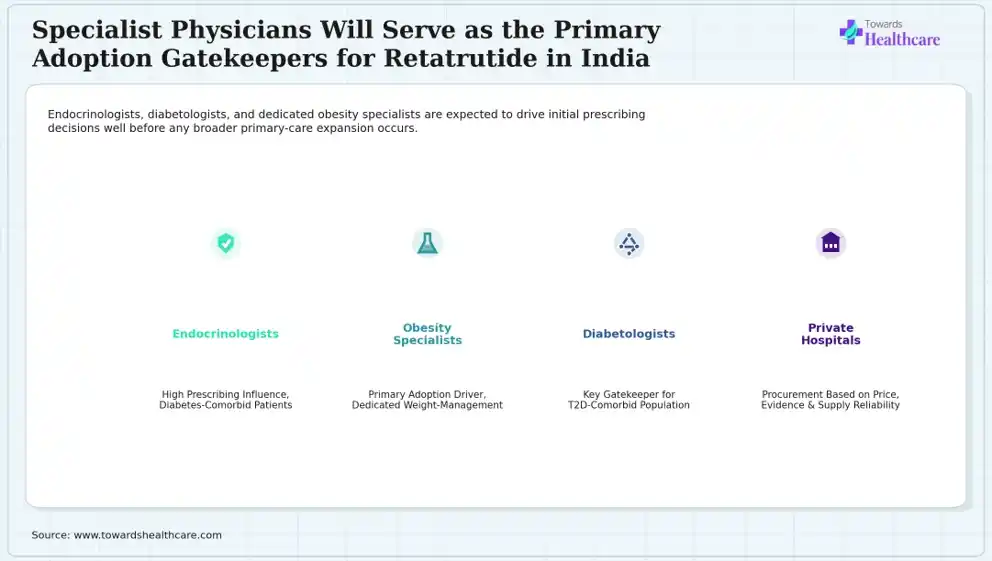
The above-mentioned ecosystem infographic covers four primary retatrutide buyer/prescriber segments in India. The endocrinologists drive high prescribing influence among diabetes-comorbid patients, while obesity specialists are the primary adoption driver, dedicated to weight management. Diabetologists are the key gatekeeper for T2D-comorbid population, while private hospitals back procurement based on price, evidence, and supply reliability.
Key Insight:
Retatrutide's India commercialization strategy is expected to be driven by physician-level medical education and relationship-building rather than large institutional procurement negotiations, which is reflected by these buyer groups, where three of four listed buyers are individual specialist physicians rather than institutions.
Source: Towards Healthcare, India Retatrutide Buyer Intelligence, 2025.
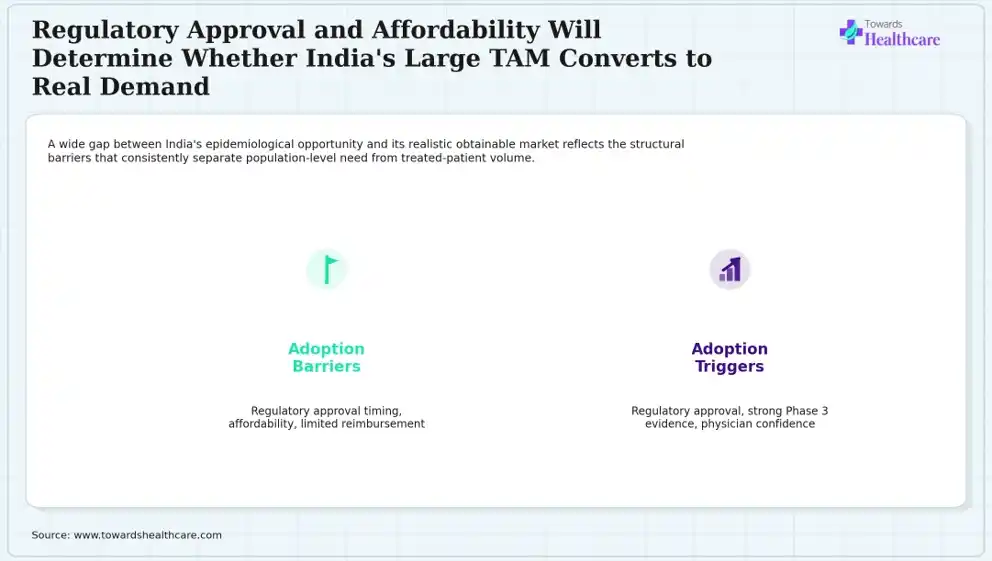
Based on our research, the split infographic encompasses key adoption barriers vs. triggers for India retatrutide market formation. The adoption barriers are regulatory approval timing, affordability, and limited reimbursement, whereas adoption triggers include regulatory approval, strong Phase 3 evidence, and physician confidence.
Key Insight:
The presence of regulatory approval as the key adoption barrier and trigger mirrors that until India-specific approval is granted, every other adoption factors like pricing, physician confidence, and reimbursement are likely to remain structurally unable to activate.
Source: Towards Healthcare, India Retatrutide Consumer Behavior & Buyer Intelligence, 2025.
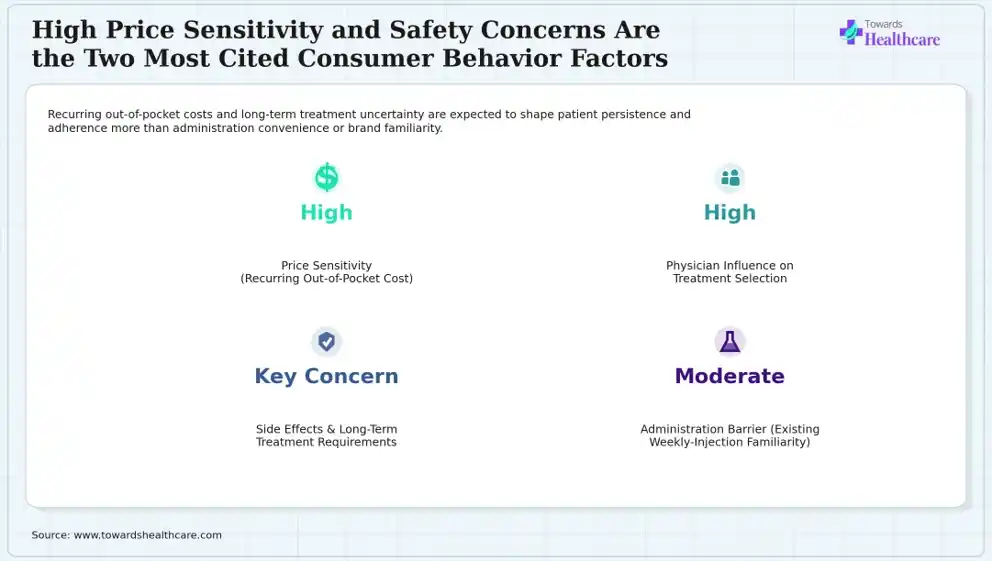
As the market research analyst, I interpret that the infographic stat panel focuses on India consumer behavior priority ratings. High intensity is expected across price sensitivity (recurring out-of-pocket cost) and physician influence on treatment selection as consumer behavior factors. Side effects and long-term treatment requirements are the key concerns, whereas administration barrier (existing weekly-injection familiarity) is a moderate consumer behavior priority.
Key Insight:
Administration barrier being rated only “Moderate”, which falls below the other concerns, indicates that the retatrutide format itself is unlikely to be a significant adoption obstacle in India if it is launched after normalization of semaglutide and tirzepatide weekly self-injection.
Source: Towards Healthcare, India Retatrutide Consumer Behavior & Buyer Intelligence, 2025.
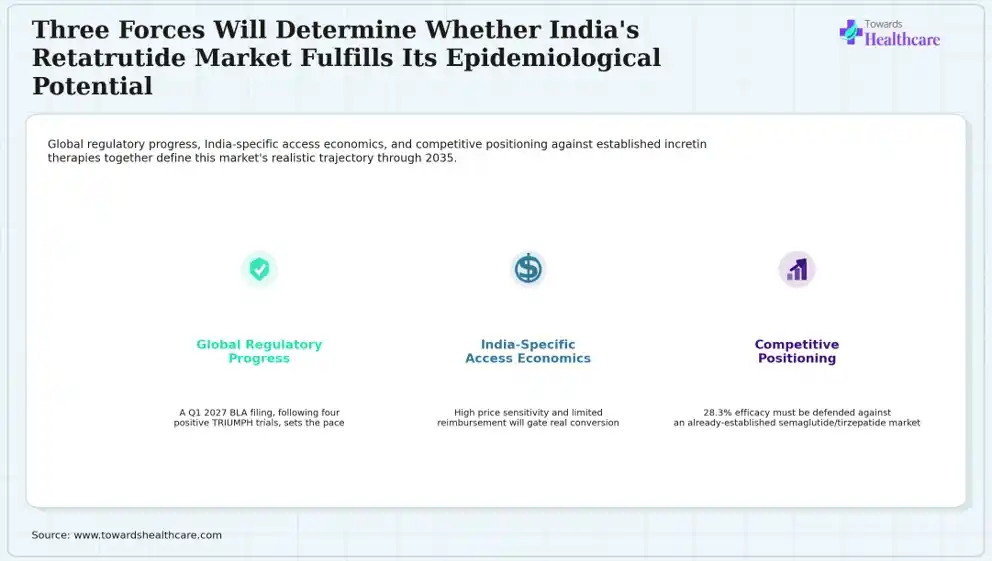
According to the survey conducted by Aman, the synthesis infographic illustrates three structural forces shaping India's future retatrutide market. The global regulatory progress is the first structural force, focusing on A Q1 2027 BLA filing, following four positive TRIUMPH trials, setting the pace. The second force, India-specific access economics, covers how high price sensitivity and limited reimbursement will gate real conversion. The third force is competitive positioning, which emphasize 28.3% efficacy must be defended against an already-established semaglutide/tirzepatide market.
Key Insight:
The commercial success of retatrutide is anticipated to be based on convincing an already-informed physician and patient base to switch or upgrade rather than creating new patient awareness, which will be a fundamentally different commercialization challenge than a true first-in-category launch in India, as it will enter the market after semaglutide and tirzepatide have already established the obesity-pharmacotherapy category.
On May 21, 2026, 28.3% mean weight loss at 80 weeks in 2,339 participants with a 12mg drug dose indicating positive topline results from TRIUMPH-1, which is the pivotal Phase 3 obesity trial of retatrutide, was announced positive Eli Lilly.
Source: Eli Lilly and Company, press release, May 2026
On July 23, 2026, positive Phase 3 results from TRIUMPH-2, focusing on obesity with Type 2 diabetes, 20.8% weight loss, and TRIUMPH-3, involving obesity with cardiovascular disease, 22.6% weight loss, were reported by Lilly.
Source: Eli Lilly and Company, press releases, 2026
On April 3, 2026, 28.7% mean weight loss and 74-76% pain reduction at 68 weeks were announced in the TRIUMPH-4, studying retatrutide in obesity with knee osteoarthritis.
Source: Eli Lilly and Company/GLP3.wiki trial tracker, 2026
In July 2026, it was confirmed that retatrutide had not been approved by any regulatory agency globally as of that date by Eli Lilly.
Source: Eli Lilly and Company, company disclosure, July 2026
On July 23, 2026, after the completion of the TRIUMPH Phase 3 program, in the first quarter of 2027, Eli Lilly plans to submit a U.S. regulatory filing (BLA) for retatrutide.
Source: Towards Healthcare synthesis, citing Eli Lilly regulatory guidance, 2026
Aditi is a pharmaceutical research expert with strong experience in new drug products, obesity with major comorbidities, and self-administered injections. She conducted detailed market research, analyzed company data, clinical trends, and industry developments. Based on her comprehensive analysis, the following strategic key takeaways highlight the most important market insights and opportunities.
For Service Providers & CDMOs
For Pharma & Biotech Companies
For Investors & Corporate Strategy Teams
Based on my assessment, the market is expected to expand significantly due to increasing incidences of obesity. The growth in the demand for obesity management solutions and programs is also likely to increase the adoption of retatrutide. I also anticipate that the advancements in next-generation incretin-based therapies will also attract patients. I also see strong growth in self-administered injections and specialty clinics, which will create new market opportunities.
Payal Rabde led the primary market research, developed the methodology, analyzed trends, segmentation, competition, forecasts, and strategic opportunities, forming the report's analytical foundation.
Aman was responsible for collecting and validating clinical trial data, research publications, company information, partnerships, and other quantitative datasets, strengthening evidence-based analysis and market estimations.
Aditi reviewed the complete research document, performed quality checks, validated findings, refined content, corrected inconsistencies, and finalized the report, ensuring accuracy, clarity, credibility, and publication-ready quality.
By Indication
By Dose Strength
By Route of Administration
By Distribution Channel
By End User
By Patient Profile
















Principal Consultant
Payal Rabde is a Healthcare Market Research Analyst at Towards Healthcare Research & Consulting with 4+ years of experience in pharmaceuticals, biotechnology, medical devices, and life sciences.
Learn more about Payal Rabde

Reviewed By
Aditi Shivarkar is a seasoned professional with over 14 years of experience in healthcare market research. As a content reviewer, Aditi ensures the quality and accuracy of all market insights and data presented by the research team.
Learn more about Aditi Shivarkar










