


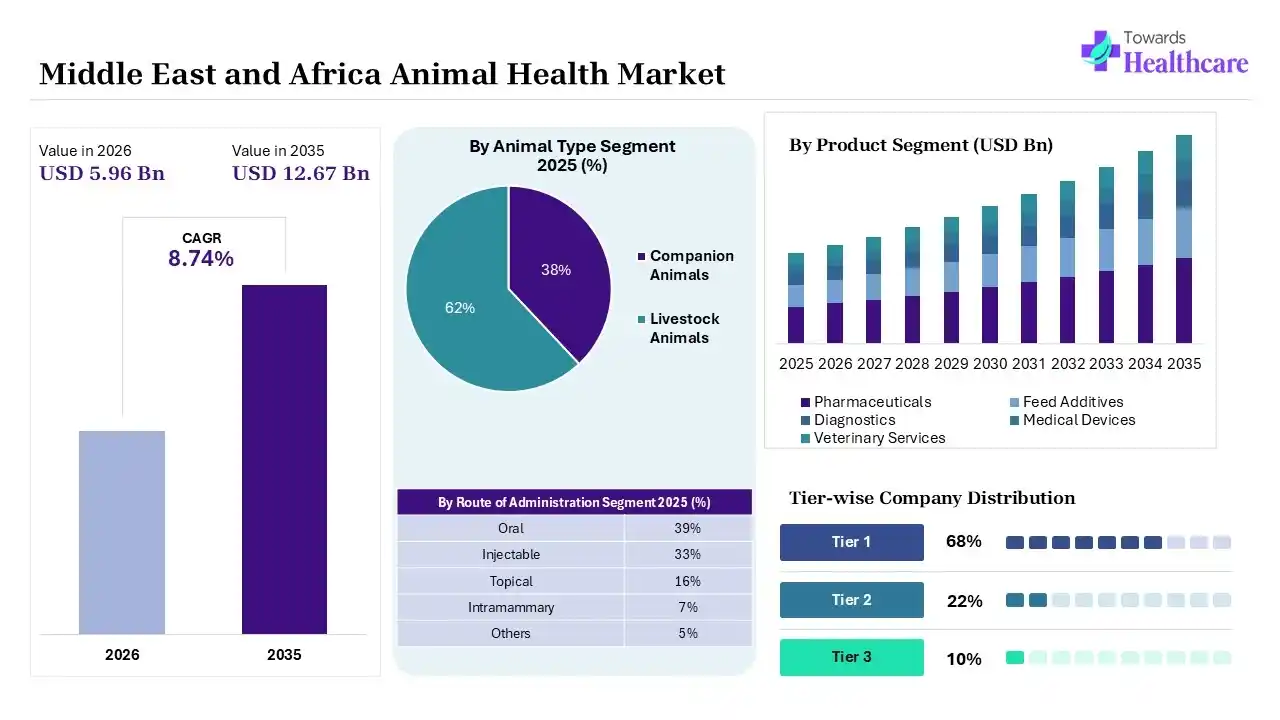
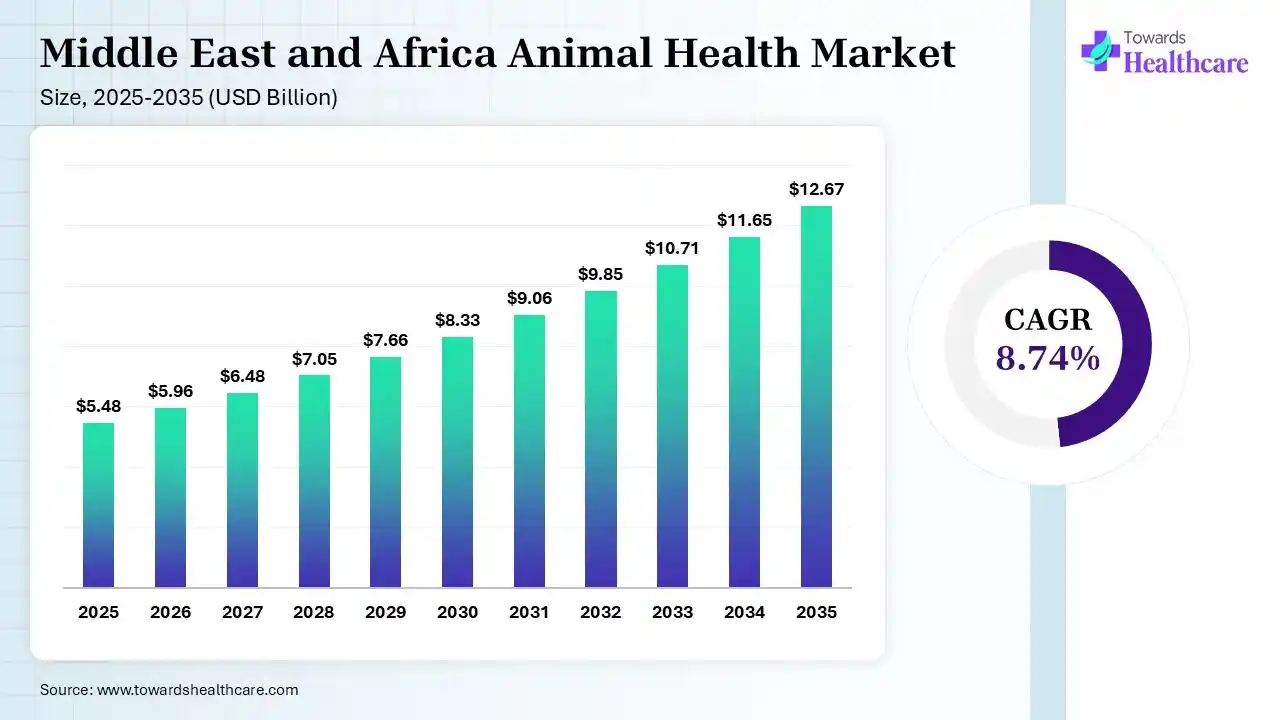
The Middle East and Africa animal health market size was estimated at USD 5.48 billion in 2025 and is predicted to increase from USD 5.96 billion in 2026 to approximately USD 12.67 billion by 2035, expanding at a CAGR of 8.74% from 2026 to 2035. Increasing pet ownership across the Middle East and Africa is increasing the use of animal health solutions. Growing zoonotic diseases, pet humanization trends, vaccination companies, government initiatives, and new collaborations are also enhancing the market growth.
The Middle East and Africa animal health market is driven by growing food security and livestock production initiatives. The Middle East and Africa animal health refers to the veterinary products developed and launched for the prevention, diagnosis, management, and treatment of animal diseases across the Middle East and Africa. They help in enhancing animal health, welfare, livestock productivity, food safety, and support disease management.
The Middle East and Africa animal health market is also supported by increasing investments in veterinary infrastructure and expanding access to professional animal healthcare services. Rising awareness of zoonotic diseases is encouraging governments and livestock owners to adopt preventive healthcare measures. Demand for advanced vaccines, diagnostic kits, feed additives, and biologics is growing across both livestock and companion animal sectors. Digital technologies, including livestock monitoring systems and telemedicine platforms, are improving disease detection and farm management.
International organizations and private companies are collaborating with local authorities to strengthen veterinary education, disease surveillance, and vaccination programs. Growing exports of livestock products are encouraging producers to follow international animal health standards. Research activities focused on infectious diseases and sustainable livestock farming are creating new opportunities for innovation. These developments are improving animal welfare, strengthening food security, and supporting long-term growth across the regional animal health industry.
AI is used in the Middle East and Africa animal health market for early and accurate detection of animal disease and prediction of disease outbreaks. It also helps in monitoring animal nutrition patterns, animal behaviour, and livestock movement. AI is also used for the development of smart wearable devices, diagnostic tools, and tele-veterinary platforms.
Expanding Veterinary Healthcare
The Middle East and Africa are experiencing a rise in the number of veterinary hospitals, clinics, and telehealth services. This is enhancing the use and accessibility of various animal health products to prevent, manage, and treat various animal diseases.
Growth in the Poultry and Dairy Sectors
Increasing protein consumption across the MEA is supporting the growth of the poultry and dairy sectors. This is driving the use of animal health solutions to improve animal nutrition, disease management, and early disease diagnosis.
Focus On Food Security
In order to enhance food quality and safety, the demand for food security is increasing, which is promoting the use of animal health products. The growing investments are also supporting the development of feed additives and veterinary products.
| Table | Scope |
| Market Size in 2026 | USD 5.96 Billion |
| Projected Market Size in 2035 | USD 12.67 Billion |
| CAGR (2026 - 2035) | 8.74% |
| Historical Data | 2020 - 2023 |
| Base Year | 2025 |
| Forecast Period | 2026 - 2035 |
| Measurable Values | USD Millions/Units/Volume |
| Market Segmentation | By Product Type, By Animal Type, By Indication, By Distribution Channel, By End User, By Route of Administration, By Region |
| Top Key Players | Zoetis Inc., HIPRA, MSD Animal Health, Afrivet Business Management, Boehringer Ingelheim Animal Health, SPIMACO-Animal Health Division, Ceva Santé Animale, Elanco Animal Health, Virbac S.A., Phibro Animal Health Corporation. |
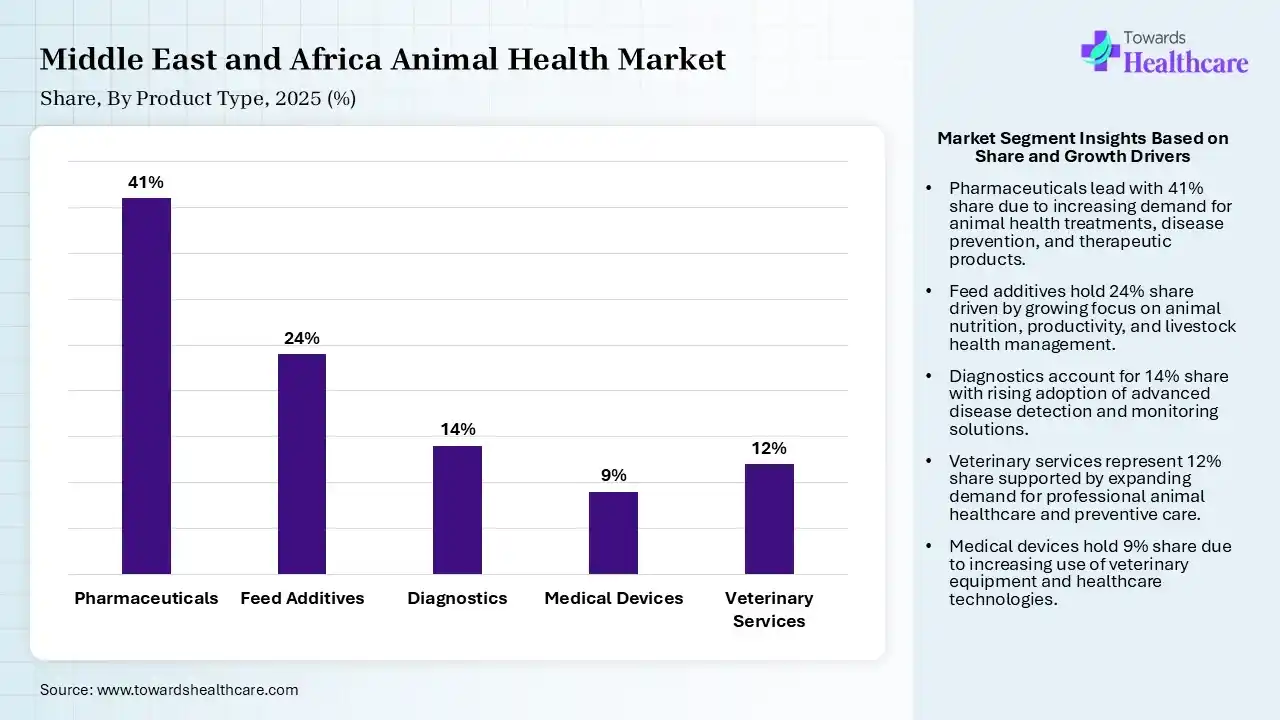
| Segment | Share 2025 (%) |
| Pharmaceuticals | 41% |
| Feed Additives | 24% |
| Diagnostics | 14% |
| Medical Devices | 9% |
| Veterinary Services | 12% |
The Pharmaceuticals Segment Dominated the Market With 41% in 2025
The pharmaceuticals segment led the Middle East and Africa animal health market with a 41% share in 2025, due to the growth of livestock disease outbreaks, which increased pharmaceutical demand across the poultry and cattle sectors. Veterinary treatment adoption also expanded rapidly in GCC countries. Governments also strengthened disease prevention initiatives.
The feed additives segment held the second-largest share of 24% of the market in 2025 and is expected to witness the fastest growth with a CAGR of 9.62% during the forecast period, as commercial farming expansion increases nutritional supplementation demand. Producers are focusing on improving feed efficiency and animal productivity. Export-oriented meat production also supports additive consumption.
The diagnostics segment held 14% of the Middle East and Africa animal health market share in 2025, due to growing awareness of zoonotic diseases, which accelerates diagnostic testing adoption. Veterinary laboratories are also expanding molecular testing capacity. Early disease detection programs also improve market penetration.
The veterinary services segment held 12% of the market share in 2025, driven by the expansion of veterinary clinics, which improves preventive healthcare access. Livestock vaccination campaigns are also driving service utilization. Telemedicine adoption is also increasing in remote regions.
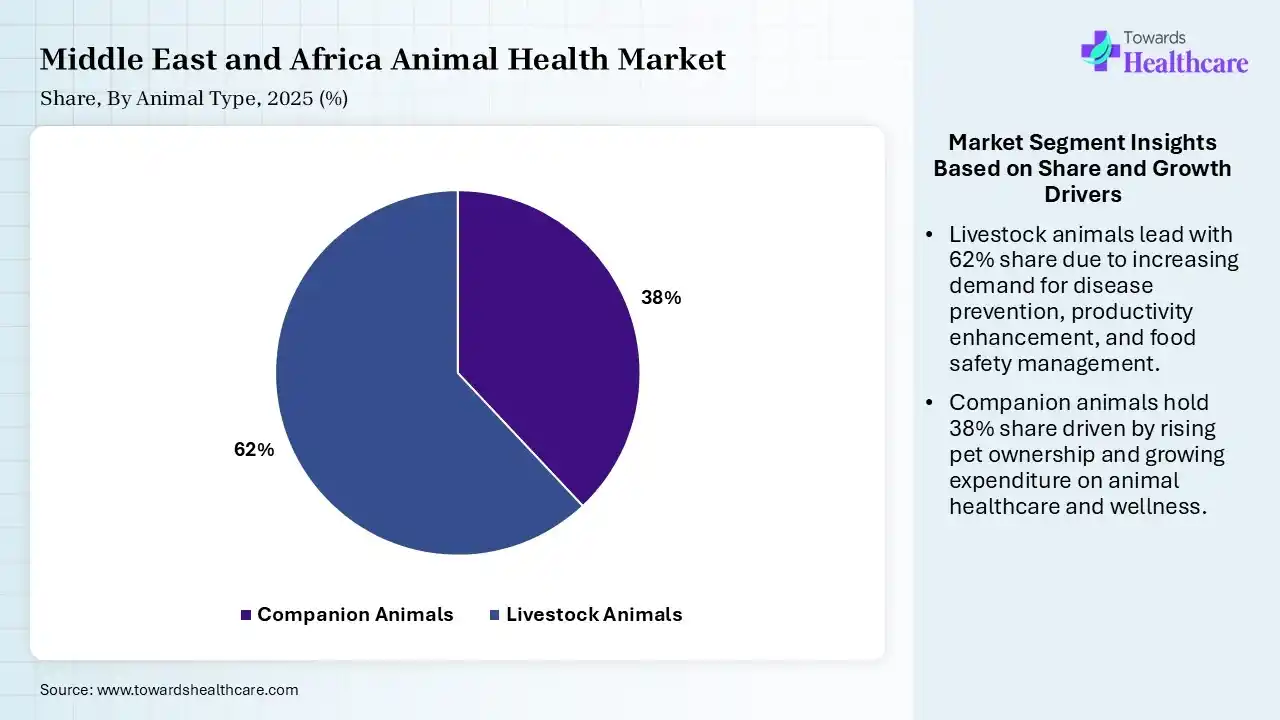
| Segment | Share 2025 (%) |
| Companion Animals | 38% |
| Livestock Animals | 62% |
The Livestock Animals Segment Dominated the Market With 62% in 2025
The livestock animals segment accounted for the highest revenue share of 62% of the Middle East and Africa animal health market in 2025, as meat and dairy demand sustained livestock healthcare spending. Government livestock productivity programs also supported market expansion. Commercial poultry farming continued to grow strongly.
The companion animals segment held the second-largest share of 38% of the market in 2025 and is expected to show the highest growth with a CAGR of 9.42% during the forecast period, as urban pet ownership continues to increase rapidly. Higher disposable income also supports premium veterinary spending. Increasing companion animal insurance awareness is driving their demand.
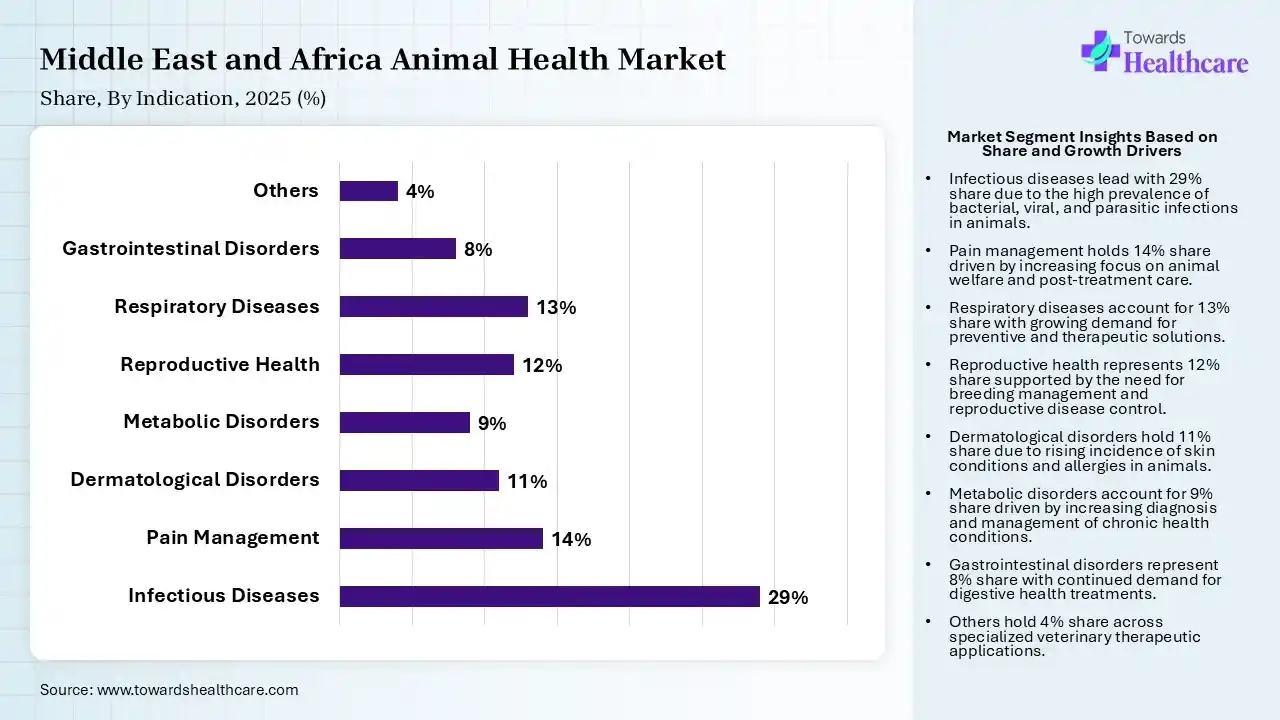
| Segment | Share 2025 (%) |
| Infectious Diseases | 29% |
| Pain Management | 14% |
| Dermatological Disorders | 11% |
| Metabolic Disorders | 9% |
| Reproductive Health | 12% |
| Respiratory Diseases | 13% |
| Gastrointestinal Disorders | 8% |
| Others | 4% |
The Infectious Diseases Segment Dominated the Market With 29% in 2025
The infectious diseases segment held a major revenue share of 29% of the Middle East and Africa animal health market in 2025 and is expected to expand rapidly with a CAGR of 9.42% during the forecast period, due to a rise in zoonotic disease prevalence, which increased treatment demand. Vaccination campaigns also strengthened disease prevention activities. Cross-border livestock trade also supported surveillance initiatives.
The pain management segment held the second-largest share of 14% of the market in 2025, driven by surgical procedures and injury management, which increase analgesic usage. Improving companion animal treatment standards is also increasing their use. Veterinary pain management awareness also continues to rise.
The respiratory diseases segment held 13% of the Middle East and Africa animal health market share in 2025, driven by intensive livestock farming, which raises respiratory infection incidence. Poultry disease outbreaks also support therapeutic demand. Veterinary respiratory monitoring is also improving steadily.
The reproductive health segment held 12% of the market share in 2025, as livestock breeding efficiency drives reproductive treatment demand. Dairy productivity enhancement also supports hormonal therapies. Commercial farming modernization also accelerates adoption.
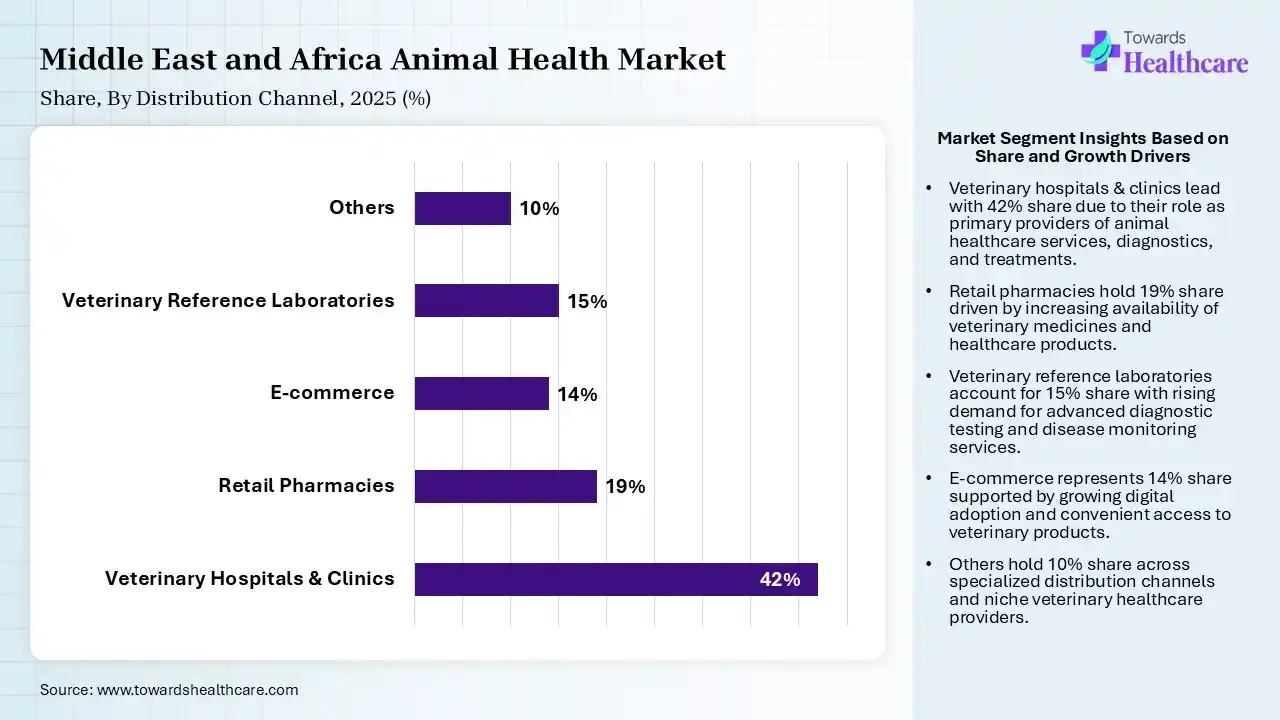
| Segment | Share 2025 (%) |
| Veterinary Hospitals & Clinics | 42% |
| Retail Pharmacies | 19% |
| E-commerce | 14% |
| Veterinary Reference Laboratories | 15% |
| Others | 10% |
The Veterinary Hospitals & Clinics Segment Dominated the Market With 42% in 2025
The veterinary hospitals & clinics segment contributed the biggest revenue share of 42% of the Middle East and Africa animal health market in 2025, due to the expansion of veterinary infrastructure, which improved healthcare accessibility. Growth in companion animal treatment demand also supported prescription sales. Clinical expertise contributed to the product distribution dominance.
The retail pharmacies segment held the second-largest share of 19% of the market in 2025, due to their wider pharmaceutical accessibility, which increases retail distribution. Urban consumers also prefer convenient medication purchasing options. OTC veterinary products also support pharmacy sales growth.
The veterinary reference laboratories segment held 15% of the Middle East and Africa animal health market share in 2025, driven by diagnostic outsourcing demand, which increases laboratory utilization. Molecular testing adoption also strengthens laboratory service growth. Veterinary disease surveillance programs also support their expansion.
The e-commerce segment held 14% of the market share in 2025 and is expected to gain the highest share with a CAGR of 11.12% during the forecast period, as digital purchasing adoption accelerates veterinary product sales. Mobile commerce penetration also improves online accessibility. Competitive pricing also encourages e-commerce expansion.
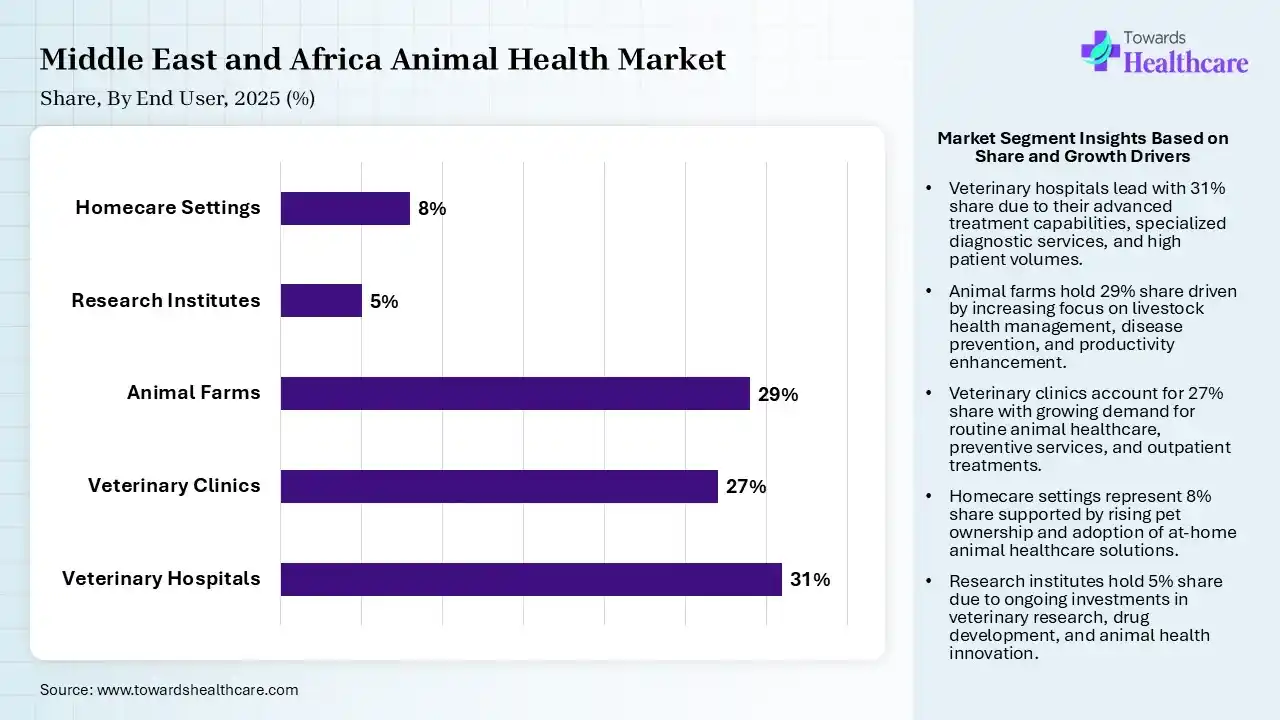
| Segment | Share 2025 (%) |
| Veterinary Hospitals | 31% |
| Veterinary Clinics | 27% |
| Animal Farms | 29% |
| Research Institutes | 5% |
| Homecare Settings | 8% |
The Veterinary Hospitals Segment Dominated the Market With 31% in 2025
The veterinary hospitals segment held the largest revenue share of 31% of the Middle East and Africa animal health market in 2025, driven by advanced treatment facilities that improved patient intake volumes. Surgical and diagnostic capabilities also supported service demand. Urban veterinary infrastructure investments also continued their growth.
The animal farms segment held the second-largest share of 29% of the market in 2025, as commercial livestock operations require extensive healthcare support. Productivity enhancement programs also increase veterinary expenditure. Disease prevention initiatives also sustain farm-based demand.
The veterinary clinics segment held 27% of the Middle East and Africa animal health market share in 2025, as routine healthcare visits increase clinic service utilization. Preventive care awareness also supports outpatient treatment demand. Companion animal ownership also drives clinic expansion.
The homecare settings segment held 8% of the market share in 2025 and is expected to grow at the fastest CAGR of 10.26% during the forecast period, as pet owners increasingly adopt home-based treatment solutions. Telemedicine and online pharmacy access also support home care growth. Convenience-driven healthcare trends also accelerate their adoption.
The Middle East and Africa animal health market is expected to show lucrative growth during the forecast period, due to the growing livestock population. The growing infection and zoonotic disease incidences are also increasing the demand for animal health products. Expanding virtual healthcare infrastructures are also increasing their innovations, enhancing the market growth.
Saudi Arabia Market Trends
Expanding livestock and poultry farming processes in Saudi Arabia is promoting the use of animal health products. Increasing focus on food security, preventive healthcare, and local food production is also increasing their use. The rising adoption of companion animals is also supporting their growth.
UAE Market Trends
The United Arab Emirates (UAE) is experiencing a rise in pet ownership, and veterinary infrastructure is also increasing the use of animal health products. Increasing investments and tele-veterinary services are also increasing the development of new veterinary vaccines and diagnostic solutions. Expanding preventive healthcare and tele-veterinary services, also enhancing their use.
Qatar Market Trends
Qatar is witnessing steady growth in the Middle East and Africa animal health market because of rising investments in food security and livestock development. The government supports veterinary healthcare through disease surveillance programs, vaccination campaigns, and modern animal health regulations. Growing demand for high-quality livestock products is encouraging better disease prevention and farm management practices. Veterinary clinics are adopting advanced diagnostic technologies and digital solutions. International animal health companies are expanding partnerships with local organizations, strengthening product availability and supporting innovation across the country's veterinary healthcare sector.
R&D
Clinical Trials and Regulatory Approvals
Patient Support and Services
| Companies | Headquarters | Middle East and Africa Animal Health Products |
| Zoetis Inc. | Parsippany, U.S. | CattleMaster Gold, Vanguard, and Synulox Apoquel |
| HIPRA | Amer, Spain | Hiprabovis, Smart Vaccination, and AviPro |
| MSD Animal Health | Rahway, U.S. | Bravonil, Bovilis, Bravecto, and Panacus |
| Afrivet Business Management | Pretoria, South Africa | Ecomectin and Africox |
| Boehringer Ingelheim Animal Health | Ingelheim, Germany | NexGard Spectra, Troccoxil, and Vaxxitek |
| SPIMACO-Animal Health Division | Riyadh, Saudi Arabia | Spimamectin |
| Ceva Santé Animale | Libourne, France | Cevac, Feliway, and Veramix |
| Elanco Animal Health | Greenfield, U.S. | AviPro, Maxiban, and Baycox |
| Virbac S.A. | Carros, France | Shotapen, Milpro, and Multimin |
| Phibro Animal Health Corporation | Teaneck, U.S. | Anadiag, Magni-Phi, and Coxistac |
In June 2026, “Animal health is a strategic enabler of food security, public health, and long-term economic resilience. Through this investment, we are building VetHealth as a regional platform that connects governments, producers, veterinary professionals, and global partners with trusted, world-class solutions. This is a long-term commitment to strengthening the systems that protect animals, people, and communities across the region,” said Zaid S. Al Khayyat, MD, Al Khayyat Investments.
Strengths
Weaknesses
Opportunities
Threats
By Product Type
By Animal Type
By Indication
By Distribution Channel
By End User
By Route of Administration
By Region









Principal Consultant
Payal Rabde is a Healthcare Market Research Analyst at Towards Healthcare Research & Consulting with 4+ years of experience in pharmaceuticals, biotechnology, medical devices, and life sciences.
Learn more about Payal Rabde

Reviewed By
Aditi Shivarkar is a seasoned professional with over 14 years of experience in healthcare market research. As a content reviewer, Aditi ensures the quality and accuracy of all market insights and data presented by the research team.
Learn more about Aditi Shivarkar









