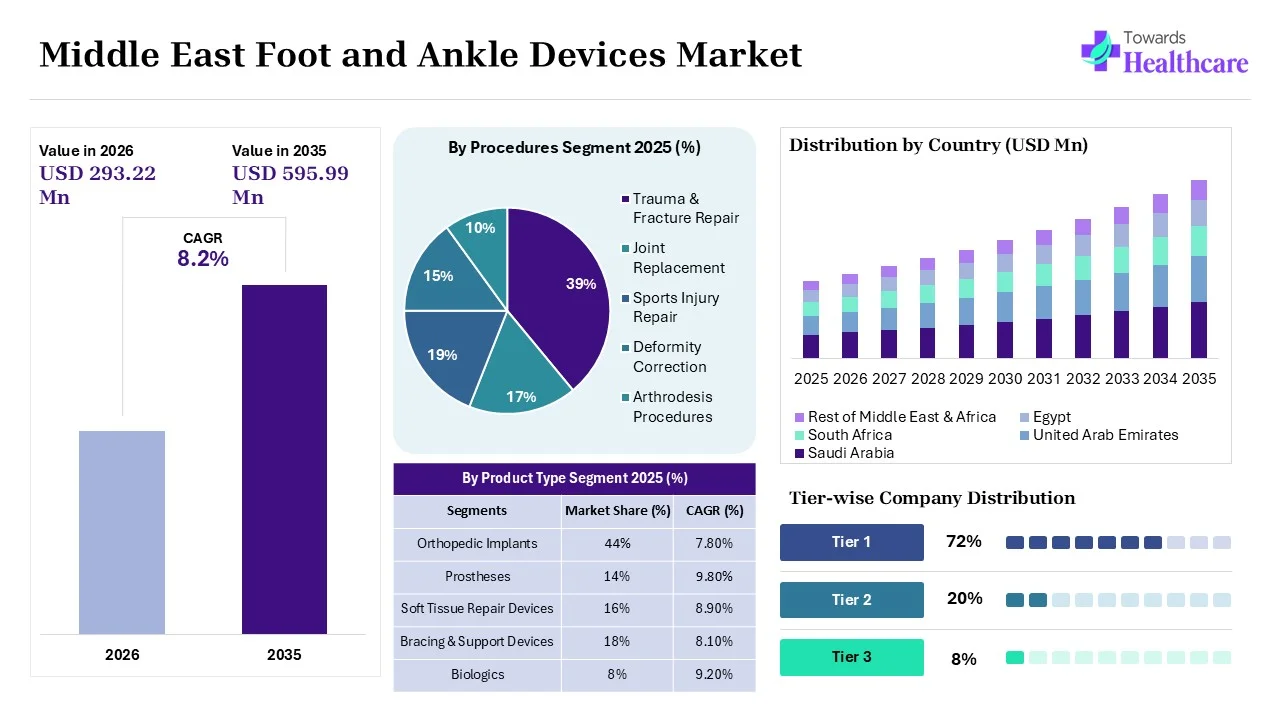
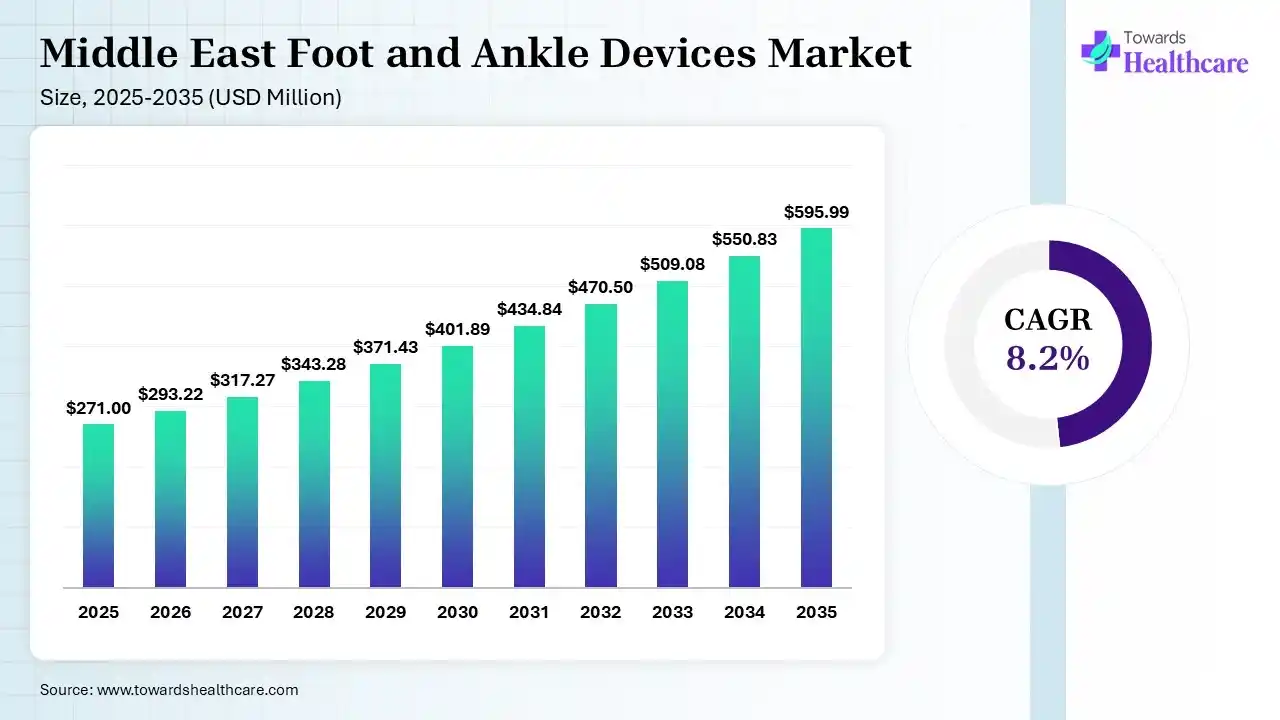
The Middle East foot and ankle devices market size was estimated at USD 271 million in 2025 and is predicted to increase from USD 293.22 million in 2026 to approximately USD 595.99 million by 2035, expanding at a CAGR of 8.2% from 2026 to 2035. Saudi Arabia accounted for 31% of the Middle East foot and ankle devices market in 2025, owing to its advanced healthcare infrastructure, growing orthopedic surgery volumes, high prevalence of diabetes-related foot disorders, and strong government healthcare investments. The market is expected to expand further, supported by technological innovations, rising sports injuries, an aging population, and broader access to specialized orthopedic treatment services.
Foot and ankle devices are developed as a significant method of preventing patients with sensory perception loss from sustaining a fall. These devices are believed to work by lowering the likelihood of a fall by enhancing the balance and gait of the consumer. These tools wear in shoes to lower symptoms related to various significant foot and ankle conditions. Based on the patient's condition, a podiatrist may recommend a custom tool. It prevents or delays the requirements for more invasive management, such as surgery. Particularly made devices which provider designs to cushion and support feet.
These devices identify the presence of ankle sprain, monitor the progress of CAI, and enhance the prognosis. These devices, with increasing portability, reduce cost and have low power consumption during operation, are an important choice for future human biomechanics studies. Up-to-date devices are intended with advanced alloys, like highly porous titanium, which reduces human bone structure to encourage rapid osseointegration. Emerging technologies such as AI in podiatry, advanced imaging, and minimally invasive foot and ankle management complement these innovations, enhancing early diagnosis, speeding up recovery, and supporting preventive approaches to maintain lifelong foot health.
AI-based technology is used in interpreting imaging and creating healthcare predictions. This technology is novel in foot and ankle surgery as compared to other orthopedic regions like the hip and knee joints. The AI-based algorithms improve the administrative and management processes of hospitals and clinics, electronic healthcare databases, and monitor the results and safety controls. AI-driven models are being advanced in nearly all orthopedic subspecialties, involving arthroscopy, arthroplasty, cancer, spinal, and paediatric surgery. AI-based technology has the potential to grow healthcare delivery, enhance indications and interventions, and minimize errors. AI-assisted 3D modeling and finite element analysis predict arthritis challenges in ankle fractures by recognizing displacements that increase joint stress, aiding in prevention and management. Integrating AI, 3D design, and new imaging technology, such as portable X-ray or weight-bearing CT scans, also makes performing negligibly invasive surgical (MIS) actions easier.
Patient-Specific Implants:
Patient-specific surgical guides (PSGs) are specifically used in foot and ankle technology, where multifaceted multiplanar malformations, poor soft tissue, and incomplete visualization often create technical complexities. Patient-centric surgical guides are created from thin-slice CT data and enable physicians to precisely transfer preoperative planning to the operative sectors.
Bioabsorbable Implants:
Bioabsorbable devices provide additional advantages like lowered infection challenges, enhanced biocompatibility, and the eradication of hardware removal surgeries. Bioabsorbable implants, malformed fracture fixation, and orthopaedic management provide a feasible substitute to permanent metal hardware. Bioabsorbable implants, malformed fracture fixation, and orthopaedic management provide a viable substitute for permanent metal hardware.
Minimally Invasive Surgery:
Minimally invasive surgery lowers the risk of infection after the surgery, particularly for patients who have diabetes. Furthermore, the length of hospital stay will be reduced, enabling the patients to save on their management costs. Minimally invasive surgery over old-style surgery includes quick healing, fewer scars, and reduced stiffness.
| Table | Scope |
| Market Size in 2026 | USD 293.22 Million |
| Projected Market Size in 2035 | USD 595.99 Million |
| CAGR (2026 - 2035) | 8.2% |
| Historical Data | 2020 - 2023 |
| Base Year | 2025 |
| Forecast Period | 2026 - 2035 |
| Measurable Values | USD Millions/Units/Volume |
| Market Segmentation | By Product Type, By Procedures, By Application, By End User, By Material, By Region |
| Top Key Players | Stryker Corporation, Zimmer Biomet, Smith+Nephew, Johnson & Johnson |
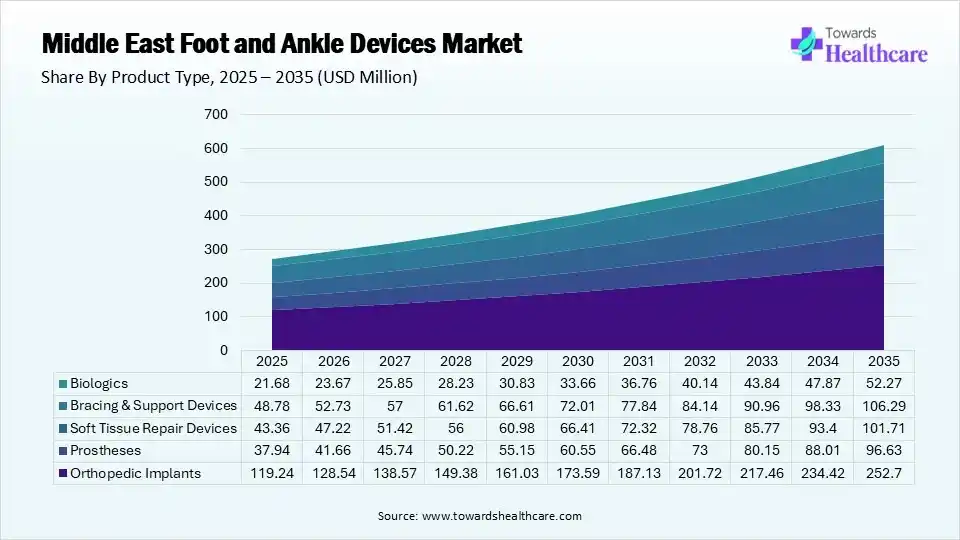
| Segment | Share 2025 (%) |
| Orthopedic Implants | 44% |
| Prostheses | 14% |
| Soft Tissue Repair Devices | 16% |
| Bracing & Support Devices | 18% |
| Biologics | 8% |
The Orthopedic Implants Segment Led the Middle East Foot and Ankle Devices Market in 2025
The orthopedic implants segment contributed the largest market share of 44% in 2025, as orthopedic implants restore function and flexibility to patients with musculoskeletal conditions, allowing them to perform daily actions with lower pain and enhanced individuality. Orthopedic implants are intended to be durable and long-lasting, offering reliable support and function for several years. This durability lowers the requirements for frequent modifications or replacements, saving both patients and the medical care technology from additional surgeries and expenses.
The prostheses segment held a significant share of 14 % and is expected to grow at the fastest CAGR of 9.8% during the forecast period in the market, as prosthetic foot restores flexibility, individuality, and quality of life after a foot amputation. It lowers post-operative pain, lowers scarring, reduces infection rates, and results in a much faster return to weight-bearing. The prosthetic foot helps to provide a stable surface, replace lost muscle function, absorb shock, replicate the anatomic joint, and reinstate aesthetics.
The bracing & support devices segment held a significant share of 18% in the Middle East foot and ankle devices market in 2025, as they provide padding, shock attenuation, and lowering of friction shear forces. They are made of softer and less durable materials, and therefore the requirement for periodic replacement for possible repairs. Soft knee and ankle braces potentially enhance stability while ambulation, navigation of stairs, kneeling, squatting, lengthy standing, and different activities of daily living.
The soft tissue repair devices segment held a significant share of 16%, as soft tissue stimulation aids in reinstating normal ligament function and lowering pain and instability. Tissue regeneration therapy manages foot and ankle pain by encouraging natural healing and lowering inflammation. offering a variety of progressive services intended to speed up healing and improve tissue repair in the foot and ankle.
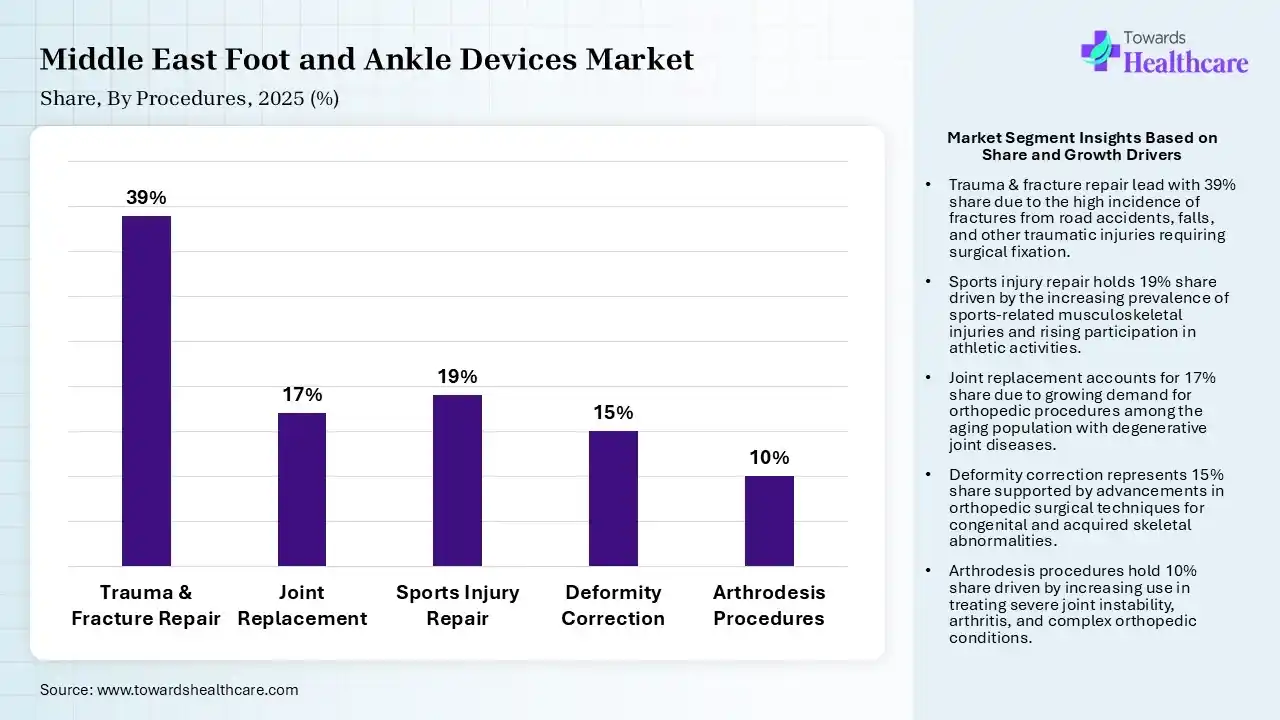
| Segment | Share 2025 (%) |
| Trauma & Fracture Repair | 39% |
| Joint Replacement | 17% |
| Sports Injury Repair | 19% |
| Deformity Correction | 15% |
| Arthrodesis Procedures | 10% |
The Trauma & Fracture Repair segment led the Middle East Foot and Ankle Devices Market in 2025
The trauma & fracture repair segment contributed the largest market share of 39% in 2025, as the use of exterior fixators for ankle and foot injuries is less invasive, avoiding complications and more favourable than internal fixators. These devices are superior implants and equipment to stabilize broken bones and support them in healing appropriately.
The sports injury repair segment held a significant share of 19% of the market as sports injury therapy improves tissue repairs, lowers inflammation, heart conditioning, and exercises ensure rapid recovery by regaining strength and mobility of the ankle joint. A significant assessment of the sport technology, consolidation of the injured muscles, balance, proprioception, and gait training lowers the challenges of re-injury.
The joint replacement segment held a significant share of 17% of the Middle East foot and ankle devices market and is expected to grow at the fastest CAGR of the 9.6% during the forecast period. Joint replacement technology development has grown implant durability. Joint replacement surgery involves pain relief, enhanced mobility, and an advanced quality of life for patients with joint damage.
The deformity correction segment held a significant share of 15% of the market, as deformity corrections applying the TSF offered significantly higher clinical scores and a higher rate of successful results than the conventional IRF. Minimally invasive technology and a near-normal, painless, and stable foot and ankle. enhanced mobility or function of the foot and ankle. It enables normal shoe wear and confirms advanced gait.
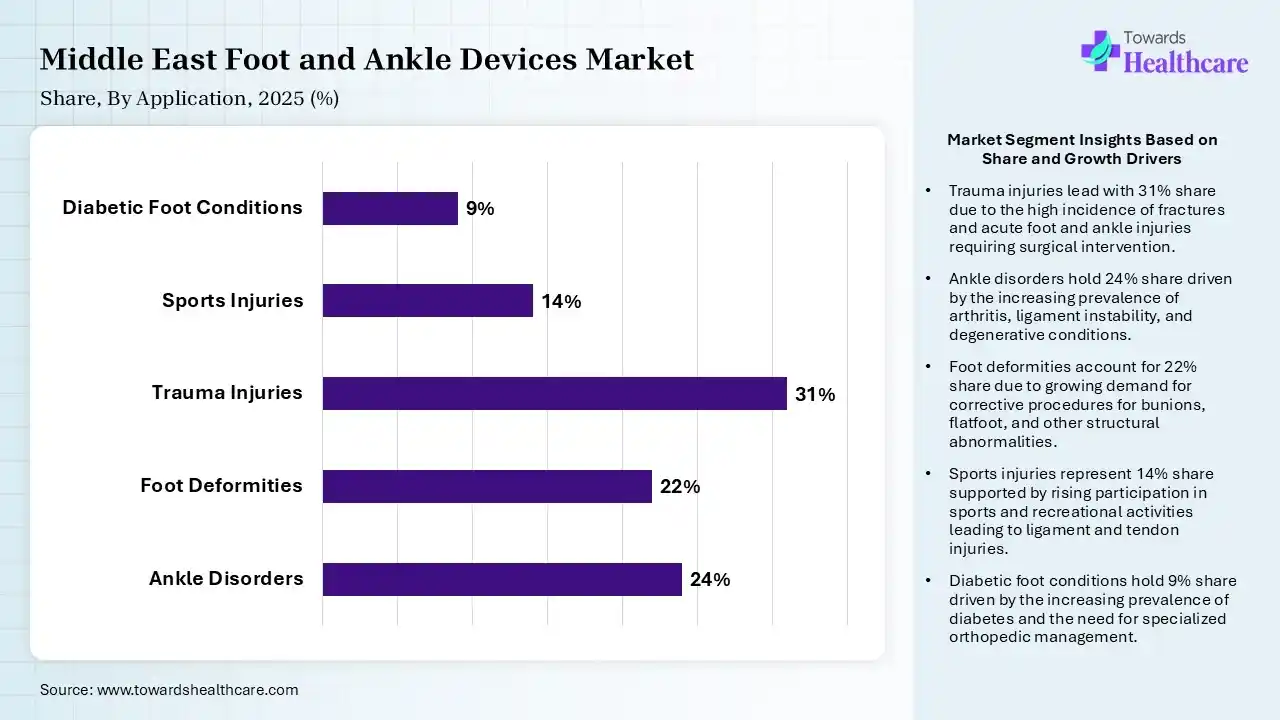
| Segment | Share 2025 (%) |
| Ankle Disorders | 24% |
| Foot Deformities | 22% |
| Trauma Injuries | 31% |
| Sports Injuries | 14% |
| Diabetic Foot Conditions | 9% |
The Trauma Injuries Segment led the Middle East Foot and Ankle Devices Market in 2025
The Trauma Injuries segment held a major share of 31% in the market in 2025. Trauma fixation devices stabilize broken bones, align fractures, and support natural healing by ensuring proper positioning and faster recovery. These devices are designed to support faster recovery, reduce infection challenges, and limit scarring, creating them significant choices for both patients and physicians.
The ankle disorders segment held a significant 24% share of the market, as ankle supports help add stability, lower swelling, and provide warmth while enabling natural foot movement. By offering targeted support, stabilization, and pain relief, they potentially enhance mobility and quality of life for patients dealing with these conditions.
The foot deformities segment held a significant share of 22% in the Middle East foot and ankle devices market, as custom orthotics support helps to maintain precise foot placement, the foot is supported, and this avoids collapse of the arch. Orthotics play a significant role in managing these conditions, preventing progression, and alleviating pressure on the affected region.
The sports injuries segment contributed a market share of 14% in 2025 and is expected to grow at the fastest CAGR of 9.4% during the forecast period, as Sports medicine devices are designed to help athletes prevent, detect, and manage injuries and provide invaluable information regarding their physical and mental well-being. Wearable sensors provide a method of monitoring real-time physiologic and movement parameters during training and competitive sports.
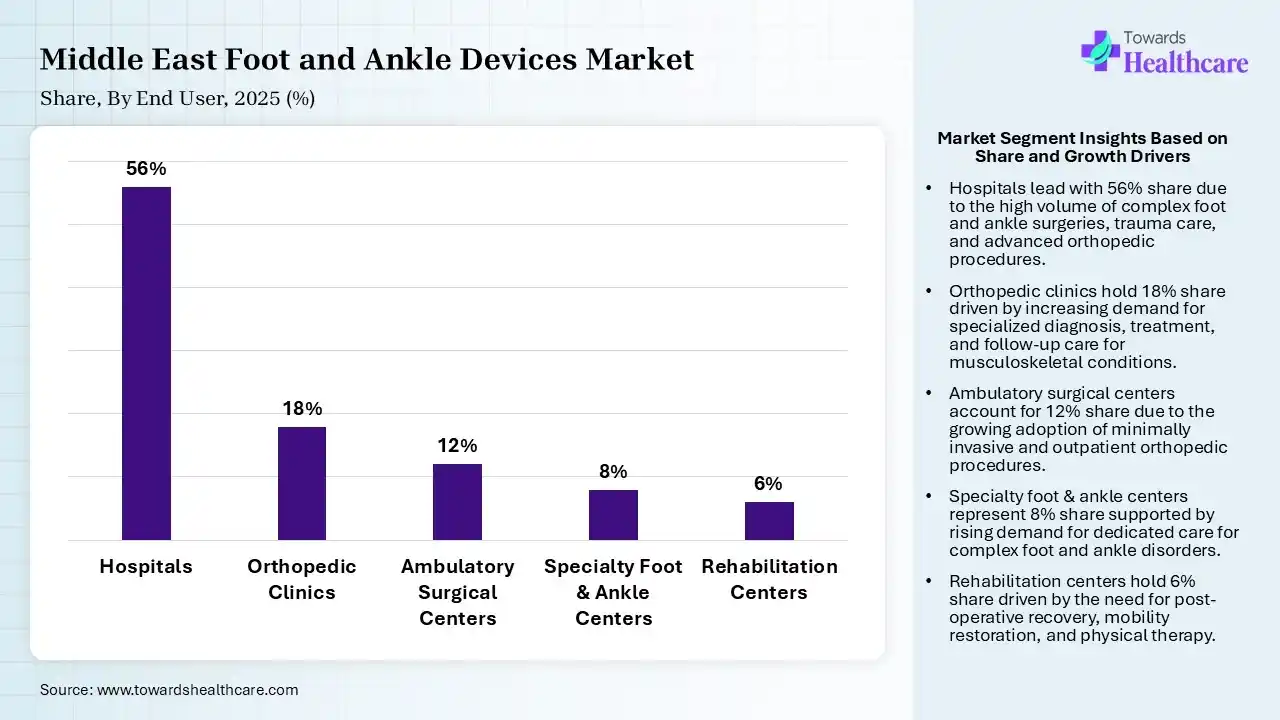
| Segment | Share 2025 (%) |
| Hospitals | 56% |
| Orthopedic Clinics | 18% |
| Ambulatory Surgical Centers | 12% |
| Specialty Foot & Ankle Centers | 8% |
| Rehabilitation Centers | 6% |
The Hospitals Segment led the Middle East Foot and Ankle Devices Market in 2025
The hospitals segment contributed the largest market share of 56% in 2025, as it lowers post-operative pain, lowers scarring, reduces the rate of infection, and results in a much faster return to weight-bearing. These equipments work by redistributing pressure in the feet, lowering stress on the problematic region, and removing pain right at the source. By enhancing mobility and lowering the challenges of falls, these tools allow patients to engage in daily activities more comfortably.
The orthopedic clinics segment held a significant share of 18% in the market in 2025. Orthotics can help align and support your feet and ankles. They can also help prevent and treat foot deformities and other conditions involving your feet. Orthotics create a change in the biomechanics of your feet. Your healthcare provider will recommend that you give it some time to allow your feet to adjust to this change.
The ambulatory surgical centers segment held a significant share of 12% in the Middle East foot and ankle devices market, and is expected to grow at the fastest CAGR of 9.5% during the forecast period, as ASCs offer a clear advantage with lower expenses, significant quality care, and a more efficient experience. ASCs offer significant cost savings and enhance effectiveness when compared to hospitals. It supports lowering foot pain caused by healthcare conditions like bunions, arthritis, plantar fasciitis, flat feet, and diabetes.
The specialty foot & ankle centers segment held a significant share of 8% in the market, as it helps to refine patients' posture of the feet and lowers the chance of injuries. Reduces heel or ankle pain caused by an injury. With dedicated training in orthopedic surgery and a deep understanding of musculoskeletal technology, they are equipped to handle complex challenges.
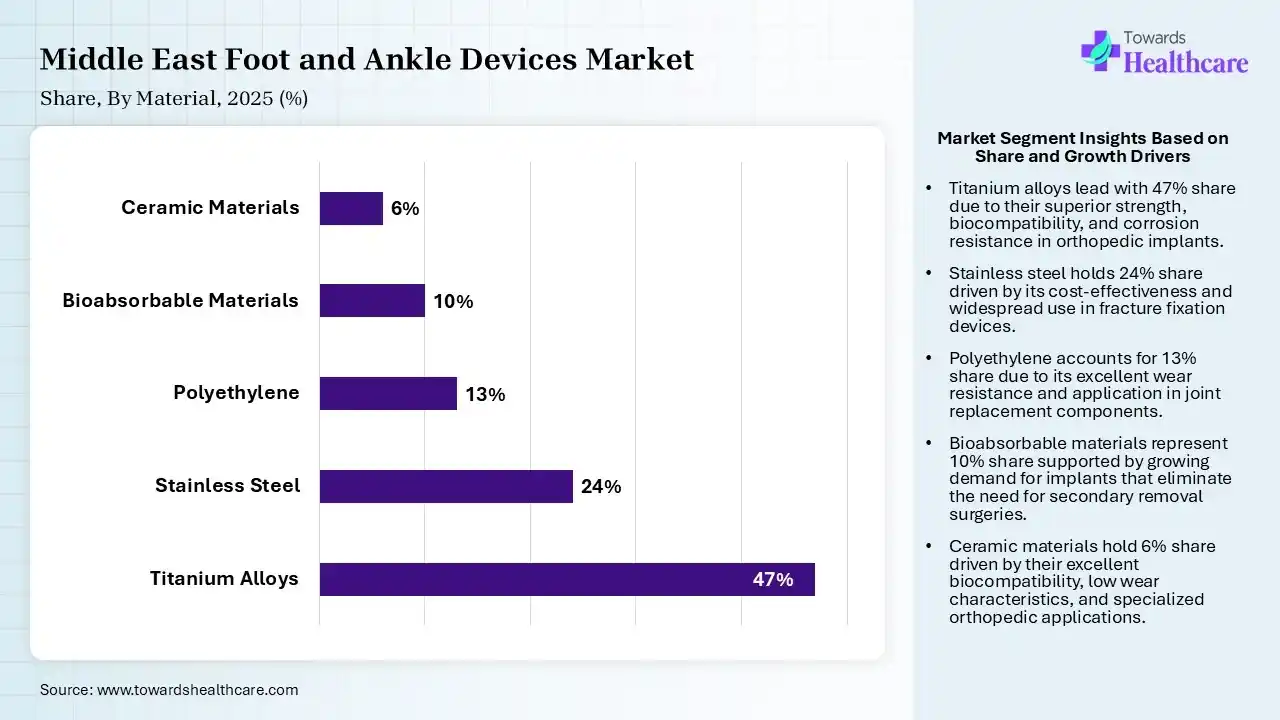
| Segment | Share 2025 (%) |
| Titanium Alloys | 47% |
| Stainless Steel | 24% |
| Polyethylene | 13% |
| Bioabsorbable Materials | 10% |
| Ceramic Materials | 6% |
The Titanium Alloys Segment led the Middle East Foot and Ankle Devices Market in 2025
The titanium alloys segment contributed the largest market share of 47%, as titanium is used as a significant component of stents, cardiac valves, and vascular grafts, also parts of implantable defibrillators, pacemaker cases, and implantable sensors. Titanium alloys are significant in the biomedical sectors because of their exceptional corrosion resistance, mechanical potential, and biocompatibility, creating them significant for producing safe healthcare implants and devices.
The stainless-steel segment held a significant share of 24% in the market in 2025. Stainless steel tools are an outstanding choice for sustainable medical care practices, providing durability, affordability, and positive environmental impact. Stainless steel involves safety via its inherent corrosion resistance, high mechanical characteristics, formability, and energy absorption strength.
The polyethylene segment held a significant share of 13% in the Middle East foot and ankle devices market in 2025, as polyethylene material has significant benefits as a biomaterial for healthcare implants and is significantly applied to the fabrication of permeable high-density polyethylene inserts for facial and cranial reconstruction. Healthcare polyethylene includes its biocompatibility, durability, ease of sterilization, and affordability.
The bioabsorbable materials segment held a significant share of 10% in the market, and is expected to grow at the fastest CAGR of 10.2% during the forecast period. Bioabsorbable implants are healthcare tools engineered to soften naturally in the body over time, removing the requirement for medical removal. Their capability to be fascinated by the body while endorsing tissue regeneration makes them a substitute for outdated implants.
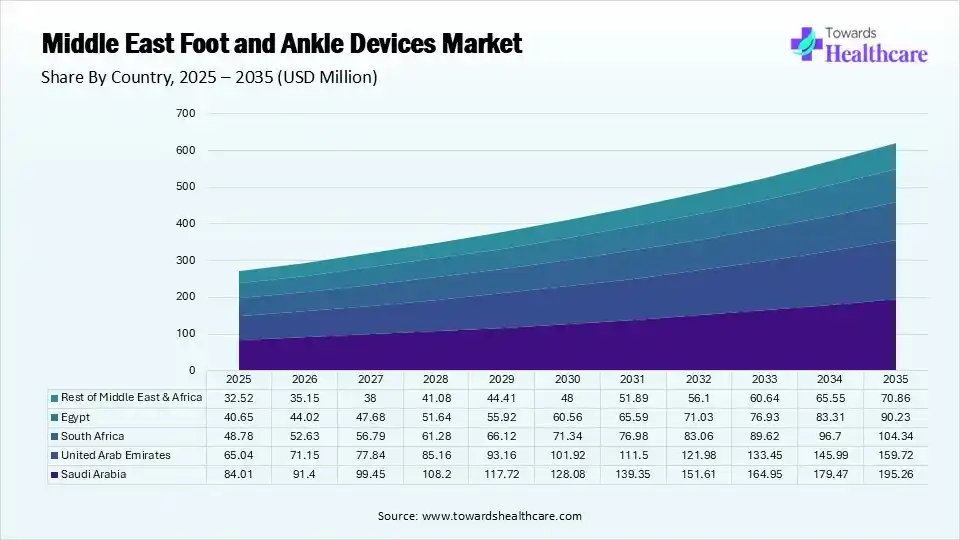
In the Middle East, growing industrialization, significant traffic, and a growing frequency of road accidents lead to severe trauma cases requiring complex orthopedic fixation and ankle reconstruction. Increasing national health insurance agendas and growing healthcare privatization make luxurious, technologically advanced surgeries, which drive the growth of the market.
Saudi Arabia Foot and Ankle Devices Market: Increasing Government Spending in Healthcare
The Saudi Arabia foot and ankle devices market size was valued at US$ 48.78 billion in 2025 and is projected to grow to 52.63 billion in 2026. Forecasts suggest it will reach approximately US$ 104.34 billion by 2035, registering a CAGR of 7.90% during the period. Saudi Arabia held a significant share of 31% in the market in 2025, as in this region, increasing diabetic foot complications (DFUs) are a significant cause of lower limb amputations in the country. This needs continuous use of progressive wound care, dedicated footwear, and offloading tools. The government has significantly invested in modernizing medical care infrastructure and increasing access to progressive, minimally invasive surgical solutions which drives the growth of the market.
UAE Foot and Ankle Devices Market is growing at the Fastest CAGR
The United Arab Emirates segment held a significant share of 24% in the market and is expected to grow at the fastest CAGR of 9.4% during the forecast period, as this region’s government has prioritized medical care infrastructure as a significant constituent of its national vision. Mandated medical insurance strategies and extensive public funding enable wider accessibility to novel and top surgical services. Additionally, the government offers favorable structures to healthcare tools players, facilitating the import and distribution of top-tier equipment from leading manufacturers.
South Africa Foot and Ankle Devices Market Trends
South Africa held a significant share of 18% in the market, as this region has the most well-developed medical care technology in Sub-Saharan Africa. The increasing presence of private hospital groups, like Netcare, Mediclinic, and Life Healthcare, drives an increasing volume of dedicated orthopedic technology. The approval of high-impact sports, involving rugby and cricket, has shaped a constant demand for ligament repairs and ankle stabilization devices, which drives the growth of the market.
R&D:
Manufacturing Processes:
Patient Services:
| Company | Headquarters | Latest Update |
| Stryker Corporation | United Arab Emirates | In June 2025, Stryker, a worldwide leader in healthcare technologies, announced it had received U.S. Food and Drug Administration (FDA) clearance for the Incompas Total Ankle System, an implant designed for patients with ankle joints damaged via severe rheumatoid, post-traumatic, or degenerative arthritis. |
| Zimmer Biomet | Saudi Arabia | In October 2025, Zimmer Biomet Holdings, Inc., a worldwide health care technology leader, and Paragon 28, an exclusively owned subsidiary, announced the full commercial launch of two advanced services for complex foot and ankle trauma to provide surgeons with advanced tools to address stimulating pilon fractures and hindfoot injuries with precision and efficiency. |
| Smith+Nephew | United Arab Emirates | Smith+Nephew steps forward with advanced sports medicine foot and ankle repair services. |
| Johnson & Johnson | United Arab Emirates | Johnson & Johnson is on pace to generate roughly $100 billion in revenue in 2026. The organization believes it has a significant opportunity to invest in its orthopedic devices. |
In January 2025, Mr. Rahul Luthra, Vice President of Global Sales & Marketing at Auxein Medical, commented on the launch: "At Auxein, our commitment to revolutionizing medical technology drives us to constantly innovate within orthopedic and arthroscopy solutions, enhancing patient care across the globe. Featuring groundbreaking products like the Flykuter, Knotless Push-in Anchor, and Reusable Suture Passer, etc., these innovative products are designed to simplify complex procedures, reduce surgery time, and enhance safety. With these new products, Auxein is not just leading, but driving the next generation of orthopedic excellence.”
By Product Type
By Procedures
By Application
By End User
By Material
By Region











Principal Consultant
Shivani Zoting is a dedicated research analyst specializing in the healthcare industry. With a strong academic foundation, a B.Sc. in Biotechnology and an MBA in Pharmabiotechnology, she brings a unique blend of scientific understanding and strategy.
Learn more about Shivani Zoting
Reviewed By
Aditi Shivarkar is a seasoned professional with over 14 years of experience in healthcare market research. As a content reviewer, Aditi ensures the quality and accuracy of all market insights and data presented by the research team.
Learn more about Aditi Shivarkar