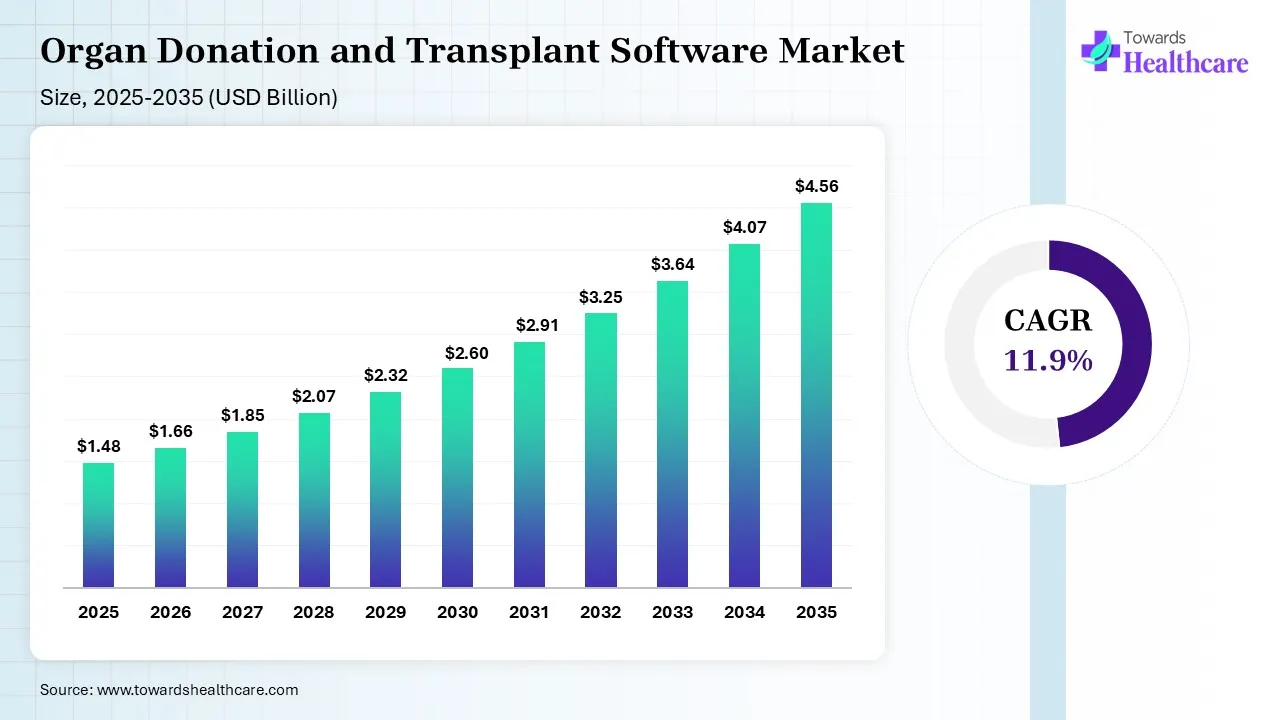
The global organ donation and transplant software market size is calculated at USD 1.48 billion in 2025, driven by growth in chronic disease, which increased the demand for organ transplantation. The market continues to grow in 2026 at USD 1.66 billion due to growing donor-recipient registrations, demand for transplant workflow management, and AI integration. It is expected to reach USD 4.56 billion by 2035 as continued healthcare expansion, technological advancements, and growing government support accelerate market expansion. The market is expected to grow at a CAGR of 11.9% during the forecasted period 2026-2035. North America accounted for 41% of the market in 2025 due to its mature transplant infrastructure, robust government oversight, and high healthcare spending.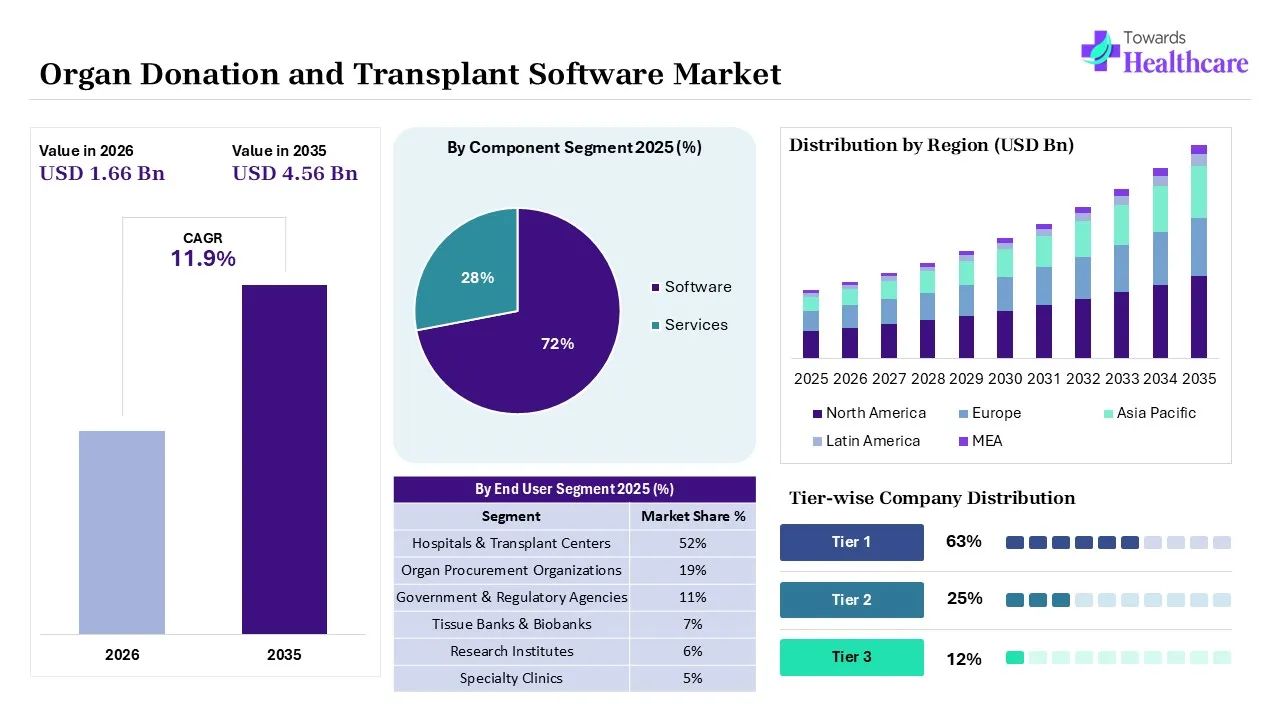
The organ donation and transplant software refers to the healthcare IT solution developed to streamline, manage, and coordinate the organ donation and transplantation process. They help in donor registration, organ allocation, recipient matching, and transplant procedure scheduling.
Evolution of Organ Donation and Transplant Software
Previously, the organ donation and transplantation registries were paper-based, where the growing role of computerized systems increased their use for storing databases and tracking recipients. The advancements in digital tools led to a rise in digital transplant systems, along with the integration of electronic health records, real-time organ tracking capabilities, and AI solutions. Thus, the transplant software has evolved from standalone hospital systems to integrated, cloud-based transplant management platforms supporting national registries and organ allocation.
Role of Digital Platforms Across the Organ Transplant Ecosystem
The organ donation and transplant software helps in the management of donor-recipient information, facilitates their matching, drives organ allocation, tracks their distribution, and manages the transplant patient list. This supports their adoption across procurement organizations, transplant centers, regulatory agencies, laboratories, logistics providers, and post-transplant care.
Business Value Created by Transplant Software
The improved operational efficiency, organ allocation accuracy, patient safety, compliance management, workflow automation, and healthcare cost optimization of organ donation and transplant software drive their adoption rates.
Market Scope
Based on the information gathered by Payal Rabde, the market is driven by rising demand for automated complete donor-recipient matching, reducing human errors, and streamlining time-sensitive logistics. They are also being utilised to streamline growing donor-recipient registration, transplant workflow management, real-time organ tracing, waiting list management, and audit management.
Cloud-Based Transplant Management Platforms Becoming the Industry Standard
The growing migration toward cloud-native healthcare platforms is increasing accessibility, data sharing, and scalability, which drives their demand.
Artificial Intelligence Improving Organ Matching Accuracy
AI-driven platforms are improving compatibility scoring, predictive analytics, and decision support, which promotes their adoption.
National Organ Registries Becoming Digitally Integrated
A rise in centralized databases and interoperability initiatives are encouraging the development of new organ allocation and transplant software.
Real-Time Organ Transportation Tracking
Growing advancements in logistics monitoring using GPS, IoT, and digital coordination are improving real-time organ transportation tracking applications.
Electronic Health Record Integration
Expanding interoperability with hospital information systems and laboratory software enhances workflow efficiency and reduces administrative burden, which increases their use.
Cybersecurity Becoming a Critical Purchasing Factor
Growing focus on patient privacy, cybersecurity, and regulatory compliance is driving the development of new organ donation and transplant software.
Market Drivers
Market Restraints
Market Opportunities
Market Challenges
| Table | Scope |
| Market Size in 2026 | USD 1.66 Billion |
| Projected Market Size in 2035 | USD 4.56 Billion |
| CAGR (2026 - 2035) | 11.9% |
| Leading Region | North America by 41% |
| Historical Data | 2020 - 2023 |
| Base Year | 2025 |
| Forecast Period | 2026 - 2035 |
| Measurable Values | USD Millions/Units/Volume |
| Market Segmentation | By Component, By Deployment Mode, By Application, By Organ Type, By End User, By Region |
| Top Key Players | InVita Healthcare Technologies, MdSleuth, CareDx, Afflo, Transplant Connect |
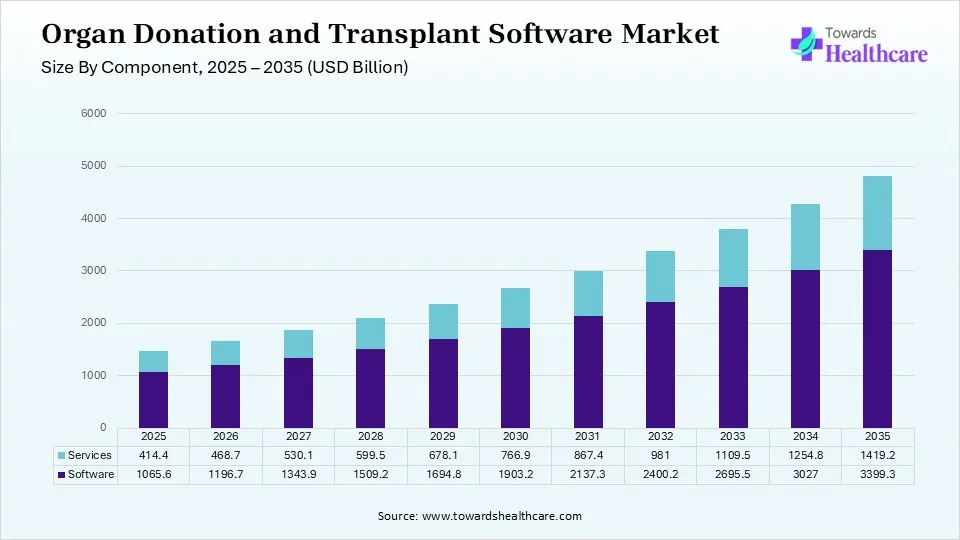
| Segments | Shares % |
| Software | 72% |
| Services | 28% |
The Software Segment Dominated the Market With 72% in 2025
The software segment led the organ donation and transplant software market with a 72% share in 2025, driven by increased digitalization of transplant workflows. Healthcare providers also adopted integrated platforms for donor-recipient coordination. Additionally, based on the information gathered by Payal Rabde, regulatory reporting requirements continued expanding, which increased their adoption rates.
The services segment held the second-largest share of 28% of the market in 2025 and is expected to witness the fastest growth during the forecast period, due to hospitals requiring implementation, customization, and managed support. Cloud migration also increases consulting demand. Ongoing training ensures compliance with evolving transplantation protocols.
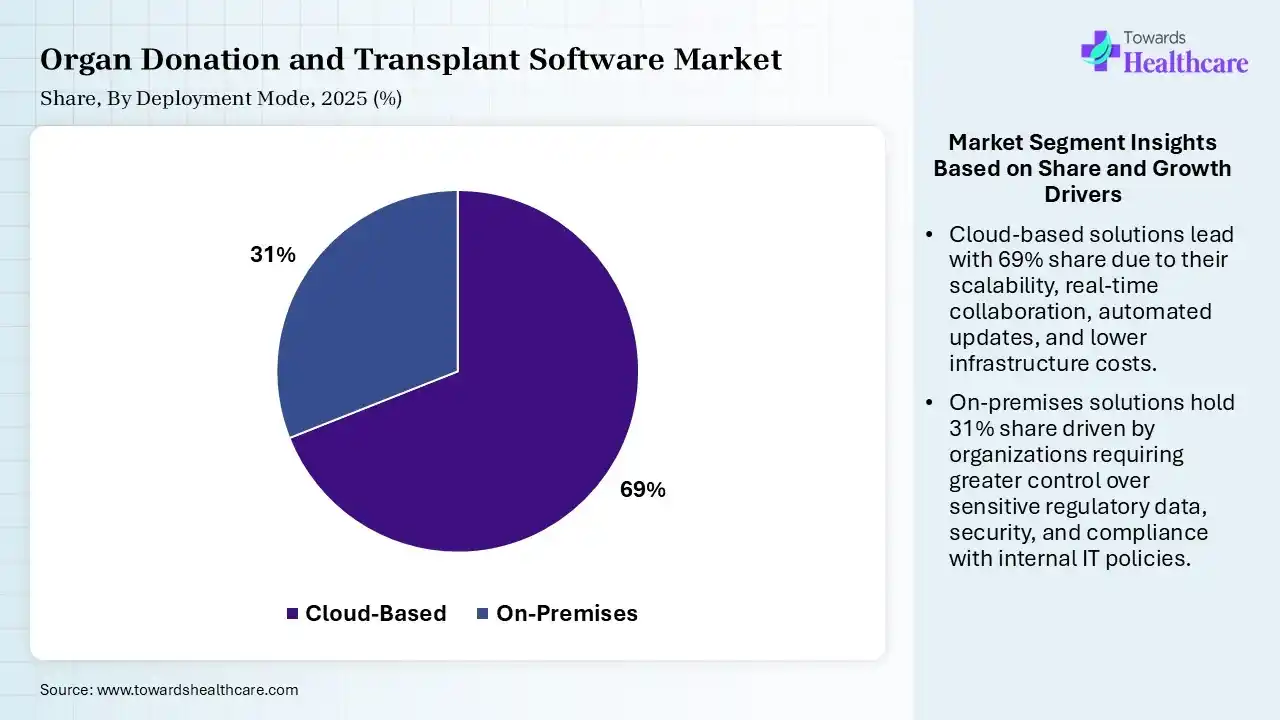
| Segments | Shares % |
| Cloud-Based | 69% |
| On-Premises | 31% |
The Cloud-Based Segment Dominated the Market With 69% in 2025
The cloud-based segment accounted for the highest revenue share of 69% of the organ donation and transplant software market in 2025 and is expected to show the highest growth during the forecast period, driven by healthcare organizations, which prioritized remote accessibility and interoperability. Cloud platforms enabled real-time organ allocation and analytics. Lower infrastructure costs also accelerated their adoption.
The on-premises segment held the second-largest share of 31% of the market in 2025, due to large institutions, which maintain legacy infrastructure. Internal security policies support local deployments, increasing their adoption rates. Existing investments slow migration to cloud platforms, sustaining their use.
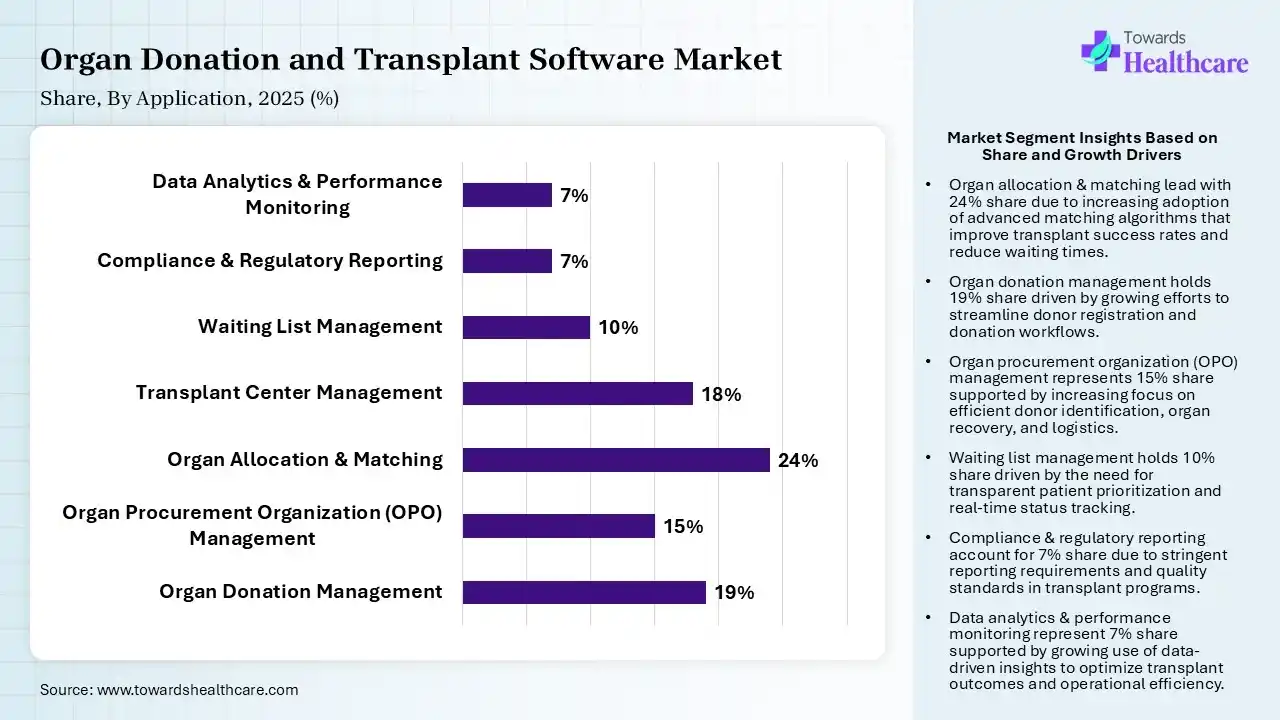
| Segments | Shares % |
| Organ Donation Management | 19% |
| Organ Procurement Organization (OPO) Management | 15% |
| Organ Allocation & Matching | 24% |
| Transplant Center Management | 18% |
| Waiting List Management | 10% |
| Compliance & Regulatory Reporting | 7% |
| Data Analytics & Performance Monitoring | 7% |
The Organ Allocation & Matching Segment Dominated the Market With 24% in 2025
The organ allocation & matching segment held a major revenue share of 24% of the organ donation and transplant software market in 2025 and is expected to expand rapidly during the forecast period, driven by AI-assisted compatibility analysis, which improved allocation accuracy. Governments emphasized equitable organ distribution, which increased their use. Advanced algorithms also shorten matching times, which increased their adoption.
The organ donation management segment held the second-largest share of 19% of the market in 2025, due to digital donor registration improving enrollment. Electronic consent management streamlines documentation, which drives their demand. Public awareness programs also increase software adoption.
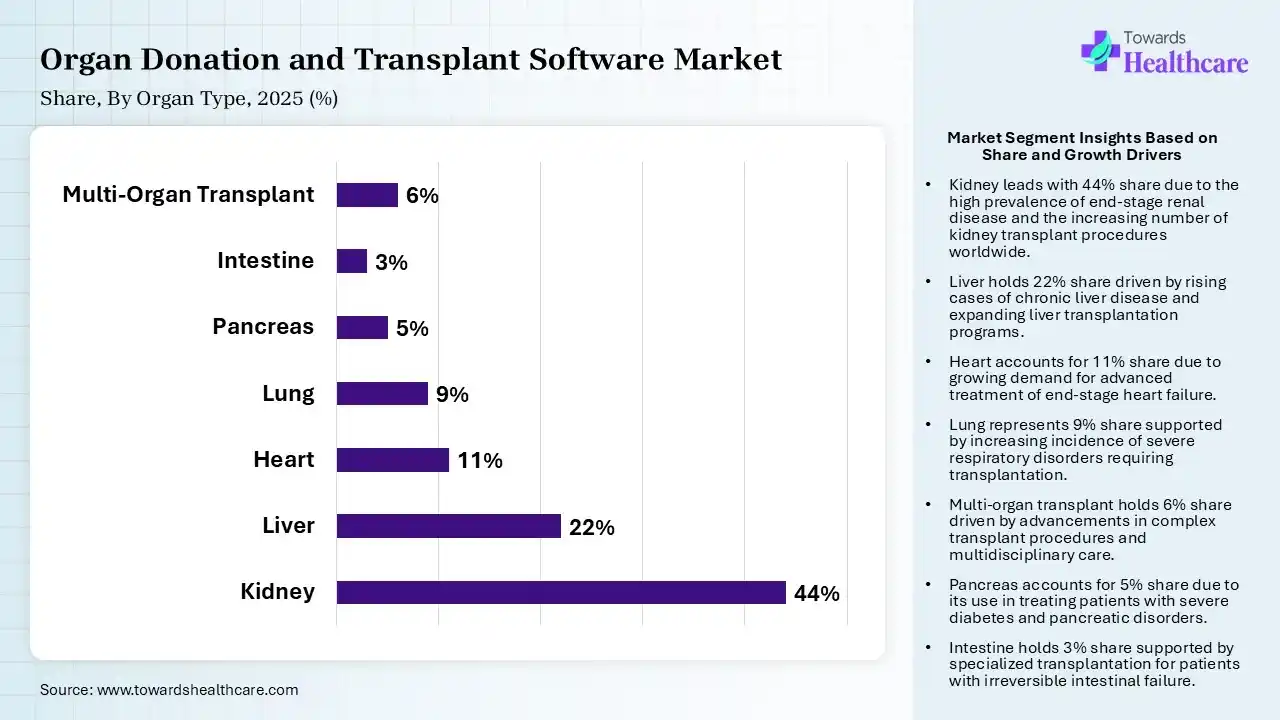
| Segments | Shares % |
| Kidney | 44% |
| Liver | 22% |
| Heart | 11% |
| Lung | 9% |
| Pancreas | 5% |
| Intestine | 3% |
| Multi-Organ Transplant | 6% |
The Kidney Segment Dominated the Market With 44% in 2025
The kidney segment contributed the biggest revenue share of 44% of the organ donation and transplant software market in 2025, as kidney transplantation represented the highest procedure volume globally. Large waiting lists required advanced management platforms, which increased the use of organ donation and transplantation software. Governments expanded kidney donation initiatives, which also increased their demand.
The lung segment held the second-largest share of 9% of the market in 2025 and is expected to gain the highest share during the forecast period, driven by an increasing respiratory disease burden, which expands transplant programs. AI-assisted matching improves donor utilization. Advanced monitoring also enhances post-transplant care.
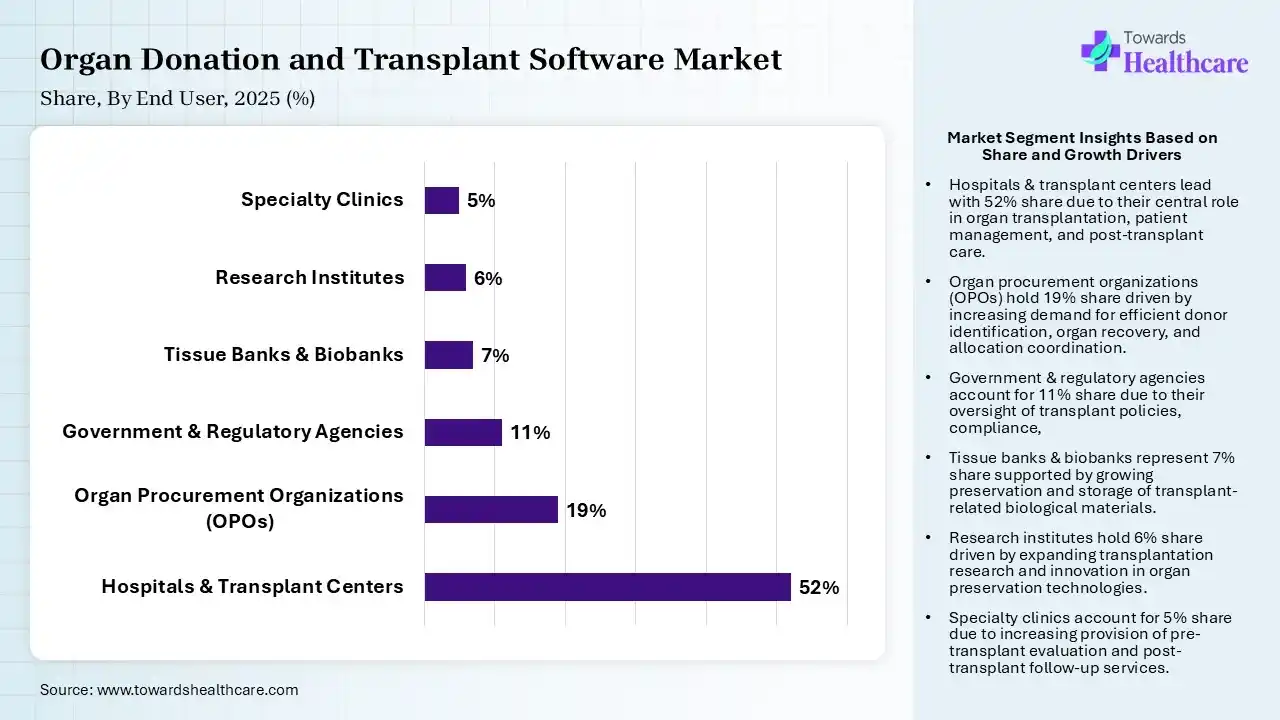
| Segments | Shares % |
| Hospitals & Transplant Centers | 52% |
| Organ Procurement Organizations (OPOs) | 19% |
| Government & Regulatory Agencies | 11% |
| Tissue Banks & Biobanks | 7% |
| Research Institutes | 6% |
| Specialty Clinics | 5% |
The Hospitals & Transplant Centers Segment Dominated the Market With 52% in 2025
The hospitals & transplant centers segment held the largest revenue share of 52% of the organ donation and transplant software market in 2025, as hospitals performed most transplant procedures globally. As per Payal Rabde’s analysis, integrated clinical workflows improved patient management. Digital transformation investments continued to increase, which increased the adoption of organ donation and transplantation software.
The organ procurement organizations (OPOs) segment held the second-largest share of 19% of the market in 2025 and is expected to grow with the fastest CAGR during the forecast period, due to national procurement organizations modernizing donor coordination. Real-time logistics also improves organ utilization. Government funding also supports technology adoption.
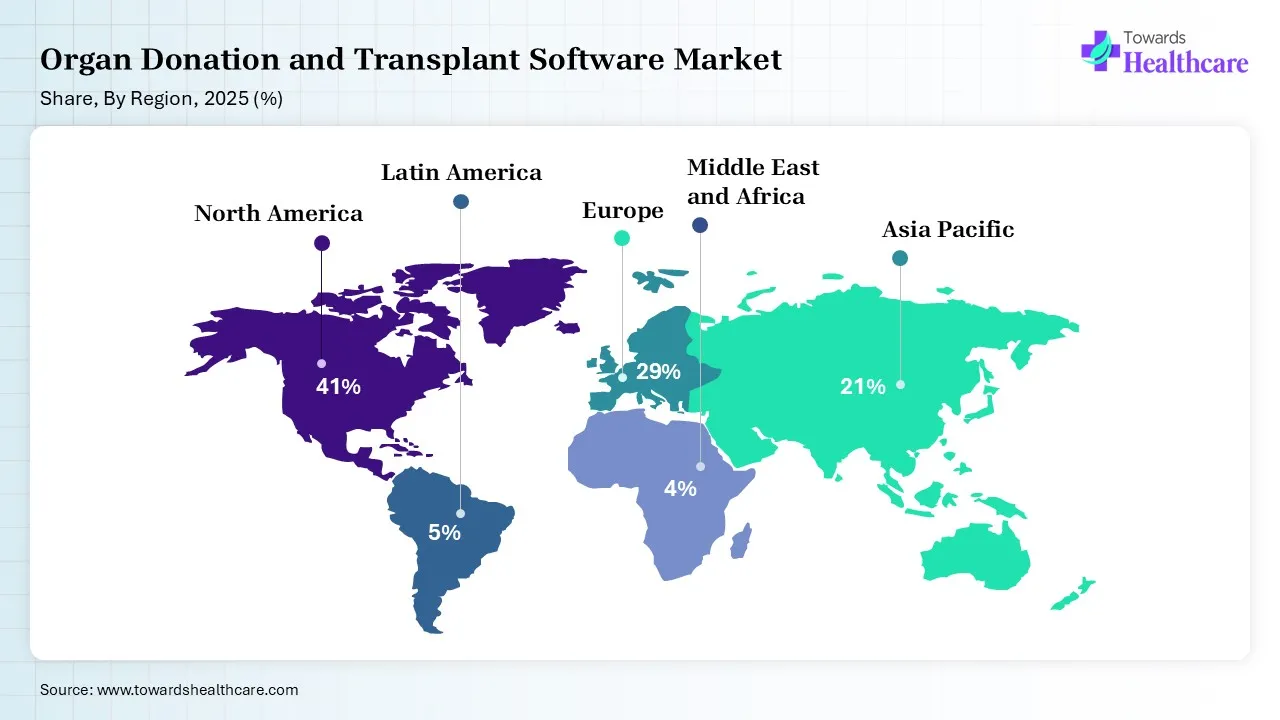
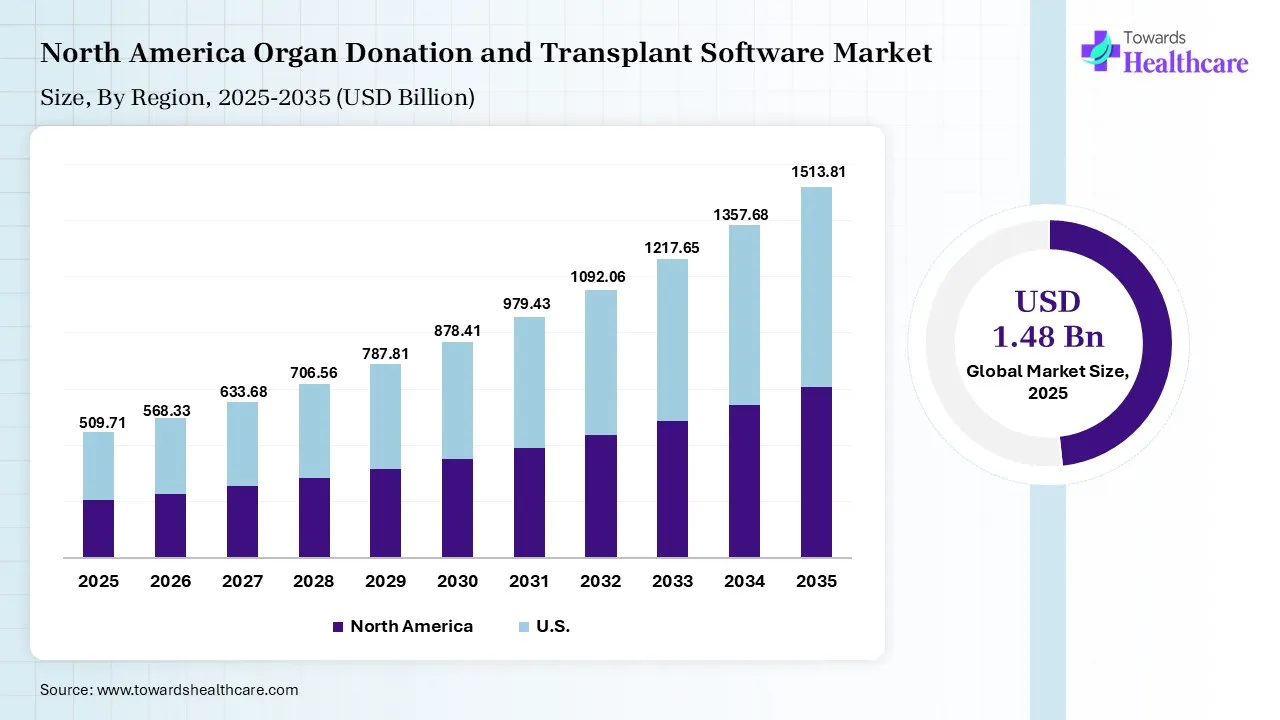
North America dominated the organ donation and transplant software market with 41% in 2025, due to the presence of mature transplant infrastructure, which supported advanced software adoption. Strong government oversight also encouraged digital registries, where high healthcare spending accelerated innovations. At the same time, the presence of advanced companies also increased the development of new platforms, where well-established regulations also increased their adoption rates, which contributed to market growth.
U.S. Market Trends
U.S. held an 84% share of the organ donation and transplant software market in 2025, driven by an extensive transplant network, which increased software demand. National registry modernization also supported digital platforms, where AI adoption also improved allocation efficiency. The presence of organ procurement organizations also increased their use, where the expansion of healthcare IT infrastructure also increased their advancements. According to Payal Rabde's analysis also highlighted the presence of advanced companies like CareDx, offering first quarter revenue of $118 million, also increased the market presence. (Source: CareDx Announces First Quarter 2026 Financial Results)
Mexico Market Trends
Mexico held a 5% share in the market in 2025 and is expected to grow with the highest CAGR of 12% during the studied years, due to expanding transplant programs increasing software adoption. Public healthcare investment strengthens digital infrastructure, where cross-border collaborations are also improving capabilities. Increasing organ donation awareness and a growing number of transplantation procedures are also increasing the demand for new software. A growing chronic disease burden is also increasing their use, and expanding transplantation organizations are also increasing their demand.
Europe held a 29% share of the organ donation and transplant software market and is expected to grow significantly during the forecast period, due to cross-border organ exchange programs requiring interoperable systems. Regulatory harmonization also supports digital platforms, where growing transplant volumes also drive investment adoption. A rise in government support and the presence of advanced healthcare infrastructure are also increasing their demand for real-time donor-recipient matching, which in turn is expanding market growth.
Germany Market Trends
Germany held a 24% share in the organ donation and transplant software market in 2025, driven by strong healthcare IT investments, which improved transplant management. National registries continued modernization, which increased the adoption of organ donation and transplantation software. Digital reporting expansion also encouraged their use, where the growth in the focus on improving transplantation outcomes also promoted their adoption. High healthcare expenditure also increased their utilization to improve organ transplantation procedures.
Spain Market Trends
Spain held a 15% share in the market in 2025 and is expected to witness the fastest growth with a CAGR of 12.50% over the forecast period, due to the presence of a world-leading donation system that adopts advanced digital tools. Real-time coordination strengthens organ allocation, where high government support also encourages their adoption. Growing adoption of digital healthcare tools and rising demand for real-time donor-recipient matching are also increasing their adoption. Continuous investments and collaborations are also driving the development of transparent, cloud-based platforms with improved efficiency.
Asia Pacific held a 21% share of the organ donation and transplant software market in 2025 and is expected to grow at the fastest CAGR during the forecast period, due to rapid healthcare digitization, which accelerates software demand. Increasing transplant procedures also support their adoption. Growing government investments also strengthen digital infrastructure, promoting their utilization. A rise in health awareness and chronic disease burden also increases the transplantation procedure volumes, driving their demand which promotes market growth.
China Market Trends
China held a 33% share of the organ donation and transplant software market in 2025, driven by national transplant reforms, which accelerated software deployment. Rapid expansion of hospital digitization and growth in AI integration improved organ matching. The presence of large patient volumes and the expansion of transplantation centres also increased their demand. A rise in investments and government support also accelerated the development of new organ donation and transplantation softwares, which improved efficiency, transparency, and traceability.
India Market Trends
India held a 15% share in the market in 2025 and is expected to expand rapidly in the coming years, due to expanding transplant centers and increasing software implementation. Government digital health programs are also improving interoperability, driving the adoption of organ donation and transplantation software. Organ donation awareness also continues rising, driving higher demand, where increasing cases of kidney, lung, and heart diseases are also increasing the transplantation volume. Growing investments in digital health solutions are also promoting their innovations.
Latin America held a 5% share in the organ donation and transplant software market in 2025 and is expected to show lucrative growth during the forecast period, due to expanding transplant programs, which increase digital investments. Healthcare modernization is also strengthening software adoption, where government initiatives are also improving organ donation management. Expanding transplantation centers and digital health tools are also increasing their use, where growing government initiatives and innovations are also driving market growth.
Brazil Market Trends
Brazil held a 58% share in the organ donation and transplant software market in 2025 and is expected to gain the highest market share during the forecast period, driven by the largest regional transplant volume, which increases software demand. Public health digitization expansion also increased their demand for organ donation and transplantation software. Registry modernization also supported their adoption. Growth in chronic disease and healthcare investments also increased their adoption, as well as innovations.
The rest of Latin America held a 18% share in the market in 2025, due to healthcare digitalization, which expands gradually. Regional collaboration improves transplantation capabilities, where cautiously rising investments also encourage their adoption. Growing government investment and expanding healthcare sectors are also driving their demand. The growing focus on patient safety and organ traceability is also fueling their utilization, where increasing investments are also accelerating the development of new cloud-based platforms.
MEA held a 4% share in the organ donation and transplant software market in 2025 and is expected to show notable growth during the forecast period, due to expanding government healthcare modernization, which supports transplantation. Digital health investments improve registry management, where specialized transplant centers continue expanding, driving the demand for organ donation and transplantation software. Increasing demand for donor-recipient matching and improved transplant coordination also increases their demand, fueling market growth.
Saudi Arabia Market Trends
Saudi Arabia held a 37% share in the organ donation and transplant software market in 2025, driven by vision-driven healthcare transformation, which expanded software adoption. Based on Payal Rabde’s survey, national transplant programs strengthened digital coordination, where growth in hospital investments also increased their adoption. An increase in cross-border organ-transplant programs and expansion of healthcare IT infrastructure also increased adoption and innovations. Growth in government support also encouraged the demand for AI, real-time monitoring, and cloud-based platforms.
UAE Market Trends
United Arab Emirates (UAE) held a 28% share in the market in 2025 and is expected to show the fastest growth over the forecast period, due to smart healthcare initiatives accelerating implementation. Growing transplant capabilities require integrated software, which drives the demand for organ donation and transplantation software. Digital innovation remains a priority, where increasing collaborations also propel their adoption. Expanding smart hospitals and transplantation organizations are also increase their demand to streamline workflow efficiency.
| Companies | Headquarters | Solutions |
| InVita Healthcare Technologies | Baltimore, U.S. | iTransplant & iReferral |
| MdSleuth | San Francisco, U.S. | MatchGrid & Bamy |
| CareDx | Brisbane, U.S. | OTTR |
| Afflo | Edmonton, Canada | Afflo |
| Transplant Connect | Santa Monica, U.S. | iTransplant Medical Ecosystem |
In July 2026, after the launch of InVita Healthcare Technologies' iReferral® at University Hospital by University Health and Texas Organ Sharing Alliance (TOSA), the executive director for Transplant and Donation Services at University Health Transplant Institute, Erica Zuniga, highlighted, "Our goal is to honor and fulfill a donor's stated wish to provide others the opportunity for transplantation." "This technology enables our healthcare teams to do that by quickly identifying and communicating potential donor information."
Software Developers
Software developers help in designing, maintaining, developing, and upgrading organ donation and transplant software.
Cloud Infrastructure Providers
Cloud infrastructure providers offer cloud hosting, cybersecurity, data storage, computing resources, and backup capabilities.
System Integrators
System integrators focus on integrating organ donation and transplant software with EHR, registries, laboratory systems, and hospital information systems.
Healthcare Providers
Healthcare providers seek organ donation and transplant software to manage donor information, organ allocation, patient monitoring, recipient matching, and transplantation workflows.
Regulatory Authorities
Regulatory authorities are responsible for managing organ donation and transplant software compliance with established policies, regulatory standards, and government guidelines.
End Users
End users for organ donation and transplant software include transplant coordinators, physicians, donor registry administrators, government agencies, and hospitals.
Software Development Lifecycle
The software development lifecycle focuses on the application, testing, validation, quality assurance, and regulatory compliance.
Cloud Infrastructure
Cloud infrastructure encompasses secure transplant databases, real-time data access, and backup capabilities.
System Integration Partners
System integration partners involve EHR vendors, hospital information system (HIS) providers, cloud technology providers, and laboratory information management system (LIMS) providers.
Technical Support Network
The technical support network highlights 24/7 helpdesk services, training, security monitoring, and regulatory services.
Managed Service Providers
Managed service providers focus on cloud infrastructure management, software maintenance, cybersecurity, and regulatory compliance.
Market Structure
Market structure highlights rising adoption of organ donation and transplant software, the growing demand, regulatory requirements, and expanding innovations.
Market Share Analysis
Market share analysis encompasses organ donation and transplant software utilization, their functionality, service quality, regulatory compliance, and geographical presence.
Competitive Strategies
Competitive strategies focus on organ donation and transplant software capabilities, workflow management, customization, and interoperability.
Product Portfolio Comparison
Based on product portfolio comparison, companies like InVita Healthcare Technologies, MedSleuth, and CareDx dominated the market.
Recent Product Launches
InVita Healthcare Technologies, MedSleuth, and CareDx led the market with their recent product launches.
Partnerships and Collaborations
InVita Healthcare Technologies, CareDx, and MedSleuth registered dominance in partnerships and collaborations.
Mergers and Acquisitions
Mergers and acquisitions involve expanding product portfolio, integration of advanced technologies, and cost-effectiveness.
Geographic Expansion Strategies
Geographic expansion strategies are influenced by growing transportation procedures, government investments, and healthcare digitalization.
Innovation Strategies
Innovation strategies depend on expanding AI application, demand for real-time organ tracking systems, integration with EHR systems, and advancements in cloud-based platforms.
| Company Overview | Passionate and committed first responders who specialize in initiating the process of organ donation, delivering transplants to waiting recipients, supporting donor families, and educating and inspiring people in communities |
| Product Portfolio | Organ, eye, and tissue donation |
| Software Capabilities | iTransplant |
| Geographic Presence | U.S. |
| Strategic Initiatives | New partnership with Donor Alliance to strengthen organ donation and transplantation |
| Recent Developments | Launched the Transplantation Science in the Classroom program |
| Future Growth Strategy | To partner with communities, families, and healthcare professionals to save and heal lives through advocacy and excellence in organ, eye, and tissue donation. |
| SWOT Analysis |
Strengths:
Weakness:
Opportunities:
Threats:
|
| Company Overview | A nonprofit company supporting research, innovation, and collaboration to strengthen organ donation and transplantation systems and enhance public health |
| Product Portfolio | Tools, OPO Tools, and Organ Tracking and Logistics |
| Software Capabilities | UNOS technologies, research and consulting, international consulting, and OPTN |
| Geographic Presence | U.S. |
| Strategic Initiatives | Collaboration with NASA Langley Research Center and LifeNet Health has completed a groundbreaking study transporting human kidneys by drone beyond visual line of sight |
| Recent Developments | Revised and updated their Notice of Privacy Practices (NPP) and United Network for Organ Sharing (UNOS) Privacy Policies |
| Future Growth Strategy | To save and transform lives through research, innovation, and collaboration. |
| SWOT Analysis |
Strengths:
Weakness:
Opportunities:
Threats:
|
| Company Overview | Leading provider of molecular testing, workflow tools, patient services, and pharmacy support built for complex care in transplant, cell therapy, and specialty oncology. |
| Product Portfolio | Tests and products throughout organ donation and transplantation of kidney, heart, and lung |
| Software Capabilities | Referral management, workflow & operations, quality & compliance, and EMR integration solutions |
| Geographic Presence | U.S., Sweden, and Australia |
| Strategic Initiatives | Acquisition of Naveris |
| Recent Developments | Finalization of the Medicare Local Coverage Determination (LCD) process related to molecular testing for solid organ allograft rejection |
| Future Growth Strateg | Focus on driving innovation, expanding impact, and setting new standards in transplant care. |
| SWOT Analysis |
Strengths:
Weakness:
Opportunities:
Threats:
|
As per Payal Rabde's analysis, the organ donation and transplant software market is expected to show significant growth during the predicted period due to various factors. The growing chronic disease burden, increasing transplantation volumes, and rising donor registrations are increasing the demand for automated healthcare solutions, which is driving the adoption of organ donation and transplant software. Expanding advancements in cloud-based solutions, AI platforms, government initiatives, and international agreements are also increasing the adoption of this software. Segments such as cloud-based, organ donation management, lung, and organ procurement organizations (OPOs) are expected to show considerable growth, driving new investments. Similarly, companies such as InVita Healthcare Technologies, CareDx, MedSleuth, and LifeSource are anticipated to show notable expansion in the market, creating new investments and funding opportunities.
By Component
By Deployment Mode
By Application
By Organ Type
By End User










Principal Consultant
Payal Rabde is a Healthcare Market Research Analyst at Towards Healthcare Research & Consulting with 4+ years of experience in pharmaceuticals, biotechnology, medical devices, and life sciences.
Learn more about Payal Rabde

Reviewed By
Aditi Shivarkar is a seasoned professional with over 14 years of experience in healthcare market research. As a content reviewer, Aditi ensures the quality and accuracy of all market insights and data presented by the research team.
Learn more about Aditi Shivarkar