

Pipeline Programs

CGT Companies Tracked

Manufacturing Facilities


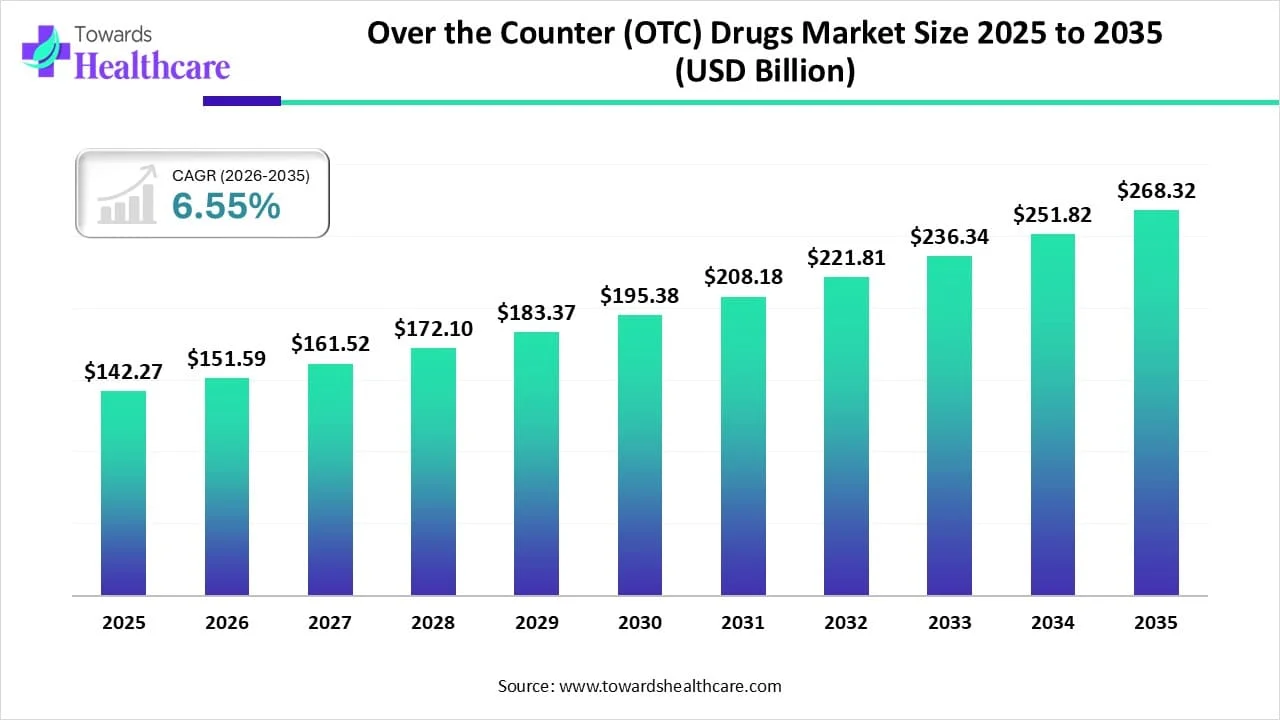
The global over the counter (OTC) drugs market size is calculated at USD 142.27 billion in 2025, grew to USD 151.59 billion in 2026, and is projected to reach around USD 268.32 billion by 2035. The market is expanding at a CAGR of 6.55% between 2026 and 2035. The rising prevalence of common infections and injuries and favorable regulatory policies drive the market.
Over-the-counter or OTC drugs are medications given or administered to a patient without a prescription. They are generally safe and effective when taken as directed by a healthcare professional. They can cure common disorders such as aches, pains, itches, common colds, fever, and allergies. They can either relieve symptoms, prevent or cure a disease, or manage recurring problems. In many countries, they are selected by regulatory agencies to ensure they contain safe and effective ingredients. Hence, these drugs can only be dispensed by a registered pharmacist after an assessment of the patient’s needs or the provision of patient education.
The rising incidences of common bacterial, viral, and fungal infections increase the use of OTC drugs. The increasing geriatric population and growing consumer awareness boost the market. Favorable regulatory policies potentiate the use and approval of OTC drugs, augmenting market growth. They are generally preferred by a large number of the patient population as they are cost-effective and easily available. The growing consumer willingness to spend on OTC medications is another growth factor that is likely to dominate the market.
The over the counter (OTC) drugs market includes non-prescription medicine that consumers can purchase directly from pharmacies, retail stores, and online platforms for treating common health problems such as pain, cough allergies, and digestive disorders. The market is growing as consumers increasingly prefer convenient, affordable, and quick treatment options for minor health conditions. A key trend is the rising adoption of self-care online pharmacy services. Technological advancements in e-commerce platforms, mobile health applications, digital product information, and personalized recommendations are improving product accessibility and consumer convenience. Increasing health awareness, rising healthcare costs, and easy availability of OTC medicines are major market drivers. Future opportunities include innovative drug formulations, personalized self-care products, preventive healthcare solutions, and expansion through digital distribution channels. Manufacturers are also focusing on improved packaging, product innovation, and consumer education to support responsible self-medication.
In April 2025, Kingsway Pharmaceuticals launched PBZ OTC Pyribenzamine Antihistamine Cream, the first new topical antihistamine at target stores across the U.S. The cream contains Tripelennamine HCL for relief from pain and discomfort due to insect bites, poison ivy, and sunburn.
In March 2025, Glenmark Pharmaceuticals announced the launch of Polyethylene Glycol 3350 Powder for Solution as an OTC product in the U.S. market. The product is an osmotic laxative used for the prevention and treatment of occasional constipation. It is a generic alternative for MiraLAX Powder for Solution, which achieved annual sales of $555.7 million.
Artificial intelligence (AI) has the potential to disrupt the healthcare sector and change the healthcare landscape. AI can enhance the effectiveness, accessibility, and accuracy of OTC drugs. It can assess patient’s conditions and suggest personalized treatment regimens to patients. AI can provide tailored dosages and routes to improve patient treatment outcomes. It can significantly reduce the workload on pharmacists. Additionally, it can predict treatment outcomes, such as identifying drug-related allergies or other side effects. AI also enables people to monitor their health conditions closely, leading to the adoption of better measures. The advent of telemedicine and the Internet of Things (IoT) increased the accessibility of OTC drugs. Moreover, AI and machine learning (ML) algorithms can identify trends and demand for particular OTC drugs in a region and streamline the supply chain.
Driver
Growing Demand for Self-Medication
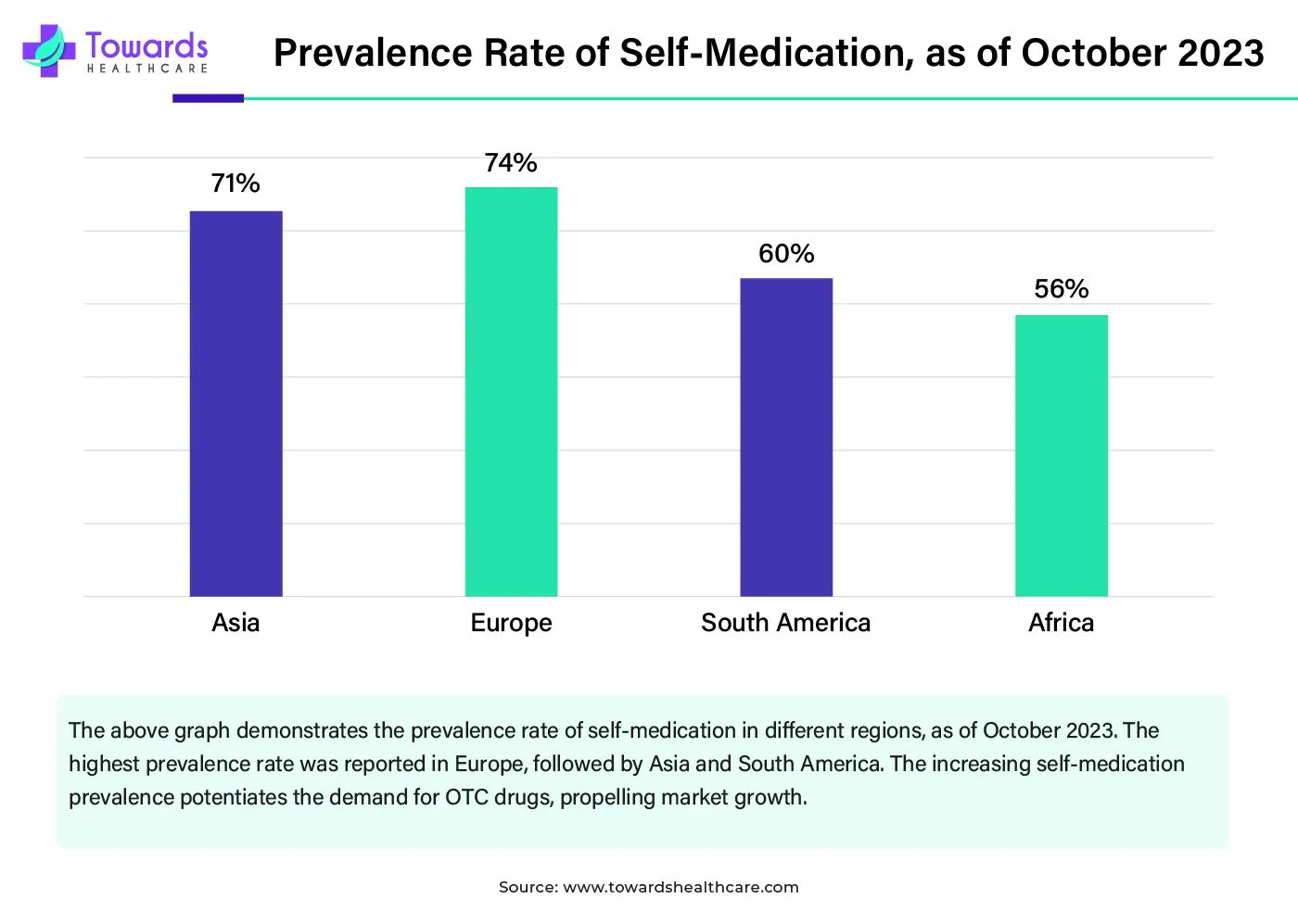
The major growth factor of the over the counter (OTC) drugs market is the growing demand for self-medication. The rising incidences of minor disorders promote the use of OTC drugs. It is estimated that the global prevalence rate of self-medication is 12% to 92%. People are now more aware of the type of medications to be administered depending on their condition. The increasing surfing on search engines and the growing use of social media educate people about OTC drugs. Many people suffer from diarrhea or motion sickness, necessitating them to carry first-aid kits while traveling, which consist of common medications. Rapid urbanization and increasing healthcare costs shift people’s perspective towards self-medication. Self-medication can help save scarce medical resources for minor conditions and reduce absenteeism from work.
Restraint
Market Competitiveness
The major challenge of the market is the increasing market competitiveness due to numerous players entering the market. The increasing number of manufacturing enterprises adds to the competition for providing safe and affordable drugs. This significantly impacts price sensitivity, distribution, and counterfeits. The Pharmaceutical Security Institute (PSI) reported around 6,897 incidents of counterfeiting, illegal diversion, and theft of pharmaceuticals in 142 countries in 2023.
Opportunity
Increasing Accessibility
The future of the over the counter (OTC) drugs market is promising, driven by technological advancements, changing consumer preferences, and increasing accessibility. The advent of online pharmacies owing to the burgeoning e-commerce sector plays a vital role in increasing the accessibility of OTC medications. Digital health platforms also provide easy access to drug and disease information, helping patients to make informed decisions. Favorable government support also helps to increase the accessibility of OTC drugs. Several government organizations globally make provisions to dispense OTC drugs in convenience stores and supermarkets, other than retail pharmacies. However, these drugs are only sold in the presence of a pharmacist.
For instance,
| Key Elements | Scope |
| Market Size in 2026 | USD 151.59 Billion |
| Projected Market Size in 2035 | USD 268.32 Billion |
| CAGR (2026 - 2035) | 6.55% |
| Leading Region | North America by 38% |
| Key Applications | Pain relief, cough & cold treatment, allergy management, gastrointestinal care, dermatology, smoking cessation, ophthalmic care, vitamin & dietary supplementation, first aid |
| Primary End Users | Consumers, retail pharmacies, drug stores, online pharmacies, hospitals, clinics, supermarkets, convenience stores |
| Key Challenges | Intense price competition, counterfeit medicines, regulatory compliance, product recalls, private-label competition, responsible self-medication concerns |
| Measurable Values | USD Millions/Units/Volume |
| Market Segmentation | By Product Type, By Dosage Form, By Route of Administration, By Distribution Channel, By Region |
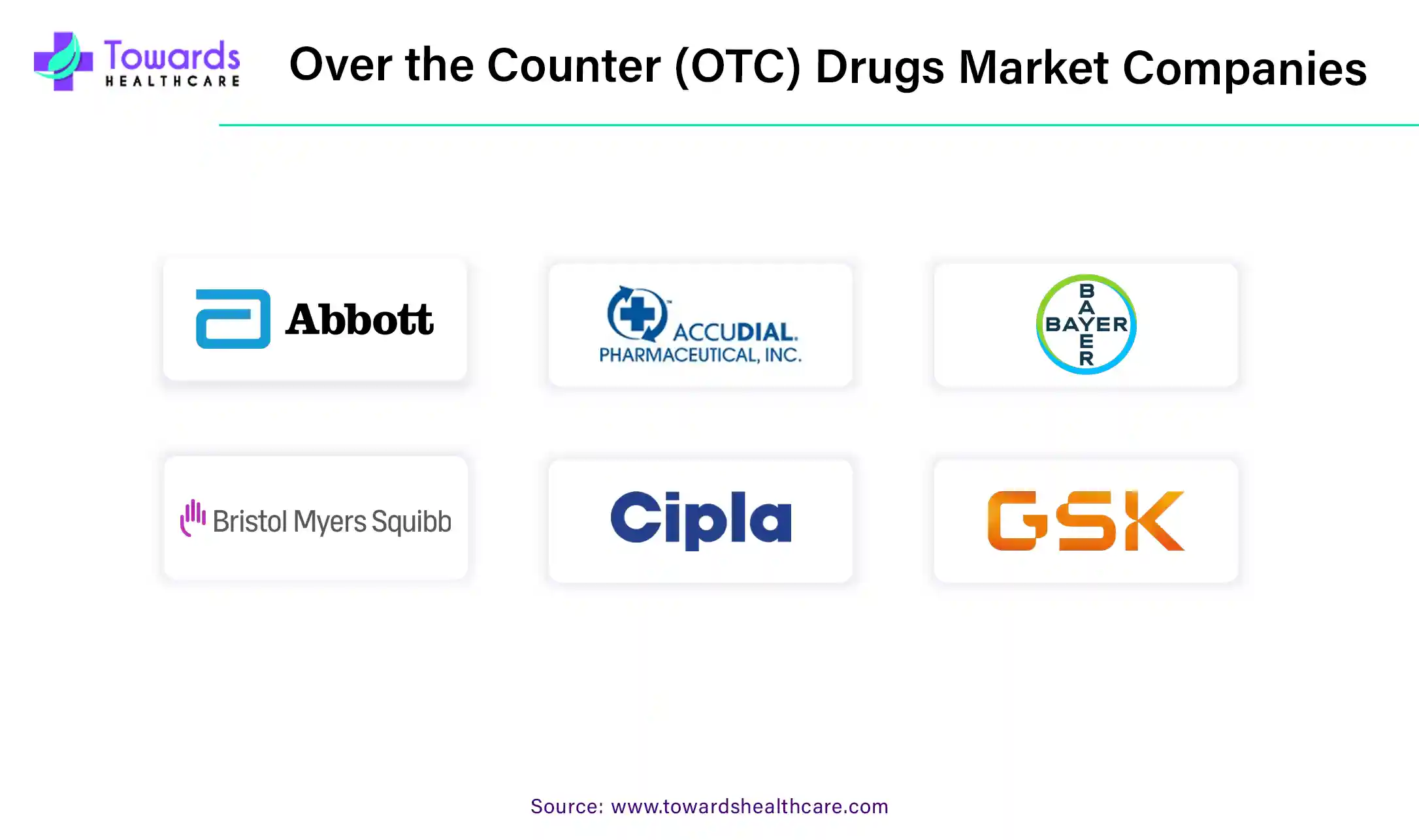
| Top Key Players | Abbott Laboratories, AccuDial Pharmaceutical Inc., Bayer AG, Bristol-Myers Squibb Company, Cipla, GlaxoSmithKline plc, Glenmark Pharmaceuticals, Merck, Mylan N.V., Novartis AG, Pfizer Inc., Procter & Gamble, Sanofi S.A., Teva Pharmaceuticals |
| Segments | Shares % |
| Cough & Cold Products | 18% |
| Analgesics | 16% |
| Vitamin & Dietary Supplements | 14% |
| Gastrointestinal Products | 10% |
| Antacids | 8% |
| Botanicals | 7% |
| Mouth Care Products | 6% |
| Sleep Aids | 5% |
| Ophthalmic Products | 4% |
| Smoking Cessation Products | 3% |
| Feminine Care | 3% |
| Otic Products | 2% |
| Wart Removers | 2% |
| Others | 2% |
By product type, the cough & cold products segment held a dominant presence in the over the counter (OTC) drugs market by 18% share in 2025. Cough & cold products include lozenges, tablets, syrups, and ointments. These products help to relieve symptoms faster and are comparatively safer. The increasing incidences of common flu cases and growing research and development activities drive the segment’s growth. Numerous researchers and drug manufacturers disrupt the market by introducing novel drug delivery systems to cure common coughs and colds. Roll-ons and steam pods are some examples of novel drug delivery systems for headache relief. The availability of generic alternatives for common flu enhances the affordability and accessibility of OTC drugs.
By product type, the analgesics segment is anticipated to grow with the highest CAGR in the market during the studied years. Analgesics are a class of drugs to relieve minor pain or inflammation. Paracetamol, aspirin, and ibuprofen are some examples of OTC analgesics. The rising incidences of minor injuries and inflammation increase the demand for OTC analgesics. The type of analgesics administered depends on the patient’s condition and the severity of the pain. Up to 70% of the population in Western countries prefer OTC analgesics regularly for headaches, body aches, or other types of pain.
| Segments | Shares % |
| Tablets | 32% |
| Liquids | 22% |
| Hard Capsules | 14% |
| Powders | 10% |
| Soft Capsules | 9% |
| Ointments | 8% |
| Others | 5% |
By dosage form, the tablets segment held the largest share of the over the counter (OTC) drugs market by 32% share in 2025. Tablets are the most convenient and effective dosage forms that are preferred by people of all ages. The demand for tablets is increasing as they are easily available, administered, and cost-effective. They are also easy to store and handle and are patient-compliant. Tablets can assure dose accuracy and result in increased physiological activity. Since they are available as sustained release and immediate release, their duration of action can be determined. Tablets also offer commercial benefits to manufacturers and distributors as they have a longer shelf life and are resistant to environmental factors.
By dosage form, the ointments segment is expected to grow at the fastest rate in the market during the forecast period. Ointments are substances that are put on the skin to cure soreness and injury. They are used to heal wounds, burns, rashes, scrapes, or other skin problems. They are available for both pharmaceutical and cosmetic purposes. Ointments allow the incorporation of water-insoluble drugs, reduce nasolacrimal drainage, and minimization of tear dilution. They contain less water in formulations; hence, they need fewer preservatives than creams.
| Segments | Shares % |
| Oral | 72% |
| Topical | 18% |
| Parenteral | 5% |
| Others | 5% |
By route of administration, the oral segment led the global over the counter (OTC) drugs market by 72% share in 2025. The oral route of administration includes liquids, capsules, and tablets. They are predominantly preferred as they are safer, cost-effective, and easy to administer to all age groups. They are non-invasive and eliminate the need for skilled professionals to administer the drugs. Tablets are available in different forms, such as buccal, sublingual, effervescent, and chewable forms, to drive the release of medications.
By route of administration, the topical segment is projected to expand rapidly in the market in the coming years. The topical route includes applying active drug substances on the skin and mucous membrane for local or systemic action. They are applied to the eyes, ears, nose, and mucous membranes. They provide better therapeutic action as they are directly applied to the target site and result in fewer side effects. They eliminate the first-pass metabolism as they are directly applied to the skin and systemic side effects.
| Segments | Shares % |
| Drug Stores & Retail Pharmacies | 55% |
| Hospital Pharmacies | 25% |
| Online Pharmacies | 20% |
By distribution channel, the drug stores & retail pharmacies segment registered its dominance over the global over the counter (OTC) drugs market by share of 55% in 2025. The increasing number of retail pharmacy stores and the presence of trained personnel fuel the segment’s growth. Pharmacists at retail stores can guide patients about dosage and time for drug administration. There are around 46,230 pharmacies and drug stores in the U.S. as of 2024. These stores offer special discounts, 24/7 facilities, and same-day home delivery services to increase the accessibility of patients.
By distribution channel, the online pharmacies segment is estimated to show the fastest growth in the market over the forecast period. The rising adoption of smartphones and advancements in telecommunication technology promote the segment’s growth. People can order medicines online from the comfort of their homes. The increasing geriatric population benefits from online pharmacies as they can order from a large range of products. They also offer special discounts and free home delivery facilities.
North America dominated the global over the counter (OTC) drugs market by 38% share in 2025. The rising incidences of minor disorders and favorable regulatory policies drive the market. The Centers for Disease Control and Prevention (CDC) estimates that around 40 million flu-related illnesses were reported in the U.S. for the 2023-2024 flu season. The Food and Drug Administration (FDA) regulates the approval of OTC drugs in the U.S. The U.S. sells more than 300,000 non-prescription drugs, including 800 active ingredients in more than 80 therapeutic classes. In Canada, around 2,000 OTC drugs are approved for sale. The presence of key players such as Pfizer, GlaxoSmithKline, and Merck held the major share of the market.
U.S. Market Trends
The U.S. over the counter OTC drugs market continues expanding because consumers prefer convenient self-care solutions. More than 340 million people create strong demand for pain relief, cough, allergy, digestive, and vitamin products. Retail pharmacies, supermarkets, and online platforms improve product availability. The Food and Drug Administration maintains strict safety standards, increasing consumer confidence. Rising healthcare costs, growing health awareness, and continuous product innovation encourage wider use of OTC medicines across all age groups nationwide.
Canada Market Trends
Canada's over-the-counter OTC drugs market is growing steadily with rising consumer awareness about self-medication and preventive healthcare. The country has over 40 million people, supporting demand for pain relief, cold, allergy, digestive, and vitamin products. Community pharmacies and online retailers continue expanding access to OTC medicines. Health Canada maintains strict product quality regulations, strengthening consumer trust. An aging population, increasing healthcare costs, and growing wellness trends continue supporting long-term market development across the country.
Asia-Pacific is projected to host the fastest-growing market by 22% share in the coming years. The increasing pediatric and geriatric population, increasing investments, and growing research and development activities boost the market. The growing healthcare expenditure and rising disposable income contribute to market growth. The burgeoning pharmaceutical sector and favorable regulatory frameworks augment the market. There are more than 6,000 OTC drugs available in China. Suitable manufacturing infrastructure encourages foreign companies to set up their manufacturing plant in Asia-Pacific countries. Countries like China and India export a major amount of OTC drugs to the world. India exported drugs and pharmaceuticals worth $27.82 billion during FY24.
China's population is the second-largest, due to which the demand for over-the-counter drugs is very high. With a rising population, the cases of infection and chronic conditions have also increased, which has led to the development of more OTC drugs to fulfill the growing pharmaceutical demand.
India makes constant efforts to develop a streamlined regulatory framework around the sales of OTC drugs to prevent misuse and ensure patient safety. The first comprehensive OTC drugs list consists of around 27-30 drugs, including analgesics, topical ointments for pain, cough & cold, etc.
Europe’s OTC drugs market is significantly growing due to increasing consumer awareness of self-care, rising demand for convenient treatment options, and the widespread availability of non-prescription medicines. Established pharmacy networks and expanding online healthcare platforms are improving product accessibility. Growing interest in preventive healthcare, aging populations, and demand for affordable treatments for common health conditions are further supporting market expansion.
UK Expands Through Growing Self-Care Demand
The UK OTC drugs market is notably expanding due to increasing consumer preference for self-care and convenient treatment options for common health conditions. Strong pharmacy networks and easy access to non-prescription medicines support product availability. Growing use of online pharmacies, rising health awareness, and demand for affordable healthcare solutions are further encouraging OTC drug adoption across the country.
Germany Maintains Notable Market Share Through Strong Self-Care Adoption
Germany’s OTC drugs market holds a notable market share due to strong consumer awareness of self-care, an established pharmacy network, and widespread availability of non-prescription medicines. Rising demand for convenient treatments for common health conditions, increasing use of online pharmacies, and growing interest in preventive healthcare are supporting market expansion. Product innovation and easy access to OTC medicines further strengthen demand.
| Ecosystem Segment | Representative Organizations | Role in the Market |
| Technology Providers | SAP, IQVIA, Veeva Systems, Oracle Health | Digital supply chain, commercial analytics, pharmacovigilance, regulatory management |
| Product Manufacturers | Kenvue, Haleon, Bayer AG, Sanofi, Perrigo | Develop, manufacture and commercialize OTC medicines and consumer health products |
| Service Providers | McKesson, Cencora, Cardinal Health | Pharmaceutical distribution, logistics, retail supply, inventory management |
| Platform Providers | Amazon Pharmacy, Walgreens, CVS Health | Retail and online distribution platforms for OTC products |
| CROs/CDMOs | Catalent, Recipharm, Almac Group, Piramal Pharma Solutions | Formulation development, manufacturing, packaging and commercialization support |
| Software Vendors | Veeva Systems, IQVIA, TraceLink | Regulatory compliance, serialization, product lifecycle management |
| Research Institutions | U.S. FDA, NIH, CDSCO, EMA | Regulatory science, clinical guidance, OTC switch evaluation, safety monitoring |
| End-User Industries | Retail Pharmacy, Consumer Healthcare, Hospitals, E-commerce, Healthcare Providers | Primary commercial channels and healthcare utilization |
| Tier 1 | Tier 2 | Tier 3 | |
| Typical Market Influence | 60% | 30% | 10% |
| Tier 1 | ||||
| Company Name | Headquarters | Country | Why Relevant to This Market | Key Products/Services |
| Kenvue Inc. | Summit, New Jersey | USA | World's largest pure-play consumer health company with one of the broadest OTC portfolios | Tylenol, Benadryl, Zyrtec, Nicorette, Imodium, Sudafed (selected markets) |
| Haleon plc | Weybridge, England | United Kingdom | Global leader exclusively focused on consumer healthcare and OTC medicines | Advil (outside U.S.), Centrum, Sensodyne, Otrivin, Voltaren (selected markets), Theraflu |
| Bayer AG | Leverkusen, North Rhine-Westphalia | Germany | Strong global OTC portfolio spanning pain relief, allergy, nutrition and digestive health | Aspirin, Claritin (selected markets), Aleve (selected markets), Bepanthen, Rennie |
| Tier 2 | ||||
| Company Name | Headquarters | Country | Why Relevant to This Market | Key Products/Services |
| Procter & Gamble | Cincinnati, Ohio | USA | Significant OTC presence through personal healthcare portfolio | Vicks, Pepto-Bismol, Metamucil, Nervive |
| Reckitt Benckiser Group plc | Slough, England | United Kingdom | Strong global consumer health portfolio focused on OTC wellness | Mucinex, Strepsils, Gaviscon, Nurofen (selected markets), Durex wellness |
| Prestige Consumer Healthcare Inc. | Tarrytown, New York | USA | OTC-focused branded healthcare company with broad North American presence | Dramamine, Monistat, Chloraseptic, BC Powder, Clear Eyes |
| Tier 3 | ||||
| Company Name | Headquarters | Country | Why Relevant to This Market | Key Products/Services |
| Glenmark Pharmaceuticals Ltd. | Mumbai, Maharashtra | India | Increasing OTC launches in U.S. and emerging markets | Polyethylene Glycol 3350 OTC, dermatology, allergy and wellness products |
| Piramal Consumer Healthcare | Mumbai, Maharashtra | India | Rapidly expanding OTC consumer healthcare business | Saridon, Lacto Calamine, Little's, Polycrol |
| Himalaya Wellness Company | Bengaluru, Karnataka | India | Fast-growing herbal OTC and wellness manufacturer | Herbal cough remedies, digestive care, skincare, wellness products |
Strengths
Weaknesses
Opportunities
Threats
Nandini Piramal, Chairperson at Piramal Pharma Ltd., commented that the company touched close to Rs. 1,000 crore in revenue from the OTC vertical in FY24 and aims to grow in double digits in the coming year. She also said that the company may look for acquisitions and is open to partnerships. However, their primary goal is to achieve scale and profitability.
By Product Type
By Dosage Form
By Route of Administration
By Distribution Channel
By Region




Principal Consultant
Payal Rabde is a Healthcare Market Research Analyst at Towards Healthcare Research & Consulting with 4+ years of experience in pharmaceuticals, biotechnology, medical devices, and life sciences.
Learn more about Payal Rabde

Reviewed By
Aditi Shivarkar is a seasoned professional with over 14 years of experience in healthcare market research. As a content reviewer, Aditi ensures the quality and accuracy of all market insights and data presented by the research team.
Learn more about Aditi Shivarkar









