Pipeline Programs

CGT Companies Tracked

Manufacturing Facilities


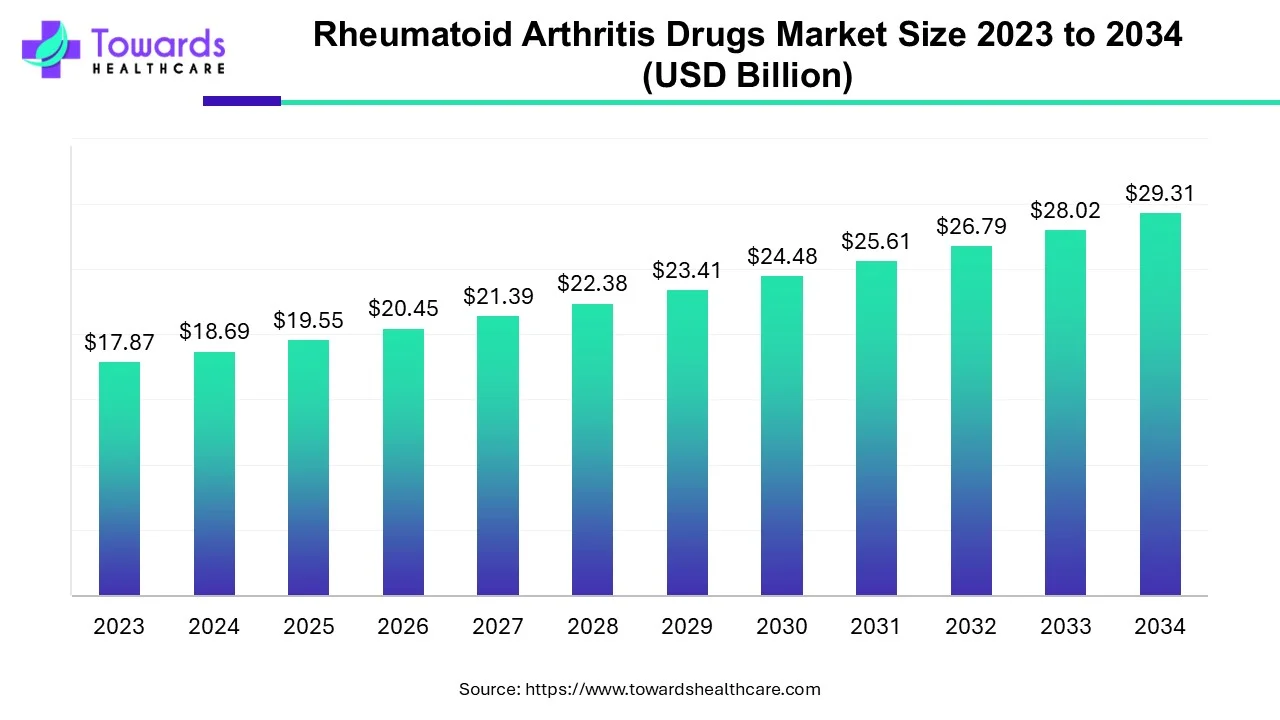
The rheumatoid arthritis drugs market is projected to reach USD 30.65 billion by 2035, growing from USD 20.45 billion in 2026, at a CAGR of 4.6% during the forecast period from 2026 to 2035.
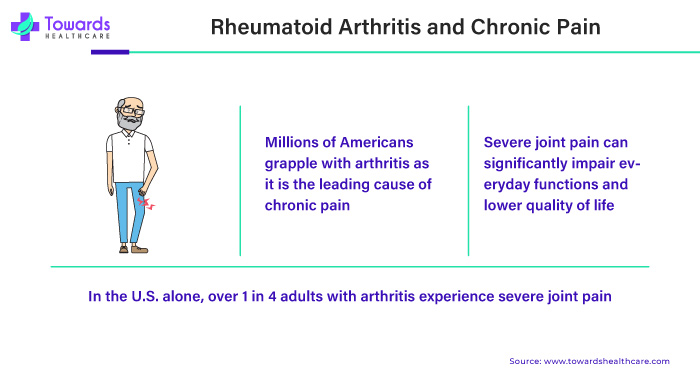
"Due to the rising rheumatoid arthritis population, the CDC organized a program to help manage and improve the well-being of those with the condition. Between 2019 and 2021, about 24.2% of women and 17.9% of men in the United States were told by a doctor that they had arthritis."
Rheumatoid arthritis is a type of arthritis that happens when your immune system mistakenly attacks the lining of your joints, called the synovium. This causes inflammation, pain, stiffness, and swelling in the affected joints. Over time, this inflammation can damage the joints and lead to deformities or loss of function. Rheumatoid arthritis commonly affects the hands, wrists, and knees but can also affect other joints. It's a chronic condition, meaning it usually lasts a long time and requires ongoing management to control symptoms and prevent joint damage.
Rheumatoid arthritis is a progressive disease, meaning it can get worse over time if not treated. It can damage your joints, making them deformed and difficult to move. If detected early and managed correctly, the worsening of the disease can often be slowed down or stopped. We're not sure what causes rheumatoid arthritis, but things like your genes, environment, and hormones might play a role. Women tend to get rheumatoid arthritis more than men. To diagnose rheumatoid arthritis, doctors will ask about your symptoms, examine your joints, and do some blood tests and imaging tests like X-rays or ultrasound to see how much damage there is.
Treatment for rheumatoid arthritis focuses on reducing inflammation, easing pain, and improving joint function to prevent further damage. This might include medications, physical therapy, lifestyle changes such as exercise and maintaining a healthy weight, and sometimes surgery. The rheumatoid arthritis treatment is growing due to various reasons. There are advancements in therapies like biologic drugs and disease-modifying antirheumatic drugs (DMARDs), which offer better control over inflammation and joint damage. Rheumatoid arthritis is becoming more prevalent globally, with more people seeking treatment as the population ages and lifestyles change. In addition, rheumatoid arthritis increases the risk of heart attack and stroke.
Better awareness and diagnosis of rheumatoid arthritis lead to earlier treatment, preventing joint damage and increasing demand for treatment options. Additionally, efforts to improve healthcare access, especially in emerging markets, allow more rheumatoid arthritis patients to receive care. Pharmaceutical companies continue to invest in research, resulting in new drugs and therapies, while a shift towards patient-centric care and technological advancements offers more practical and convenient treatment options. Overall, the rheumatoid arthritis treatment market is expected to keep growing due to these factors, with ongoing innovation improving patient outcomes.
Government Initiative
In March 2025, Accelerating Medicines Partnership Rheumatoid Arthritis and Systemic Lupus Erythematosus Program. AMP RA/SLE, managed through the Foundation for the NIH, trusted on a nationwide network of research teams that work collaboratively to deepen understanding of autoimmune diseases by the focus on rheumatoid arthritis (RA) and systemic lupus erythematosus (SLE).
Exploring Why More People are Getting Rheumatoid Arthritis
Rheumatoid arthritis is becoming more widespread across the globe, leading to a larger group of people who require medical care. This rise in cases can be attributed to a variety of factors. One major factor is the aging population. As people get older, their chances of developing rheumatoid arthritis increase.
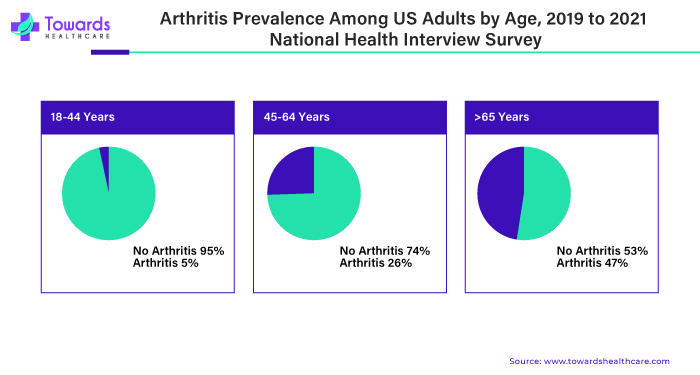
Arthritis can affect people of all ages, but it becomes more common as you age. Here are some numbers from the United States between 2019 and 2021:
Additionally, changes in lifestyle patterns contribute to this condition's growing prevalence.
For instance,
These lifestyle changes influence our body's function, potentially making us more prone to developing certain health conditions like rheumatoid arthritis. With these factors at play, experts predict that the number of new cases of rheumatoid arthritis will continue to rise. Consequently, there will be a greater demand for treatments and therapies to help manage the symptoms and improve the overall well-being of those living with rheumatoid arthritis.
The CDC Consolidated information from the National Health Interview Survey (NHIS) spanning the years 2013 to 2015, focusing on the population expands and ages; the prevalence of arthritis is expected to rise, both in current diagnoses and in future projections of this condition, providing adequate medical interventions and support systems becomes increasingly important. This includes developing new medications, therapies, and lifestyle recommendations to alleviate pain, reduce inflammation, and slow down the progression of the disease. By addressing the needs of individuals with rheumatoid arthritis, we can work towards enhancing their quality of life and ensuring they receive the care and support they deserve.
High Costs Make it Hard to Create New Drugs for Rheumatoid Arthritis
Creating new drugs for rheumatoid arthritis is a big job that costs a lot of money and takes a long time. It involves several steps, like doing tests called clinical trials to see if the new drug works and is safe. After that, the drug needs approval from regulators to make sure it's okay to use. This whole process can be costly and can take years to finish. Plus, the drug companies must ensure the new drug is effective and safe for people with rheumatoid arthritis. These steps make developing new rheumatoid arthritis drugs a big challenge. However, it's important because it helps find better treatments to improve people's lives with rheumatoid arthritis.
| Key Elements | Scope |
| Market Size in 2026 | USD 20.45 Billion |
| Projected Market Size in 2035 | USD 30.65 Billion |
| CAGR (2026 - 2035) | 4.6% |
| Leading Region | North America |
| Measurable Values | USD Millions/Units/Volume |
| Market Segmentation | By Drug Type, By Distribution Channel, By Route of Administration and By Region |
| Top Key Players | Boehringer Ingelheim GmbH, AbbVie, Novartis, Pfizer Inc, Bristol Mayers Squib, F. Hoffmann-La Roche Ltd., Johnson & Johnson, Regeneron Pharmaceuticals, Inc, Amgen, Inc. and Merck KGaA |
Which Drug Type Segment Dominated the Rheumatoid Arthritis Drugs Market?
The biopharmaceuticals segment held a dominant position in the market in 2025.New and improved treatments are now available for rheumatoid arthritis, giving patients more choices to manage their condition. These treatments come in different forms, such as biologic drugs, disease-modifying antirheumatic drugs (DMARDs), targeted therapies, and NSAIDs for pain relief. They all work by helping to reduce inflammation in the body and slow down the damage rheumatoid arthritis can cause to the joints.
Biologic drugs are made from living cells and target specific parts of the immune system responsible for causing inflammation in rheumatoid arthritis. DMARDs are medications that help slow the progression of rheumatoid arthritis by calming down the body's immune response. Targeted therapies are designed to block specific molecules or pathways involved in the inflammatory process of rheumatoid arthritis.
| Approval Year | Drug Name | Category | Indication |
| 2023 | Tofidence (tocilizumab-bavi) | Biosimilar | Rheumatoid Arthritis, Polyarticular Juvenile idiopathic Arthritis, Systemic Juvenile Idiopathic Arthritis |
These new treatments bring hope for better symptom management and improved quality of life for people living with rheumatoid arthritis. With more options available, doctors and patients can work together to create a treatment plan that suits each individual's needs. This collaborative approach can help patients find relief from pain and stiffness, allowing them to live more comfortably with rheumatoid arthritis.
Why Did the Hospital Pharmacy Segment Dominate the Rheumatoid Arthritis Drugs Market?
The hospital pharmacy segment held the largest revenue share of the market in 2025, due to favorable infrastructure and the presence of skilled professionals. Hospital pharmacies contain all types of medications related to RA treatment, including generic and branded. Skilled professionals can guide patients about the delivery mode and dosages of RA drugs. Hospital pharmacies have a sufficient storage capacity to store different drugs under different conditions.
How the Oral Segment Dominated the Rheumatoid Arthritis Drugs Market?
The oral segment contributed the biggest revenue share of the market in 2025. Medications taken by mouth, like pills and tablets, are essential in treating rheumatoid arthritis. Many medicines used to help with rheumatoid arthritis symptoms are taken this way. These meds include ones like pain relievers called NSAIDs, drugs that slow down rheumatoid arthritis progress and protect joints called DMARDs, and steroids that can calm down inflammation.
There are also newer medicines taken by mouth that have been approved to treat rheumatoid arthritis, like targeted synthetic DMARDs and Janus kinase (JAK) inhibitors. These can be helpful for people who don't get better with the usual treatments. Taking medicines by mouth is a big part of treating rheumatoid arthritis because it's convenient and works well in making symptoms better and improving life for people with this long-lasting condition.
The rheumatoid arthritis drug market in North America is a significant part of the global rheumatoid arthritis treatment landscape. In the United States, the prevalence of rheumatoid arthritis is relatively high, with millions of people diagnosed with the condition. This has led to a robust market for rheumatoid arthritis drugs, with a wide range of treatment options available to patients. CDC has projected that about 78 million adults will live with arthritis by 2040 in the U.S. only.
The market includes conventional therapies such as nonsteroidal anti-inflammatory drugs (NSAIDs), disease-modifying antirheumatic drugs (DMARDs), corticosteroids, newer biologic agents, and targeted synthetic DMARDs. The pharmaceutical industry in North America is highly developed and innovative, with numerous companies investing in research and developing new rheumatoid arthritis treatments. This has led to the introduction of novel therapies with improved efficacy and safety profiles, driving growth in the rheumatoid arthritis drug market.
U.S. Market Trends
The United States is a key contributor to the market. The increased prevalence of rheumatoid arthritis among adults and the rise in joint conditions in U.S. aged demographics increase demand for rheumatoid arthritis drugs. The high utilization of JAK inhibitors and the increased specialist access help with expansion. The use of cost-effective biosimilars in rheumatoid arthritis and the presence of companies like Amgen & AbbVie support the overall growth of the market.
Key players, such as AbbVie, Pfizer, and Eli Lilly and Company, are major developers and providers of RA drugs in the U.S. The U.S. has a well-established clinical trial infrastructure and conducts the highest number of clinical trials globally. As of 2025, a total of 1,098 studies were registered in the U.S. related to RA drugs, accounting for 30.29% of global trials.
Canada Market Trends
Canada’s rheumatoid arthritis drugs market is supported by established rheumatology services, public drug programs, and strong use of biologic therapies. Biosimilar adoption is increasing as payers seek lower treatment costs. Updated Canadian guidelines continue to support disease-modifying antirheumatic drugs, biologics, and targeted therapies. Growing access to advanced treatments and improved disease management should support continued market development across the country.
The rheumatoid arthritis drug market in the Asia-Pacific region is expected to increase in the coming years. This growth is fueled by several factors, including more awareness about effective treatments for the disease, increased spending on healthcare by both the government and private sectors, and a rise in the number of people diagnosed with rheumatoid arthritis. Rheumatoid arthritis is the most common type of autoimmune inflammatory arthritis in India, affecting about 0.75% of the population. More than half of Indians go to primary healthcare centers first when they suspect they have rheumatoid arthritis. Additionally, people in the Asia-Pacific region have easier access to good healthcare services, and many different kinds of effective medicines are available for treating rheumatoid arthritis. Also, the approval of new and innovative drugs by regulatory authorities is helping to drive growth in the market.
India Market Trends
It is estimated that RA affects around 0.28% to 0.7% of the total Indian population. RA is mainly caused by genetic, hormonal, or environmental alterations in India. India is emerging as a global research hub, conducting the highest research activities. Government institutions, such as DST, IIT, and AIIMS, along with numerous private institutions, conduct advanced RA research.
China Market Trends
China’s rheumatoid arthritis drugs market is expanding with better diagnosis, rising healthcare access, and increasing use of advanced therapies. The 2024 treatment guidelines recommend methotrexate as the preferred first-line conventional DMARD, while biologic and targeted therapies are used for patients with inadequate responses. Greater availability of domestic medicines and biosimilars should improve treatment access and support future market development.
Japan Market Trends
Japan is growing at a significant rate in the market. The high rate of rheumatoid arthritis in older age groups and the use of TNF biologics & DMARDs help with expansion. The awareness of proactive healthcare and the innovative drug launches increase the production of rheumatoid arthritis drugs. The personalized treatment regimens and high patient compliance boost the overall growth.
Europe is considered to be a significantly growing area, due to the increasing adoption of advanced technologies, the availability of suitable research and manufacturing infrastructure, and favorable government support. Government organizations launch initiatives to encourage people to screen for and diagnose RA at an early stage. The growing demand for personalized medicines results in the development of innovative DMARDs and biologics.
UK Market Trends
The UK is home to over 1,860 life science companies with manufacturing as their primary activity. The UK government envisions its biotech sector with a stronger long-term capital base, including more scaled-up companies, research, health/genomics data, and clinical infrastructure. The British Society for Rheumatology urged that more rheumatology consultants would reduce the health and societal costs of incident RA by £69 million annually.
Germany Market Trends
Germany has a well-developed rheumatoid arthritis treatment market supported by advanced healthcare infrastructure and specialist rheumatology services. Biologics, biosimilars, conventional DMARDs, and targeted therapies are widely available. Strong pharmaceutical capabilities support product development and distribution. Germany’s established reimbursement system and emphasis on early treatment help patients access disease-modifying therapies, supporting continued demand for effective rheumatoid arthritis medicines.
France Market Trends
France is growing at a substantial rate in the market. The prevalence of RA in elderly citizens and the growing demand for advanced biologics for managing rheumatoid arthritis increase the development of innovative drugs. The supportive reimbursement structures, such as the Haute Autorité de Santé and the focus on treat-to-target, increase the development of RA drugs. Companies like Pfizer and Sanofi boost the overall growth of the market.
The Middle East & Africa are expected to grow at a notable CAGR in the foreseeable future. The rising prevalence of RA and evolving regulatory landscapes boost the market. People are becoming aware of personalized RA treatment, potentiating its development. Increasing R&D investments, collaborations, and public-private partnerships foster market growth. Biosimilars are increasingly developed to enhance the affordability of RA treatment.
UAE Market Trends
The UAE government is at the forefront of providing enhanced access to patients with RA treatment. It also provides funding to enable free treatment for chronic disease patients. In May 2025, it announced funding of Dh 1 billion as part of its “Life Endowment Campaign”. It is estimated that the RA prevalence in the UAE is around 2-3% of the total population.
GCC Countries Market Trends
GCC countries are seeing greater demand for rheumatoid arthritis drugs due to improving healthcare infrastructure, specialist services, and rising awareness of autoimmune diseases. Saudi Arabia and the UAE are strengthening access to advanced medicines. Biologics and targeted therapies are gaining attention alongside conventional treatments. Healthcare modernization, private-sector investment, and better diagnosis should support future adoption across GCC pharmaceutical markets.
Saudi Arabia Market Trends
Saudi Arabia is growing robustly in the market. The high private investment in the management of diseases and the transition to targeted DMARDs help with expansion. The demand for patient-friendly drug options and the growing proactive clinical research increase the development of rheumatoid arthritis drugs. The increased awareness about symptoms of rheumatoid arthritis and diagnostic advancements drives the overall growth.
South Africa Market Trends
South Africa is growing steadily in the market. The increasing number of patients with chronic joint disorders and the focus on slowing down joint damage increases the demand for drugs. The rise in the arthritis industry and long-term prescriptions for rheumatoid arthritis increase the development of RA drugs. The dependence on DMARDs and enhanced clinical guidelines boost the overall growth.
Latin America is expected to grow at a notable CAGR in the foreseeable future. Government and private bodies are making constant efforts to expedite the development of RA drugs in the region. The increasing prevalence of RA and the growing demand for generic alternatives/biosimilars propel the market. The rising R&D investments and collaboration among key players foster market growth. Foreign players set up their manufacturing facilities in the region to serve the local population.
Brazil Market Trends
According to a recent survey on 841 patients with RA, approximately 90% of patients used synthetic DMARDs, and half of them were using them on monotherapy. Fiocruz, a Brazilian company, has partnered with Pfizer Brazil for the large-scale production of tofacitinib, a generic clone of Xeljanz.
Argentina Market Trends
Argentina’s rheumatoid arthritis drugs market is supported by growing awareness, specialist care, and increasing diagnosis of chronic autoimmune conditions. Conventional DMARDs remain important, while biologics and targeted treatments provide options for patients with difficult-to-control disease. Improvements in healthcare access and pharmaceutical availability can support demand. Cost pressures and affordability remain important factors influencing treatment selection and market development.
R&D
The latest research focuses on developing novel drugs and biologics, providing personalized treatment.
Key Players: Cyxone, AbbVie, Inc., and Jiangsu Alphamab Biopharmaceuticals.
Clinical Trials & Regulatory Approval
Trials evaluate the safety and efficacy of RA drugs in humans. Regulatory agencies like the FDA, EMA, and NMPA provide marketing authorization for these drugs.
Key Players: IQVIA, Eli Lilly and Company, and Novotech CRO.
Patient Support & Services
Patient support & services refer to providing financial assistance to patients and raising awareness about RA.
In October 2025. “We are prioritizing refractory RA as our lead autoimmune indication for AlloNK given the size of this underserved population. Despite the many approved therapies in RA, there are over 100,000 patients in the United States who remain treatment refractory and could potentially benefit from a deep B-cell depleting therapy,” said Fred Aslan, M.D., Chief Executive Officer of Artiva. "We look forward to sharing the emerging translational and safety data in mid-November, supporting AlloNK’s profile as an outpatient-ready therapy capable of achieving deep B-cell depletion, followed by clinical response data in the first half of 2026 from more than 15 refractory RA patients, several of whom will have six or more months of follow-up. In addition, we are planning FDA interactions in the first half of 2026 that could enable AlloNK to become the first deep B-cell depleting therapy to advance to a pivotal trial in patients with RA.”
By Drug Type
By Distribution Channel
By Route of Administration
By Geography





Principal Consultant
Payal Rabde is a Healthcare Market Research Analyst at Towards Healthcare Research & Consulting with 4+ years of experience in pharmaceuticals, biotechnology, medical devices, and life sciences.
Learn more about Payal Rabde

Reviewed By
Aditi Shivarkar is a seasoned professional with over 14 years of experience in healthcare market research. As a content reviewer, Aditi ensures the quality and accuracy of all market insights and data presented by the research team.
Learn more about Aditi Shivarkar