Pipeline Programs

CGT Companies Tracked

Manufacturing Facilities


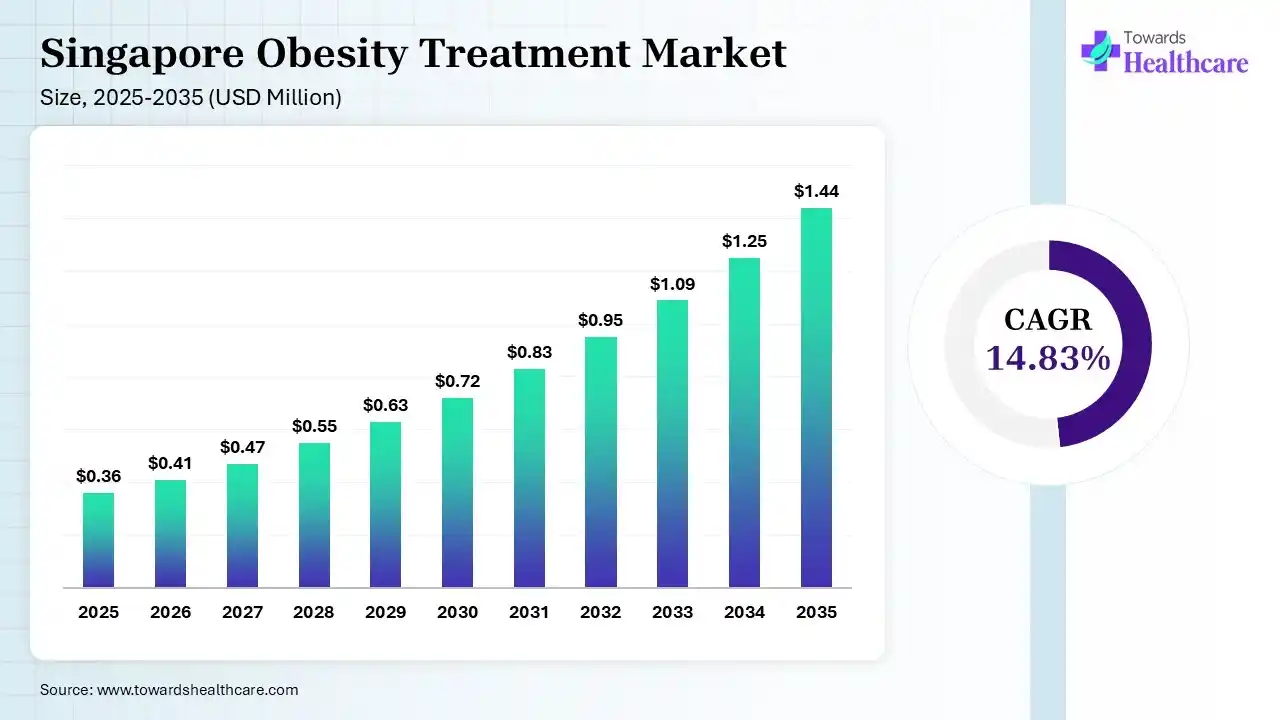
The Singapore obesity treatment market size was estimated at USD 0.36 million in 2025 and is predicted to increase from USD 0.41 million in 2026 to approximately USD 1.44 million by 2035, expanding at a CAGR of 14.83% from 2026 to 2035. Her analysis highlights that the Singapore obesity treatment market is rapidly expanding due to rising obesity prevalence, an increasing semaglutide user base, growing adoption of GLP-1 receptor agonists, a rising shift towards subcutaneous injections, and regulatory support.
Singapore obesity treatment refers to the use of pharmacological approaches, therapies, and technologies used for the treatment of obesity across Singapore. The different types of treatments include GLP-1 receptor agonists, lipase inhibitors, dual/multi-incretin agonists, non-invasive/endoscopic procedures, appetite suppressants, bariatric surgery, behavioral and lifestyle therapy, and medical devices. Moreover, treatment types, drug classes, routes of administration, patient types, age groups, genders, distribution channels, end users, treatment settings, proprietary market model, independently verified national health survey, and regulatory data are covered in this report.
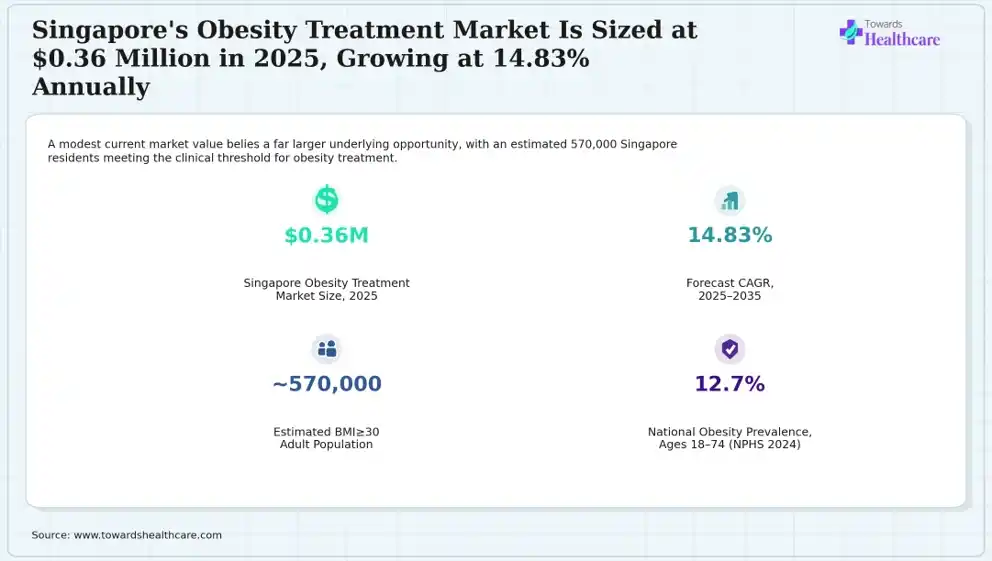
As a market research analyst, I interpret that the infographic stat panel covers market definition and sizing metrics. In 2025, the Singapore obesity treatment market size was $0.36 million and is expected to expand at a 14.83% CAGR from 2025 to 2035. The estimated BMI≥30 adult population was expected to be approximately 570,000, while national obesity prevalence among the 18- 74 age group was noted to be 12.7% by NPHS 2024.
Key Insight:
The $0.36 million market value and 570,000-person addressable population suggest that the data covers current commercial transactions and not full latent demand as quantified by TAM/SAM analysis.
Source: Towards Healthcare, Singapore Obesity Treatment Market Model, 2025.
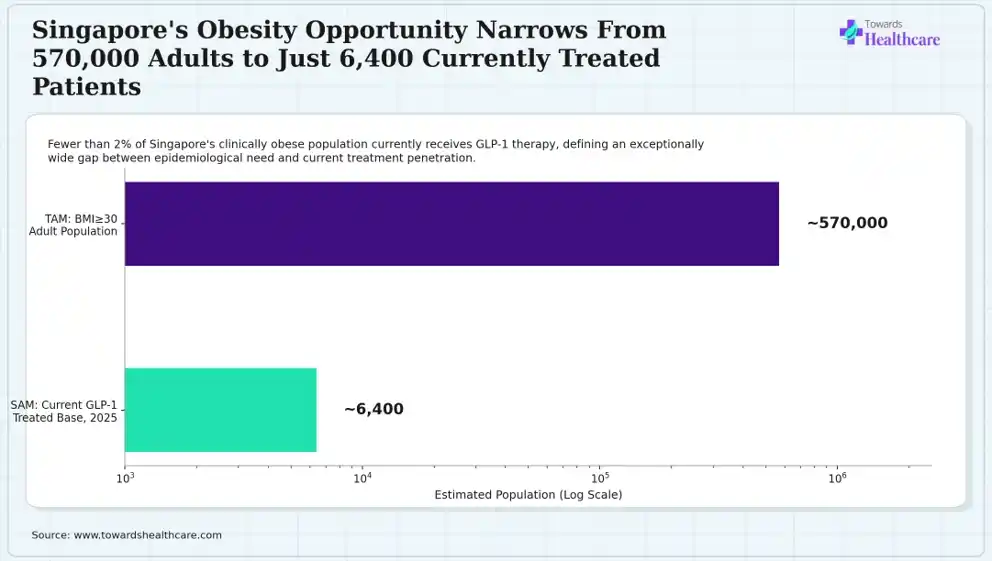
The above-mentioned horizontal funnel chart (log scale) illustrates Singapore's obesity TAM vs. current treated SAM. The TAM, focused on the BMI≥30 adult population, reported an estimated population of approximately 570,000, and SAM highlights the current GLP-1 treated base in 2025, recorded at roughly 6,400.
Key Insight:
One of the widest demand-to-penetration ratios is represented by a nearly 89-to-1 gap between the clinically obese population and the currently treated base, reinforcing substantial headroom for rapid market expansion.
Source: Towards Healthcare, Singapore Obesity Treatment SAM Analysis, 2025, citing industry clinic reporting.
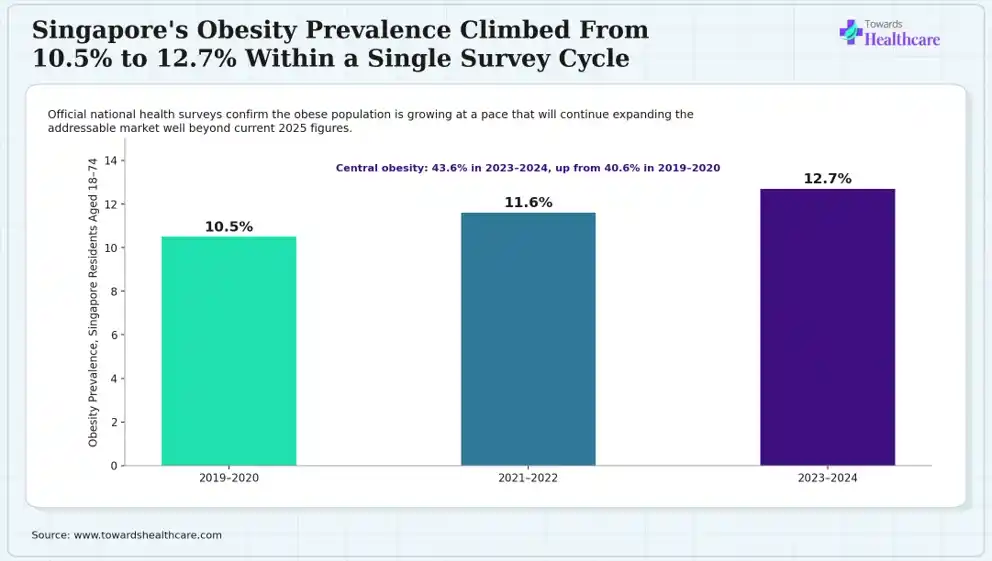
According to the survey, the bar chart highlights Singapore's national obesity prevalence trend across three NPHS survey cycles. In 2019-2020, the obesity prevalence among ages 18-74 was reported to be 10.5%, while in 2021-2022 11.6% obesity prevalence was recorded among ages 18-74. In 2023-2024, the obesity prevalence rate among ages 18-74 was noted to be 12.7%.
Key Insight:
The consistent growth in the three consecutive survey cycles, instead of a spike in a single year, reflects that the rising obesity is a structural, sustained trend in Singapore and not a temporary post-pandemic fluctuation.
Source: Ministry of Health Singapore, National Population Health Survey (NPHS) 2024.
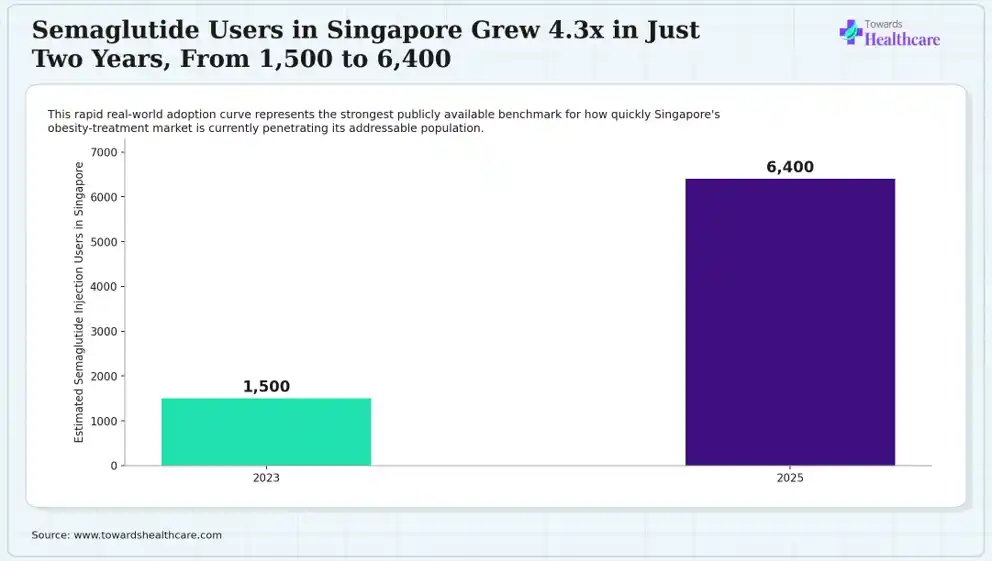
As per the analysis, the bar chart compares estimated semaglutide injection users in Singapore in 2023 and 2025. In 2023, the number of semaglutide users was recorded to be approximately 1,500, which increased to roughly 6,400 in 2025.
Key Insight:
The data highlights a 4.3x rise in semaglutide injection users in just two years within Singapore's strict prescription-only regulatory framework, indicating that category adoption, when clinical evidence and awareness align, can be driven by physician-mediated access instead of direct-to-consumer marketing.
Source: Towards Healthcare, Singapore Obesity Treatment SAM Analysis, 2025, citing industry clinic reporting.
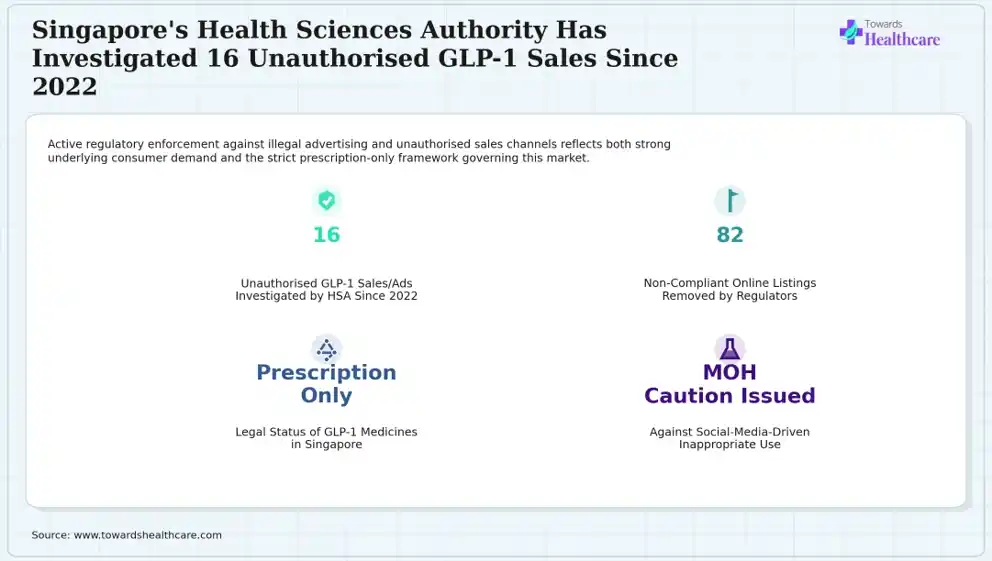
The given infographic stat panel focuses on HSA regulatory enforcement metrics. 16 unauthorised GLP-1 sales/ads investigated by HSA since 2022, with 82 non-compliant online listings removed by regulators. The legal status of GLP-1 medicines in Singapore depends on prescription-only status, while a caution was issued against social-media-driven inappropriate use through MOH public guidance.
Key Insight:
Rapid platform-level takedowns over lengthy individual enforcement actions are being prioritized by Singapore regulators as a scalable approach to manage unauthorised online GLP-1 sales, which is confirmed by the removal of 82 non-compliant listings against only 16 formal investigations.
Source: Health Sciences Authority (HSA), Singapore, regulatory enforcement disclosures.
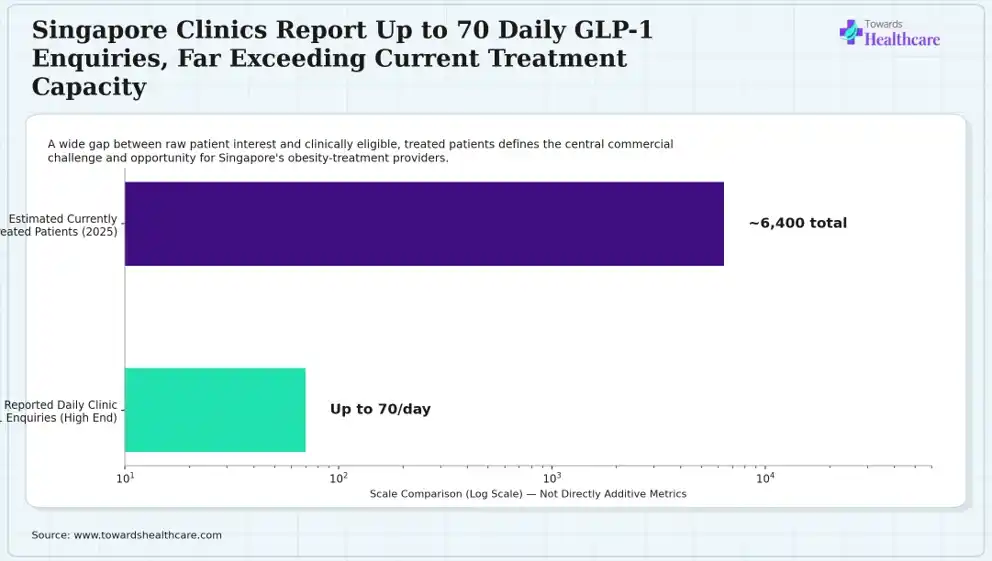
Based on our research, the horizontal bar chart (log scale) represents daily enquiry volume vs. total treated patient base. The daily clinic GLP-1 enquiries (high end) were reported to be up to 70 per day, while the current treated patient base in 2025 accounted for almost 6,400 in total.
Key Insight:
The growing annualized enquiry volume across Singapore's obesity clinic network, due to increasing daily enquiries across individual clinics, are expected to exceed the total currently treated patient base within months, suggesting that the emerging market constraint is eligibility screening and not interest generation.
Source: Towards Healthcare, Singapore Obesity Treatment Consumer Behavior Analysis, 2025, citing industry clinic reporting.
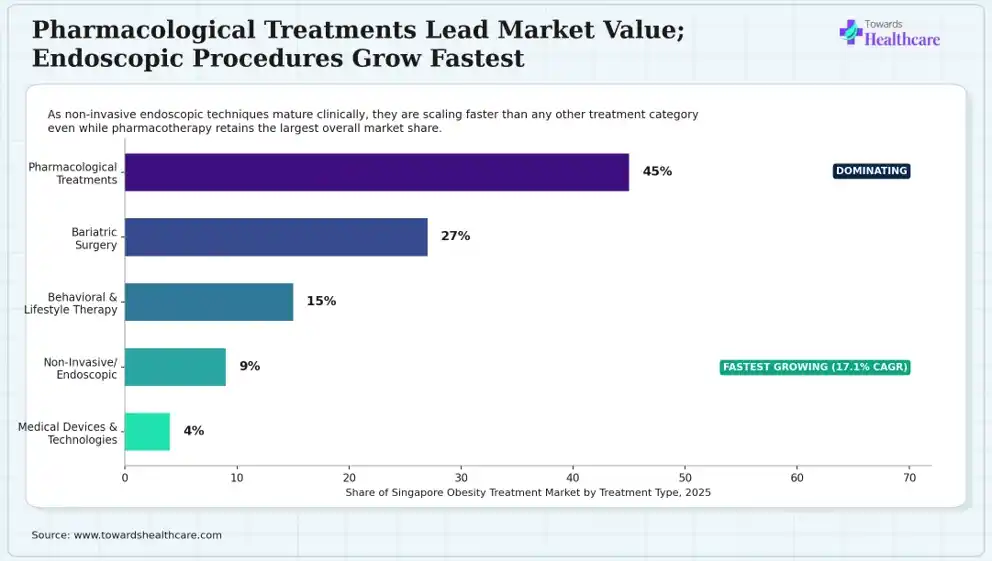
Based on the information gathered by Aman, the horizontal bar chart outlines Singapore obesity treatment market share by treatment type in 2025. The pharmacological treatments segment dominated the market with a 45% share in 2025, while the bariatric surgery segment held the second-largest share of the market with 27%. The behavioral & lifestyle therapy segment contributed 15% market share, whereas the non-invasive/endoscopic procedures segment held 9% in 2025 and is expected to grow at the fastest CAGR of 17.1% during the forecast period. The medical devices & technologies segment held 4% market share in 2025.
Key Insight:
A total of 72% of market value contributing to pharmacological treatments and bariatric surgery indicates that established, clinically intensive interventions are fueling Singapore's obesity treatment market, irrespective of increasing interest in less invasive options.
Source: Towards Healthcare, Singapore Obesity Treatment Market Model, 2025.
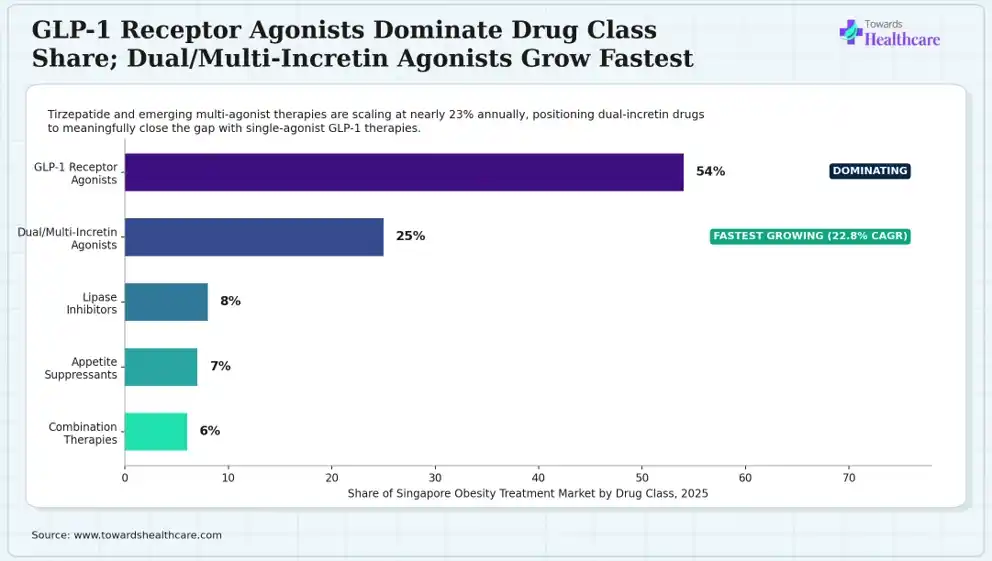
As the market research analyst, I interpret that the horizontal bar chart illustrates Singapore's obesity treatment market share by drug class in 2025. The GLP-1 receptor agonists segment held the major share of 54% of the market in 2025, while the dual/multi-incretin agonists segment held the second-largest share of 25% in 2025 and is anticipated to expand rapidly at a 22.8% CAGR during the predicted time. The lipase inhibitors segment accounted for 8% market share, while the appetite suppressants segment held 7% share in 2025. Additionally, the combination therapies segment contributed to 6% share of the market in 2025.
Key Insight:
The nearly 1.3x growth rate of dual/multi-incretin agonists of single-agonist GLP-1 drugs mirrors the fact that Singapore's drug-class mix is moving toward tirzepatide-class therapies, which are anticipated to hold a substantially larger market share within the ten-year forecast window.
Source: Towards Healthcare, Singapore Obesity Treatment Market Model, 2025.
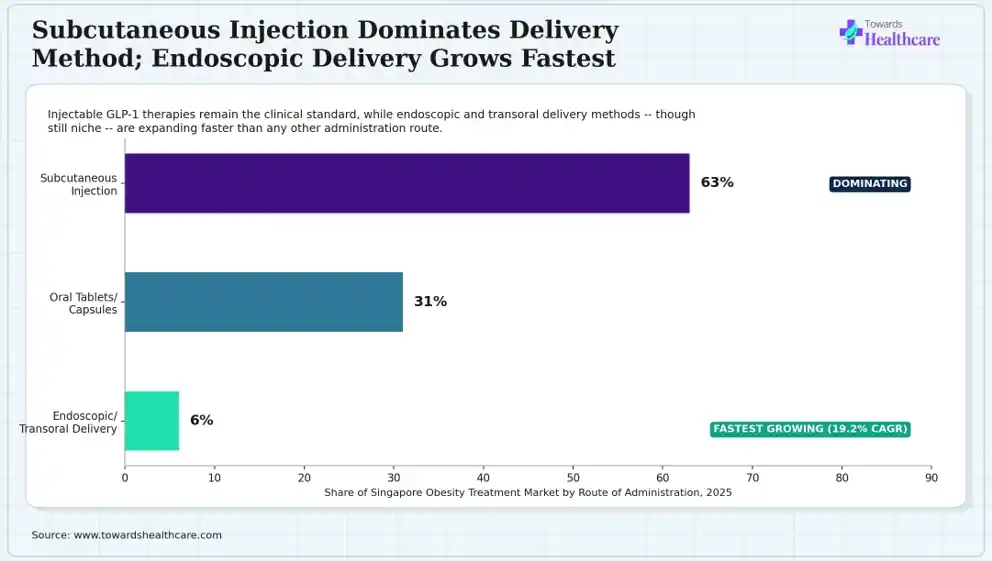
The above-mentioned horizontal bar chart highlights Singapore obesity treatment market share by route of administration in 2025. The subcutaneous injection segment led with a 63% market share in 2025 and is expected to expand at a 17.8% CAGR during the forecast period. The oral tablets/capsules segment held the second-largest share of 31% of the market and is predicted to grow at 0.6% CAGR in the upcoming years. The endoscopic/transoral delivery segment held a 6% share of the market in 2025 and is anticipated to grow with the fastest CAGR of 19.2% during the predicted time.
Key Insight:
The dominant position and strong 17.8% CAGR expansion of the subcutaneous injection segment indicates that, instead of being displaced by oral or endoscopic alternatives, the injectable route of delivery is actively driving the market's growth rather than being merely an entrenched legacy format.
Source: Towards Healthcare, Singapore Obesity Treatment Market Model, 2025.
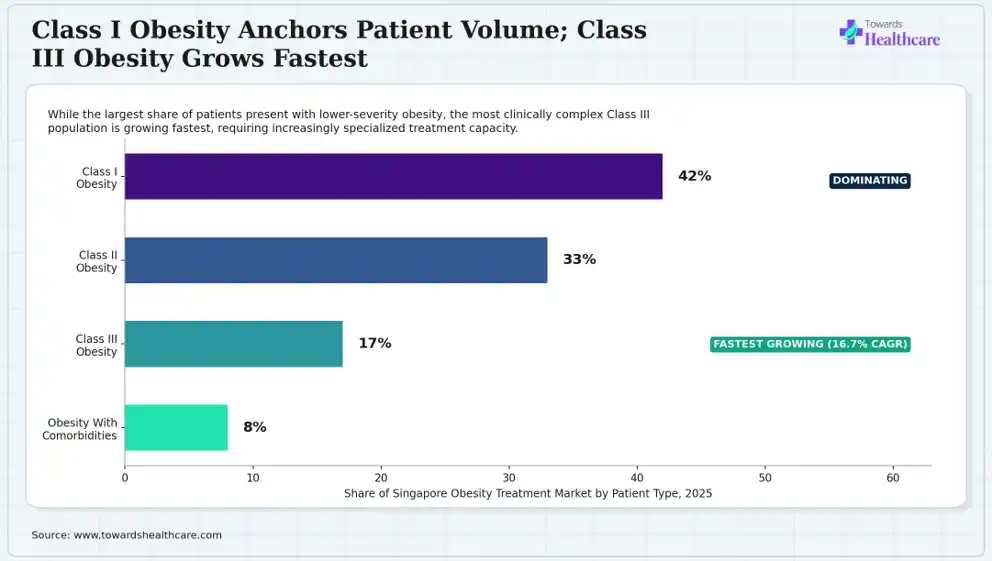
Based on our research, the horizontal bar chart shows Singapore obesity treatment market share by patient type in 2025. The class I obesity segment held 42% market share in 2025, while the class II obesity segment held the second-largest share of 33% in 2025. The class III obesity segment held a 17% share in 2025 and is expected to show the highest growth with 16.7% CAGR during the forecast period. The obesity with comorbidities segment held an 8% market share in 2025.
Key Insight:
The rapid expansion of the class III obesity segment, despite its smallest BMI-defined category, reflects that patients with the most severe disease burden, representing a population historically underserved, are increasing across Singapore's treatment infrastructure.
Source: Towards Healthcare, Singapore Obesity Treatment Market Model, 2025.
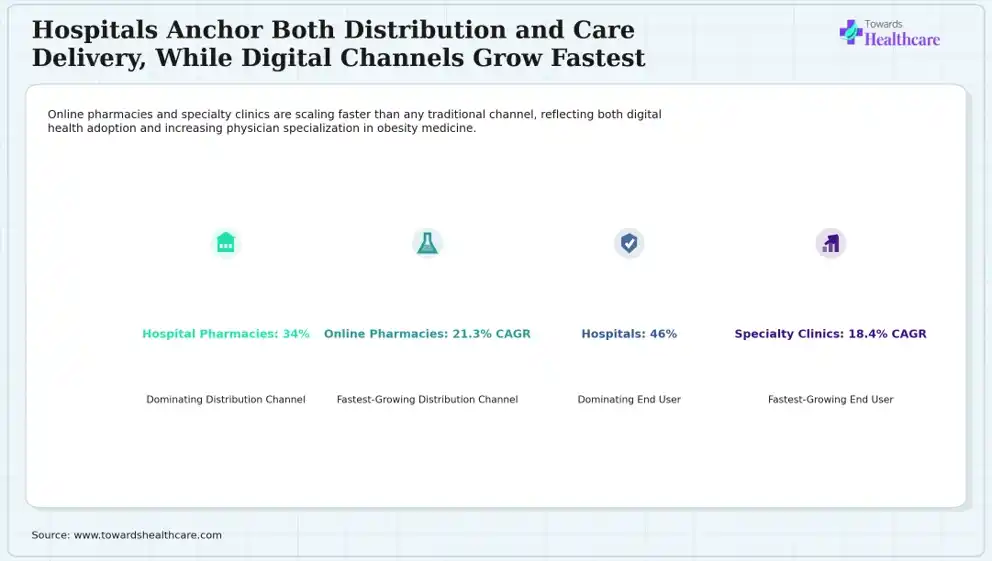
The given ecosystem infographic encompasses distribution channel and end-user segment leaders. Based on the distribution channel, the hospital pharmacies segment registered dominance over the market with a 34% share in 2025, while the online pharmacies segment is expected to show the highest growth during the predicted period with a 21.3% CAGR. Similarly, by end user, the hospitals segment led the market with a 46% share in 2025, whereas the specialty clinics segment is expected to expand rapidly with an 18.4% CAGR during the upcoming years.
Key Insight:
By combining the fast growth of the online pharmacies segment in the distribution channel with GLP-1's prescription-only legal status, it confirms that telehealth-linked prescription fulfillment is promoting digital growth and not the relaxation of regulatory access controls in Singapore.
Source: Towards Healthcare, Singapore Obesity Treatment Market Model, 2025.
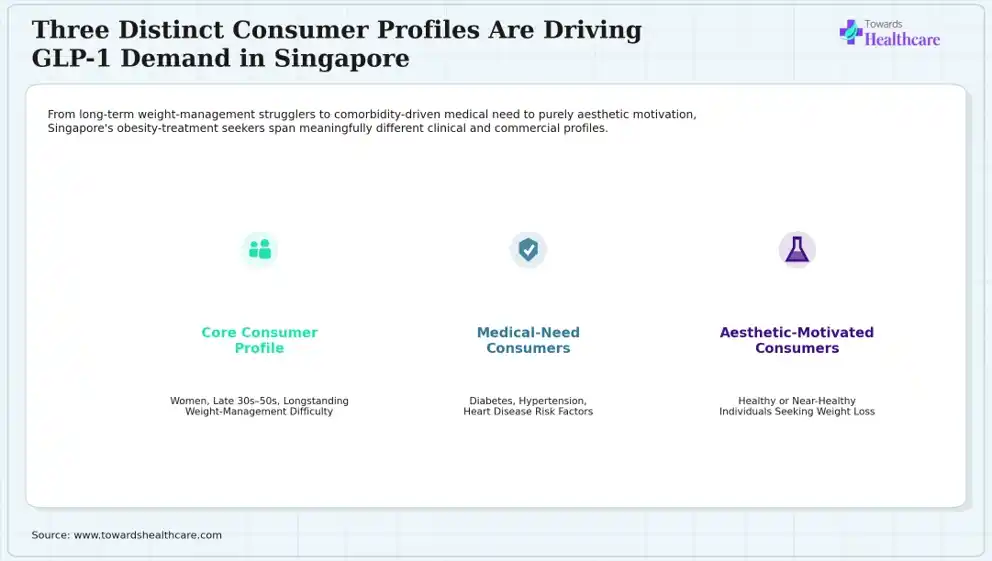
As per the survey conducted by Aman, the ecosystem infographic covers three primary Singapore GLP-1 consumer profiles. The core consumer profile revolves around women, late 30s–50s, and longstanding weight-management difficulty. The medical-need consumers highlight diabetes, hypertension, and heart disease risk factors. The aesthetic-motivated consumers focus on healthy or near-healthy individuals seeking weight loss.
Key Insight:
Singapore's obesity treatment market is divided into distinct clinical and lifestyle-driven demand, which may need different eligibility and counseling approaches, as highlighted by the increasing share of healthy or near-healthy aesthetic-motivated consumers with an established medical-need population, as reported by physicians.
Source: Towards Healthcare, Singapore Obesity Treatment Consumer Behavior Analysis, 2025, citing physician-reported patterns.
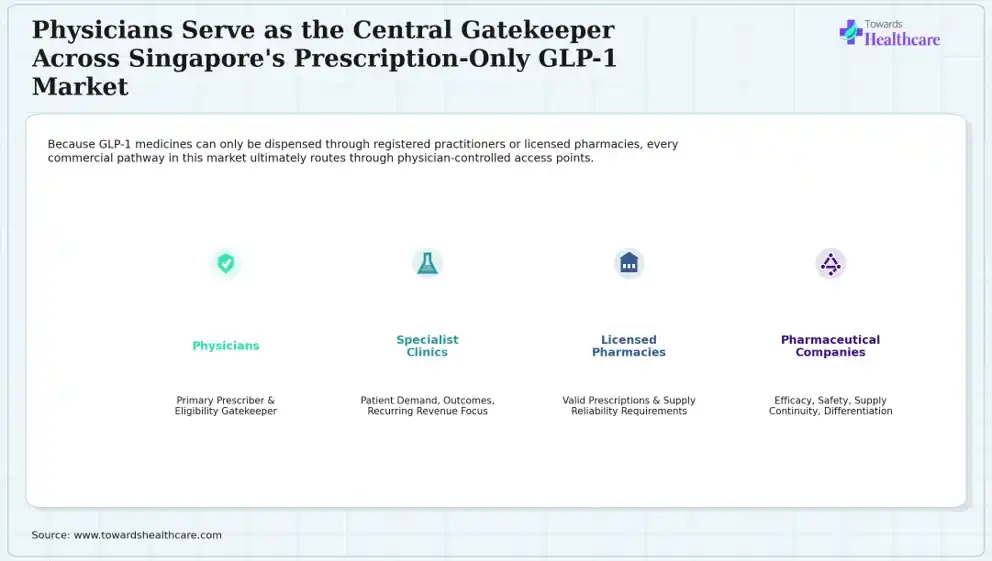
Based on the information gathered, the ecosystem infographic focuses on four primary Singapore obesity treatment buyer segments. The physicians are the primary prescriber and eligibility gatekeeper, while specialist clinics prioritize patient demand, outcomes, and recurring revenue. The licensed pharmacies' key role is focused on valid prescriptions and supply reliability requirements, where pharmaceutical companies focus on efficacy, safety, supply continuity, and differentiation.
Key Insight:
Pharmacy-level or direct-to-consumer access plays a larger role as they help in controlling both clinical eligibility assessment and legal prescribing authority simultaneously, which influences market growth, compared to a regulatory structure that gives individual doctors disproportionate market-shaping influence.
Source: Towards Healthcare, Singapore Obesity Treatment Buyer Intelligence, 2025.
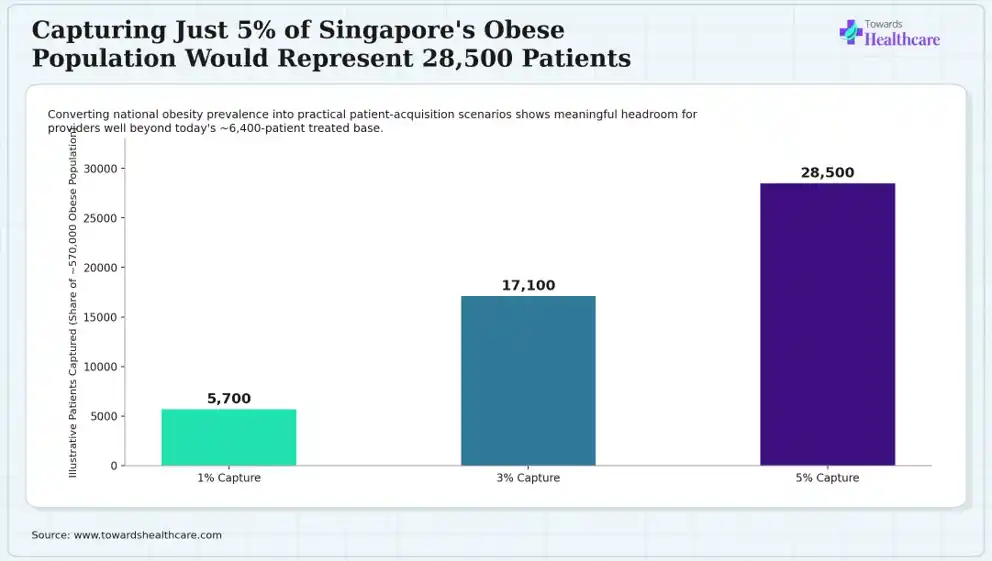
As the market research analyst, I interpret that the bar chart encompasses illustrative Singapore obesity treatment obtainable-market capture scenarios. The 1%, 3%, and 5% capture scenarios contributed to approximately 5,700, roughly 17,100, and nearly 28,500 illustrative patients, respectively.
Key Insight:
When compared to today's entire approximate 6,400-patient treated base, the 1% capture scenario with almost 5,700 patients is the most conservative, suggesting that the modest percentage-point gains in population penetration translate into commercially meaningful patient volume, which promotes market growth.
Source: Towards Healthcare, Singapore Obesity Treatment SOM Analysis, 2025 (illustrative capture scenarios, not published market-share observations).
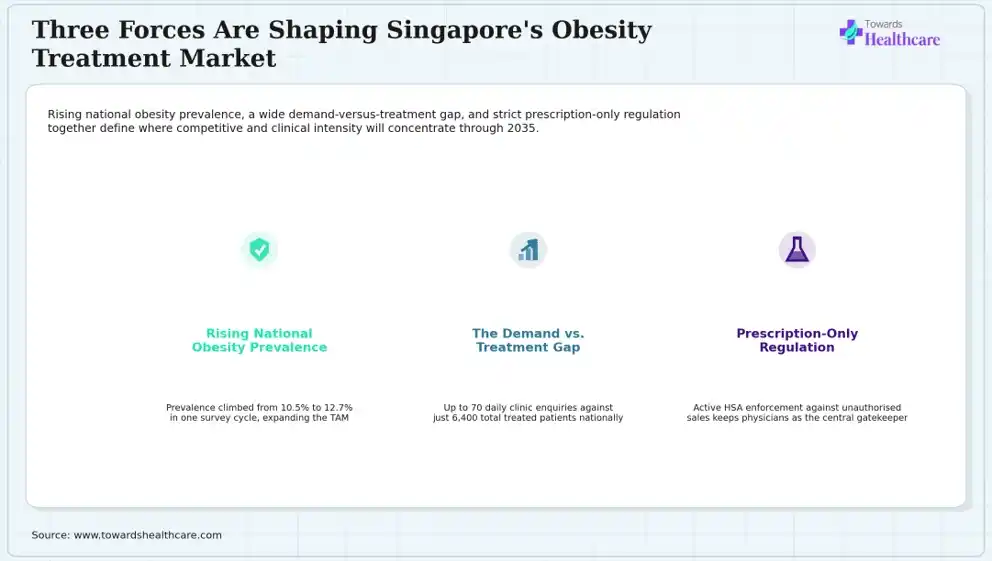
According to the survey conducted by Aman, the synthesis infographic illustrates three structural forces shaping Singapore's obesity treatment market. The rising national obesity prevalence is the first force, highlighting a rise in prevalence from 10.5% to 12.7% in one survey cycle, expanding the TAM. The demand vs. treatment gap is the second force, emphasizing up to 70 daily clinic enquiries against just 6,400 total treated patients nationally. The prescription-only regulation is the third force driving active HSA enforcement against unauthorised sales, keeping physicians as the central gatekeeper.
Key Insight:
The provider strategy must target the specialist and general-practitioner physician base of Singapore to convert epidemiological opportunity into treated patients, as physician gatekeeping introduces restraint against supply via eligibility screening and legitimizes demand via clinical credibility.
On October 17, 2025, among the age group of 18-74, Singapore residents were recorded with a baseline obesity prevalence of 10.5% by the National Population Health Survey.
Source: Ministry of Health Singapore, NPHS
On September 27, 2023, rising obesity prevalence to 11.6%, consisting of males at 13.1% with higher risk compared to females at 10.2%, was reported by NPHS.
Source: Ministry of Health Singapore, NPHS 2022
In September 2023, as per NPHS 2024, the obesity prevalence and central obesity are reaching 12.7% and 43.6% (crude prevalence), respectively, while in spite of improvements in other lifestyle indicators, MOH is publicly flagging rising obesity as a health concern.
Source: Ministry of Health Singapore, NPHS 2024 Survey Report
From 2023 to 2025, semaglutide injection users grew from approximately 1,500 in 2023 to nearly 6,400 in 2025 across Singapore, indicating a 4.3x increase; at the same time, individual clinics reported receiving 50-70 GLP-1 enquiries per day.
Source: Towards Healthcare synthesis, citing industry clinic reporting
Since 2022 (Ongoing), 16 unauthorised GLP-1 sales/illegal advertisements were investigated, and 82 non-compliant online listings were removed by Singapore's Health Sciences Authority, where social-media-driven promotion of GLP-1 medicines for inappropriate use has been warned by MOH publicly.
Source: Health Sciences Authority (HSA); Ministry of Health Singapore
Aditi is a therapeutic area research expert with strong experience in metabolic diseases, lifestyle therapy, and dual/multi-incretin agonists. She conducted detailed market research, analyzed company data, clinical trends, and industry developments. Based on her comprehensive analysis, the following strategic key takeaways highlight the most important market insights and opportunities.
For Service Providers & CDMOs
For Pharma & Biotech Companies
For Investors & Corporate Strategy Teams
Based on my assessment, the market is expected to expand significantly due to the increasing incidence of obesity. I also anticipate that growing interest in GLP-1 receptor agonists and subcutaneous injections will also contribute to market expansion. The growth in semaglutide adoption and collaborations will also increase innovation of new treatment approaches. I also see strong growth in weight management medical devices and telehealth platforms, which will create new market opportunities.
Payal Rabde led the primary market research, developed the methodology, analyzed trends, segmentation, competition, forecasts, and strategic opportunities, forming the report's analytical foundation.
Aman was responsible for collecting and validating clinical trial data, research publications, company information, partnerships, and other quantitative datasets, strengthening evidence-based analysis and market estimations.
Aditi reviewed the complete research document, performed quality checks, validated findings, refined content, corrected inconsistencies, and finalized the report, ensuring accuracy, clarity, credibility, and publication-ready quality.
By Treatment Type
By Drug Class
By Route of Administration
By Patient Type
By Age Group
By Gender
By Distribution Channel
By End User
By Treatment Setting

















Principal Consultant
Payal Rabde is a Healthcare Market Research Analyst at Towards Healthcare Research & Consulting with 4+ years of experience in pharmaceuticals, biotechnology, medical devices, and life sciences.
Learn more about Payal Rabde

Reviewed By
Aditi Shivarkar is a seasoned professional with over 14 years of experience in healthcare market research. As a content reviewer, Aditi ensures the quality and accuracy of all market insights and data presented by the research team.
Learn more about Aditi Shivarkar