


The stroke management market size was valued at US$ 44.82 billion in 2025 and is projected to grow to 48.15 billion in 2026. Forecasts suggest it will reach approximately US$ 91.86 billion by 2035, registering a CAGR of 7.44% during the period.
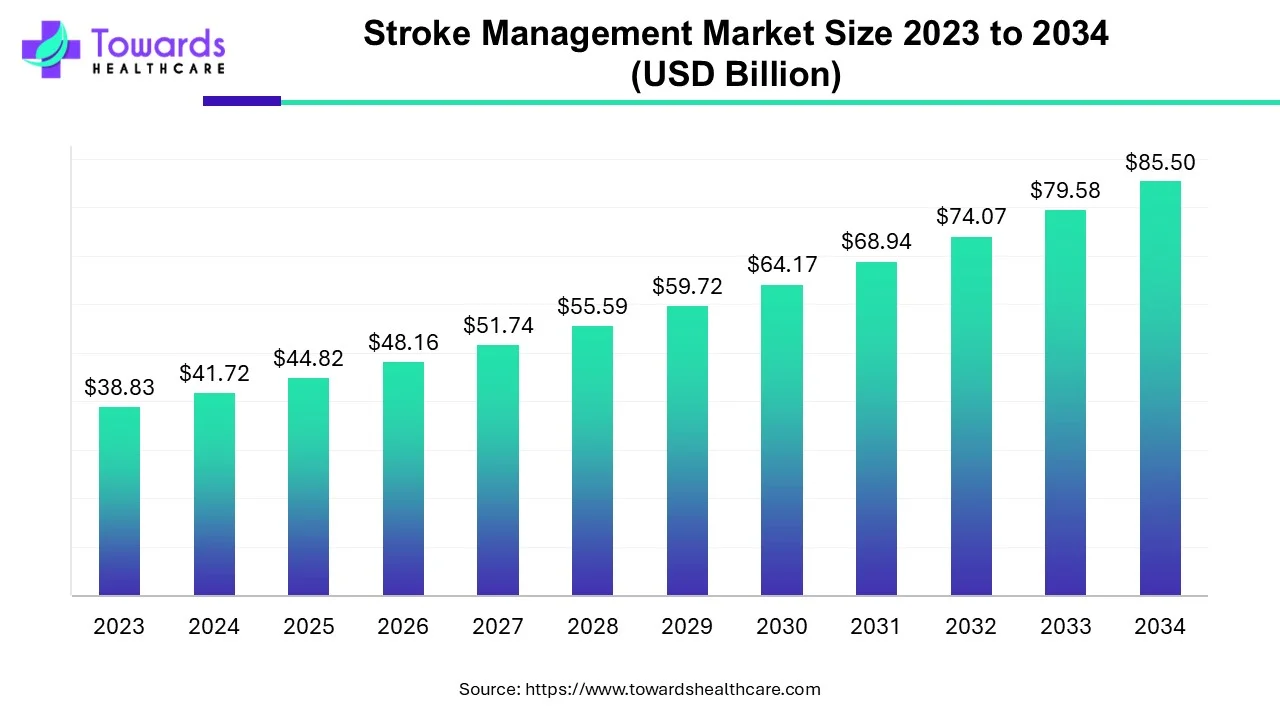 The stroke management market is growing because if the stroke is left untreated, the stroke will continue until the brain cells in the affected area of the patient's brain die, causing permanent damage due to the need for stroke management.
The stroke management market is rapidly growing due to emergency treatment depending on whether patients have a stroke or a hemorrhagic stroke. During an ischemic stroke, the blood vessels in the brain can become blocked or narrowed. During a hemorrhagic stroke, bleeding occurs in the brain. A stroke occurs when the amount of oxygen reaching the brain is reduced. This can be caused by a blood clot or a blockage in the brain. Immediate emergency treatment can help prevent life-threatening conditions.
Doctors may do blood tests to determine if patients are at risk for bleeding or blood clots, measure the levels of certain drugs in blood (such as those used to treat blood clots), and check for disease. Stroke is the leading cause of long-term disability in adults. About 800,000 Americans have a stroke each year. Early treatment and rehabilitation can significantly reduce the risk of stroke.
Stroke management refers to the coordination medical approaches used to prevent, diagnose, treat, and rehabilitate individuals affected by stroke. It includes emergency intervention, diagnostic procedures, medication therapies aimed at reducing brain damage and improving patient recovery. The market is growing as healthcare systems focus on faster intervention and improved long-term outcomes. Key drivers include the increasing prevalence of stroke, aging populations, greater awareness of warning signs, and rising demand for specialized neurological care.
Current trends include tele-stroke services, minimally invasive intervention, remote monitoring, and personalized rehabilitation. Technological advancements in artificial intelligence, advanced imaging, robotic rehabilitation, wearable devices, and digital health platforms are improving diagnosis, treatment planning, and recovery monitoring. Future opportunities include AI-assisted stroke detection, portable diagnostic technologies, home-based rehabilitation, and integrated digital care pathways. Expansion of specialized stroke centers is further supporting market development.
AI can analyze and combine clinical data, tests, and imaging to provide personalized recommendations for the best treatments for stroke and provide evidence of operational outcomes. This technology is also being used to treat strokes. Electronic devices that use AI can analyze a patient’s movement patterns and guide them to help improve mobility and function.
It will also help develop programs to help treat speech, language, and vision problems. By analyzing clinical and imaging data, AI may also be able to predict which patients will suffer from depression and cognitive dysfunction after strokes, which causes growth of the stroke management market.
Increasing public awareness of stroke symptoms and increasing the availability of emergency medical services (EMS) are important to ensuring that stroke patients receive timely and appropriate treatment. In both outpatient and hospital settings, emergency physicians play a key role in developing and implementing programs to manage hyperacute stroke. Additionally, regular hospital internships and reviews are essential to ensure that hospital staff are prepared and knowledgeable.
One of the best strategies for raising public awareness is to use healthcare professionals and activists with close ties to the local community to educate the public about stroke and appropriate interventions. Increasing awareness of the warning signs of stroke and the need for urgent medical attention can reduce delays in patients seeking emergency care and ultimately improve patient outcomes and hospital operations, leading to an improved stroke management market.
Stem cell therapy represents an opportunity for stroke treatment and offers great potential to speed recovery and improve patient outcomes. Research with mesenchymal stem cells (MSCs), particularly those derived from bone marrow, fat tissue, or the umbilical cord, has shown promising results in initial testing for ischemic and hemorrhagic stroke. Mesenchymal stem cells have been shown to regenerate brain tissue, reduce nerve inflammation, and replace lost nerve cells, making them ideal candidates for regenerative medicine. As stem cell therapies continue to advance, their ability to improve nerve function offers the opportunity to revolutionize the industry, create new avenues for new treatments, and increase medical benefits for stroke patients. This growth is expected to spur innovation and expand the stroke management market for advanced stroke treatments.
The general population’s low awareness of stroke symptoms, lack of access to specialist healthcare providers, and lack of international collaboration pose major challenges to stroke management. Global health insecurity and financial barriers to stroke prevention, including limited access to essential medicines, hinder efforts to address the risk of the condition and prevent stroke. In addition, lack of access to specialist stroke care, low rates of stroke, and inadequate training further limit the availability of effective treatment. These issues limit the expansion of the stroke management market and create challenges for timely diagnosis, effective treatment, and long-term prevention. Addressing these challenges is critical to unlocking economic growth and improving patient outcomes worldwide.
| Key Elements | Scope |
| Market Size in 2025 | USD 44.82 Billion |
| Projected Market Size in 2035 | USD 91.86 Billion |
| CAGR (2025 - 2035) | 7.44% |
| Leading Region | North America |
| Historical Data | 2020 - 2023 |
| Base Year | 2025 |
| Forecast Period | 2026 - 2035 |
| Measurable Values | USD Millions/Units/Volume |
| Market Segmentation | By Type, By Application, By Geography |
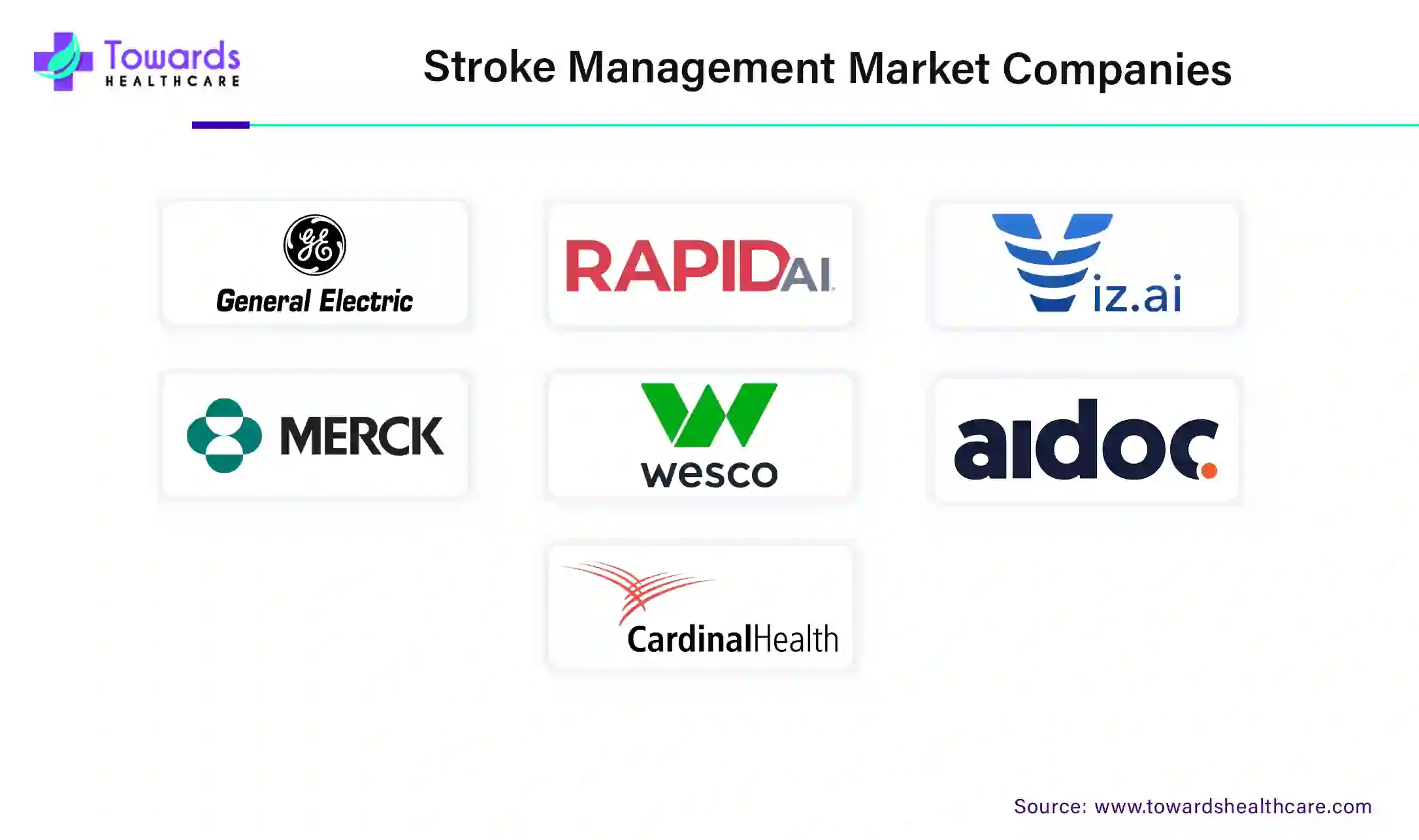
| Top Key Players | JLK, Heuron Co., Ltd., General Electric Company, iSchemaView, Inc., Viz.ai, Inc., Merck & Co. Inc, VasSol Inc., Aidoc, Cardinal Health, NeuraSignal, Inc., Brainomix, Bristol-Myers Squibb Company, Boston Scientific Corporation, Abbott Laboratories, METHINKS, Qure.ai, Siemens AG, B. Braun SE, Koninklijke Philips N.V, Deepnoid Co., Ltd., Medtronic |
Which Type Segment Dominated the Stroke Management Market?
The diagnostic segment dominated the global market and is expected to remain dominant during the stroke management market forecast period as accurate diagnosis is essential for the selection of appropriate stroke treatments such as intravascular tissue therapy with plasminogen activator (IV tPA) or endovascular mechanical thrombectomy treatment. Gold-standard imaging techniques such as CT and MRI. This device allows first responders to assess stroke earlier when responding to medical emergencies in the field. Prompt initiation of thrombolytic and endovascular therapy is important for optimal outcomes. Another technology used for the rapid detection of stroke utilizing blood-based biomarkers and novel portable devices employing imaging methods such as volumetric impedance phase-shift spectroscopy, microwave tomography, and Doppler ultrasound.
How the Ischemic Stroke Segment Dominated the Stroke Management Market?
The ischemic stroke segment dominated the global market share and is anticipated to continue this trend during the forecast period, as ischemic stroke is caused by atherosclerosis, it can cause fatty deposits and cholesterol plaques to build up in the arteries. An ischemic stroke occurs when blood flow to a part of the brain is blocked or reduced. This prevents the brain tissue from being deprived of oxygen and nutrients. Ischemic stroke accounts for approximately 87 percent of all strokes and has a high long-term risk of recurrence. More than 58 percent of ischemic strokes each year occur in people under the age of 70.
North America accounted for a major stroke management market share, with over 795,000 stroke cases in the United States in 2022, of which approximately 610,000 are first-time strokes. In the United States, someone has a stroke every 40 seconds. In this country, someone dies from a stroke every 3 minutes and 11 seconds. Approximately 87 percent of strokes are ischemic, where blood flow to the brain is blocked. High blood pressure, high cholesterol, smoking, obesity, and diabetes are risk factors for stroke in this region.
One in three adults in the US is at risk for at least one of these conditions. Of the 5,533 emergency departments in the US, 2,446 (44%) were identified as stroke centers, of which 297 were Comprehensive stroke centers, 14 were Thrombectomy - capable Stroke centers, 1,459 were primary stroke centers, and 678 were Acute Stroke Ready Hospitals. Research and clinical support from teaching hospitals in the United States have improved outcomes for patients after stroke, including reduced mortality rates. Based on technology, medicine is exploring new treatments to improve survival and quality of life for stroke patients.
For Instance,
Why the U.S. Is Significantly Growing in the Stroke Management Market
The U.S. stroke management market is significantly growing due to increasing demand for rapid diagnosis, advanced treatment, and comprehensive rehabilitation. Strong healthcare infrastructure and widespread availability of specialized stroke centers are supporting timely intervention. Growing adoption of mechanical thrombectomy, advanced imaging, tele-stroke services, and AI-assisted diagnosis is improving patient management. Rising healthcare investment and increasing focus on reducing stroke-related disability are further driving market expansion.
Why Canada Is Notably Expanding in the Stroke Management Market
Canada’s stroke management market is notably expanding due to increasing demand for timely diagnosis, specialized treatment, and rehabilitation services. Growing awareness of stroke symptoms is encouraging earlier medical intervention. Improvements in hospital infrastructure, expansion of dedicated stroke centers, and wider adoption of tele-stroke services are strengthening access to care. Advancements in brain imaging, minimally invasive treatment, and digital rehabilitation technologies are further supporting market development.
Asia Pacific is expected to witness significant growth in the stroke management market during the forecast period, driven by advances in acute management strategies (IV t-PA thrombolysis and mechanical thrombectomy) for AIS across the region over the past decade. Coordinate various stroke groups to improve the care of stroke patients. APSO is an international non-profit organization comprised of national stroke societies, stroke organizations, and individuals whose primary purpose is to improve stroke care in the Asia Pacific region by encouraging, supporting, and organizing international research projects and subsequently sharing the results. The large number of stroke diagnostic trials and research conducted in the Asia-Pacific region has increased significantly as a result of international collaboration and cooperation. Raise awareness of stroke prevention and increase access to care. ASIR in ischemic stroke is increasing in Asia, leading to the growth of the stroke management market in this region.
For Instance,
Why India Is Significantly Increasing in the Stroke Management Market
India’s stroke management market is significantly increasing due to the growing burden of stroke and rising awareness about early treatment. Expansion of hospitals and specialized neurological care facilities is improving access to diagnosis and intervention. Increasing adoption of advanced imaging, minimally invasive procedures, telemedicine, and rehabilitation technologies is supporting better patient management. Growing healthcare investment and efforts to strengthen emergency stroke services are further driving market development.
Japan Market Trends
Stroke is the fourth-leading cause of death in Japan. Approximately 270,000 people in Japan are estimated to experience strokes annually. The Pharmaceuticals and Medical Devices Agency (PMDA) authorizes the approval of novel drugs and devices for stroke management. The Japanese Guidelines for the Management of Stroke 2021 recommend edavarone for the treatment of acute ischemic stroke.
Europe is expected to grow at a notable CAGR in the foreseeable future. The rapidly expanding healthcare sector and favorable regulatory support boost the market. The increasing incidence of stroke due to the rising prevalence of chronic disorders favors market growth. The Stroke Alliance for Europe reported that approximately 1.1 million strokes occur in Europe annually. Government bodies support the development of novel techniques for stroke management. The increasing investments and collaborations also contribute to market growth.
For instance,
UK Market Trends
According to the NHS England, stroke is the leading cause of disability and the fourth largest cause of death in the UK. GE Healthcare, Circle Health Group, and Forest Healthcare provide stroke management in the UK. The Accelerated Access Collaborative (AAC) funded over £11 million to 21 new innovations in stroke, cardiovascular diseases, and respiratory diseases.
Why Germany Is Notably Expanding the Market Growth
Germany’s stroke management market is notably expanding due to its well-developed healthcare system and strong focus on rapid stroke diagnosis and treatment. Growing demand for specialized stroke care is supporting investment in dedicated facilities and advanced medical technologies. Wider adoption of brain imaging, minimally invasive interventions, telemedicine, and rehabilitation solutions is improving patient outcomes. An aging population and increasing emphasis on preventive and post-stroke care are further supporting market growth.
By Type
By Application
By Geography



Principal Consultant
Payal Rabde is a Healthcare Market Research Analyst at Towards Healthcare Research & Consulting with 4+ years of experience in pharmaceuticals, biotechnology, medical devices, and life sciences.
Learn more about Payal Rabde

Reviewed By
Aditi Shivarkar is a seasoned professional with over 14 years of experience in healthcare market research. As a content reviewer, Aditi ensures the quality and accuracy of all market insights and data presented by the research team.
Learn more about Aditi Shivarkar









