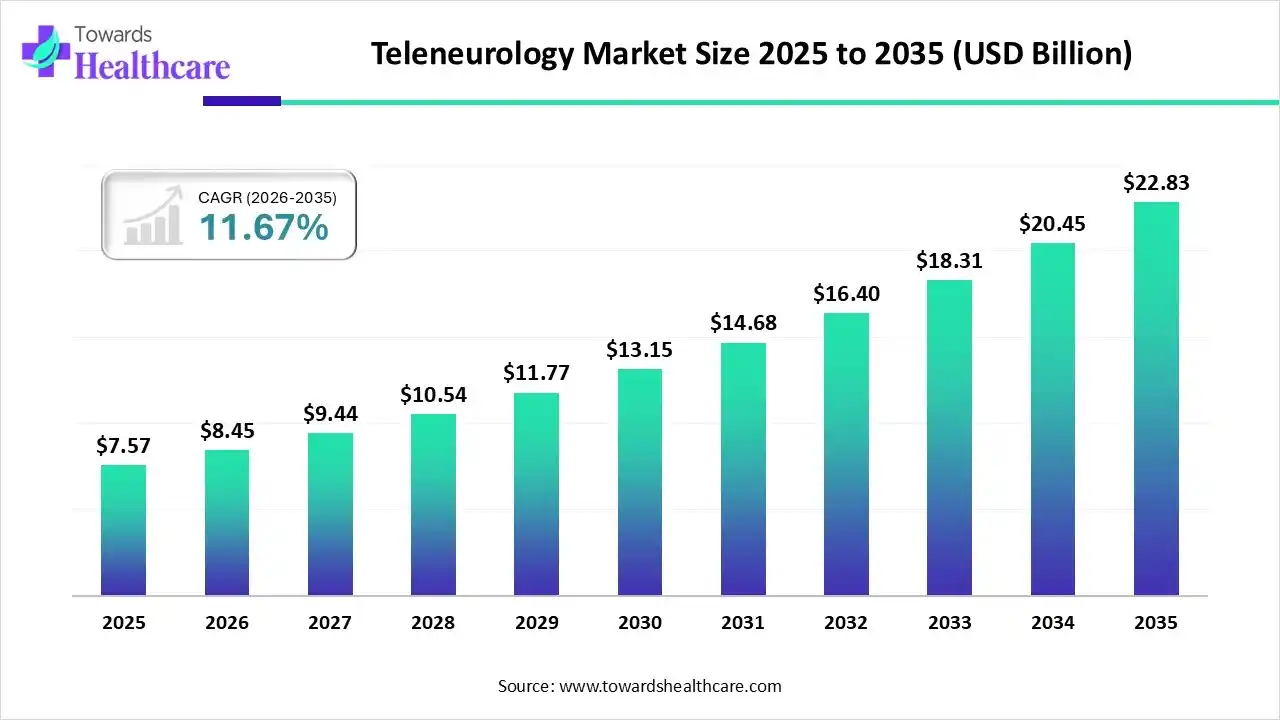
The global teleneurology market size is calculated at US$ 7.57 billion in 2025, grew to US$ 8.45 billion in 2026, and is projected to reach around US$ 22.83 billion by 2035. The market is expanding at a CAGR of 11.67% between 2026 and 2035.
The growing incidence of neurological diseases is increasing the demand for teleneurology to overcome the shortage of neurologists and enhance access to neurological care in remote areas. AI technologies are also being integrated to enhance their accuracy and remote care, where advanced healthcare, expanding hospitals, and government initiatives are increasing their adoption rates across various regions. The companies are also investing, collaborating, and launching various teleneurology platforms, promoting the market growth.
The teleneurology market is driven by rapid advancements in digital health technologies, the rising burden of neurological disorders, and a significant shortage of specialists. Teleneurology refers to the digital communication tools used to provide remote diagnosis, monitoring, consultation, and management of neurological disorders. They are used for acute and chronic neurological care, telemonitoring, teleconsultations, training, as well as enhancing access to neurologists.
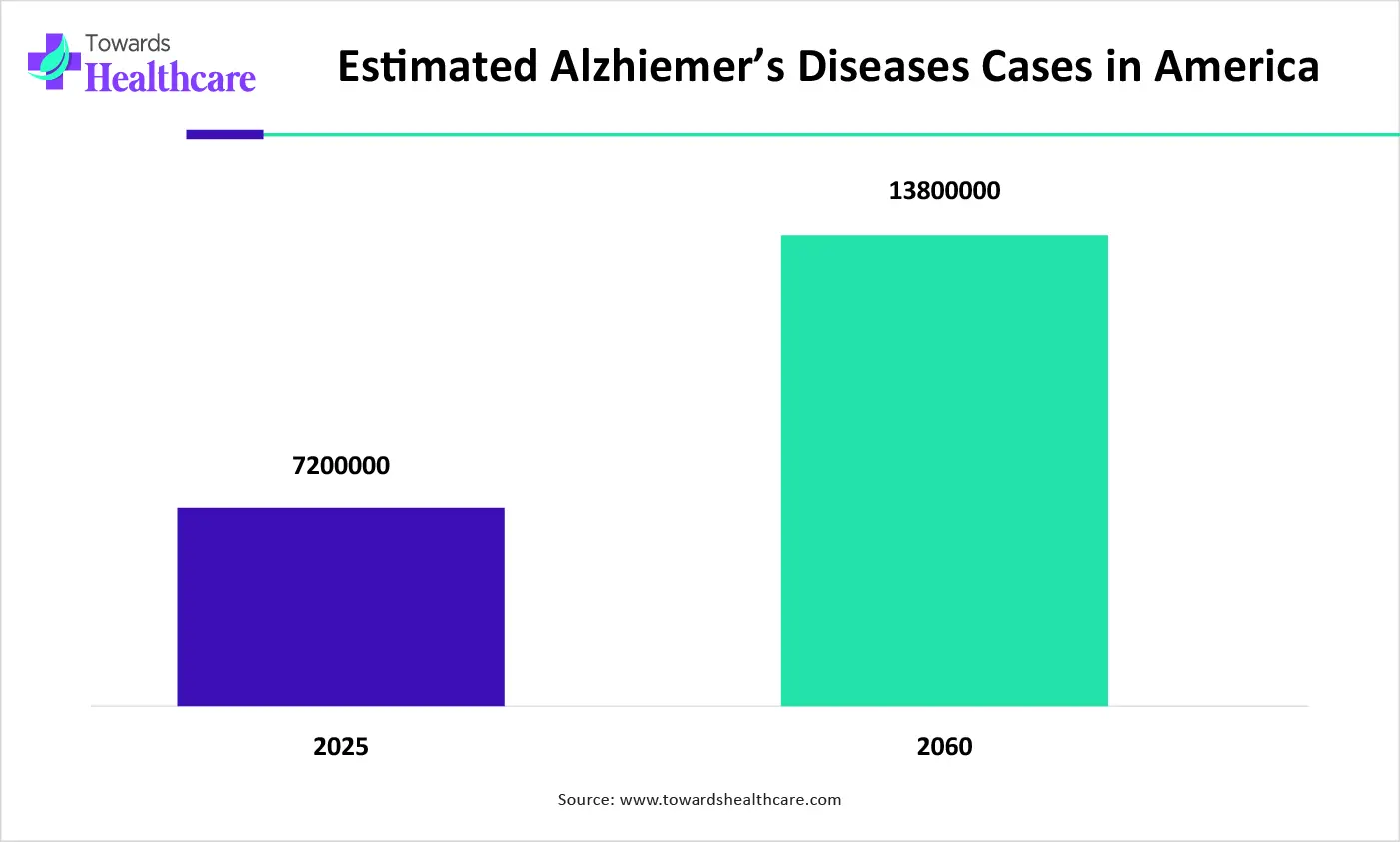
The graph represents the comparison between the Alzheimer's disease cases in the years 2025 and 2060 in America. It indicates that there will be growth in the Alzheimer's disease cases, which will increase the demand for teleneurology. This, in turn, will ultimately promote the market growth.
AI is increasingly being utilized in teleneurology to provide automated diagnostics of neurological conditions. They are also being used in the development of wearable devices and mobile apps, which increases their remote monitoring, promoting their early and accurate diagnosis, where it also helps in tracking the disease progression. Different types of AI chatbots are also offering teleconsultations. Additionally, they are also being used in the development of personalized therapies, which is increasing their use and interaction, driving their innovations.
The Rise of Remote Patient Monitoring: The hospitals and clinics are offering remote patient monitoring, which is increasing the use of various home monitoring devices, promoting the long-term management of chronic neurological conditions.
Utilization of Hybrid Models: There is a growth in the use of hybrid models for in-person visits of initial assessments and remote consultations for follow-ups and patient monitoring, which is enhancing patient convenience and comfort.
Flourishing Investments: Due to the growing shift toward digital health, there is a growth in investments and funding, which is increasing the advancements of software, hardware, and other remote monitoring devices.
Growing Neurological Burden: Due to a growth in the aging population and increasing incidence of Alzheimer's disease, stroke, and Parkinson's disease, the demand for teleneurology platforms and services is increasing.
Increasing Neurologist Shortage: The rural and underserved regions lack the presence of neurologists or stroke specialists, which is increasing the demand for teleneurology platforms to enhance access to these specialists.
Innovations in Motion: The companies are developing various telemedicine platforms, real-time data analytics, wearable sensors, and remote monitoring tools to provide more effective teleneurology solutions.
| Key Elements | Scope |
| Market Size in 2026 | USD 8.45 Billion |
| Projected Market Size in 2035 | USD 22.83 Billion |
| CAGR (2026 - 2035) | 11.67% |
| Leading Region | North America by 38% |
| Historical Data | 2020 - 2023 |
| Base Year | 2025 |
| Forecast Period | 2026 - 2035 |
| Measurable Values | USD Millions/Units/Volume |
| Market Segmentation | By Application, By Service, By End Use, By Region |
| Top Key Players | Teleneurology Solutions, Access TeleCare, LLC, Sevaro Health, Inc., Blue Sky Telehealth, Teladoc Health, Inc., TeleSpecialists, Lakewood Health System |
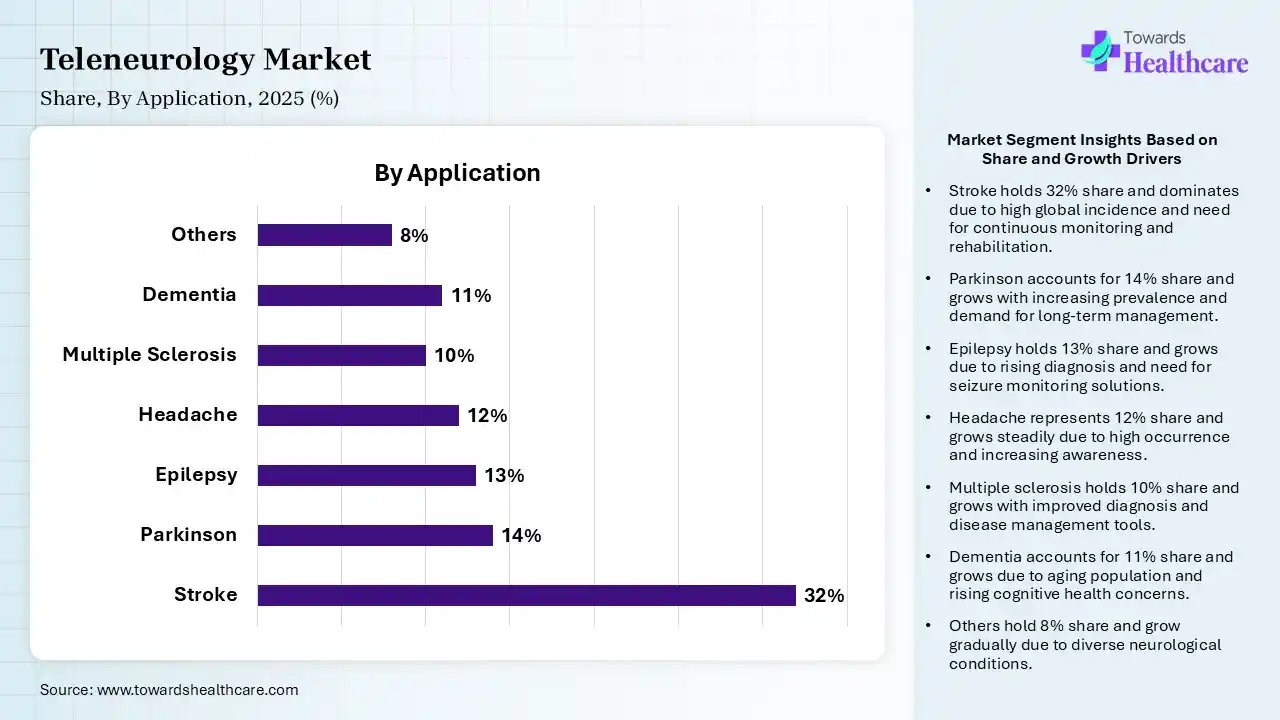
| Segments | Shares% |
| Stroke | 32% |
| Parkinson | 14% |
| Epilepsy | 13% |
| Headache | 12% |
| Multiple Sclerosis | 10% |
| Dementia | 11% |
| Others | 8% |
Explanation
Which Application Type Segment Held the Dominating Share of the Teleneurology Market in 2025?
The stroke segment held the dominating share of the market by 32% share in 2025 and is expected to show the fastest growth rate during the predicted time, due to its growing incidence rates. This is increasing the use of teleneurology for early diagnosis and treatment to prevent permanent damage. Moreover, the shortage of neurologists can be overcome with their use, which in turn is enhancing patient outcomes.
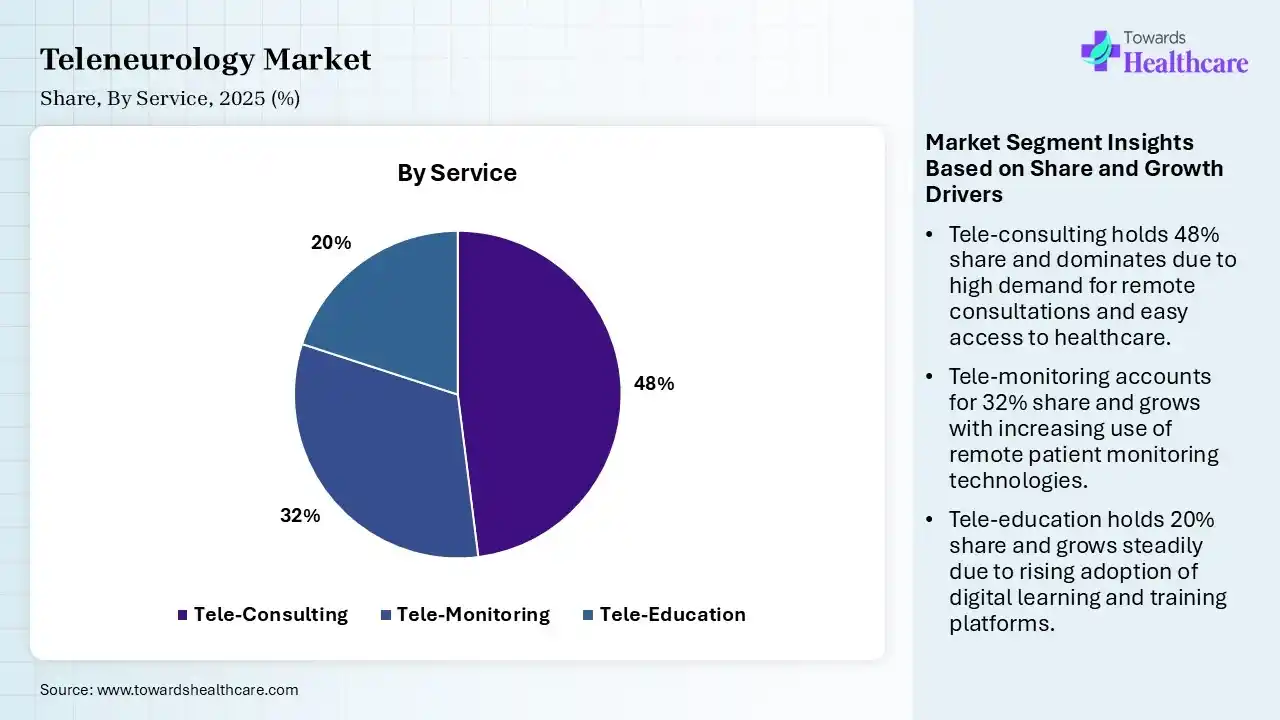
| Segments | Shares% |
| Tele-Consulting | 48% |
| Tele-Monitoring | 32% |
| Tele-Education | 20% |
How Tele-Consulting Segment Dominated the Teleneurology Market in 2025?
The tele-consulting segment led the market with the share of 48% in 2025, as it was considered the primary mode of remote care. Moreover, the growth in chronic neurological conditions increased their use, where integration with diagnostics also promoted early diagnosis. Additionally, they offered affordable service over a long period of time, which increased patient adherence to the treatment.
Tele-Monitoring
The tele-monitoring segment is expected to show the highest growth during the predicted time, as it provides continuous patient monitoring. At the same time, they promote early detection of neurological conditions and help to reduce their complications. They are also enhancing access to the neurologists, increasing their use across rural or underserved areas.
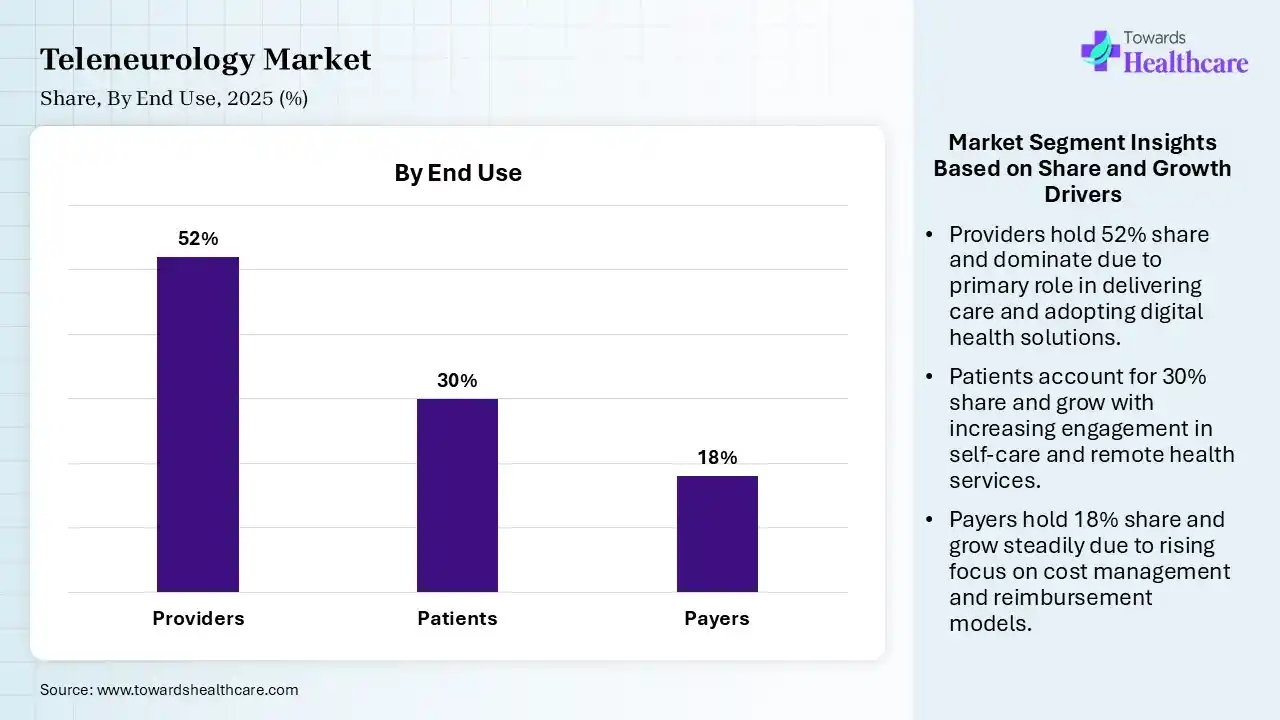
| Segments | Shares% |
| Providers | 52% |
| Patients | 30% |
| Payers | 18% |
What Made Providers the Dominant Segment in the Teleneurology Market in 2025?
The providers segment held the largest share of 52% of the market in 2025, due to growth in neurological conditions. This increased their adoption and integration with teleneurology for consultation, diagnosis, and monitoring of the patients. Moreover, their increased access and affordability increased their adoption rates, which enhanced patient comfort.
Patients
The patients segment is expected to show the fastest growth rate during the upcoming years, due to growing demand for home-based care approaches. The teleneurology is enhancing patient convenience, where the growing neurological disorders are encouraging their use. Therefore, the companies are developing various wearable devices and platforms, which are driving their adoption.
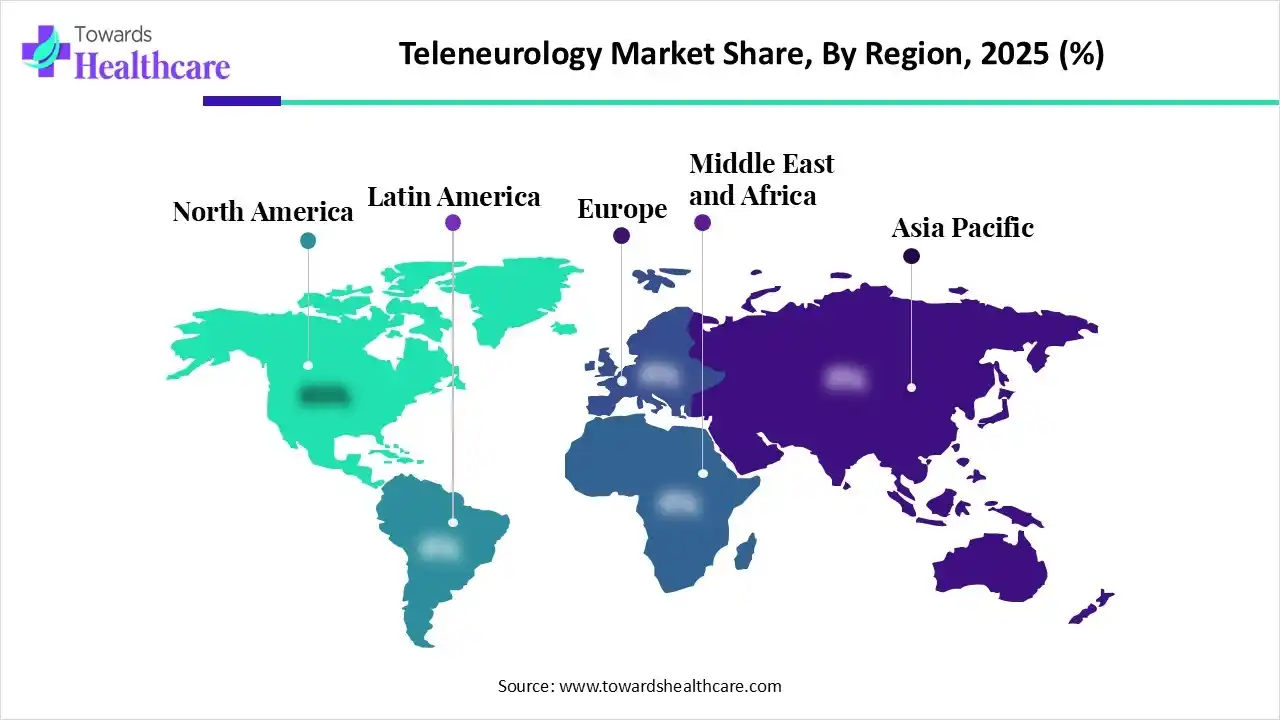
North America held the major revenue share of 38% in the teleneurology market in 2025, due to the growth in neurological diseases. At the same time, the presence of advanced healthcare infrastructure also increased the use of teleneurology platforms, which enhanced their early diagnosis, promoting their effective treatment. Moreover, the presence of well-developed companies promoted their innovations, which were backed by investments and contributed to the market growth.
U.S. Market Trends
The U.S. is experiencing a rise in Alzheimer's and Parkinson's diseases, which is increasing the utilization of telemedicine. Therefore, the hospital, clinics, and neurological centres are driving the early adoption of these platforms. At the same time, the companies are developing various software and devices, where their R&D is being supported by investments from various sources.
Asia Pacific is expected to grow significantly in the teleneurology market by 22% share during the forecast period, due to the expanding healthcare sector, which is driving the adoption of advanced platforms and digital health solutions. At the same time, growing incidences of neurological conditions are also increasing their use to provide effective diagnostic and treatment options across rural or remote areas, enhancing the market growth.
China Market Trends
Due to growing neurological disorders, the demand for teleneurology solutions in China is increasing, and they are also being used to overcome the shortage of neurologists. The growing government initiatives are also promoting their adoption of AI-assisted platforms, where companies are developing wearable devices as well as smartphone apps, which is increasing their use.
Europe is expected to show lucrative growth in the teleneurology market by 27% share during the forecast period, due to the presence of an advanced healthcare system. At the same time, the growing incidence of stroke, along with other chronic neurological diseases, is increasing the use of teleneurology, where government initiatives are encouraging its utilization. The companies are developing various solutions to overcome the shortage of neurologists, which, in turn, is promoting the market growth.
UK Market Trends
To deal with the growing neurological diseases in the UK, the demand for teleneurology is increasing. Their adoption is also being supported by the government initiatives, where the reimbursement policies are also encouraging their use. Moreover, new collaborations are also being formed among the companies to develop various platforms for consultation, monitoring, and diagnosis of these diseases.
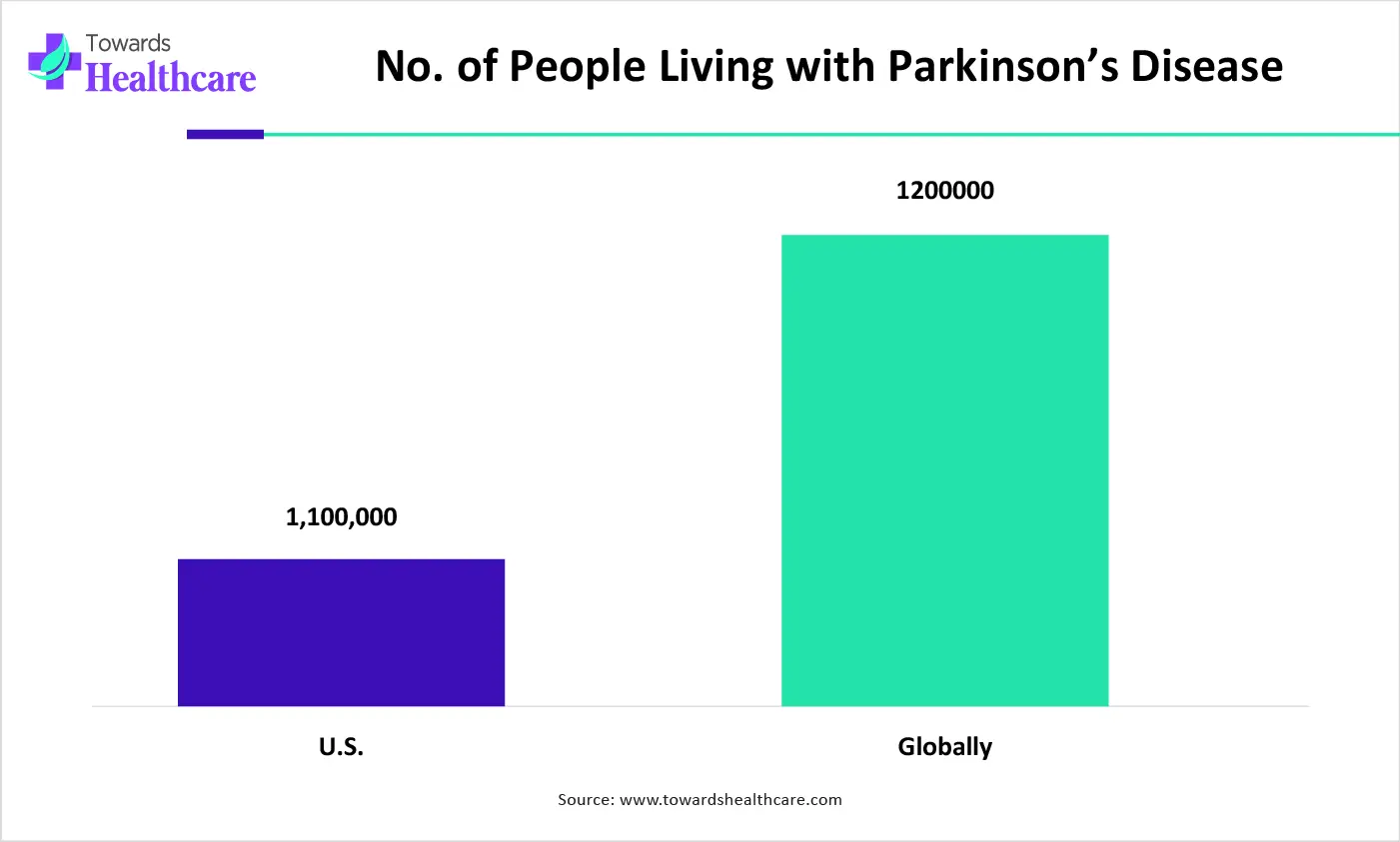
The graph represents the total number of people living with Parkinson’s disease in the year 2025 across the U.S. and worldwide. It indicates that there is a growth in Parkinson’s disease incidence, which is increasing the use and adoption of teleneurology. This, in turn, will ultimately promote the market growth.
The teleneurology market in South America is rapidly growing due to a major shortage of specialists in rural areas, the need for quick stroke evaluations, and a high rate of chronic diseases like epilepsy. After the COVID-19 pandemic, the widespread adoption of digital health technologies and supportive government policies has made virtual consultations essential. Teleneurology helps link remote patients with specialists, thus alleviating pressure on urban healthcare systems that lack resources.
Brazil Market Trends
The teleneurology is growing in Brazil due to a high occurrence of neurological conditions like stroke and epilepsy, along with a significant shortage of specialists in rural areas. There has also been a marked rise in telemedicine use since the pandemic. Key elements driving this growth include government initiatives, widespread smartphone adoption, and the pressing need for stroke care, making Brazil a leader in Latin America. The country faces high rates of stroke and epilepsy, requiring specialized and timely medical care, which is supported by telestroke programs and remote consultations.
The teleneurology sector in the Middle East and Africa (MEA) is experiencing significant growth with the share of 6%, driven by high rates of chronic diseases, government support, and improved digital infrastructure. While the global market is growing, the MEA region is becoming a strong market for teleneurology, particularly in the UAE and Saudi Arabia, which are at the forefront of digital healthcare adoption. There is a rising need for treating neurological conditions like stroke, epilepsy, Parkinson's disease, and multiple sclerosis, increasing the demand for remote consultations with specialists.
UAE Market Trends
The teleneurology in the UAE is quickly becoming a leader in regional healthcare, due to significant government investment in digital health, a high rate of neurological disorders, and a focused shift towards remote patient monitoring. The country faces a major challenge with chronic diseases, including neurological disorders like stroke, epilepsy, multiple sclerosis, and Parkinson’s disease, all of which require continuous, specialized care. The Department of Health, Abu Dhabi, and the Dubai Health Authority (DHA) are promoting platform-first strategies, highlighted by projects like Malaffi (the health information exchange in Abu Dhabi) and NABIDH (the unified medical record system in Dubai), which allow for the secure and prompt sharing of neuro-imaging and diagnostic data between healthcare facilities.

| Companies | Headquarters | Teleneurology Solutions |
| Providence | Washington, U.S. | Emergent TeleNeurology, TeleEEG, TeleNeuroHospitalist services |
| Access TeleCare, LLC | Texas, U.S. | Telemed IQ |
| Sevaro Health, Inc. | Atlanta, Georgia | Synapse 2.0 Documentation Platform |
| Blue Sky Telehealth | Colorado, U.S. | Provides remote EEG, telestroke, and teleneurohospitalist |
| Medical University of South Carolina | South Carolina, U.S. | REACH MUSC Telestroke Program |
| Eagle Telemedicine | Atlanta, Georgia | Virtual Partnership Model |
| Teladoc Health, Inc. | New York, U.S. | InTouch Health System |
| TeleSpecialists | Fort Lauderdale, Florida | Focus on acute teleneurology and telestroke services |
| American Well | Massachusetts, U.S. | SaaS-based platform |
| Lakewood Health System | Minnesota, U.S. | Provides Telestroke |
| The Australian Stroke Alliance | Victoria, Australia | Focus on remote stroke care |
Strength
Weakness
Opportunity
Threats
By Application
By Service
By End Use
By Region
North America
South America
Europe
Asia Pacific
MEA










Principal Consultant
Shivani Zoting is a dedicated research analyst specializing in the healthcare industry. With a strong academic foundation, a B.Sc. in Biotechnology and an MBA in Pharmabiotechnology, she brings a unique blend of scientific understanding and strategy.
Learn more about Shivani Zoting
Reviewed By
Aditi Shivarkar is a seasoned professional with over 14 years of experience in healthcare market research. As a content reviewer, Aditi ensures the quality and accuracy of all market insights and data presented by the research team.
Learn more about Aditi Shivarkar