Pipeline Programs

CGT Companies Tracked

Manufacturing Facilities


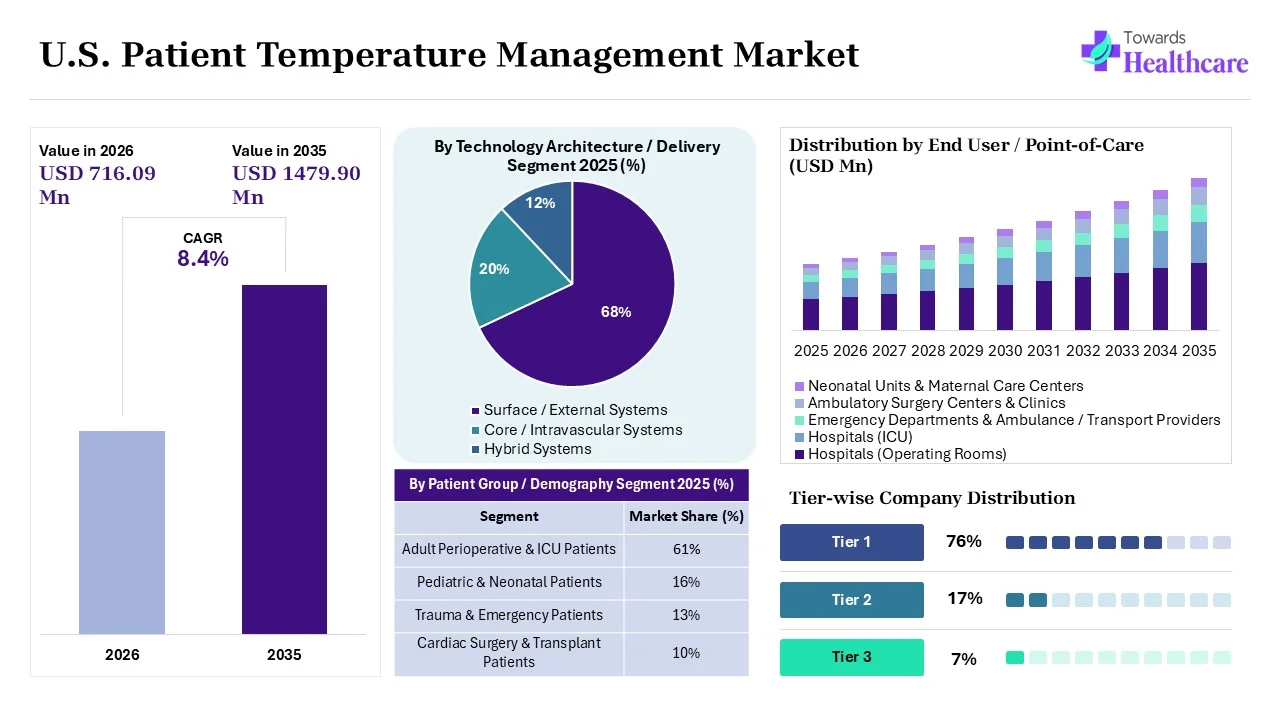
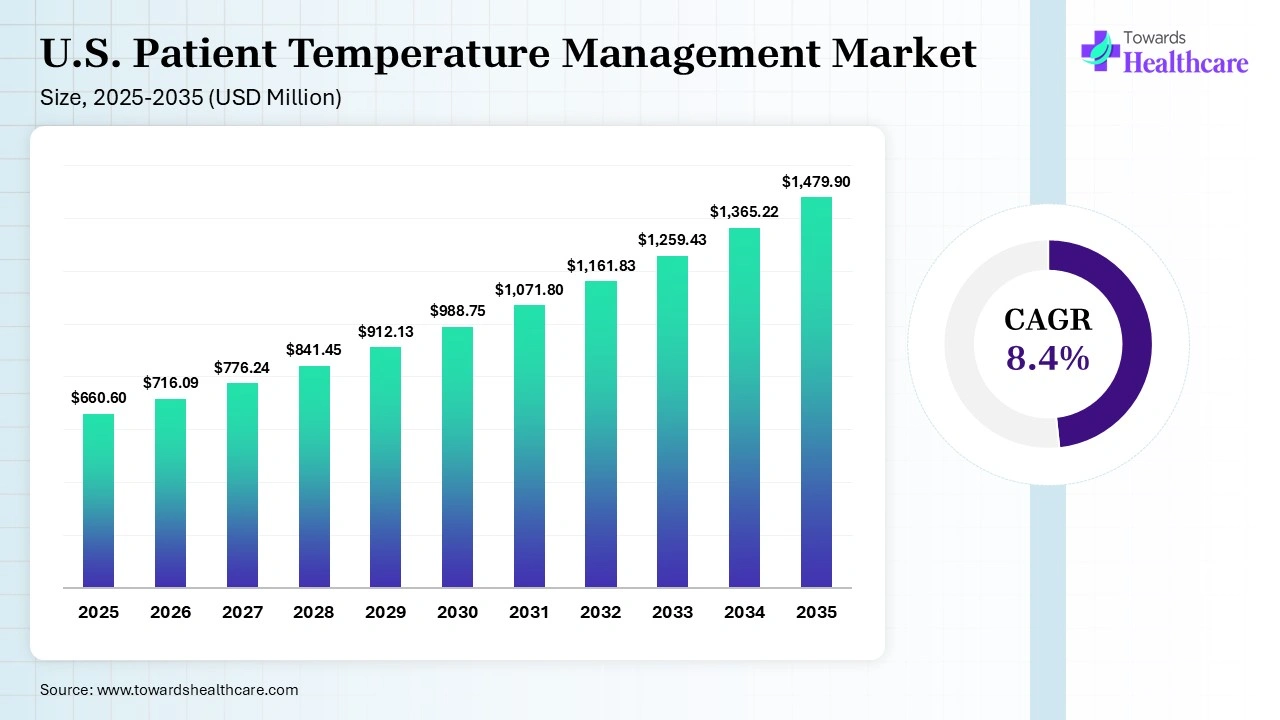
The U.S. patient temperature management market size is calculated at USD 660.6 million in 2025 and is expected to reach USD 1479.9 million by 2035, expanding at a CAGR of 8.4% from 2026 to 2035, as helping patients maintain a usual core body temperature is noteworthy to improving medical care outcomes. The market is growing USD 716.09 million in 2026 because this management improves patient ease, improves the treatment of wounds, and ultimately speeds up recovery and discharge from the medical care setting. It is predictable to expand through 2035 because it lowers surgical site infections, reduces bleeding challenges, accelerates wound healing, and limits hospital stays
Patient temperature management services offer perioperative nurses with evidence-driven guidance for avoiding, managing, and responding to both inadvertent perioperative hypothermia and MH. Evolving a patient temperature management plan, performing patient assessment and monitoring, using active warming and passive insulation technology. Efficient perioperative temperature management significantly advantages to both patients and physicians. This technology provides patient comfort, enhances the healing of wounds, and eventually accelerates recovery and discharge from the hospital.
Major technologies include convective warming, water-circulating blankets and ads, intravenous (IV) fluid warmers, endovascular cooling catheters, hydrogel cooling pads, and continuous non-invasive sensors. The incorporation of well-developed technologies like smart devices and IoT is revolutionizing temperature management. PTM shows a simple, affordable, and evidence-driven approach to enhance patient safety, lower complications, and lessen expenses.
Next-generation PTM technologies like automated forced-air technology, temperature-sensing wearables, and integrated digital dashboards streamline and scale adoption. These advancements lower the challenges of human error. They allow real-time temperature monitoring, and they are tied into hospital quality metrics, supporting compliance and performance tracking. PMT technology is used in operating rooms, intensive care units (ICUs), neonatal care units (NICUs), and emergency departments.
U.S. Patient Temperature Management Advancing Precision in Critical Care
U.S. patient temperature management refers to medical technologies and procedures used to monitor, maintain, control, or modify a patient’s body temperature during surgery, critical care, emergency treatment, and recovery. The market is growing as hospitals increasingly prioritize precise temperature control for improving patient outcomes and supporting safer clinical procedures. Key trends include targeted temperature management, continuous monitoring, wearable temperature sensors, and automated thermal regulation systems. Technological advancements in non-invasive sensors, smart warming and cooling devices, wireless monitoring, AI-assisted temperature analysis, and responsive. Key drivers include increasing surgical procedures, critical care demand, emergency care utilization, and greater focus on preventing temperature-related complications. Future opportunities are emerging in remote monitoring, connected hospital systems, personalized temperature protocols, and next-generation wearable devices. Integration with electronic health records and intelligent clinical decision-support platforms may further improve monitoring and treatment efficiency across U.S. Healthcare facilities.
Internal factors include device accuracy, temperature-control efficiency, product reliability, ease of use, technological capabilities, pricing, manufacturing quality, and research and development. External factors include increasing surgical procedures, critical care demand, emergency admissions, healthcare expenditure, hospital infrastructure, regulatory requirements, reimbursement conditions, and technological advancements. Growing adoption of automated warming and cooling systems and continuous temperature monitoring creates opportunities for manufacturers. However, high equipment costs, complex regulatory requirements, limited clinical expertise, cybersecurity concerns, and competition from alternative temperature-control approaches can restrict adoption. Together, these factors influence purchasing decisions, clinical utilization, product innovation, operational efficiency, and long-term market development.
AI-based algorithms trained on paired peripheral and core temperature measurements enhance the precision of non-contact thermometry, while classification models offer probabilistic fever assessment, which accounts for measurement uncertainty rather than smearing fixed threshold criteria. AI-driven technology offers continuous, intelligent oversight of patient vital signs, behaviour patterns, and well-being indicators. In place of manual thermometer readings, AI-based wearable skin patches offer continuous, real-time tracking of a patient's core and peripheral body temperature. AI-based technology tracks and assesses temperature-sensitive environments, such as hospital refrigerators and transport vehicles. It identifies temperature deviations in real time and mechanically triggers alerts to avoid spoilage of vaccines and vigorous prescriptions, which contributes to the growth of the patient temperature management market.
Shift to Non-Invasive Systems:
Continuous monitoring using wireless wearable sensors is a promising service for use in clinical solutions and in the home-based setting. Flexible thermal sensors are integrated into smart environments to enhance comfort and energy effectiveness through personalized temperature control. They are compact, transportable tools intended to unceasingly monitor and measure body temperature.
Increasing Need for Patient Warming Systems:
Recent advancements in modern patient warming technology not only avoid complications but also involve rapid patient recovery. Thermal comfort supports patients in maintaining normothermia, lowers preoperative anxiety, and enhances their sense of well-being. Warming technology is mostly needed in neonatal care to avert cold stress and help the infant's metabolic requirements.
Surge in Therapeutic Cooling:
Therapeutic cooling is a hopeful technology for lowering final infarct capacity and enhancing results in ischemic stroke, particularly as research regarding brain reperfusion remains to be explored. Therapeutic cooling is required to consider a more severe induction of brain hypothermia and must mitigate potential adverse effects associated with inducing hypothermia.
| Table | Scope |
| Market Size in 2026 | USD 716.09 Billion |
| Projected Market Size in 2035 | USD 1479.9 Billion |
| CAGR (2026 - 2035) | 8.4% |
| Historical Data | 2020 - 2023 |
| Base Year | 2025 |
| Forecast Period | 2026 - 2035 |
| Measurable Values | USD Millions/Units/Volume |
| Market Segmentation | By Product, By Application, By End User, By Technology Architecture, By Patient Group |
| Top Key Players | Johnson & Johnson, Takeda Pharmaceutical Company, Bristol Myers Squibb, AstraZeneca PLC, AbbVie |
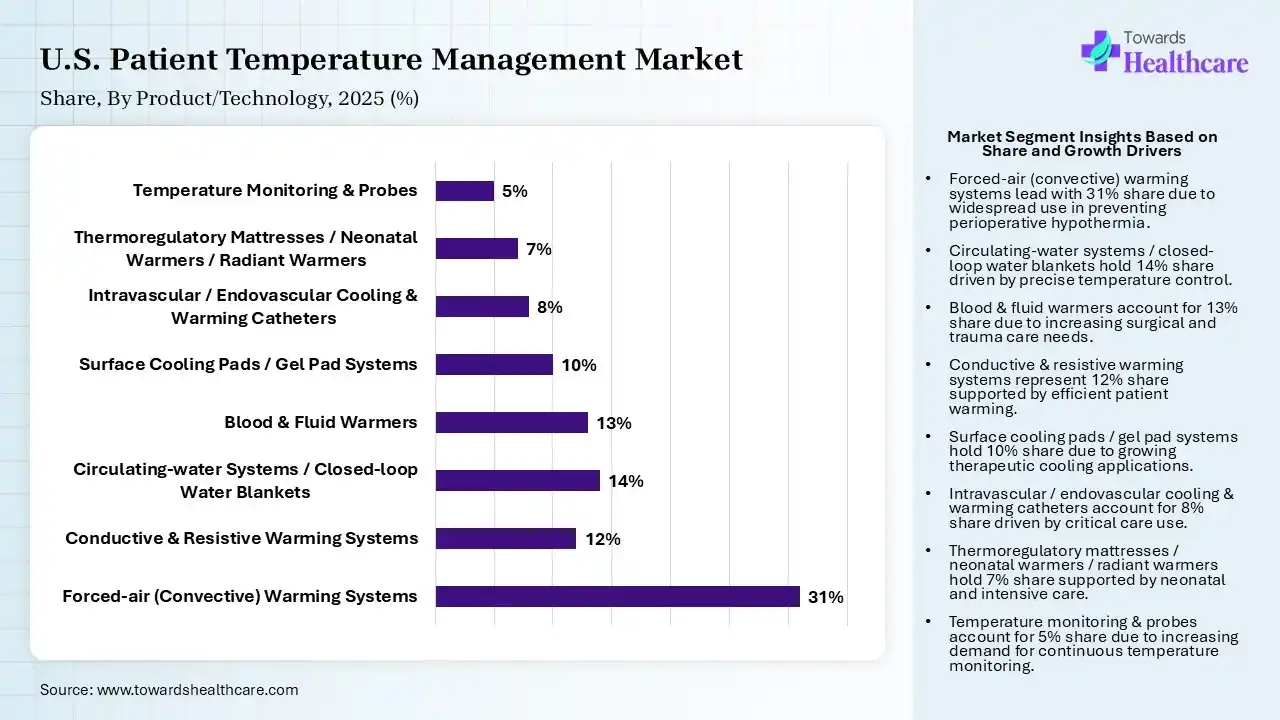
| Segment | Share 2025 (%) |
| Forced-air (Convective) Warming Systems | 31% |
| Conductive & Resistive Warming Systems | 12% |
| Circulating-water Systems / Closed-loop Water Blankets | 14% |
| Blood & Fluid Warmers | 13% |
| Surface Cooling Pads / Gel Pad Systems | 10% |
| Intravascular / Endovascular Cooling & Warming Catheters | 8% |
| Thermoregulatory Mattresses / Neonatal Warmers / Radiant Warmers | 7% |
| Temperature Monitoring & Probes | 5% |
The Forced-air (Convective) Warming Systems Segment Led the U.S. Patient Temperature Management Market in 2025
The forced-air (convective) warming systems segment contributed the largest market share of 31% in 2025, as forced-air warming efficiently lessens the incidence of hypothermia and speeds up the recovery of postoperative core temperature in the incidence of surgical site infection and postoperative shivering and thermal ease. Forced air warming technology is typically more affordable than other temperature management processes, like warming blankets.
The circulating-water systems/closed-loop water blankets segment held a significant share of 14% in 2025, as closed recirculating technology has significant advantages. They offer better control of temperatures in heat-producing tools, and their small makeup water needs simplify control of potential waterside challenges. Water circulation cooling blankets are generally used in heat stroke management, but their effectiveness and safety remain inadequately studied.
The conductive & resistive warming systems segment held a significant share of 12% in 2025, as conductive technology supplies even and stable warmth via the mattress or blanket being used, removing the hot or cold spots, which sometimes occur with forced air warming. This confirms greater patient comfort and more expected thermal management via the significant procedure.
The intravascular/endovascular cooling & warming catheters segment held a significant share of 8% in 2025, and is expected to grow at the fastest CAGR of 10.30% during the forecast period in the market, as temperature control with a cooling catheter is related to rapid cooling, enhanced thermic constancy in the target range, less overcooling or warmness and slower rewarming as compared with outdated processes.
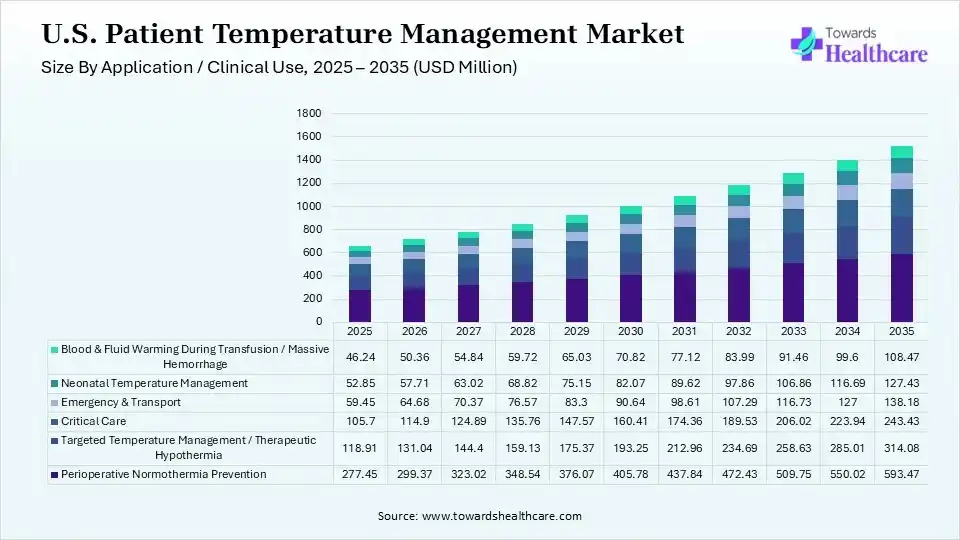
| Segment | Share 2025 (%) |
| Perioperative Normothermia Prevention | 42% |
| Targeted Temperature Management / Therapeutic Hypothermia | 18% |
| Critical Care | 16% |
| Emergency & Transport | 9% |
| Neonatal Temperature Management | 8% |
| Blood & Fluid Warming During Transfusion / Massive Hemorrhage | 7% |
The Perioperative Normothermia Prevention segment led the U.S. Patient Temperature Management Market in 2025
The perioperative normothermia prevention segment contributed the largest market share of 42% in 2025, as patient temperature management technology enhances patient comfort, increasing the healing of wounds, and eventually speeds up recovery. It provides advantages such as maintaining normothermia, which involves reductions in postoperative wound infection, the challenges of perioperative coagulopathy, and myocardial ischemia.
The targeted temperature management/therapeutic hypothermia segment held a significant share of 18% of the market, and is expected to grow at the fastest CAGR of the 10.20% during the forecast period in the market, as targeted temperature management (TTM), previously known as therapeutic hypothermia, has been shown to enhance survival and neurological recovery in patients of cardiac arrest. Targeted temperature management (TTM) is the active, precise regulation of a patient's core body temperature to reduce brain injury, lowering metabolic demand.
The critical care segment held a significant share of 16% of the U.S. patient temperature management market in 2025, as temperature management is a significant characteristic of the management of significantly ill patients. It raises patient comfort, enhances the healing of wounds, and eventually accelerates recovery and discharge from the hospital. Therapeutic hypothermia enhances the results after cardiac arrest and perinatal asphyxia.
The emergency & transport segment held a significant share of 9% of the market, as targeted temperature management avoids fever and maintains controlled body temperature to lessen secondary brain injury and improve neurological outcomes. Persuading controlled mild hypothermia (32°C–36°C) decelerates cellular metabolism and oxygen demand.
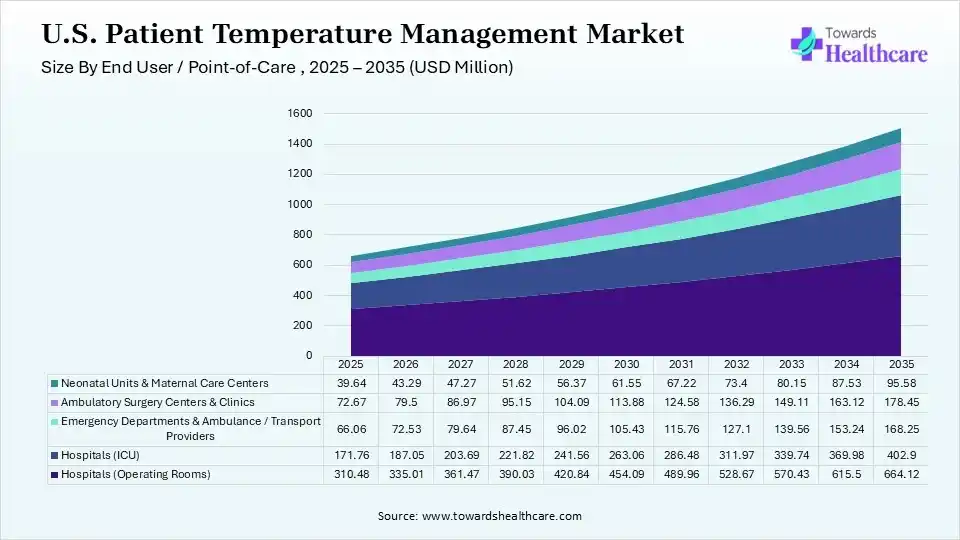
| Segment | Share 2025 (%) |
| Hospitals (Operating Rooms) | 47% |
| Hospitals (ICU) | 26% |
| Emergency Departments & Ambulance / Transport Providers | 10% |
| Ambulatory Surgery Centers & Clinics | 11% |
| Neonatal Units & Maternal Care Centers | 6% |
The Hospitals (Operating Rooms) Segment Led the U.S. Patient Temperature Management Market in 2025
The hospitals (operating rooms) segment held a significant share of 47% in the market, as temperature management services lower the challenges of infections and wound healing disorders. reducing blood loss and lessening transfusion needs. Lessen recovery times and enhance healthcare workflow. It improves patient comfort and surgical results.
The hospitals (ICU) segment contributed the largest U.S. patient temperature management market share of 26% in 2025, as PTM is applied to avoid fever, to sustain normothermia, or to reduce core temperature. This treatment is broadly applied in intensive care units, typically as a primary neuroprotective process. A temperature management solution decreases swelling and pressure in the brain, which causes further challenges after a cardiac arrest.
The ambulatory surgery centers & clinics segment contributed a revenue share of 11% in the U.S. patient temperature management market share of 11%, as the PMT supporting patients maintain a standard core body temperature is significant to enhancing surgical results and lowering or reducing expenses associated with hypothermia-associated challenges.
The emergency departments & ambulance/transport providers segment held a significant 10% share of the market, and is expected to grow at the fastest CAGR of the 9.80% during the forecast period, as patient temperature management (PTM) services, helpful in emergency departments, improve neurological recovery after cardiac arrest, avoids brain swelling, curtails pathogen development, and curtails cellular metabolism to prevents ischemic-reperfusion wounds.
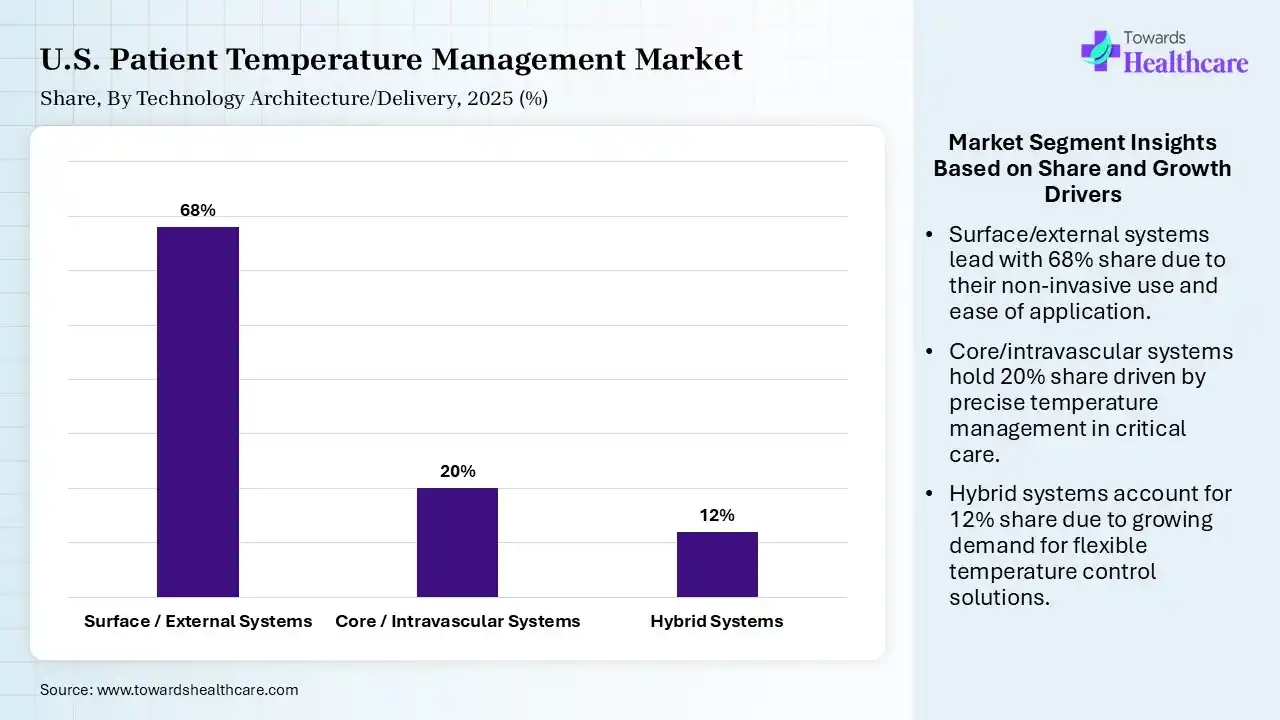
| Segment | Share 2025 (%) |
| Surface / External Systems | 68% |
| Core / Intravascular Systems | 20% |
| Hybrid Systems | 12% |
The Surface/External Systems Segment led the U.S. Patient Temperature Management Market in 2025
The surface/external systems segment contributed the largest market share of 68%, as surface cooling technology applications, blankets or pads wrapped around the patient, which circulate cold air or fluid. These tools are less labor-intensive and simple to use, with most being prepared with auto feedback mechanisms that alter the water or air temperature to keep the set specific temperature.
The core/intravascular systems segment held a significant share of 20% in the U.S. patient temperature management market and is expected to grow at the fastest CAGR of the 10.10% during the forecast period, as warming patients and preserving a core temperature in the range of 32ºC to 36ºC supports and enhances results by reducing challenges, enhancing wound healing, and allowing a quicker recovery from anaesthesia.
The hybrid systems segment held a significant share of 12% in the market, as hybrid patient warming technology not only avoids challenges but also contributes to faster patient recovery. Hybrid cooling technology is their capability to adapt to diverse climate circumstances. It performs well in arid and humid environments. It enhances patient results, accelerates patient recovery time, and lessens hospital stays of patients, reducing expenses for the medical care organization.
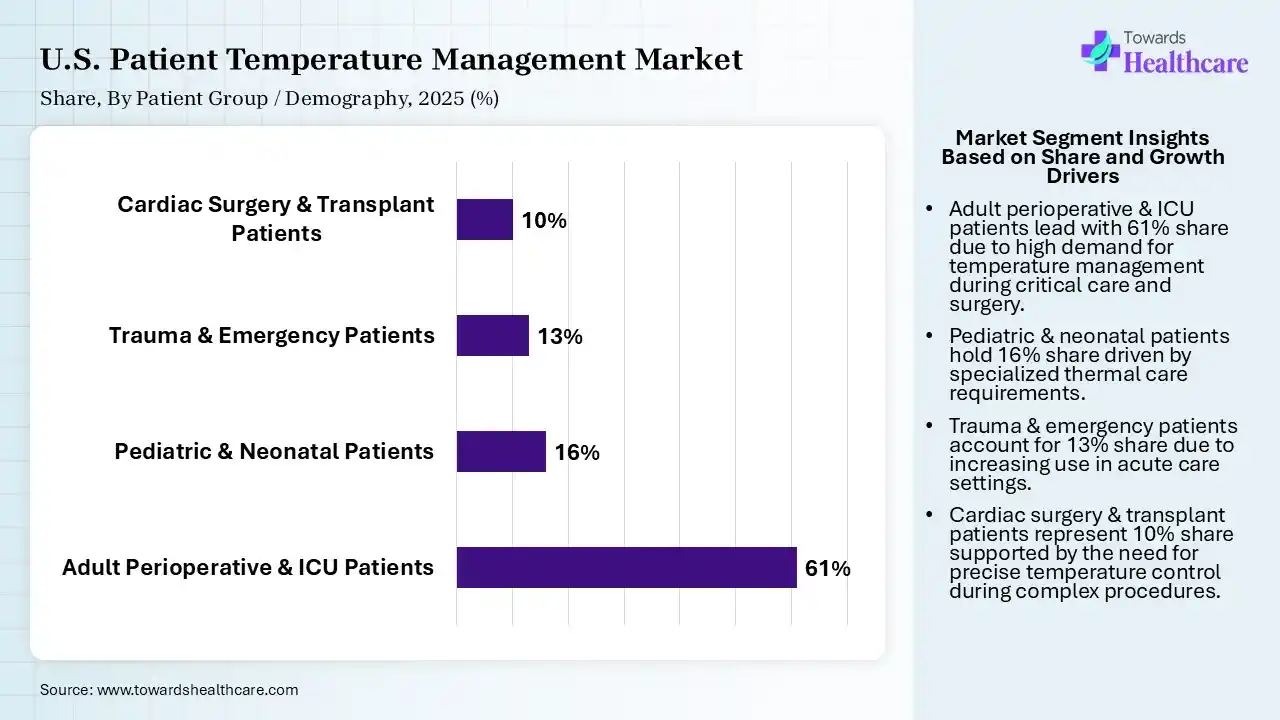
| Segment | Share 2025 (%) |
| Adult Perioperative & ICU Patients | 61% |
| Pediatric & Neonatal Patients | 16% |
| Trauma & Emergency Patients | 13% |
| Cardiac Surgery & Transplant Patients | 10% |
The Adult Perioperative & ICU Patients Segment led the U.S. Patient Temperature Management Market in 2025
The adult perioperative & ICU patients segment contributed the largest market share of 61%, as targeted temperature management in adults and ICU patients prevents fever and maintains controlled body temperature to lower the risk of secondary brain injury and enhance neurological outcomes. This technology actively avoids fever and maintains a particular temperature range to protect the brain from secondary damage. By controlling temperature, medical care providers lessen the cerebral metabolic demand.
The pediatric & neonatal patients segment held a significant share of 16% in the market, as thermoregulation is a noteworthy technology for all paediatric patients, particularly the neonatal and at-risk patient populations. Preserving body temperature in preterm infants is important for survival, and advanced thermal care helps neonatal health and advancement. Precise temperature monitoring of neonates is significant because of the morbidities and mortality related to neonatal hypothermia.
The trauma & emergency patients segment held a significant share of 13% in the U.S. patient temperature management market, and is expected to grow at the fastest CAGR of 9.70% during the forecast period, as in patients with serious, life-threatening brain injury, physicians suggest considering TTM at 35–37 °C to enhance survival with good neurological results. Stabilizing body temperature supports preventing challenges such as coagulopathy, wound infections, and circulatory instability.
The cardiac surgery & transplant patients segment held a significant share of 10% in the market, as hypothermia demonstrated significant advantages in myocardial infarction, organ transplantation, intestinal ischemia, spinal cord injury (SCI), cardiopulmonary bypass (CPB), and neonatal hypoxic ischemia.
The global patient temperature management market size is calculated at US$ 3.67 billion in 2025, grew to US$ 3.97 billion in 2026, and is projected to reach around US$ 8.03 billion by 2035. The market is expanding at a CAGR of 8.15% between 2026 and 2035.
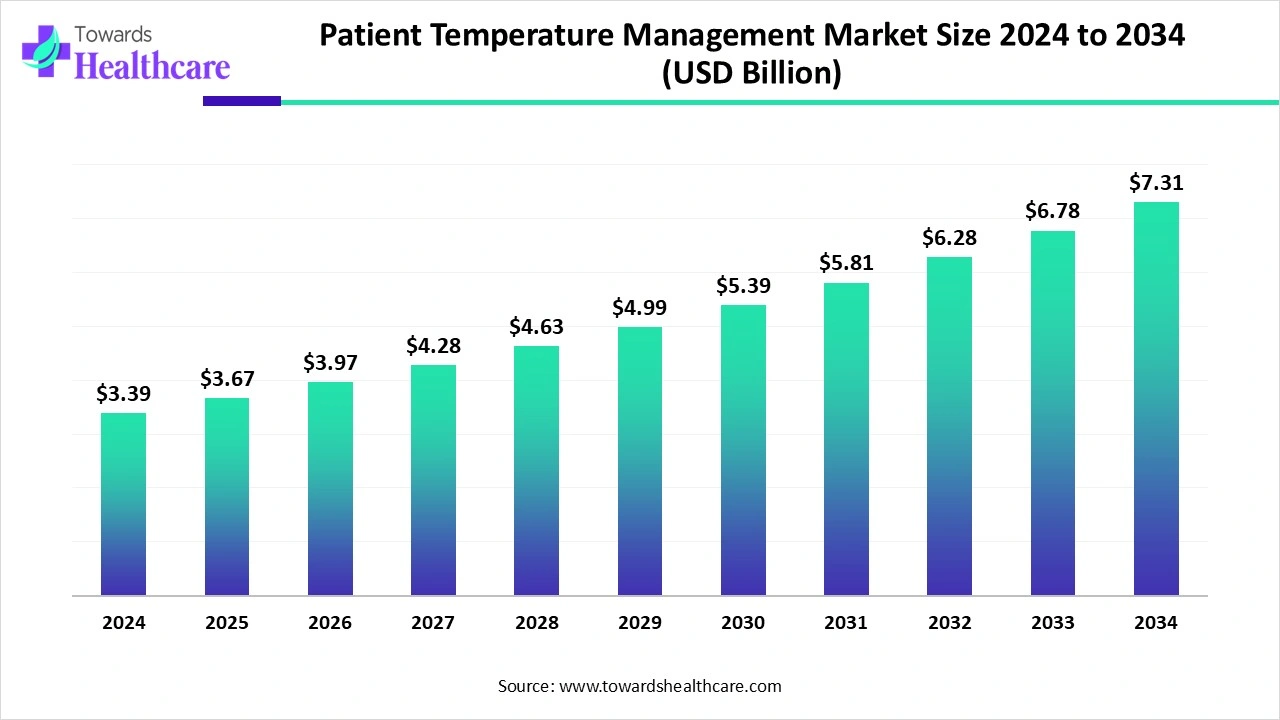
In the U.S. increasing prevalence of heart diseases and severe neurological conditions. U.S. healthcare institutions quickly adopted TTM and therapeutic hypothermia protocols, which include actively cooling patients to preserve brain function after cardiac arrest and traumatic brain injury. The U.S. medical care system operates under value-driven care models, which prioritize positive patient results over the sheer volume of technology, which drives the growth of the patient temperature management market.
R&D:
Clinical Trials:
Patient Support & Services:
| Company | Headquarters | Latest Update |
| 3M Company | United States | The 3M Bair Hugger temperature management solutions are standard for patient warming needs, leveraging medical research technologies. |
| Medtronic plc | United States | Medtronic increases its acute care and monitoring wearables portfolio in the U.S. with a novel distribution agreement for the Corsano multi-parameter devices. |
| Stryker Corporation | United States | Stryker Corporation significantly focusing on improving its product providing, is investing in innovative temperature management services. |
| ZOLL Medical Corporation | United States | ZOLL's proprietary technology gets to the core of the temperature challenges by managing patient temperature from the inside and the outside, based on target temperature and the particular patient's individual requirements. |
| ICU Medical, Inc. | United States | ICU Medical introduced the level 1 H-1200 fast flow fluid warmer, an important tool for warming blood and fluids in healthcare settings. |
| Cincinnati Sub-Zero Product | United States | In March 2026, Cincinnati Sub-Zero, a significant brand in environmental testing services, announced the development of its Z-Plus stackable Benchtop Temperature/Humidity Chamber, supporting laboratories' double testing capacity without needing extra lab space. |
In July 2025, “We designed the ComfortTemp system to address specific challenges our customers were experiencing with patient warming systems,” said Charlie Ling, Medline product manager for the operating room division. “Perioperative departments and surgery centers looking for advanced technology that improves this important facet of the surgical process will find ComfortTemp easy to use and a great way to enhance the surgery experience for both patients and clinical team members.”
Strengths
Weaknesses
Opportunities
Threats
By Product
By Application
By End User
By Technology Architecture
By Patient Group









Principal Consultant
Payal Rabde is a Healthcare Market Research Analyst at Towards Healthcare Research & Consulting with 4+ years of experience in pharmaceuticals, biotechnology, medical devices, and life sciences.
Learn more about Payal Rabde

Reviewed By
Aditi Shivarkar is a seasoned professional with over 14 years of experience in healthcare market research. As a content reviewer, Aditi ensures the quality and accuracy of all market insights and data presented by the research team.
Learn more about Aditi Shivarkar